
WASHINGTON — The United States has deployed Ukrainian-built counter-drone technology and Ukrainian military trainers at Prince Sultan Air Base in Saudi Arabia, after weeks of Iranian drone and missile strikes destroyed irreplaceable aircraft, killed at least one American service member, and exposed a capability gap that the Pentagon’s own systems could not close. The deployment of Sky Map, a battlefield command-and-control platform developed by the Ukrainian firm Sky Fortress, and Merops interceptor drones — first combat-tested against Russian-operated Shaheds in 2024 — represents an operational admission that IRGC drone tactics have outpaced the formal US defence acquisition cycle. On March 6, 2026, President Trump told Fox News Radio that America did not need Ukrainian help with drone defence. Six weeks later, Ukrainian trainers were on the ground at Prince Sultan, teaching US service members how to use a system born in the trenches of a conscript army fighting with Soviet-era hardware.
Table of Contents
- What Counter-Drone Systems Did the US Deploy at Prince Sultan?
- Six Weeks from Rejection to Deployment
- Why Did the World’s Largest Defence Budget Need Ukrainian Drones?
- How Did IRGC Strikes Overwhelm US Air Defences at Prince Sultan?
- The Cost Equation Iran Engineered
- What Does Ukrainian Presence at Prince Sultan Mean for Saudi Arabia?
- The Political Cost Washington Has Not Priced
- Eight Days Versus Eight Hundred
- Frequently Asked Questions
What Counter-Drone Systems Did the US Deploy at Prince Sultan?
The US military deployed two Ukrainian-origin systems at Prince Sultan Air Base in April 2026: Sky Map, a command-and-control platform built by Sky Fortress, and Merops, a kinetic interceptor drone procured through Project Eagle under the Perennial Autonomy programme backed by Eric Schmidt’s Swift Beat. Ukrainian military trainers are physically present on the base to train American personnel on both systems, according to Reuters, which reported the deployment on April 22, 2026, citing unnamed US officials.
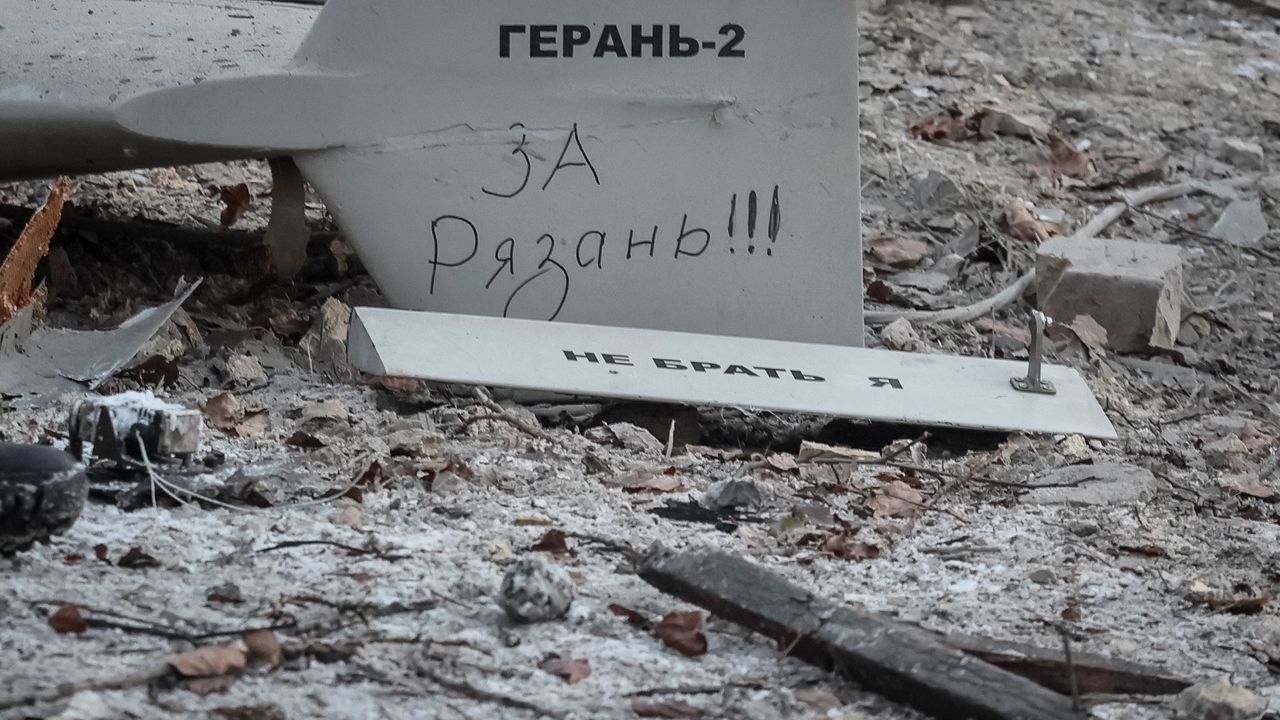
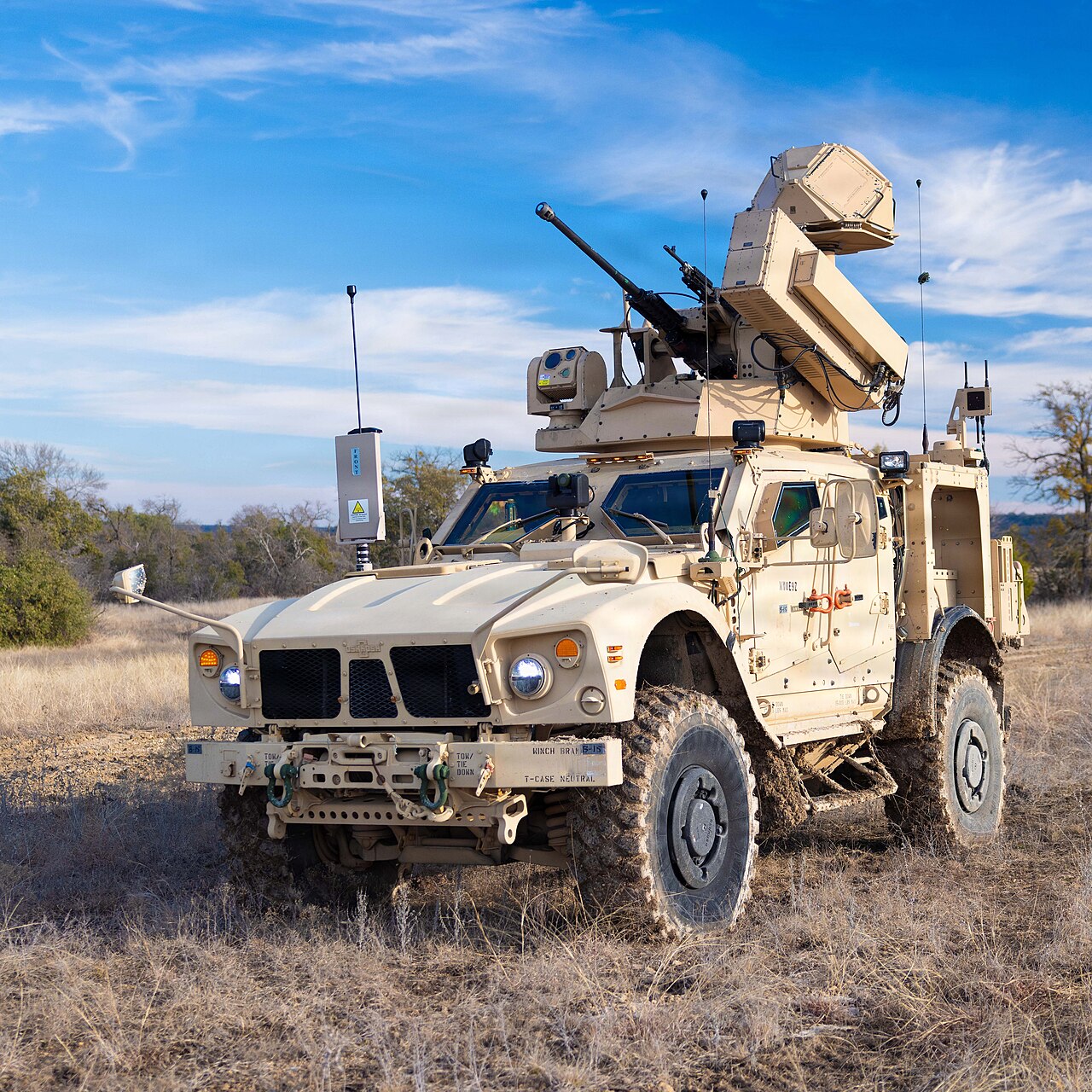
Sky Fortress, founded in 2022, has deployed more than 14,000 acoustic sensors across Ukraine, each costing between $400 and $1,000. The sensors detect Shahed drone acoustic signatures at low altitudes where radar coverage breaks down, triangulate position, and feed targeting data to a tablet-displayable interface. The system was funded through Brave1, Ukraine’s defence innovation accelerator, and refined across two years of continuous combat against the same Iranian-manufactured Shahed-136 platform now striking Saudi Arabia.
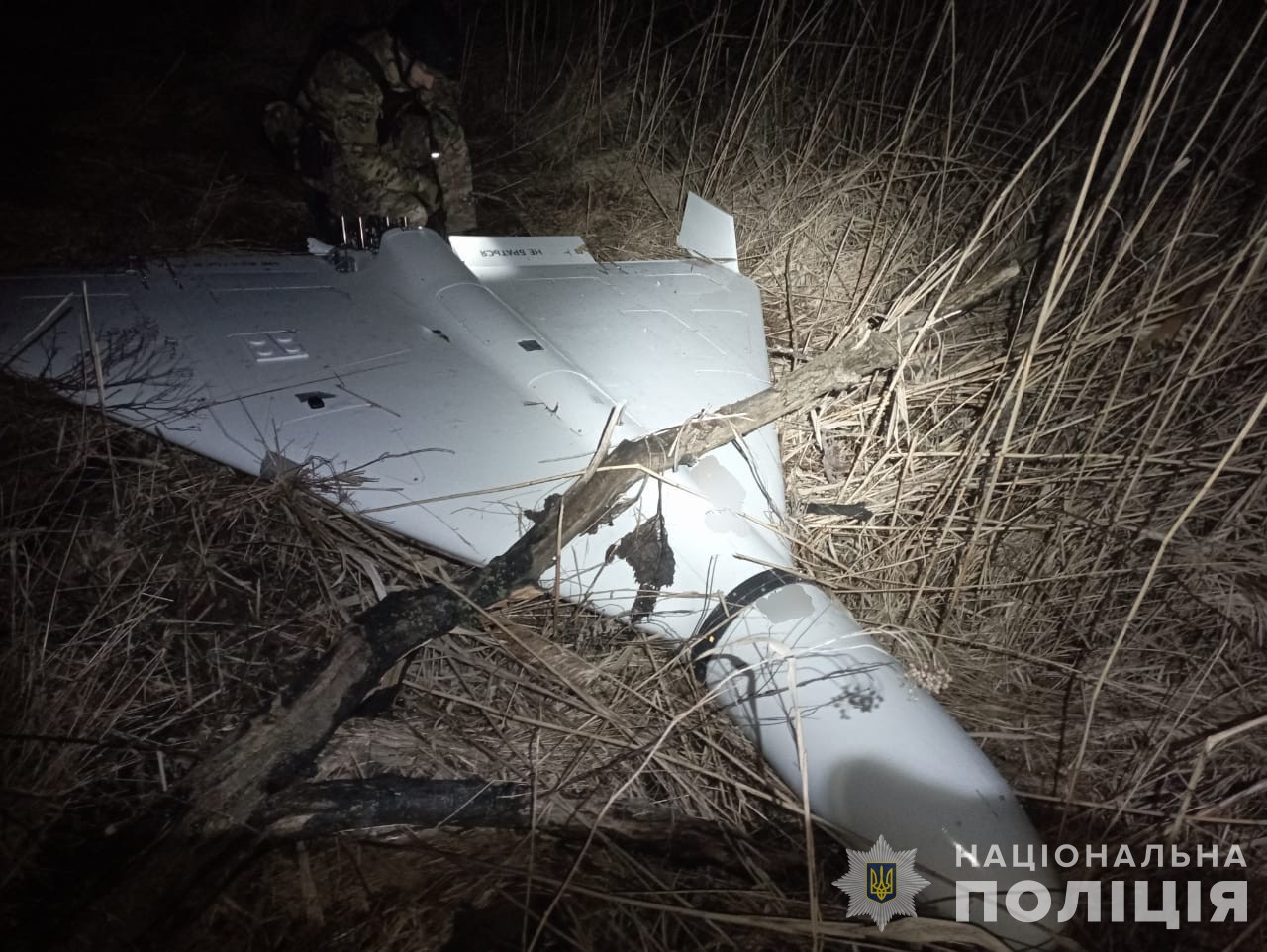
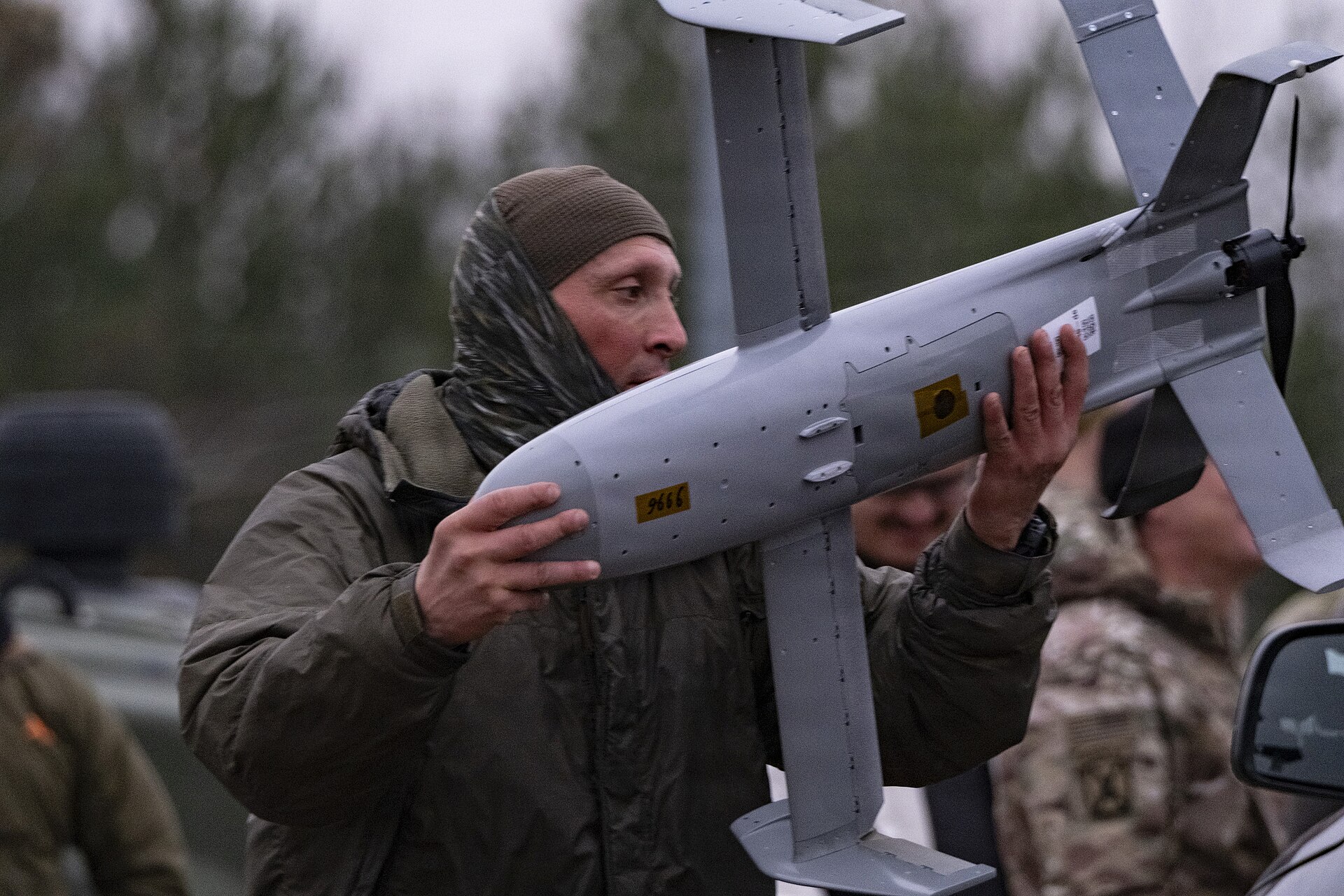
Merops is a different proposition — a kamikaze interceptor designed to kill drones with drones. Ukrainian forces first used it operationally in June 2024 against Russian-launched Shaheds. It carries a 2-kilogram fragmentation warhead, flies at 280 km/h, and operates at ranges of 5 to 20 kilometres. The US Army procured approximately 13,000 units within eight days of the war’s opening on February 28, using Other Transaction Authority to bypass the standard acquisition process. Poland and Romania had already adopted Merops for NATO’s eastern flank before the US Army placed its order.
The deployment has not been seamless. During testing at Prince Sultan, a Merops interceptor lost control and crashed into a portable toilet block on the base, according to Reuters. A representative of Schmidt’s organisation declined to comment on the incident. Army Secretary Daniel Driscoll, testifying before Congress on April 16, framed the system’s value in cost terms: “They’re about $15,000 a piece right now… we’ll make that trade all day long.”
Six Weeks from Rejection to Deployment
On March 6, 2026 — six days after the war opened and five days after the missile strike that fatally wounded Sergeant Benjamin Pennington at Prince Sultan — Trump appeared on Fox News Radio with Brian Kilmeade. “We don’t need their help in drone defense,” he said of Ukraine. “We know more about drones than anybody. We have the best drones in the world, actually.” Ukrainska Pravda published the remarks the same day.
The Middle East briefing 3,000+ readers start their day with.
One email. Every weekday morning. Free.
Approximately six weeks later, Reuters confirmed that Ukrainian-built Sky Map was operational at Prince Sultan Air Base, with Ukrainian military trainers on the ground instructing American service members. The timeline is public record. The gap between the two events — the presidential assertion and the operational reality — is forty-seven days.
The contradiction did not originate in a policy reversal. It originated in a structural fact that Trump’s statement obscured: the US military had no fielded system purpose-built to detect and intercept low-altitude, low-cost one-way attack drones at the speed and volume the IRGC was launching them. The systems that existed — Patriot, SM-6, the layered architecture designed for ballistic missiles and cruise missiles — were engineered for a different threat class. Sky Fortress had spent two years solving the specific problem the Pentagon faced, against the same drone, in real combat. The Army’s eight-day procurement of 13,000 Merops units, conducted through emergency authorities while the president was publicly dismissing the need for Ukrainian technology, suggests that the uniformed military understood the gap before the White House acknowledged it.
Brigadier General Curtis King described Merops as “very lethal” and said it “enables us to kill very effectively and at a much lower cost,” according to Defense News on April 20. The general was not discussing a theoretical capability. He was describing a weapon that Ukrainian conscripts had been using against Shaheds for two years before the US Army bought it.
Why Did the World’s Largest Defence Budget Need Ukrainian Drones?
Because the US defence acquisition system, built for peer-competitor deterrence over twelve-year development cycles, had no fielded answer to low-altitude, low-cost one-way attack drones at wartime volume. The FY2026 defence budget exceeds $886 billion — the gap was not funding. It was institutional velocity.
Ukraine’s entire annual defence expenditure, even at wartime levels, is a fraction of that $886 billion figure. The disparity makes the deployment at Prince Sultan a statement about institutional capacity rather than national wealth — a distinction that matters for every country hosting US forces and relying on American protective infrastructure.
The Pentagon’s own leadership made the capability gap explicit before Congress. On March 3, 2026, Defence Secretary Pete Hegseth and General Dan Caine, the Chairman of the Joint Chiefs, delivered a closed-door briefing in which they told lawmakers that Iranian Shaheds “are posing a bigger problem than anticipated” and that US air defences “will not be able to intercept them all,” according to CNN, which reported the briefing’s contents on March 4.
Tom Karako of the Center for Strategic and International Studies offered a blunter assessment. “Increased investment is dramatically overdue,” he told DefenseScoop on April 10. Alex Plitsas, also of the Atlantic Council, added: “U.S. forces are still vulnerable, and drones and missiles continue operating.” Timothy Walton, a senior fellow at the Hudson Institute, told Reuters that “there’s been longstanding gaps in U.S. air and missile defense coverage around the world. This has been well understood. However, it hasn’t been addressed.”
Walton’s phrasing — “well understood” and “hasn’t been addressed” — identifies the problem as institutional rather than intellectual. The threat was known. The acquisition system could not respond at the speed the threat demanded.
The average major defence programme takes twelve years from inception to delivery, according to a 2025 Government Accountability Office assessment. The Pentagon eliminated its old requirements process in August 2025, but the Planning, Programming, Budgeting, and Execution cycle that governs how money flows to programmes remained unchanged. The institutional plumbing moves at peacetime speed regardless of wartime need.
Ukraine, fighting for national survival since 2022, did not have the luxury of a twelve-year development cycle. Sky Fortress built its acoustic sensor network under fire. Merops went from prototype to operational deployment in months, not years. The US Army’s decision to procure 13,000 units through Other Transaction Authority — an emergency mechanism that bypasses normal competitive bidding — was an acknowledgment that the standard process had failed, and that the fastest path to a fielded capability ran through Kyiv, not through Lockheed Martin or Raytheon.
How Did IRGC Strikes Overwhelm US Air Defences at Prince Sultan?
Through volume, cost ratio, and target selection. The IRGC launched four escalating strike packages between February 28 and March 27, 2026, combining one-way attack drones and ballistic missiles to exhaust high-value interceptor stocks while destroying irreplaceable aircraft one at a time.
The IRGC’s campaign against Prince Sultan Air Base began on February 28, 2026, the day the war opened. Subsequent strikes followed on March 1, March 14, and March 27, each escalating in complexity and damage. The base sits approximately 400 miles — roughly 640 kilometres — from Iran, well inside the Shahed-136’s estimated 2,000-kilometre range, and hosts the US strike aircraft central to the Hormuz blockade declared effective April 13.
The March 1 strike, a missile attack, inflicted the injury that killed Sergeant Benjamin N. Pennington seven days later. Pennington, 26, from Glendale, Kentucky, was assigned to the 1st Space Battalion, 1st Space Brigade, based at Fort Carson, Colorado. He became the seventh US service member to die during Operation Epic Fury, according to Task and Purpose, The Hill, and Army Times.
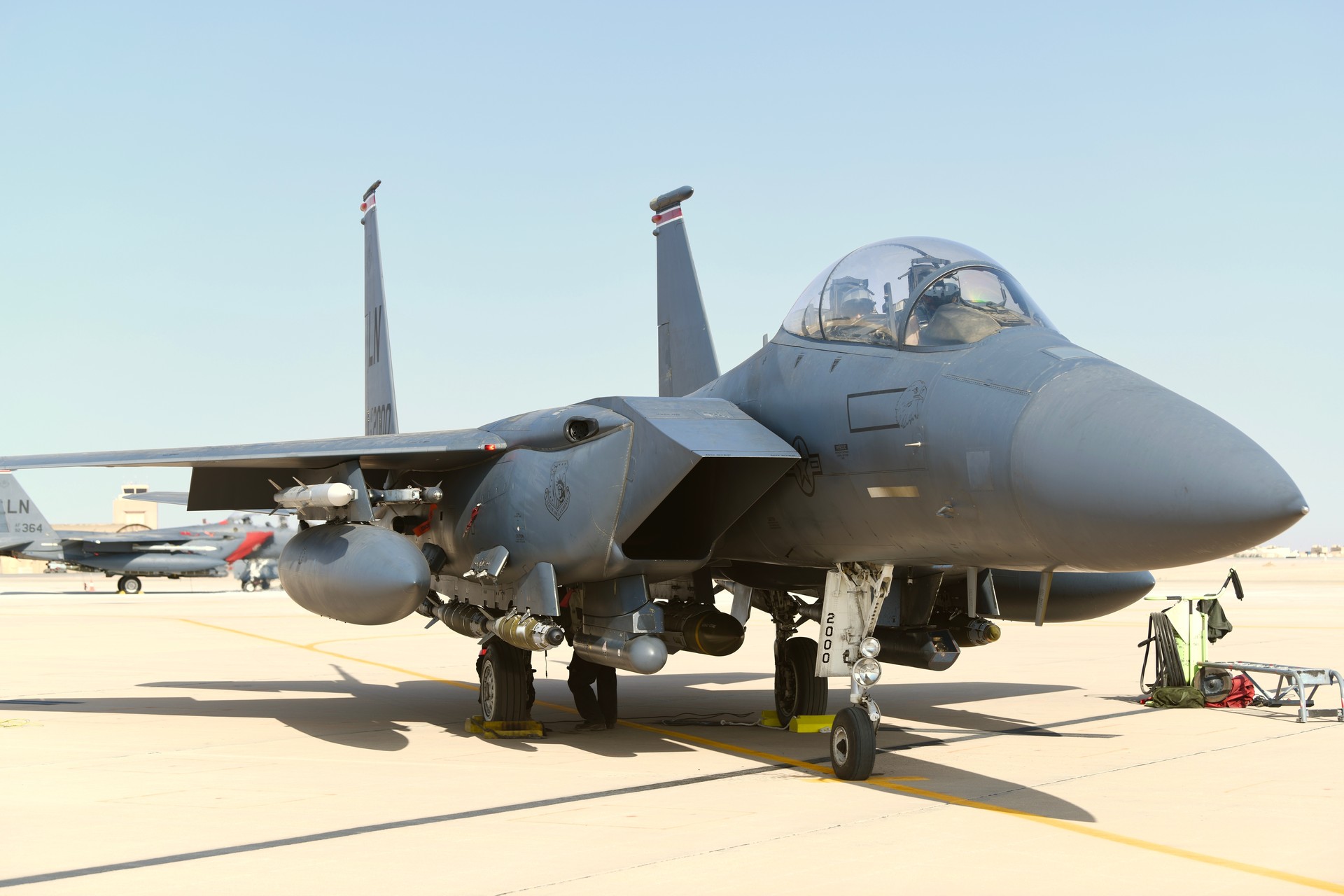
The March 14 strike damaged five KC-135 Stratotanker aerial refuelling aircraft. The March 27 attack was the most consequential: a combined package of six ballistic missiles and 29 one-way attack drones destroyed a US E-3G Sentry AWACS aircraft — serial number 81-0005, assigned to the 552nd Air Control Wing at Tinker Air Force Base — and damaged multiple KC-135 tankers. At least 15 US service members were wounded, five of them seriously, according to The Aviationist and Military Times. The E-3G was the air-battle management aircraft for the entire theatre. Its destruction removed a node that cannot be replaced from existing inventory; the Air Force operates only 16 of the type.
The cumulative toll is substantial. Approximate US equipment losses at Prince Sultan have reached $1.3 billion, according to Defence Express estimates. General Caine reported that US and allied forces had intercepted 1,700 total ballistic missiles and one-way attack drones as of early April 2026. The intercept volume itself is part of the problem: each Patriot or SM-6 intercept costs $1 million or more, while the Shaheds being intercepted cost between $20,000 and $50,000 each — the cost equation examined in the next section.
On the day the war opened, IRGC-affiliated Tasnim News Agency warned civilians to leave areas hosting US forces across the Gulf region. After the March 27 strike, IRGC Aerospace Force claimed it had targeted “a gathering of 200 American pilots and aircrew.” US Central Command denied the specific claim but confirmed casualties and aircraft losses. The IRGC knew from its Shahed exports to Russia — the same platform Ukraine had been destroying since 2022 — that US standard air defence was not built for this threat class.
The Cost Equation Iran Engineered
The economics of the IRGC’s drone campaign are not incidental to its strategy. They are the strategy. A Patriot PAC-3 interceptor costs upward of $4 million. An SM-6 costs approximately $4.3 million. Even the cheaper Coyote interceptor, part of the JIATF-401 counter-drone package, runs above $100,000 per unit. Against Shaheds costing $20,000 to $50,000 each, the cost-exchange ratio — between 20:1 and 50:1 in Iran’s favour — means that every wave degrades the defender’s interceptor stockpile at a rate the defender cannot sustain. Saudi Arabia’s own PAC-3 inventory has drawn down to approximately 400 rounds, roughly 14 percent of its pre-war stock.
Merops changes the arithmetic. At $15,000 per unit — with Driscoll projecting the price will fall below $10,000 at scale — it is the first US-procured system that does not lose the cost ratio against a Shahed. A $15,000 interceptor against a $20,000 to $50,000 drone produces a ratio that favours the defender or, at worst, approaches parity. Driscoll’s Congressional testimony — “we’ll make that trade all day long” — was a statement about mathematics as much as capability.
The Joint Interagency Task Force 401, the Army-led counter-drone unit activated under emergency authorities, has committed more than $600 million in counter-UAS defences within 60 days of the war’s opening, according to DefenseScoop. The systems procured include Coyote interceptors, Merops, EAGLS, APKWS Hydra-70, Smart Shooter, Wingman, and Pitbull — a portfolio approach reflecting the absence of any single system adequate to the threat. JIATF-401’s $600 million spend in two months is itself evidence of the pre-war gap. If the systems had existed in inventory, the emergency procurement would not have been necessary.
The cost asymmetry extends beyond individual intercepts to platform losses. The KC-135 tankers damaged across multiple strikes are worth tens of millions each. The $1.3 billion in estimated equipment losses at Prince Sultan alone — a figure that includes the E-3G Sentry detailed in the previous section — exceeds the annual defence budget of most nations, inflicted by weapons costing less than a mid-range sedan. Aramco’s first-quarter war-price economics reflect a parallel cost distortion on the Saudi side, where the revenue windfall from elevated crude prices has not kept pace with the fiscal burden of the conflict.
What Does Ukrainian Presence at Prince Sultan Mean for Saudi Arabia?
It complicates the implicit bargain at the heart of US basing in the Gulf — that American protection is the best available. Riyadh now hosts trainers from a country its protector publicly dismissed, operating technology its protector’s own system failed to produce, inside a base that four Iranian strike packages have demonstrated is not invulnerable.
Prince Sultan Air Base has been a recurring feature of the US-Saudi military relationship since Operation Desert Storm in 1990. US forces occupied the base through the 1990s, withdrew after the 2003 invasion of Iraq — partly in response to domestic Saudi pressure following the 1996 Khobar Towers bombing — and returned on February 28, 2026, the day the war with Iran began. The Combined Air Operations Centre, which had moved to Al-Udeid in Qatar after the 2003 withdrawal, now relies on Prince Sultan as a forward operating base for strike missions and as a node in the Hormuz enforcement architecture.
The presence of Ukrainian military trainers on a Saudi-hosted base adds a layer of complexity to an already fraught hosting calculus. Saudi Arabia signed a 10-year defence agreement with Ukraine between March 27 and March 30, 2026, alongside the UAE and Qatar. By March 18, Ukraine had deployed 201 anti-drone specialists across all three Gulf states, according to Breaking Defense. The agreements cover drone warfare, electronic warfare, and air-defence interception — precisely the capabilities the US military was importing from Ukraine at Prince Sultan.
Samuel Bendett of the Atlantic Council described the logic: the deals enable “investments in Ukrainian defense tech, so that potential solutions can be quickly available to Gulf countries as they are tested.” The formulation is revealing. Gulf states are not buying finished products from an established defence industrial base. They are buying access to a live testing environment — a war — and the iterative improvements it produces. Prince Sultan Air Base has become, in operational terms, a doctrine-development range where Ukrainian battlefield innovations are adapted to Gulf conditions in real time.
For Riyadh, this raises questions that extend beyond military capability. The kingdom agreed to host American forces under an implicit arrangement: the United States provides a security umbrella, and Saudi Arabia provides basing access. The umbrella’s credibility depended on the assumption that American military technology was the best available. The deployment of Ukrainian systems — systems developed by a country receiving American military aid, not providing it — complicates that assumption. The host nation is now watching its protector import solutions from a third party that the protector’s president publicly dismissed weeks earlier.
The IRGC’s sustained ability to strike Prince Sultan despite the American presence also erodes the deterrent value of US basing for Saudi Arabia. Each successful strike demonstrates that hosting American forces does not make a Saudi facility invulnerable. It makes it a target. The March 27 destruction of the E-3G Sentry — the most expensive single-aircraft loss in the campaign — occurred at a base the kingdom was told would be defended by the most capable military in the world.
The Political Cost Washington Has Not Priced
Sergeant Pennington served in the 1st Space Battalion — a unit whose name alone captures the distance between the Pentagon’s institutional self-image and the low-altitude, low-cost drone threat that killed him on March 8, 2026, seven days after the missile strike detailed above.
The War Powers notification for Operation Epic Fury was filed on March 2, 2026, two days after the war began. The Senate voted down a restrictive resolution on March 4. Representative Brian Fitzpatrick introduced a separate War Powers Resolution. No published US-Saudi Status of Forces Agreement explicitly addresses legal accountability for US service members killed while defending Prince Sultan on Saudi soil, according to a Lawfare analysis from April 2026.
American combat deaths on foreign soil carry a domestic political cost that compounds over time. The first casualty generates grief and patriotic solidarity. The seventh generates questions about why the base is still being struck. The questions sharpen when the technology defending the base turns out to come from a country whose help the president said was unnecessary. They sharpen further when the systems that were supposed to provide protection — Patriot batteries, the layered air-defence architecture — are acknowledged by the Defence Secretary himself to be inadequate to the threat.
The 15 service members wounded in the March 27 strike, five of them seriously, add to a casualty count that the administration has managed through episodic acknowledgment rather than sustained public accounting. Each strike on Prince Sultan generates a news cycle. Each news cycle generates congressional questions. Each congressional hearing — like the one where Driscoll praised Merops on April 16 — produces testimony that simultaneously validates the Ukrainian solution and indicts the system that failed to produce an American one.
The political risk is compounded by the nature of the base itself. Prince Sultan sits in Saudi Arabia, a country whose relationship with the United States is transactional, contested, and subject to domestic scrutiny from both parties. American service members are dying to defend a base that supports operations — including the Hormuz blockade — whose legal authorisation remains contested. The Merops that crashed into a portable toilet block during testing at Prince Sultan is a footnote in the Reuters report. In a congressional investigation, it would be Exhibit A.
Eight Days Versus Eight Hundred
Eight days to procure 13,000 Merops units. More than 800 days — under the old requirements framework — just to establish what a new system should do, before a single unit is manufactured. The PPBE budget cycle adds two or more years after that. The twelve-year average development timeline, documented in the GAO’s 2025 assessment, is not an anomaly. It is the design.
The Merops procurement used Other Transaction Authority, an emergency mechanism that bypasses competitive bidding, standard testing protocols, and much of the bureaucratic architecture the requirements process imposes. OTA exists precisely for situations where the standard system cannot respond fast enough. Its use for 13,000 units of a single weapons system is not a vindication of the acquisition process. It is a confession of its failure.
The contrast with Ukraine’s approach is structural, not circumstantial. Sky Fortress iterated its acoustic sensor network across 14,000 battlefield deployments and refined Sky Map as a C2 platform while the system was in active use. The development cycle was measured in weeks and months. Brave1, Ukraine’s defence innovation unit, funded the programme outside traditional procurement channels — a parallel the US attempted with JIATF-401 but at a pace constrained by the PPBE cycle’s grip on funding flows.
The Prince Sultan deployment was the operational proof of concept. The April 24-25 Drone Agreement codified it as a ten-year trilateral architecture: Ukraine’s Drone Agreement Makes Kyiv a Structural Participant in Gulf Air Defense analyzes how the deal embeds Ukrainian counter-drone doctrine across Saudi Arabia, the UAE, and Qatar — and why that creates a structural complication for any Hormuz settlement Iran must eventually negotiate.
The $600 million JIATF-401 committed within 60 days represents a fraction of what the Pentagon spends annually on programmes that did not produce a fielded counter-drone system adequate to the IRGC’s February 28 campaign. The systems procured — Coyote, Merops, EAGLS, APKWS, Smart Shooter, Wingman, Pitbull — are a portfolio assembled in crisis. Several, including Merops, were developed entirely outside the US defence industrial base.
The institutional implications extend beyond this war. If the fastest path to a fielded capability against a known threat runs through a Ukrainian startup and an emergency procurement authority, the twelve-year average development timeline is not a process safeguard. It is a vulnerability. The IRGC did not develop a weapon the US could not counter. It deployed a weapon the US had not countered — a distinction that falls entirely on the acquisition system rather than on American engineering capacity. The engineers who could have built an American Merops exist. The system that would have funded, tested, and fielded it in time did not.
Frequently Asked Questions
What is Sky Fortress and who founded it?
Sky Fortress is a Ukrainian defence technology company founded in 2022 that developed the Sky Map command-and-control platform and an acoustic sensor network for detecting low-altitude drones. The company emerged from Ukraine’s Brave1 defence innovation accelerator, which funds startups developing battlefield technology outside traditional military procurement. Sky Fortress’s acoustic sensors cost between $400 and $1,000 each — a price point that enabled the rapid scaling to 14,000 units across Ukrainian territory, a density no NATO country has replicated in its own airspace.
Has the US military used foreign counter-drone technology before?
The US has historically been a net exporter of air-defence technology, not an importer. Israel’s Iron Dome is the closest precedent — the US co-funded its development and procured two batteries for domestic testing — but Iron Dome addresses rockets and mortars, not the low-altitude drone threat that Shaheds represent. The Sky Map deployment at Prince Sultan marks the first known instance of the US importing a counter-drone C2 system developed by a country it is simultaneously providing military aid to, creating a circular dependency in which American-funded Ukrainian survival produced technology America itself needed.
What is the legal status of Ukrainian military personnel operating on a Saudi-hosted US base?
No Status of Forces Agreement publicly covers Ukrainian trainers at Prince Sultan. US SOFA protections extend to American service members and Defence Department civilians, not to third-country personnel operating under bilateral commercial or government-to-government arrangements. The 10-year Ukraine-Saudi defence agreement signed in late March 2026 provides a bilateral legal framework, but Saudi Arabia has not publicly disclosed the legal architecture governing Ukrainian personnel on US-controlled facilities within its territory.
Does OTA procurement require the same safety testing as standard defence acquisitions?
Other Transaction Authority bypasses the standard Testing and Evaluation Master Plan that governs major defence programmes under FAR-based contracts, including dedicated developmental and operational testing phases at proving grounds. OTA agreements can impose contractual testing requirements, but these are negotiated case-by-case and are typically compressed or waived in emergency procurements. The Merops crash into the portable toilet block at Prince Sultan during base testing reflects the practical consequence: operational validation is occurring in the field rather than at White Sands or Yuma, a process that normally takes years.
Could Saudi Arabia procure Ukrainian counter-drone systems independently?
The 10-year defence agreement signed between Saudi Arabia and Ukraine in late March 2026 provides a legal framework for direct procurement, technology transfer, and joint development. Bendett’s characterisation — that the deals enable Gulf states to access Ukrainian defence technology “as they are tested” — suggests a model closer to venture investment than traditional arms sales. Saudi Arabia’s Defence Ministry has not publicly disclosed whether it intends to procure Sky Map or Merops independently of the US military presence, but the agreement’s scope explicitly includes drone warfare and electronic warfare capabilities, and the 201 Ukrainian specialists already deployed to the Gulf operate under bilateral arrangements, not through US intermediation. The strategic logic behind Saudi Arabia’s direct procurement relationship with Kyiv — and why MBS is deliberately building defense capacity outside ITAR, FMS, and congressional notification requirements — is examined in MBS Is Building a Military That Doesn’t Need Washington’s Permission.