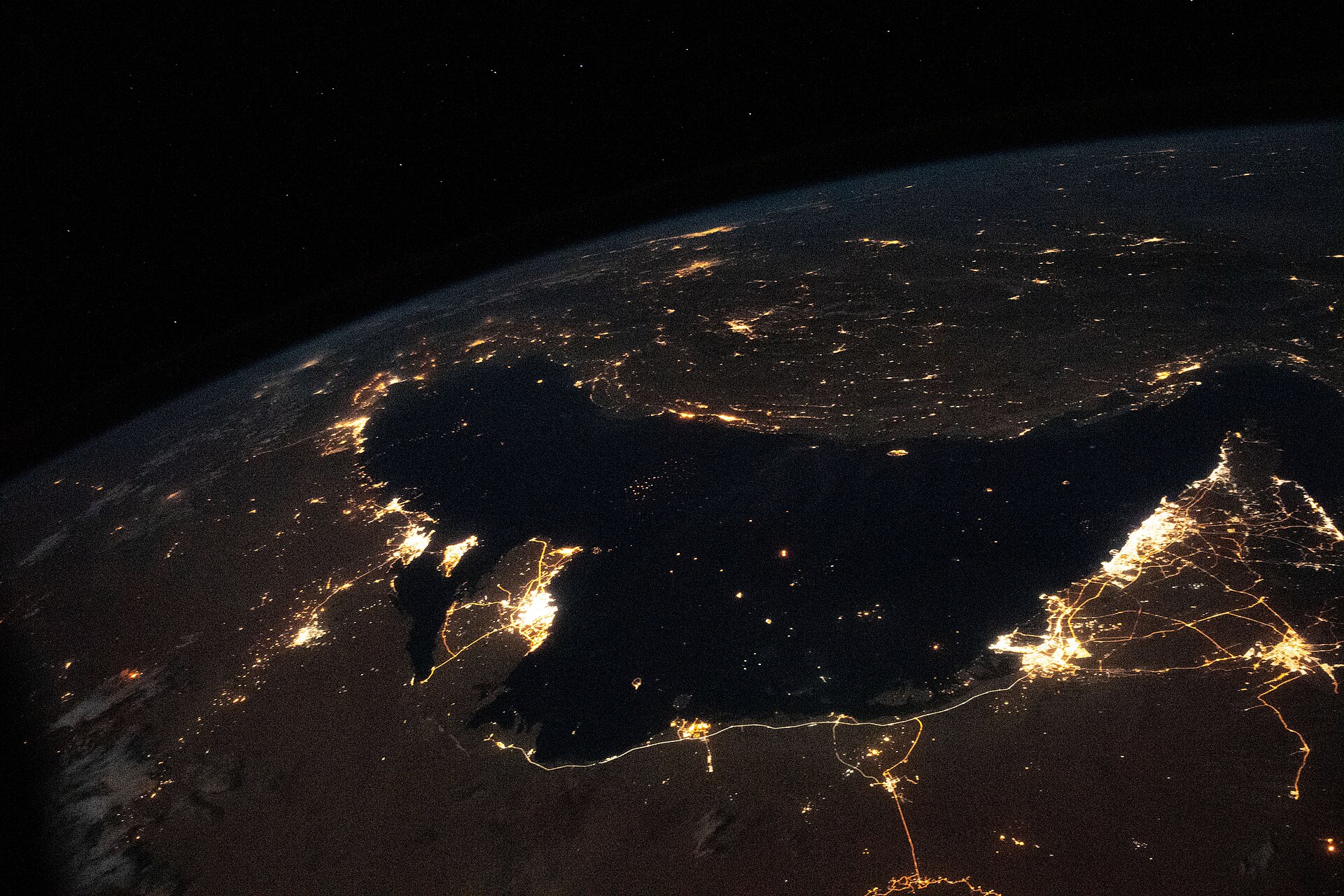
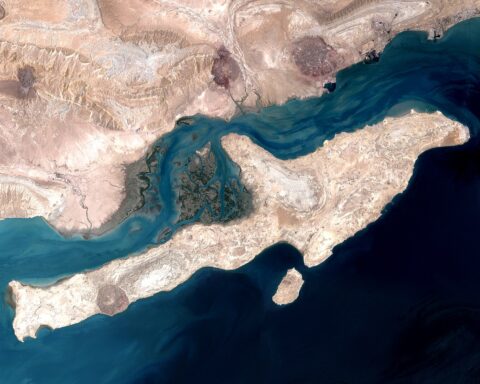
RIYADH — Donald Trump’s April 23 order for the US Navy to “shoot and kill any boat” laying mines in the Strait of Hormuz has placed Saudi Arabia in a position it has spent a month trying to avoid: endorsing a rule of engagement whose failure mode is a dead Iranian crew in a waterway Riyadh cannot afford to see closed. The Truth Social post, which instructs commanders that “there is to be no hesitation” and declares the strait “sealed up tight” under US Navy approval, arrived three days after Xi Jinping phoned Mohammed bin Salman and named the Strait of Hormuz by name — the first time Beijing has ever done so in a bilateral call with Riyadh. The Saudi Royal Court, the Ministry of Foreign Affairs and the Saudi Embassy in Washington have said nothing. Brent crude closed below the kingdom’s fiscal break-even. What follows examines the doctrine, its legal terrain, the 1988 precedent it most closely resembles, and the three-way bind — Washington, Tehran, Beijing — that silence alone will not resolve.
Table of Contents
- What Trump’s Shoot-on-Sight Order Actually Says
- Why Iran Cannot Find Its Own Mines
- Why Has Saudi Arabia Said Nothing?
- Xi’s Hormuz Phone Call and the China Vector
- The Fiscal Math Behind Riyadh’s Bind
- Does the 1988 Vincennes Precedent Still Apply?
- The Minesweeper Gap the US Created Itself
- What a Collision in the Strait Would Look Like
- Frequently Asked Questions
What Trump’s Shoot-on-Sight Order Actually Says
The Truth Social post appeared on the morning of April 23, 2026. Its operative sentences were four: the Navy is to “shoot and kill any boat” observed laying mines in the Strait of Hormuz; mine-clearing operations are to be “tripled”; the United States has “total control” of the waterway; and “no ship can enter or leave without the approval of the United States Navy. It is ‘sealed up tight’ until such time as Iran is able to make a deal.” Reported by CNBC, Newsweek and NBC News the same day.
The order arrived roughly eighteen hours after the Islamic Revolutionary Guard Corps seized two tankers in the strait — the Panama-flagged MSC Francesca and the Liberia-flagged Epaminondas, the latter bound for Gujarat — and fired on but failed to capture the Greek-owned Euphoria. The IRGC’s justification, carried by Business Standard and the Times of Israel on April 22, was that the vessels had “endangered maritime security by operating without required authorization and tampering with navigation systems.” It added that the Francesca had ties to Israel.
Trump’s post came one day after he had extended the ceasefire indefinitely, citing an Iranian government that was in his words “seriously fractured.” The extension preserved the US naval blockade declared April 13 — a contradiction the Iranian foreign ministry’s spokesman, Esmaeil Baghaei, described the same week as evidence of “contradictory messages, contradictory behaviors, and unacceptable actions of the American side.” This pairing — ceasefire plus blockade plus shoot-on-sight — produced the posture Daniel Byman at CSIS has described as a “paradoxical equilibrium,” in which the United States responds to Iran’s blockade by “blockading the blockaders.”
Ali Vaez of the International Crisis Group, in comments to Newsweek on April 23, framed the doctrine as “not strategic mastery but mutual brinkmanship, with each side testing the limits of coercion.” His warning: “the danger is that neither believes it can afford to blink, and that makes every incident at sea a potential trigger for wider escalation.” Mark Cancian of CSIS, interviewed in the same piece, put it more bluntly. The shoot-on-sight order, he said, means “we’re going to be daring the Iranians to shoot,” and the country “may end up in another shooting war.”
Why Iran Cannot Find Its Own Mines
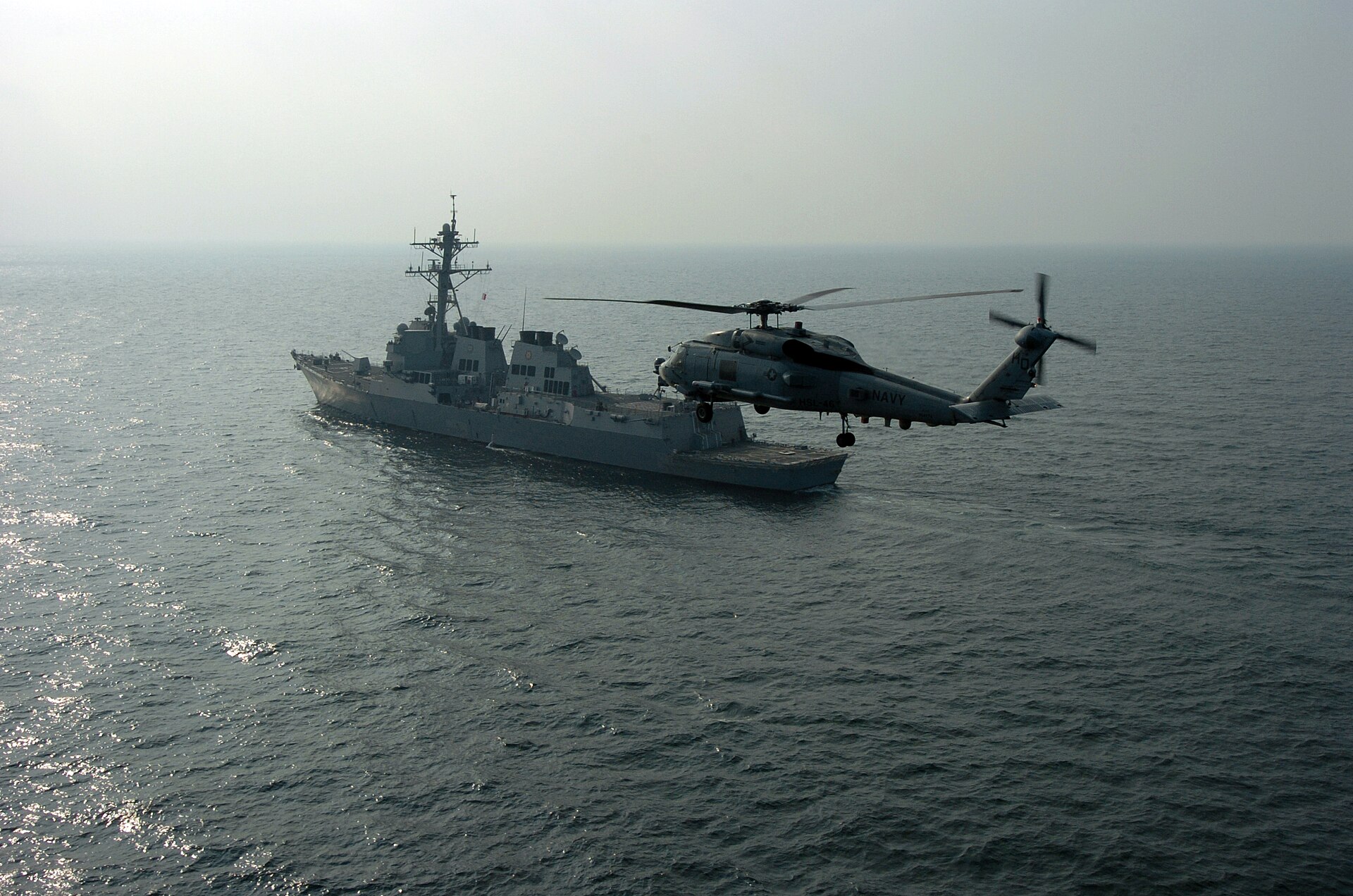
The April 23 order targets mine-laying vessels. The mines already in the water are a separate problem, and they belong to both sides now.
The Middle East briefing 3,000+ readers start their day with.
One email. Every weekday morning. Free.
US officials told The New York Times — reporting relayed through the Japan Times, Jerusalem Post and Euronews on April 11 — that Iran had deployed its Hormuz mine field through decentralized small-boat forces operating without a clear command-chain record. The result is that Tehran itself cannot reliably locate what it has planted. Pentagon estimates put the clearance timeline at up to six months. The Iranian stockpile, per Al Jazeera reporting on April 13, runs to between 2,000 and 6,000 devices across three families: domestically produced M-08 contact mines, Maham-2 seabed influence mines, and reportedly imported Chinese EM-52 rocket mines capable of operating at depths of up to 200 meters.
Mine-laying began on March 10, 2026. By April 11, the US military was reporting that sixteen Iranian mine-laying vessels had been destroyed. The decentralization that complicates clearance also insulates the command structure: the IRGC Navy can disown any given incident by pointing to the absence of a record. An analysis of the IRGC’s post-March capture of Iranian decision-making has described this as the governing feature of the war — a state whose civilian government is audibly opposed to the policies its armed forces pursue.
The Institute for National Security Studies in Tel Aviv has held that “it is virtually impossible to employ naval mines in a manner that complies with legal requirements” in Hormuz, given the density of traffic, the narrowness of the geography and the inability to distinguish vessel types. The legal site Just Security has added that “transit passage rights cannot be negotiated away,” and that a genuine reopening of the strait requires “a coordinated, multinational mine clearance operation at scale.” Neither currently exists.
The April 22 satellite pass gave a snapshot of what the shoot-on-sight order will meet. Sentinel-2 imagery, reported by The Week India on April 23, showed at least 33 IRGC fast-attack craft sailing north of the strait near the Kargan coast. Despite US strikes, Tehran retains an estimated 80 to 90 percent of its original small-boat and mine-laying fleet capacity. Ali Vaez’s analytical point — that Iran has “no logical reason” to continue laying mines when projectiles and direct seizure present greater risks to shipping — is the counterpoint. Trump’s order, Vaez argued in comments to Newsweek on April 23, targets a tactic that may already be strategically obsolete.
Why Has Saudi Arabia Said Nothing?
Saudi Arabia has issued no statement on the shoot-on-sight order. None from the Royal Court, none from the Ministry of Foreign Affairs, none from the Saudi Embassy in Washington. The pattern matches the kingdom’s response to the April 13 US naval blockade of Iranian ports, which drew the same zero-comment response. The Wall Street Journal, in reporting relayed by the Jerusalem Post, said Saudi Arabia was privately pressing Washington to end the blockade.
The bind has three walls. Riyadh cannot endorse the doctrine without identifying itself publicly with a rule of engagement the IRGC has spent a month branding as evidence of US-Gulf complicity — an identification that raises the kingdom’s targeting exposure at a moment when PAC-3 MSE interceptor stocks sit at roughly 14 percent of pre-war levels, approximately 400 rounds. It cannot oppose the doctrine without rupturing the security guarantee that currently keeps a Pakistani combined-arms formation — 13,000 troops and 18 fighters deployed April 11 under the 2025 Saudi-Pakistan Strategic Mutual Defence Agreement — in place on its Eastern Province border. And it cannot stay silent indefinitely, because the moment a US Navy vessel kills an Iranian crew inside Hormuz, every Arabic-language broadcaster in the region will frame the silence as consent.
IRGC General Majid Mousavi, speaking on April 22, delivered the public half of that threat structure. Any regional state cooperating with US or Israeli strikes, he said, should “say goodbye to oil production in the Middle East region.” The statement did not name Riyadh, but the address was unambiguous. The White House ruling that the IRGC’s ship seizures do not constitute ceasefire violations sits inside the same silence: Riyadh has not contested that reading either.
A separate vector has been closed. Pakistan’s offer to mediate — floated by Islamabad in the second week of April — was rejected by Riyadh, a decision that eliminated one of the few bilateral channels that could have absorbed Saudi comment on the shoot-on-sight doctrine without requiring a direct response to Washington or Tehran. The silence is now load-bearing. There is no third party to speak through.
Xi’s Hormuz Phone Call and the China Vector
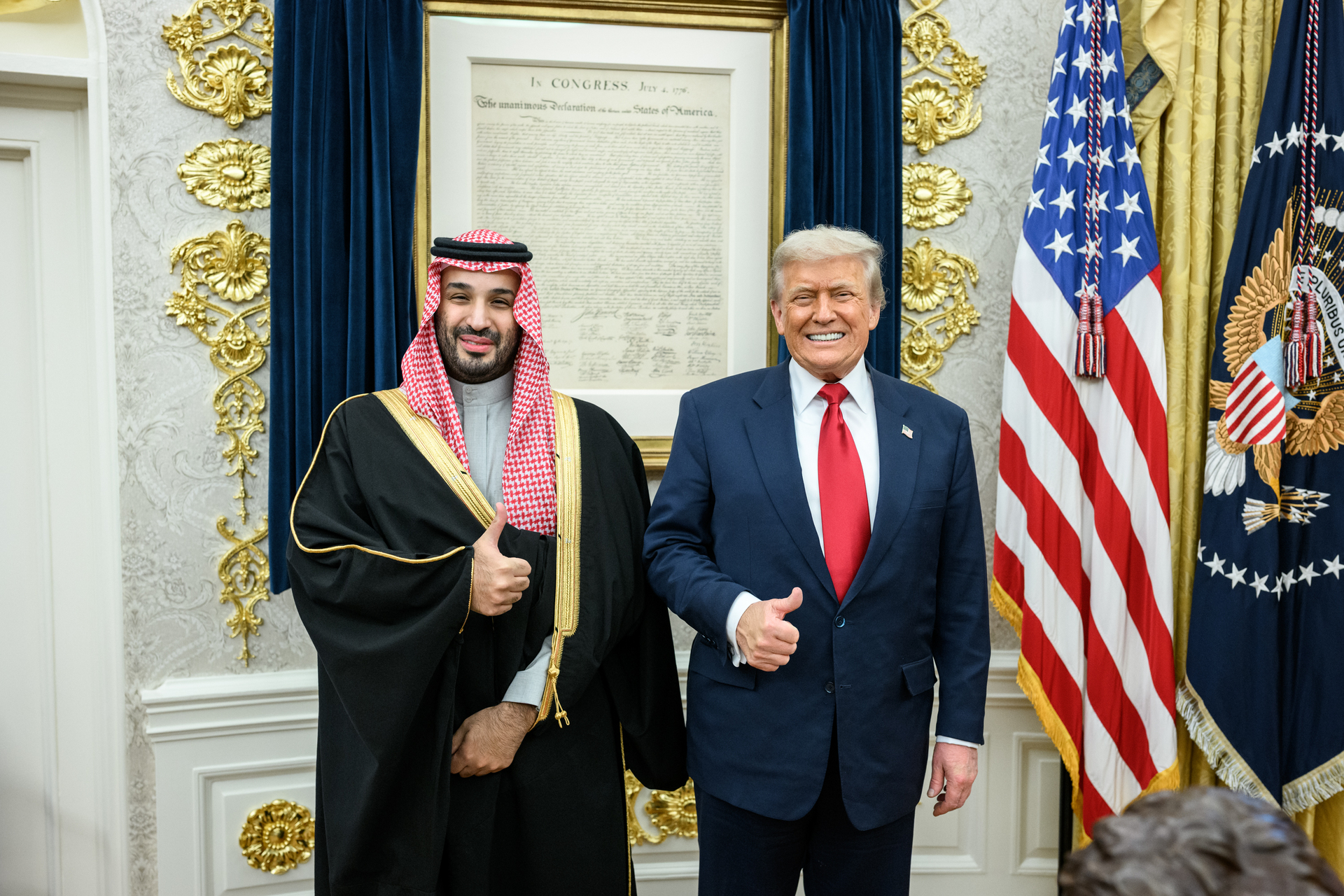
On April 20, three days before Trump’s Truth Social post, Xi Jinping phoned Mohammed bin Salman. The call was unremarkable in format — the two leaders speak regularly — and singular in content.
Xi, per the Chinese foreign ministry readout carried by Bloomberg, Al Arabiya English and the South China Morning Post, told MBS that “the Strait of Hormuz should remain open to normal transit, which is in the common interest of regional countries and the international community,” and called for “an immediate and comprehensive ceasefire.” This was the first time Beijing has named the strait in a bilateral call with Riyadh. The public demand itself altered the Saudi silence problem. It is no longer a bilateral question between Riyadh and Washington. It is a three-way question in which the Saudi Arabia that stays silent on the US shoot-on-sight order is simultaneously staying silent on the Chinese de-escalation demand directed at the Saudi crown prince personally.
The commercial stakes are not symmetrical. China purchases up to 90 percent of Iran’s oil exports and is bound to Tehran by the 2021 twenty-five-year strategic partnership. Over 40 percent of Chinese crude imports originate in the Middle East. Beijing has an interest in the strait remaining open that is larger than any single relationship with Gulf producers, and the Iranian mine-laying — regardless of whether Tehran knows where the mines are — is an obstacle to that interest. The second sentence of Xi’s call, the demand for “an immediate and comprehensive ceasefire,” addresses both ends of the waterway at once: the Iranian mines and the US Navy vessels prepared to kill crews laying more.
The diplomatic architecture around that call has since tightened. The same day Trump posted, CENTCOM turned back 31 ships under the blockade’s new enforcement protocol. The Saudi Arabia that does not answer Xi is the Saudi Arabia that has watched Washington escalate the maritime choke point Beijing has now explicitly asked Riyadh to help keep open.
The Fiscal Math Behind Riyadh’s Bind
Brent crude closed at $101.91 on April 22, 2026. That is more than forty percent above pre-war levels. It is also roughly seven dollars below the Saudi fiscal break-even of $108 to $111 a barrel.
The arithmetic of the gap is punishing. At $100 Brent and 3.33 million barrels per day of actual Saudi exports — an export volume that excludes production lost to attacks on Abqaiq, Ras Tanura and the Yanbu corridor — the kingdom earns roughly $162 million per day less than before the war. That figure is consistent with the $93 million-a-day shortfall the HOS archive tracked earlier in the conflict, adjusted for the further price increase and the output constraints that have compounded since. The war is expensive at every Brent level. It is unaffordable at the current one.
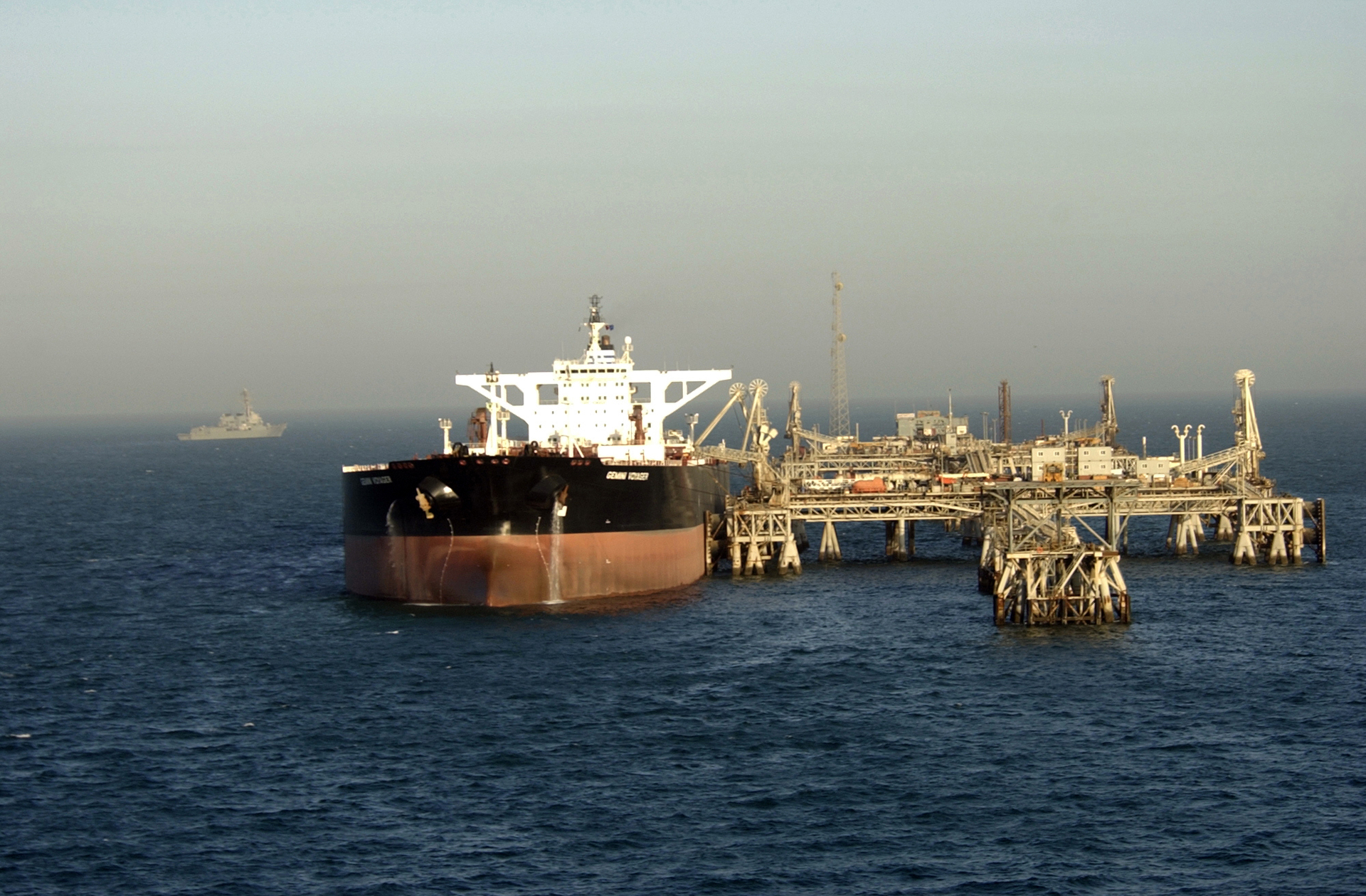
The International Energy Agency has described the disruption as “the biggest energy security threat in history,” estimating approximately 13 million barrels per day of supply lost at the crisis peak. That figure captures both the physical damage and the precautionary withdrawal of tonnage from the strait. Tanker rates have stayed at war-era highs. Qatari LNG exits continue to move selectively under Chinese intermediation. Saudi exports are structurally capped by the loading ceiling at Yanbu, not by upstream capacity. The compounding pressure on Saudi Arabia’s war arithmetic has now generated a private Saudi lobbying campaign in Washington to end the blockade — a signal that Riyadh has concluded the cordon is costing more than it is extracting from Tehran.
A shoot-on-sight order that triggers a maritime incident — and therefore a rate spike — raises Saudi revenue per barrel by a margin that does not close the break-even gap at 3.33 million bpd. The price improvement does not compensate for the volume collapse. Trump’s doctrine is fiscally bad for Riyadh in every branch of the decision tree, which is one reason the Wall Street Journal’s private-pressure reporting reads as plausible.
Does the 1988 Vincennes Precedent Still Apply?
On July 3, 1988, the USS Vincennes shot down Iran Air Flight 655 — an Airbus A300 carrying 290 passengers and crew, all killed — over the strait. The aircraft was misidentified as a descending F-14. The incident took place inside Iranian territorial waters. The USS Vincennes was operating under liberalized rules of engagement issued earlier that year following the Iraqi Exocet strike that killed 37 US sailors aboard the USS Stark.
The Vincennes shootdown is the reason the word “liberalized,” applied to Hormuz rules of engagement, carries weight that the 2026 framing has not yet absorbed. The chain runs from the Stark incident to the Operation Earnest Will reflagging mission to the expanded ROE to the Flight 655 disaster. The 1988 sequence was also the sequence in which Operation Praying Mantis, then the largest US naval battle since World War Two, was fought — retaliation for the mining of the USS Samuel B. Roberts, which had struck an Iranian M-08 mine in April 1988. The precedent is direct: mine-related incident leads to direct naval confrontation.
Two structural differences separate 1988 from 2026. The first is that the 2026 ROE is not liberalized by quiet Pentagon directive but declared on Truth Social in the imperative voice. “No hesitation” is the text. A commanding officer who hesitates is now in violation of a presidential order published in public. The second difference is that the 2026 IRGC fleet is denser and more decentralized than the 1988 Iranian Navy. The 33 fast-attack craft visible in the April 22 Sentinel-2 pass near Kargan — noted above — represent a concentration that makes the probability of a misidentification incident substantially higher than in the earlier period. A fishing boat, a smuggler, a civilian transit: the IRGC does not broadcast which is which.
A maritime lawyer reviewing the 2026 order would note one further departure. UN Security Council Resolution 2817, passed on March 11, 2026, condemned “any action or threat by Iran aimed at closing, obstructing, or interfering with international navigation through the Strait of Hormuz,” with roughly thirty states signing supporting statements. The Resolution does not authorize pre-emptive lethal force against suspected mine-layers. The legal gap between the international authorization and the presidential order is the terrain on which any post-incident inquiry will be fought.
The Minesweeper Gap the US Created Itself
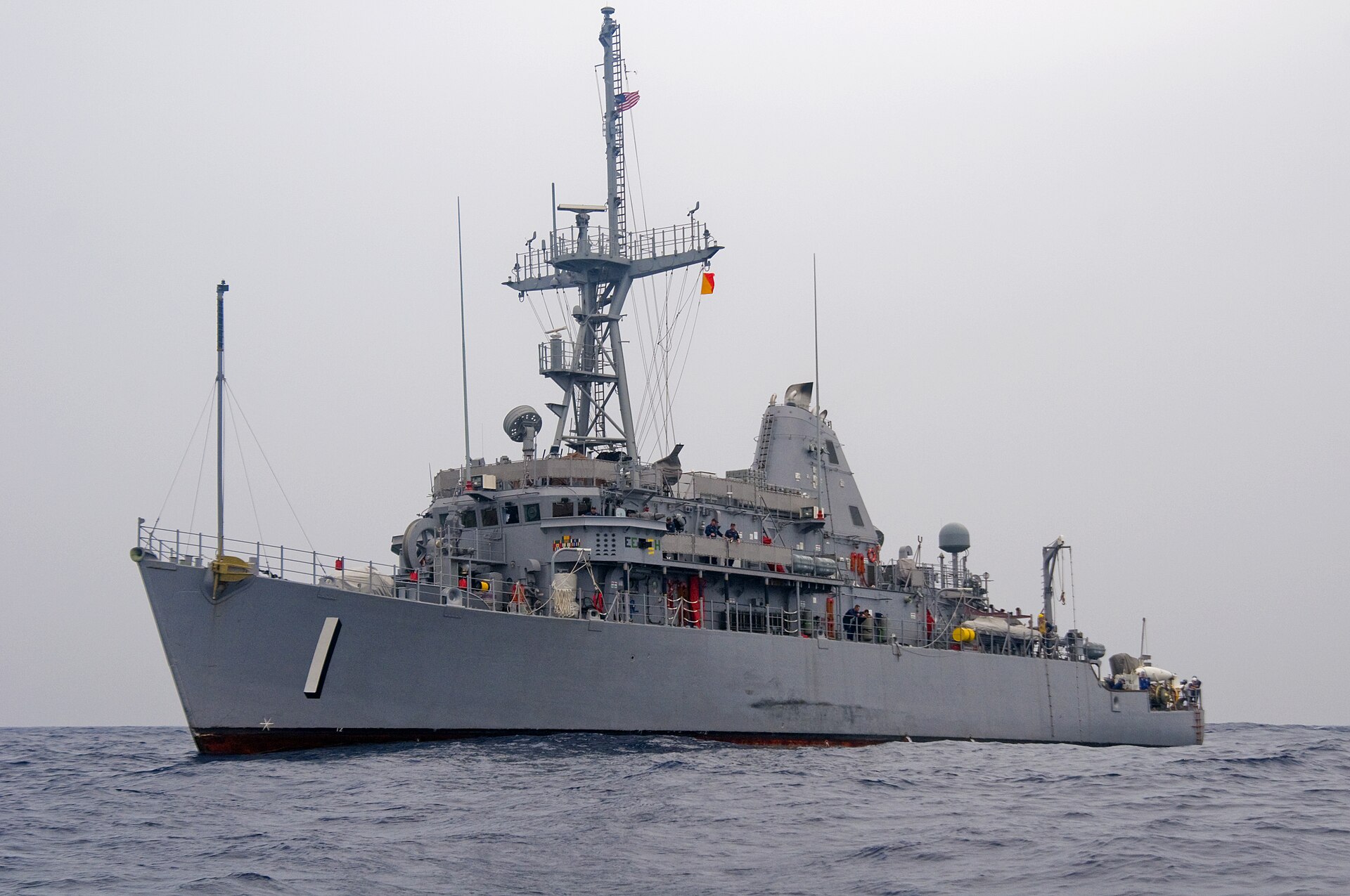
In September 2025, the US Navy decommissioned its four Bahrain-based Avenger-class minesweepers — USS Devastator, USS Dextrous, USS Gladiator and USS Sentry — at Naval Support Activity Bahrain. The ships left the Persian Gulf in January 2026 and arrived at the Philadelphia Inactive Ship Maintenance Facility shortly thereafter. The Fifth Fleet entered the current war with zero dedicated mine-countermeasures vessels in theater. Reporting from The War Zone and Navy Times documented the gap as it opened.
Trump’s April 23 order to “triple” minesweeping operations is therefore an order issued against the lower bound. There are no in-theater Avengers to triple. The replacement pipeline is two hulls: USS Pioneer (MCM-9) and USS Chief (MCM-14) are currently transiting the Indian Ocean toward the Gulf. Both are Avenger-class and therefore the appropriate hull type — wooden and fiberglass construction that does not trigger magnetic-influence mines the way a steel or aluminum hull does. The Littoral Combat Ships that had been intended to replace the Avengers are aluminum-hulled, and in minefield doctrine must operate outside the perimeter and deploy stand-off systems rather than sweep through.
The scale comparison is Baltic. The Just Security legal analysis noted that roughly 80 years of post-war mine clearance has removed an estimated 20 percent of the 160,000 WWI and WWII mines laid across the Baltic Sea. The Pentagon’s “six-month” estimate for Hormuz — against a stockpile that could run to 6,000 devices — sits on a theory of operation that assumes conditions the Baltic never had: calmer water, shallower depths, compact geography, and continuous uncontested access. Two of those conditions are present in Hormuz. Two are not. Tripling operations does not resolve the physics of influence-mine detection in water with the acoustic and magnetic noise profile of a strait that carries nearly a fifth of global crude.
Daniel Byman’s “blockading the blockaders” framing captures the practical geometry. The United States is enforcing open transit for international vessels while preventing Iranian port calls — and clearing the mines that Iran’s own decentralized force cannot account for. That is not an orthodox minesweeping operation. It is a coercive diplomacy conducted at sea, with the mine field as the leverage of the side that laid it and cannot now remove it.
What a Collision in the Strait Would Look Like
The scenario that ends the Saudi silence is not elaborate. A US Navy helicopter or small boat observes an Iranian fast-attack craft apparently laying or preparing to lay a mine. The craft is fired on and the crew killed. The IRGC claims the vessel was conducting routine patrol; Washington points to satellite imagery or visual identification. Iranian state media frames the incident as a second Vincennes. Saudi Arabia is asked for a position.
The answer it chooses will be legible in four capitals on the same afternoon — Washington, Tehran, Beijing and Moscow. An endorsement converts Riyadh into an identified target for IRGC retaliation at a PAC-3 stock level that a revenue base running roughly $160 million a day below pre-war earnings cannot sustain. A condemnation ruptures the umbrella that currently holds. A silence longer than seventy-two hours becomes its own answer and is read as complicity by audiences Riyadh has spent decades cultivating.
The Hajj calendar compresses the available time. The first Indonesian charter flights departed on April 22 — the same day the MSC Francesca and Epaminondas were seized. Between 1.2 and 1.5 million pilgrims are expected between May 24 and 29. A maritime incident during the Hajj arrival window raises the kinetic threshold for any Saudi response. It also removes the option of a postponed statement: the global Muslim audience that will follow the arrivals is the same audience that will read a Riyadh silence on a US Navy shootdown.
Iranian President Masoud Pezeshkian’s April 22 rebuttal to Trump’s “fractured” framing — “the solution to the problems lies not in increasing tensions but in reason, dialogue,” paired with his insistence that “we are all ‘Iranian’ and ‘revolutionary’” — was a political signal that Tehran’s civilian government is not positioned to de-escalate unilaterally. Parliament Speaker Mohammad Ghalibaf’s acknowledgement the same day — “we are not stronger than the US in military power” — was the realistic half of the same statement.
Neither line gives Riyadh a script. The IRGC, which authored the seizures and would author any retaliation, signed neither.
The day Trump posted was also the anniversary of the IRGC’s founding. Baghaei, the foreign ministry spokesman, marked it by posting that Iran “salutes the noble defenders and guardians of the homeland, and honour[s] the memory of the crimson-shrouded martyrs of the IRGC.” NBC News carried the line. The symmetry — shoot-on-sight order and martyr-day language on the same news cycle — is the kind of convergence that in 1988 produced the liberalized ROE first and the Flight 655 shootdown four months later. The C-UAS posture at Prince Sultan Air Base has been significantly upgraded since the IRGC strikes that destroyed the E-3G Sentry: the Pentagon’s counter-drone response to IRGC strikes brought Ukrainian Sky Map and Merops systems to the base, filling the same detection and intercept gaps that Riyadh’s silence on the shoot-on-sight order leaves exposed.
Frequently Asked Questions
Has Saudi Arabia ever publicly endorsed US rules of engagement in the Strait of Hormuz?
No. Even during the 1987-88 Tanker War, when the Reagan administration reflagged Kuwaiti tankers and escorted them through Hormuz under Operation Earnest Will, Riyadh’s position was supportive in private and studiously neutral in public. The kingdom’s doctrine — dating to the 1970s — is to treat the strait as an international waterway whose security it benefits from without claiming responsibility for. That tradition is why April 2026’s silence reads as continuity rather than evasion.
What legal basis does the shoot-on-sight order have?
The order relies on the inherent right of self-defense under Article 51 of the UN Charter, interpreted to cover vessels threatening international navigation. UNSC Resolution 2817 (March 11, 2026) condemned Iranian interference with the strait but did not authorize pre-emptive lethal force. The Truth Social post does not invoke Article 51 by name, which complicates any subsequent legal defense — post-hoc justifications for presidential ROE typically fare worse in international tribunals than concurrent declarations.
How does Iran’s mine stockpile compare with other recent mine campaigns?
Iran’s estimated 2,000 to 6,000 mines exceed the combined stockpiles deployed during the 1990-91 Gulf War by Iraqi forces, which laid roughly 1,300 devices across the northern Persian Gulf. Ukraine’s Black Sea mine field since 2022 is the nearest contemporary analogue in density. The M-08 family used by Iran is a direct descendant of the Soviet mines that damaged the USS Samuel B. Roberts in 1988 — a lineage explaining why US mine-countermeasures doctrine has remained oriented toward this threat.
What happens if Brent crosses the Saudi fiscal break-even line?
Above $108 a barrel, the kingdom moves from deficit to balance at current export volumes. The problem is that current export volumes are structurally capped below pre-war levels by damage and routing constraints. A price-without-volume recovery still leaves PIF drawdowns and sovereign debt issuance as the financing mechanisms for the war year. The Wall Street Journal’s reporting on Saudi private pressure to end the blockade aligns with this calculus: higher prices do not substitute for higher exports.
Could the Saudi-Pakistan defense agreement be activated offensively?
The 2025 Strategic Mutual Defence Agreement is defensive in text and deployment. The 13,000 Pakistani troops and 18 fighters placed in the Eastern Province on April 11 are configured for territorial defense and air policing, not offensive operations against Iran. Islamabad’s nuclear posture — the implicit guarantee that enlarges the agreement’s deterrent value — is directed at India, not Tehran. The $5 billion reportedly paid by Saudi Arabia and Qatar buys presence, not a Pakistani mandate to escalate.
Trump’s subsequent April 23 announcement that he faces no time pressure to resolve the Iran crisis removed the deadline pressure the shoot-on-sight order was designed to exploit: “Don’t Rush Me” — Trump Converts Saudi Arabia’s Short War Into an Open-Ended Fiscal Emergency traces how that single phrase restructured every downstream Saudi fiscal assumption.
The operational context for that shoot-on-sight order—including the arrival of a third carrier and the absence of any named IRGC Navy commander to receive a calibrated signal—is documented in Three US Carriers Converge on Hormuz Under Shoot-on-Sight Rules. The PAC-3 stockpile crisis that frames Saudi Arabia’s vulnerability throughout this period — approximately 400 rounds protecting 1.37 million Hajj pilgrims with no resupply before mid-2027 — is analyzed in The Custodian’s 400 Rounds: Saudi Arabia’s Air Defense Crisis Meets Hajj 2026.