WASHINGTON — The US military seized the sanctioned oil tanker Majestic X in the Indian Ocean on April 23, a second interdiction in the waters between Sri Lanka and Indonesia within 48 hours, targeting a stateless vessel carrying approximately two million barrels of Iranian crude bound for Zhoushan, China. The seizure, more than 2,000 miles from the Persian Gulf, confirmed what the first interdiction — the Tifani, stopped two days earlier in the same corridor — had suggested: the US is building a second enforcement ring around Iranian oil exports, one that operates well beyond the Hormuz blockade and reaches into waters where Beijing’s refiners expected to receive their cargo undisturbed.
The Zhoushan destination is where this stops being a straightforward sanctions enforcement story. China has spent the past two months positioning itself as the diplomatic intermediary in the Hormuz crisis, brokering LNG transits for Qatar and publicly pressing Tehran to reopen the strait, while its independent refiners at Zhoushan — the so-called teapot refineries that were the dominant buyers of Iran’s discounted crude before the war — remained the named end-buyers of the oil Washington is now seizing in open ocean. That contradiction, between China as peacemaker and China as the primary customer for sanctioned Iranian crude, is the structural fault line this second seizure has exposed.
Table of Contents
The Interdiction
The US military described the operation as “a right-of-visit maritime interdiction and boarding” conducted within the INDOPACOM area of responsibility, according to the Washington Post. The Majestic X — formerly named Phonix, IMO number 9198317, registered owner Faith Enterprise Ltd, managed by Vision Ship Management LLP — was designated by OFAC in December 2024 as part of a broader sanctions package targeting vessels transporting Iranian oil. The vessel was flying a Guyana flag, but Guyana’s Maritime Administration Department confirmed it had no record of the ship in its registry, making the flag fraudulent and the vessel legally stateless under international maritime law.
That statelessness is the legal hinge. Under customary international law and UNCLOS, stateless vessels on the high seas can be boarded without flag-state consent — a “right of visit” that gives the US Navy a cleaner legal basis than it had for the seizure of the Iranian-flagged Touska in the Gulf of Oman three days earlier, where the USS Spruance disabled the vessel’s propulsion and Washington relied on broader anti-terrorism statutes, according to US officials. The Majestic X boarding, by contrast, was conducted from an expeditionary sea base — roughly the size of an aircraft carrier — supporting helicopters and special operations forces, according to the AP, a platform designed for exactly this kind of sustained, far-from-shore interdiction.
Gen. Dan Caine, Chairman of the Joint Chiefs of Staff, had already signalled the geographic expansion before the Majestic X was stopped. US forces across all areas of responsibility “will actively pursue any Iranian-flagged vessel or any vessel attempting to provide material support to Iran,” Caine stated in the days between the Tifani and Majestic X seizures, a formulation that deliberately erased the boundary between the Hormuz blockade zone and the rest of the world’s oceans.
A Second Enforcement Perimeter
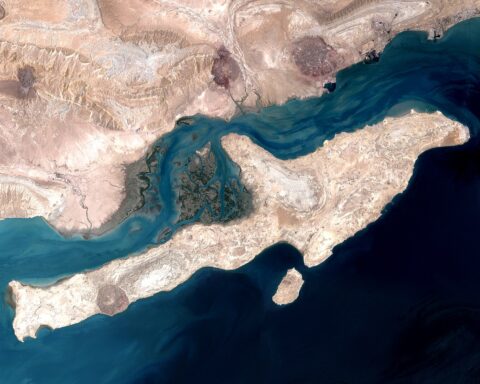
The geography matters more than the cargo. The US blockade of Iranian ports, effective April 13, was designed to choke exports at source — prevent tankers from loading at Kharg Island and the handful of other Iranian terminals that handle the country’s crude. But Lloyd’s List reported that at least 26 Iranian shadow fleet vessels, including 11 oil and gas tankers, bypassed that blockade between April 13 and 20, a figure the Pentagon disputed but Lloyd’s List said it “stands by the veracity” of its intelligence. The blockade, in other words, leaked — and the Indian Ocean interdictions are the US response to that leakage.
The Middle East briefing 3,000+ readers start their day with.
One email. Every weekday morning. Free.
Both the Tifani and the Majestic X were intercepted in the same corridor, between Sri Lanka and Indonesia, more than 2,000 miles from the Persian Gulf. This is not an accident of routing; it is the natural chokepoint for vessels heading from the Middle East to East Asian refineries, and the US is now treating it as a second enforcement line. The first perimeter — the Hormuz blockade — stops vessels from leaving. The second — the Indian Ocean interdiction zone — catches the ones that got through, on the assumption that a VLCC carrying two million barrels of sanctioned crude cannot hide its destination, its draft, or its identity from a navy with satellite coverage and expeditionary sea bases positioned for exactly this mission.
The operational precedent was already established before the war escalated. Between December 2025 and February 2026, the US interdicted nine shadow fleet tankers — vessels that, according to a House Select Committee on CCP report, had collectively delivered 69.3 million barrels of sanctioned Iranian crude to China, valued at approximately $4 billion. Those pre-war seizures were framed as sanctions enforcement; the Indian Ocean interdictions carry the same legal label but operate in a fundamentally different context, one where the US is simultaneously blockading Iranian ports, enforcing a contested ceasefire, and now intercepting cargo in waters governed by a different combatant command.
Why Is Beijing Both Broker and Buyer?
The Majestic X was bound for Zhoushan, China’s primary hub for independent refining — the cluster of Shandong-based “teapot” refineries that operate outside the major state oil companies and have been the dominant buyers of discounted Iranian crude for years. China imported more than 80 per cent of Iran’s shipped oil in the year before the war, and roughly 40 per cent of its total oil imports and 30 per cent of its LNG transit the Strait of Hormuz, according to CSIS and CNBC. Beijing’s exposure to the Hormuz crisis is existential in a way that makes its diplomatic posture — pressing Tehran to reopen the strait while its refiners keep buying the crude that funds Iran’s ability to keep it closed — structurally contradictory.
That contradiction was manageable when the shadow fleet operated without interference. Chinese refiners could buy Iranian crude at steep discounts, Beijing could publicly call for de-escalation, and the two positions never collided in a single news cycle. The Majestic X seizure collapsed that separation. The vessel’s destination was Zhoushan, reported by Fox News and Arab Times, and the cargo was Iranian crude sanctioned under an OFAC designation that predates the war by more than a year — the US is not seizing Chinese-bound oil as a wartime measure but enforcing sanctions that Beijing’s refiners have been violating since well before the first missile was fired.
“Increased military operations and taking targeted blockade action will only exacerbate tensions and undermine the already fragile ceasefire agreement.”
— Guo Jiakun, Chinese MFA spokesman
China’s Ministry of Foreign Affairs called the US moves “dangerous and irresponsible behaviour” that “further jeopardises safety of passage through the strait,” but the statement addressed the blockade in general terms — no Chinese official has publicly commented on the Zhoushan destination of the Majestic X or on what it means that US Navy special operators are now boarding vessels carrying crude destined for Chinese ports. Beijing brokered the Hormuz transit of Qatar’s Al Daayen LNG carrier in early April, a diplomatic intervention that positioned China as the responsible actor keeping energy flowing through the strait, and that framing becomes considerably harder to maintain when the cargo being seized 2,000 miles away was heading for Chinese refineries. Operation Economic Fury’s escalation against Chinese buyers reached its most direct expression on April 25, when Treasury designated Hengli Petrochemical — China’s No. 2 independent refiner at 400,000 bpd — in the largest single Economic Fury round since the campaign began.
Can the Shadow Fleet Survive Open-Ocean Enforcement?
The economics of Iran’s shadow fleet depend on a simple calculation: discounted crude, loaded at sanctioned terminals, carried by aging tankers with fraudulent flags and switched-off transponders, delivered to buyers willing to accept the compliance risk in exchange for prices well below spot. That logistics chain — the shell companies, flag-of-convenience registries, and ship-to-ship transfers designed to obscure origin and ownership — is what the pre-war interdiction campaign, and now the Indian Ocean seizures, are dismantling piece by piece.
The Majestic X’s corporate structure illustrates the pattern: Faith Enterprise Ltd as registered owner, Vision Ship Management LLP as commercial manager, a Guyana flag that Guyana’s own maritime authority says was never issued. OFAC sanctioned the entire Vision Ship Management fleet in December 2024, which means every actor in the chain — owner, manager, flag state — was either fictitious or already designated before the vessel left port. The pre-war interdiction campaign treated these as individual enforcement actions; the Indian Ocean seizures treat them as a systematic blockade-evasion network, and the operational response has scaled accordingly.
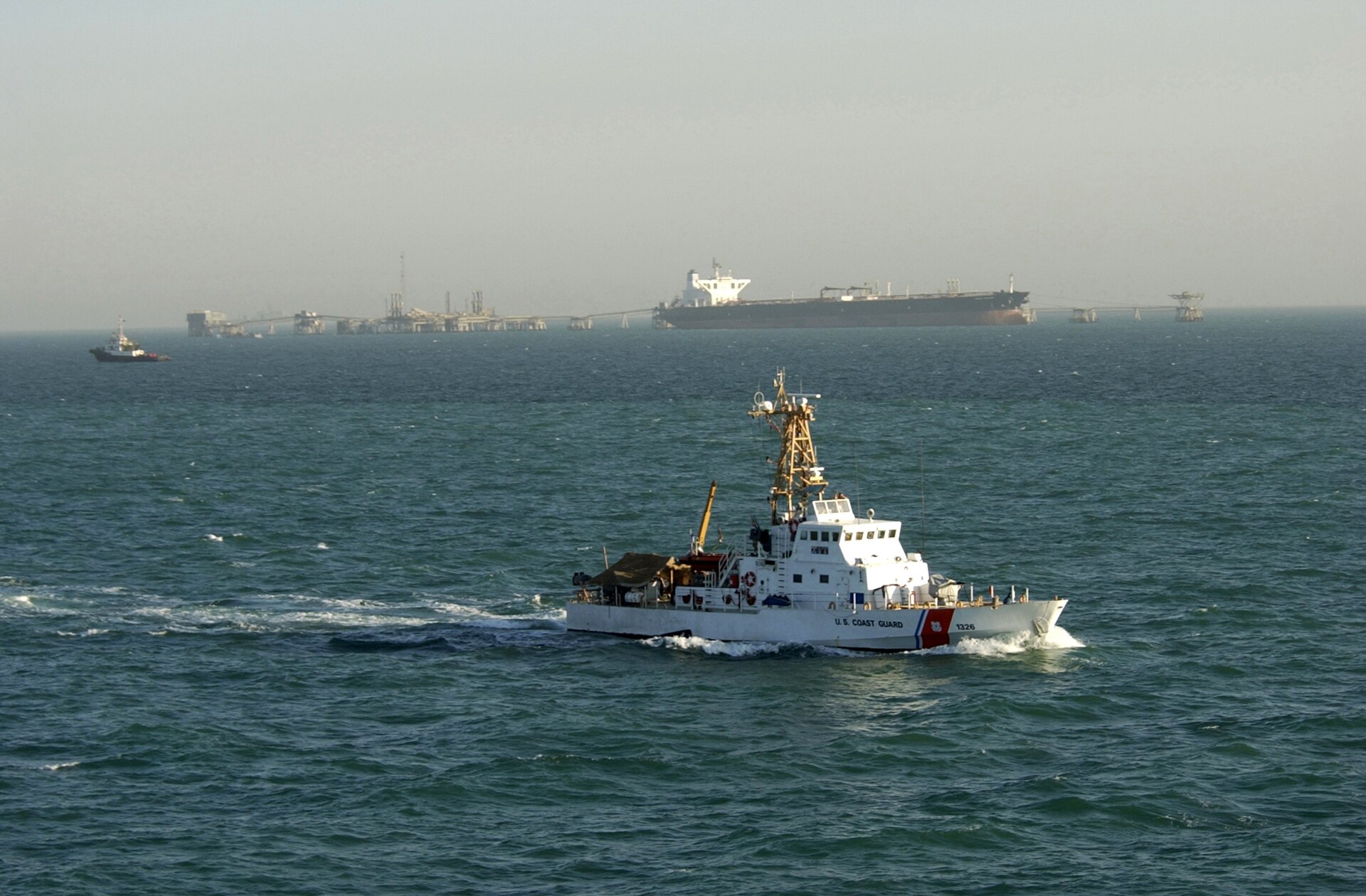
The Lloyd’s List figure — 26 vessels bypassing the blockade in seven days — suggests the shadow fleet is large enough to absorb losses. But a VLCC is not a speedboat; a vessel drawing 20 metres of water and carrying two million barrels does not evade satellite surveillance by turning off its transponder, and the US has now demonstrated that it can intercept these vessels in open ocean, not just at chokepoints. The question for shadow fleet operators is whether the risk-reward calculation — discounted crude minus the growing probability of seizure, crew detention, and vessel forfeiture — still works when the US is patrolling not just the Gulf of Oman but the waters off Sri Lanka.
Iran’s Tit-for-Tat Response
Iran’s reaction to the Indian Ocean seizures has followed a pattern established earlier in the war: rhetorical escalation paired with a physical response that targets vulnerability rather than matching capability. FM Abbas Araghchi called the boardings “an even greater violation” than the blockade itself, telling his Pakistani counterpart that US “actions, rhetoric and contradictions were signs of bad intentions and lack of seriousness in diplomacy,” according to PressTV. Iran’s joint military command labelled the Tifani and Touska boardings “acts of piracy” and “ceasefire violations,” while a senior Iranian official described them as “piracy at sea and state terrorism.”
The physical response came on April 22, when the IRGC seized two MSC-operated container ships — the MSC Francesca and the Epaminondas — in the Strait of Hormuz, taking both vessels to Bandar Abbas with approximately 40 crew members aboard. The IRGC Navy’s official statement claimed both vessels “had endangered maritime security by operating without the required authorization and by tampering with navigation systems,” the same permit-and-authorization framework that Tehran has been trying to impose on Hormuz transit since early in the conflict, and which has generated zero revenue in 36 days of attempted enforcement. The seizure of MSC ships — Mediterranean Shipping Company is the world’s largest container line — is a deliberate escalation in target selection, moving from Iranian-linked vessels to major commercial carriers.
The asymmetry is clear: the US seizes sanctioned, stateless tankers in open ocean under established legal authority; Iran seizes commercial container ships in a strait it claims to manage, under a toll regime that no international body recognises. Michael O’Hanlon of the Brookings Institution framed the US position by noting that “we agreed to stop dropping bombs on them, and that’s the basic thing they wanted,” arguing that the blockade and interdictions do not violate the ceasefire because they are economic rather than kinetic measures — a distinction that Araghchi and Iran’s military command explicitly reject. The Atlantic Council’s assessment was more equivocal, noting that the US tactics “blur the lines between economic warfare and old-fashioned gunboat diplomacy” and amount to “combatting maritime rule violations with means that were themselves not fully compliant with maritime rules.”
From Blockade to Open Ocean
The escalation sequence compresses into 11 days. On April 13, the US blockade of Iranian ports took effect; on April 16, terms were widened to classify Iranian crude and petroleum products as contraband. On April 19, OFAC’s General License U — the waiver that had allowed Indian refiners to purchase Iranian crude — expired without renewal, closing the last legal pathway for Iranian oil to reach a major buyer. The Touska was seized in the Gulf of Oman on April 20, the Tifani in the Indian Ocean on April 21, the MSC Francesca and Epaminondas were taken by the IRGC in Hormuz on April 22, and the Majestic X was boarded in the Indian Ocean on April 23.
| Date | Event | Location | Actor |
|---|---|---|---|
| April 13 | US blockade of Iranian ports begins | Persian Gulf | US Navy / CENTCOM |
| April 16 | Blockade terms widened to include Iranian crude as contraband | — | US / Lloyd’s List |
| April 19 | OFAC General License U expires, not renewed | — | US Treasury |
| April 20 | M/T Touska seized (Iranian-flagged cargo ship) | Gulf of Oman | US Navy (USS Spruance) |
| April 21 | M/T Tifani seized (VLCC, ~2M barrels) | Indian Ocean (Sri Lanka–Indonesia corridor) | US Navy / INDOPACOM |
| April 22 | MSC Francesca + Epaminondas seized (~40 crew) | Strait of Hormuz → Bandar Abbas | IRGC Navy |
| April 23 | M/T Majestic X seized (VLCC, ~2M barrels) | Indian Ocean (Sri Lanka–Indonesia corridor) | US Navy / INDOPACOM |
What the timeline reveals is a ratchet mechanism. Each step — blockade, contraband designation, waiver expiry, chokepoint seizure, open-ocean interdiction — closes a pathway that Iranian oil was using to reach market. The Lloyd’s List data suggests the ratchet is not yet tight enough; 26 vessels slipping through in a week means the shadow fleet still has routes and the global crude market still has buyers willing to accept the risk. But the Indian Ocean seizures represent a qualitative shift — from contesting Iran’s ability to load oil to contesting its ability to deliver it, anywhere, to anyone, regardless of how far from Hormuz the handoff occurs.
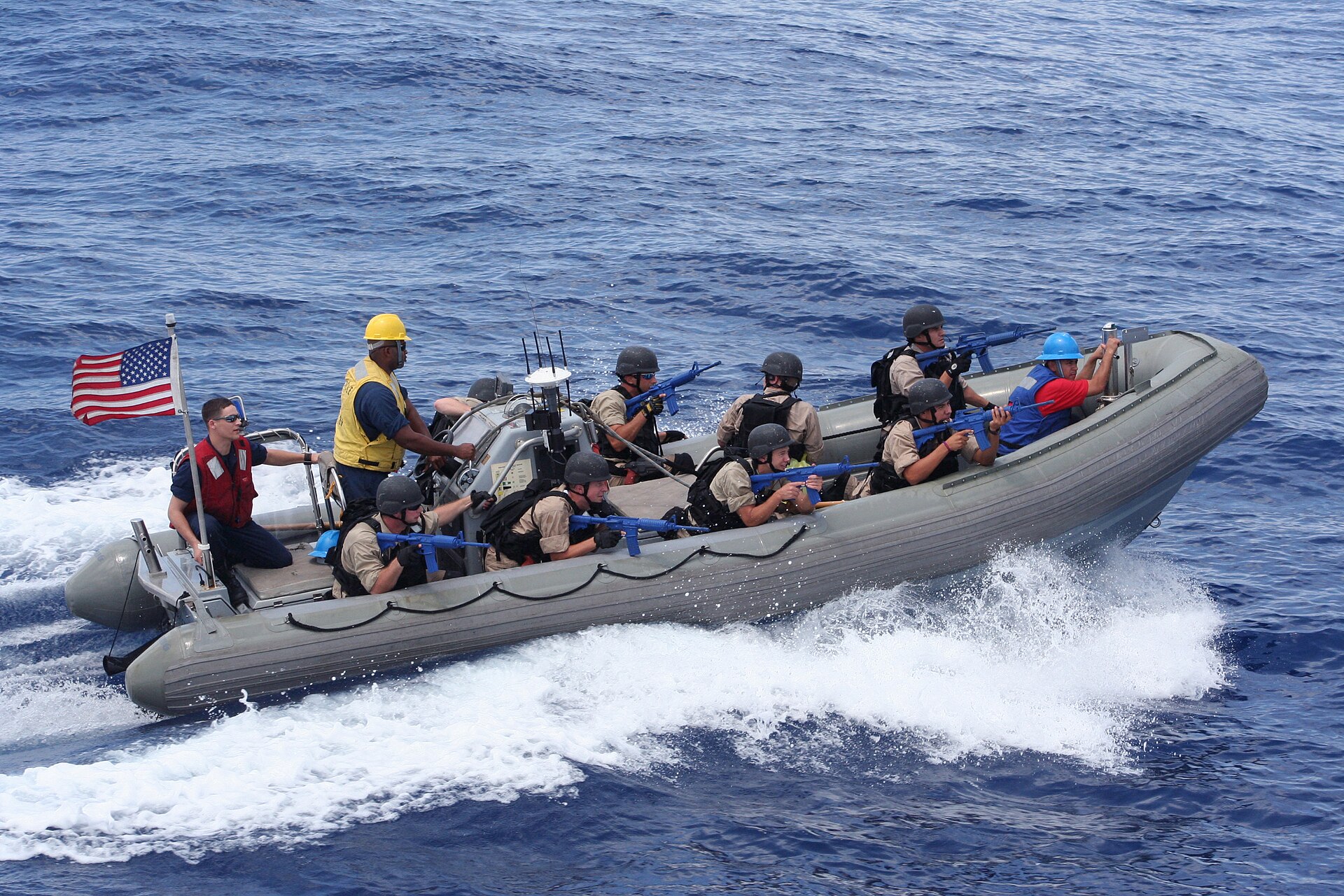
The two million barrels aboard the Majestic X — enough crude to supply a mid-sized refinery for several days, valued at roughly $180 million at current Brent prices — will not reach Zhoushan, and neither will the two million aboard the Tifani. Together with the pre-war seizures documented by the House Select Committee, the US has now demonstrated the capability and the willingness to intercept Iranian crude at every stage of its journey, from the loading terminal to the open ocean, and the political intent to do so even when the destination is a port in the country that both sides need at the negotiating table. The full strategic context of Hegseth’s “growing and going global” declaration — including the doctrinal shift from chokepoint denial to open-ocean supply-chain disruption — is examined in The Blockade Goes Global: US Seizes Two Iranian Dark-Fleet Tankers in the Indo-Pacific.
FAQ
What legal authority does the US use to board vessels in the Indian Ocean?
For stateless vessels like the Majestic X and Tifani — ships flying fraudulent flags with no legitimate registry — the US invokes the “right of visit” under customary international law and UNCLOS Article 110, which permits any warship to board a vessel on the high seas that is reasonably suspected of being without nationality. This is a lower legal threshold than boarding a flagged vessel, which requires flag-state consent or a UN Security Council resolution. The distinction matters because Iran’s response — seizing MSC-flagged commercial vessels in Hormuz — operates under a different and far more contested legal framework, one that no international maritime body has endorsed.
How many barrels of Iranian crude has the US seized since the war began?
The Tifani and Majestic X together carried approximately four million barrels, each being a VLCC-class vessel. Combined with the nine pre-war interdictions between December 2025 and February 2026, which covered 69.3 million barrels according to the House Select Committee on CCP, the total volume removed from Iran’s export pipeline since December 2025 exceeds 73 million barrels — though the pre-war seizures occurred under sanctions enforcement rather than the wartime blockade. The pace of interdictions has accelerated sharply: it took three months to reach 69.3 million barrels before the war; the most recent four million were removed in 72 hours.
What happens to seized vessels and their crews?
US practice in previous shadow fleet interdictions has been to divert seized vessels to friendly ports — typically in the Gulf region — where the cargo is offloaded and the vessel detained pending legal proceedings. Crew members, who are often from South or Southeast Asian countries and may have limited knowledge of the cargo’s sanctioned status, are generally processed separately from the vessel’s corporate operators. The Majestic X’s crew status has not been publicly disclosed by the US military as of April 23.
Has China responded to the Zhoushan destination being made public?
Not specifically. China’s MFA statement addressed the broader US blockade in general terms, but no Chinese official has commented on the Zhoushan destination or addressed what it means for Chinese refiners who were expecting the cargo. The silence is notable given that China has simultaneously positioned itself as the Hormuz crisis’s chief diplomatic broker: a country that cannot publicly acknowledge its refiners were the named end-buyers of seized cargo is constrained in ways that will show up at the negotiating table, regardless of what its diplomats say in public.
Does the ceasefire prohibit these interdictions?
The ceasefire’s terms have not been fully published, but the US position, articulated by Brookings’ Michael O’Hanlon, is that the agreement covers kinetic military operations — “we agreed to stop dropping bombs on them” — and does not extend to economic enforcement measures like the blockade or sanctions interdictions. Iran categorically rejects this interpretation; Araghchi has called the blockade “an act of war” and the vessel seizures a “greater violation” than the blockade itself. The Atlantic Council has noted that the distinction between economic warfare and military action “blurs” in practice, particularly when the enforcement involves special operations forces boarding vessels from military platforms.