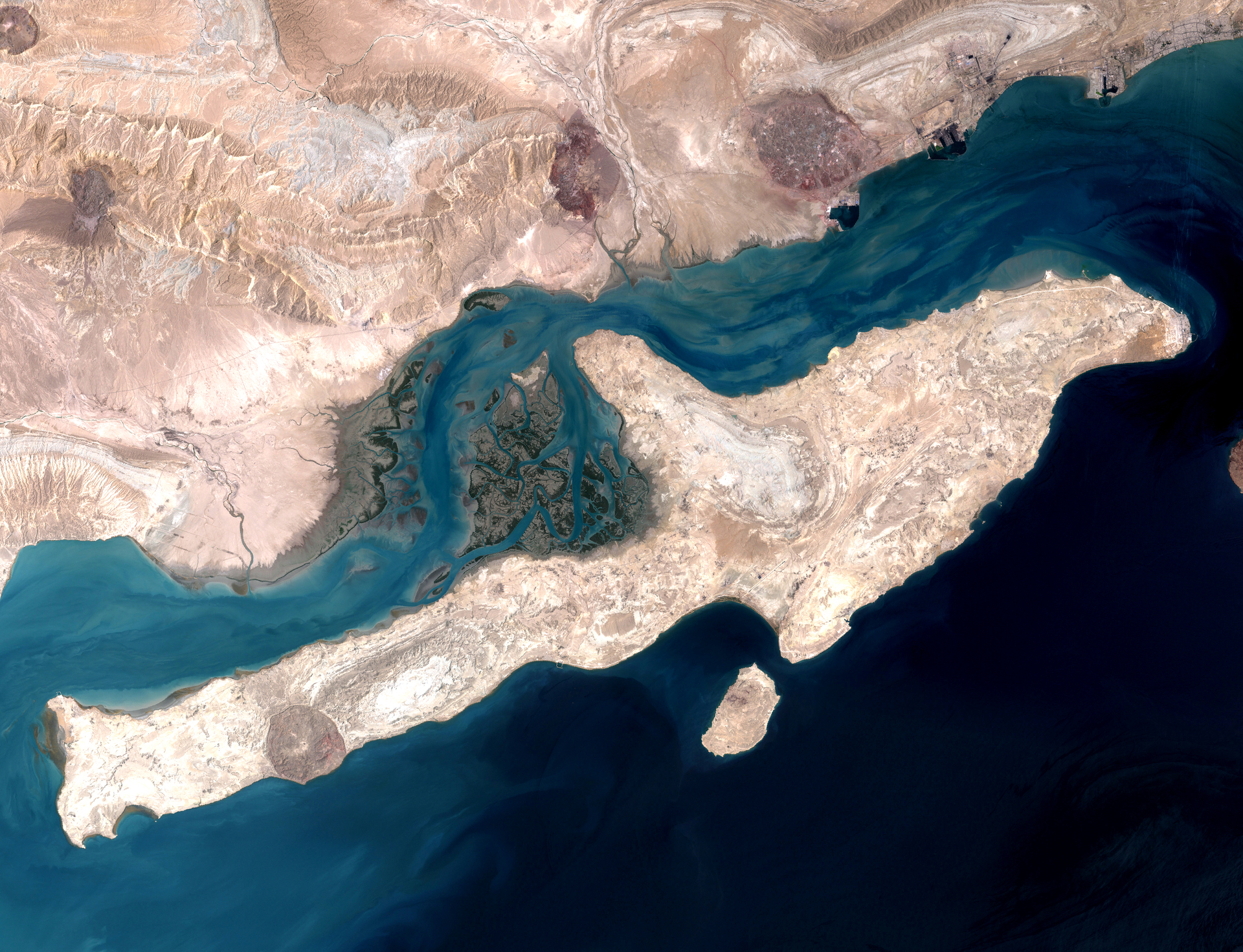
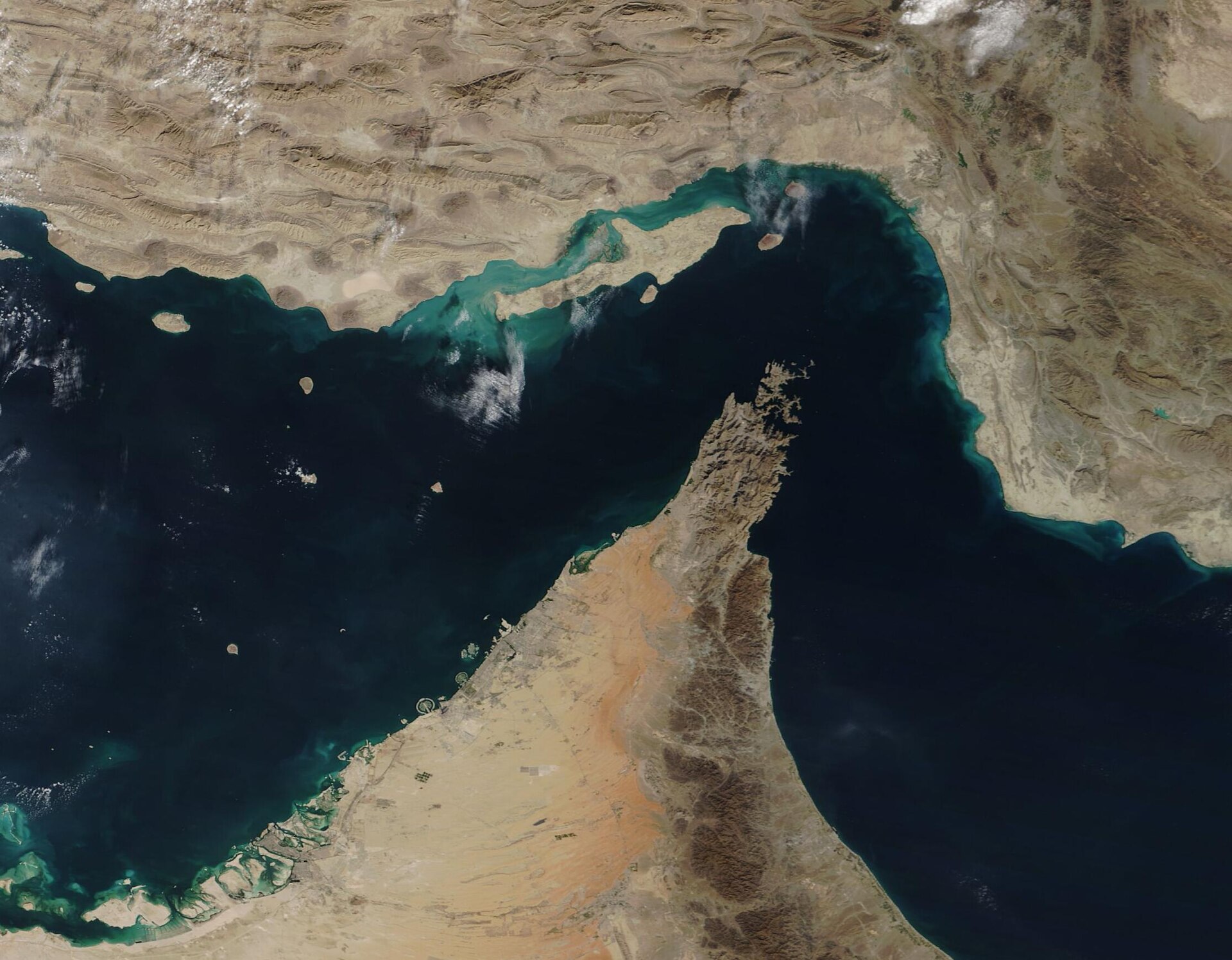
WASHINGTON — Defense Secretary Pete Hegseth declared April 24 that the US naval blockade of Iran is “only growing and going global,” announcing the seizure of two dark-fleet oil tankers in the Indo-Pacific — more than 2,000 miles from the Persian Gulf — in what amounts to a second enforcement front operating under an entirely different legal and diplomatic logic than the Hormuz chokepoint blockade declared April 13.
The seizures of the M/T Tifani in the Bay of Bengal on April 21 and the M/T Majestic X in the Indian Ocean between Sri Lanka and Indonesia on April 23 — both bound for Zhoushan, China — extend US interdiction authority into waters policed by INDOPACOM, not CENTCOM. Combined with the boarding of the Iranian-flagged container ship M/V Touska near Hormuz on April 19, they represent three vessel seizures in five days and a doctrinal shift from chokepoint denial to global supply-chain disruption. The timing is not incidental: OFAC General License U expired without renewal at 12:01 AM EDT on April 19, closing the last managed-exit pathway for buyers of Iranian crude.
Three Ships in Five Days
Gen. Dan Caine, Chairman of the Joint Chiefs, framed the operations as the beginning of a sustained campaign. “We will continue to conduct similar maritime interdiction actions and activities in the Pacific and Indian Oceans against Iranian ships and vessels of the dark fleet,” he said at a press conference on April 23. Hegseth, speaking the following day, was more direct about the two tankers that had loaded Iranian crude before the blockade began: “They did not make it out in time. We seized their sanctioned ships, and we will seize more.”
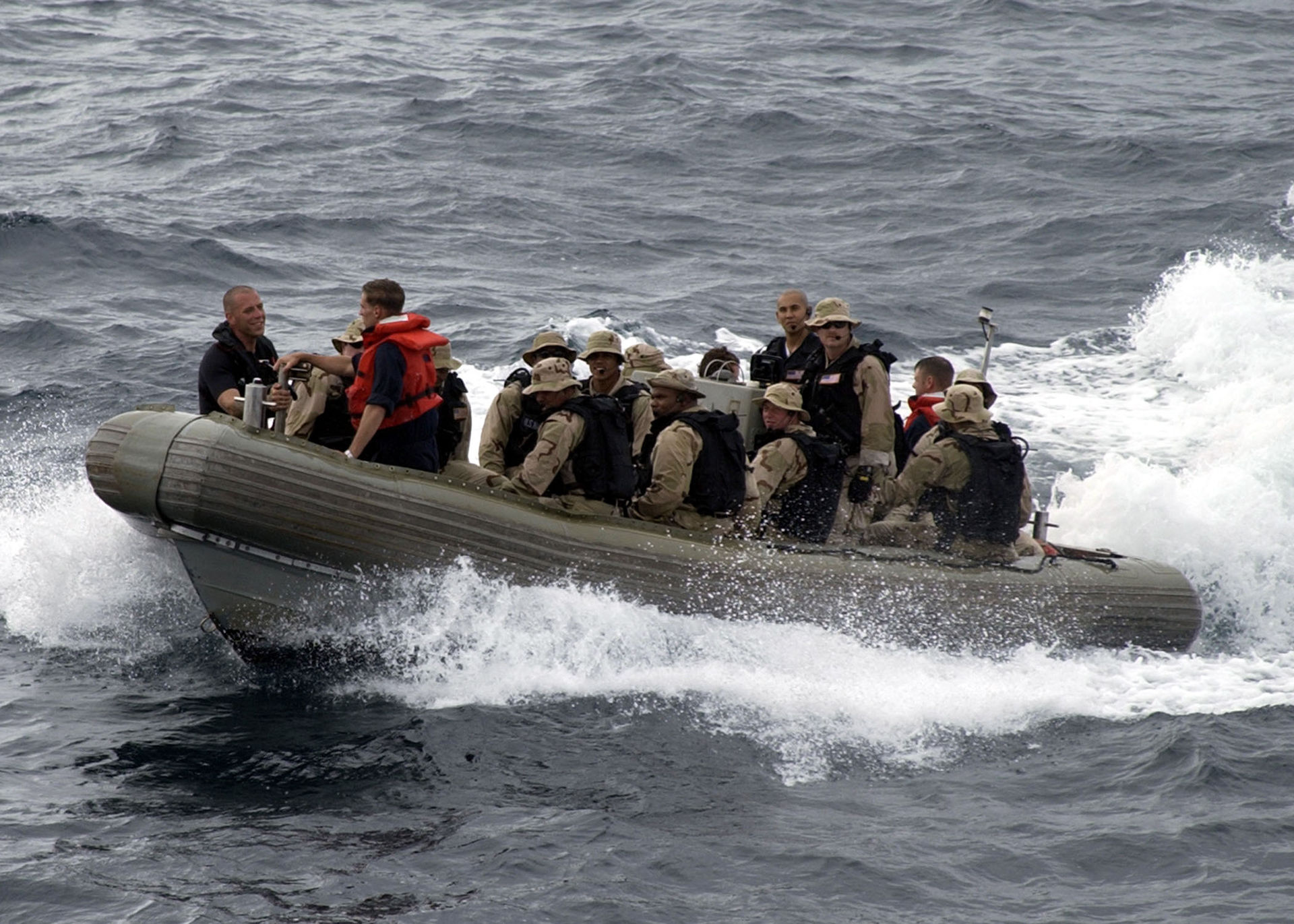
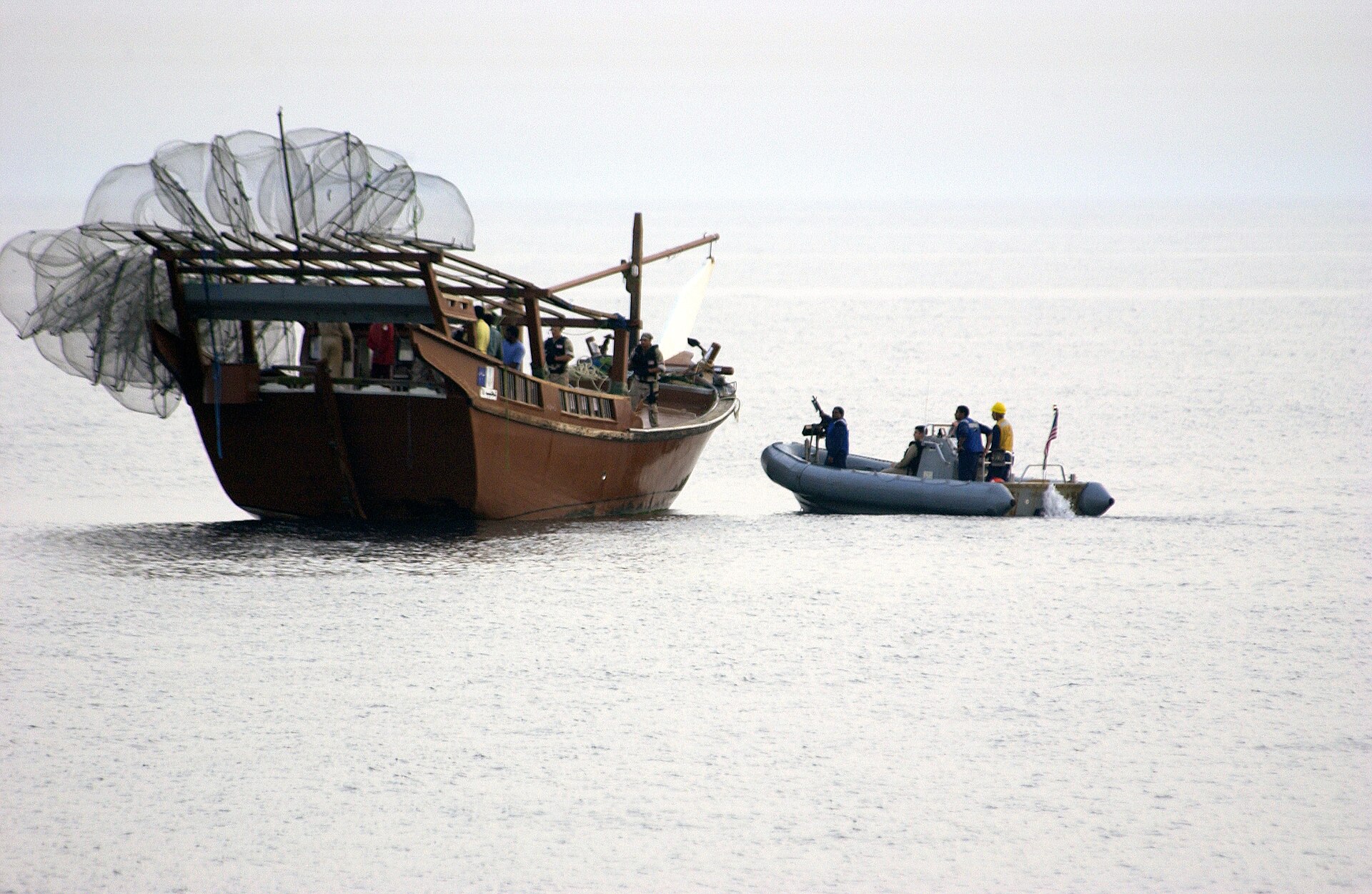
The three seizures followed a compressed timeline. The M/V Touska, a 294-metre Iranian-flagged container ship — the first non-military Iranian vessel hit in the war — was boarded near Hormuz on April 19 after a six-hour standoff in which the USS Spruance fired on it before Marines of the 31st MEU took the ship, according to USNI News. Two days later, US forces in the Bay of Bengal boarded the Tifani, a stateless crude carrier that had loaded approximately two million barrels at Kharg Island on April 6. On April 23, the Majestic X — formerly named Phonix, sanctioned by US Treasury in 2024 for Iranian crude smuggling, fraudulently flying a Guyana flag that Guyana confirmed it had never issued — was taken in the Indian Ocean.
USNAVCENT had already declared that “all Iranian vessels with OFAC sanctions, and vessels suspected of carrying contraband, are subject to belligerent right to visit and search regardless of location.” That language — “regardless of location” — is the doctrinal backbone. It detaches enforcement from geography.
The Middle East briefing 3,000+ readers start their day with.
One email. Every weekday morning. Free.
What Is the Dark Fleet — and Why Can’t a Ceasefire Touch It?
Iran’s shadow tanker network was built systematically after Washington reimposed maximum-pressure sanctions in May 2019. Over six years it evolved into a routinised parallel supply chain: approximately 503 vessels, 62 percent falsely flagged, 87 percent already on the OFAC Specially Designated Nationals list, with ownership chains running through Marshall Islands, Hong Kong, mainland China, and Panama. Standard evasion methods include ship-to-ship transfers at sea — Malaysia’s Eastern Outer Port Limit and the Singapore Strait were key nodes — along with falsified documentation, cargo rebranding, and GNSS spoofing. The Tifani had appeared at the Malaysian EOPL for STS transfers before its final leg toward Zhoushan.
By October 2025, fleet utilisation had risen from 43 percent in 2022 to 58 percent, with the tracking firm Vortexa noting “nearly every deployable vessel now active.” Vortexa estimated oil-on-water volumes climbed from roughly 110 million barrels to 200 million barrels over that period. The infrastructure was not improvised. It was industrial.
The distinction that matters now is jurisdictional. The Hormuz blockade is a kinetic chokepoint action — in theory, suspendable by ceasefire. The dark-fleet interdiction operates under OFAC executive authority: secondary sanctions, SDN-list enforcement, and right-of-visit on sanctioned stateless vessels. There is no off-switch in ceasefire language for this. Iran cannot negotiate the OFAC list at Islamabad. That list is a US Treasury instrument requiring executive action entirely outside the diplomatic track that Foreign Minister Abbas Araghchi and Pakistan’s mediators have been labouring over since early April. Araghchi can accept a ceasefire at Hormuz. He cannot make the SDN list disappear.
The Tifani and Majestic X: Anatomy of Two Seizures
The Tifani (IMO 9273337) is a stateless crude oil tanker capable of carrying roughly two million barrels. It loaded at Kharg Island on April 6 — a week before the blockade began — and was intercepted in the Bay of Bengal on April 21. At prevailing Brent prices of $103–106 per barrel on April 23–24, the cargo’s value was approximately $206–212 million. A single ship, a single load, a quarter-billion-dollar loss.
The Majestic X has a longer paper trail. Formerly named Phonix, it was sanctioned by the Treasury in 2024 specifically for Iranian crude smuggling. It was flying a Guyana flag that Georgetown confirmed belonged to no vessel in its registry — a textbook false-flag operation of the kind that sustains the dark fleet’s operating model. It was boarded on April 23 in the Indian Ocean between Sri Lanka and Indonesia, also bound for Zhoushan. Both ships were heading to the same Chinese port complex, the hub of Shandong province’s independent refineries — the “teapots” that have processed roughly 90 percent of China’s Iranian crude intake.
Shandong Port Group had already announced in January 2025 that it would no longer allow US-sanctioned vessels to dock, beginning a structural squeeze that predated the war. The seizures now enforce from the supply side what Shandong’s policy began from the demand side.
The Revenue Extinction Arithmetic
Iran exported 35.7 million barrels of crude in March 2026, averaging 1.136 million barrels per day — a 45 percent volume drop from February, according to United Against Nuclear Iran’s tanker tracking data. Estimated revenue was $3.63 billion for the month. That figure already reflected wartime compression. In the first eight months of the current Iranian fiscal year, Iran’s parliament Budget Commission reported actual oil income of only $20 billion — well below the nominal value of recorded shipments — indicating persistent discount losses running at $11–12 per barrel below benchmark, up from roughly $3 per barrel before the war.
| Metric | Value | Source |
|---|---|---|
| March 2026 exports | 1.136M bpd / 35.7M barrels | UANI Tanker Tracker |
| March 2026 est. revenue | $3.63 billion | UANI |
| Effective discount to benchmark | $11–12/barrel | Iran International |
| Fiscal year oil income (8 months) | $20 billion actual | Iran Parliament Budget Commission |
| Dark fleet size | ~503 vessels | Kpler / Windward.ai |
| OFAC-sanctioned share of fleet | 87% | Kpler |
| China share of Iran exports | ~91% | CRS / Vortexa |
| IMF 2026 GDP forecast | −6.1% | IMF / CNBC |
| IMF 2026 inflation forecast | 68.9% | IMF / CNBC |
The table shows a country whose oil income was already degrading before the global interdiction doctrine took effect. Oxford Economics estimates the blockade could cut 70 percent of Iran’s export revenues. The Foundation for Defense of Democracies, in an April 23 assessment titled “Evaluating the Economic Damage to Iran From Operation Epic Fury,” estimated that Iran had exported oil at roughly pre-war volumes and elevated wartime prices between the war’s start and the April 13 blockade — but that the blockade “will cut subsequent exports substantially for at least the next six months.” The IMF projects Iran’s economy will contract 6.1 percent in 2026, with inflation reaching 68.9 percent.
What the dark-fleet seizures add is a second enforcement layer that operates independently of any Hormuz ceasefire. Even if the strait reopened tomorrow, every OFAC-sanctioned tanker transiting the Indian Ocean or Bay of Bengal would remain subject to interdiction. Iran’s Hormuz toll scheme has already collected zero revenue in 36 days. The dark fleet was the actual revenue mechanism. Now it is under fire from both ends.
Does Beijing Intervene or Absorb the Loss?
Both seized tankers were bound for Zhoushan. China accounted for approximately 91 percent of Iran’s crude exports by early 2026, averaging 1.5 million barrels per day before the war began, with Shandong’s independent refineries processing the overwhelming majority. Chinese discharges had already dipped to 1.13–1.20 million bpd in January and February, according to Kpler and Vortexa tracking data. Five Shandong teapots stopped taking Iranian crude in April. The seizures in INDOPACOM-patrolled waters force Beijing to confront a question it had been avoiding: whether to contest US enforcement of sanctions on vessels that are stateless, falsely flagged, or already designated by Treasury.
Chinese Foreign Ministry spokesperson Guo Jiakun’s response was calibrated ambiguity. “We hope all relevant parties will adopt a responsible attitude, abide by the ceasefire agreement, avoid escalating tensions or intensifying contradictions,” he said — neither condemning the seizures outright nor endorsing Iran’s characterisation of them as piracy. CNN’s analysis noted that Chinese state media took a “responsible restraint” posture reflecting Beijing’s bind as a major buyer of Iranian crude now facing enforcement in its own operational waters.
Russia and China had vetoed a UN Security Council resolution on April 7 aimed at protecting commercial shipping in the Strait of Hormuz — 11 of 15 members voted in favour. That veto exhausted the multilateral legal avenue for objecting to US enforcement. It also created a precedent problem: having blocked the international framework for managing Hormuz, Beijing now has limited standing to invoke international law against US interdiction of sanctioned vessels on the high seas.
Operation Economic Fury — the financial enforcement arm of the broader Operation Epic Fury — had already sent warning letters to Chinese banks, as well as financial institutions in the UAE, Hong Kong, and Oman, threatening secondary sanctions. The Tifani and Majestic X seizures convert those warnings from paper to physical interdiction. That escalation culminated on April 25 with Washington’s designation of Hengli Petrochemical — China’s second-largest independent refiner at 400,000 barrels per day and a Fortune Global 500 company — the first Chinese firm of that scale named under Operation Economic Fury.
Tehran’s Response: Piracy Claims and Retaliatory Seizures
Iran labelled all three vessel seizures “piracy at sea and state terrorism,” with the Foreign Ministry filing formal complaints and state television broadcasting extended coverage. Khatam al-Anbiya, Iran’s joint military command, issued a direct warning on April 22: “We warn that the armed forces of the Islamic Republic of Iran will soon respond and retaliate against this armed piracy by the US military.”
Araghchi framed the seizures as a ceasefire violation, telling NBC News that “striking a commercial vessel and taking its crew hostage is an even greater violation” of the ceasefire framework. That framing serves a dual purpose: it delays re-engagement with US peace talks and shifts the narrative from sanctions enforcement — where the legal ground favours Washington — to laws of armed conflict, where Iran can invoke the ceasefire text.
The retaliation has already begun at the tactical level. On April 22, Iran seized two foreign commercial vessels in the Strait of Hormuz — a response that, whatever its symbolic value, reinforces rather than undermines the US case for extended interdiction. One of those vessels, the MSC Francesca, was not a random selection: the Aponte family that owns MSC has direct personal access to both Trump and Macron, making the seizure an intelligence-informed act of coercive diplomacy targeting the two Western leaders whose political cooperation is structurally necessary for any ceasefire resolution. Each Iranian retaliatory seizure provides additional justification for the “regardless of location” doctrine. Iranian state media outlets Tasnim and Fars framed the Tifani and Majestic X seizures as evidence of US aggression “beyond the battlefield,” but the legal distinction between a sanctioned stateless vessel and a commercial ship transiting international waters under a legitimate flag is one that Tehran’s rhetoric consistently elides.
The IRGC Navy’s “full authority” declaration over Hormuz — issued while the strait’s commander position remained vacant after Tangsiri’s death on March 30 — had already undermined Iran’s claim to be managing the waterway as a responsible coastal state. The retaliatory seizures compound the problem. Iran is simultaneously claiming Hormuz is under its lawful management and using it as a venue for hostage-taking in response to US sanctions enforcement thousands of miles away.
Background
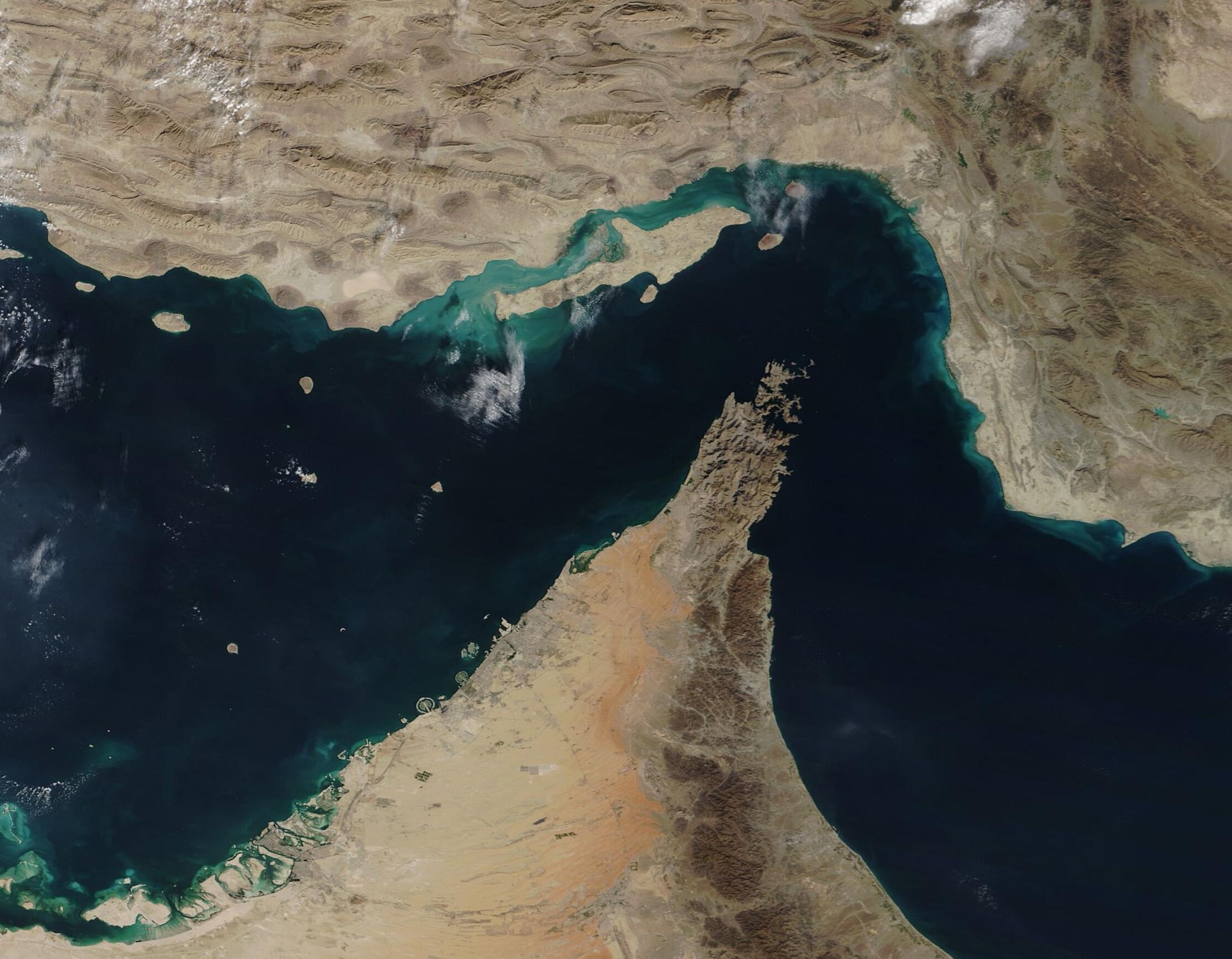
The US naval blockade of Iranian ports and toll-collecting vessels took effect on April 13 under CENTCOM authority, targeting Hormuz transit specifically. OFAC General License U — a 30-day authorisation issued March 20 that applied only to named Indian buyers (IOC, BPCL, HPCL, Reliance) — expired April 19 without renewal, while Russia’s GL 134A was quietly extended on April 18, creating a deliberate asymmetry in which Russia retained continued access and Iran did not. The selective-exemption architecture Iran had built around Hormuz — permitting certain transits while charging others — had already failed to collect a dollar in 36 days of operation.
The ceasefire framework negotiated through Pakistan expired April 22, with no extension mechanism identified by the Soufan Center or other monitoring bodies. The Indo-Pacific seizures introduce a variable that ceasefire negotiators at Islamabad have no mandate to address: OFAC designations are a US executive instrument, not a term subject to bilateral or multilateral diplomacy.
FAQ
What legal authority does the US claim for seizing vessels thousands of miles from the war zone?
USNAVCENT invoked “belligerent right to visit and search” — a wartime authority under international law that permits boarding vessels suspected of carrying contraband or operating in violation of sanctions, regardless of their location on the high seas. The Tifani was stateless (no legitimate flag state), and the Majestic X was flying a fraudulent Guyana flag, which under UNCLOS effectively renders a vessel stateless and strips it of flag-state protection. Both were already on the OFAC SDN list, giving the US a parallel domestic legal basis independent of the belligerent-rights claim.
How many dark-fleet vessels remain operational, and can Iran replace seized ships?
Kpler and Windward.ai estimate approximately 503 vessels in the Iranian shadow fleet as of early 2026. However, fleet replacement is constrained by three factors: acquisition of aging tankers has become more difficult as sellers face secondary-sanctions risk; insurance and classification societies have withdrawn coverage from sanctioned vessels; and the Shandong Port Group’s January 2025 decision to bar sanctioned ships from docking reduced the number of viable discharge ports. Vortexa assessed fleet utilisation at 58 percent by October 2025 — high enough that sustained attrition from seizures would reduce operational capacity faster than Iran could replenish it.
What happens to the seized cargo and crews?
Previous US seizures of Iranian crude — including the 2023 seizure of the M/T Suez Rajan’s cargo of roughly one million barrels — resulted in the oil being transferred to US-controlled storage and eventually sold, with proceeds held or allocated under sanctions-enforcement authorities. Crews on flagless or falsely flagged vessels occupy a legal grey zone: they are typically detained briefly, interviewed, and released to their flag state — except that stateless vessels have no flag state to receive them. The Tifani’s crew status has not been publicly disclosed. Iran’s characterisation of the crews as “hostages” has no basis in admiralty law but serves Tehran’s narrative strategy.
Could China retaliate economically against the US for seizing ships bound for Chinese ports?
Beijing’s options are constrained by the same April 7 UNSC veto that blocked the Hormuz shipping-protection resolution. Having rejected the multilateral framework, China lacks institutional standing to challenge unilateral US enforcement. More practically, China’s Strategic Petroleum Reserve holds approximately 1.2 billion barrels — 109 days of import cover — giving Beijing a buffer against short-term supply disruption. The five Shandong teapots that stopped taking Iranian crude in April suggest that at the commercial level, Chinese buyers are already pricing in interdiction risk rather than waiting for a diplomatic resolution.
Does the dark-fleet interdiction make a ceasefire more or less likely?
The FDD assessment suggests the economic pressure could accelerate Iranian willingness to negotiate — but only if the entity making concessions has the authority to do so. Iran’s internal authorization problem remains unchanged: President Pezeshkian publicly accused IRGC commanders Vahidi and Abdollahi of wrecking the Islamabad ceasefire process, but under Article 110 of Iran’s constitution, the president has zero authority over the IRGC. The dark-fleet seizures add pressure on the civilian government, which lacks the power to deliver what the pressure demands. Revenue extinction may force a reckoning within Iran’s command structure — but the timeline for that is measured in months, not news cycles. The Hormuz-side counterpart to these Indo-Pacific seizures is the sanctioned VLCC Yuri, which halted inside the IRGC’s Larak corridor on April 24 with two million barrels of Iranian crude — attempting transit at the precise moment the shadow fleet is under maximum interdiction pressure globally. How the Yuri halt fits the broader IRGC-facilitated evasion architecture is analyzed here.