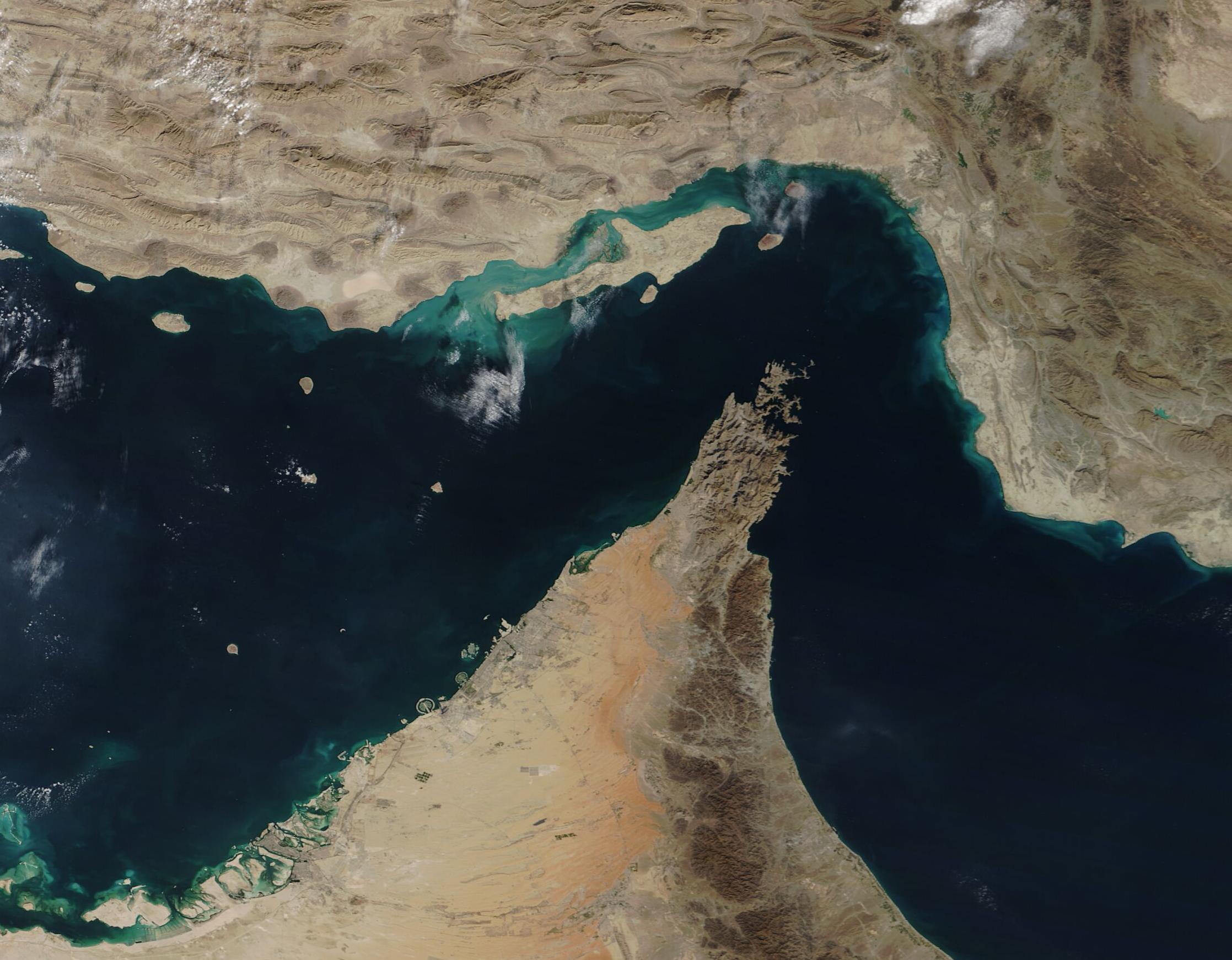
NICOSIA — Saudi Arabia was not in the room when the European Union convened Arab leaders at Cyprus’s Filoxenia Conference Centre on April 24. It did not need to be. The positions Riyadh has spent two months constructing — Lebanon inclusion, Hormuz internationalization, ceasefire enforcement with teeth — were advanced by three separate proxies: the GCC Secretary-General speaking with institutional authority, aligned Arab heads of state reading from compatible scripts, and a Cypriot president who announced he would fly to Riyadh within days to deliver the results in person.
The Nicosia format is not an improvised response to Saudi exclusion from the Islamabad talks Saudi Arabia is excluded from. It is a second track, built on pre-existing EU-GCC institutional infrastructure, through which Riyadh can press demands on Washington that it cannot make directly without triggering a rupture in the defense relationship it depends on for survival.
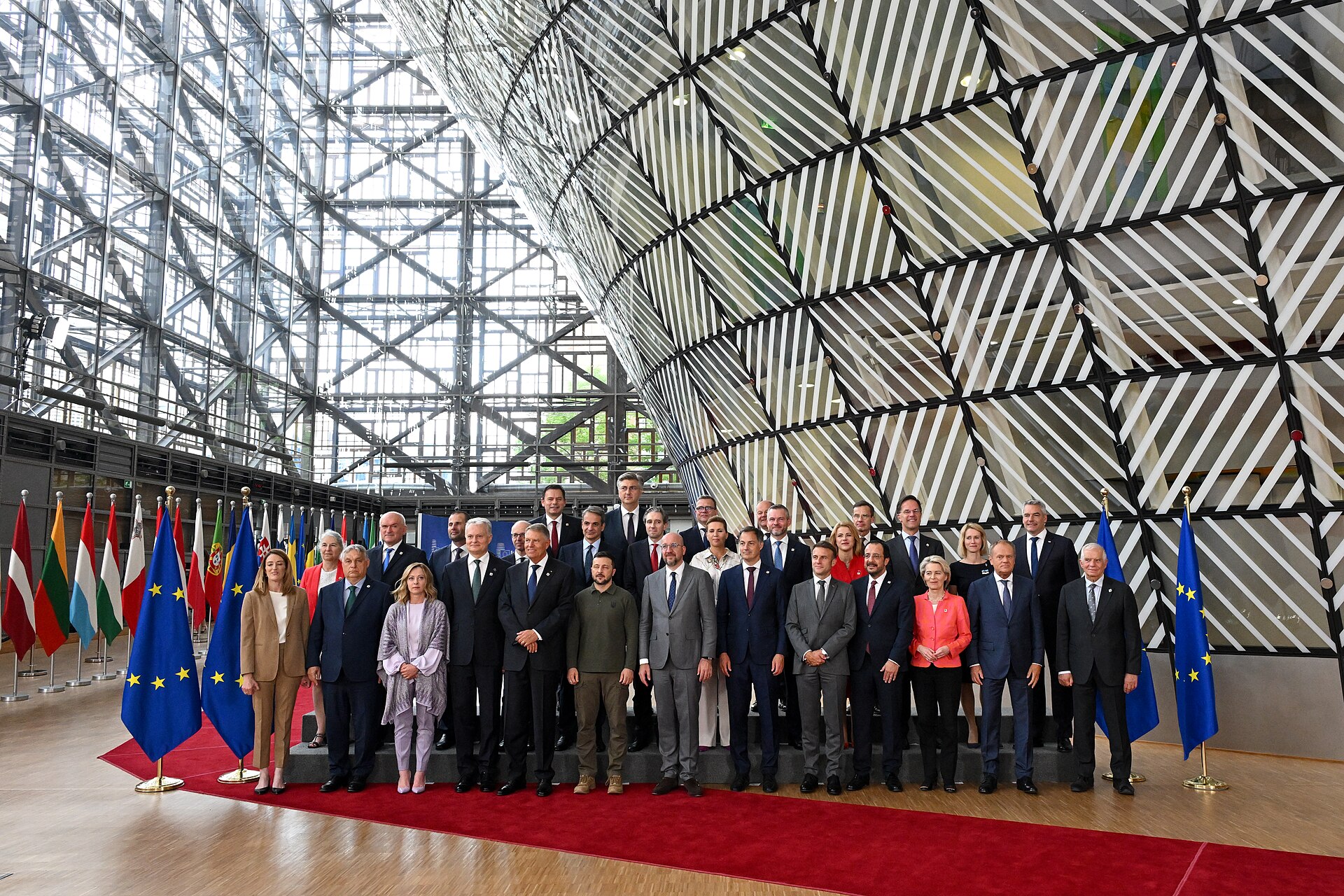
The summit’s composition tells the story: Macron, Merz, Meloni, the European Commission president, the European Council president — and then, across the table, Egypt’s Sisi, Jordan’s King Abdullah II, Lebanon’s Aoun, Syria’s al-Sharaa, and GCC Secretary-General Jasem Albudaiwi. This is Saudi Arabia’s preferred coalition of states that share its interest in a durable, multilateral Hormuz resolution rather than a bilateral US-Iran deal that carves out Gulf interests as collateral.
Table of Contents
- Who Was in the Room — and Who Sent Whom
- Why Did Saudi Arabia Need a Parallel Track?
- The Institutional Plumbing Behind the Summit
- What Did the EU Actually Say About Hormuz?
- Can Operation Aspides Fill the Gulf’s Naval Gap?
- The Lebanon Linkage
- Why Did Iran Ignore the Nicosia Format?
- The Riyadh Pipeline: From Nicosia to the Second EU-GCC Summit
- FAQ
Who Was in the Room — and Who Sent Whom
The April 24 session operated under a format without recent precedent in EU diplomacy: a working lunch embedding Arab heads of state inside a formal European Council gathering, convened under the authority of the rotating EU presidency rather than through normal EU External Action Service channels. Cyprus President Nikos Christodoulides, who also holds the EU Council Presidency through June 2026, used the dual authority to extend invitations that a purely bilateral Cypriot initiative could never have carried.
The Arab participants were Egypt’s President Abdel Fattah el-Sisi, Jordan’s King Abdullah II, Lebanese President Joseph Aoun, Syrian President Ahmad al-Sharaa, and GCC Secretary-General Jasem Mohamed Albudaiwi. No Gulf head of state attended. Saudi Arabia’s Crown Prince Mohammed bin Salman was not present, nor were the leaders of the UAE, Qatar, Kuwait, Bahrain, or Oman.
This absence is the architecture. Under the GCC Charter, the Secretary-General cannot legally bind member states to operational positions without authorization from the Ministerial Council or Supreme Council. Albudaiwi’s presence functions as political signaling — not treaty commitment. Riyadh can endorse positions advanced through the GCC institutional frame without appearing to construct a rival negotiating track to Islamabad, where the US and Iran are conducting direct talks from which Saudi Arabia has been structurally excluded since the process began.
The Middle East briefing 3,000+ readers start their day with.
One email. Every weekday morning. Free.
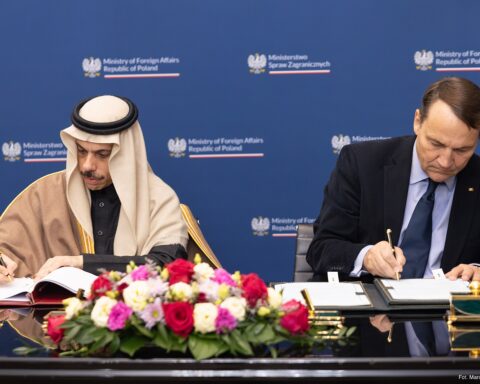
The contrast with Islamabad is structural. At the Pakistan-mediated talks, the participants are the United States and Iran, with Pakistan as mediator and enforcer. Saudi Arabia has no seat. Its Foreign Minister, Prince Faisal bin Farhan, called Iranian FM Abbas Araghchi on April 13 — the day the US blockade was announced — but this was a parallel bilateral channel, not a seat at the table where terms are written. At Nicosia, every country in the room shares Riyadh’s core interests: Hormuz reopening, Lebanon stabilization, and a ceasefire framework that Gulf states can monitor rather than merely absorb.
Why Did Saudi Arabia Need a Parallel Track?
Saudi Arabia’s problem is structural, not tactical. The kingdom’s defense architecture depends on the United States — PAC-3 interceptors, THAAD batteries, intelligence sharing, the entire Fifth Fleet footprint in Bahrain. But the US-Iran negotiating framework at Islamabad treats Gulf security as a derivative of the bilateral relationship rather than a primary concern. The 45-day ceasefire framework leaked by Axios in early April deferred Hormuz and enrichment to Phase 2 — making the issue most existential to Saudi Arabia a bargaining chip in a deal Riyadh cannot influence.
Pressing Washington directly on this creates a contradiction. Saudi Arabia cannot demand that the US prioritize Gulf interests over a potential nuclear deal without appearing to obstruct the diplomacy its own security depends on. The kingdom needs a channel through which its positions arrive in Washington attributed to a multilateral consensus rather than a Saudi bilateral demand. The domestic Saudi strategy behind this architecture — near-daily ambassador contact with Iran’s Enayati in Riyadh, two FM-level calls with Araghchi in five days, and the MBS-Xi Jinping call that activated Beijing as a pressure vector on both Tehran and Washington — is examined in full in Saudi Arabia Is Not Sitting Out the Iran War — It’s Negotiating a Separate Peace.
The EU provides that channel. When European Council President António Costa declared at Nicosia that “the Strait of Hormuz must immediately reopen without restrictions and without tolling, in full respect of international law and the principle of freedom of navigation,” he was articulating a position identical to Saudi Arabia’s — but with European institutional authority behind it. When von der Leyen linked Lebanon explicitly to Gulf stability, she was carrying a demand that Saudi Arabia has pursued through every available diplomatic channel since the war began.
The Chatham House framing from March 2025 — that “Saudi Arabia’s goals rest on managing multipolarity” — describes exactly this maneuver. Riyadh is not choosing the EU over the US. It is building a concurrent institutional relationship that generates pressure on Washington from a direction the White House cannot dismiss as Gulf self-interest.
The Institutional Plumbing Behind the Summit
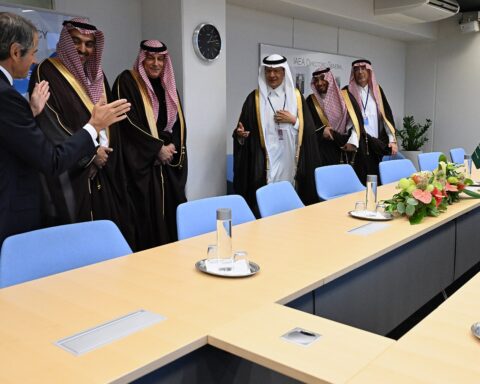
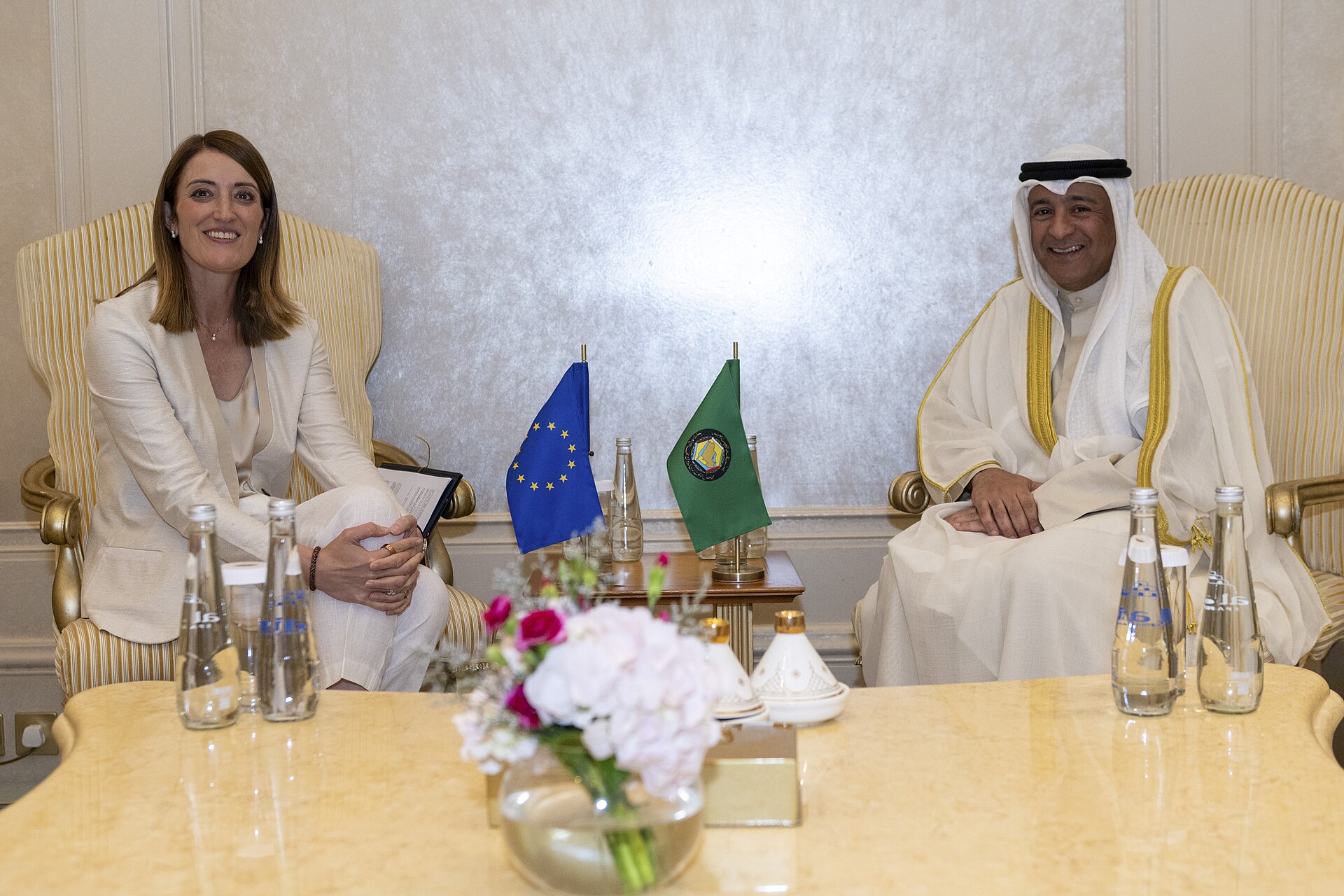
Nicosia did not emerge from improvisation. It sits atop an institutional track that has been under construction since at least October 2024, when the first-ever EU-GCC Summit in Brussels produced a 57-point joint statement and committed both sides to biennial summits. The second summit is confirmed for Riyadh in 2026 — Saudi Arabia as host.
The escalation sequence is precise:
| Date | Event | Significance |
|---|---|---|
| October 16, 2024 | First EU-GCC Summit, Brussels | 57-point joint statement; biennial summit format established |
| October 6, 2025 | 29th GCC-EU Joint Council and Ministerial Meeting | Reaffirmed strategic partnership; confirmed Riyadh 2026 summit |
| February 1, 2026 | GCC SG Albudaiwi mandate renewed (3-year term) | Institutional continuity secured before war escalation |
| March 5, 2026 | Emergency GCC-EU Ministers’ joint statement | Condemned Iranian strikes; elevated relationship to crisis-response mode |
| April 15, 2026 | Albudaiwi briefs EU Parliament AFET Committee | Called for “upgrade” in GCC-EU diplomatic relations |
| April 17, 2026 | Macron-Starmer Hormuz Summit (51 nations) | Saudi Arabia among signatories; layered legitimacy |
| April 24, 2026 | Nicosia EU-Arab informal summit | Arab heads of state embedded in European Council format |
The March 5 emergency meeting — called after Iran’s initial strikes on GCC infrastructure — produced a joint statement condemning “unjustifiable Iranian attacks against the GCC countries which threaten regional and global security.” That statement established the institutional template: GCC Foreign Ministers and the EU Foreign Affairs Council in joint format, with shared language on Hormuz and condemnation of Iran. Everything at Nicosia builds on that foundation.
Albudaiwi’s April 15 appearance before the European Parliament’s Foreign Affairs Committee — nine days before Nicosia — was preparatory work. He told the committee that “any attempt to impose a new reality by force or use it as a tool of political or economic pressure was widely condemned regionally and internationally” and called for an “upgrade” in GCC-EU diplomatic relations. The language mirrors Saudi positioning without requiring a Saudi official to deliver it.
The UN Security Council presidential statement in April 2026 formally recognized the GCC’s expertise in regional peace-building and preventive diplomacy — adding a third layer of institutional legitimacy to positions Riyadh advances through multilateral vehicles.
What Did the EU Actually Say About Hormuz?
Costa’s formulation was the sharpest language any European institutional leader has used on Hormuz since the war began: “The Strait of Hormuz must immediately reopen without restrictions and without tolling, in full respect of international law and the principle of freedom of navigation. This is vital for the entire world.”
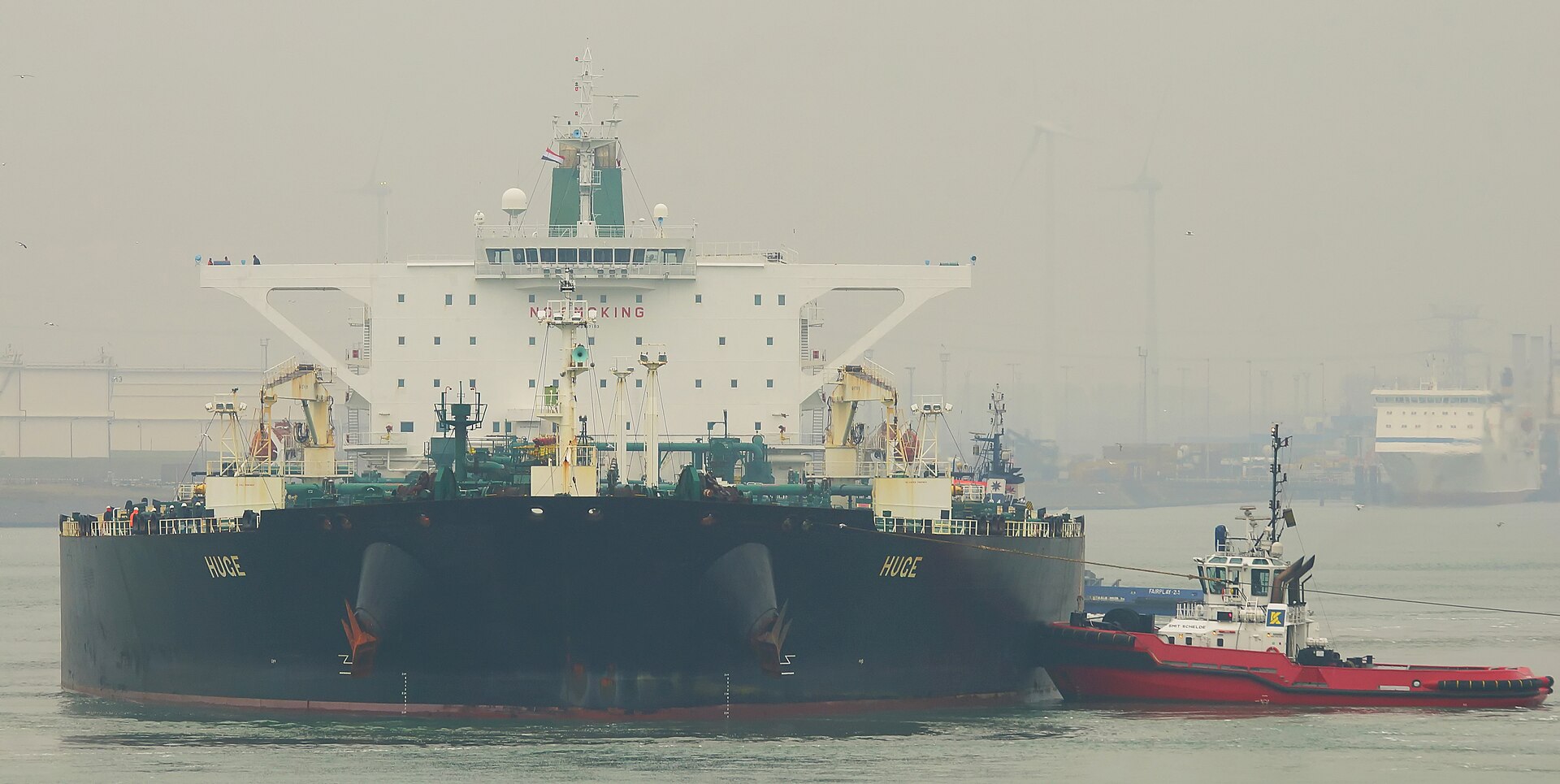
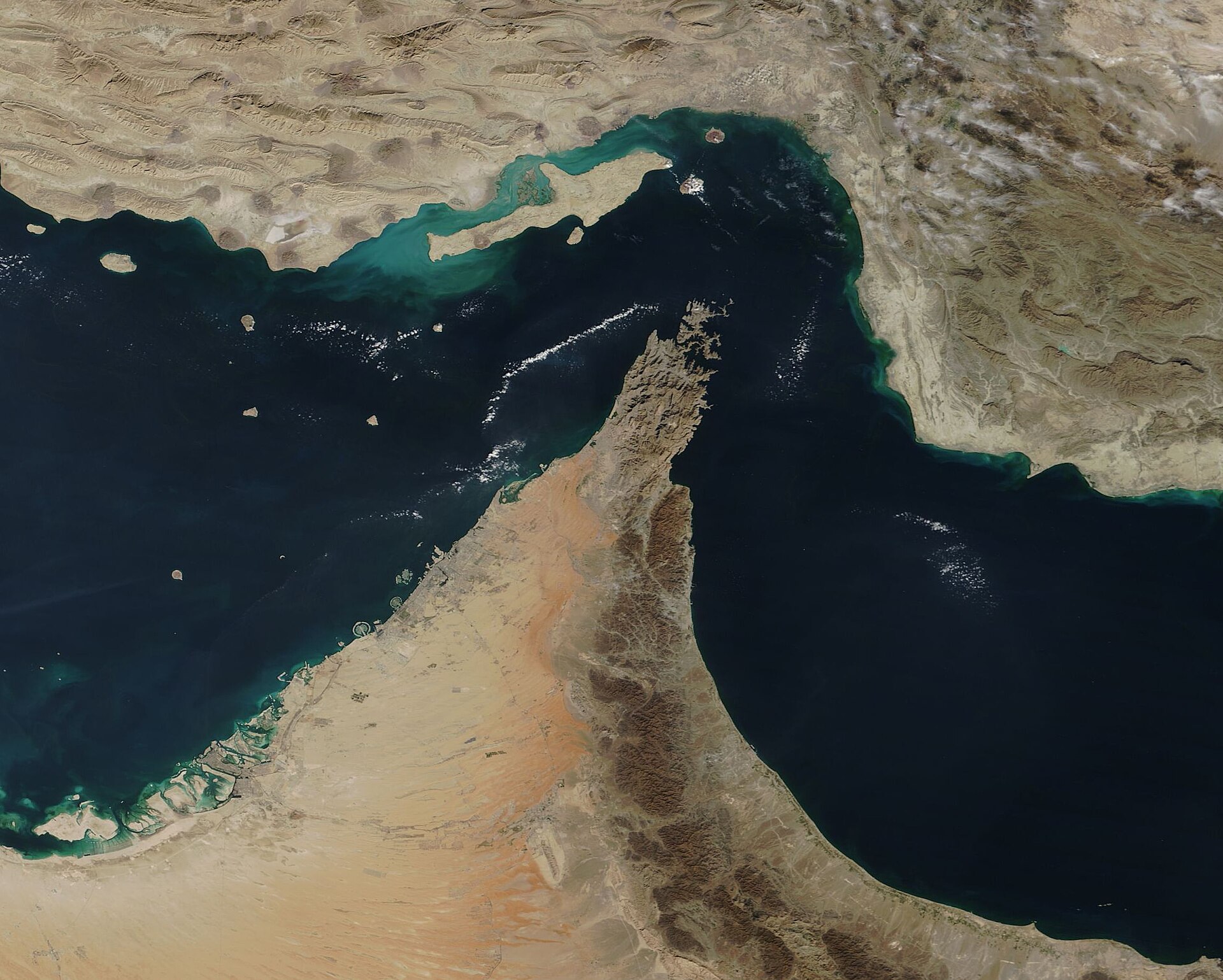
Three elements of this statement map directly onto Saudi priorities. “Without tolling” rejects the Iran-proposed transit fee structure that has collected zero revenue in 36 days but remains Tehran’s preferred mechanism for asserting sovereignty over the strait. “Without restrictions” rejects the IRGC’s declared “danger zone” and administrative permit system that has redirected vessels through the narrow Qeshm-Larak channel inside Iranian territorial waters. “Freedom of navigation” invokes the UNCLOS framework that Iran’s toll scheme violates under Article 26.
Costa’s concluding frame — “the European Union is not part of the conflict, but we will be part of this solution” — is a direct assertion of European relevance in a process Iran has tried to restrict to bilateral US-Iran channels. When Araghchi dismissed the EU as “paralysed and irrelevant” on February 15, he was attempting to pre-empt exactly this kind of multilateral intervention. The Nicosia format is the EU’s answer.
No formal joint EU-Arab communiqué was issued from the April 24 session. The outcome was individual leader statements and institutional positions. This absence of a signed text is itself a concession to Gulf diplomacy — it preserved GCC deniability on endorsing specific enforcement language while allowing the substance to be communicated through each leader’s separate public remarks.
Can Operation Aspides Fill the Gulf’s Naval Gap?
Von der Leyen’s proposal to expand Operation Aspides — “from mere protection to a sophisticated joint maritime coordination” — represents a qualitative shift in European military posture in the Gulf. Aspides, launched on February 19, 2024, was originally a defensive escort mission for the Red Sea against Houthi threats. Extending it to the Strait of Hormuz would transform it into an active multilateral maritime management operation in waters where the US Navy has been operating largely unilaterally.
Italy is driving the operational planning. Defense Minister Guido Crosetto confirmed that discussions “aim to allow the EU to expand maritime security operations, including the protection of the Strait of Hormuz,” while setting a condition: hostilities must stop before ships deploy. The Italian Navy chief of staff confirmed readiness to deploy up to four vessels, including two minesweepers — a detail that matters because the US decommissioned its four Avenger-class mine countermeasure ships from Bahrain in September 2025, leaving a capability gap that European minesweepers could fill.
Crosetto also called for the Aspides coalition to extend beyond Europe to include Asian states, given their Hormuz dependency. This broadening — if it materializes — would create a multinational naval presence in the strait that is neither American nor Iranian, providing exactly the kind of internationalized security framework that Saudi Arabia has been lobbying for.
The dormant precedent is Operation AGENOR, the European-led maritime surveillance mission that operated in the Strait of Hormuz from 2020 to 2024 before going inactive. Reviving a Hormuz naval presence under the Aspides umbrella would give it institutional continuity and a broader mandate than AGENOR ever had.
The €22 billion in losses attributed to the Hormuz crisis over 44 days, cited in EU estimates, provides the economic rationale. For European policymakers, this is not abstract solidarity with Gulf states — it is a direct threat to energy security and trade flows that the EU has material interest in resolving.
The Lebanon Linkage
Von der Leyen’s explicit connection of Lebanon to Gulf stability was the least remarked-upon and most consequential statement at Nicosia. “You cannot have stability in the Middle East or the Gulf while Lebanon is in flames. A temporary pause is not enough. We need a permanent path to peace.”
This linkage is Saudi Arabia’s position, delivered in European institutional language. Riyadh has argued since the ceasefire negotiations began that any deal addressing Hormuz without addressing Lebanon is structurally incomplete — Iran’s ability to threaten Gulf states through Hezbollah proxies and its ability to threaten maritime transit through the strait are two expressions of the same strategic posture. The 51-nation Macron-Starmer summit on April 17 included Lebanon in its framework. The Nicosia format reinforced it.
Lebanese President Joseph Aoun’s presence gave the linkage a human face. He told the summit that Lebanon “refuses to be a bargaining chip in regional conflicts” and “negotiates in its own name, in defense of its national interests and sovereignty.” He described conditions on the ground: 1,300 evacuation orders, 311 towns affected, more than 6,800 airstrikes through April 11, over 10,000 casualties, and more than one million displaced.
Christodoulides added institutional weight by proposing that the EU “should begin discussions with Lebanon on establishing a strategic, comprehensive agreement” modeled on existing EU frameworks with Egypt and Jordan. This would embed Lebanon in the same institutional architecture that provides economic and security support to states in Saudi Arabia’s orbit — a long-term structural commitment rather than crisis-specific intervention.
For Saudi Arabia, the value of European Lebanon advocacy is that it arrives in Washington as a transatlantic partner demand rather than a Gulf interest play. Netanyahu worked overnight with the US to exclude Lebanon from the 20-plus-nation Western joint statement in early April. Having the EU president, the Commission president, and the German chancellor all link Lebanon to Gulf stability makes that exclusion harder to sustain.
Why Did Iran Ignore the Nicosia Format?
Tehran’s response to Nicosia was not condemnation but counter-programming. On April 24 — the day Arab leaders sat down with EU heads of state in Cyprus — Iran’s state news agency IRNA confirmed that Araghchi had departed on a regional tour to Islamabad, Muscat, and Moscow. The three destinations map Iran’s preferred diplomatic channels: Pakistan as ceasefire mediator, Oman as traditional back-channel, Russia as Security Council protector.
The counter-scheduling is the signal. Iran chose to ignore the Nicosia format rather than legitimize it by responding — a calculated silence that reinforces Araghchi’s February 15 dismissal of the EU as “paralysed and irrelevant” while demonstrating that Tehran’s diplomatic investments flow through an entirely separate network.
This creates a bifurcated diplomatic field. The Islamabad track operates through US-Iran bilateral engagement with Pakistani mediation. The Nicosia track operates through EU-GCC institutional channels with Arab state participation. Saudi Arabia is excluded from the first and embedded — through proxies — in the second. Iran is embedded in the first and absent from the second. The two tracks share a subject (Hormuz, ceasefire enforcement, regional stability) but operate through different institutional frameworks with different participants, different legitimacy structures, and different implied enforcement mechanisms. Running alongside both is a third track: Saudi Arabia’s quartet framework with Pakistan, Turkey, and Egypt, which operates as the regional enforcement architecture — the body positioned to set post-blockade Hormuz rules regardless of how the Islamabad or Nicosia processes resolve.
The question is whether these tracks converge or compete. The absence of a formal joint communiqué at Nicosia suggests the EU is careful not to position itself as a rival mediator to Pakistan. Costa’s framing — “we will be part of this solution” — claims a role in implementation, not negotiation. But implementation and negotiation are difficult to separate when the terms being negotiated (Hormuz access, Lebanon inclusion, enforcement standards) are precisely the terms the Nicosia track is trying to shape from outside the room.
The Riyadh Pipeline: From Nicosia to the Second EU-GCC Summit
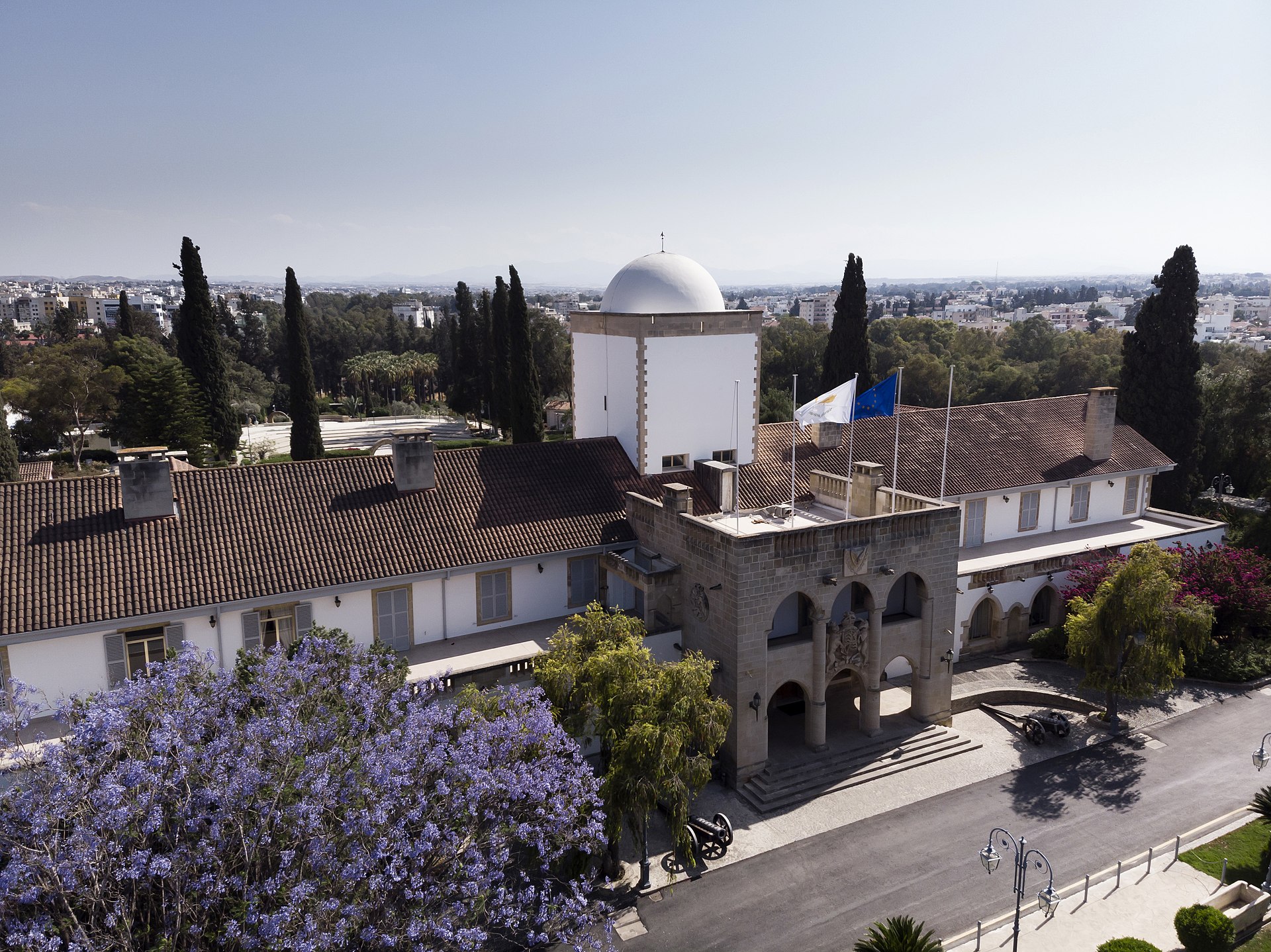
Christodoulides’s announcement that he would visit Qatar and Saudi Arabia the week following the summit — the week of April 28 — converts Nicosia from a one-day event into a diplomatic pipeline. The Cypriot president will arrive in Riyadh carrying EU Council presidency authority and a briefing on positions that European leaders have already articulated publicly. MBS will receive a readout of what was said at a table he chose not to sit at — but where his positions were spoken by others.
The pipeline extends further. The second EU-GCC Summit, agreed at Brussels in October 2024 and confirmed at the 29th Joint Council meeting in October 2025, is scheduled for Riyadh in 2026. No date has been announced, but the summit will take place on Saudi soil, with Saudi Arabia as host, giving MBS convening authority over a format that brings EU heads of state to his capital. Nicosia is a waypoint in this institutional arc, not an endpoint.
The ECFR’s 2024 characterization of Saudi foreign policy as “opportunistic actionism” — pursuing immediate national interests across competing power blocs — misses the institutional depth of what is being constructed here. This is not opportunism. It is infrastructure. The GCC-EU relationship has a summit track, a ministerial track, a parliamentary track (Albudaiwi’s AFET briefing), and now a crisis-response track (March 5 emergency meeting, Nicosia informal format). Each track creates a new channel through which Saudi positions can be transmitted with multilateral legitimacy.
The Syrian dimension adds a layer. Al-Sharaa’s declaration at Nicosia that “Syria can serve as a corridor linking the Gulf, Central Asia with Europe” positions the new Syrian government as a geographical bridge in a trade and energy architecture that Saudi Arabia is investing in through Vision 2030 and the GCC’s broader institutional framework. Syria’s presence at a table with EU and Gulf-aligned states — months after the fall of Assad — is itself a product of Saudi-backed reconfiguration of regional alignments.
Merz’s confirmation that the EU is prepared to ease Iran sanctions “as part of a process” contingent on a comprehensive agreement adds a European carrot to the stick of Hormuz internationalization. This is the first public German formulation of conditional sanctions relief at head-of-government level during the conflict. It offers Iran an incentive that the US — locked into maximum pressure — cannot provide, creating asymmetric pressure that benefits the multilateral track over the bilateral one.
| Dimension | Islamabad Track | Nicosia Track |
|---|---|---|
| Primary participants | US, Iran | EU heads of state, Arab leaders, GCC SG |
| Mediator | Pakistan | Cyprus (EU Council Presidency) |
| Saudi Arabia’s role | Excluded | Represented through GCC SG + aligned states |
| Iran’s role | Direct participant | Absent; counter-scheduled Araghchi tour |
| Hormuz position | Deferred to Phase 2 | Immediate reopening, no tolls, freedom of navigation |
| Lebanon | Excluded by US-Israeli pressure | Explicitly linked to Gulf stability |
| Enforcement mechanism | Pakistan as sole enforcer | Operation Aspides expansion; multinational naval presence |
| Output format | Bilateral MoU / ceasefire text | Individual leader statements; no joint communiqué |
FAQ
Was Saudi Arabia officially represented at the Nicosia summit?
No Saudi head of state or foreign minister attended. Saudi positions were advanced through three channels: GCC Secretary-General Albudaiwi’s institutional participation, aligned Arab heads of state (Egypt, Jordan, Lebanon, Syria) whose positions on Hormuz and Lebanon overlap with Riyadh’s, and Cypriot President Christodoulides’s announced post-summit visit to Saudi Arabia and Qatar the week of April 28. The GCC Secretary-General cannot bind member states under the GCC Charter without Ministerial Council authorization — his presence signals political alignment without creating treaty obligations that could complicate Saudi Arabia’s separate bilateral communications with Washington.
How does the Nicosia format differ from the Macron-Starmer Hormuz Summit of April 17?
The April 17 summit was a 51-nation declaration focused narrowly on Hormuz freedom of navigation, producing a joint statement that Saudi Arabia signed. Nicosia was a smaller, more curated format — roughly two dozen participants — embedded within a formal EU institutional structure (European Council informal meeting), with Arab heads of state as invited participants rather than co-signatories. The difference is between a broad coalition statement and an intimate working session with institutional follow-through: the Christodoulides visit to Riyadh, the second EU-GCC Summit pipeline, and the Operation Aspides expansion discussion all flow from Nicosia’s format, not from the April 17 declaration.
What is Operation Aspides and why does its proposed expansion matter for the Gulf?
Operation Aspides is an EU naval mission launched on February 19, 2024, originally to provide defensive escort against Houthi attacks in the Red Sea. Von der Leyen’s Nicosia proposal to expand it “from mere protection to a sophisticated joint maritime coordination” would extend its mandate to the Strait of Hormuz — a qualitative shift from reactive defense to active multilateral maritime management. Italy has confirmed readiness to deploy up to four vessels including two minesweepers, addressing a capability gap created when the US decommissioned its four Avenger-class mine countermeasure ships from Bahrain in September 2025. The dormant Operation AGENOR (2020-2024) previously provided European maritime surveillance in the strait, but Aspides expansion would carry a broader mandate and more institutional backing than AGENOR ever had.
Why did Iran ignore the Nicosia summit rather than condemn it?
Iran’s counter-scheduling — dispatching Araghchi to Islamabad, Muscat, and Moscow on the same day — was a deliberate choice to demonstrate that Tehran’s diplomatic investments flow through a separate network. Condemning the Nicosia format would have legitimized it as a relevant venue. Ignoring it reinforces Araghchi’s February 15 characterization of the EU as “paralysed and irrelevant” while signaling that Iran views the US-Iran bilateral channel through Pakistan as the only track that matters. The risk for Tehran is that the Nicosia track generates multilateral pressure — on Hormuz tolling, Lebanon inclusion, enforcement standards — that constrains the terms available at Islamabad even though Iran has no seat at the European table.
What happens next in the EU-GCC institutional track?
Three events follow Nicosia in sequence. First, Christodoulides visits Qatar and Saudi Arabia the week of April 28, carrying EU Council presidency authority and summit briefings. Second, the Cyprus EU Council Presidency runs through June 2026, giving Christodoulides continued convening power for follow-up formats. Third, the second EU-GCC Summit — agreed at Brussels in October 2024 and reaffirmed at the 29th Joint Council meeting in October 2025 — is scheduled for Riyadh in 2026, with Saudi Arabia as host. If the Aspides expansion proceeds, a formal EU Council decision would be required, likely preceded by a joint EU-GCC assessment of Hormuz maritime security conditions. Italy’s Defense Minister Crosetto has set a condition that hostilities must stop before ships deploy — making a sustainable ceasefire a prerequisite for the military track that the diplomatic track is trying to construct.
With the Islamabad track’s formal collapse on April 25 — Trump cancelling the Witkoff-Kushner trip after Araghchi had already left Pakistan — the Nicosia multilateral format becomes correspondingly more relevant as the only structured diplomatic architecture still operational. Trump Cancels Islamabad Trip, Collapsing the Only US-Iran Diplomatic Channel traces the full consequences: what the Oman back-channel can and cannot replace, and what Saudi Arabia’s position looks like without Islamabad providing diplomatic cover.