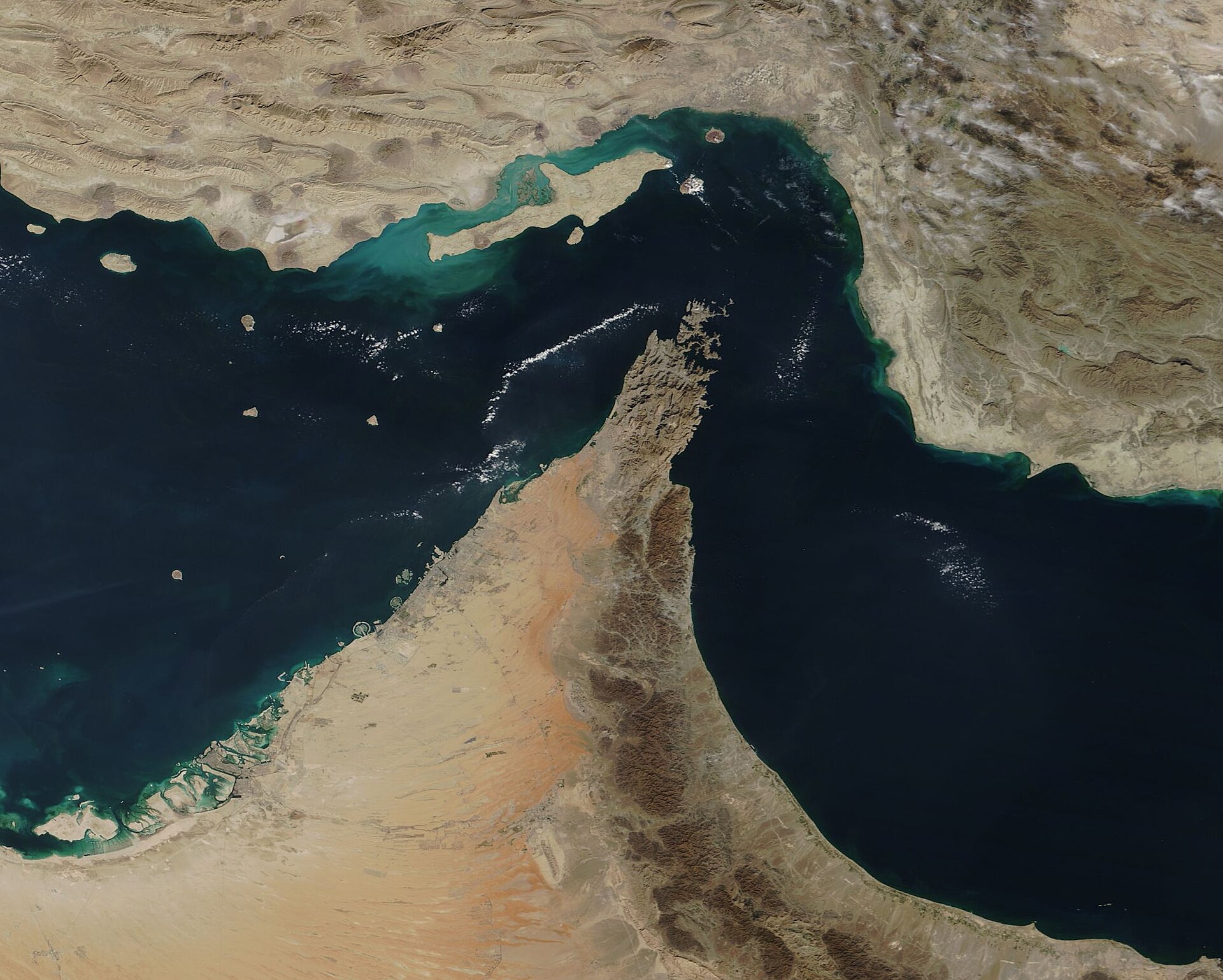

DHAHRAN — Five commercial vessels transited the Strait of Hormuz in the 24 hours to April 24, 2026 — down from a pre-war baseline of 140 daily passages — as Brent crude crossed $106.80 per barrel and a Dallas Federal Reserve survey of 116 oil executives found that 80 per cent do not expect normal shipping traffic to resume until August at the earliest. The convergence of near-zero maritime data and the industry’s own timeline expectations marks the point at which the Hormuz closure stops being a crisis and starts being a condition.
The Dallas Fed number matters most because it comes from the constituency whose economics the US blockade and IRGC counter-closure are supposed to protect. When four in five American oil executives price in a summer-long shutdown, $106 Brent is not a war premium — it is rational structural pricing for a world that has lost chokepoint capacity it will not recover before the second half of the year. Baker Hughes CEO Lorenzo Simonelli, reporting Q1 earnings the same morning, told analysts the company’s guidance assumed Hormuz would remain non-operational through June and “possibly not fully operational until H2 2026” — a forecast that aligns almost exactly with the Dallas Fed’s median expectation. Baker Hughes has since elaborated on the capex and contract implications of that guidance, confirming the company has restructured its H2 2026 forward book around a closed-strait baseline.
Table of Contents
Five Ships and What They Tell You
The five vessels that crossed on April 24 were not normal commercial traffic. One was the Iranian-flagged tanker Niki, already under US sanctions and therefore indifferent to the blockade’s legal architecture. Another was Helga, a Comoros-flagged supertanker whose flag-state obscurity places it outside mainstream insurance markets. Hapag-Lloyd sent a single container ship through — the German carrier has otherwise been avoiding the strait entirely since early April, along with Maersk, and the transit appears to have been a contractual obligation rather than a commercial choice. Two of the five — MSC Francesca and the bulk carrier Epaminondas — were seized by the IRGC on April 22, making their “transit” an act of detention rather than navigation.
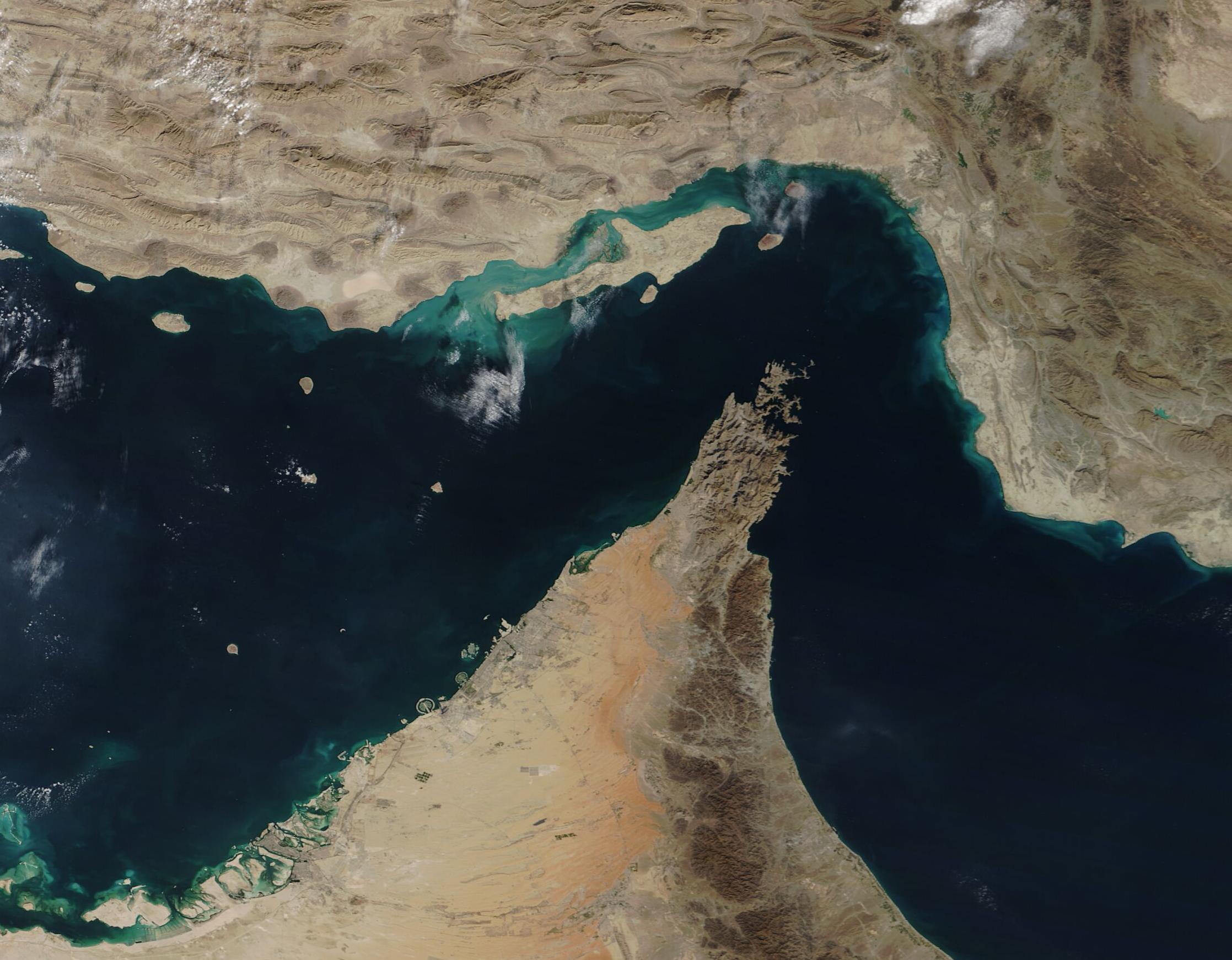
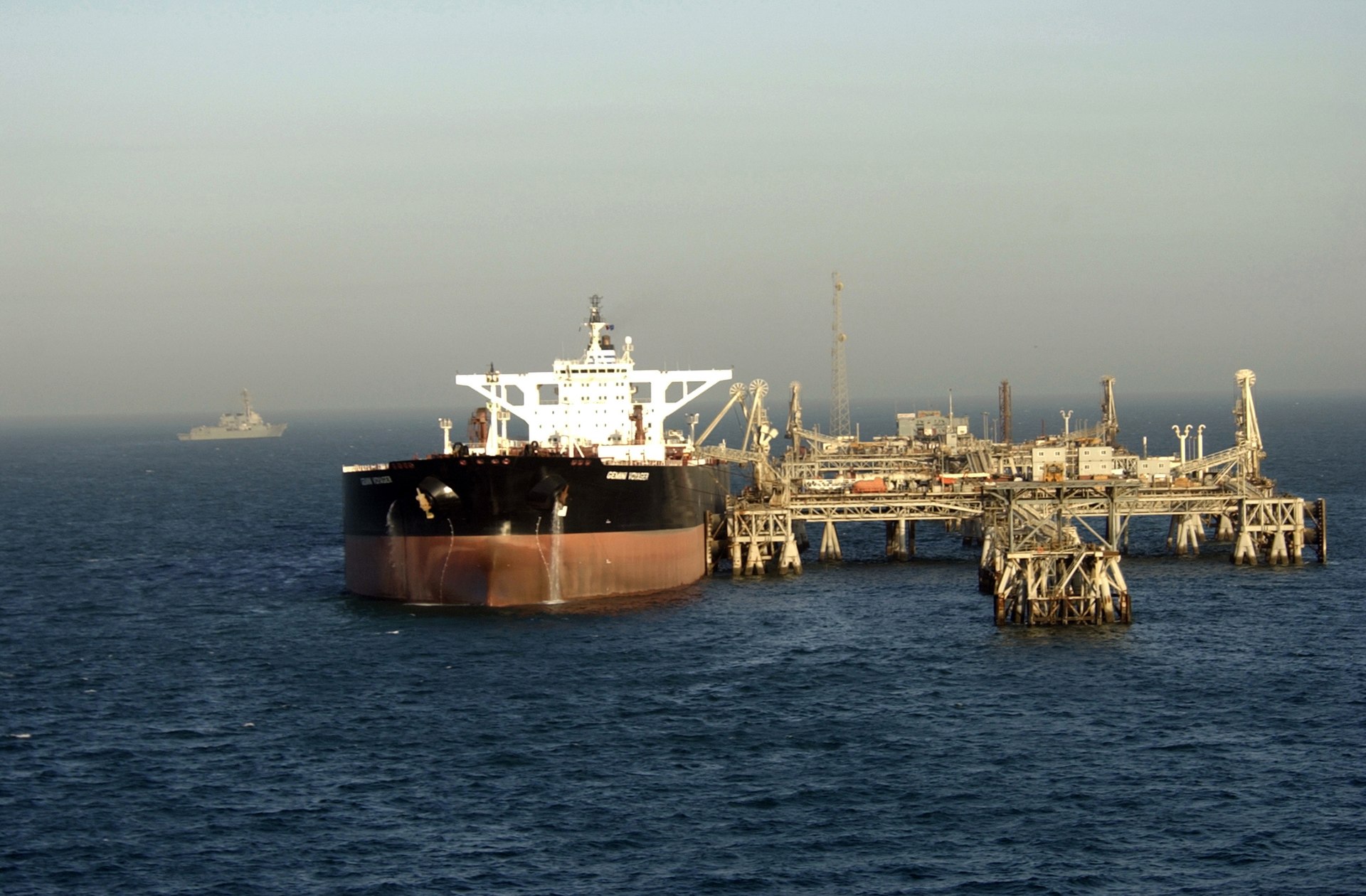
The only genuinely voluntary commercial transit in the preceding days was the LB Energy, a Greek-owned bulk carrier that departed Iran’s Bandar Imam Khomeini port on April 19, routed through the IRGC-designated Hormuz-Larak corridor, and headed for Brazil. That corridor — a five-nautical-mile channel between Qeshm and Larak islands — runs through Iranian territorial waters, giving Tehran inspection and seizure authority over every vessel that uses it without formally “closing” the strait under UNCLOS. The effect is identical: commercial shipping has stopped. Maritime intelligence firm Windward’s assessment from earlier in April — that the strait was in “a supervised pause” — now understates the reality; a supervised pause implies resumption is imminent, and nothing in the data supports that.
The numbers are historically unprecedented. Even at the peak of the 1984-1988 Tanker War, when Iran and Iraq attacked 451 commercial vessels over four years, disruption never exceeded 2 per cent of Gulf shipping and Hormuz never actually closed. The current 96 per cent collapse has no precedent in the strait’s modern history, and the IEA’s April Oil Market Report called it “the largest disruption in history” — a phrase the agency has never previously applied to a single chokepoint. Some 20,000 seafarers remain stranded inside the Gulf, with hundreds of vessels at anchor and no timeline for relief.
What Does the Dallas Fed Survey Actually Say?
The Federal Reserve Bank of Dallas conducts its Energy Survey quarterly, polling executives across the US oil and gas sector on business conditions, commodity prices, and operational outlook. The Q1 2026 survey, with data collected between April 15 and 20, asked when respondents expected Hormuz shipping to normalise. Only 20 per cent said May — meaning four in five executives believe the closure will persist through at least the summer. The distribution was telling: 39 per cent chose August, 26 per cent chose November, and 14 per cent said later still. The median expectation lands squarely in August, which is precisely where Baker Hughes placed its own guidance floor.
The Middle East briefing 3,000+ readers start their day with.
One email. Every weekday morning. Free.
The survey’s free-text responses were sharper than the numbers. One executive dismissed the administration’s framing of elevated crude prices as an “Iran terror premium” that had existed for decades, calling the characterisation “laughable.” Another noted that “extreme oil price volatility is leaving both small and large [companies] unsure of whether to increase capital spending” — a signal that the closure is already suppressing upstream investment decisions, not just spot prices. A third offered what may be the most useful single sentence in the report: “Shut-in production in the Persian Gulf will eventually rise above pre-war levels, but it will take time.” The word “eventually” is doing real work in that sentence.
The administration’s comment about an ‘Iran terror premium’ existing for decades with crude oil pricing is laughable.Dallas Fed Q1 2026 Energy Survey respondent
Beyond the headline timeline question, 79 per cent of respondents expect higher insurance, freight costs, and tolls to add at least $2 per barrel even after the strait reopens — a finding that suggests the market is pricing in not just the closure itself but a permanently altered cost structure for Hormuz transit. War-risk insurance, which peaked at 5 per cent of hull value per transit in March, had settled to 0.8-1 per cent by mid-April — still multiples of the pre-war rate and high enough to make the strait uneconomical for most commercial operators.
The $106 Price Floor
Brent’s rise to $106.80 on April 24 — up nearly 5 per cent on the day — places the benchmark at its highest level since the war began on February 28. The price sits in a precise and uncomfortable position relative to the analytical models tracking the conflict. Goldman Sachs published an extended-closure scenario in early April projecting Q3 2026 Brent at $120 and Q4 at $115; a moderate-resolution scenario placed Q3 closer to $95. At $106, the market is pricing in something between Goldman’s moderate and extended cases — which is to say, the market has decided the closure is real but is still uncertain about duration. The Dallas Fed survey suggests that uncertainty is resolving toward the longer end.
Baker Hughes’ Q1 earnings, released the same morning as the $106 print, provided the corporate confirmation. Simonelli told analysts the company was “assuming conflict continues through end of June” and that Hormuz would be “possibly not fully operational until H2 2026.” The closure had knocked offline “10 per cent of global oil volumes and 20 per cent of global LNG supplies,” he said, and prices would face “persistent risk premiums” even after traffic resumed. Baker Hughes set its EBITDA guidance floor at $2.325 billion, contingent on Hormuz reopening in H2 — a conditional that effectively tells investors the company considers summer-long closure its base case.
Oil and LNG prices will face persistent risk premiums.Lorenzo Simonelli, CEO, Baker Hughes, Q1 2026 earnings call
The IEA’s April report quantified the supply destruction: global oil supply fell 10.1 million barrels per day to 97 mb/d in March, with Hormuz throughput collapsing from over 20 mb/d pre-war to approximately 3.8 mb/d in early April. By late April, with transits at five per day, throughput is functionally zero for pricing purposes. The 10.1 mb/d supply loss is larger than any OPEC production cut in history and larger than the entire daily consumption of every country in Africa combined. The East-West Pipeline bypass through Yanbu has provided Saudi Arabia with a partial workaround, but its loading ceiling of 4-5.9 million barrels per day against a pre-war Hormuz throughput of 7 mb/d leaves a structural gap of 1.1-3 mb/d that no pipeline can close.
Why Can’t the Strait Just Reopen?
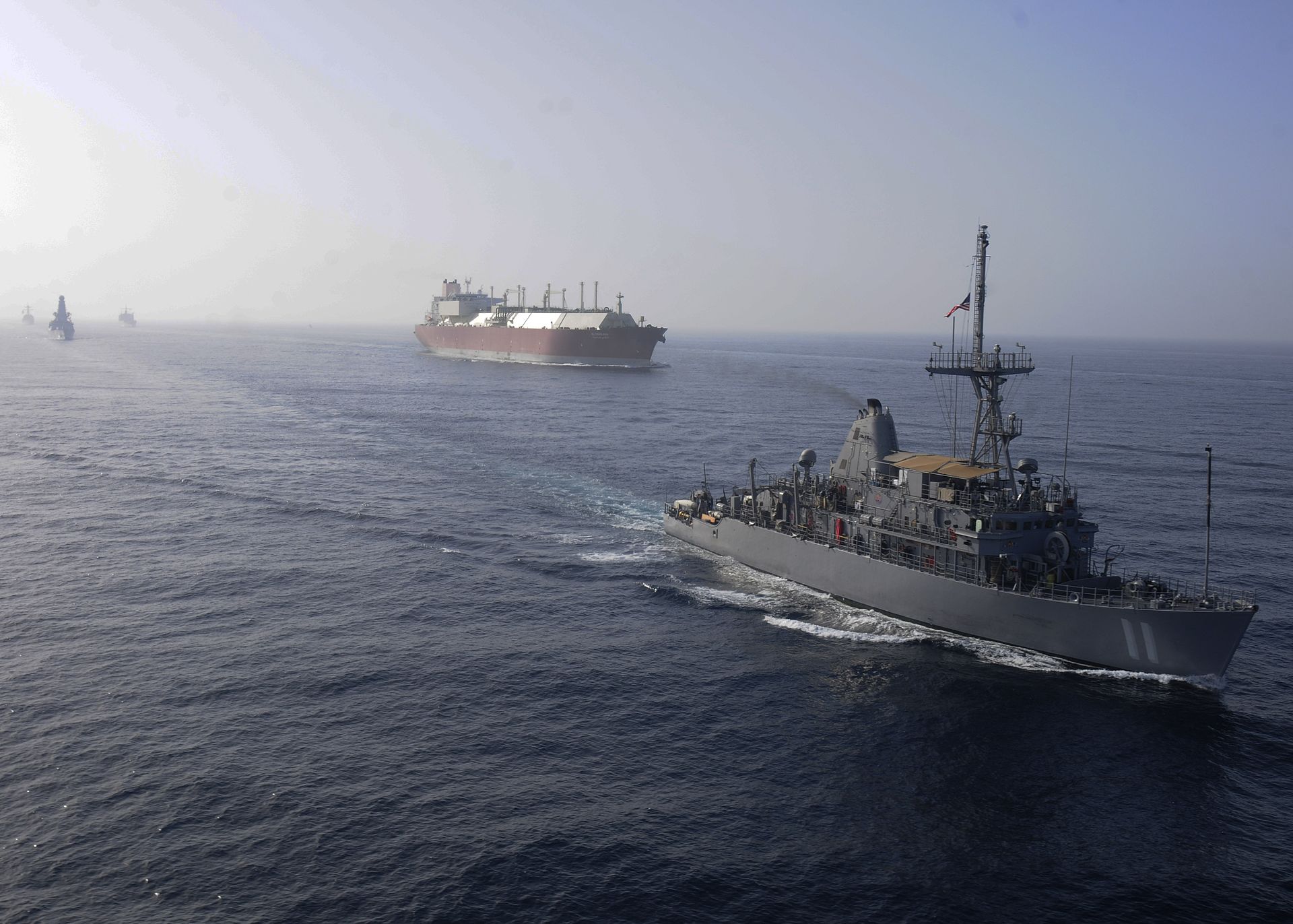
The physical answer is mines. A Pentagon briefing to the House Armed Services Committee on April 22 estimated that clearing the Strait of Hormuz after hostilities end would take up to six months using current naval assets. The US Navy’s mine countermeasures force has been effectively halved since September 2025, when four Avenger-class MCM ships were decommissioned from their Bahrain homeport. Two ships — Pioneer and Chief — remain in the Gulf theater; Patriot and Warrior are stationed in Japan. The Pentagon’s six-month estimate assumes all four available hulls deployed, which would require redeploying the Japan-based ships and leaving the Western Pacific without dedicated mine countermeasures capability.
The 2026 mine threat is qualitatively different from the benchmark most analysts use. The 1991 Kuwait mine clearance — 200 square miles swept in 51 days using four Avenger-class ships — involved moored contact mines, a technology essentially unchanged since the Second World War. The IRGC’s current inventory includes GPS-guided influence mines that detonate based on a vessel’s magnetic, acoustic, or pressure signature rather than physical contact. These clear three to five times slower than moored variants, according to Pentagon assessments, because each must be individually located, identified, and neutralised rather than swept in lanes. A 51-day benchmark at 1991 rates becomes 150-250 days at 2026 rates — placing full clearance, if it began tomorrow, somewhere between September 2026 and mid-2027.
The political answer is equally obstructive. The IRGC declared on April 18-19 that “the Strait of Hormuz will be closed until this blockade is lifted,” framing their counter-closure as a response to the US naval blockade of Iranian ports. All commercial vessels are permitted only through Iran-designated routes — the Larak corridor — and the IRGC warned that any vessel approaching outside these routes “will be considered cooperation with the enemy, and any offending vessel will be targeted.” The IRGC’s framing creates a structural deadlock: the US blockade was imposed to coerce Iran into ceasefire compliance, and Iran’s counter-closure was imposed to coerce the US into lifting the blockade. Neither side has a face-saving exit that does not require the other to move first, and the authorization ceiling within Iran’s own government — where President Pezeshkian has publicly accused IRGC commanders Vahidi and Abdollahi of sabotaging ceasefire talks — means that even a diplomatic breakthrough may not translate into operational change on the water.
Saudi Arabia Below Break-Even
At $106 Brent, Saudi Arabia is still below its fiscal break-even price. Bloomberg Economics places the PIF-inclusive break-even at $108-111 per barrel — a threshold that accounts for the sovereign wealth fund’s capital commitments under Vision 2030, not just the central government budget. The gap is narrow at current prices, but it is compounded by the production collapse: Saudi output fell from 10.4 mb/d in February to 7.25 mb/d in March, a 30 per cent drop, meaning revenues are calculated on a much smaller volume even as the per-barrel price rises. Goldman Sachs’ war-adjusted fiscal deficit estimate stands at 6.6 per cent of GDP — approximately $80-90 billion — against the government’s official projection of 3.3 per cent ($44 billion), a gap that reflects both the production shortfall and the cost of sustaining Yanbu as the kingdom’s primary export route.
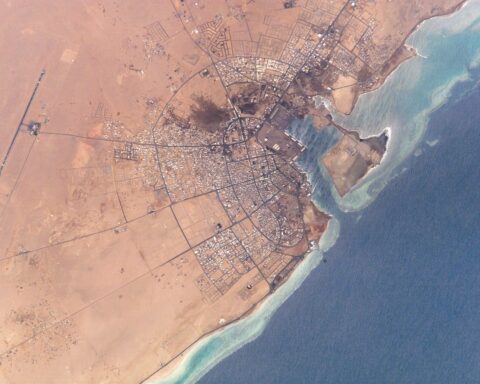
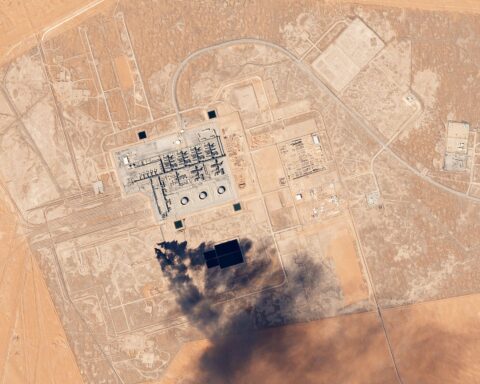
The Yanbu bypass, routed through the 1,200-kilometre East-West Pipeline to terminals on the Red Sea coast, has prevented a total Saudi export shutdown but cannot replicate pre-war capacity. The pipeline’s theoretical throughput is 7 mb/d, but loading infrastructure at Yanbu constrains effective capacity to 4-5.9 mb/d — and even that upper bound requires the SAMREF refinery (struck by the IRGC on April 3) to be fully operational, which it is not. IEA data shows Saudi crude exports to Asia fell 38.6 per cent in March (Kpler tracking), with the kingdom’s OPEC+ production quota of 10.2 mb/d now sitting 3 million barrels per day above actual output. The quota is a legal fiction; the pipeline is a physical ceiling.
The Tanker War Comparison Is Wrong
Every analysis of the Hormuz closure eventually reaches for the 1984-1988 Tanker War as precedent, and every such comparison obscures more than it reveals. As conflict historian John Phillips told Al Jazeera on April 24, the Tanker War “involved a much larger land conflict between two regional armies,” whereas the current situation concerns “Iran’s standoff with the United States and its allies” — a structural difference that changes every variable. During the Tanker War, both Iran and Iraq depended on Hormuz for their own oil export revenue, which meant neither had an incentive to close the strait entirely; attacks were designed to raise costs, not halt traffic. In 2026, Iran no longer depends on Hormuz revenue. Years of sanctions had already severed Tehran from mainstream crude markets before the war began, and the IRGC’s toll scheme — which collected zero dollars in its first 36 days of operation — demonstrates that Iran’s interest in the strait is now coercive rather than commercial.
The Tanker War disrupted less than 2 per cent of Gulf shipping at its peak over four years; the 2026 closure has eliminated 96 per cent of transits in under two months. The Tanker War never threatened global supply sufficiently to trigger an IEA “largest disruption in history” designation; the current closure prompted exactly that. The Tanker War ended when the Iran-Iraq ceasefire removed both belligerents’ incentive to attack shipping; the current closure has no equivalent off-switch because the IRGC’s declared “full authority” over the strait is not contingent on any single ceasefire provision but on the broader question of whether Iran or the international community controls transit rights through the waterway. The 1980s precedent is comforting precisely because it suggests Hormuz always reopens. The Dallas Fed’s 116 executives have a clearer sense of when than the historical analogies do.
| Metric | Tanker War (1984-88) | 2026 Closure |
|---|---|---|
| Duration | 4 years | 55 days (ongoing) |
| Peak shipping disruption | <2% | 96% |
| Iran’s Hormuz revenue dependence | High (own exports) | Near-zero (sanctions) |
| Vessels attacked / seized | 451 (total, 4 years) | 2 seized April 22 alone |
| IEA designation | None | “Largest disruption in history” |
| Mine clearance estimate | 51 days (1991 Kuwait) | 6 months (Pentagon, April 2026) |
| Global supply loss | Marginal | 10.1 mb/d (IEA March 2026) |
Frequently Asked Questions
How does the 80% August figure in the Dallas Fed survey compare to what actually happened on April 22?
The survey data was collected April 15-20, two days before the IRGC seized MSC Francesca and Epaminondas on April 22 — the first dual-seizure in a single day since the closure began. That event post-dates the survey, which means the 80 per cent figure likely understates current industry pessimism. If the survey were conducted today, analysts covering the data expect the August-or-later figure to be higher. The April 22 seizures also collapsed India’s remaining ambiguity on Iran sanctions: with the Epaminondas seized three days after New Delhi’s NSA flew to Riyadh, the question of whether India could sustain Iranian crude purchases outside the GL U framework was answered operationally before it was resolved diplomatically, as India’s Impossible Neutrality Died in Seven Days documents.
What is the IRGC’s Larak corridor?
Beginning in February 2026, the IRGC published navigational charts designating the standard international shipping lanes through Hormuz as a “danger zone” and redirecting commercial traffic to a five-nautical-mile channel between Qeshm and Larak islands. This corridor runs through Iranian territorial waters, giving Tehran legal authority under UNCLOS to board, inspect, and seize any vessel transiting it — a mechanism that achieves effective control without a formal closure declaration. It is also the route through which the IRGC’s zero-revenue toll scheme has been administered.
Could the US Navy clear the mines faster with allied support?
In theory, yes — the UK Royal Navy operates Hunt-class MCM vessels and Japan’s Maritime Self-Defence Force has Awaji-class minesweepers. In practice, allied MCM deployment requires political authorisation that has not materialised, and the GPS-guided influence mines the IRGC has deployed clear three to five times slower than conventional moored mines regardless of how many hulls are committed. The Pentagon’s six-month estimate already assumes optimal force allocation.
Why hasn’t OPEC+ cut quotas to match reduced output?
OPEC+ held its April 5 meeting and announced a production pause rather than a cut, leaving Saudi Arabia’s quota at 10.2 mb/d against actual March output of 7.25 mb/d. Acknowledging the production loss through a formal quota reduction would signal that the closure is structural, undermining diplomatic standing. The quota remains a placeholder for the output Riyadh expects to restore once Hormuz reopens — a date the Dallas Fed’s survey suggests is no earlier than August.
What happens to the 20,000 stranded seafarers?
The International Maritime Organization and International Transport Workers’ Federation have issued joint statements calling for humanitarian corridors, but no mechanism exists to extract crews from anchored vessels inside the Gulf while the IRGC maintains its “danger zone” designation. Most stranded vessels are commercial tankers and bulk carriers whose charterers cannot afford the war-risk insurance premiums required to exit through the Larak corridor, and whose flag states lack the diplomatic standing to negotiate passage with Tehran. War-risk insurance had settled to 0.8-1 per cent of hull value per transit by mid-April — still multiples of pre-war rates. The royalty arithmetic that makes the Hormuz war premium so structurally valuable to Riyadh — even as volumes crater — is detailed in Aramco’s Q1 2026 Profit Paradox: A 57% Surge Built on 30% Less Oil.
Aramco’s OSP cut to +$3.50 above Oman/Dubai for July — a pricing concession made without the volume to back it, as the Yanbu ceiling structurally limits Saudi exports to 4.0–4.5 million bpd — is detailed in Aramco Cuts Arab Light OSP for Asia for First Time in Three Months.
The well shut-in risk that makes the current closure structurally different from previous Hormuz crises is detailed in Iran’s Oil Storage Just Hit the Wall: with Kharg Island storage at capacity as of April 26, Tehran must begin shutting in reservoirs whose pressure may not fully recover — a permanent supply loss of 300,000–500,000 bpd that extends the Dallas Fed’s August reopening timeline into a lasting structural supply deficit. The specific reservoir mechanisms now under way — water coning, sand ingress, and wax deposition across Iran’s aging southwest fields — are assessed in Iran’s Wellhead Overflow Crisis Hits Its Deadline.
The compounding dynamic by which both the US naval blockade and IRGC enforcement simultaneously reduce Hormuz traffic — and why Iran’s April 24 “open” declaration changed the throughput figure by zero ships — is examined in full in the US-Iran dual blockade analysis.