RIYADH — Saudi Arabia is privately lobbying the United States to lift its naval blockade of Iranian ports, and the reason has nothing to do with sympathy for Tehran. It has everything to do with a spreadsheet. The kingdom is bleeding $93 million a day in oil revenue below its pre-war baseline, its only functioning export route runs through waters where Houthi missiles can reach every tanker, and the blockade Washington imposed on April 13 has produced zero Iranian concessions in eleven days. Riyadh is not breaking ranks. Riyadh is doing arithmetic.
The Wall Street Journal reported on April 14 that Saudi officials communicated through Arab intermediaries a blunt message: end the cordon and return to negotiations. Not modify the blockade’s scope, not soften its enforcement — end it. The ask landed in Washington at the same moment Iran’s IRGC was seizing commercial vessels in the Strait and Trump was ordering the Navy to shoot anything laying mines. Saudi Arabia is caught between a patron it cannot defy and a war economy it cannot sustain, and it has chosen the only instrument available to a country that hosts American air-defense batteries while arguing against American coercive strategy: quiet diplomacy backed by very loud fiscal pain.
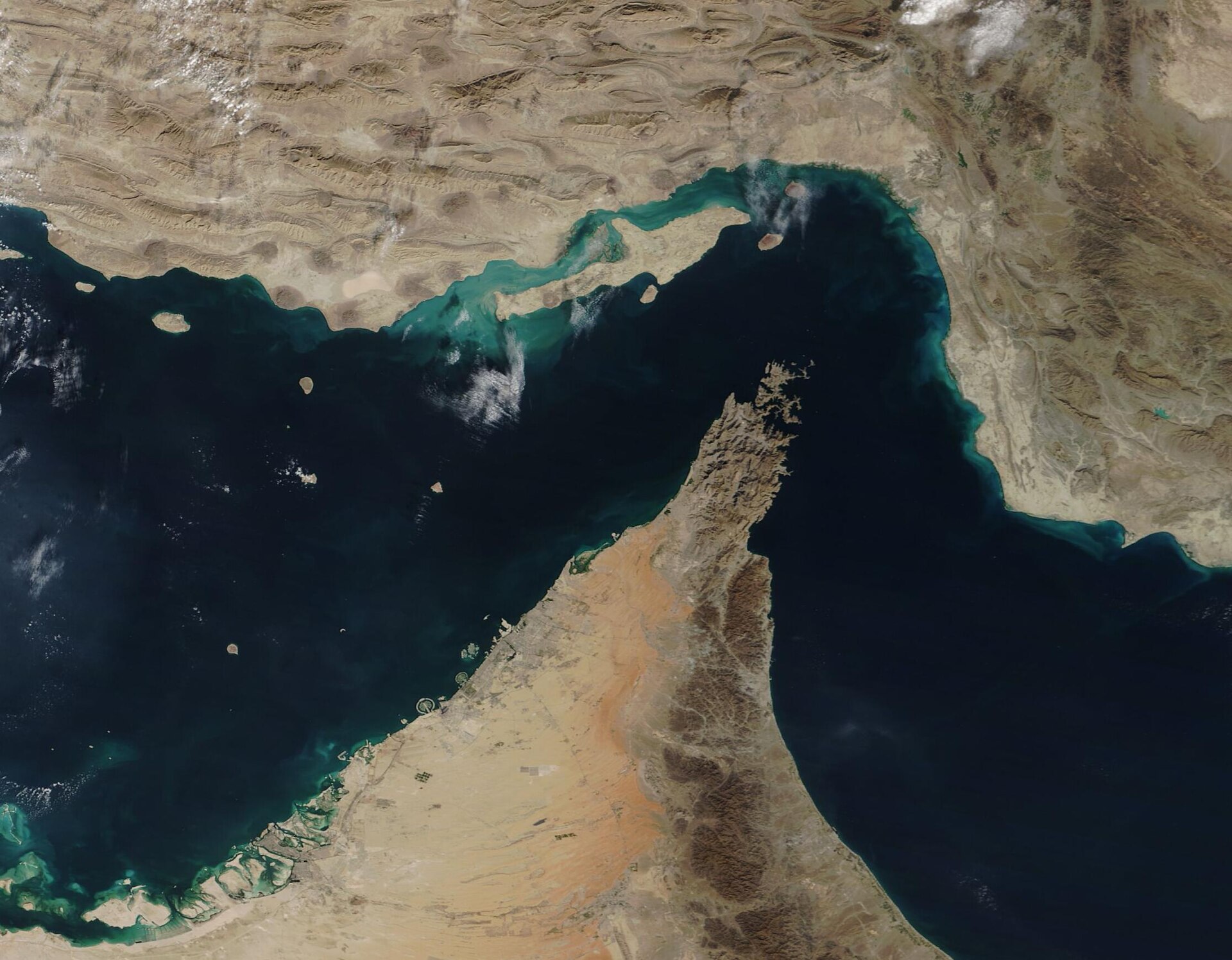
Table of Contents
- What Saudi Arabia Actually Asked Washington to Do
- The $93 Million-a-Day Problem
- Why Is the Yanbu Bypass Not Enough?
- What Has the Blockade Actually Achieved?
- The Authorization Ceiling Iran Cannot Clear
- Why the Cuba 1962 Analogy Flatters Washington
- The PAC-3 Constraint: Why Riyadh Cannot Push Harder
- The UAE Divergence and the GCC Fracture
- How Tehran Is Weaponizing Saudi Discomfort
- What Riyadh Actually Wants
- FAQ
What Saudi Arabia Actually Asked Washington to Do
The Saudi message, conveyed through Arab officials to their American counterparts in mid-April, was structurally simple: lift the blockade and go back to talking. The Wall Street Journal’s April 14 report made clear this was not a request for cosmetic adjustments — extending exemptions, narrowing the cordon’s geographic scope, or issuing more general licenses. Riyadh wanted the coercive instrument removed entirely and replaced with a diplomatic track. The timing was not accidental. Saudi Foreign Minister Prince Faisal bin Farhan had called Iranian Foreign Minister Hossein Amir-Abdollahian on April 13, the day the blockade began — a behavioral signal that Riyadh was already building a parallel channel before the cordon’s first week was over.
That parallel channel extends beyond the Arab world. The EU-GCC Nicosia format, convened in Cyprus in the same week, gave Saudi Arabia an additional institutional track. The Nicosia summit as Saudi Arabia’s EU-GCC diplomatic track documents how Riyadh is using European institutional weight to advance Hormuz and Lebanon terms independently of both the Islamabad negotiations and its constrained bilateral channel with Washington. The full architecture of Saudi Arabia’s parallel diplomacy — near-daily ambassador contact with Iran’s Enayati, two FM-level calls in five days, and a direct MBS-Xi Jinping conversation — is documented in Saudi Arabia Is Not Sitting Out the Iran War — It’s Negotiating a Separate Peace, which argues that Riyadh’s restraint reflects active multi-channel diplomacy, not passivity. The defense-industrial dimension of the same independence drive — Saudi Arabia procuring Ukrainian drones and joint production lines outside the entire US arms-transfer architecture — is examined in MBS Is Building a Military That Doesn’t Need Washington’s Permission.
What made the lobbying structurally notable was its context. Saudi Arabia hosts the air-defense architecture that protects US force projection in the Gulf — THAAD batteries, Patriot systems, the command infrastructure at Prince Sultan Air Base. The kingdom absorbed Iranian ballistic missile strikes on its Eastern Province in early March and kept American assets operational on its soil. Asking Washington to abandon its primary coercive lever against the country firing those missiles is not something Riyadh does casually, and the fact that it did so within 24 hours of the blockade’s activation tells you how fast the fiscal math overwhelmed the alliance math.
The Saudi position also carried an implicit warning about Ansarallah. Riyadh told American officials it had secured assurances from the Houthis not to target Saudi-flagged vessels, but cautioned that Iran could override those assurances at any time. A Saudi official told the Journal that this was the kingdom’s core vulnerability — not the blockade itself, but the Houthi escalation the blockade could trigger in the Red Sea, where Saudi Arabia’s entire Yanbu bypass strategy is exposed.
The Middle East briefing 3,000+ readers start their day with.
One email. Every weekday morning. Free.
The $93 Million-a-Day Problem
The numbers underpinning Saudi Arabia’s lobbying are not speculative — they come from the IEA, Goldman Sachs, and Bloomberg, and they describe a fiscal emergency. Saudi production in March 2026 fell to 7.25 million barrels per day, down from 10.4 million bpd in February — a 30 percent collapse that represents the largest single-month production drop in the kingdom’s history. The Khurais field, producing 300,000 bpd before the war, remains offline with no announced restoration timeline. Eastern Province loading terminals that once handled the majority of Saudi exports are functionally closed. The industry’s own timeline for restoration is examined in Baker Hughes Just Bet $33 Billion That Hormuz Won’t Reopen Before Summer, which details how the company’s Q1 guidance frames capital allocation through the H2 2026 reopening baseline.
At current Brent prices of $106.80 and current production levels, Saudi Arabia is running $93 million per day below its pre-war revenue baseline. That figure compounds into roughly $2.8 billion per month, or $34 billion annualized if conditions persist through December. Goldman Sachs has already revised its 2026 Saudi fiscal deficit projection to 6.6 percent of GDP — approximately $80–90 billion against an official budget assumption of $44 billion. The IMF cut Saudi GDP growth from 4.5 percent to 3.1 percent. Bloomberg’s PIF-inclusive fiscal break-even sits at $108–111 per barrel, meaning even with Brent near $107, the kingdom is operating below the price it needs to fund both its government budget and its sovereign wealth commitments. A Dallas Federal Reserve survey of 116 oil executives on April 24 found 80 per cent price in no Hormuz recovery before August, confirming the structural duration the fiscal arithmetic already implies. Full analysis: Hormuz functional closure confirmed — five ships, $106 Brent, and the Dallas Fed’s August timeline.
These are not theoretical risks — they are current operating conditions. Every day the blockade continues without producing a diplomatic result is a day Saudi Arabia absorbs war-economy losses while the instrument causing those losses demonstrates diminishing coercive utility. The question Riyadh is posing to Washington is not whether the blockade hurts Iran. The question is whether it hurts Iran enough to matter while simultaneously bleeding the ally paying for the air-defense umbrella that makes the blockade possible.
Why Is the Yanbu Bypass Not Enough?
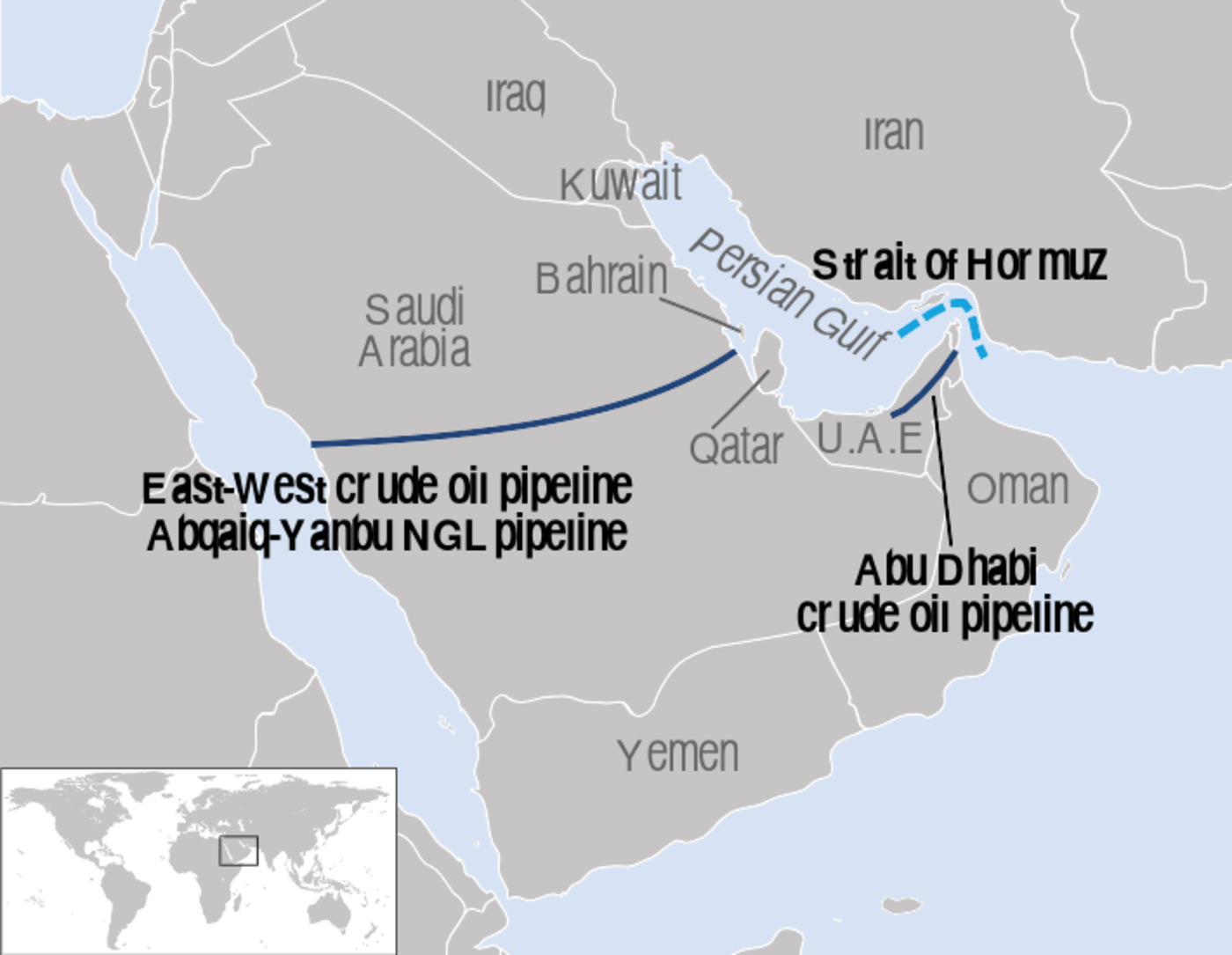
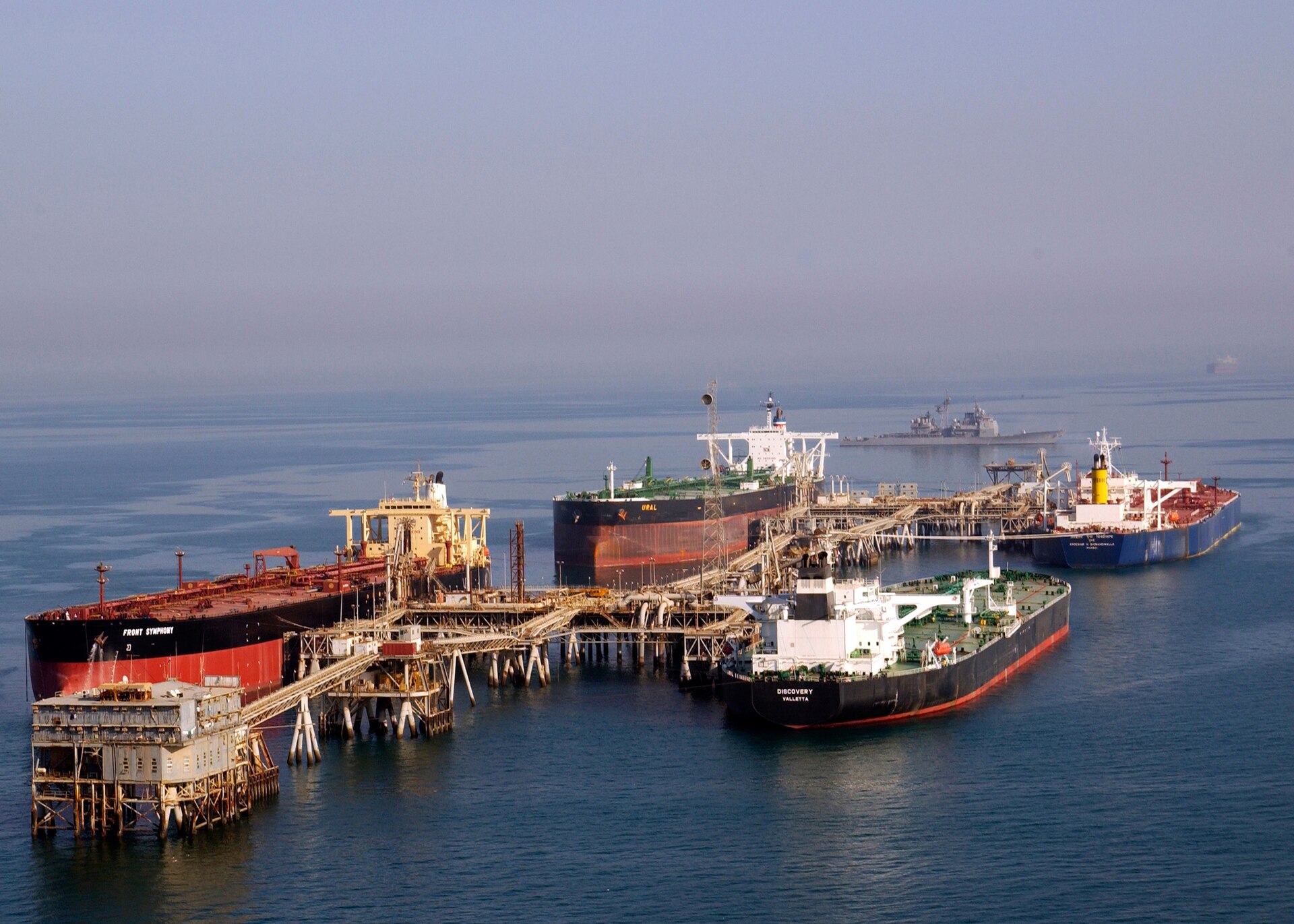
Saudi Arabia’s East-West Pipeline to Yanbu is not a solution to the Hormuz closure — it is a ceiling. By March, Yanbu was loading at a record 4.0–4.3 million bpd, but two structural constraints cap that figure well below pre-war Saudi export volumes, and both of them worsen as the crisis extends.
The first ceiling is capacity. The East-West Pipeline’s maximum throughput is approximately 7 million bpd, but effective Yanbu loading capacity tops out at 4–5.9 million bpd depending on terminal congestion and tanker scheduling. Pre-war Saudi Hormuz throughput was 7–7.5 million bpd. That leaves a structural gap of 1.1–1.6 million bpd that no amount of operational optimization can close — barrels that simply cannot reach market through any existing infrastructure. The production crash from 10.4 million to 7.25 million bpd partly reflects this physical constraint: there is nowhere to send the oil even if the fields could produce it.
The second ceiling is geographic. Yanbu loads onto tankers that transit the Red Sea southward through Bab al-Mandab — the 20-mile-wide chokepoint between Yemen and Djibouti where Ansarallah has demonstrated persistent anti-shipping capability since late 2023. Approximately 70–75 percent of Yanbu crude exports move on VLCCs, and those VLCCs must pass through waters where Houthi missiles and drone boats have already struck commercial shipping. A Bab al-Mandab closure could disrupt 4–9 million bpd of oil and products. Saudi Arabia did not bypass one chokepoint — it traded a chokepoint controlled by the IRGC for one controlled by the IRGC’s most capable proxy. That is the structural trap the blockade intensifies: the longer Hormuz remains closed, the more Saudi revenue depends on a second strait that Iran can threaten at lower cost.
What Has the Blockade Actually Achieved?
Eleven days in, the US blockade has produced no Iranian diplomatic concession, seen its cordon bypassed by approximately 26 vessels, and failed to secure operational burden-sharing from Washington’s closest allies. The coercive instrument the administration bet on is not performing as designed. The Yuri — a US-sanctioned VLCC that halted inside the IRGC’s Larak corridor on April 24 with two million barrels of Iranian crude aboard — is the kind of enforcement gap Saudi Arabia is lobbying Washington to close: how the Yuri halt exposes the blockade’s blind spot for IRGC-facilitated shadow-fleet transits is detailed here.
The US blockade, which began on April 13 as a cordon targeting vessels entering or departing Iranian ports, was designed to strangle Iranian oil export revenue — the funding source for the IRGC’s operational tempo and Iran’s war economy. President Trump claimed it costs Iran $500 million per day. The Foundation for Defense of Democracies put the figure at $400 million. Brookings assessed that removing 2 million barrels of Iranian daily exports would have a “moderate” impact on global prices. Admiral Brad Cooper of US Central Command said the blockade could be sustained “as long as necessary.”
The operational record is less impressive than the rhetoric. By April 20, approximately 26 vessels had bypassed the blockade via alternative routes — the cordon is technically a port blockade, not a transit interdiction, and ships with non-Iranian cargo can still move through Hormuz. The UK and Spain declined to participate. France and the UK announced plans for a separate multinational defensive mission conference, signaling that Washington’s closest allies see the blockade as an American project, not a coalition one. The 30-nation Hormuz coalition conference that Admiral Cooper referenced has produced diplomatic attendance but not operational burden-sharing.
More fundamentally, the blockade has produced no Iranian diplomatic concession. Iran has not delivered the “unified proposal” that Trump’s ceasefire extension terms require. The IRGC seized the MSC Francesca and the Epaminodes on April 22 — hours after Trump extended the ceasefire indefinitely — demonstrating that the blockade’s coercive signal does not reach the commanders making operational decisions. The seizure was also an intelligence product: the Aponte family, owners of MSC, hold direct personal access to both Trump and Macron, meaning Iran selected the vessel for its political leverage, not merely its flag. Iran’s Parliament Speaker Mohammad Bagher Ghalibaf, a man whose IRGC Aerospace Force credentials (1997–2000) make him a more reliable indicator of military sentiment than any diplomat, declared on April 22: “We do not accept negotiations under the shadow of threats, and in the past two weeks, we have prepared to reveal new cards on the battlefield.” The blockade is not producing compliance. It is producing defiance calibrated for domestic Iranian audiences and operational escalation calibrated for the Strait. The same dual seizure event — MSC Francesca and Epaminondas on April 22 — ended India’s post-GL-U ambiguity: India’s Impossible Neutrality Died in Seven Days documents how three simultaneous compliance cliffs forced New Delhi off the fence within a single week.

The Authorization Ceiling Iran Cannot Clear
The structural reason the blockade cannot produce an Iranian concession is not willpower or ideology — it is institutional. Iran’s decision-making architecture has a ceiling that no amount of economic pressure can penetrate, because the people absorbing the pressure are not the people who control the military assets the blockade is designed to constrain. This is the authorization ceiling problem, and it explains why Saudi Arabia views the blockade as a dead instrument.
Supreme Leader Ali Khamenei’s death — unconfirmed publicly for weeks, acknowledged through the behavioral evidence of his extended absence — removed the only figure in Iran’s constitutional architecture who could simultaneously authorize a ceasefire, order the IRGC to comply, and be believed by external parties. Article 110 of Iran’s constitution gives the Supreme Leader sole authority over the armed forces. Article 176 places the Supreme National Security Council under his direct supervision. Without him, the system defaults to factional competition. As Saeid Golkar of the University of Tennessee observed in Fortune: “Because the main arbitrator is gone, the fight between different factions has started.”
President Masoud Pezeshkian publicly accused SNSC Secretary Ali Akbar Ahmadian (Vahidi’s successor in the security apparatus) and Khatam al-Anbiya commander Abdollahi of derailing the Islamabad ceasefire talks by deviating from the delegation’s mandate. But accusation is not authority. Pezeshkian has zero constitutional power over the IRGC. The April 22 tanker seizures confirmed the pattern: the IRGC operates on its own timeline, and civilian negotiators like Foreign Minister Araghchi can promise outcomes they cannot deliver. Javad Heiran-Nia, director of the Persian Gulf Studies Group at Iran’s Center for Scientific Research, told Al Jazeera on April 22 that “the attack on tankers during the ceasefire demonstrates the IRGC’s dominance over the diplomatic team and its disregard for their positions.” The blockade’s economic pain lands on Iran’s civilian economy and on Saudi Arabia’s export revenue. Neither controls the IRGC’s operational tempo.
Why the Cuba 1962 Analogy Flatters Washington
The Cuba 1962 comparison fails the Hormuz blockade on the single variable that made Kennedy’s quarantine work: the existence of one decision-maker who could order compliance and be believed. Iran in April 2026 has no such figure, and the IRGC’s April 22 tanker seizures prove it.
Administration officials and sympathetic commentators have reached for the 1962 Cuban Missile Crisis as the historical frame for the Hormuz blockade — a quarantine that applies calibrated pressure until the adversary folds. Where it holds: the UK’s Harold Macmillan questioned Kennedy’s quarantine scope in a phone call on October 23, 1962, much as Saudi Arabia is questioning the Hormuz blockade’s utility today. Allied discomfort with American coercive instruments is not new. Where it collapses: Nikita Khrushchev was a single decision-maker who could order missile removal and be believed. When he agreed to withdraw, the Soviet military complied.
Iran in April 2026 has no Khrushchev. Vahidi holds a military veto over civilian negotiators. The IRGC Navy declared “full authority to manage the Strait” on April 5 and again on April 10, while Araghchi was in Islamabad ostensibly negotiating a ceasefire. The tanker seizures on April 22 happened hours after Trump extended the ceasefire — not before, not in a vacuum, but as a direct operational response to a diplomatic signal. The Cuba quarantine worked because coercive pressure landed on the person who could resolve the crisis. The Hormuz blockade’s pressure lands on Iran’s import-dependent civilian population, on Gulf oil revenues, and on global shipping costs. None of these constituencies command a single IRGC fast boat.
Vali Nasr of Johns Hopkins SAIS framed the Saudi position in broader terms: “Saudi Arabia is voicing a broader international concern that U.S. blockade is a dangerous escalation. It further closes all trade in the Persian Gulf, could lead to more violent conflict there but also lead to disruption of trade in the Red Sea. It could bring the global economy [into crisis].” The Saudi lobbying is not Macmillan’s polite phone call. It is a fiscal distress signal from the country absorbing the quarantine’s collateral damage while the intended target’s military apparatus operates as though the quarantine does not exist.
The PAC-3 Constraint: Why Riyadh Cannot Push Harder
If Saudi Arabia’s fiscal argument against the blockade is strong, its leverage to enforce that argument is weak — and Washington knows it. The kingdom’s PAC-3 missile stockpile has been depleted by approximately 86 percent since the war began, with Iranian ballistic missile strikes on the Eastern Province consuming interceptors faster than any resupply chain can deliver them. The $9 billion PAC-3 MSE sale approved in January 2026 — 730 rounds — slots into a Lockheed Martin production queue running at roughly 620 rounds per year for all global customers. Saudi Arabia will not see meaningful deliveries before 2030.
This dependency is not abstract — it is the physical constraint governing how forcefully Riyadh can lobby against American strategy. A country that needs American interceptors to protect its cities, its oil infrastructure, and the American bases on its own soil cannot issue ultimatums to the country manufacturing those interceptors.
The Turkish precedent is instructive but misleading: Ankara refused to allow the 2003 Iraq invasion from its territory while remaining a NATO defense partner, but Turkey was not absorbing ballistic missile strikes from the country the US was invading. Saudi Arabia’s situation is categorically more constrained. It is simultaneously the host, the target, and the critic, and only one of those roles comes with leverage.
The result is the quiet diplomacy the WSJ reported: back-channel lobbying through Arab intermediaries rather than public demands, financial arguments rather than political threats, and a careful framing that positions the blockade as counterproductive rather than illegitimate. Saudi Arabia is not telling Washington the blockade is wrong. It is telling Washington the blockade is not working — a message calibrated to avoid triggering the arms-dependency leverage Washington holds and Riyadh cannot afford to test.
The UAE Divergence and the GCC Fracture
Saudi Arabia’s anti-blockade lobbying would carry more weight if the Gulf Cooperation Council presented a unified position. It does not. The UAE explicitly told the United States on April 5 that it would support a military operation to control Hormuz — a direct divergence from Riyadh’s diplomatic approach. Abu Dhabi’s calculus is different: the UAE’s Fujairah terminal sits outside the Strait, its sovereign wealth fund is less exposed to oil-revenue fluctuations than PIF, and its strategic relationship with Washington is built on different transactional foundations than Saudi Arabia’s.
This GCC fracture gives Washington less incentive to accommodate Riyadh’s position, because the US can point to Emirati support as evidence that Gulf allies are not unanimously opposed to coercive measures. Andrew Leber and Sam Worby of the Carnegie Endowment identified the core structural problem in their April 2026 analysis: “The GCC lacks negotiating seats despite ceasefire talks directly affecting its security environment.” Saudi Arabia is the largest economic victim of the Hormuz crisis — absorbing production losses, revenue shortfalls, and infrastructure damage — but it has no formal voice in the Islamabad talks process that will determine whether and how the Strait reopens. The collapse of Pakistan’s enforcement architecture only deepens this exclusion.
Bahraini analyst Ahmed Alkhuzaie captured the paradox directly: “A US blockade would paradoxically harm its allies more than Iran, destabilizing markets.” The paradox is real but incomplete — the blockade harms allies and Iran simultaneously. The question Saudi Arabia is forcing Washington to confront is whether the harm ratio favors American strategic objectives or undermines them.
How Tehran Is Weaponizing Saudi Discomfort
Iran’s state media apparatus has not missed the opportunity Saudi lobbying presents. PressTV labeled the US blockade “illegal” from day one and framed the WSJ report as confirmation that “the move risks escalating tensions in a critical maritime corridor” — using Riyadh’s own words as rhetorical ammunition. The framing is deliberate: Iranian state media portrays Saudi Arabia not as an adversary but as a reluctant American client being harmed by Washington’s recklessness. The narrative purpose is to split the US from its Gulf allies by amplifying Saudi discomfort and presenting it as validation of Iran’s position that the blockade is counterproductive.
The propaganda value is real but the strategic exploitation is limited. Saudi Arabia’s lobbying against the blockade does not translate into Saudi alignment with Iranian interests — Riyadh still hosts the air-defense infrastructure the IRGC is trying to destroy, still funds the coalition framework Washington relies on for regional power projection, and still considers Iranian ballistic missiles the primary threat to its territory. What Iranian media cannot acknowledge is that Saudi lobbying against the blockade is simultaneously lobbying against IRGC operational behavior: the Hormuz toll scheme that collected zero revenue in 36 days, the tanker seizures that torpedoed ceasefire momentum, and the mine-laying that will keep Hormuz closed until winter regardless of any diplomatic breakthrough.
Ali Akbar Velayati, the Supreme Leader’s senior advisor, issued the kind of threat that plays well on Tasnim but poorly in insurance markets: “If the White House thinks of repeating its stupid mistakes, it will quickly realize that the flow of global energy and trade can be disrupted with a single signal.” That signal has already been sent — the April 22 tanker seizures, the mine chart declaring Hormuz shipping lanes a danger zone, the IRGC’s public override of Araghchi’s diplomatic assurances. Saudi Arabia is not lobbying Washington because it believes Iran’s propaganda. It is lobbying because the IRGC’s operational behavior confirms what the propaganda obscures: neither the blockade nor the ceasefire framework has a mechanism that reaches the commanders making decisions in the Strait.
What Riyadh Actually Wants
Saudi Arabia’s anti-blockade lobbying is not a request for surrender — it is a request for a different coercive instrument. The kingdom’s position, reconstructed from the WSJ report and the behavioral evidence of Saudi FM Faisal’s April 13 call to Araghchi, amounts to a three-part argument. First, the blockade is not producing Iranian concessions because it cannot reach the decision-makers who control IRGC operations. Second, the blockade is compounding Saudi war-economy losses at a rate ($93 million/day) that threatens fiscal solvency faster than it threatens Iranian compliance. Third, a negotiated Hormuz reopening that excludes IRGC sovereignty claims over the Strait is achievable through diplomacy and preferable to an indefinite cordon that bleeds allies while emboldening IRGC hardliners.
The third argument is the most contested. Vali Nasr told NPR on April 20 that resumed talks “could” happen “but it requires a last-minute high-wire act by the mediators.” The structural obstacle is the same authorization ceiling that makes the blockade futile: who on the Iranian side can agree to reopen Hormuz without IRGC sovereignty claims and guarantee that the IRGC will comply? Yemen analyst Ahmed Nagi warned that “if the US moves to impose a blockade on Iranian ports and Iran starts feeling the pressure, Ansarullah is very likely to escalate” — precisely the Bab al-Mandab scenario that makes Saudi Arabia’s Yanbu bypass a vulnerability rather than a solution.
Riyadh’s real calculation may be darker than its diplomatic framing suggests. If the blockade cannot coerce Iran and Hormuz will remain physically closed by mines until winter regardless, then the blockade’s only function is political — a signal of American resolve that costs Saudi Arabia $93 million per day to maintain. From Riyadh’s perspective, paying that sum monthly for a signal whose intended audience — the IRGC — has responded by seizing more tankers and laying more mines is a luxury a country running the Goldman-revised deficit cannot afford. The shoot-on-sight order Trump issued on April 23 escalated the military dimension without addressing the diplomatic vacuum. Saudi Arabia’s lobbying is a bet that a negotiated reopening, however imperfect, would stop the fiscal bleeding faster than an indefinite blockade whose only guaranteed outcome is higher insurance premiums and lower Saudi revenue. What Riyadh cannot publicly acknowledge is that the US envoy now leading those negotiations — Jared Kushner — holds $2 billion of Saudi PIF capital in his private equity firm, creating a structural alignment between his financial interest and Riyadh’s diplomatic preferences that no back-channel lobbying could manufacture. The conflict of interest is examined in full in Kushner Replaces Vance in Islamabad: The $137 Million Conflict of Interest at the Heart of Iran Talks.
| Indicator | Pre-War (Feb 2026) | Current (April 2026) | Change |
|---|---|---|---|
| Oil production (bpd) | 10.4 million | 7.25 million | -30% |
| Daily revenue shortfall vs baseline | — | $93 million | — |
| Fiscal deficit (% GDP) | 3.3% (official) | 6.6% (Goldman, war-adjusted) | +100% |
| Fiscal deficit ($B) | $44B (budget) | $80–90B (Goldman) | +$36–46B |
| Fiscal break-even ($/bbl) | $108–111 | $108–111 | Brent at $106.80 |
| PAC-3 stockpile | ~100% | ~14% | -86% |
| GDP growth forecast | 4.5% (IMF) | 3.1% (IMF revised) | -1.4 pp |
| Yanbu loading | Normal operations | 4.0–4.3M bpd (record) | Max capacity |
| Metric | Status |
|---|---|
| Start date | April 13, 2026 |
| Vessels bypassing cordon | ~26 by April 20 |
| Coalition partners enforcing | US only (UK, Spain declined) |
| Iranian diplomatic concessions | Zero |
| Iranian unified proposal delivered | No |
| IRGC tanker seizures during blockade | 2 (MSC Francesca, Epaminodes — April 22) |
| Claimed daily cost to Iran | $400–500M (FDD/Trump) |
| Claimed daily cost to Saudi Arabia | $93M below baseline |
FAQ
Is Saudi Arabia siding with Iran against the United States?
No. Saudi Arabia is lobbying against a specific American instrument — the naval blockade — while continuing to host US air-defense infrastructure, absorb Iranian missile strikes on its territory, and fund coalition logistics. The kingdom’s argument is utilitarian, not ideological: the blockade costs Saudi Arabia $93 million per day in lost revenue while producing zero Iranian concessions. Riyadh’s simultaneous outreach to Iranian FM Araghchi reflects a hedging strategy common among front-line states in great-power confrontations — maintaining communication with both the patron and the adversary to preserve options. Turkey employed similar dual-channel diplomacy during the 2003 Iraq crisis without leaving NATO.
Could the United States punish Saudi Arabia for lobbying against the blockade?
Washington’s leverage is real but mutual. The $9 billion PAC-3 MSE deal gives the US real coercive power over Riyadh — Saudi Arabia cannot source equivalent air-defense systems from any other supplier before 2030. However, the US also cannot relocate its Gulf force-projection infrastructure on short notice. Prince Sultan Air Base, the THAAD deployments, and the logistics network supporting three carrier strike groups in the Gulf depend on Saudi territorial access. The most likely American response is to ignore the lobbying rather than punish it — much as Kennedy acknowledged Macmillan’s concerns in 1962 and proceeded with the quarantine unchanged.
What would happen if the blockade were lifted without conditions?
An unconditional lift would allow Iranian crude exports to resume from Kharg Island and Bandar Abbas, potentially returning 1.5–2 million bpd to global markets. This would likely push Brent below $100, worsening Saudi Arabia’s fiscal position in the short term but stabilizing shipping insurance rates and potentially reopening Hormuz to commercial traffic — which would allow Saudi Eastern Province terminals to resume operations and restore the 3.15 million bpd production gap. The net fiscal effect for Riyadh depends on whether restored production volume at lower prices exceeds current reduced production at higher prices. Goldman Sachs modeling suggests restored volume wins, but only if Hormuz mine clearance proceeds — a process the US Navy estimates at 51 days minimum based on 1991 Kuwait benchmarks.
Why hasn’t Saudi Arabia publicly demanded the blockade’s removal?
Public demands would trigger the arms-dependency leverage Washington holds. Saudi Arabia’s PAC-3 interceptor stockpile is at 14 percent of pre-war levels, and the production queue for replacements extends to 2030. A public confrontation with Washington over blockade policy could delay or condition future arms deliveries at the moment Riyadh is most vulnerable to Iranian strikes. The kingdom’s choice of quiet back-channel lobbying through Arab intermediaries — rather than public statements, UN speeches, or media campaigns — reflects a deliberate calibration: apply fiscal-pain arguments where they have maximum persuasive value (in private bilateral channels) while avoiding the political theater that would force Washington into a public defense of the blockade’s effectiveness.
What role does the Houthi threat play in Saudi calculations?
The Houthi dimension is arguably more important to Saudi planners than the Hormuz closure itself. With 70–75 percent of Yanbu crude exports moving on VLCCs through Bab al-Mandab, Saudi Arabia’s entire bypass strategy depends on Ansarallah restraint. Yemen analyst Ahmed Nagi warned that if “Iran starts feeling the pressure, Ansarullah is very likely to escalate.” Riyadh secured Houthi assurances against targeting Saudi ships but assessed — correctly, based on the IRGC’s track record of overriding civilian diplomatic commitments — that Iran could direct Ansarallah to escalate regardless. A Bab al-Mandab closure would disrupt 4–9 million bpd and eliminate Saudi Arabia’s last functioning export corridor. The blockade raises the probability of this scenario by increasing Iran’s incentive to demonstrate escalation dominance through its proxy network. That legal uncertainty compounds a separate political deadline: the War Powers Resolution gives Congress until May 1 to either authorize or end Operation Epic Fury, with five Senate votes and one House vote already failing to resolve the question. The May 1 war powers deadline and what it means for the blockade’s legal future.
The internal capital response to this math is now documented: PIF’s approved 2026–2030 strategy redirects 80 percent of its deployable capital domestically and designates Oxagon — not The Line — as the wartime priority, in effect treating the Hormuz disruption as a permanent rather than temporary constraint on Saudi export geometry — PIF’s 2026–2030 strategy and why Oxagon became the real bet. The fiscal paradox at the centre of Saudi lobbying — that Aramco’s Q1 2026 profits surge 57% even as the government runs a widening deficit — is quantified in Aramco’s Q1 2026 Profit Paradox: A 57% Surge Built on 30% Less Oil.
The commercial dimension of Saudi Arabia’s export predicament — Aramco cutting the Arab Light OSP for July at a cost of $51–60 million per month while the Yanbu ceiling keeps volumes 38% below pre-war levels — is covered in Aramco Cuts Arab Light OSP for Asia for First Time in Three Months.