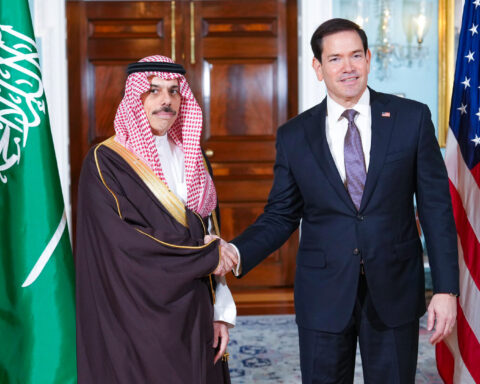

RIYADH — South Korea dispatched Presidential Chief of Staff Kang Hoon-sik as a special envoy to Riyadh between April 7 and 14, where he met Saudi Foreign Minister Prince Faisal bin Farhan on April 12 to negotiate emergency crude oil supplies routed around the Strait of Hormuz. The mission, which also included stops in Kazakhstan, Oman, and Qatar, secured commitments for 273 million barrels of crude oil and 2.1 million tons of naphtha through year-end, according to Kang’s announcement upon return to Seoul on April 15.
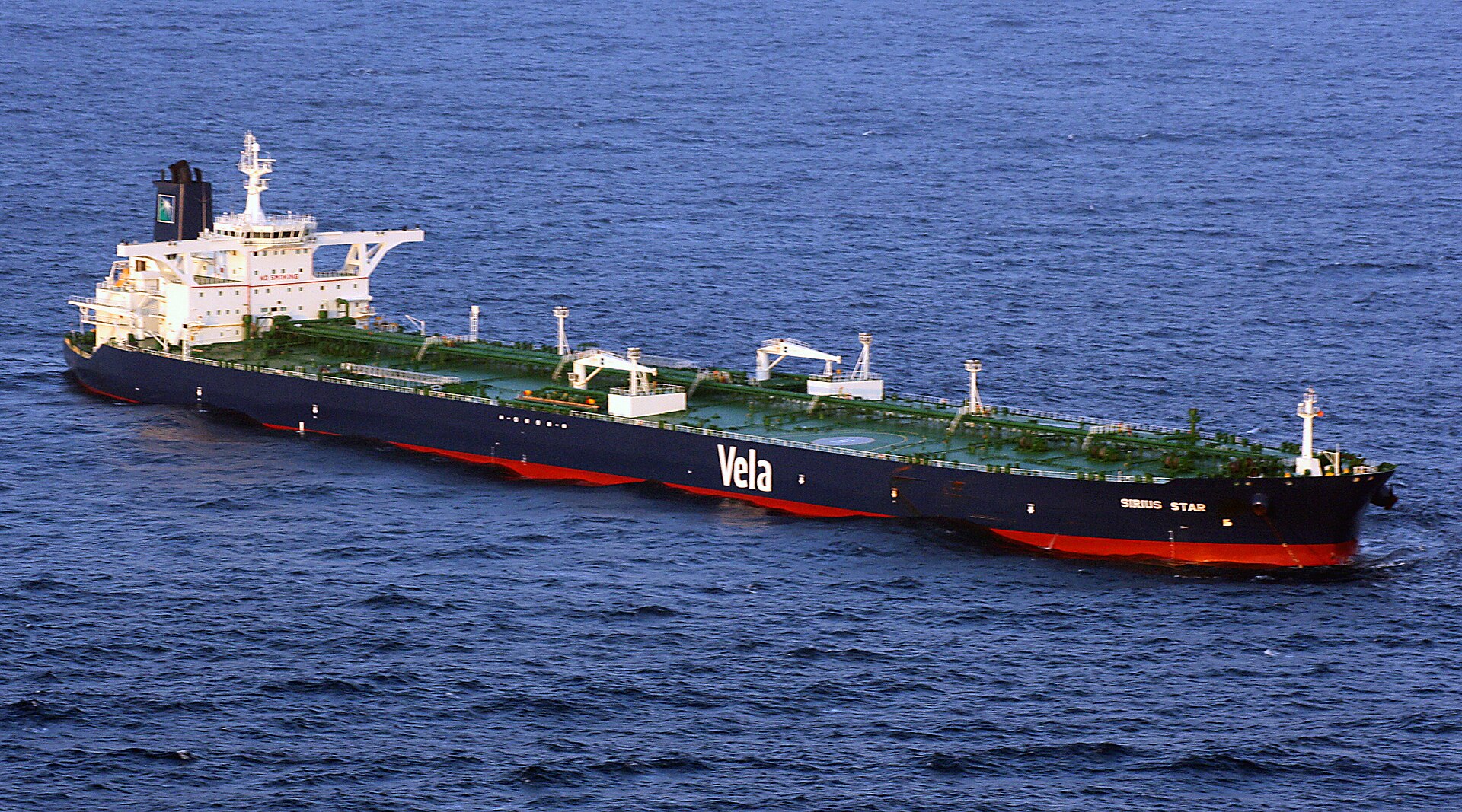
The routing of the delegation tells the story. Seoul did not go to Washington to lobby for convoy escort. It did not go to Islamabad to join the ceasefire track. It went to Riyadh — and it sent not a trade envoy or foreign ministry official but the president’s chief of staff, accompanied by Minister of Trade, Industry and Energy Kim Jeong-gwan and representatives of Korea’s major energy companies. Of the 273 million barrels secured, 250 million came from Saudi Arabia alone, to be delivered via the Red Sea port of Yanbu, bypassing Hormuz entirely.
Contents
- What Kang Secured — and What It Costs
- Why Did Seoul Go to Riyadh Instead of Washington?
- Can Saudi Arabia Physically Deliver 250 Million Barrels via Yanbu?
- How Exposed Is South Korea to the Hormuz Closure?
- Japan Made the Same Call One Week Later
- The Tehran Track Seoul Is Running in Parallel
- Background
- FAQ
What Kang Secured — and What It Costs
The breakdown of the 273-million-barrel package, reported by the Korea Times and Asia Business Daily on April 15, runs as follows: Saudi Arabia committed 250 million barrels of crude and 500,000 tons of naphtha. Kazakhstan contributed 18 million barrels, routed overland through pipelines that never touch the Persian Gulf. Oman added approximately 5 million barrels of crude and up to 1.5 million tons of naphtha, according to the Korea Herald.
“We secured an additional 273 million barrels of crude oil and 2.1 million tons of naphtha,” Kang told reporters in Seoul, per Asia Business Daily. The word “additional” is doing work: these volumes sit on top of existing term contracts, meaning Seoul negotiated supplementary supply precisely because its contracted volumes — much of which transit Hormuz under normal conditions — can no longer be delivered.
The naphtha component matters more than its volume suggests. South Korea is the world’s fourth-largest petrochemical producer. Yeochun NCC, the country’s largest ethylene maker, had already declared a supply disruption by mid-March. Lotte Chemical, LG Chem, and Hanwha Solutions all issued potential force majeure notices, according to For Our Climate and Korean media reports. The 2.1 million tons of naphtha is a feedstock lifeline for an industry that underpins $50 billion in annual exports.
What the announcement did not include: the price. At current Brent levels of $103.38 per barrel (as of April 23), the 273-million-barrel package carries a notional cost above $28 billion before freight. VLCC spot charters from Yanbu have reached $440,000 per day — GS Caltex paid that rate in late March — and S-Oil secured an emergency charter at $555,000 per day, among the highest rates on record, according to shipping data compiled by multiple brokers.
The Middle East briefing 3,000+ readers start their day with.
One email. Every weekday morning. Free.
Why Did Seoul Go to Riyadh Instead of Washington?
The United States has three carrier strike groups converging on Hormuz and a naval blockade that has turned back 31 vessels as of April 23. Washington is running a coercive military track. But South Korea’s problem is not military — it is logistical. Seoul needs barrels loaded onto tankers at ports that do not require transit through a strait where 26 Korean-linked ships and 173 Korean crew members remain stranded, according to Lloyd’s List and the Korea Times.
The Islamabad ceasefire track, even if it produces a framework, offers no guaranteed timeline for reopening commercial shipping through Hormuz. The IRGC’s “full authority” declaration over the strait, issued on April 5 and repeated April 10 while Iran’s foreign minister was negotiating in Islamabad, demonstrated the gap between diplomatic process and operational reality on the water.
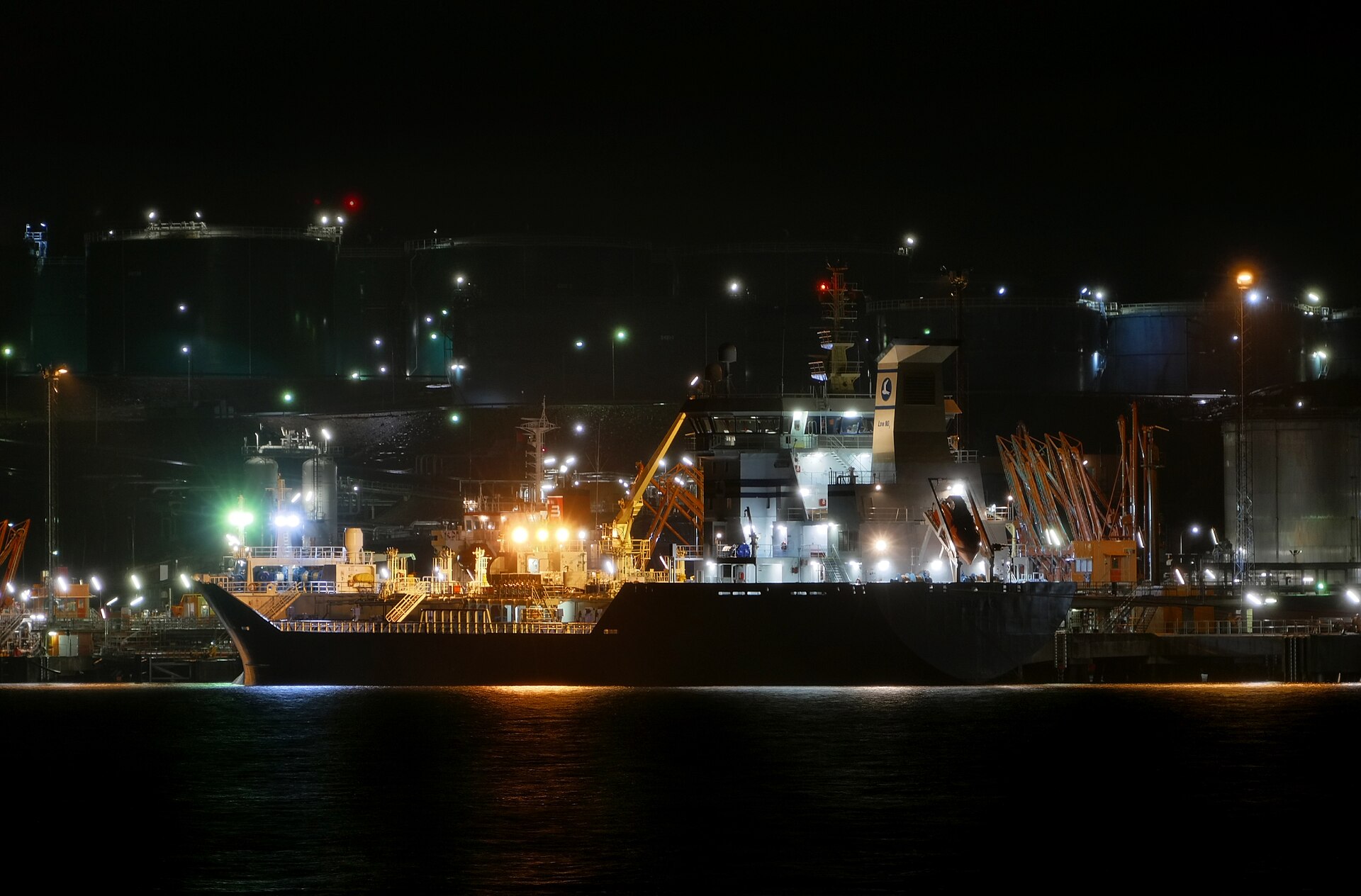
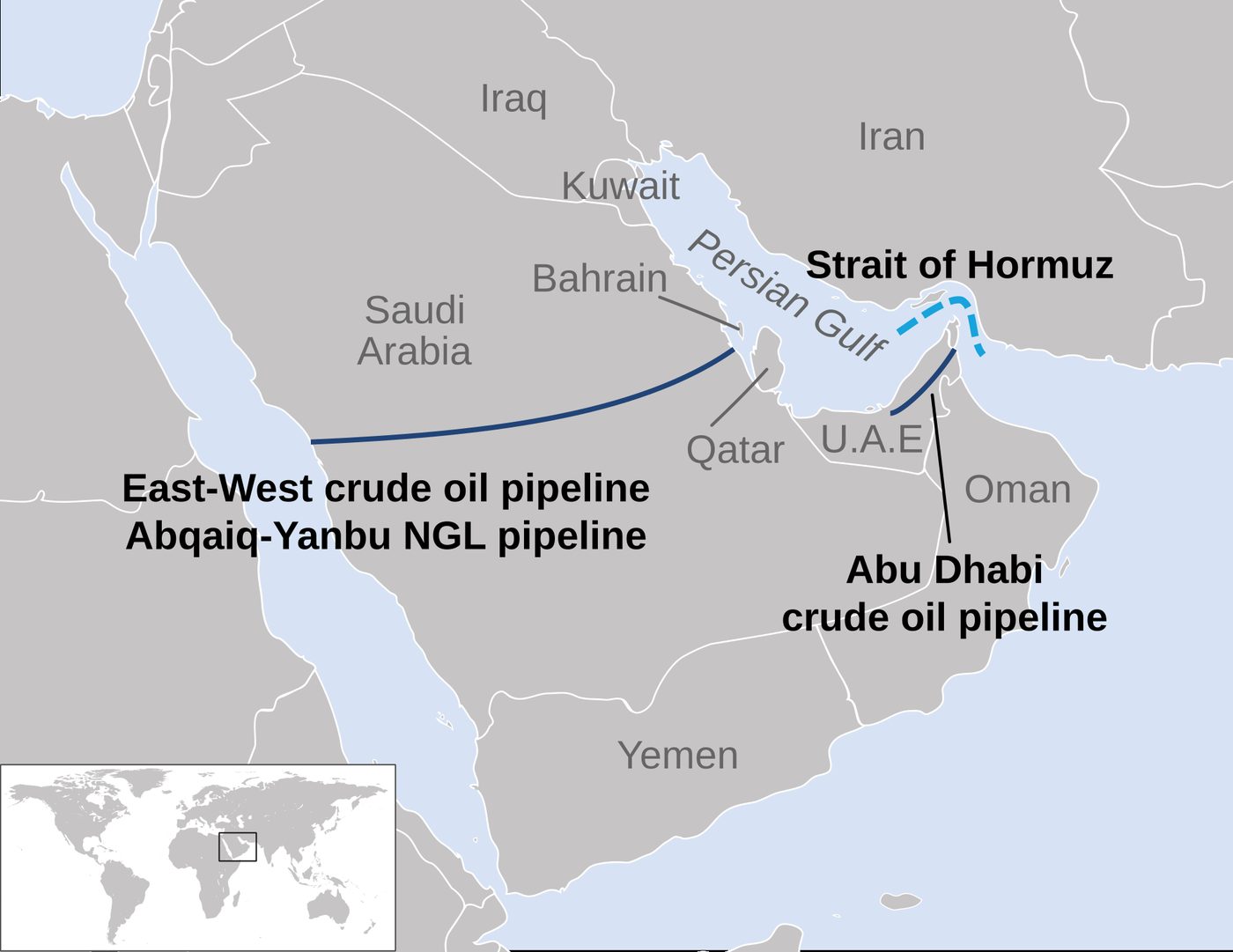
That left Riyadh. Saudi Arabia is South Korea’s largest crude oil supplier and its largest Middle East trading partner. It is also the only major Gulf producer with a functioning export terminal on the Red Sea that does not require Hormuz transit. The meeting between Kang and Prince Faisal, described by the Saudi Gazette as covering “bilateral cooperation between the two countries” and “regional developments and their implications for regional security and the global economy,” was the diplomatic wrapper around an operational ask: load Korean-destined crude at Yanbu.
The Korea Institute for International Economic Policy (KIEP), Seoul’s premier economic policy think tank, had already concluded that oil prices would not return to pre-war levels of roughly $63 per barrel under any scenario. KIEP projected Brent at $90 per barrel in its base case, $117 in its stress case, and $174 in its severe disruption scenario, according to Seoul Economic Daily on April 2. Against that backdrop, securing physical supply mattered more than securing a price.
Can Saudi Arabia Physically Deliver 250 Million Barrels via Yanbu?
This is the structural tension at the center of the deal. Saudi Arabia’s Yanbu terminal on the Red Sea has rarely loaded more than 2.5 million barrels per day historically. Traders surveyed by Reuters and Argus Media estimate the terminal’s handling capacity at “above 4.5 million bpd,” but the effective sustained ceiling is lower — and it is already under strain.
Saudi production in March 2026 stood at 7.25 million bpd, according to the IEA, down 30% from 10.4 million bpd in February. The East-West pipeline connecting the Eastern Province fields to Yanbu was struck by the IRGC on April 8 — a pumping station hit after the ceasefire’s nominal start — and has been reported by Aramco as restored to its full 7 million bpd throughput capacity, though Yanbu’s berths, storage tanks, and vessel scheduling create a bottleneck well below the pipeline’s nameplate flow.
The 250 million barrels committed to South Korea through year-end implies a delivery run rate of roughly 1 million bpd over the remaining eight months — a substantial claim on a terminal that is simultaneously fielding requests from Japan, India, and other buyers locked out of Hormuz. Japan’s Prime Minister Takaichi called MBS directly on April 23 to request expanded oil supply through Yanbu — a conversation covered in detail in the Japan-MBS Yanbu ceiling analysis.
The arithmetic does not resolve easily. If Saudi Arabia is producing 7.25 million bpd and a significant share goes to domestic refining and OPEC+ compliance obligations, the competing claims from South Korea, Japan, India, and term-contract buyers in Europe could exceed what the terminal can physically handle.
How Exposed Is South Korea to the Hormuz Closure?
South Korea sources approximately 70% of its crude oil through the Strait of Hormuz, according to CNBC and CSIS. Its Middle East crude dependence rose from 59.8% in 2021 to 71.9% in 2023, partly because Western sanctions on Russian crude after the Ukraine invasion displaced one of Seoul’s alternative supply sources, according to KIEP. The dependence held near 70% through 2025.
LNG compounds the vulnerability. Roughly 18% of South Korea’s LNG imports transit Hormuz, per CSIS. The Korea Economic Institute of America (KEIA) notes that LNG accounts for more than 19% of Korea’s total energy supply and approximately 25% of its electric power generation. South Korea imported 6.97 million metric tons of LNG from Qatar in 2025 — 14.9% of total LNG imports of 46.684 million metric tons — and Qatar declared force majeure on its long-term Korean contracts amid the crisis, according to Seoul Economic Daily on March 25.
LNG carrier rates surged approximately 650% to around $300,000 per day, according to shipbroker data cited by the Korea Herald. Australia has overtaken Qatar as Korea’s largest LNG supplier, with 14.669 million metric tons in 2025, up 28.7% year-over-year per S&P Global, but the Qatar volumes cannot be easily replaced at current spot prices.
The downstream effects have been severe:
- South Korea released a record 22.46 million barrels from its strategic petroleum reserve in March 2026, part of a 400-million-barrel IEA coordinated release, according to S&P Global.
- The government approved a 26.2 trillion won ($17.3 billion) supplementary budget to cushion energy costs and stabilize supply chains, per Bloomberg.
- KOSPI market capitalization fell approximately 670 trillion won — roughly $444 billion — between end-February and late March, with a 6% single-day decline on March 9 triggering circuit breakers, according to the Korea Herald.
- The OECD downgraded South Korea’s 2026 growth forecast by 0.4 percentage points, the steepest cut among major economies, raising its inflation projection to 2.7%, per the Korea Herald.
- Seoul capped fuel exports for the first time in decades on March 13, covering gasoline, diesel, and kerosene, later extending the restriction to naphtha, according to Argus Media.
Japan Made the Same Call One Week Later
On April 23, Japanese Prime Minister Takaichi called Crown Prince Mohammed bin Salman directly to request “cooperation toward the expansion of energy supply to Japan” via Yanbu, according to the Japanese government readout published by Nippon.com and reported by Bloomberg. Takaichi “expressed her appreciation for Saudi Arabia’s continued supply of crude oil to Japan via Yanbu Port even after the outbreak of the situation,” the readout stated. MBS responded that Saudi Arabia was “willing to respond positively to ensure stable energy supplies to markets including Japan,” per Japan Today.
The pattern is now established: Asia’s two largest advanced-economy oil importers — South Korea and Japan — have both gone directly to Riyadh to negotiate Hormuz-bypass supply within the same two-week window. Neither went through Washington. Neither joined the Islamabad mediation track. Both treated MBS as the functional address for securing their energy supply, a role that carries no formal title but more operational weight than the ceasefire negotiations have produced in nearly two months of talks.
The implicit competition is also visible. Every barrel loaded at Yanbu for Korean tankers is a barrel unavailable for Japanese buyers, and vice versa. Saudi Arabia is being asked to serve as energy guarantor for multiple economies simultaneously through a single Red Sea terminal — a role it has never previously played at this scale.
The Tehran Track Seoul Is Running in Parallel
Seoul is not relying exclusively on Riyadh. South Korea’s Foreign Minister Cho Hyun called Iran’s Foreign Minister Araghchi in March to request safe passage for Korean vessels, according to OE Digital on March 23. On April 23, Araghchi expressed “readiness to cooperate” on South Korean stranded vessels when Seoul’s special envoy visited Tehran separately, per UPI and the Korea Times.
The Korea Shipowners’ Association floated acceptance of Iran’s transit fees as a way to free the 26 stranded vessels, according to Lloyd’s List. That Iran’s toll regime has collected zero revenue in its first 36 days of operation — 60 permits issued, 8 payment requests sent, nothing paid — has not stopped Seoul’s shipping industry from considering it as a pragmatic option.
This creates a diplomatic tension. Seoul is simultaneously pursuing the Saudi bypass route (treating Hormuz as a closed strait to be routed around) and potential accommodation with Tehran (treating Hormuz as a tolled strait to be transited under Iranian terms). The two approaches are not formally contradictory — one is a medium-term supply restructuring, the other an immediate vessel-release negotiation — but they point in different directions regarding the legitimacy of Iran’s claims over the waterway.
Iranian state media has framed the crisis through a leverage lens. The 84% of Hormuz crude going to China, India, Japan, and South Korea gives the IRGC’s transit fee architecture its target market, according to analysis published by 19FortyFive citing the Iranian toll framework. Tehran’s calculation: Asian buyers who cannot easily reroute will eventually pay.
Background
The Korea-Saudi bilateral relationship is formalized under the Korea-Saudi Vision 2030 Memorandum of Cooperation, signed in 2017. The cooperation committee is a cross-ministerial channel covering energy, construction, manufacturing, defense, and advanced technology. The relationship predates that framework by decades — South Korean construction companies have been building infrastructure in Saudi Arabia since the 1970s oil-for-construction era.
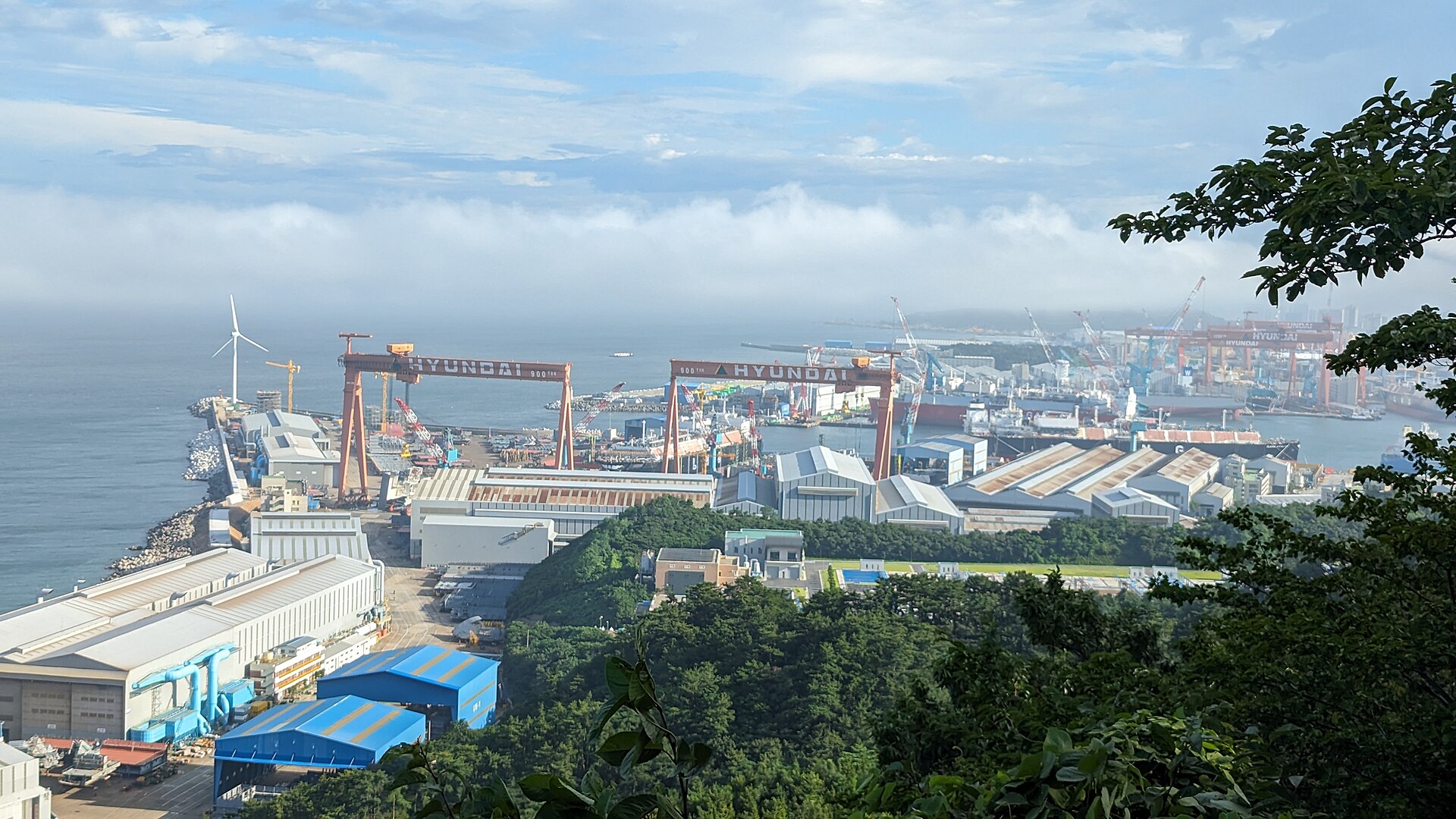
HD Hyundai is currently building the IMI Shipyard at Jubail Port, the largest shipyard in the Middle East, scheduled to begin operations in 2026 with a 40-vessel annual capacity. The shipyard project gives Seoul non-oil diplomatic leverage that Riyadh wants to protect — a detail that likely featured in the Kang-Prince Faisal meeting, though neither side disclosed specifics beyond the Saudi Gazette’s communiqué language.
RAND Corporation convened a “Policy Game” simulation in Seoul in September 2025 that modeled precisely this scenario: a simultaneous Taiwan Strait and Hormuz blockade. The simulation concluded that diversification of energy routes was “no longer optional — it is a strategic necessity,” according to RAND’s April 2026 analysis, which added that “Korea must fundamentally restructure its energy architecture or it will remain exposed to external shocks.” South Korea imports 90-95% of its energy. The Kang mission’s four-country, non-Hormuz supply portfolio mirrors the simulation’s central recommendation — though Seoul has not confirmed the operational connection.
The helium dimension is rarely discussed but acutely felt. South Korea sourced 64.7% of its helium from Qatar’s Ras Laffan facility, per CSIS and the Carnegie Endowment. IRGC strikes on Ras Laffan compounded what was already a semiconductor feedstock crisis — helium is essential for chip fabrication cooling — adding a technology-sector dimension to what is otherwise framed as an energy story. Neither the Kang mission nor Araghchi’s readiness statement addressed helium. The gap between what Seoul secured in Riyadh and what its semiconductor industry actually needs remains open.
Frequently Asked Questions
How long can South Korea’s strategic petroleum reserve sustain consumption at current drawdown rates?
Before the crisis, South Korea’s SPR covered approximately 210 days of domestic consumption, per IEA and Korea National Oil Corporation data. After the record 22.46-million-barrel release in March 2026, roughly 77.64 million barrels remain, according to S&P Global and Cityintel. At South Korea’s average crude consumption rate, this provides roughly 90 days of emergency cover — but the IEA-coordinated release framework limits how quickly additional volumes can be drawn. The 273-million-barrel package is partly designed to slow the SPR drain by replacing disrupted Hormuz-routed cargoes with Red Sea and overland alternatives.
Why did South Korea include Kazakhstan and Oman on the same envoy trip?
Kazakhstan’s 18 million barrels reach South Korea via the CPC (Caspian Pipeline Consortium) pipeline to Novorossiysk on the Black Sea, then by tanker through the Mediterranean — a route that never enters the Persian Gulf. Oman’s contribution (5 million barrels of crude, 1.5 million tons of naphtha) is more complex: Oman’s crude export terminals face the Arabian Sea, not the Gulf, meaning Omani cargoes can bypass Hormuz if loaded at Duqm or Ras Markaz rather than the older Mina al-Fahal facility. The four-country itinerary was designed to assemble a diversified non-Hormuz supply portfolio in a single trip.
What is South Korea’s petrochemical industry’s exposure to the naphtha shortage?
Naphtha — a light hydrocarbon feedstock cracked into ethylene, propylene, and other base chemicals — accounts for the majority of Korean cracker feedstock. When Yeochun NCC and three additional major producers issued potential force majeure notices in March, the downstream impact extended to plastics, synthetic rubber, and chemical exports. The 2.1 million tons of naphtha in the Kang package addresses roughly three to four months of supplementary feedstock demand at current operating rates. What it does not address: if producers cannot restart crackers at full capacity during the supply gap, restarting takes additional weeks, compounding the export disruption beyond what volume alone would suggest.
Could South Korea’s payments of Iran’s transit fees trigger US secondary sanctions?
Yes — and that risk is why the Korea Shipowners’ Association’s openness to paying Iran’s Hormuz transit fees has not translated into payments. Any Korean entity that pays fees to the IRGC-administered toll regime would risk exposure under US Treasury secondary sanctions targeting Iranian revenue streams. The IMO Secretary-General has separately called the toll regime “illegal” under UNCLOS Article 26, which prohibits transit passage charges. Seoul is managing the tension by separating the vessel-release negotiation (a Tehran conversation) from the supply-rerouting negotiation (a Riyadh conversation), but the two tracks may collide if Iran conditions vessel release on toll payment.
How does the Korea-Saudi shipyard relationship factor into the Hormuz diplomacy?
HD Hyundai’s IMI Shipyard at Jubail — the largest in the Middle East, due to begin 40-vessel annual production in 2026 — gives Seoul a non-oil card in Riyadh that most other Asian buyers cannot match. Saudi Arabia needs the shipyard to support its maritime expansion and Red Sea port ambitions; South Korea needs Yanbu loading slots. That mutual dependency almost certainly shaped the terms of the Kang-Prince Faisal meeting, though neither government has disclosed the link explicitly. It also means Seoul has an incentive to keep the bilateral relationship stable regardless of how the Hormuz crisis resolves — and Riyadh knows it.