ISLAMABAD — Iranian Foreign Minister Abbas Araghchi landed in Islamabad late Friday with what IRNA described as a “small delegation” — his first appearance at the negotiating venue since the collapse of the April 11-12 talks that ended without an agreement. Hours earlier, the White House confirmed that Special Envoys Steve Witkoff and Jared Kushner would arrive in Pakistan over the weekend, with Vice President JD Vance on standby should the talks produce enough momentum to warrant his presence.
The timing is not incidental. The 60-day War Powers clock that began when President Trump notified Congress of Iran operations on March 2 expires on May 1 — seven days from now. On April 23, the Senate voted 52-47 to block the fifth War Powers resolution challenging the president’s authority to continue military action, but Republican Senator John Curtis of Utah warned publicly: “I will not support ongoing military action beyond a 60-day window without congressional approval.” The administration needs either a deal, a new authorization, or the political cover that visible negotiations provide.
What makes this round different from the first is not the venue. It is who is — and who is not — in the room.
The delegation that matters
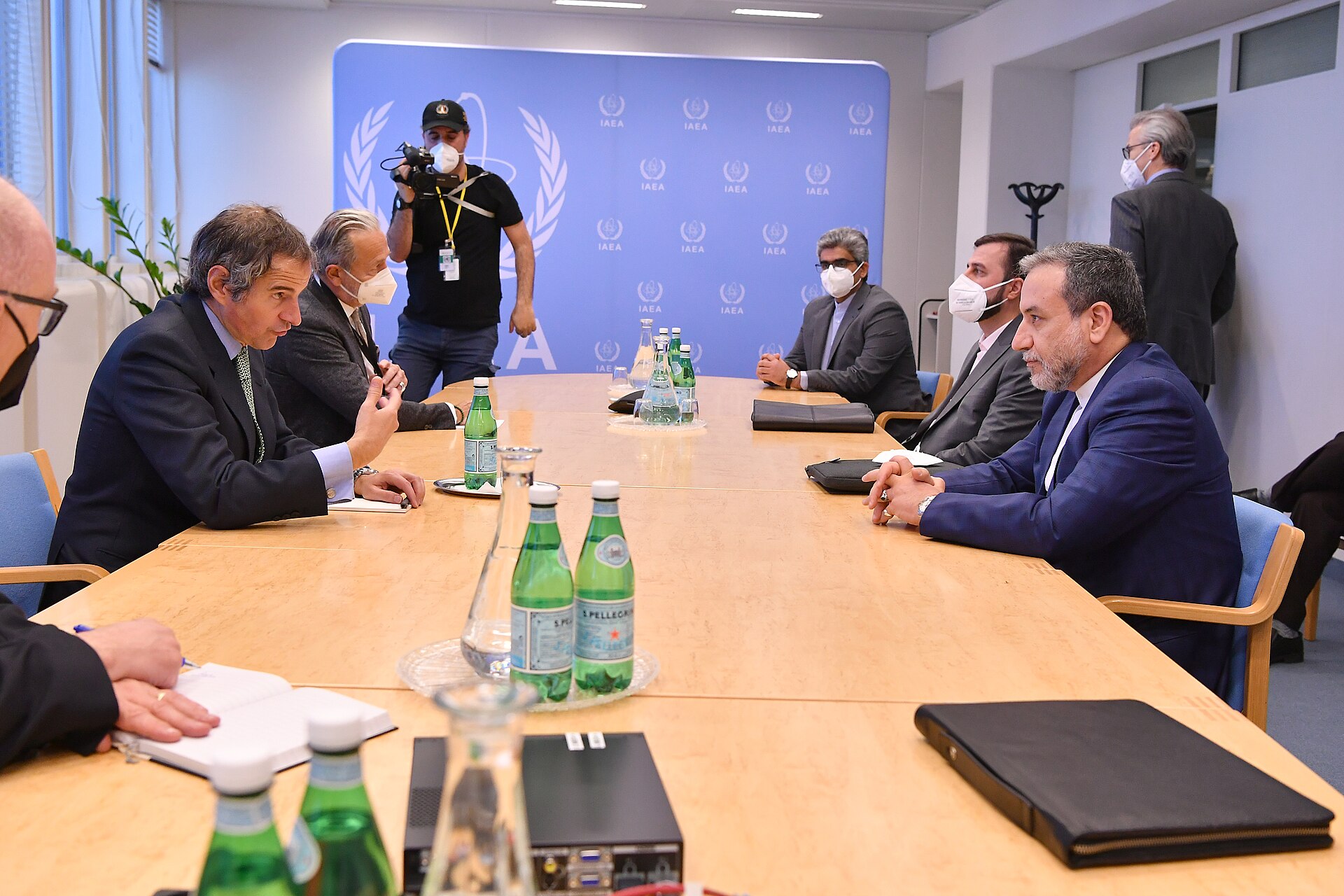
At Islamabad I, Iran sent approximately 70 delegates. The delegation was co-led by Parliament Speaker Mohammad Bagher Ghalibaf — a former IRGC Aerospace Force commander (1997-2000) — and Araghchi, with Supreme National Security Council members and deputy foreign ministers in tow. The American side fielded roughly 300 personnel led by Vance, Witkoff, Kushner, and National Security Advisor Andrew Baker. Three rounds of talks unfolded over 21 hours at the Serena Hotel: one indirect, two direct. No memorandum of understanding was issued.
This time, Araghchi arrives without Ghalibaf. Israeli media reported on April 23, citing Channel 12, that Ghalibaf had resigned from the negotiating team following IRGC intervention. Iran officially denied the reports. But the denial and the absence tell different stories. IRNA’s characterization of the visit as “bilateral” consultations with Pakistani officials — not nuclear or ceasefire talks with the United States — mirrors the exact framing Tehran used before the first round on April 10, when PressTV “rejected baseless rumors of senior officials’ travel to Pakistan.” That trip proceeded.
The Middle East briefing 3,000+ readers start their day with.
One email. Every weekday morning. Free.
On the American side, the downgrade from Vance to Witkoff-Kushner as lead negotiators tracks with the White House explanation that Ghalibaf was Vance’s designated counterpart. Without Ghalibaf, the protocol logic shifts. Vance waits in reserve — available to fly in if the talks reach a stage where his rank is needed to close, but absent from the opening sessions where his presence would be wasted on a delegation that may not have the authority to agree to anything.
Araghchi’s X post on April 24 framed his tour through the language of neighborhood: “Our neighbors are our priority.” The itinerary — Islamabad, then Muscat, then Moscow — positions Pakistan as one stop on a regional consultation loop rather than the destination for a bilateral negotiation with Washington. Whether that framing survives contact with Witkoff and Kushner across a table remains the open question.
What broke the Iranian boycott?
Iran had not attended talks in Islamabad since the April 12 walkout. The intervening twelve days produced an escalation sequence that made a return to negotiations seem less likely, not more.
On April 13, CENTCOM implemented a naval blockade on Iranian ports. Araghchi called it “an act of war” on CNBC on April 22. The same day, Iran seized two MSC-operated vessels — the MSC Francesca and the Epaminondas — in the Strait of Hormuz, describing the action as retaliation for the US seizure of the Iranian-flagged cargo ship Touska on April 19. The IRGC’s choice of vessel was not random: the Aponte family, which owns MSC, has documented personal relationships with both Trump and Macron — making the seizure an intelligence-informed act of coercive diplomacy rather than an opportunistic maritime grab. On April 23, Trump posted on Truth Social ordering the Navy to “shoot and kill any boat” laying mines in Hormuz and to operate minesweepers at “tripled up” tempo. Iranian state media reported that negotiators at the first round “were instructed not to engage on the nuclear file,” with Araghchi telling Iran International that further participation under those constraints was “essentially futile.”
Ghalibaf, on April 21, declared publicly: “We do not accept negotiations under the shadow of threats.” Trump was “trying to turn the negotiating table into a table of surrender.”
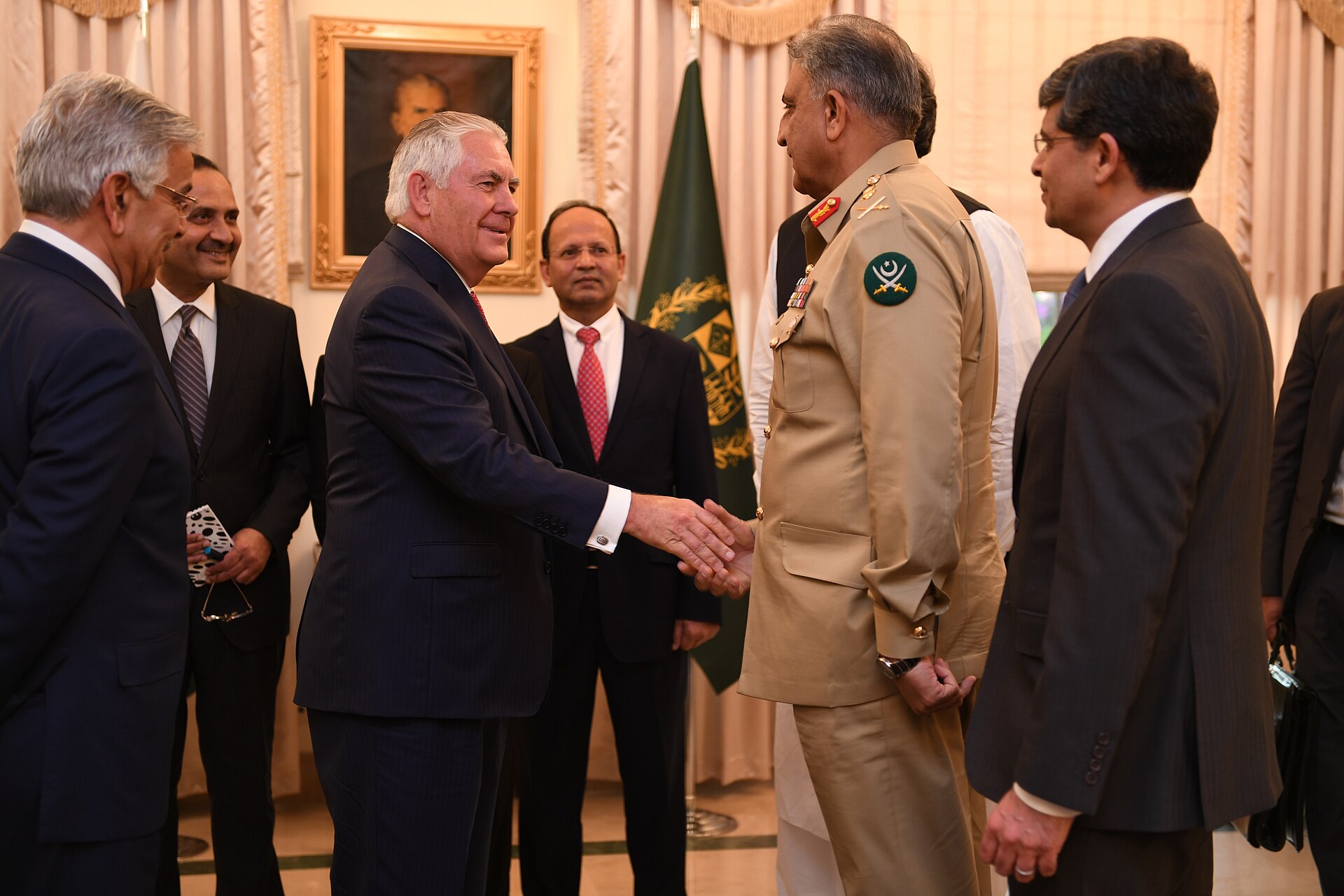
What changed was Pakistan. Foreign Minister Ishaq Dar spoke with Araghchi by phone in the days before the visit, working through ceasefire mechanisms. Army Chief General Asim Munir, who visited Khatam al-Anbiya headquarters (the IRGC’s economic and military construction command) on April 16, had a direct channel to the military side of Iran’s power structure that Araghchi does not. Pakistan’s structural incentive is acute: a $5 billion Saudi loan matures in June 2026, and Islamabad’s role as the sole enforcement mechanism for any ceasefire depends on its ability to bring both parties into the same city.
Trump’s indefinite ceasefire extension on April 21 — issued via Truth Social and citing Iran’s government as “seriously fractured” — also removed the expiry deadline that Iran had cited as evidence of American bad faith. The extension was requested by Pakistan. It conditioned continuation on Iran producing a “unified proposal,” which Pakistani officials described to Al Jazeera as carrying a “high likelihood of a breakthrough.”
The authorization ceiling — again
The structural problem that collapsed the first round has not been resolved. It may have gotten worse.
At Islamabad I, Vance diagnosed it in plain language after the walkout: Iranian officials were “unable to cut a deal and they had to go back to Tehran, either from Supreme Leader Mojtaba Khamenei or somebody else, and actually get approval.” Iran International attributed the disruption to “disagreements between officials aligned with the government and figures linked to Mojtaba Khamenei.” Ali Zolghadr, the SNSC secretary and former IRGC commander, had demanded inclusion in the delegation, resisted by Ghalibaf and Araghchi. When Araghchi showed flexibility on Iran’s support for the Axis of Resistance during talks, Zolghadr submitted a formal complaint accusing him of “deviation from the delegation’s mandate.” That complaint, forwarded through IRGC-aligned channels, effectively ended the round.
The nuclear gap was real but secondary to the authority gap. The United States demanded a 20-year enrichment moratorium and the removal of all highly enriched uranium from Iranian soil. Iran countered with single-digit years and monitored downblending in-country. Araghchi told TRT World and WION that the two sides had been “inches away from an MoU” and accused Washington of “moving the goalposts and maximalizing.” But being inches from a text means nothing if the person with the pen cannot sign.
The stakes of that authority gap sharpened further this week: the Pentagon has formally designated Vahidi as a named strike target while Witkoff boards his flight to Islamabad — a coercive signal that decapitation is back on the table even as diplomacy continues around it.
President Masoud Pezeshkian publicly accused Vahidi and Abdollahi on April 4 of sabotaging ceasefire efforts — an extraordinary admission by a sitting president that he does not control his own security establishment. Under Article 110 of the Iranian constitution, the president has zero authority over the IRGC. Khamenei, who has been absent from public view for over 50 days, remains the only figure who can override Vahidi’s red lines. Mojtaba Khamenei, the Supreme Leader’s son and effective proxy, was reported by one source to have communicated via audio-only channels.
Ghalibaf’s reported departure from the negotiating team — officially denied, visibly absent — removes the one figure who bridged the civilian-military divide. A former IRGC commander who became parliament speaker, Ghalibaf gave the first round’s delegation a veneer of military-affiliated credibility that Araghchi alone cannot provide. If the IRGC Navy has declared full authority over the Strait and the parliament speaker has walked away from the negotiating table, Araghchi arrives in Islamabad with a mandate that may not survive his return flight to Tehran.
What does Kushner’s presence signal?
Jared Kushner is not a diplomat in the conventional sense. He is Trump’s son-in-law, a real estate developer turned Special Envoy for Peace, and the managing partner of Affinity Partners — a firm that received $2 billion from the Saudi Public Investment Fund and has collected more than $110 million in management fees from the Saudi government. Representative Jamie Raskin, the ranking Democrat on the House Judiciary Committee, opened a formal congressional investigation on April 16 into what his office described as “99 percent of its funding derived from foreign nationals, including sovereign wealth funds operated by the governments of Saudi Arabia, the United Arab Emirates, and Qatar.”
His presence in Islamabad serves a different function than Witkoff’s. Witkoff is the designated negotiator — the person who sat across from Araghchi for 21 hours in April and who, according to former diplomats cited by TIME, required Araghchi “to explain the difference between an enrichment facility and a reactor on multiple occasions.” Kushner is the signal to Riyadh and Abu Dhabi that whatever emerges from these talks will account for Gulf interests — or, more precisely, for the interests of governments whose sovereign wealth funds are Affinity Partners’ principal investors.
The combination also reflects Trump’s domestic timeline. The May 1 War Powers deadline requires either a deal, a new congressional authorization, or a legal theory for continuing operations without one. A president who has now seen five War Powers resolutions defeated on party-line votes has reason to prefer a visible negotiation process that makes the question moot.
Defense Secretary Pete Hegseth, speaking on April 24, confirmed that “the American blockade on the Strait of Hormuz will continue” regardless of talks. He added, addressing European allies: “This is much more their fight than ours.”
Hegseth’s framing — “much more their fight than ours” — is precisely the opening Saudi Arabia has been working through the Nicosia EU-Arab format. The Nicosia summit and Saudi Arabia’s parallel EU-GCC diplomatic track uses European institutional weight to advance Hormuz and Lebanon terms that Riyadh cannot press bilaterally with Washington without triggering the arms-supply leverage the Pentagon holds over the kingdom.
May 1 and the domestic clock
Trump notified Congress of hostilities against Iran on March 2. Under the War Powers Resolution of 1973, the 60-day authorization window expires May 1. Congress can extend it by simple-majority joint resolution in both chambers. It can also terminate operations by the same mechanism — though the Senate has now blocked five such attempts.
The April 23 vote — 52-47 — fell largely along party lines. Senator Rand Paul of Kentucky was the only Republican to vote in favor of the resolution. Senator John Fetterman of Pennsylvania was the only Democrat to vote against. Senate Minority Leader Chuck Schumer told reporters afterward: “We’re going to keep voting on those resolutions again and again and again.”
Representative Don Bacon, a Republican from Nebraska, stated the constitutional position bluntly: “If it’s not approved, by law, they have to stop their operations.” But the War Powers Resolution has never been enforced against a sitting president in its 53-year history. No court has ruled on its constitutionality. Every president since Nixon has treated it as advisory rather than binding.
The administration’s most likely path past May 1, according to legal analysts cited by Al Jazeera and Foreign Policy, is to invoke the 2001 or 2002 AUMF — the same authorizations used against al-Qaeda and Iraq that Congress has never repealed. Alternatively, Trump can certify a 30-day extension citing “unavoidable military necessity” for orderly withdrawal of forces. Neither option requires new legislation. Both require the political judgment that visible military operations against Iran are worth the constitutional friction.
Saudi Arabia’s position compounds the pressure. Riyadh has been lobbying Washington to lift the Hormuz blockade, which has cratered Saudi crude exports alongside Iranian ones. Saudi production fell from 10.4 million barrels per day in February to 7.25 million in March — a 30 percent drop, the International Energy Agency’s “largest disruption on record.” Brent crude stood at approximately $105-106 per barrel on April 24, below the $108-111 Saudi fiscal breakeven that Bloomberg has calculated inclusive of PIF commitments.
The strait between rounds
The twelve days between Islamabad I and Islamabad II turned the Strait of Hormuz from a negotiating variable into a battlefield.
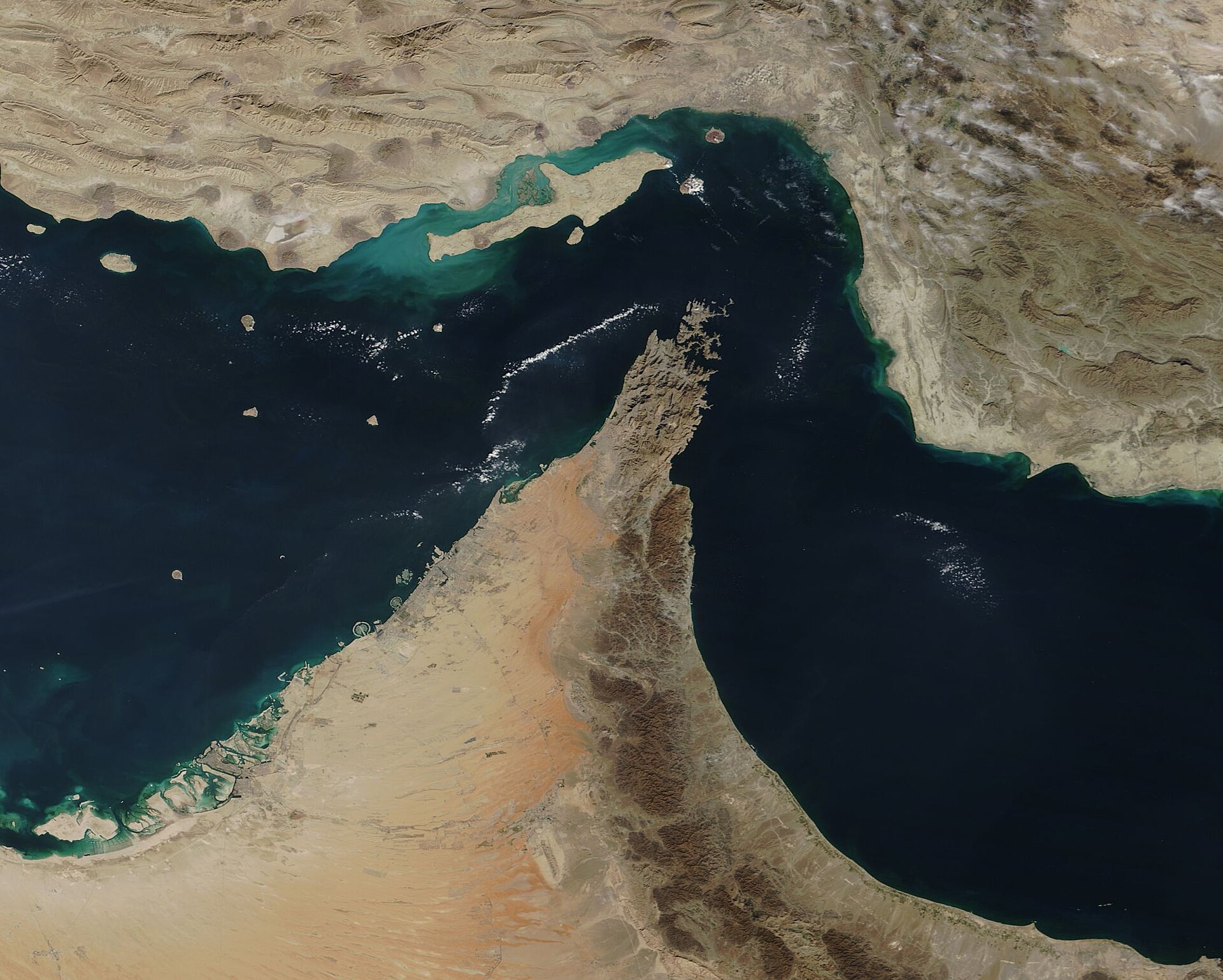
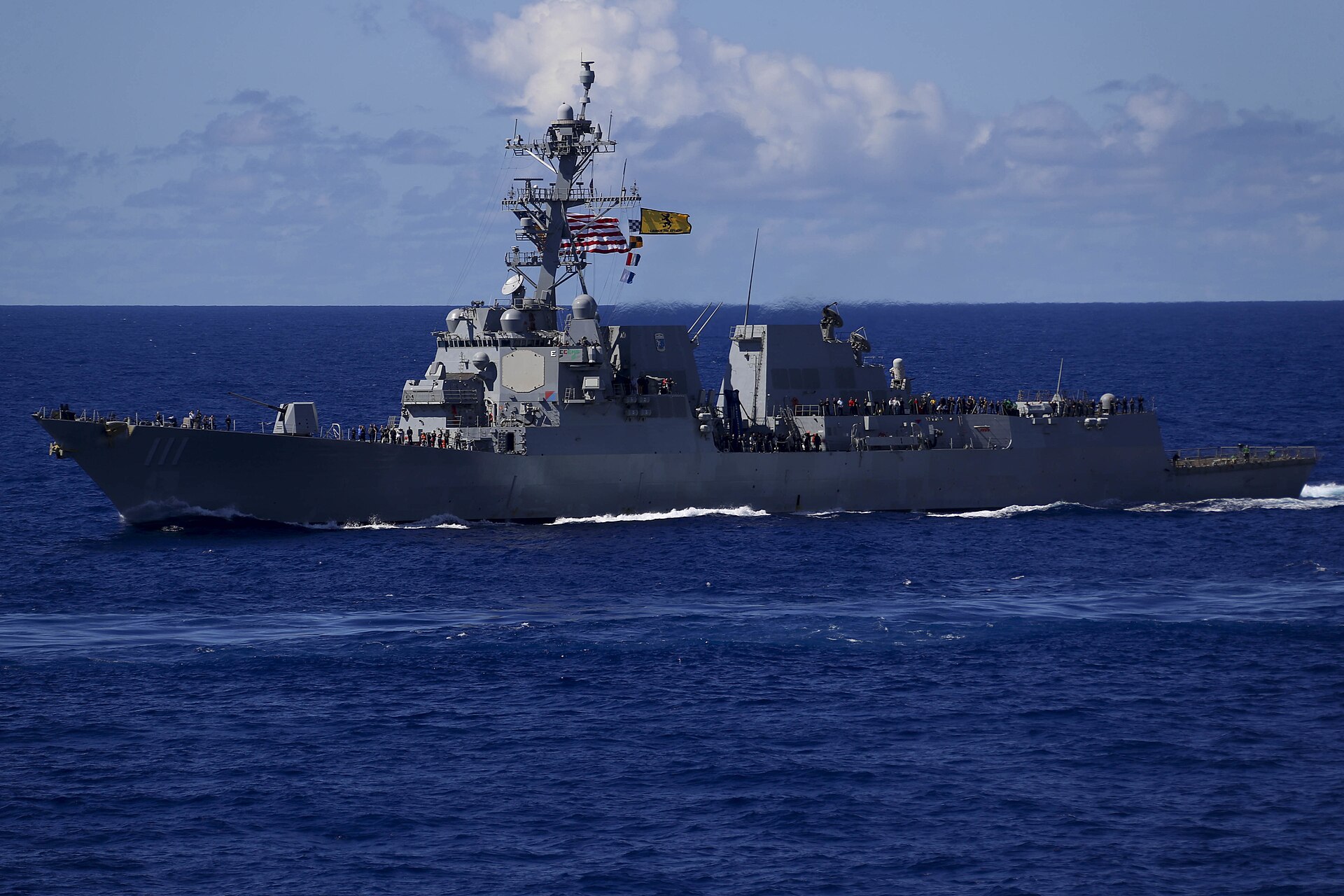
On April 13, CENTCOM imposed a blockade on Iranian ports — not all Hormuz transit, but any vessel bound for or departing from Iranian facilities, or subject to Iranian toll demands. By April 24, at least 33 ships had been redirected. The US seized the Iranian-flagged Touska on April 19 via the destroyer USS Spruance. Iran retaliated on April 22 by seizing the MSC Francesca and the Epaminondas, both MSC-operated container ships transiting Hormuz. An Iranian gunboat fired on a container ship the same day, causing damage to the vessel’s bridge, according to a UKMTO incident report.
Trump’s April 23 Truth Social post ordering the Navy to “shoot and kill any boat” laying mines represented a further escalation in declared rules of engagement. The US intercepted another sanctioned tanker in the Indian Ocean on April 24.
Iran’s refusal to appear at talks while the blockade persisted was the stated reason for the twelve-day gap. Araghchi then traveled to Islamabad two days after calling it “an act of war,” without announcing the blockade had been lifted as a precondition. Something else — Pakistani pressure, the ceasefire extension, internal calculation, or some combination — moved the needle enough to get a foreign minister on a plane while calling the trip “bilateral consultations.”
Ghalibaf’s April 21 framing — that negotiating under blockade equals surrender — remains the IRGC-aligned position. His reported absence from this delegation may not indicate a softening of that stance. It may indicate that the people who hold that stance have decided the talks are Araghchi’s problem now.
Frequently asked questions
Is Araghchi meeting Witkoff and Kushner directly, or through Pakistani intermediaries?
Iran’s official framing describes the visit as bilateral consultations with Pakistani officials. At Islamabad I, the first round was indirect (through Pakistani mediation) before two direct rounds followed. Al Jazeera and Haaretz have reported that Araghchi may be arriving with an Iranian proposal to transmit through Pakistan rather than present directly to the US team. The format will likely become clear once both delegations are on the ground over the weekend.
What happens on May 1 if there is no deal?
The 60-day War Powers authorization expires. Trump can invoke existing war authorizations, certify a 30-day extension, or simply continue operations — no court has ever enforced the War Powers Resolution against a sitting president in its 53-year history. The Senate’s 52-47 party-line vote on April 23 suggests Congress will not force the issue. The deadline creates political pressure, not a legal hard stop.
Why is Ghalibaf’s absence significant?
Ghalibaf served as the IRGC-credentialed co-lead of Iran’s delegation at Islamabad I. His background as IRGC Aerospace Force commander (1997-2000) gave the delegation a bridge to the military establishment that the civilian Araghchi lacks. Israeli media reported his resignation from the negotiating team on April 23; Iran denied it. If he is absent by choice, it may signal that IRGC-aligned figures have decided direct talks are not worth the political cost. If absent under pressure, it suggests the same internal disputes that collapsed the first round have been resolved in favor of the hardliners — leaving Araghchi to negotiate with less authority than he had twelve days ago.
What is Kushner’s formal role in the talks?
Kushner holds the title of Special Envoy for Peace. His firm, Affinity Partners, manages $6.16 billion in assets, with 99 percent of that capital sourced from foreign nationals — including $2 billion from the Saudi Public Investment Fund. Representative Raskin’s congressional investigation, opened April 16, is examining whether his diplomatic role creates conflicts of interest with his investment portfolio. His presence signals that Gulf financial interests will factor into whatever framework emerges. The full architecture of that conflict — including the $137 million in cumulative management fees and the structural tension between Kushner’s Saudi income and the sanctions-relief outcome Iran requires — is examined in Kushner Replaces Vance in Islamabad: The $137 Million Conflict of Interest at the Heart of Iran Talks.
Can Iran’s foreign minister actually agree to anything binding?
Based on the precedent of Islamabad I, probably not without approval from figures above him. Under Iran’s constitutional structure, the president — let alone the foreign minister — has no authority over the IRGC. Any agreement Araghchi reaches would need ratification by the Supreme National Security Council, where Vahidi and Zolghadr hold effective vetoes. Ghalibaf’s absence removes the one delegation member whose IRGC background gave him standing to broker internally. The authorization ceiling that broke the first round is, if anything, higher now.
Pakistan’s own capacity to enforce any agreement it brokers is equally constrained — not by its constitutional structure but by its financial dependence on Riyadh. Saudi Arabia’s financial leverage over Pakistan’s defence exports means Munir cannot afford to broker a deal that Saudi Arabia does not want, regardless of what Araghchi agrees across the table. When Araghchi arrived for Round 3, he carried Iran’s written roadmap of conditions while denying any talks with the US were planned — the architecture of deniability that Ghalibaf’s resignation from the delegation made structurally necessary. Araghchi’s subsequent Muscat and Moscow stops — designed to test and ratify positions he cannot publicly accept in Islamabad — are examined in Araghchi’s Three-Stop Tour Builds a Back-Channel Architecture Iran Can Deny.