LONDON — Iran’s Islamic Revolutionary Guard Corps did not seize a random container ship on April 22. By targeting MSC Francesca — a vessel belonging to the Aponte family, owners of the world’s largest shipping company, who maintain documented personal relationships with both Donald Trump and Emmanuel Macron — the IRGC executed an intelligence-informed act of coercive diplomacy aimed at the two Western leaders whose political cooperation is structurally necessary for any ceasefire resolution.
The seizure occurred hours after Trump announced an indefinite extension of the Iran ceasefire, in waters eight nautical miles west of Iranian territory. MSC Francesca was taken alongside a second vessel, the Greek-owned Epaminondas, and both were brought to Bandar Abbas. A third ship, the Euphoria, was targeted but escaped. Within 24 hours, the White House declared the seizures were not a ceasefire violation, and Trump issued a “shoot and kill” order — directed at Iranian boats laying mines, not at the seizures themselves. That gap determined the ceasefire’s effective scope.
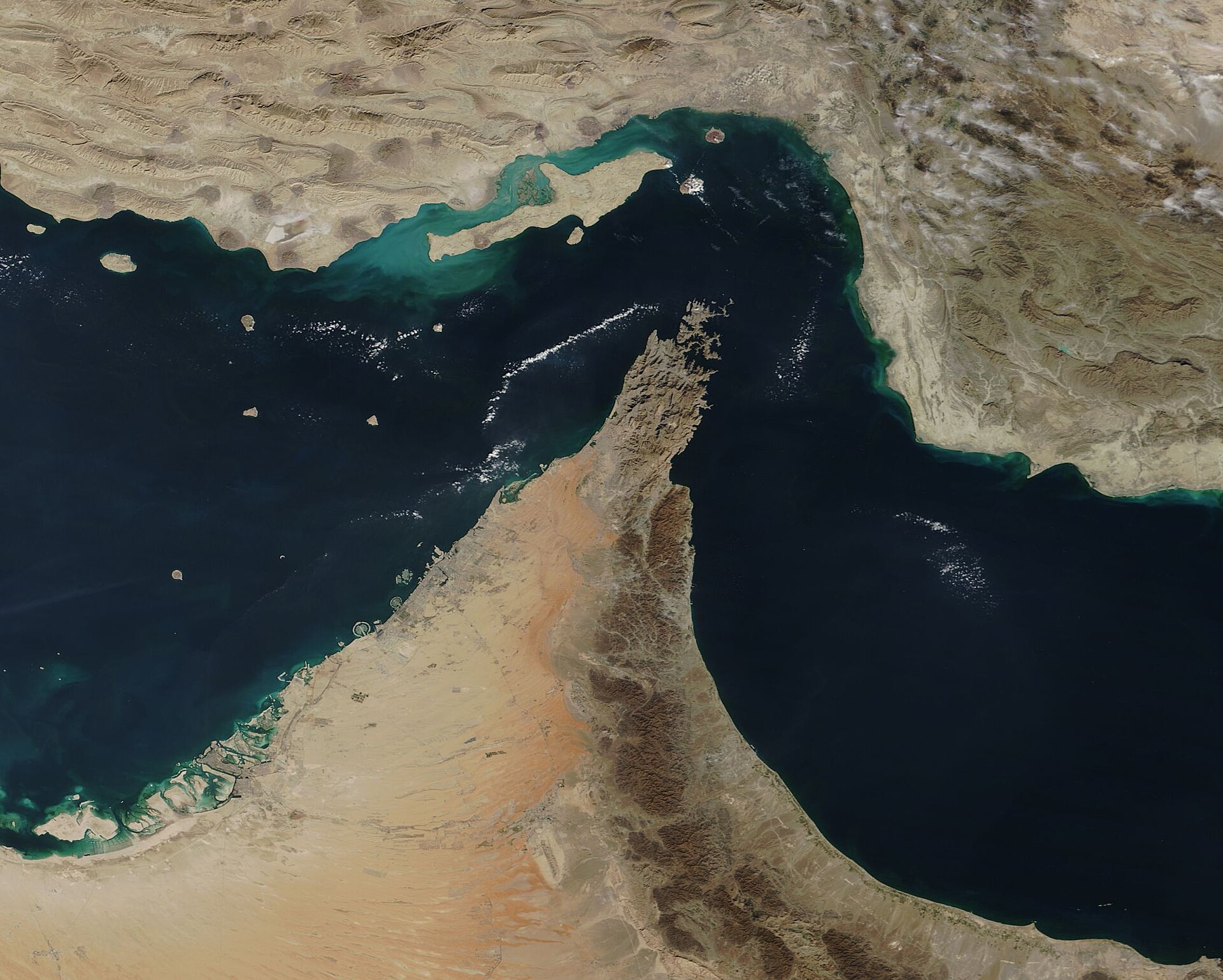
Table of Contents
- The Seizure: April 22 in the Strait
- Why Did Iran Choose an MSC Ship — Again?
- The Aponte-Trump Connection: Panama, the Oval Office, and the Tariff Deal
- What Links MSC to the Élysée Palace?
- The MSC Aries Template
- Did Iran Time the Seizure to the Ownership Handover?
- The White House Response and the Ceasefire Gap
- What Does the Aponte Seizure Mean for Saudi Arabia?
- Frequently Asked Questions
The Seizure: April 22 in the Strait
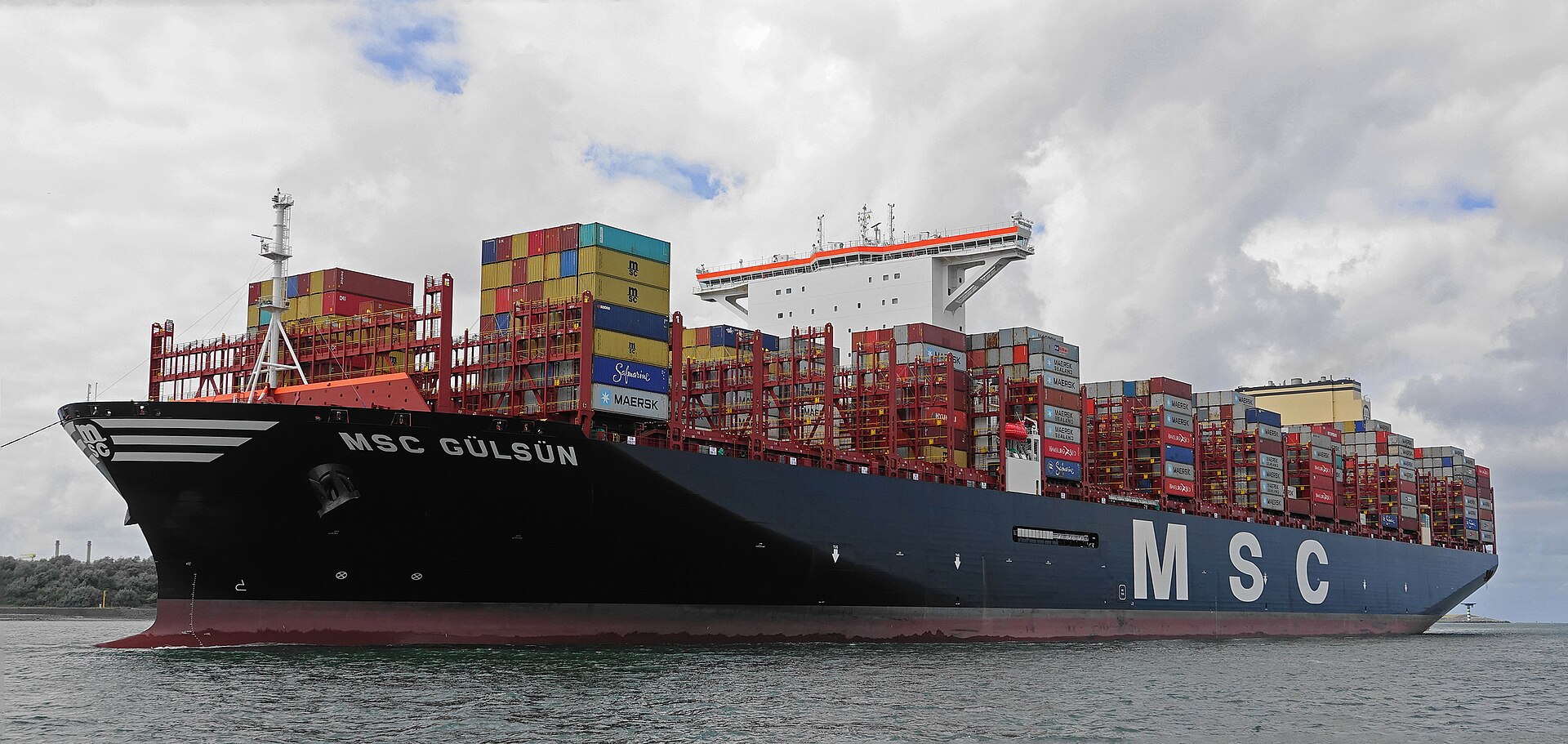
MSC Francesca (IMO 9401116) is a 363-meter, 11,668-TEU container vessel built in December 2008 by Hyundai Samho Heavy Industries. Panama-flagged, Italian-owned. She had last departed Dammam, Saudi Arabia, on March 5 and was en route to Hambantota, Sri Lanka, when IRGC Navy commandos boarded her approximately eight nautical miles west of Iranian territory in the Strait of Hormuz.
Approximately 40 crew were aboard, including four Montenegrin nationals — among them the captain — and two Croatian nationals confirmed by Croatia’s foreign ministry. Press TV broadcast footage of the boarding within hours, presenting it as sovereign maritime enforcement.
The Epaminondas, a Liberia-flagged, Greek-owned bulk carrier (94,769 dwt, owned by Technomar Shipping Inc.) on time charter to MSC, came under gunfire approximately 20 nautical miles off Oman’s coast at roughly 06:50 local time, sustaining bridge damage. Her crew of 21 — primarily Ukrainians and Filipinos — were taken to Bandar Abbas alongside MSC Francesca’s complement.
The IRGC’s formal statement cited two grounds: “operating without the required authorization and tampering with navigation systems,” adding that the vessels “had endangered maritime security.” IRNA, Iran’s state news agency, applied a third characterization — that MSC Francesca was “said to be linked to the Zionist regime.” The same language Iran used to justify its 2024 seizure of MSC Aries.
The Middle East briefing 3,000+ readers start their day with.
One email. Every weekday morning. Free.
Panama’s Foreign Ministry condemned the action as “an illegal seizure that violates international law.” IMO Secretary-General Arsenio Dominguez called the seizures “unacceptable,” demanding “these reckless actions cease and any ships and innocent seafarers be released immediately.”
Why Did Iran Choose an MSC Ship — Again?
The IRGC has a documented pattern of selecting vessels whose beneficial owners have identifiable political relationships with Iran’s adversaries. The MSC Francesca seizure is the second time in two years that Iran has targeted a ship connected to Mediterranean Shipping Company, and in both cases the selection reflects knowledge of ownership networks that extends well beyond flag state or cargo manifest.
MSC is the world’s largest container shipping company: 980-plus vessels, more than 7.2 million TEU of capacity, commanding 21.2 percent of global container throughput as of November 2025. It was founded in 1970 in Naples by Gianluigi Aponte and his wife Rafaela Aponte-Diamant. Gianluigi’s net worth stands at $37 billion according to the Bloomberg Billionaires Index.
The Aponte family’s political entanglements run in two directions simultaneously: one to the White House through the Panama Canal ports deal and an Oval Office tariff meeting; the other, through family ties and a criminal investigation, to the Élysée Palace. Iran appears to have selected MSC Francesca because of what seizing it does to two specific diplomatic relationships, not because of what the ship carries.
Every major outlet — Fox News, Al Jazeera, Lloyd’s List, the Washington Post — has noted the Aponte-Trump-Macron connections as color. None has constructed the systematic argument that the IRGC’s vessel selection reflects operational intelligence about political ownership networks. The 2024 MSC Aries precedent, in which Iran targeted a Zodiac Maritime vessel because of Eyal Ofer’s Israeli identity, establishes the methodology. The 2026 seizure applies the same logic at a higher altitude.
The Aponte-Trump Connection: Panama, the Oval Office, and the Tariff Deal
On November 4, 2025, Diego Aponte — Gianluigi’s son and MSC Group President — participated virtually in a meeting with Trump in the Oval Office alongside Swiss executives from Rolex, Partners Group, Richemont, Mercuria, and MKS Pamp. Diego Aponte helped arrange the meeting. The result: US tariffs on Switzerland were cut from 39 percent to 15 percent, according to Ship2Shore and Axios.
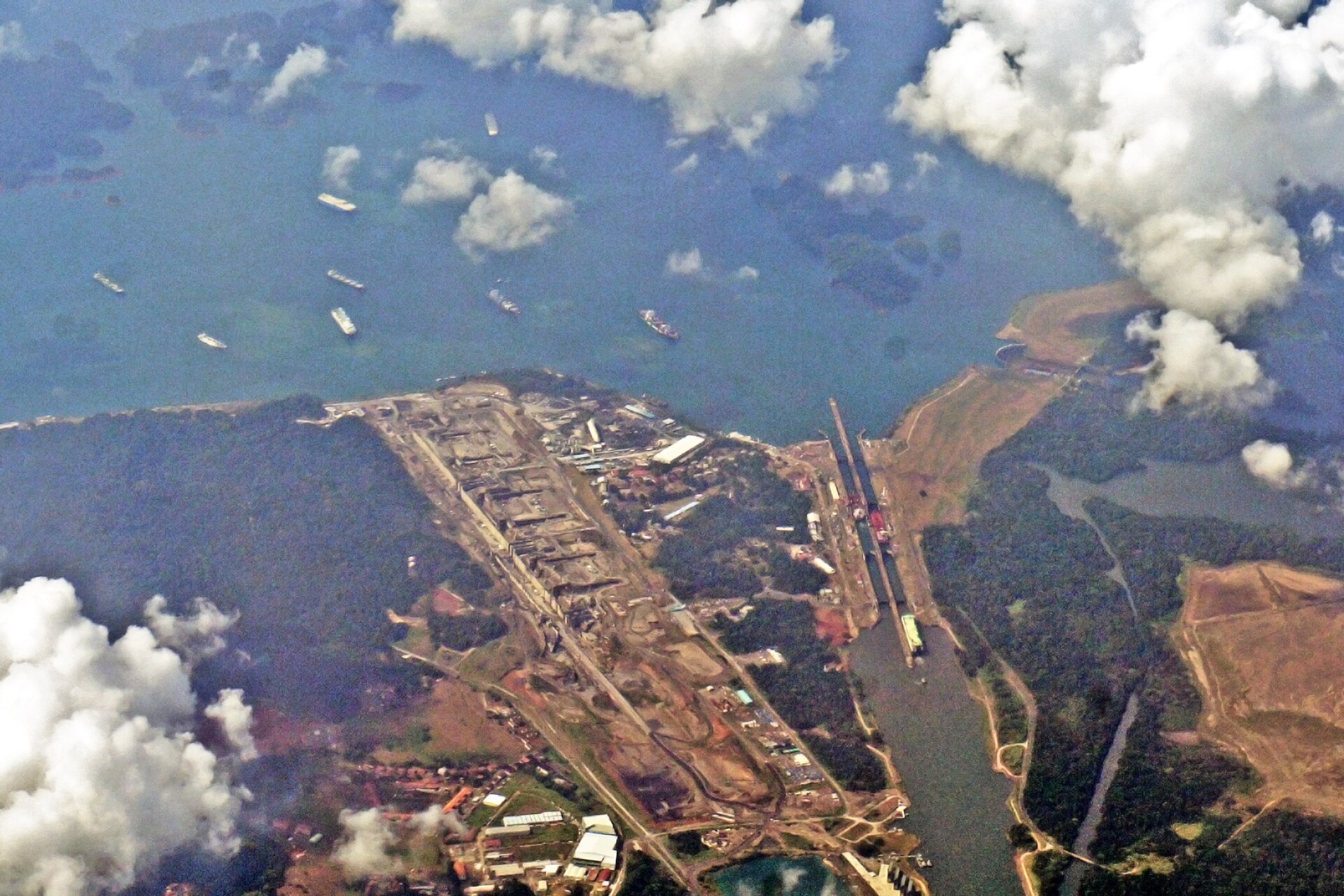
The relationship extends beyond tariff negotiations. MSC’s port infrastructure arm, Terminal Investment Limited (TiL), chaired by Diego Aponte, was a consortium partner with BlackRock in the $22.8 billion acquisition of 43 CK Hutchison global ports — including the two Panama Canal terminals at Balboa and Cristobal. Trump cited this deal in his March 4, 2025, address to Congress: “My administration will be reclaiming the Panama Canal, and we’ve already started doing it.”
The Panama deal made MSC a participant in one of Trump’s signature geopolitical campaigns. Trump had framed the Panama Canal as a national security issue since his inauguration, and the BlackRock-TiL consortium gave him a corporate vehicle to claim progress on a promise that required no congressional authorization and no military deployment — only a commercial transaction involving a family that also wanted tariff relief.
| Connection | Nature | Date | Source |
|---|---|---|---|
| Diego Aponte — Trump Oval Office | Virtual meeting, tariff negotiation | November 4, 2025 | Ship2Shore; Axios |
| TiL/BlackRock — Panama Canal ports | $22.8B acquisition of CK Hutchison ports | February 2025 | Maritime Executive; CNBC |
| Rafaela Aponte-Diamant — Kohler family | Reported cousin of Kohler’s mother | Long-standing | France24, June 2018 |
| Apontes — Macron at MSC Meraviglia | Photographed together at ship delivery | May 31, 2017 | Fox News, April 2026 |
| Kohler — Aponte family yachts | Eight vacations, ski chalet in Megève | During Élysée tenure | Mediapart via France24 |
For the IRGC’s purposes, the Aponte-Trump relationship is not incidental. It is the mechanism through which seizing a container ship in the Strait of Hormuz becomes a signal that arrives on the desk of a sitting American president as a personal affront — not merely a diplomatic incident.
What Links MSC to the Élysée Palace?
Rafaela Aponte-Diamant is reportedly a cousin of the mother of Alexis Kohler, who served as Secretary-General of the Élysée Palace — France’s most powerful civil servant — from May 2017 until April 14, 2025. France24 described Kohler as “Macron’s second brain.”
Kohler’s career trajectory runs through MSC. He joined the company as finance director in 2016 while simultaneously advising Macron’s presidential campaign. After Macron’s election, Kohler moved from MSC’s corporate offices directly into the Élysée, where he remained for nearly eight years.
In October 2022, French prosecutors placed Kohler under formal criminal investigation for “unlawful taking of interest” — the charge that his role in French state negotiations involving Les Chantiers de l’Atlantique, the Saint-Nazaire shipyard where MSC is the primary cruise ship client, represented a conflict of interest given his family ties to the Apontes. In November 2024, a court ruled Kohler could face trial after judges found he may have undertaken “positive actions to conceal” his MSC connections.
Mediapart reported that during his time at the Élysée, Kohler, his wife, and their three children took eight vacations on Aponte family yachts and stayed at the family’s ski chalet in Megève. Gianluigi and Rafaela Aponte-Diamant were photographed alongside Macron at the MSC Meraviglia delivery ceremony on May 31, 2017, at the Chantiers de l’Atlantique shipyard — two weeks after Macron’s inauguration and Kohler’s assumption of his Élysée role.
Kohler left the Élysée on April 14, 2025. But the network he built between MSC and the French state over eight years does not dissolve with his departure. The MSC-Chantiers de l’Atlantique relationship — France’s largest shipyard, builder of MSC’s cruise fleet — remains a standing commercial and political entanglement.
The French angle matters because France, alongside the UK, has been the most assertive European voice on Iran. Macron called both Trump and Iranian President Pezeshkian during the April talks. Foreign Secretary Cooper’s Mansion House speech — “Lebanon must be included, Hormuz must be fully reopened, no place for tolls” — reflected a UK-France alignment that gave Saudi Arabia diplomatic cover to demand Lebanon’s inclusion in the ceasefire without saying so publicly. Threatening the Aponte family is a way of testing that alignment.
The MSC Aries Template
On April 13, 2024 — within hours of Iran’s mass drone and missile strike on Israel — IRGC commandos helicopter-boarded MSC Aries in the Strait of Hormuz. MSC Aries was operated by Zodiac Maritime, the shipping arm of Israeli billionaire Eyal Ofer’s Zodiac Group. Iran demanded a $170 million fine from Ofer. The crew of 25 were held until May 3, 2024.
The targeting logic was transparent: Iran selected a vessel whose beneficial owner had a specific, identifiable relationship with Israel. IRNA labeled MSC Aries as connected to the “Zionist regime” — the same language now applied to MSC Francesca. The actual purpose was to send a message that would arrive through commercial and personal channels, not diplomatic ones.
A February 2023 Iranian suicide drone attack on an oil tanker partially owned by Ofer’s Zodiac Group further establishes the pattern of tracking specific beneficial owners across multiple vessels over time.
| Date | Vessel | Beneficial Owner | Political Target | Pretext |
|---|---|---|---|---|
| February 2023 | Oil tanker (drone attack) | Eyal Ofer / Zodiac Group | Israel | “Israeli-linked” |
| April 13, 2024 | MSC Aries | Zodiac Maritime / Ofer | Israel | “Linked to Zionist regime” |
| April 22, 2026 | MSC Francesca | Aponte family / MSC | Trump + Macron | “Linked to Zionist regime” + “navigation tampering” |
The 2026 seizure repeats the playbook but escalates the target. In 2024, Iran seized a vessel connected to an Israeli shipping billionaire during a direct military confrontation with Israel. In 2026, Iran seized a vessel connected to a family with simultaneous personal access to the president of the United States and the president of France — the two Western leaders whose political cooperation is structurally necessary for the Islamabad ceasefire track to produce results.
The pattern suggests the IRGC maintains an intelligence capability — or at minimum an open-source research function — that maps the political ownership networks of vessels transiting the Strait. This is the argument no competing outlet has constructed: not that the Aponte connections are interesting color, but that Iran’s vessel selection is an operational intelligence product.
Did Iran Time the Seizure to the Ownership Handover?
On April 13, 2026 — nine days before the MSC Francesca seizure — MSC announced the formal generational transfer of the company from Gianluigi Aponte to his children. Diego Aponte became Group President. Alexa Aponte Vago became CFO. Gianluigi retained the title of Executive Chairman. Lloyd’s List and shipping trade press covered the announcement widely.
The timing raises a question that available evidence cannot definitively answer but that the pattern demands be asked. The handover announcement was public. It named Diego Aponte — the same Diego Aponte who sat in on Trump’s Oval Office meeting five months earlier, who chairs TiL, who helped arrange the Swiss tariff delegation — as the new operational leader of a company whose vessels were already established IRGC targets after the MSC Aries incident.
For an intelligence service monitoring MSC — and the 2024 MSC Aries seizure establishes that the IRGC does monitor MSC — the generational handover would have been noted. Whether it influenced the timing of the April 22 seizure is unknowable from open sources. But the effect is measurable: the first major crisis of Diego Aponte’s tenure as Group President is the seizure of his company’s vessel by the same force that seized MSC Aries two years earlier, at a moment when his family’s relationships with Trump and Macron are commercially and politically active.
The White House Response and the Ceasefire Gap
The White House response split into two distinct statements that reveal the structural problem the Aponte targeting created.
Press Secretary Karoline Leavitt stated on April 22 that the seizures were not a ceasefire violation: “No, because these were not U.S. ships. These were not Israeli ships. These were two international vessels.” She described Iran as having “gone from having the most lethal navy in the Middle East to now acting like a bunch of pirates.”
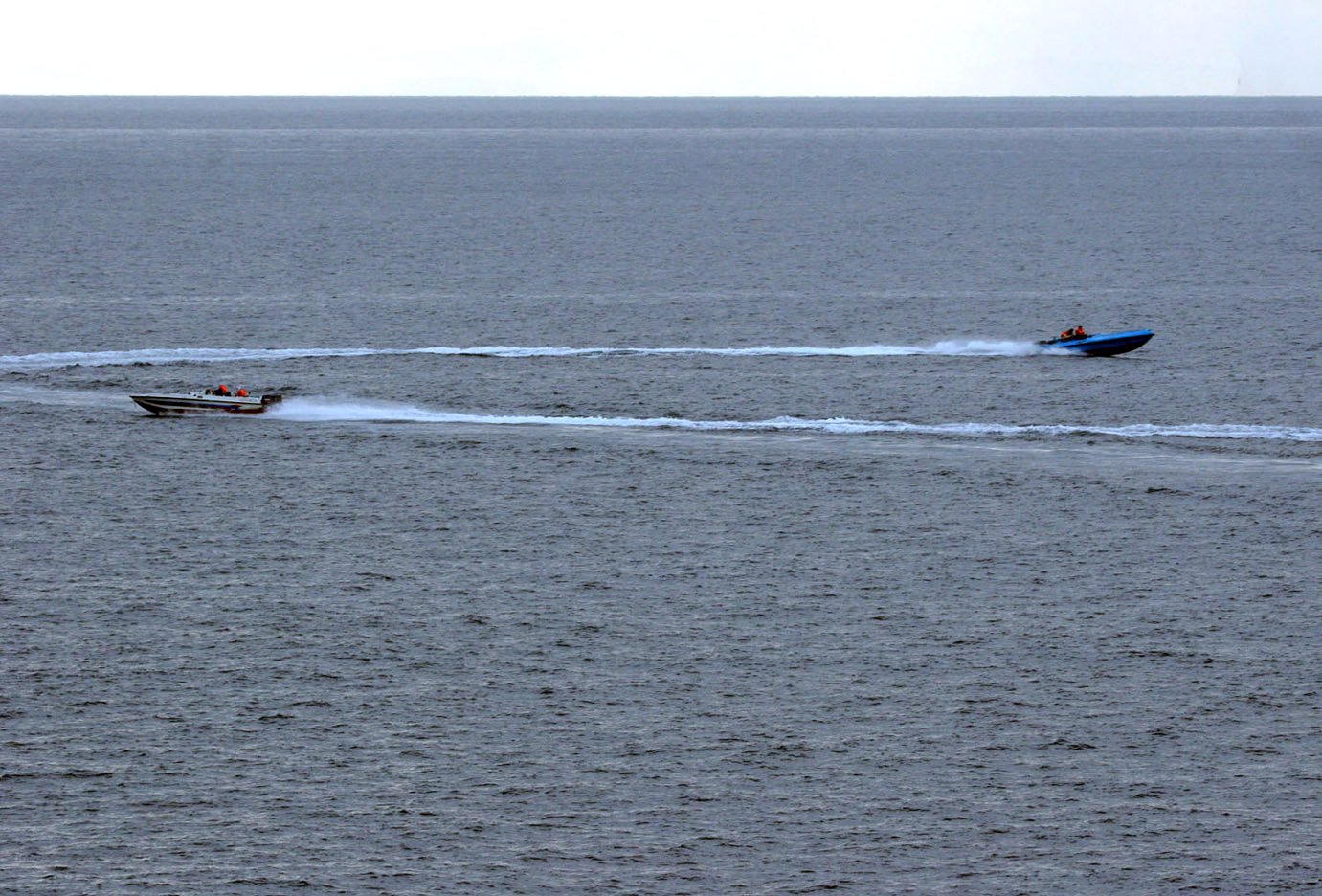
On April 23, Trump issued a “shoot and kill” order — directed at Iranian boats laying mines, not at the seizures themselves. The escalatory language was detached from the specific provocation. The order addressed the broader Hormuz mine threat, where Iran’s mine-laying campaign has created a separate crisis with a six-month clearance timeline.
The gap between “not a ceasefire violation” and “shoot and kill” is the space Iran designed. By seizing a vessel belonging to a family with personal ties to the president, the IRGC created a situation in which Trump had to decide whether the ceasefire he had just extended would be enforced on behalf of his own commercial associates — or whether he would publicly accept that the ceasefire protects only US and Israeli-flagged ships. He chose the latter.
That choice confirmed the ceasefire’s scope to every shipping company in the world. MSC had already suspended all cargo bookings to the Middle East on March 1, declaring “end of voyage” for Persian Gulf cargo and adding an $800-per-container surcharge. China-to-Jeddah container spot rates are up 63 percent since late February, though they fell 11 percent during April to $4,969 per forty-foot equivalent unit.
“The extended ceasefire can be seen as a positive step, but there is no safe and free passage through the Strait of Hormuz.”
— Peter Sand, Chief Analyst, Xeneta
Sand described the seizures as “the weaponization of trade.” Ali Vaez, Iran Project Director at the International Crisis Group, framed the dynamic differently: “What we are seeing in the Strait of Hormuz is not strategic mastery but mutual brinkmanship, with each side testing the limits of coercion.” He added: “The danger is that neither believes it can afford to blink, and that makes every incident at sea a potential trigger for wider escalation.”
Iran’s foreign minister Araghchi has characterized the US naval blockade as “an act of war.” An Iranian adviser stated publicly that the ceasefire “means nothing” while the blockade continues. The IRGC boarding of MSC Francesca — broadcast on Press TV as a sovereign enforcement action — is Iran’s answer to the US seizure of Iranian dark-fleet tankers in the Indo-Pacific. Each side is calibrating seizures against the other’s seizures, with commercial vessels and their crews as the medium.
The Leavitt statement created an immediate classification problem for the ceasefire itself. If seizing a Panama-flagged, Italian-owned vessel operated by a company with documented White House access does not constitute a violation, then the ceasefire’s effective scope is confined to a narrow category of ships that Iran had no interest in seizing anyway. The IRGC toll regime — which has collected zero revenue in over a month of operation — now has a coercive complement: vessels that refuse to pay can be seized under pretexts the White House has pre-classified as non-violations.
The operational sequence matters. Trump announced the indefinite ceasefire extension. Hours later, the IRGC seized two ships. The White House then declared the seizures fell outside the ceasefire. The sequence reads, from Tehran’s perspective, as a successful probe: test the ceasefire’s boundary, receive a public answer that the boundary is narrower than assumed, and pocket the result. The IRGC now knows — and every shipping insurer in London, Singapore, and Oslo now knows — that MSC-class seizures do not trigger the ceasefire’s enforcement mechanism.
What Does the Aponte Seizure Mean for Saudi Arabia?
Riyadh’s problem is specific. MSC Francesca’s last port call before seizure was Dammam — Saudi Arabia’s primary Eastern Province commercial port. The vessel was carrying cargo that departed a Saudi facility. Iran seized it anyway, under a pretext that has nothing to do with the cargo’s origin and everything to do with the ship’s owner.
Saudi-origin cargo on non-Saudi-flagged vessels is not protected by the ceasefire, by the US blockade, or by any bilateral arrangement. Saudi Arabia is already lobbying Washington to modify the blockade because the math stopped working: Saudi March production fell to 7.25 million barrels per day from 10.4 million in February — a 30 percent collapse — with Brent above $106 per barrel as of April 24.
The Aponte seizure compounds this by introducing a new variable: the political identity of the shipping company. If Iran is selecting targets based on the beneficial owner’s political relationships — and the MSC Aries and MSC Francesca precedents together constitute a pattern — then shipping companies with identifiable political exposure become higher-risk carriers for Saudi cargo. The risk calculation now incorporates the beneficial owner’s political relationships, not only the vessel’s flag state or route.
For Riyadh, this creates a dependency problem. The kingdom needs the ceasefire to hold and expand in scope before Trump’s May 1 war powers deadline. But Trump’s personal entanglement with the Aponte family — the same family whose ship Iran just seized — means US decision-making on Hormuz now carries a variable that has nothing to do with Saudi interests and everything to do with American domestic commercial relationships.
The question is whether Trump’s Aponte connection accelerates a resolution — because the president now has a personal stake in ensuring ships transit safely — or distorts one, because the response must navigate his own commercial relationships rather than Saudi Arabia’s export requirements. The $800-per-container surcharge and 63 percent rate spike are Saudi costs; the Aponte relationship is Trump’s, and the seizure put both in play at once.
There is a third possibility that Riyadh’s planners will have noted. Trump’s commercial relationship with the Aponte family is not secret — it was covered by Axios, Ship2Shore, and CNBC at the time. If Trump responds to the seizure in ways that appear to privilege Aponte interests over broader Gulf shipping security, the optics in the Gulf capitals are corrosive. Saudi Arabia, the UAE, and Kuwait need the ceasefire to cover all commercial traffic through the Strait, not just the vessels of families with Oval Office access. The M/V Touska seizure demonstrated how a single ship incident cascades into insurance repricing, port congestion, and diplomatic friction within 72 hours.
| Metric | Value | Source |
|---|---|---|
| MSC Francesca capacity | 11,668 TEU, 363.57m length | MarineTraffic |
| Crew aboard | ~40 (incl. 4 Montenegrin, 2 Croatian) | Fox News; NBC News |
| Epaminondas crew | 21 (primarily Ukrainian and Filipino) | Reuters |
| China-to-Jeddah rate increase | +63% since late February; $4,969/FEU in April | Xeneta |
| MSC Middle East surcharge | $800/container | WWD/Sourcing Journal |
| Brent crude (April 24) | Above $106/barrel | Al Jazeera |
| Saudi March production | 7.25M bpd (vs. 10.4M Feb, -30%) | IEA |
| MSC Aries fine demand (2024) | $170 million | Times of Israel |
Frequently Asked Questions
What happened to the crew of MSC Francesca?
As of April 24, approximately 40 crew members remain in Iranian custody at Bandar Abbas alongside the 21-member crew of the Epaminondas. Montenegro has confirmed four nationals including the captain; Croatia has confirmed two. No consular access arrangements have been publicly announced. In the 2024 MSC Aries precedent, 25 crew members were held for 20 days before release — but that seizure occurred during a short-duration Iranian strike on Israel, not an open-ended Gulf war with an active blockade and contested ceasefire.
Has MSC suspended all Strait of Hormuz transits?
MSC suspended all cargo bookings to the Middle East on March 1 and declared “end of voyage” for any Persian Gulf cargo already in transit, rerouting it to transshipment hubs outside the Gulf. The company imposed an $800-per-container war risk surcharge. Hapag-Lloyd and Maersk have also been avoiding the Strait. MSC Francesca departed Dammam on March 5, four days after the suspension — suggesting she was among the last MSC vessels to call at a Gulf port before the policy took full effect.
Is Alexis Kohler still connected to MSC?
Kohler left his Élysée position on April 14, 2025. The formal criminal investigation into his “unlawful taking of interest” — centered on his involvement in French state decisions affecting Les Chantiers de l’Atlantique, MSC’s primary shipyard — remained active as of a November 2024 court ruling that he could face trial. His post-Élysée employment has not been publicly confirmed. The judicial proceeding itself keeps the MSC-Macron entanglement in French public life regardless of Kohler’s current role.
Could the MSC Francesca seizure trigger US military action?
Trump’s April 23 “shoot and kill” order was directed at Iranian boats laying mines — a separate operational category from vessel seizure. Three US carrier strike groups positioned near Hormuz operate under shoot-on-sight rules of engagement, but their mandate covers mine-clearing and blockade enforcement, not the recovery of foreign-flagged commercial vessels from Iranian ports. The White House explicitly classified the seizures as outside the ceasefire’s scope.
What precedent does the 2024 MSC Aries seizure set for crew release?
Iran held MSC Aries’ 25 crew members for 20 days in 2024, demanding $170 million from Zodiac Maritime owner Eyal Ofer. The crew included Indian, Pakistani, Filipino, and Estonian nationals. Release followed indirect negotiations, not payment of the fine. The 2026 context is different: approximately 60 crew from two vessels are held simultaneously, the IRGC is operating under an authorization ceiling with Khamenei’s extended absence from decision-making, and the broader war gives Iran bargaining power that did not exist in 2024.