
ISLAMABAD — Iran’s foreign minister Abbas Araghchi landed at Nur Khan air base in Rawalpindi late Thursday night, was greeted personally by Field Marshal Asim Munir and Deputy Prime Minister Ishaq Dar, sat through five hours of overnight talks that ended at sunrise — and then his government announced he was not there to negotiate with the United States. Hours later, the White House said the Iranians had “reached out and asked for an in-person conversation,” and dispatched Steve Witkoff and Jared Kushner to Islamabad to have it.
One of them is lying, or they are describing two different things, and the distinction may not matter. With the May 1 War Powers Resolution deadline six days away and a US naval blockade choking Iranian ports, the Islamabad process has become something stranger than diplomacy — a structured refusal architecture in which both sides claim to be responding to the other’s invitation while communicating through a Pakistani intermediary whose own loyalties are contractually divided.
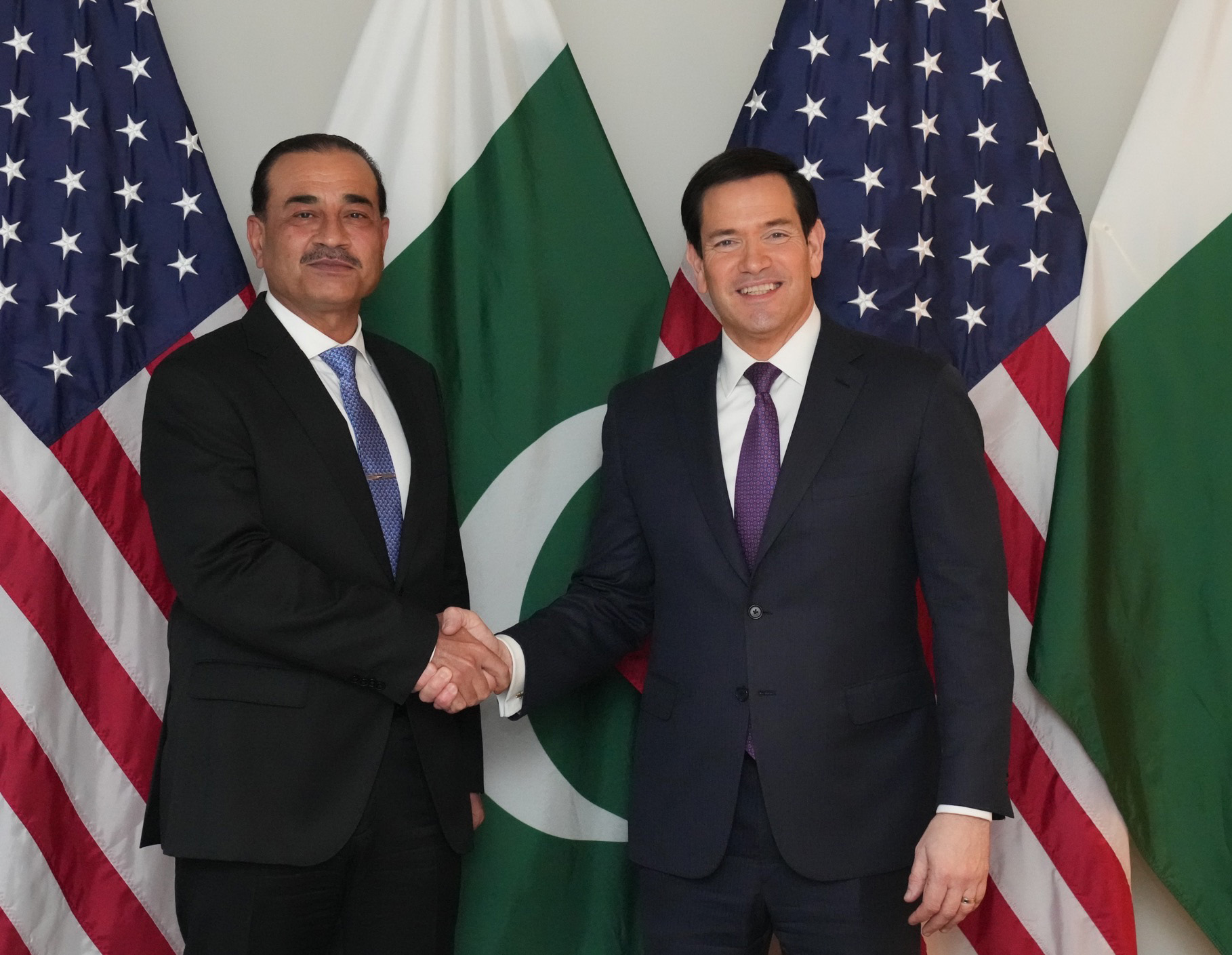
Table of Contents
Who Said What — and When They Said It
The contradiction between Washington and Tehran is not subtle — it is a flat, documented, on-the-record collision. Iranian Foreign Ministry spokesman Esmaeil Baqaei told reporters on April 24 that “no meeting is planned to take place between Iran and the U.S.” and that “Iran’s observations would be conveyed to Pakistan.” The same day, White House Press Secretary Karoline Leavitt appeared on Fox News and said “the Iranians reached out and asked for an in-person conversation, as President Donald Trump had asked them to do.”
Both statements were made within hours of each other. Both were delivered by official spokespeople in their formal capacities. Leavitt added that the president was “dispatching Steve and Jared to go hear what they have to say,” while acknowledging the talks would be “intermediated by the Pakistanis” — a concession that quietly undermined her own framing of a direct Iranian request for face-to-face contact.
The Iranian denial was not a lone voice. Tasnim News Agency, the outlet most closely aligned with the IRGC, published a statement that Araghchi’s trip “is not for talks with the United States” and that there are “no negotiations with the Americans on the agenda at all.” Tasnim went further, accusing US officials and media of having “fabricated narratives about a new round of negotiations for more than 10 days.” Nournews, the outlet affiliated with Iran’s Supreme National Security Council, issued its own parallel denial — a detail that matters because it means the refusal reflects institutional consensus across both the IRGC and the SNSC, not just the Foreign Ministry.
“No meeting is planned to take place between Iran and the U.S. Iran’s observations would be conveyed to Pakistan.”
The HOS Daily BriefThe Middle East briefing 3,000+ readers start their day with.
One email. Every weekday morning. Free.
— Esmaeil Baqaei, Iranian Foreign Ministry spokesman, April 24, 2026
The gap between these two accounts is not resolvable through spin. Either Iran communicated a willingness to meet — possibly through Pakistani back-channels — that its own public apparatus then denied, or the White House constructed the appearance of an Iranian invitation to justify sending envoys to a meeting that was never agreed. The third possibility is the most disorienting: that Iran asked Pakistan to relay a message, Pakistan relayed it as an invitation, and now both sides are technically telling the truth about different things.
What Happened in the Five-Hour Session
Araghchi’s arrival at Nur Khan — a military airfield, not a civilian airport — was itself a signal. His hosts were not the elected government’s protocol officers but Field Marshal Munir and FM Dar, the two men who actually run Pakistan’s ceasefire diplomacy under the authority created by the 27th Constitutional Amendment. Interior Minister Mohsin Naqvi joined Saturday morning, but the core session was the overnight marathon, ending at dawn on April 25, with Munir and Dar across the table.
No official readout of that session has been published. What is known is that Iran handed Pakistan written positions — a document whose contents have not been disclosed but whose existence converts the Islamabad channel from verbal shuttle diplomacy into something more formal. Araghchi also pointedly did not meet Prime Minister Shehbaz Sharif, confining his interlocutors to the military-intelligence axis that holds actual decision-making power in Pakistan’s current constitutional framework.
The timing is as important as the substance. Witkoff and Kushner, originally expected to depart Washington on Saturday, had their departure pushed back to Sunday — meaning Araghchi will likely complete his entire Pakistan leg and move on to Oman, the second stop on his three-country tour (Pakistan, Oman, Russia), before the American envoys even land. This is not an accident of scheduling. It converts the format from parallel presence — two delegations in the same city, communicating through a mediator — into sequential briefing, where Pakistan receives Iran’s position, Iran leaves, and the Americans arrive to hear it secondhand.
Why Is Iran Refusing Direct Talks While Physically Present?
The refusal is not a boycott, which would mean staying home. Araghchi flew to Islamabad, sat through a five-hour session, and handed over a written document — all while his government insisted he was not there to negotiate with the United States. The distinction Iran is drawing is between consultation with an ally and negotiation with an adversary, and it is doing so with enough institutional coordination (Foreign Ministry, Tasnim, Nournews) to make clear this is policy, not posturing.
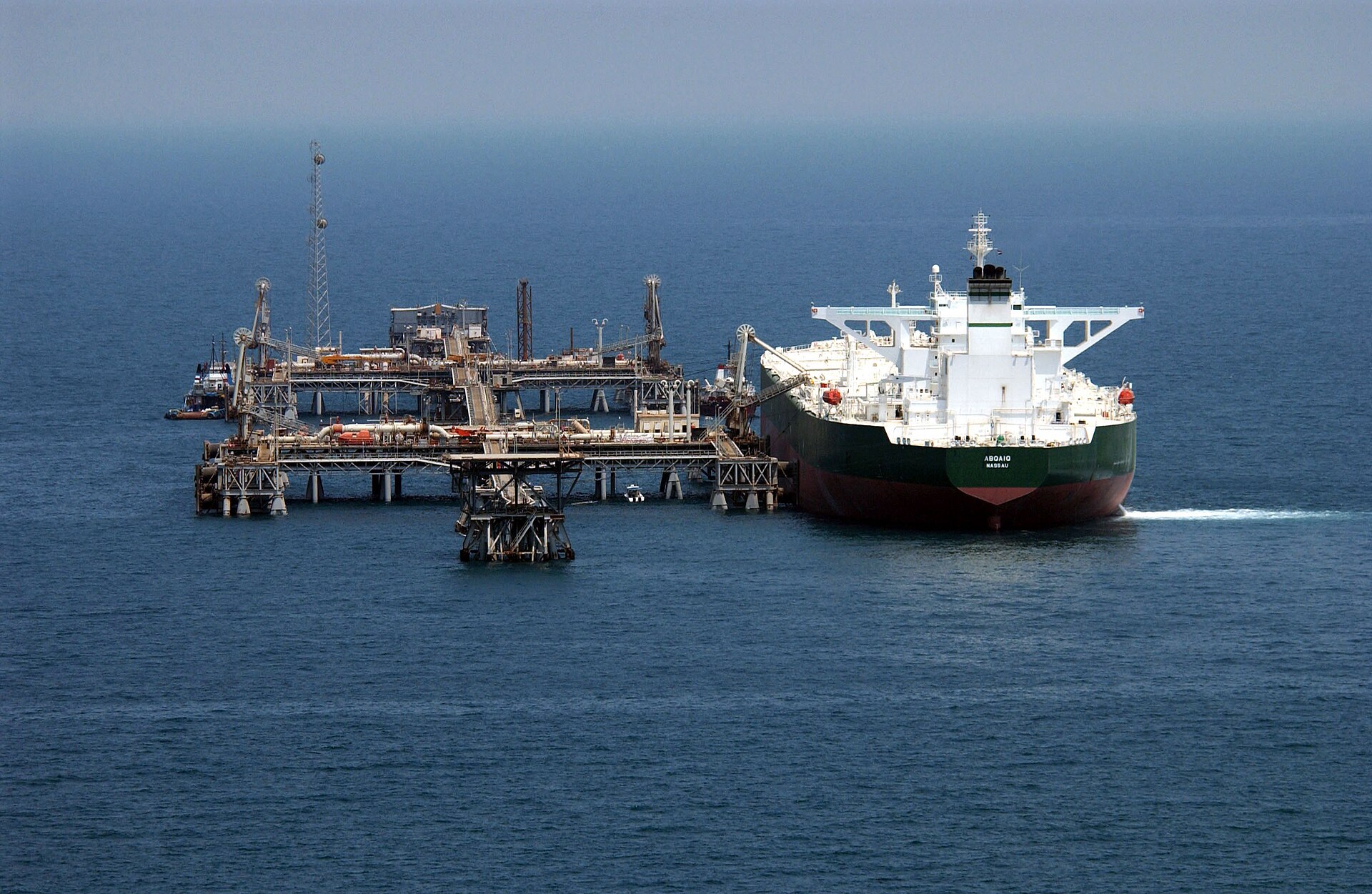
Iran’s stated precondition is the lifting of the US naval blockade on Iranian vessels and ports, imposed by CENTCOM on April 13 as coercive follow-up to the collapse of the first Islamabad round. From Tehran’s perspective, negotiating under active blockade would constitute capitulation before any text is even discussed. The blockade is not symbolic — it is the primary instrument of economic pressure, and the IRGC’s authorization ceiling means even Araghchi cannot concede on it without clearance from a command structure whose supreme leader has been functionally absent for over fifty days.
But the refusal also serves a domestic function. Tasnim’s accusation that the US has been “fabricating narratives” about direct talks for ten days is aimed at an Iranian audience that watched the Vance-Ghalibaf encounter on April 11 — the first direct US-Iran contact since 1979 — collapse without result and get followed immediately by a naval blockade. Any appearance of seeking a second round would be read domestically as weakness, particularly by the IRGC hardliners who drove the first round’s failure. Iran’s structured refusal lets Araghchi be physically present in the diplomatic process while maintaining the fiction, for domestic consumption, that Iran is not participating in it.
The Witkoff-Kushner Downgrade
The most conspicuous absence from the US delegation is JD Vance. The vice president led the April 11-12 round and conducted the first direct US-Iran conversation in forty-seven years — a moment whose historical weight was not matched by its diplomatic outcome. Vance is now described as ready to travel “if deemed necessary” or if talks progress, a formulation that downgrades him from lead negotiator to standby option. In his place, the White House is sending Kushner, whose reported $137 million in Saudi and Qatari investment interests has already drawn scrutiny from ethics watchdogs, and Witkoff, a real estate developer serving as special envoy.
The substitution matters beyond optics. As TIME reported on April 15, citing former diplomats, “Iranian officials were understood to be confused when the White House again sent Kushner and Witkoff, neither of whom has a background in nuclear policy.” The core unresolved issue between the two sides is enrichment: the US proposed a twenty-year moratorium on Iranian enrichment, and Iran countered with “single digit” years — a gap so wide that bridging it requires technical fluency in cascade configurations, breakout timelines, and IAEA verification protocols, none of which are in either envoy’s portfolio.
The downgrade also signals something about the White House’s own expectations. You send your vice president when you think a deal is close enough to justify the political risk of his name being attached to it. You send Kushner and Witkoff when you need to show you tried, or when the real action is happening somewhere else — in this case, possibly on the parallel track that Saudi Arabia is quietly building toward a separate accommodation with Iran that does not depend on the American timeline at all.
Can the US Clock Run Out Before May 1?
President Trump notified Congress of US military operations against Iran on March 2, 2026, triggering the sixty-day clock under the War Powers Resolution. That clock expires on May 1 — six days from now. A bipartisan Senate effort to limit Trump’s authority to continue operations without congressional authorization failed 52-47 on April 15, with Senator John Curtis, a Utah Republican, publicly stating he would “not support ongoing military action beyond a 60-day window without congressional approval.”
The vote’s failure does not mean the deadline is irrelevant. It means Trump has political cover to continue operations past May 1, but not legal certainty — a distinction that matters less in practice than it does in the internal calculations of allies like Pakistan and Saudi Arabia, who need to assess whether the American military posture they are building their own strategies around has a shelf life. The blockade, the carrier groups, the 20,000 US troops in theater — all of these become legally contestable after May 1 if no authorization is forthcoming, even if the political reality is that no one will enforce the constraint.
For Iran, the May 1 deadline is a reason to stall, not to concede. Every day that passes without a deal brings the US closer to a legal and political inflection point that could fragment congressional support for the operation. The structured refusal — present in Islamabad but not negotiating, handing over documents but not sitting across a table — is optimized for exactly this kind of clock management. Araghchi is not running out the clock by staying home; he is running it out by showing up and refusing to play.
The Algiers Precedent — and Why Pakistan Isn’t Algeria
The closest historical analog to what is happening in Islamabad is the Algiers channel of 1980-81, when Algeria brokered indirect communications between the United States and Iran during the hostage crisis. The Algerian foreign minister led a “flying committee” that shuttled between Washington and Tehran, carrying messages, proposals, and counterproposals without the two sides ever sitting in the same room. That process produced the Algiers Accords on January 19, 1981 — the only successfully negotiated US-Iran outcome in forty-seven years — and established the Iran-US Claims Tribunal that still operates in The Hague.
The format Araghchi is constructing in Islamabad looks superficially similar: a mediator carries messages between parties who refuse direct contact. But Pakistan’s structural position is nothing like Algeria’s. Algeria in 1981 was a genuinely non-aligned intermediary with no treaty obligations to either side and no financial dependencies that could compromise its neutrality. Pakistan in 2026 is simultaneously Iran’s chosen intermediary and Saudi Arabia’s treaty defense partner under the Saudi-Pakistan Mutual Defense Agreement signed in September 2025, with a $5 billion Saudi loan maturing in June 2026 — five weeks from now.
This dual positioning does not automatically disqualify Pakistan as a mediator, but it does mean that every message Dar relays from Araghchi to Witkoff passes through a chain of custody that is structurally compromised. Saudi Arabia has the contractual leverage to know what Pakistan knows, and the financial leverage to shape how Pakistan frames it. The Algiers channel worked because Algeria had no dog in the fight. Pakistan has several, and they bite in different directions. Saudi Arabia demonstrated the scope of that leverage concretely: MBS withdrew financing for Pakistan’s $1.5 billion Sudan arms deal within days of Army Chief Munir’s April 16 visit to IRGC headquarters — a signal that Pakistan’s Arab-world export program operates at Saudi discretion.
Background
The current round of Islamabad diplomacy is the second attempt at a Pakistan-mediated process since the Iran war began on February 28, 2026. The first round, held April 11-12, saw Vice President Vance and Iranian Parliament Speaker Ghalibaf conduct the first direct US-Iran exchange since 1979 — a moment that collapsed when the US demanded full removal of all highly enriched uranium from Iran and Iran offered only monitored downblending. CENTCOM announced its blockade of Iranian ports on April 13, one day after the talks failed.
Iran’s negotiating capacity is constrained by what analysts have termed the “authorization ceiling” — the structural inability of elected officials to make concessions on issues controlled by the IRGC. President Pezeshkian publicly accused IRGC Secretary Vahidi and Khatam al-Anbiya commander Abdollahi on April 4 of derailing ceasefire negotiations, but under Article 110 of Iran’s constitution, the president has zero authority over the Revolutionary Guards. Supreme Leader Khamenei, the only figure who can override the IRGC, has been functionally absent for over fifty days, with his son Mojtaba communicating only through audio channels.
Iran’s diplomatic itinerary — with Oman and Russia to follow Islamabad — suggests Tehran is building a parallel architecture that treats the US-Pakistan channel as one node in a wider network rather than a bilateral negotiation forum. Oman has historically served as the most trusted back-channel between Washington and Tehran, brokering the secret talks that led to the 2015 JCPOA. Russia’s inclusion signals that Iran may be seeking security guarantees or sanctions relief commitments that the US format cannot provide.
Frequently Asked Questions
Why did Araghchi land at Nur Khan air base instead of Islamabad International Airport? Nur Khan is a Pakistan Air Force facility in Rawalpindi, adjacent to the army’s General Headquarters. Arriving there rather than at the civilian airport signals that Araghchi’s primary interlocutors are the military establishment — specifically Munir’s command structure — rather than the elected government. It is also a security measure: Islamabad is under heightened lockdown with military checkpoints, road closures, and helicopter surveillance for the duration of the diplomatic activity.
What is the 27th Constitutional Amendment and why does it matter here? Pakistan’s 27th Constitutional Amendment, passed in 2025, restructured the relationship between the military and civilian government in ways that effectively placed foreign policy and national security decision-making under the Chief of Defence Forces. In practical terms, this means Asim Munir — not PM Sharif or FM Dar — holds the binding authority in ceasefire mediation. Dar functions as Munir’s public-facing diplomatic instrument, which is why Araghchi’s core overnight session was with Munir, not Sharif.
What does Iran’s written document to Pakistan reportedly contain? The contents of the document Araghchi handed to Pakistani officials have not been publicly disclosed. Based on prior rounds of diplomacy, Iran’s known positions include a demand that the US lift the naval blockade before substantive talks begin, rejection of any permanent enrichment moratorium (Iran has countered the US’s twenty-year proposal with a figure in the single digits), and insistence that any deal must not constrain Iran’s conventional missile programme. Whether the written document represents a formal counterproposal or a restatement of preconditions is not yet known.
What happens legally if no deal is reached before May 1? The War Powers Resolution requires congressional authorization for military operations beyond sixty days. Trump notified Congress on March 2, making May 1 the statutory deadline. The Senate’s 52-47 vote on April 15 rejected a constraint on Trump’s authority, but this was a political vote, not a legal waiver — the constitutional question of whether operations can continue without explicit authorization remains unresolved and could be challenged in federal court, though no such challenge has been filed.
Why was Vance replaced by Kushner and Witkoff for this round? The White House has not publicly explained the substitution. Vance led the April 11-12 round and is described as on standby if talks progress, suggesting the administration views this round as preliminary rather than decisive. The downgrade may also reflect internal calculations about political exposure — attaching the vice president’s name to a second failed round carries higher domestic costs than sending envoys whose public profiles are lower, even if their conflicts of interest are higher.
Any agreement reached in these talks faces a structural ceiling that runs deeper than diplomatic positioning: the structural reasons Iran cannot operationally open Hormuz lie in Article 110 of the constitution and a command chain that excludes the foreign minister entirely.
The outcome of this format — Araghchi departing Islamabad before the American delegation had packed a bag, Trump cancelling the trip entirely — is documented as it resolved in Araghchi Left Islamabad Before Washington Packed a Bag: Both Sides Prefer It That Way, which traces why non-engagement has now become the stable equilibrium for both parties. The full diplomatic fallout — Oman back-channel, May 1 War Powers deadline, and where Saudi Arabia sits after the collapse — is analysed in Trump Cancels Islamabad Trip, Collapsing the Only US-Iran Diplomatic Channel.