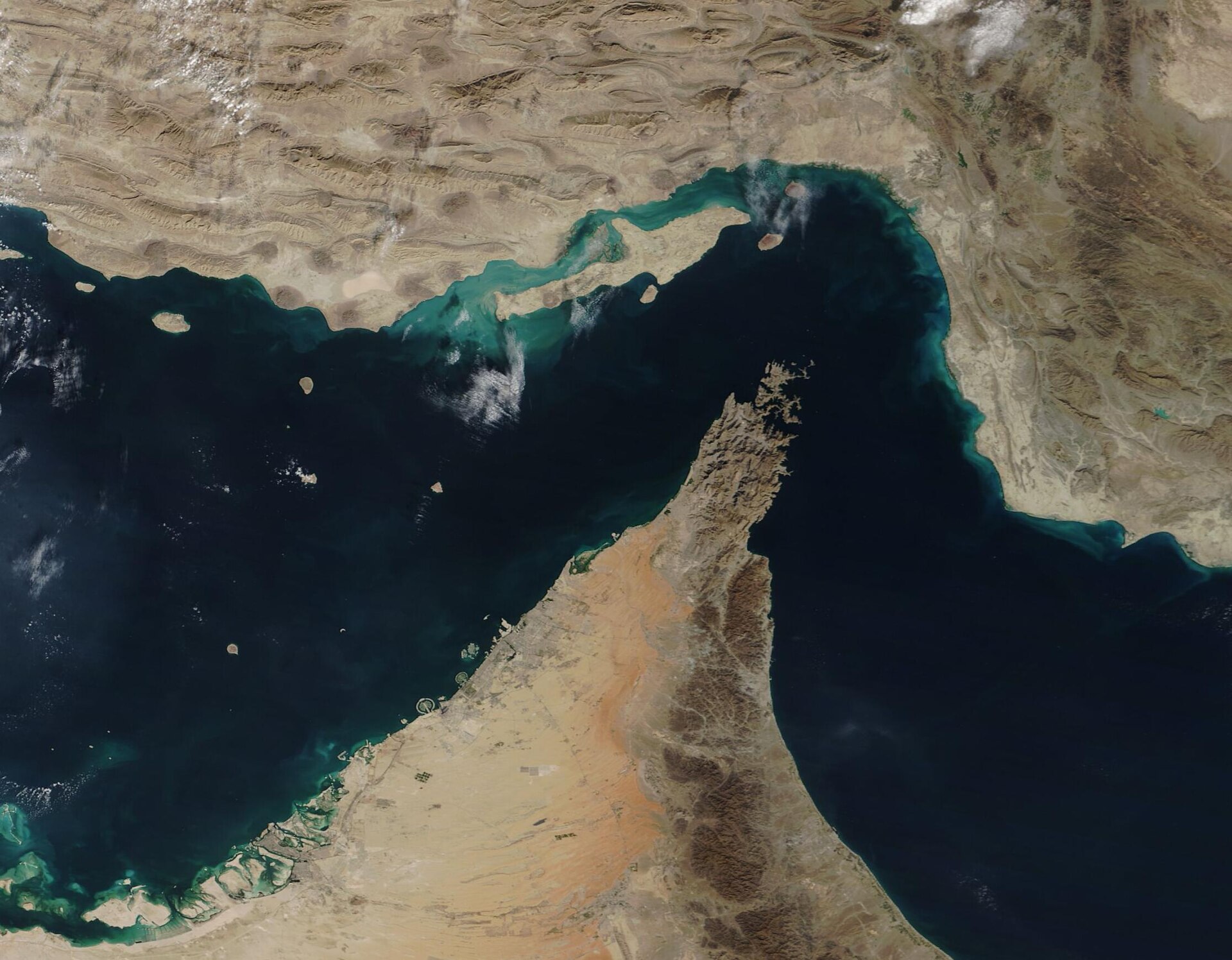

TEHRAN — Iran’s foreign minister Abbas Araghchi cannot open the Strait of Hormuz. Not because he lacks the will — his April 17 tweet declaring the passage “completely open” made his intentions explicit — but because the constitutional and military command architecture required to translate a diplomatic signal into an operational order is structurally broken. The Supreme Leader is physically inaccessible. The IRGC Navy commander is dead with no named successor. The SNSC ratification chain runs through a secretary appointed under IRGC pressure. And the field units operating the strait’s transit protocol answered Araghchi’s declaration within hours on Channel 16, the international maritime distress frequency: “We will open it by the order of our leader, Imam Khamenei, not by the tweets of some idiot.”
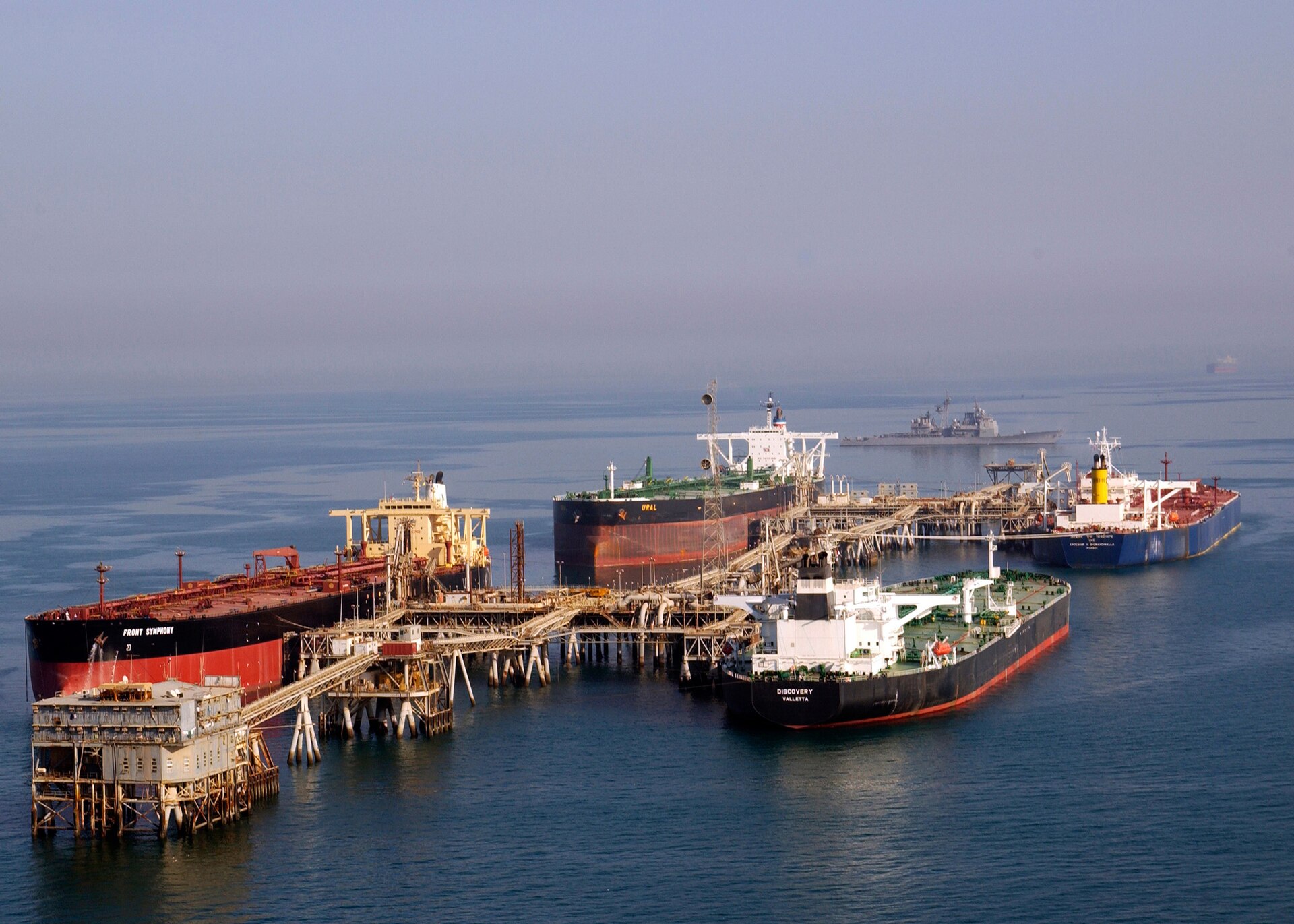
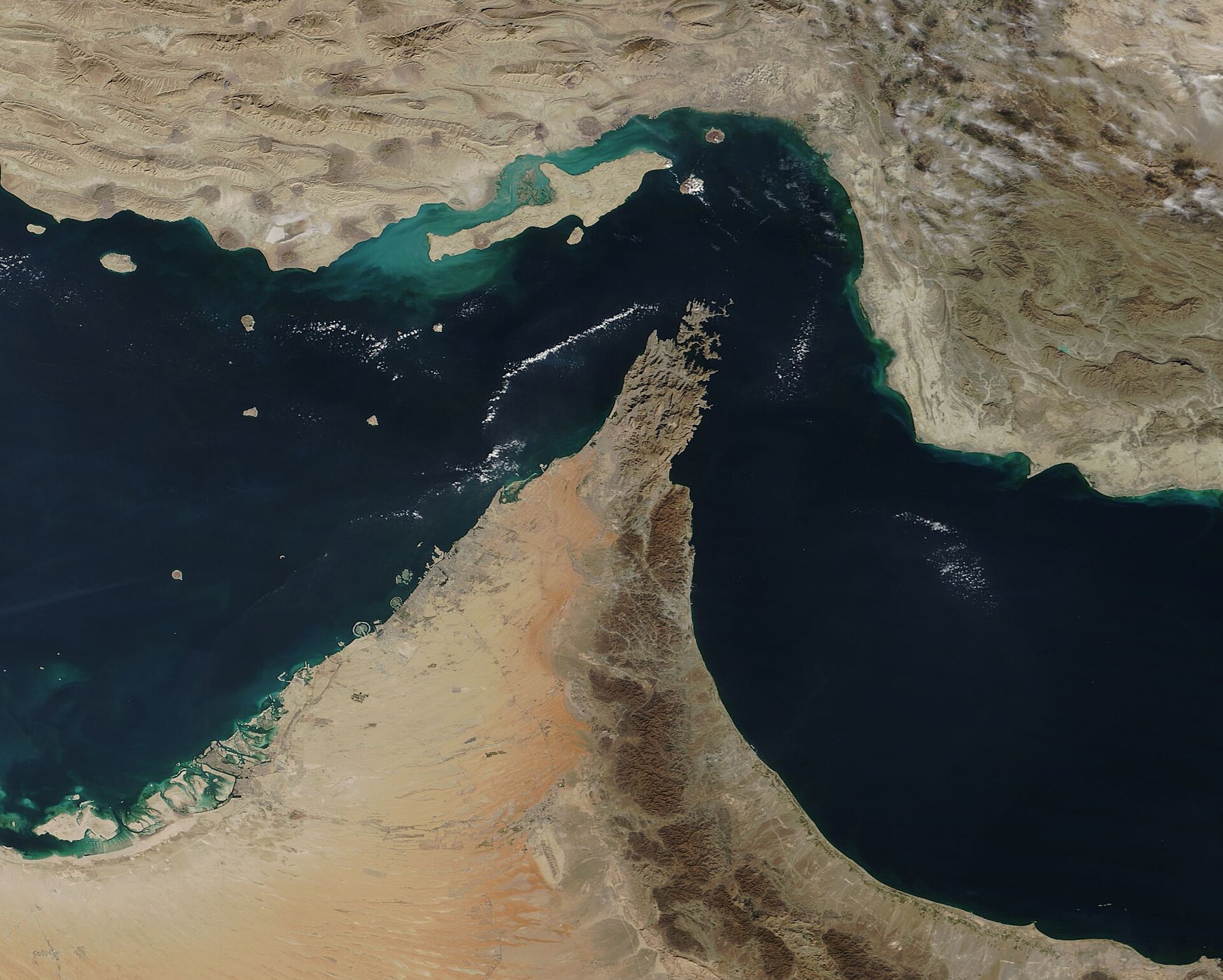
That transmission was not defiance. It was an accurate description of the constitutional requirement under Article 110 of the Iranian constitution — a requirement that currently cannot be met. Five vessels transited the strait in the 24 hours ending April 25, including one sanctioned Iranian-flagged tanker with no declared destination, according to Kpler and MarineTraffic data reported by Reuters. The pre-war baseline was 140 vessels per day. Traffic stands at 3.6% of normal. Markets, the White House, and the Witkoff negotiating team are trading on a diplomatic signal that has zero enforcement architecture behind it.
What Did Araghchi Actually Declare on April 17?
Araghchi’s declaration was a tweet, not an operational order. Posted on his verified X account on April 17, 2026, the full text read: “In line with the ceasefire in Lebanon, the passage for all commercial vessels through Strait of Hormuz is declared completely open for the remaining period of ceasefire, on the coordinated route as already announced by Ports and Maritime Organisation of the Islamic Rep. of Iran.”
Three elements of this statement merit close parsing. First, Araghchi linked the opening to “the ceasefire in Lebanon” — a ceasefire that was already under severe strain and subject to competing interpretations in Islamabad. Second, he referenced the “coordinated route” established by the Ports and Maritime Organisation, a civilian agency with no operational authority over IRGC Navy patrol zones. Third, his statement contained no reference to any military order, SNSC resolution, or Supreme Leader directive.
The foreign minister of the Islamic Republic declared the strait open without citing a single document from the chain of command that controls it.
The declaration produced an immediate market response. WTI crude fell nearly 12% to $83.85 per barrel. Brent dropped 9% to $90.38, according to CNBC. Shipping desks began pricing a partial reopening. Witkoff’s team reportedly treated the statement as a diplomatic concession worth building on. None of them asked who would enforce it.
The Middle East briefing 3,000+ readers start their day with.
One email. Every weekday morning. Free.
Why Did the IRGC Reverse It Within 36 Hours?
The reversal came from the Khatam al-Anbiya Central Headquarters — the IRGC’s unified command for all military operations — not from any civilian authority. Lt. Col. Ebrahim Zolfaghari, the headquarters’ spokesperson, announced on April 18 that “control of the Strait of Hormuz has returned to its previous state” under “the intense management and control of the armed forces,” according to PressTV. He cited US “repeated breaches of faith” and “banditry and piracy under the guise of a so-called blockade.”
The entity that reversed a foreign minister’s public commitment was the military command that the foreign minister has no constitutional authority to direct. This was not, as Gregory Brew of the Eurasia Group characterized it in Fortune, a “miscommunication.” It was the IRGC exercising the authority that the constitution grants it under Articles 110 and 150 — authority that flows from the Supreme Leader, not from the elected government.
The reversal had been telegraphed before Araghchi even posted. Tasnim, the IRGC-aligned news agency, published its critique of his declaration as a “bad and incomplete tweet” characterised by “a complete lack of tact in information dissemination” — language prepared and published fast enough to suggest it was either pre-written or issued with IRGC editorial coordination. Fars News, another IRGC-aligned outlet, ran the headline: “Dear Officials! At Least Explain Your Failure To Explain.” Nizam Mousavi, former editor of the IRGC-owned Javan daily, wrote: “The meaning of people’s trust in negotiating officials does not mean that we disregard public opinion… Gentlemen! Say something!”
This pre-emptive media barrage — attacking Araghchi’s authority before the formal reversal — reveals that the IRGC’s institutional response was not reactive. It was coordinated. The reversal was not a correction of policy. It was an assertion of jurisdiction.
Who Commands the IRGC Navy After Tangsiri?
Rear Admiral Alireza Tangsiri, commander of the IRGC Navy and the architect of the Hormuz transit protocol, was killed at Bandar Abbas between March 26 and March 30, 2026, according to FDD analysis. As of April 25 — 26 days later — no successor has been publicly named. The IRGC Navy is operating without a commanding officer.
Tangsiri was not merely a commander. He held the institutional memory of the clearance-and-transit system that the IRGC developed to manage vessel passage through Hormuz under wartime conditions. That system — involving Channel 16 communications, designated approach routes, IRGC-issued transit permits, and coordination with shore-based missile batteries — was built under his direct supervision. His death removed the single officer who understood the entire architecture as a unified system rather than as a collection of standing orders.
The IRGC’s 2008 mosaic command restructuring, designed to ensure operational continuity after leadership strikes, distributed authority across 31 semi-autonomous corps. This design means that even under normal conditions, changing a Hormuz transit protocol requires parallel orders flowing through the IRGC hierarchy, ratified at the Supreme National Security Council, and confirmed by the Supreme Leader. Every node in that chain is currently absent, headless, or operating via courier.
Without a named IRGC Navy commander, there is no single officer who can receive an order to “open the strait” and translate it into changed rules of engagement for patrol boats, shore batteries, and mine-laying units. The mine warfare command vacuum compounds this: the officers who laid mines do not report to the officers who would need to clear safe channels. Saeid Golkar of the University of Tennessee at Chattanooga told Fortune on April 18: “Because the main arbitrator is gone, the fight between different factions has started.”
The Constitutional Chain That Cannot Fire
The path from a foreign minister’s tweet to an operational change at the Strait of Hormuz runs through five constitutional nodes, every one of which is currently broken or bypassed.
The Foreign Ministry is the first. Araghchi reports to President Masoud Pezeshkian. Under Article 113, the president is responsible for implementing the constitution — but Article 110 reserves command of all armed forces exclusively for the Supreme Leader. Pezeshkian acknowledged this publicly on April 4 when he accused IRGC Secretary Vahidi and senior military official Ali Abdollahi of undermining the ceasefire delegation’s mandate. His accusation was simultaneously an admission: the president has zero constitutional authority over the IRGC.
The president is the second node. Pezeshkian’s April 4 statement — naming Vahidi and Abdollahi as the officers who derailed the Islamabad negotiations — was the most explicit public confession of presidential powerlessness in the Islamic Republic’s history. As the FDD assessed, Pezeshkian is excluded from the five men actually running Iran.
The Supreme National Security Council is the third. Under Article 176, SNSC decisions require Supreme Leader confirmation to become binding. The council’s current secretary — who has turned over twice under IRGC pressure — is operating under Zolghadr, who was simultaneously sent to Islamabad as the IRGC’s enforcer. His “deviation from delegation’s mandate” report triggered the April 14 walkout from negotiations. The SNSC secretary is the IRGC’s man, not the president’s.
The Supreme Leader is the fourth node. Ayatollah Ali Khamenei is physically inaccessible. The New York Times confirmed on April 24 that his son Mojtaba Khamenei was “gravely wounded” — one leg operated on three times, awaiting a prosthetic; face and lips severely burned. Khamenei’s own status remains opaque, but IRGC commanders have avoided visiting him for fear of Israeli tracking, according to multiple reports. Communication runs through handwritten courier chains delivered by car and motorcycle.
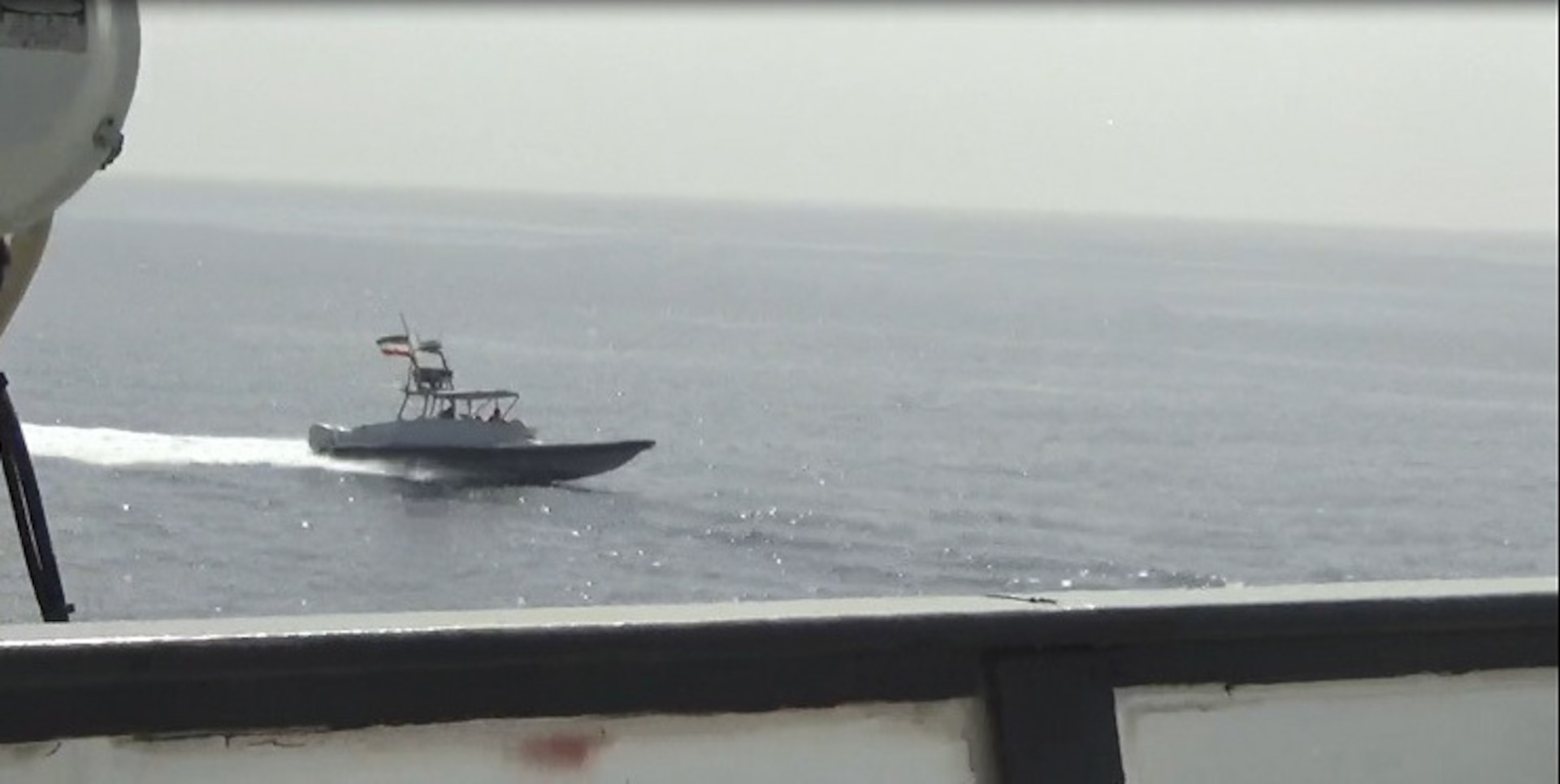
The fifth node is the IRGC field command itself. With no IRGC Navy commander, no accessible Supreme Leader, and an SNSC secretary loyal to the IRGC rather than the president, the field units at Hormuz are operating on the last standing orders they received — which are to manage and control transit, not to open it.
The Channel 16 transmission — “by the order of our leader, Imam Khamenei” — was a precise statement of constitutional law. Article 110 assigns supreme command to Khamenei alone. No Hormuz opening can occur without his explicit order. That order cannot currently be issued, transmitted, or verified.
Can Mojtaba Khamenei Issue the Order?
Mojtaba Khamenei cannot constitutionally authorize a Hormuz opening. Under Article 110, supreme command authority belongs to the Supreme Leader personally. No delegation mechanism exists in the constitution for this authority — it is non-transferable, unlike certain administrative powers that can be delegated under Article 112.
The NYT’s April 24 reporting established that Mojtaba governs from an undisclosed location via handwritten messages transported by car and motorcycle courier. IRGC generals Hossein Taeb, Mohsen Rezaei, and Parliamentary Speaker Mohammad Bagher Ghalibaf constitute what multiple sources describe as a “triangle of power,” according to the Times of Israel’s summary of Iranian power dynamics. The Institute for the Study of War assessed that Khamenei’s incapacitation removed the regime’s cohesive force, allowing IRGC factions to dominate.
Even if Mojtaba attempted to issue a Hormuz order through courier channels, the IRGC Navy field command has no mechanism to authenticate it. A handwritten note delivered by motorcycle, purporting to come from a wounded son of the Supreme Leader governing from an undisclosed hideout, lacks the institutional verification infrastructure that the IRGC’s own security protocols would require for an order of this magnitude. The IRGC built its authentication systems around the Supreme Leader’s office, his named representatives, and the SNSC’s formal resolution process — not around informal courier chains.
Max Boot, the CFR’s Jeane J. Kirkpatrick Senior Fellow, acknowledged in April that Araghchi had committed to opening the strait but the IRGC “has the guns (and drones and missiles), and exercises more influence” — and had “publicly criticized” Araghchi’s commitment and “fired on a couple of tankers.” Boot’s framing, while correct about the power asymmetry, understated the structural dimension: this is not merely about who has more guns. It is about a constitutional architecture in which the person with the authority to command the guns is unreachable.
The April 19 High-Water Mark and Its Collapse
For one day — April 19 — the data briefly suggested Araghchi’s signal might carry operational weight. Kpler tracked more than 20 vessel transits, the highest single-day traffic since March 1, as reported by Al-Monitor and Reuters. The transits included the VLCC Fpmc C Lord carrying approximately 2 million barrels of Saudi crude, the Navig8 Macallister with roughly 500,000 barrels of UAE naphtha, and the Desh Garima with approximately 780,000 barrels of UAE crude.
By April 20, traffic had collapsed again. The April 19 spike was not an opening. It was a test — vessels that had been waiting in anchorage attempting transit during the narrow window between Araghchi’s declaration and the IRGC’s reassertion of control. When the IRGC’s operational posture did not change to match the diplomatic signal, the window closed.
The cumulative data tells the structural story. Between February 28 and April 12, only 279 ships transited the strait against an expected total of approximately 4,400 — a reduction exceeding 95%, according to Al Jazeera’s data analysis. Twenty-two ships were attacked in that period. The April 19 spike did not alter this trajectory. It confirmed that commercial shipping will not treat the strait as open until the IRGC’s field posture changes — and that posture has not changed because no order to change it has been issued through the only chain of command the field units recognise.
The carriers that attempted April 19 transits did so under calculated risk assessments, not under confidence that the strait was genuinely open. VLCC operators were testing whether the IRGC’s field units had received orders consistent with Araghchi’s declaration. They had not. The Fpmc C Lord’s successful transit reflected the IRGC’s selective enforcement pattern — permitting certain cargoes that serve Iranian strategic interests while blocking or seizing others — not a general opening. The Pentagon’s own mine clearance assessment remained unchanged throughout the April 17-20 window, indicating that US Central Command did not treat Araghchi’s declaration as operationally meaningful either.
The pattern has historical precedent. In 2012, Iranian officials repeatedly threatened and walked back Hormuz closure within 24-48 hour cycles. In 2019, Iran’s foreign ministry issued statements inconsistent with IRGC field operations. The gap between Araghchi’s diplomatic architecture and IRGC operational reality predates this war by more than a decade.
What Are the Markets Actually Trading On?
Brent crude stood at $106.80 on April 24, having risen nearly 5% that day driven by the renewed vessel seizures, according to CNBC. The price sits $1.20 to $4.20 below Saudi Arabia’s fiscal break-even of $108-111 per barrel, as calculated by Bloomberg using PIF-inclusive methodology. Goldman Sachs estimates Saudi Arabia’s war-adjusted fiscal deficit at 6.6% of GDP, against the official projection of 3.3%. Every $10 movement in Brent corresponds to approximately $3 billion in Saudi revenue change.
The market is pricing two contradictory propositions simultaneously. The first is that Araghchi’s April 17 declaration represents a genuine Iranian intention to reopen the strait — a proposition that would push prices lower. The second is that the IRGC’s operational posture has not changed — a proposition that keeps prices elevated. The April 17-18 crash-and-recovery cycle captured this contradiction in real time: WTI fell 12% on the tweet, then recovered as the reversal landed.
Saudi Arabia’s Q1 production data anchors the stakes. The IEA recorded Saudi March production at 7.25 million barrels per day, down from 10.4 million in February — a 30% drop that the IEA called “the largest disruption on record.” Asia-bound Saudi exports fell 38.6% according to Kpler. The Yanbu bypass pipeline, which routes crude around Hormuz to the Red Sea, has a practical loading ceiling of 4-5.9 million barrels per day against the 7 million barrel capacity of the pipeline itself — a structural gap that Araghchi’s declaration does nothing to address.
The production data frames a diplomatic paradox: Saudi Arabia is absorbing the war’s highest economic cost yet has no seat in the talks where Hormuz terms are being negotiated. Araghchi cannot open the strait even if he wants to — and Riyadh cannot influence the framework that would define what “open” means. The structural case for why Saudi Arabia was excluded from the US-Iran negotiating format is examined in Saudi Arabia Bears the War’s Highest Cost and Has No Seat at the Table.
Iran holds approximately 160 million barrels of crude at sea, representing roughly 2.5 months of Chinese demand coverage. The IRGC has less economic urgency to open the strait than Araghchi and Pezeshkian do. This asymmetry of incentive maps directly onto the asymmetry of authority: the faction that wants the strait open has no power to open it, and the faction that controls the strait has no reason to. The economic cost of that standoff now extends below the surface: as onshore storage hits capacity on April 26, forced well shut-ins are causing permanent reservoir damage that no ceasefire can reverse.
The MSC Francesca Seizure: Field Authority in Action
On April 22 — one day after the ceasefire extension — the IRGC seized the Panama-flagged MSC Francesca and the Liberia-flagged Epaminodes, citing “operating without required authorization,” according to Iran International and PressTV. A third vessel, the Euphoria, was attacked but escaped. Panama condemned the seizure as “illegal.”
The seizures occurred five days after Araghchi’s “completely open” declaration and four days after the IRGC’s formal reversal. They demonstrate that IRGC field units are not merely ignoring Araghchi’s diplomatic signals — they are actively enforcing the operational posture that preceded his declaration. The “required authorization” they cited is the IRGC’s own transit permit system, a system that Araghchi’s Ports and Maritime Organisation has no authority to modify or override.
The timing — the day after a ceasefire extension — is itself revealing. Saudi Arabia’s parallel diplomatic track has been predicated on the assumption that ceasefire extensions create windows for de-escalation. The MSC Francesca seizure demonstrates that the IRGC does not recognise ceasefire timelines as constraints on its Hormuz operations.
Ali Abdollahi, the senior military official whom Pezeshkian publicly accused of undermining the ceasefire, told IRNA in late April that the United States and Israel “have no option but to bow and submit” before Iran. This is not the language of an institution preparing to implement a diplomatic opening. It is the language of a military command operating under its own authority, on its own timeline, toward its own objectives.
On April 25, the disconnect reached its sharpest expression. White House Press Secretary Karoline Leavitt confirmed that “special envoy Witkoff and Jared Kushner will be off to Pakistan again tomorrow morning to engage in talks, direct talks, intermediated by the Pakistanis,” as reported by CBS News. Hours later, Iranian Foreign Ministry spokesperson Esmaeil Baghaei declared: “No meeting is planned to take place between Iran and the US… Iran’s observations would be conveyed to Pakistan.” A foreign ministry that hands Pakistan a written roadmap while denying that any talks are planned is a foreign ministry that has lost the ability to commit to anything — because the institution that enforces commitments does not answer to it.
The April 22 seizures also exposed the transit permit system’s function as a revenue and intelligence tool. Vessels granted IRGC permits must declare cargo, destination, beneficial ownership, and insurance provider — data that the IRGC uses to map Western sanctions enforcement patterns and identify which flag states will challenge seizures and which will not. Panama’s condemnation of the MSC Francesca seizure as “illegal” produced no operational consequence. Liberia issued no statement regarding the Epaminodes. The IRGC’s risk calculus on seizures is informed by precisely this kind of flag-state response differential, and no foreign ministry declaration alters that calculus.
PressTV’s framing of the April 18 reversal was itself revealing. The state broadcaster did not characterise the IRGC’s reassertion as an internal contradiction of Araghchi. It framed the action as Iran “reasserting control” against American “piracy and blockade” — presenting IRGC authority as a legitimate national security response rather than an institutional override of the foreign minister. The audience for this framing was domestic: it established that the IRGC, not the foreign ministry, speaks for Iran on Hormuz.
The structural reality is that Iran’s Hormuz posture cannot change through diplomatic channels. It can only change through the military command chain, which requires an accessible Supreme Leader, a functioning SNSC ratification process, and a named IRGC Navy commander to translate orders into rules of engagement. None of these conditions exists. Araghchi can tweet. He can negotiate in Islamabad alongside Kushner and Witkoff. He can offer the strait as a concession. But he cannot deliver it. The IRGC Channel 16 operators who called him “some idiot” were crude, but they were constitutionally correct. The order they are waiting for cannot come from him. And the person it must come from cannot currently give it.
That constraint has direct implications for the US carrier posture: as three carrier strike groups now sit in the Arabian Sea and Indian Ocean, unable to enter a strait that Iran cannot legally open even if it wanted to, the enforcement vacuum runs in both directions.
Frequently Asked Questions
Why does Iran’s foreign minister lack authority over the Strait of Hormuz?
Iran’s 1979 constitution assigns supreme command of all armed forces exclusively to the Supreme Leader under Article 110. The president and foreign minister operate under a parallel civilian authority structure with no command linkage to IRGC operational units. The constitutional separation predates the current war — it was designed to ensure clerical and revolutionary authority over military matters, insulating the IRGC from elected-government direction entirely. Any foreign minister who commits to an operational outcome at Hormuz is making a promise that the constitution prohibits him from keeping.
How does the IRGC’s 2008 mosaic command structure affect Hormuz operations?
The IRGC restructured in 2008 to distribute operational authority across 31 semi-autonomous corps, each capable of independent action within its area of responsibility. This survivability design — intended to ensure continuity after leadership decapitation strikes — means that reversing a Hormuz closure requires coordinated orders through every relevant corps simultaneously, ratified through the SNSC. A single foreign ministry declaration cannot penetrate 31 parallel command chains, each with its own operational security protocols and standing orders.
What is the practical difference between a transit permit and an open strait?
The IRGC’s transit permit system requires individual vessel clearance, route designation, and in some cases IRGC naval escort. An “open” strait under international maritime law — governed by UNCLOS Article 38 on transit passage — requires no permits, no designated routes, and no state authorization for innocent passage. The gap between these two regimes is the gap between Araghchi’s declaration and operational reality: even during the April 19 spike, vessels transited under IRGC-designated protocols, not under free-passage conditions.
Could a new IRGC Navy commander change the strait’s operational status?
A named successor to Tangsiri would restore one node in the command chain but not the others. The new commander would still require SNSC ratification and Supreme Leader confirmation for any change to Hormuz rules of engagement. The appointment itself would also reveal internal IRGC factional outcomes — whether the new commander comes from Tangsiri’s operational school or from the more hardline faction aligned with Vahidi — making the selection politically fraught at a moment when IRGC factions are competing for institutional control.
What would an actual Hormuz reopening require?
A verifiable reopening would require, at minimum: a named IRGC Navy commander with operational authority; a formal SNSC resolution directing changed rules of engagement; Supreme Leader confirmation of that resolution (currently impossible through normal channels); new standing orders distributed to all 31 relevant IRGC corps units; withdrawal or repositioning of mine assets; and cessation of the transit permit system in favour of UNCLOS-compliant free passage. None of these steps can be initiated by the foreign ministry, and none has been taken as of April 25, 2026. The full implications of Iran’s ceasefire repositioning for the military options now available to Washington are assessed in The Ceasefire Was an Iranian Operational Maneuver — Hegseth Admitted It, and Now Trump’s 3-5 Day Ultimatum Has No Military Teeth.
How the US naval enforcement perimeter outside the strait compounds Araghchi’s structural incapacity — creating a double blockade in which neither side has full control and neither can unilaterally end the closure — is the subject of Both Sides of Hormuz Are Now Blocked and Neither Will Blink First.