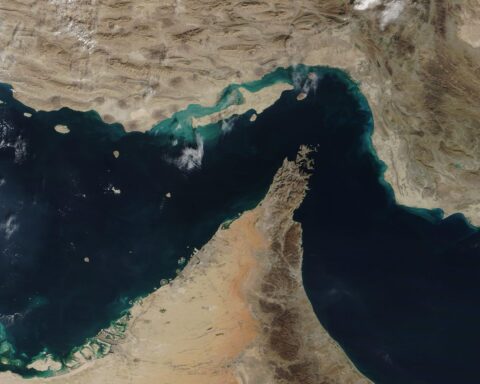

DHAHRAN — Saudi Aramco is forecast to report a 57% quarter-on-quarter profit surge for Q1 2026 — $29.01 billion in net income, according to AlJazira Capital’s April 23 research note — even as the kingdom’s oil production has cratered by more than two million barrels per day since the Iran war closed the Strait of Hormuz. The paradox is not a paradox at all. It is the arithmetic of a tiered royalty system meeting a war premium, and it reveals something Riyadh would prefer not to say aloud: Saudi Arabia’s fiscal model now depends less on pumping oil than on the price of the oil it cannot pump. The crossover threshold — the Brent price at which reduced volumes still generate pre-war government revenue — sits at approximately $114.76 per barrel, a figure derived from the kingdom’s published royalty tier structure (see section below). With Brent at $105.33, the kingdom is running a structural deficit even as Aramco’s profit line surges. That gap is $9.43 per barrel — the spread between current spot prices and the revenue-neutral threshold, translating to roughly $73 million per day in lost government income relative to pre-war volumes at pre-war prices.
Table of Contents
- The Q1 Numbers: Profit Surge on a Shrinking Base
- How Does Aramco’s Royalty Structure Turn War Into Margin?
- The $114.76 Crossover: Where Volume Loss Meets Price Gain
- What Happens to Saudi Dividends When Production Craters?
- The Yanbu Ceiling and the Infrastructure Bind
- Iran’s Revenue Mirror: Who Is Actually Winning the Oil War?
- Why Would Riyadh Want Hormuz to Stay Partially Closed?
- PIF, Fiscal Buffers, and the Breakeven Mirage
- The Restart Illusion: Days, Weeks, or Months?
- May 11 and the Market Reckoning
The Q1 Numbers: Profit Surge on a Shrinking Base
AlJazira Capital’s Q1 2026 forecast — SAR 108.8 billion, or $29.01 billion in net income — represents a 56.7% jump from Q4 2025 and a 13.8% increase over Q1 2025’s $26.0 billion. The research note, published April 23 with an Overweight rating and a SAR 29.6 target price, attributes the entire gain to one variable: crude oil prices surged 24.8% quarter-on-quarter in Q1, sufficient to “wipe out the impact of lower production.”
The production impact was severe. Saudi output fell from 10.11 million barrels per day in February to 7.76 million bpd in March, a 23% decline that Energy Intelligence and Semafor both documented. AlJazira Capital models a more conservative 600,000 bpd crude decline and 700,000 boe/day hydrocarbon decline for the quarter — a figure that averages across pre-war January, early-war February, and full-disruption March. The averaging effect flatters Q1. Q2 will carry the full burden.
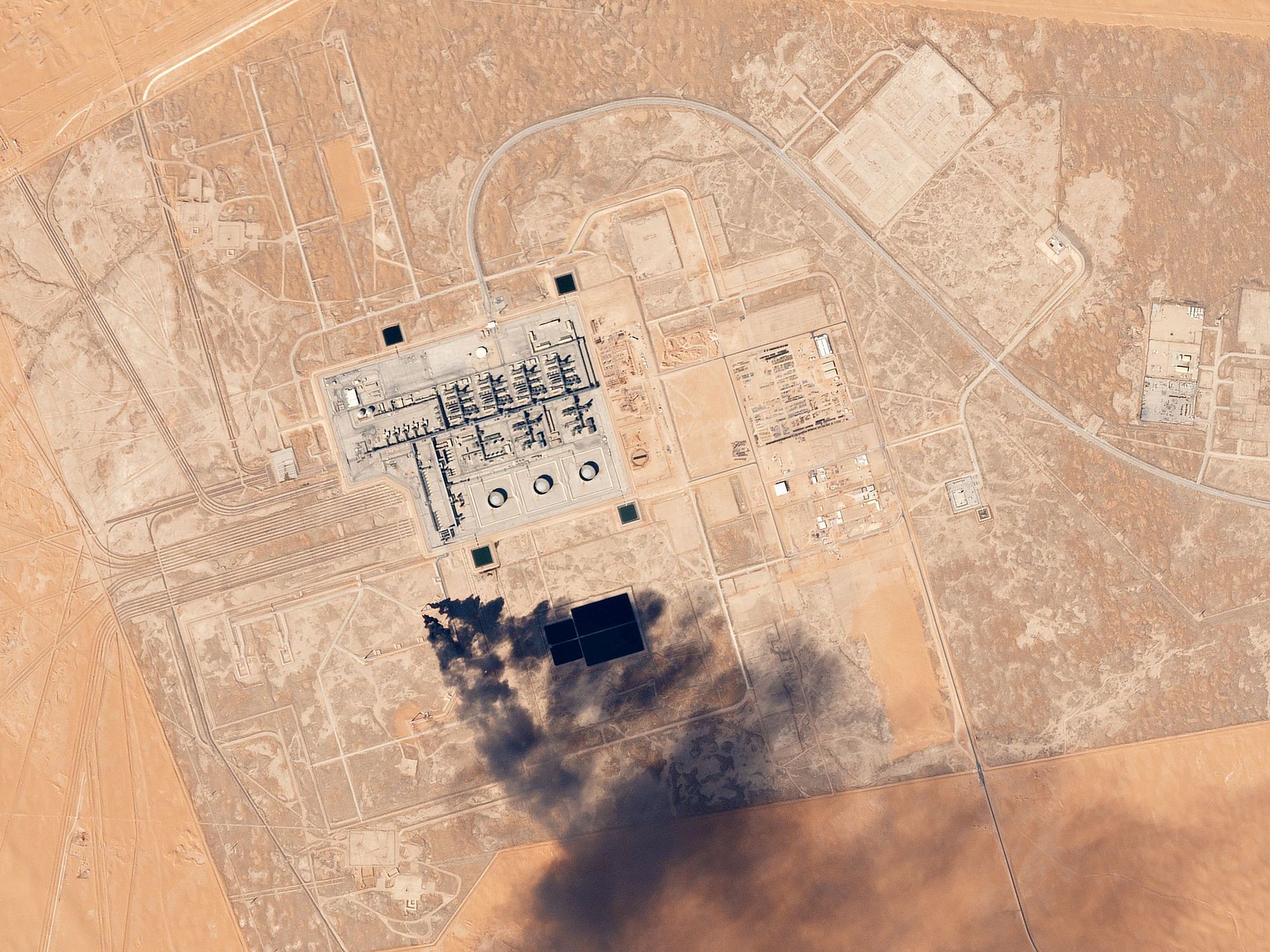
The last time Aramco posted a comparable profit trajectory was 2022, when net income hit $161 billion — the highest annual profit by any publicly listed company in history. Free cash flow reached $148.5 billion that year. But 2022’s windfall came with volumes intact: Russia’s invasion of Ukraine disrupted global supply chains without touching a single Saudi wellhead. The 2026 situation is structurally different. Saudi Arabia is simultaneously the war premium’s beneficiary and its most direct volume casualty.
Full-year 2025 net income was $93.4 billion, down 12% from 2024 — the 12th consecutive quarter of year-on-year profit decline before the Hormuz closure reversed the trend. AlJazira Capital’s full-year 2026 forecast: SAR 427 billion, approximately $114 billion. If that holds, it would represent a 22% annual increase, driven entirely by a production base that has lost roughly a third of its pre-war capacity.
How Does Aramco’s Royalty Structure Turn War Into Margin?
The mechanism is the tiered royalty Aramco pays to the Saudi government — a structure redesigned in recent years to be exquisitely price-sensitive. The rates: 15% on barrels priced below $70; 45% on the slice between $70 and $100; 80% on everything above $100.
The Middle East briefing 3,000+ readers start their day with.
One email. Every weekday morning. Free.
At $105.33 Brent, the math works as follows. The first $70 of every barrel generates a 15% royalty — $10.50. The next $30 (from $70 to $100) generates 45% — $13.50. The final $5.33 above the $100 threshold generates 80% — $4.26. Total government royalty per barrel: $28.26.
This is where the war premium performs its quiet inversion. At pre-war prices of approximately $70 per barrel, the royalty was roughly $10.50 — entirely in the lowest tier. At $105, it is $28.26. The government’s per-barrel take has nearly tripled, but only because the top tier — 80% above $100 — has activated. Every dollar of Brent above $100 delivers 80 cents to the Ministry of Finance.
For Aramco itself, the royalty structure means that the company’s retained margin on barrels above $100 is razor-thin — only 20 cents on the dollar before income tax. The profit surge is real, but the distribution of that profit skews overwhelmingly toward the state. Karen E. Young of the Arab Gulf States Institute and Columbia’s Center on Global Energy Policy described the dynamic as a “zero-sum game” — the royalty channel that responds fastest to production cuts hits the Ministry of Finance hardest and most directly.
Aramco’s lifting cost remains $2 per barrel for oil and $1 per barrel for gas, with total production and exploration costs at approximately $3.53 per barrel. At $105 Brent, the margin per barrel before royalties and tax is extraordinary. After the tiered royalty extraction, it narrows considerably — but Aramco still earns more per barrel than at any point since mid-2022.
The $114.76 Crossover: Where Volume Loss Meets Price Gain
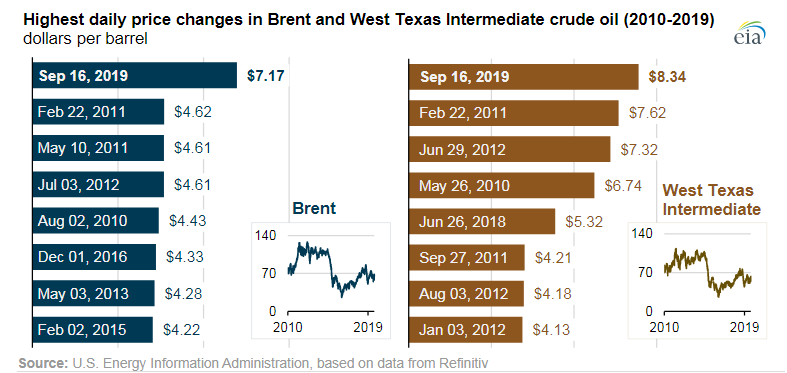
The crossover price is the number that matters most and is discussed least. For Saudi Arabia to match its pre-war daily royalty and tax revenue at current production levels — 7.76 million bpd instead of 10.11 million — Brent needs to reach approximately $114.76 per barrel. This figure is derived from the kingdom’s published tiered royalty structure applied to the February-to-March production shift; it does not appear in analyst reports and is not a figure any institution has published. That level has not been sustained since the immediate post-Hormuz price spike.
At $105.33, the kingdom is $9.43 per barrel below breakeven on a revenue-neutral basis. Applied across 7.76 million barrels per day, that gap translates to roughly $73 million per day in lost government revenue compared to pre-war volumes at pre-war prices. Over a quarter, the shortfall approaches $6.6 billion.
The IMF’s December 2025 estimate quantifies the relationship differently: a 1 million bpd increase in production lifts Saudi Arabia’s fiscal balance by 3.2% of GDP. The corollary is punishing. The 2.35 million bpd production loss between February and March represents a 7.5% of GDP negative fiscal shock from volume alone. Even at elevated prices, the volume drag dominates.
This is why Goldman Sachs estimates the war-adjusted fiscal deficit at 6.6% of GDP — double the official 3.3% projection. The official figure excludes PIF off-budget spending, which continues on its own trajectory regardless of Aramco’s output constraints. At the current burn rate, the difference implies an additional $40 to $50 billion in annual off-budget pressure that does not appear in the central government accounts.
The AGSI has cautioned against over-reliance on breakeven calculations, noting that Saudi Arabia has “one of the lowest government debt-to-GDP ratios in the G20” and can run deliberate deficits. That is correct. The kingdom ran deliberate deficits through 2015-2017, burning through $250 billion in reserves before course-correcting with a combination of austerity, domestic bond issuance, and the 2019 Aramco IPO. SAMA’s current foreign reserves stand at approximately $450 billion.
What Happens to Saudi Dividends When Production Craters?
Aramco’s 2026 total expected dividends are $87.6 billion — up marginally from 2025’s $85.5 billion but down 30% from the $124.3 billion peak in 2024. The base dividend for Q4 2025, paid in Q1 2026, was $21.1 billion, a 4.2% year-on-year increase that signals Aramco’s determination to maintain the floor even under production stress.
The performance-linked component tells the real story. Introduced in Q3 2023, this variable payout was delivering multi-billion-dollar windfalls through 2024. By Q4 2025, it had collapsed to $219 million — effectively zero in Aramco terms.
The distribution of those dividends maps directly onto Saudi fiscal architecture. The government holds 81.5% of Aramco, receiving approximately $71 billion of the projected 2026 payout. PIF holds 16%, receiving approximately $14 billion. In 2024, PIF’s share was roughly $20 billion. The $6 billion annual reduction is not trivial for a sovereign fund that was already scaling back its international investment ambitions.
PIF approved its 2026-2030 strategy on April 15 with a new three-portfolio structure and an approximately 15% cut to capital expenditure. The appointment of Fahd Al Saif — previously a senior PIF director who led green financing, credit rating, and global capital finance — as Investment Minister in February signals institutional tightening. Al Saif built his career in debt management and credit ratings, not deal origination.
There is a secondary fiscal drag that rarely appears in Aramco coverage. The Saudi government pays Aramco approximately $44 billion per year — 164 billion riyals in 2024 — to compensate for domestic energy sold below market rates. Aramco deducts this from its income tax liability. Without the subsidy structure, government oil revenue would be roughly 22% higher. The war premium that inflates Aramco’s headline profit does nothing to reduce this domestic subsidy obligation.
The Yanbu Ceiling and the Infrastructure Bind
Saudi Arabia’s OPEC+ quota stands at 10.2 million bpd. Actual March output was 7.76 million bpd — a 2.44 million bpd structural gap that no price increase can monetize. The constraint is not geological. Saudi wells are among the most productive on earth. The constraint is logistical: the Strait of Hormuz remains functionally closed to Saudi-origin crude, and the East-West Pipeline to Yanbu on the Red Sea has a maximum throughput of 4 to 5.9 million bpd against a pre-war Hormuz throughput exceeding 7 million bpd.
The Yanbu ceiling is the binding constraint. Wellhead capacity is irrelevant when the pipeline connecting eastern fields to the western export terminal cannot move enough barrels. The approximately 1.1 to 1.6 million bpd gap between Yanbu’s maximum capacity and pre-war export volumes represents oil that physically cannot reach a port, regardless of price or demand.
Khurais, one of Saudi Arabia’s largest fields at 300,000 bpd, remains offline with no announced restart timeline. Whether that shutdown reflects genuine war damage, infrastructure routing constraints, or a strategic decision to hold capacity in reserve is unclear. What is clear is that every barrel not pumped is a barrel not contributing to the royalty base — and at $105 Brent, each lost barrel costs the government $28.26 in royalties alone.
The June 2026 Official Selling Price reset tells a parallel story. Aramco cut its OSP by $16 per barrel — from May’s extraordinary +$19.50 war premium to June’s +$3.50 — even as spot Brent remained elevated above $105. The OSP reduction signals Aramco’s recognition that Asian buyers, its core market, are resisting the full war premium and diverting to alternatives. Those alternatives include Iranian crude settled in yuan and Russian barrels flowing under extended general licenses.
Iran’s Revenue Mirror: Who Is Actually Winning the Oil War?
The assumption embedded in most Western coverage is that Iran’s economy is buckling under war and blockade while Saudi Arabia weathers the disruption from a position of strength. The revenue data complicates this framing.
Iran exported 1.84 million bpd in March 2026 and 1.71 million bpd through mid-April — both above the 2025 average of 1.68 million bpd. Iranian crude has not traded below $90 per barrel in the past month, frequently exceeding $100. Al Jazeera reported on April 24 that Iran earned at least $4.97 billion in the past month, approximately 40% above the pre-war monthly average of $3.45 billion.
Iran’s barrels flow through channels it controls — the Larak and Qeshm corridors inside Iranian territorial waters — while GCC-origin crude must transit the broader Hormuz shipping lanes where the IRGC Navy declared “full authority to manage the Strait.” The closure punishes Gulf exporters structurally more than it punishes Iran — a geometry the IRGC’s February 28 channel-control orders established deliberately.
Kenneth Katzman, cited by Al Jazeera on April 24, estimated that Iran holds 160 to 170 million barrels of oil afloat on ships globally — a floating reserve that could sustain revenue flows through August despite the US naval blockade. An additional 183 million barrels sit on vessels at various points in the supply chain, with roughly 20 days of current production in onshore storage.
Iran’s Hormuz toll regime, by contrast, has generated exactly nothing. Sixty permits issued, eight payment requests sent, zero dollars collected in 36 days. The realistic revenue potential was $1 to $2 billion per year; the actual return is $0. IMO Secretary-General Arsenio Dominguez called the toll structure “illegal” under UNCLOS Article 26, and no major carrier has paid.
The IMF estimates Iranian GDP will contract 6.1% in 2026 with 68.9% inflation. Former Ambassador Adam Ereli told CNBC: “Iranians have prepared for this eventuality. They have alternative means of storing or selling their oil.” That preparation included building sanctions-evasion infrastructure over two decades — dark fleet tankers, yuan settlement channels, Chinese teapot refinery relationships — that is now performing exactly as designed under war conditions.
Why Would Riyadh Want Hormuz to Stay Partially Closed?
This is the question that the Q1 earnings data forces into the open. If Hormuz reopened tomorrow, Bloomberg estimates Brent would drop $10 to $20 per barrel immediately, stabilizing in the $80 to $90 range. At $85 Brent, the 80% royalty tier vanishes entirely. The 45% tier shrinks to the $70-$85 band — $6.75 per barrel. The 15% tier yields $10.50. Total government royalty per barrel: $17.25, down from $28.26 at $105. A 39% decline in per-barrel government revenue.
At pre-war volumes of 10.11 million bpd and $85 Brent, daily government royalty income would be approximately $174 million. At current volumes of 7.76 million bpd and $105 Brent, daily royalty income is approximately $219 million. The kingdom is earning $45 million more per day from the war-premium-plus-volume-loss combination than it would from full production at peacetime prices.
This is the inversion. Saudi Arabia is not losing money from the Hormuz closure in absolute terms — it is losing money relative to a hypothetical in which both prices and volumes are maximized, a scenario that has never existed simultaneously. In the real choice set available to Riyadh — war premium with constrained volumes, or peacetime prices with unconstrained volumes — the war premium is currently delivering more government revenue.
The benefit has a ceiling, and the ceiling is the crossover price. Below $114.76, the volume loss exceeds the price gain relative to the pre-war baseline. At $105, the kingdom is in the zone where the war premium helps but does not fully compensate. Above $114.76, reduced production at elevated prices would actually exceed pre-war revenue — a scenario that makes Hormuz reopening actively contrary to Saudi fiscal interests.
This does not mean Riyadh is engineering the closure. It means Riyadh has a more ambivalent relationship to the closure than its public lobbying to lift the US blockade suggests. The lobbying targets the blockade — a US-imposed constraint on Iranian ports — not the Hormuz disruption itself. The blockade suppresses Iranian exports, which competes with Saudi crude for Asian market share. The Hormuz disruption elevates prices, which inflates Saudi per-barrel revenue. The two constraints operate on different pressure points and Saudi statements have carefully tracked that distinction. Riyadh’s optimal outcome is a Hormuz open enough to move its own barrels at elevated prices but disrupted enough to sustain the war premium — a gap that has remained between roughly $90 and $115 Brent since February 28.
PIF, Fiscal Buffers, and the Breakeven Mirage
The fiscal breakeven price — the oil price at which the Saudi government balances its budget — is the most widely cited and least useful metric in Gulf economic analysis. The IMF’s December 2025 estimate puts it at $91 per barrel for the central government. Bloomberg’s PIF-inclusive estimate ranges from $108 to $111. The AGSI’s position is that “a thorough analysis of the government budget, debt, and net asset positions is needed” rather than fixating on a single breakeven number.
The reason the breakeven misleads is that Saudi Arabia does not need to balance its budget. It needs to fund three things simultaneously: central government operations, PIF’s investment program, and the social spending commitments embedded in Vision 2030. The first has a breakeven. The second and third do not — they draw on reserves, debt issuance, and Aramco dividends through channels that the breakeven calculation does not capture.
PIF’s 16% Aramco stake is the load-bearing column. At projected 2026 dividends of $87.6 billion, PIF receives approximately $14 billion — down from roughly $20 billion in 2024. The $6 billion annual haircut arrived just as PIF was scaling NEOM, the Entertainment City cluster, and a portfolio of international tech investments. The April 15 strategy reset — three-portfolio structure, 15% capex reduction — is the institutional response.
The government’s 81.5% stake delivers approximately $71 billion in 2026. In 2024, that figure was roughly $101 billion. The $30 billion annual reduction in government dividend income is larger than the entire defense budget of most Gulf states. It is being absorbed through a combination of higher debt issuance, drawdowns on SAMA reserves, and — less visibly — deferred Vision 2030 commitments.
The pre-war trajectory was already difficult. The AGSI projected in March 2025 that at $70 Brent with OPEC+ production plans, Saudi oil revenue would be approximately $152 billion — roughly 25% below 2024 levels. The war replaced the $70 price threat with a $105 price but imposed a 23 to 30% production loss. AlJazira Capital’s 2026 oil revenue estimate at war-adjusted volumes is in the same range as the AGSI’s pre-war $152 billion projection. The kingdom was heading for fiscal stress before the first missile struck Ras Tanura.
The Restart Illusion: Days, Weeks, or Months?
Aramco CEO Amin Nasser told investors on March 10 that the company could restore production “in a matter of days” once Hormuz reopens. The quote was designed to reassure markets that the production loss is temporary and reversible — a supply interruption, not a structural impairment.
Kim Fustier, an HSBC analyst covering the sector, offered a corrective: Saudi wells are “relatively easy to restart” individually, but “weeks is more likely” than days for simultaneous restoration of all shut-ins. The distinction matters. Individual well restarts are routine. Coordinating the restart of more than two million barrels per day of shut-in capacity across multiple fields, gathering systems, processing facilities, and export terminals — while simultaneously managing pipeline logistics between eastern fields and Yanbu — is an operational challenge with no recent precedent at this scale.
Nasser also said, on the same earnings call: “There would be catastrophic consequences for the world’s oil and markets the longer the disruption goes on.” The royalty arithmetic presented in the section above shows that at $105.33 Brent and 7.76 million bpd, the Saudi government earns $219 million per day in royalties — $45 million more per day than it would at pre-war volumes of 10.11 million bpd priced at peacetime levels of $85 Brent.
The restart timeline has market implications that Aramco cannot control. Bloomberg’s $10-to-$20 per barrel price drop estimate upon Hormuz reopening assumes markets front-run the supply restoration. If traders believe restart takes days, Brent collapses fast. If they believe it takes weeks, the drawdown is gradual and the war premium persists longer. Nasser said “days” on March 10. Kim Fustier told investors “weeks is more likely.”
May 11 and the Market Reckoning
Aramco’s official Q1 2026 results are scheduled for May 11. The AlJazira Capital forecast of $29.01 billion — which the market has substantially priced in, with the Tadawul at a year-high as of April 25 — will either be confirmed or revised. If confirmed, the earnings call will be the first occasion where Aramco’s management must address the structural inversion directly: how long can profit growth persist when it depends on a war premium that the company’s own CEO describes as catastrophic?
The Q2 outlook is where the tension sharpens. Q1’s averaging effect — pre-war January diluting wartime March — disappears. Q2 carries a full quarter of production at or below 7.76 million bpd. If Brent holds above $105, AlJazira Capital’s full-year forecast of $114 billion net income is achievable. If Brent drops to $90 on ceasefire progress or blockade relaxation, the 80% royalty tier disappears and the profit surge reverses within a single quarter.
The Tadawul’s pricing suggests investors are betting on persistence — that the war premium outlasts the production constraint. That bet requires either Hormuz to remain disrupted or Brent to find structural support above $100 on non-war fundamentals. Neither is guaranteed. The ceasefire — such as it is — expired April 22. No extension mechanism exists. Pakistan’s enforcement role depends on appeals to IRGC commanders whom Iran’s own president has publicly accused of sabotaging negotiations.
What the Q1 numbers will not show is the fiscal stress accumulating beneath the profit headline. Aramco’s earnings and the Saudi government’s fiscal position are connected but not identical. Aramco can post a record quarter while the government runs a widening deficit — because the royalty structure means the government’s revenue is a function of both price and volume, while Aramco’s profit per barrel rises as the top royalty tier activates. The May 11 earnings call will separate those two lines for investors for the first time since the war began.
The $114.76 crossover — derived from the royalty tier structure, not sourced from any analyst note — is the threshold above which Riyadh genuinely does not need Hormuz to reopen to maintain pre-war government revenue. AlJazira Capital’s full-year 2026 forecast of $114 billion net income implies Aramco crosses into record territory even as the government remains below that revenue-neutral price. Below $114.76, every day of closure costs the kingdom money even as Aramco’s profit line climbs. At $105.33 Brent and 7.76 million bpd, that amounts to approximately $73 million per day in foregone government revenue compared to pre-war conditions — a figure that will accumulate to roughly $6.6 billion by the time Aramco’s Q1 results are announced on May 11.
Frequently Asked Questions
When does Aramco report Q1 2026 earnings?
Aramco’s official Q1 2026 results are scheduled for May 11, 2026. The company typically holds an earnings call the same day. Pre-earnings analyst consensus, led by AlJazira Capital’s April 23 note, points to SAR 108.8 billion ($29.01 billion) in net income. Aramco’s share price on the Tadawul has already moved to year-highs in anticipation, suggesting the market has partially front-run the result.
What is Aramco’s lifting cost per barrel in 2026?
CEO Amin Nasser confirmed in October 2025 that Aramco’s lifting cost is $2 per barrel for oil and $1 per barrel for gas, with total production and exploration costs at approximately $3.53 per barrel. These are the lowest in the global industry by a wide margin — Exxon’s comparable figure exceeds $10 per barrel — and explain why Aramco remains profitable at virtually any oil price above $20. The low cost base also means the royalty and tax structure, not production economics, is the binding constraint on government revenue.
How much does the Saudi government pay Aramco in energy subsidies?
The government paid Aramco approximately $44 billion (164 billion Saudi riyals) in 2024 to compensate for domestic energy — gasoline, diesel, electricity feedstock — sold below international market prices. Aramco deducts this payment from its income tax liability, meaning the subsidy effectively reduces the government’s net oil revenue by roughly 22%. This structure predates the war and is politically untouchable: domestic energy prices are a core component of the social contract that Vision 2030 has not yet replaced with alternative revenue sources.
Could Saudi Arabia actually benefit from Hormuz staying closed?
At current Brent prices of $105.33, Saudi daily government royalty income at 7.76 million bpd ($219 million/day) exceeds what it would earn at pre-war volumes of 10.11 million bpd and peacetime Brent of $85 ($174 million/day). The benefit disappears below the $114.76 crossover on a pre-war revenue comparison, and the kingdom faces infrastructure constraints (the Yanbu pipeline ceiling) that prevent full export recovery regardless of strait status. The net position is ambivalent, not clearly positive — which is precisely why Saudi diplomatic posture on Hormuz has been more nuanced than simple advocacy for reopening.
What is Iran earning from oil during the war?
Al Jazeera reported on April 24 that Iran earned at least $4.97 billion from oil in the previous month — approximately 40% above its pre-war monthly average of $3.45 billion. Iran exported 1.84 million bpd in March and 1.71 million bpd through mid-April, both above the 2025 average of 1.68 million bpd. Analyst Kenneth Katzman estimates Iran holds 160 to 170 million barrels afloat on ships globally, a buffer that could sustain exports through August even under intensified US naval blockade conditions. Iran’s barrels transit through territorial water corridors it controls, bypassing the Hormuz disruption that constrains GCC exports.
How Aramco is adjusting its Official Selling Price for Asia to defend market share while operating 23% below pre-war output — and at a cost of $51–60 million per month in foregone revenue — is analysed in Aramco Cuts Arab Light OSP for Asia for First Time in Three Months.
The permanent Iranian production loss that makes this price-volume dynamic increasingly one-sided is quantified in Iran’s Oil Storage Just Hit the Wall: Kharg Island storage reached capacity on April 26, forcing well shut-ins that could permanently remove 300,000–500,000 bpd of Iranian production and make the global supply deficit structural rather than cyclical.