RIYADH — Saudi state television channel Al-Hadath reported on May 19 that “agreements have reportedly been reached regarding easing the blockade in exchange for a gradual reopening” of the Strait of Hormuz, predicting “a breakthrough regarding the ships stranded in the Strait is expected in the coming hours.” No such agreement can be operationalized under existing US sanctions law — and that is what makes the broadcast consequential. The Office of Foreign Assets Control prohibited payments to Iran’s government for Hormuz transit on May 1, eighteen days before Al-Hadath’s report. Iran established the Persian Gulf Strait Authority fourteen days before the broadcast. No general license authorizing payments to the PGSA has been issued. What Riyadh’s state broadcaster aired was a public disclosure — transmitted on a channel the Saudi state controls — of the precise legal instrument Riyadh requires Washington to produce: an OFAC carve-out for PGSA toll payments. Seven days before the Day of Arafat, with 860,000 foreign pilgrims inside Saudi borders and the kingdom’s Goldman Sachs-estimated fiscal break-even at $108–111 per barrel against Brent crude at $107–108, the broadcast amounts to a filing with a deadline.
Table of Contents
- What Did Al-Hadath Actually Report on the Hormuz Negotiations?
- The OFAC Architecture: Why No Hormuz Deal Can Close Without a New License
- What Would a PGSA-Specific OFAC Carve-Out Require?
- The General License Graveyard: GL U, GL W, and the Missing Authorization
- Why Is Riyadh Broadcasting a Deal It Cannot Legally Accept?
- The Gulf Veto and the Trial Balloon
- Can Saudi Arabia Afford Seven More Days Without Hormuz?
- How Does Iran’s PGSA Create a Western Shipping Compliance Trap?
- Frequently Asked Questions
What Did Al-Hadath Actually Report on the Hormuz Negotiations?
Al-Hadath, the news channel operated by the Saudi-owned MBC Group, broadcast three claims in rapid succession on May 19: that “intensive negotiations” were underway to reopen the Strait of Hormuz, that “agreements have reportedly been reached regarding easing the blockade in exchange for a gradual reopening of the Strait,” and that “a breakthrough regarding the ships stranded in the Strait is expected in the coming hours.” The channel cited no named sources. It offered no documentary evidence. It did not identify which governments were party to the reported agreements, what legal framework governed them, or how they addressed the OFAC prohibition on payments to Iran’s transit authority that has been in force since May 1.
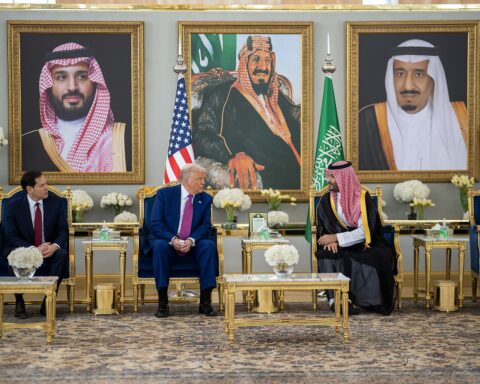
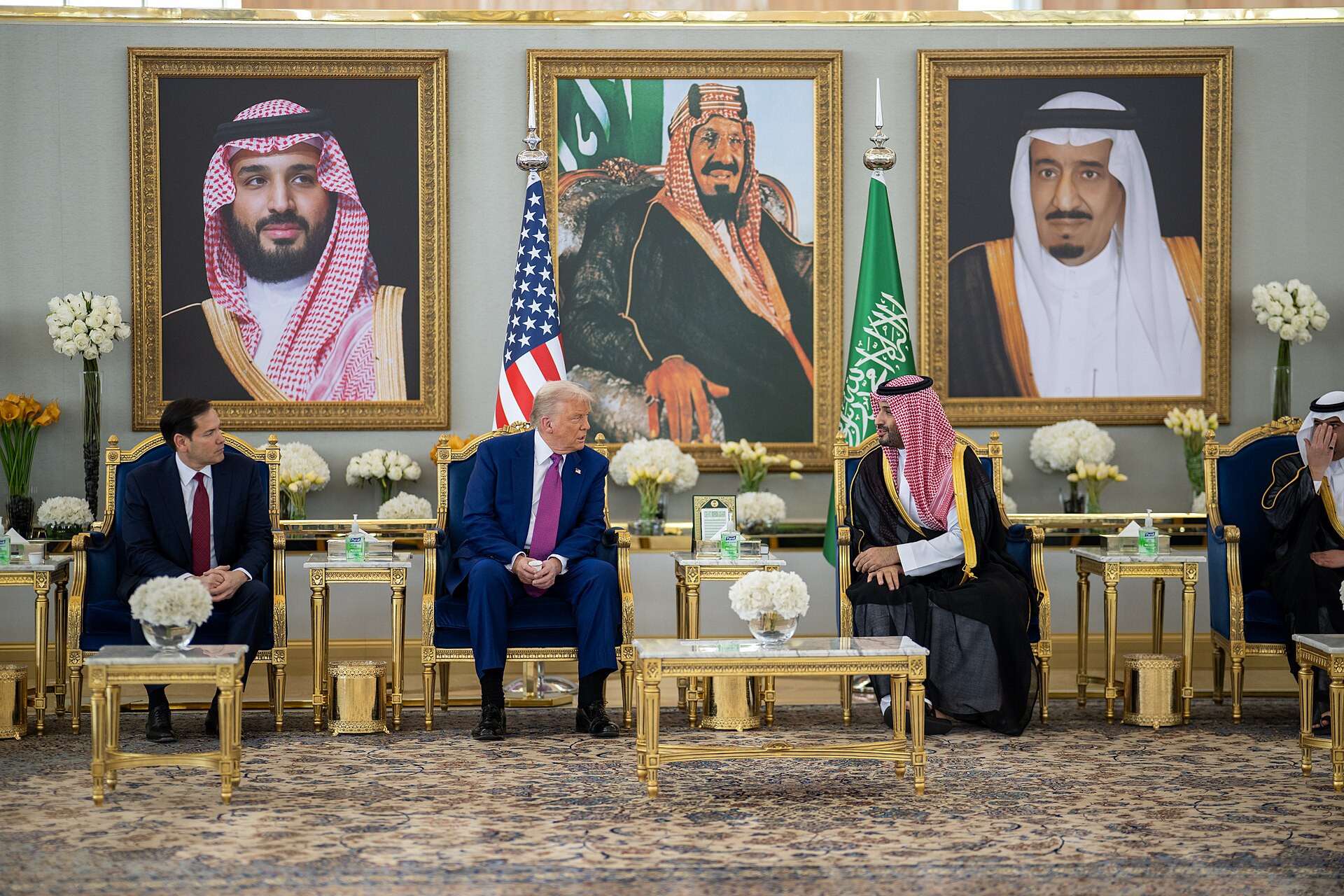
The broadcast aired one day after President Trump announced he had cancelled a military strike on Iran — scheduled for May 19 — at the personal request of Crown Prince Mohammed bin Salman, UAE President Mohamed bin Zayed Al Nahyan, and Qatar’s Emir Tamim bin Hamad Al Thani. Trump disclosed on Truth Social that the three leaders asked him “to hold off on our planned Military attack of the Islamic Republic of Iran” because “serious negotiations are now taking place.” The strike, Trump said, was to have been “a very major attack.” He complied with the request but warned the US military remained on standby for a “full, large-scale assault” if the diplomatic window closed without result.
Two days before Al-Hadath’s report, Bloomberg reported on May 17 that the US and Iran remained “far from a Hormuz deal,” with Iran demanding blockade-lifting and sanctions relief while insisting on maintaining PGSA toll-collection capacity as a condition for reopening. Bloomberg’s sourcing and Al-Hadath’s sourcing describe the same negotiation and reach opposite conclusions about its status. One outlet, drawing on multiple diplomatic sources, calls the talks distant from resolution. The other, broadcasting from a channel answerable to the Saudi state, announces agreements reached. The distance between those two assessments is not a reporting discrepancy — it is the distance between what a Saudi-state channel needs the diplomatic situation to be and what it is.
The OFAC Architecture: Why No Hormuz Deal Can Close Without a New License
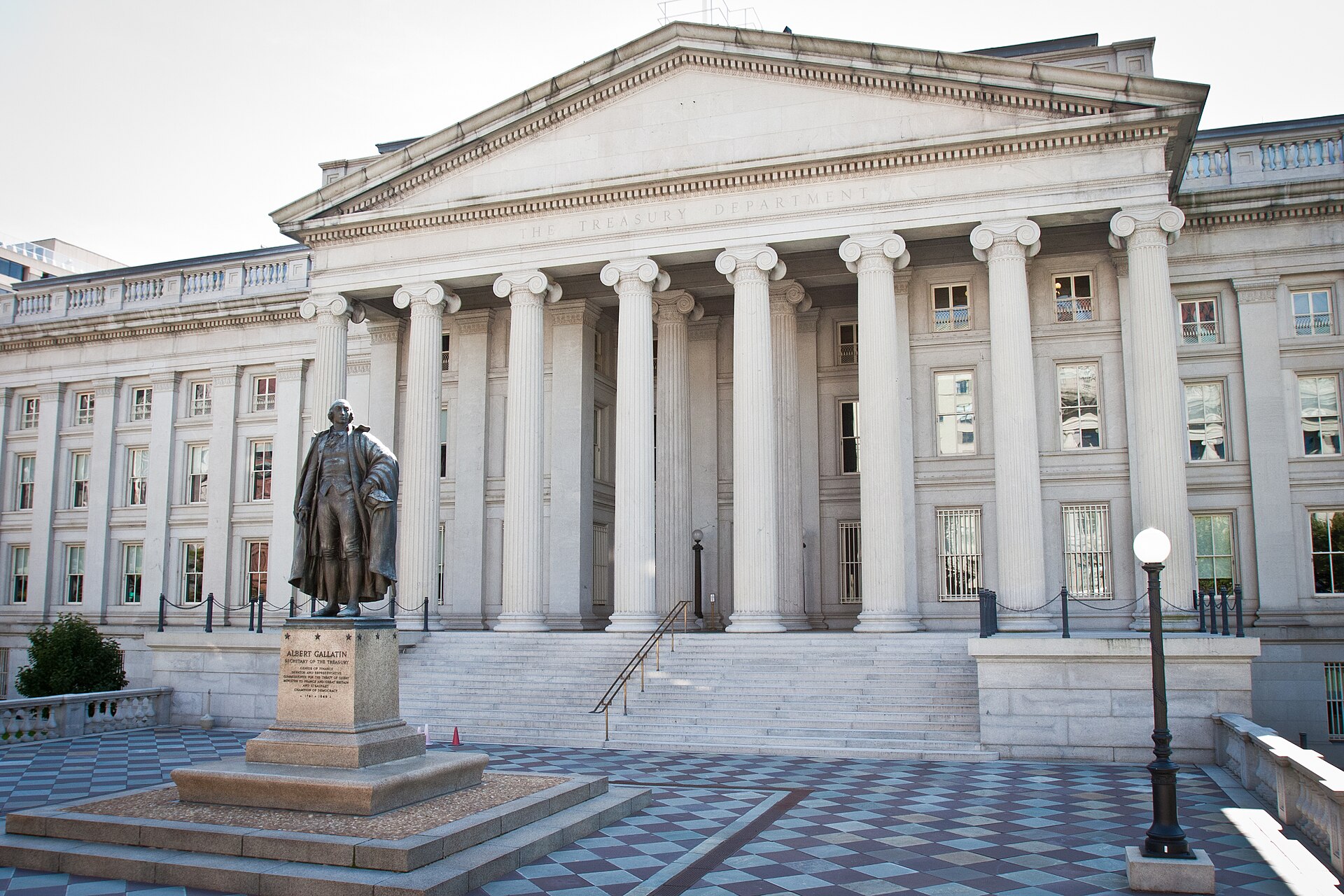
On May 1, 2026, OFAC published a formal advisory and simultaneously issued FAQ 1249, stating that payments to the Government of Iran or the Islamic Revolutionary Guard Corps “directly or indirectly, for safe passage through the Strait of Hormuz” are not authorized for US persons, US financial institutions, or US-owned or -controlled foreign entities. The advisory covered every payment form: cash, digital assets, in-kind transfers. For non-US persons, OFAC warned of “significant sanctions exposure” under secondary sanctions provisions targeting transactions with the Government of Iran and the IRGC — designated by the United States as a Foreign Terrorist Organization.
The Persian Gulf Strait Authority was established four days later, on May 5. Ebrahim Azizi, chairman of Iran’s Parliament National Security and Foreign Policy Committee, confirmed on May 16 that the PGSA will “unveil soon” the full tariff mechanism, framing transit fees as payment for “specialized services.” Vessels apply through info@PGSA.ir and must disclose ownership, insurance, crew manifests, and cargo before a permit is issued. Some vessels have already paid up to $2 million per transit in Chinese yuan. Deputy Speaker Hamidreza Hajibabaei confirmed on April 23 via Tasnim News Agency that “the first revenue from a newly imposed toll system had been received.”
The Middle East briefing 3,000+ readers start their day with.
One email. Every weekday morning. Free.
Under the existing sanctions architecture, any payment to the PGSA — a statutory Iranian government entity — constitutes a payment to the Government of Iran. OFAC’s advisory did not mention the PGSA by name; the entity did not yet exist when FAQ 1249 was drafted. But the advisory’s categorical language leaves no ambiguity and no carve-out. A trade attorney cited by Lexology described financial institutions as “extremely sceptical” that toll fees could qualify as transactions “ordinarily incident and necessary” to any authorized activity under existing general licenses.
The prohibition reaches operations through the insurance chain. The Swedish Club, one of the world’s largest protection and indemnity insurers, issued a member alert warning that “any payment made to Iran or the IRGC in connection with transit may give rise to sanctions exposure, which could in turn affect the Club’s ability to provide cover or process claims.” The practical consequence — a vessel losing P&I coverage, becoming uninsurable, unable to load at any commercial port — is examined in full here.
What Would a PGSA-Specific OFAC Carve-Out Require?
A PGSA-specific OFAC general license would need to authorize US persons and US-connected financial institutions to process payments to the Government of Iran — specifically to the Persian Gulf Strait Authority — for the purpose of transiting the Strait of Hormuz. No such license has been issued. Issuing one would constitute de facto US acceptance that Iran possesses legal authority to charge for passage through an international strait — a concession that contradicts Washington’s four-decade legal position under UNCLOS.
The United States insists that Hormuz transit is governed by UNCLOS Article 38, which establishes a right of transit passage through international straits and prohibits coastal states from imposing fees on transiting vessels. James Kraska of the Naval War College has stated there is “no legal basis under international law” for Iran’s toll charges. Iran signed but never ratified UNCLOS. Its parliament is advancing a 12-article Hormuz sovereignty law that would codify the PGSA’s toll regime in domestic statute — transforming what Tehran currently frames as an administrative service fee into sovereign legislation that cannot be withdrawn as a diplomatic concession without amending Iranian law.
UNSC Resolution 2817, adopted during the crisis, reaffirmed “unimpeded transit passage.” Iran dismisses the resolution’s transit provisions as non-binding on non-ratifying parties. The PGSA’s legal architecture was built to exploit this specific gap in the international order. And any OFAC general license authorizing toll payments would, regardless of its stated scope or duration, constitute the first instance of the United States conceding — through regulatory action if not through words — that a foreign government may charge for access to a strait that Washington has treated as an international commons since the Carter Doctrine.
Washington cannot issue the license without undermining the transit passage doctrine it has enforced through four decades of naval presence. It cannot refuse to issue the license without leaving the Strait functionally closed to Western-connected tonnage. Al-Hadath’s broadcast placed that dilemma before a global audience and identified Washington, not Riyadh, as the party required to resolve it.
The General License Graveyard: GL U, GL W, and the Missing Authorization
OFAC has issued a series of general licenses since the war began in February. None authorizes what Al-Hadath’s reported deal would require.
| License | Issued | Scope | Status | Authorizes PGSA Payments? |
|---|---|---|---|---|
| GL U | March 20 | Sale/delivery of Iranian crude loaded on vessels as of March 20 | Expired April 19 (not renewed) | No |
| GL W | May 1 | Wind-down of transactions involving Qingdao Haiye Oil Terminal (designated Chinese entity) | Expires May 31 | No |
| GL 134/134A | March 2026 | Certain Russian crude oil transactions | Active | No (Russia-specific) |
| FAQ 1249 | May 1 | Clarification: Hormuz transit payments to GoI/IRGC prohibited | Active | Explicitly prohibited |
| [Hypothetical GL] | Not issued | Authorization for PGSA toll payments by Western-connected tonnage | Does not exist | Required for any deal |
GL U was the broadest Iran-related authorization issued during the conflict. Treasury Secretary Scott Bessent described it as “a narrowly tailored, short-term authorization permitting the sale of Iranian oil currently at sea,” designed to “quickly bring approximately 140 million barrels of oil to global market.” Issued March 20, GL U authorized all transactions ordinarily incident and necessary to the sale, delivery, or offloading of Iranian crude loaded on vessels as of that date — including ancillary services such as bunkering, crewing, insurance, and port services. It expired on April 19 without extension or renewal.
Even during its 30-day window, GL U’s scope covered cargo transactions — not transit toll payments to an Iranian government authority. The distinction is dispositive. GL U authorized the movement of oil already at sea. The PGSA demands payment for use of a waterway. These are categorically different transactions, and no parsing of GL U’s “ordinarily incident and necessary” language bridges the gap between them.
GL W, issued on the same day as OFAC’s Hormuz advisory on May 1, authorized a 30-day wind-down of transactions involving Qingdao Haiye Oil Terminal, a Chinese entity designated for importing sanctioned Iranian crude. It expires May 31. GL W does not mention Hormuz transit, does not authorize PGSA payments, and is directed at a single designated Chinese entity — not at the Iranian government’s toll-collection apparatus.
The juxtaposition of GL W and FAQ 1249 on the same date reads as deliberate sequencing. On May 1, Washington was willing to provide a 30-day clean-up window for Chinese entities entangled in Iranian crude trades. On the same day, it categorically prohibited toll payments to the authority Iran was about to establish. Iran’s 14-point plan, published two days later on May 3, demanded full sanctions relief and frozen asset return simultaneously with Hormuz reopening — a framework under which the PGSA’s toll architecture would survive any deal as a residual post-conflict revenue instrument. Amir Handjani of the Quincy Institute has estimated PGSA revenue potential at $1.5 to $3.9 billion per month for Iran.
Why Is Riyadh Broadcasting a Deal It Cannot Legally Accept?
Saudi Arabia broadcast a deal framework it cannot operationalize because the broadcast itself is the instrument. By airing claims of “agreements reached” on a state-affiliated channel, Riyadh publicly established that a diplomatic pathway exists — and that the sole remaining obstacle is a US regulatory action that Washington has so far refused to take.
Al-Hadath is not a commercial outlet operating at arm’s length from the Saudi government. The channel is part of the MBC Group, in which the Public Investment Fund holds a controlling stake following its 2022 acquisition. Its editorial output tracks with the government’s preferred framing — a pattern consistent across two decades of Gulf media operations and well understood by every foreign ministry that monitors the region.
The Wall Street Journal reported that Saudi Arabia was “pressing the U.S. to drop its blockade of Hormuz,” fearing the blockade’s economic damage was outweighing its coercive value. NBC News confirmed that Trump’s earlier plan to escort commercial vessels through the Strait had been reversed after a “key Gulf ally” objected. Al-Hadath’s broadcast translated that private diplomatic pressure into a public signal — one whose technical specificity (blockade easing in exchange for gradual reopening) maps directly onto the regulatory instrument (PGSA toll authorization) that the WSJ’s reporting implies Riyadh has been requesting through quieter channels.
The broadcast told its Arabic-speaking domestic audience that resolution was near. It told Washington’s policy apparatus — the Bloomberg terminals, the FT desks, the Treasury Department analysts who monitor Gulf state media for diplomatic traffic — something more precise: the deal structure exists, the negotiating framework is agreed, and the single remaining variable is an OFAC action that only the US government can take.
The Gulf Veto and the Trial Balloon
The sequence of May 18–19 merits precise reconstruction. On Sunday, May 18, Trump disclosed he had cancelled a military strike on Iran — scheduled for the following day — at the personal request of MBS, MBZ, and Tamim. The three leaders, per Trump’s Truth Social post, told him that “serious negotiations are now taking place” and asked him to wait two to three days. Trump said the planned attack was “very major.” He complied but warned the US military was ordered to remain ready for a “full, large-scale assault” if talks failed.
The two-to-three-day window the Gulf leaders purchased expires around May 20–21. Within that window — on May 19 — Al-Hadath aired its report. The channel’s claims (agreements reached, breakthrough expected in hours, stranded ships to move) constituted the diplomatic progress the three leaders had promised Trump existed. The broadcast’s function was to demonstrate to Washington that the diplomatic capital expended on halting the strike was producing returns, and to establish that any failure to reach agreement would be attributable not to the Gulf states’ diplomatic effort but to Washington’s refusal to provide the regulatory instrument that would operationalize the deal.
Riyadh carried a second audience simultaneously: the 860,000 foreign pilgrims inside Saudi borders with seven days to the Day of Arafat. Al-Hadath’s broadcast was the first public signal that the Gulf states’ diplomatic intervention had produced something — a framework, a timetable, a promise of movement. The OFAC license would be the second signal.
If the window closes without that license — if the two to three days pass and no PGSA payment authorization appears — Trump’s deferred strike returns to the table. The May 18 intervention by MBS, MBZ, and Tamim bought approximately 48 to 72 hours. Al-Hadath’s report consumed the first of them.
Can Saudi Arabia Afford Seven More Days Without Hormuz?
Saudi Arabia posted a SAR 125.7 billion ($33.5 billion) deficit in Q1 2026 — the largest quarterly shortfall since 2018. Goldman Sachs estimates the kingdom’s PIF-inclusive fiscal break-even at $108–111 per barrel. With Brent at $107–108 on May 19, the kingdom is selling below the price it needs to break even.
| Metric | Pre-War | Current (April–May 2026) | Gap |
|---|---|---|---|
| Saudi crude production | 10.4M bpd | ~6.879M bpd (April, IEA) | -3.52M bpd (34%) |
| East-West pipeline (Yanbu) throughput | Bypass capacity | ~7M bpd (at ceiling) | Operating as sole export route |
| Pre-war Hormuz export throughput | ~7–7.5M bpd | Near zero (Western tonnage) | -1.1 to 1.6M bpd structural shortfall vs Yanbu ceiling |
| Brent crude | ~$80–85/bbl (2025 avg) | $107–108/bbl | +$25/bbl (price premium from disruption) |
| Daily revenue (est.) | ~$832M | ~$739M (at $107–108/bbl) | -$93M/day |
| Goldman PIF-inclusive break-even | — | $108–111/bbl | At or below threshold |
| Q1 2026 deficit | — | SAR 125.7B ($33.5B) | 24% above full-year official projection |
The Q1 deficit already exceeds the government’s full-year official projection of SAR 101 billion. Goldman’s war-adjusted full-year estimate: $80–90 billion, representing 6.6% of GDP against the government’s projected 3.3%. Aramco reported Q1 net income of $33.6 billion — up 25% year-over-year — but the profit figure partially masks the volume constraint beneath elevated prices.
The East-West pipeline is running at its 7-million-bpd design ceiling through Yanbu. Saudi April production of approximately 6.879 million bpd (down from 7.25 million in March) sits below the pipeline’s capacity, but the pipeline was built as a strategic bypass, not as a permanent replacement for Hormuz throughput. The structural gap between Yanbu’s ceiling and pre-war export capacity — 1.1 to 1.6 million bpd — cannot be closed by any infrastructure that exists or could be built within the relevant timeframe. At current prices, that gap represents approximately $120–175 million per day in unshippable production value.
The Hajj window compounds every fiscal and security variable simultaneously. PAC-3 MSE interceptor stockpiles have depleted from approximately 2,800 rounds pre-war to an estimated 400 — an 86% reduction. Lockheed Martin’s Camden, Arkansas plant produces 620 rounds annually. The inventory cannot be meaningfully replenished before the Day of Arafat on May 26, when approximately two million pilgrims will gather at the Haram under an air defense architecture that is operationally intact but mathematically thinner than at any point since the war began. IEA Director Fatih Birol has characterized the 13 million barrels per day offline as “the biggest energy security threat in history.” Saudi Arabia is running $93 million per day below pre-war revenue levels while already above its full-year deficit projection after the first quarter alone.
How Does Iran’s PGSA Create a Western Shipping Compliance Trap?
Iran’s Persian Gulf Strait Authority creates a binary compliance dilemma for Western-connected shipping: paying the PGSA’s transit toll triggers OFAC sanctions exposure, while refusing to pay triggers IRGC interdiction risk. The result is a de facto exclusion of all vessels connected to Western insurance, banking, or flag-state jurisdiction from the Strait — regardless of whether any government has formally declared it closed.
The exclusion operates through the insurance chain rather than through physical obstruction. The Swedish Club’s member alert — warning that sanctions exposure “could in turn affect the Club’s ability to provide cover or process claims” — means in practice that a vessel paying the PGSA toll risks losing P&I coverage. Without P&I coverage, no port will load its cargo, no counterparty will accept its bills of lading, and no bank will process its letters of credit. OFAC’s May 1 advisory — issued fourteen days before the PGSA formally existed — pre-emptively imposed that consequence on every Western-connected vessel that would attempt the transit.
The vessels that can transit are those operating outside OFAC’s secondary sanctions perimeter: Chinese-flagged, Russian-flagged, and flag-of-convenience tonnage insured by non-Western P&I clubs and settling payments in non-dollar currencies. Iranian Army official Mohammad Akraminia made the selectivity explicit: “Countries that comply with the United States by imposing sanctions on the Islamic Republic of Iran will certainly face difficulties crossing the strait.” The PGSA functions as a compliance filter: it sorts the global fleet into two halves, charges the OFAC-compliant half for access, and leaves the non-compliant half — Chinese, Russian, flag-of-convenience tonnage — as the only vessels moving through the Strait.
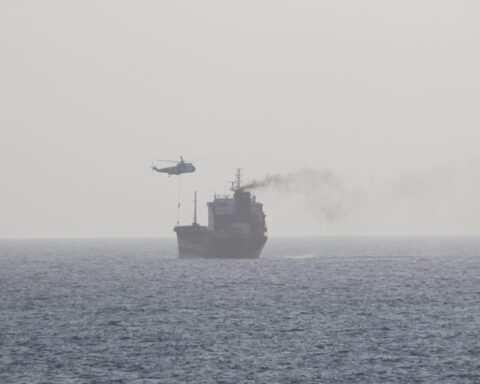
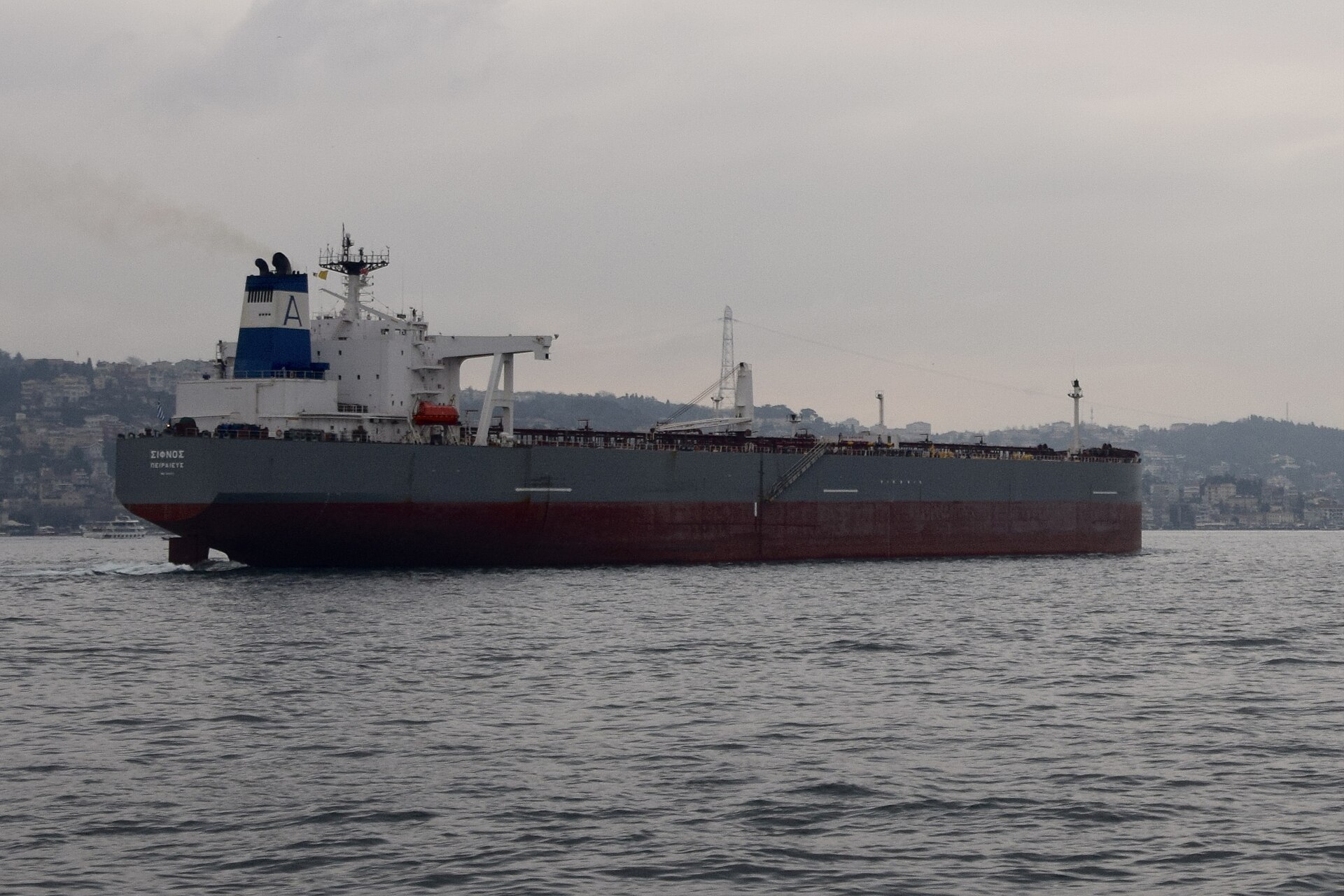
The double blockade that results is self-reinforcing. CENTCOM’s blockade (effective April 13) targets Iranian ports and toll-paying vessels. The IRGC controls the Gulf of Oman exit corridor. Vessels require both clearances to transit. The numbers reflect the compound obstruction: approximately 45 transits between the April 8 ceasefire and late April — 3.6% of the pre-war monthly baseline of roughly 1,250 transits. By mid-May, daily throughput had fallen to a single vessel against a pre-war norm of sixty. The Chairman of the Joint Chiefs confirmed on May 6 that 22,500 mariners are trapped on more than 1,550 commercial vessels in and around the Strait.
Iran’s Foreign Minister Abbas Araghchi has stated that Iran “intends to devise a new arrangement to ensure secure maritime traffic through the waterway” — conditional on a broader deal that includes US blockade removal and sanctions relief. Iran’s sequencing demand is unambiguous: Washington lifts the naval blockade first, then Tehran reopens Hormuz. But the OFAC prohibition means that even if Washington lifts the CENTCOM blockade, Western tonnage still cannot transit without a sanctions authorization that no one has issued. The naval blockade and the sanctions prohibition are distinct instruments with distinct lifting mechanisms — and Iran’s negotiating position conflates them, deliberately, because every day the conflation persists is a day the PGSA collects revenue from the non-Western vessels that can still pay. The same period saw Iran run a parallel nuclear track: E3 talks in Istanbul at deputy level, structured not to close a deal but to ensure that European concern over Hormuz amplifies Tehran’s leverage in the US channel.
Frequently Asked Questions
Could OFAC issue a PGSA-specific license through executive action without Congressional approval?
Yes. OFAC derives its authority from the International Emergency Economic Powers Act (IEEPA), which grants the president broad power to regulate international transactions during declared national emergencies. A PGSA-specific general license could be issued by OFAC without Congressional action, following the same administrative pathway as GL U and GL W. However, such a license would face immediate political opposition from Senate Banking Committee members who have pushed for maximum pressure on Iran throughout the conflict. The political cost — issuing a license that implicitly validates Iranian toll authority over an international strait — may weigh more heavily in Treasury’s calculus than the legal mechanics, which are straightforward. GL 134/134A, issued for Russian crude in March 2026, demonstrates that OFAC can move quickly on commodity-specific, time-limited authorizations when the executive branch determines the market disruption warrants it.
Has any government ever authorized payments to a foreign state for transit through an international strait?
No direct precedent exists in the modern sanctions era. The closest historical analogy is the Danish Sound Dues — tolls charged for centuries on vessels transiting the straits between the North Sea and the Baltic. The Sound Dues were abolished in 1857 through the Copenhagen Convention, a multilateral buyout in which maritime nations paid Denmark a lump sum to eliminate the charges permanently. The abolition was driven by the same principle now at stake in Hormuz: the 19th-century consensus that charging for strait transit was incompatible with freedom of navigation. An OFAC general license authorizing PGSA payments would represent a reversal of the legal trajectory that the Sound Dues’ abolition established — and Washington’s freedom-of-navigation advocates, including the Naval War College’s James Kraska, have explicitly invoked this historical parallel.
What is the PGSA’s legal status under Iranian domestic law?
The PGSA was established by administrative decree on May 5, 2026, which gives it executive-branch authority but leaves it vulnerable to revocation by a future Iranian government. Iran’s parliament (Majlis) is advancing a 12-article “Hormuz Sovereignty Law” that would give the toll regime statutory force, codifying Iran’s position that Hormuz transit is subject to Iranian sovereign regulation rather than UNCLOS transit passage rights. If enacted, the law would make PGSA toll collection a matter of domestic legislation rather than executive discretion — meaning that any future deal requiring Iran to abandon the toll system would necessitate legislative repeal, not merely an executive order. The bill’s sponsors include members of the National Security and Foreign Policy Committee, the same committee whose chairman, Azizi, oversees the PGSA.
What happens to the 22,500 trapped mariners if no deal materializes?
The International Maritime Organization has flagged the situation as a humanitarian emergency. Mariners on more than 1,550 vessels are experiencing supply shortages, crew fatigue, and deteriorating conditions, with some vessels having been at anchor for over two months. Flag states — particularly Panama, Liberia, and the Marshall Islands, which register the majority of affected tonnage — face obligations under the Maritime Labour Convention to ensure crew welfare. Humanitarian evacuation would require IRGC cooperation for vessels within Iranian-controlled waters, creating an additional dependency on the entity OFAC has prohibited Western entities from transacting with. Several shipping industry groups have called for a humanitarian corridor independent of the commercial toll mechanism, but Iran has not agreed to separate the two.
Could Saudi Arabia route Hormuz-bound tankers through non-US-connected entities to bypass OFAC restrictions?
In theory, Saudi Arabia could charter non-Western tonnage — Chinese or Emirati-flagged vessels insured outside the International Group of P&I Clubs — to transit Hormuz and pay PGSA tolls without triggering US sanctions. However, Saudi Arabia’s own financial system is deeply integrated with US dollar-denominated markets. Aramco, SABIC, and the PIF all maintain relationships with US-regulated financial institutions. A deliberate sanctions-evasion architecture would expose each of these entities to OFAC enforcement action and jeopardize Saudi Arabia’s access to US capital markets. Lloyd’s List has reported Aramco exploring intermediary arrangements, but the PIF’s 2022 acquisition of MBC Group — and thus Al-Hadath itself — is processed through US-regulated institutions. The regulatory mechanism Riyadh is publicly asking Washington to dismantle is the same mechanism that constrains the kingdom’s own sovereign wealth fund.
The PGSA’s administrative architecture — its vessel identification form, tiered-access ranking system, and the Majlis bill that would give it statutory force — makes any deal involving toll dissolution structurally more complex than the OFAC licensing question alone. The full institutional analysis is in Iran Built a Customs Authority on Hormuz — and Nobody Is Negotiating to Dismantle It.