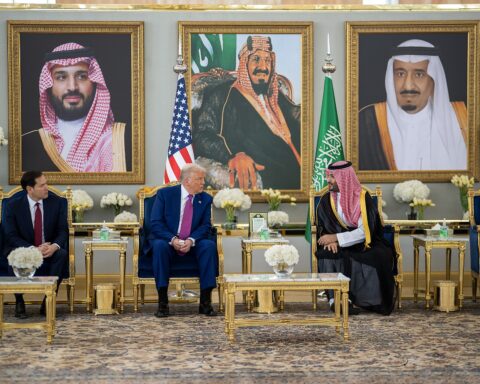
WASHINGTON — Trump’s National Security Council meets on Monday to hear CENTCOM commanders present operational plans to physically seize part of the Strait of Hormuz with ground forces — the first proposed American ground operation on Iranian sovereign territory since eight servicemen died in the desert at Tabas in 1980. The plan, first reported by Axios on April 30 and confirmed in granular detail by Admiral Brad Cooper’s Senate Armed Services Committee testimony on May 14, has already accomplished more as a published intention than it could plausibly achieve as a military operation: its existence on the public record has simultaneously collapsed Iran’s incentive to make ceasefire concessions, eliminated Saudi Arabia’s power as the gatekeeper of American basing access in the Gulf, and killed Riyadh’s Helsinki-style non-aggression proposal — floated just four days ago — before the ink dried.
The question for Monday’s Situation Room is not whether CENTCOM can seize Larak Island or push mine-clearing drones through the strait’s shipping lanes — Cooper told senators the US “has options to reopen the Strait of Hormuz militarily.” The question is whether anyone at the table grasps that the threat, once published, already detonated in the one domain where it did irreversible harm: the diplomatic space where Saudi Arabia, Iran, and a half-dozen mediators were still, however improbably, trying to negotiate an end to the war.
Table of Contents
- What Is CENTCOM Actually Proposing?
- The 36 Hours That Already Answered the Question
- Why Does the Seizure Plan Kill the Ceasefire Before Authorization?
- Saudi Arabia’s Vanishing Card
- Can the US Military Actually Hold Iranian Islands?
- What Happened to the Mine Clearance Fleet?
- Helsinki, Dead on Arrival
- The Occupation Arithmetic
- Frequently Asked Questions
What Is CENTCOM Actually Proposing?
CENTCOM commanders have prepared plans for a ground and naval operation to seize part of the Strait of Hormuz, including potentially fortified Iranian islands, using airborne troops, Marine expeditionary units, and special operations forces — plans confirmed by Admiral Brad Cooper’s Senate Armed Services Committee testimony on May 14 as real, resourced, and awaiting a presidential signature. Axios reported on April 30 that the plan is “focused on taking over part of the Strait of Hormuz to reopen it to commercial shipping” and “could include ground forces.” Cooper confirmed the operational logic to senators: the US has military options for Hormuz, but “that is a decision for policymakers” — a formulation that handed the political risk to the White House while placing the planning squarely on the public record.
The most detailed open-source picture of what such an operation would involve comes from Can Kasapoglu at the Hudson Institute, whose March 31 analysis — titled “Cutting the Gordian Knot” — described US forces approaching Iranian islands “at low altitudes using tilt-rotor aircraft such as the MV-22, the Marine Corps variant of the V-22 Osprey,” with “elements from the 82nd Airborne Division and select Special Forces detachments” joining the raids. Kasapoglu assessed that Larak Island, which commands the narrowest navigable point of the strait at just 39 kilometres wide, “is heavily fortified and would be a hard target” even for elite units with complete air superiority.
The professional naval officer community treated island seizure as a live debate in the April 2026 issue of USNI Proceedings, which ran both “The Perilous Options in the Strait of Hormuz” and “Seizing Iranian Offshore Islands: High Risk, Low Payoff” in the same volume — a pairing that tells you everything about where the Navy’s own thinkers landed. The Proceedings authors warned that holding Kharg Island would mean “a more difficult and sustained fight” against “unrelenting drone and missile barrages from the Iranian mainland 20 miles away,” a distance close enough for unguided rockets, let alone the precision-guided weapons the IRGC has been stockpiling for decades.
For scale: Trump’s Operation Project Freedom, which involved no territorial seizure, no ground forces on Iranian soil, and no mine clearance, required 15,000 troops and more than 100 land- and sea-based aircraft according to Axios. A seizure operation targeting fortified islands defended by missile batteries, naval mines, and an IRGC force that has spent nearly three months hardening its positions would need substantially more than what Operation Sledgehammer already stretched to constitutional limits. The last time Trump tried something far less ambitious in the same waterway, it took Saudi Arabia exactly 36 hours to shut it down.
The Middle East briefing 3,000+ readers start their day with.
One email. Every weekday morning. Free.
The 36 Hours That Already Answered the Question
On May 4, Trump announced Operation Project Freedom — a naval escort mission to shepherd commercial shipping through Hormuz, framed by the administration as a freedom-of-navigation exercise backed by guided-missile destroyers and carrier-based air cover. It was not a seizure operation, not an island assault, not even a blockade enforcement action at the scale the US was already conducting. Thirty-six hours later, Trump paused it, and NBC News reported the reason: Saudi Arabia had suspended American military use of Prince Sultan Air Base and Saudi airspace “without prior US consultation,” after Washington launched the operation “without notifying key Gulf allies first.”
Both sides blindsided each other, and Saudi Arabia blinked second. Riyadh and Kuwait formally restored basing access on May 7–8, but only after a direct Trump-MBS phone call whose contents neither government has disclosed — a conversation that presumably involved the kind of transactional reassurance that leaves no written record precisely because both parties need deniability about what was promised. The 36-hour sequence established a fact that no subsequent diplomatic language has overridden: Saudi Arabia possesses and is willing to exercise a functional veto over American combat operations in the Gulf, and it can activate that veto within a timeframe that makes military planning assumptions meaningless. A sortie generation schedule built around sustained air operations from Prince Sultan Air Base collapses the moment the host nation revokes access between one flight and the next.
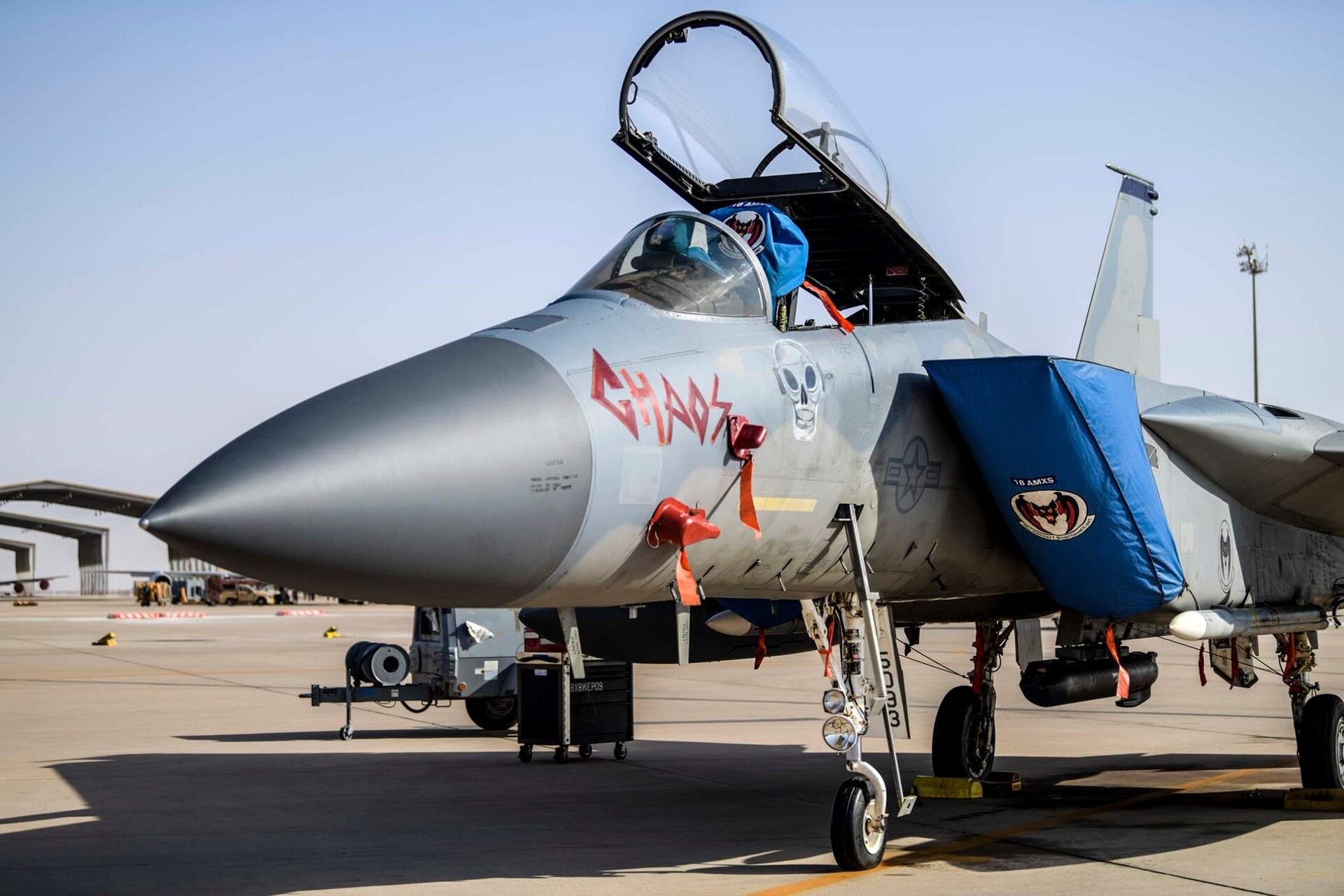
The Saudi position, stated publicly on February 28 through the Foreign Ministry — “Saudi Arabia will not allow its airspace and territory to be used to target Iran” — and reinforced privately when MBS told President Pezeshkian that Riyadh “respects Tehran’s sovereignty,” did not prevent Project Freedom from launching. But it ended it. A seizure operation would require not a single escort transit but continuous combat air operations over days or weeks from Prince Sultan, al-Udeid, and other Gulf facilities — exponentially more dependent on the cooperation Riyadh has already demonstrated it can withdraw in a day and a half. The seizure plan’s publication transforms Saudi basing access from a source of power into a trap, which is where the ceasefire framework started dying.
Why Does the Seizure Plan Kill the Ceasefire Before Authorization?
The publication of CENTCOM’s seizure plan hands Iran’s hardliners the argument they need to kill any remaining ceasefire flexibility, because the logic is self-evident: why would Tehran negotiate restrictions on its Hormuz operations when the United States is publicly planning to seize the strait by force regardless of what Iran concedes? The IRGC answered through state media within days — the Strait of Hormuz “will not be opened to the enemies of this nation through the ridiculous spectacle by the president of the United States.” Foreign Minister Abbas Araghchi, who has served as Tehran’s primary diplomatic voice throughout the crisis, had already called the existing US naval blockade “an act of war,” and the blockade is less provocative than a territorial seizure by several orders of magnitude.
“Iran is likely to perceive US attacks as an effort to create in the Gulf what Israel has created in Gaza, in the West Bank and in Lebanon, in which a ceasefire is essentially unilateral.”
— Trita Parsi, Executive Vice President, Quincy Institute for Responsible Statecraft
Parsi’s framing, offered in comments to Al Jazeera, captures a structural problem that no amount of American diplomatic reassurance can fix. Iran established the Persian Gulf Strait Authority on May 5 — a statutory government body that administers IRGC-cleared transit permits through a narrow corridor between Qeshm and Larak islands, entirely inside Iran’s 12-nautical-mile territorial sea. The PGSA transformed what had been an ad hoc IRGC enforcement practice into permanent institutional infrastructure with a domestic legal mandate, the administrative equivalent of pouring concrete around a negotiating position while your counterpart publishes plans to storm the building. Iran’s parliament is simultaneously advancing a 12-article Hormuz Sovereignty Law that would codify IRGC “coordination” over all strait transit as a statutory requirement — the National Security and Foreign Policy Committee ratified the bill on April 21, sending it to the full chamber for debate.
The IRGC’s Mohammad Akbarzadeh made the doctrinal expansion explicit in comments to the Tribune India, declaring that the Strait of Hormuz is “no longer viewed as the narrow maritime corridor surrounding the islands of Hormuz and Hengam, rather as a broader strategic zone extending from the Iranian port city of Jask to Siri Island” — a 500-kilometre arc that encompasses virtually every approach the US Navy would need to use in a seizure operation. Parliament Speaker Mohammad Bagher Ghalibaf, whose own IRGC Aerospace Force credentials from 1997–2000 give his statements operational rather than rhetorical weight, formally linked Hormuz reopening to the removal of the US naval blockade on X on April 22, creating a mutual-trap framework in which each side’s escalation becomes the stated justification for the other’s. The seizure plan’s publication tightened that trap to the point where no diplomatic exit allows Iran’s hardliners to frame concession as anything other than surrender under threat of territorial invasion — and the seizure doesn’t need to happen for that framing to become permanent.
Saudi Arabia’s Vanishing Card
For 80 days, Saudi Arabia has maintained its position in this war through a single, extraordinarily effective instrument: control over American military access to the Gulf. Every US combat operation that requires Saudi airspace, Saudi bases, or Saudi logistics passes through a decision in Riyadh, and MBS has used that gatekeeping power to constrain American escalation while preserving enough cooperation to keep Trump from turning against the kingdom. The seizure plan’s publication destroys this instrument by forcing Riyadh into the binary choice it has spent the entire conflict avoiding: allow the operation and become a co-belligerent against Iran, or block it and openly defy a president who has already demonstrated — with Project Freedom — that he is willing to launch Gulf operations without asking Saudi permission first.
Neither option is survivable as currently configured. Allowing a US ground operation against Iranian sovereign territory from Saudi-based aircraft and Saudi airspace would shatter the February 28 sovereignty commitment to Pezeshkian and every subsequent assurance MBS has made to Tehran, Muscat, and Islamabad that the kingdom is not party to the American military campaign. Blocking it, as Riyadh effectively did for 36 hours with Project Freedom, would work once or perhaps twice — but Monday’s NSC meeting is already a signal that the administration is building institutional momentum behind the seizure option, and a Saudi veto that was effective against a single escort run may not survive the political pressure generated by a presidential decision backed by CENTCOM’s full planning apparatus and a frustrated commander-in-chief who, as Axios reported on May 4, “wants action.”
The economic pressure compounds the political trap. Brent crude sits at roughly $107 per barrel with futures at $111.15, and Aramco CEO Amin Nasser has warned that market normalization will arrive “only in 2027” if the disruption persists even weeks more. The sanctions waiver reported by Tasnim on May 18 — and the 14-hour diplomatic sequence in which an annihilation threat and an OFAC sanctions offer hit Iran on the same day — did not resolve the contradiction that the seizure plan created; it deepened it, handing Iran’s hardliners a second argument alongside the territorial one. The FDD estimates $435 million per day in aggregate Gulf economic damage from the Hormuz closure — money Saudi Arabia cannot offset indefinitely through the East-West Pipeline bypass, which operates at a ceiling of 5.9 million barrels per day against pre-war Hormuz throughput of 7–7.5 million, leaving a structural gap of over a million barrels daily that no amount of Yanbu loading can fill.
| Country | Projected 2026 GDP Growth |
|---|---|
| Qatar | −14.7% |
| Kuwait | −4.2% |
| Bahrain | −3.8% |
| UAE | −1.9% |
| Saudi Arabia | −1.4% |
Source: IMF projections cited by Stimson Center, 2026
Even if MBS were to acquiesce — and nothing in his conduct throughout this conflict suggests he would — the question shifts immediately from political permission to operational reality. Iran has spent five decades fortifying the islands CENTCOM proposes to seize.
Can the US Military Actually Hold Iranian Islands?
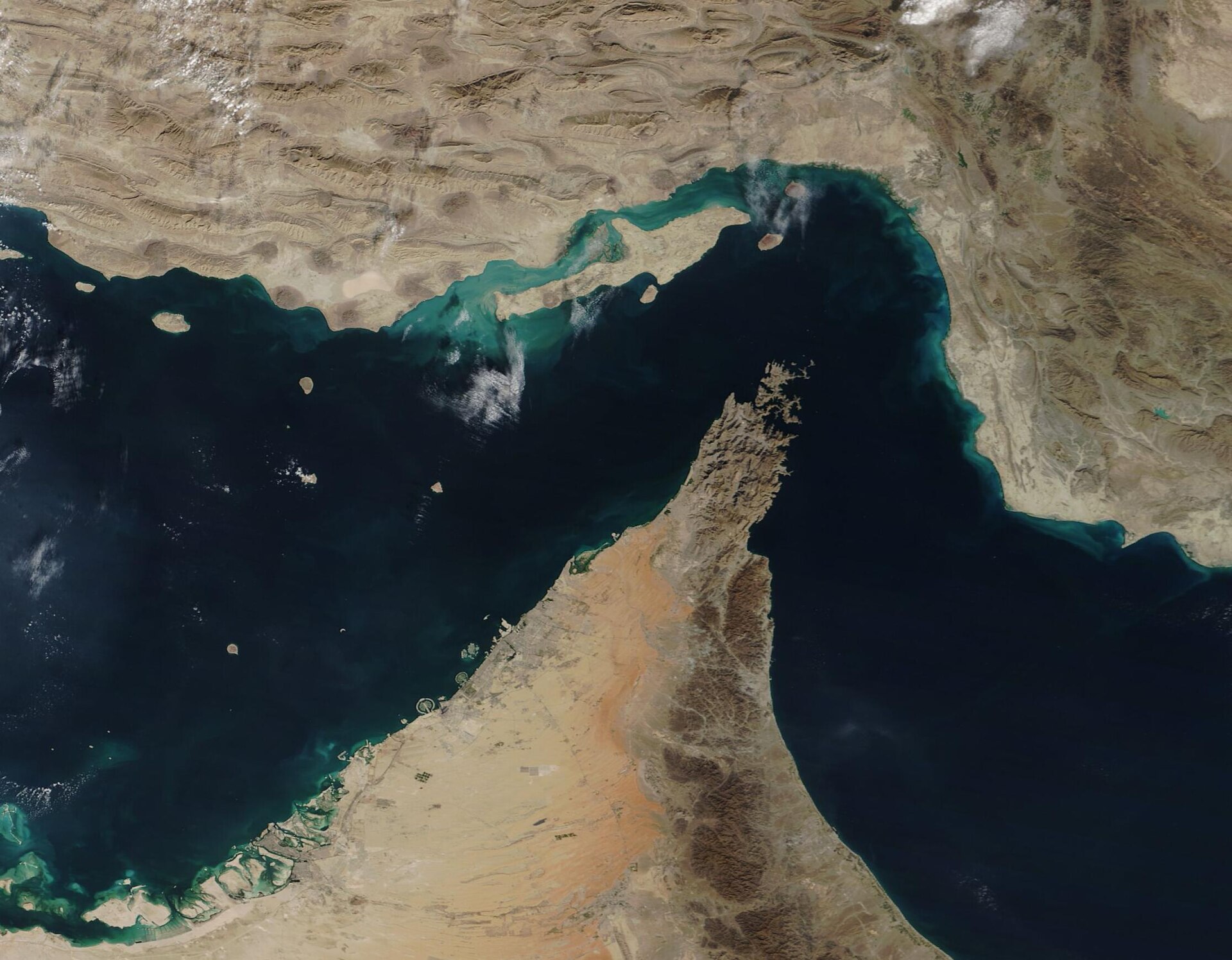
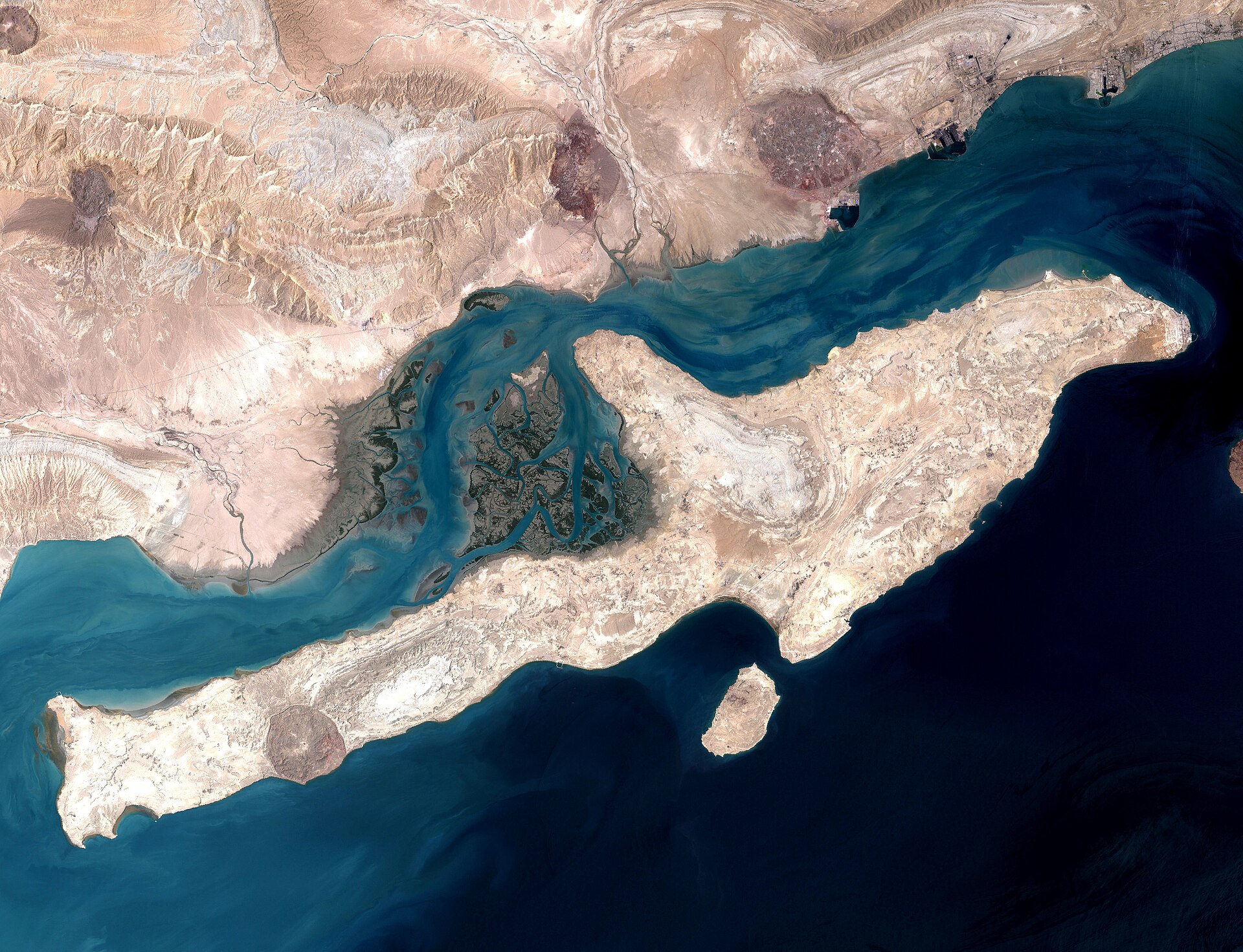
Iran’s defensive position at Hormuz rests on a chain of seven islands — Abu Musa, Greater Tunb, Lesser Tunb, Hengam, Qeshm, Larak, and Hormuz island itself — that form an arc of overlapping missile coverage, mine storage, and drone launch capacity spanning the strait’s narrowest navigable approaches. Qeshm, the largest, contains underground tunnel complexes storing anti-ship cruise missiles, naval mines, armed drones, and fast-attack craft, hardened infrastructure designed to survive sustained American bombardment of the kind the Air Force has been delivering since February 28. Larak commands the narrowest point and is where Kasapoglu assessed the heaviest fighting would occur — the same island he described as “heavily fortified” even against elite units with total air superiority. Thirty of the IRGC’s 33 missile sites along the Hormuz coastline have been restored as of May 13 according to Euronews, meaning Iran has reconstituted its integrated coastal defense network even as Cooper testified to senators that the Iranian navy would take “a generation to rebuild.”
“Limited Iranian successes in killing US ground troops could prove a political disaster.”
— Center for Strategic and International Studies, “Iran’s Strait of Hormuz Gambit and the Limits of US Military Power,” 2026
CSIS’s assessment reflects a reality that the USNI Proceedings authors explored in operational detail: holding an island under sustained bombardment from the Iranian mainland, 20 miles away across open water, in shipping lanes seeded with naval mines, against a defender who has been preparing for exactly this scenario since the Shah fell in 1979, is a fundamentally different proposition from destroying Iranian naval assets at range from carrier decks. Iran seized Abu Musa and the Tunb islands from Ras al-Khaimah on November 30, 1971, when British forces withdrew — four Emirati policemen and three Iranian soldiers died in an operation that lasted hours, because the islands were essentially ungarrisoned. Fifty-five years of continuous Iranian military fortification — the last 47 under the IRGC — involving tunnel construction, missile emplacement, and mine storage later, those same islands would require a contested amphibious and airborne assault against hardened, prepared positions with pre-registered fields of fire.
The legal framework is equally hostile. Iran signed the UN Convention on the Law of the Sea in 1982 but never ratified it, making Tehran a persistent objector to the transit passage regime the United States invokes as the legal foundation for freedom of navigation in the strait. A US seizure of Iranian sovereign territory cannot be credibly framed as UNCLOS enforcement against a state that explicitly rejected UNCLOS, which means it would be, in every international legal forum Iran and its allies care about, a territorial invasion triggering Article 51 self-defense rights under the UN Charter. When John F. Kennedy imposed the Cuba quarantine in October 1962, he calibrated the operation specifically to avoid any territorial seizure that would hand the Soviets an Article 51 argument — what CENTCOM is briefing on Monday abandons that calibration entirely, and against a state whose self-defense claim would carry considerably more legal weight than Khrushchev’s would have over missiles in a third country.
What Happened to the Mine Clearance Fleet?
The US Navy’s four dedicated mine countermeasures ships — USS Devastator, USS Dextrous, USS Gladiator, and USS Sentry, all Avenger-class — were decommissioned from their Bahrain homeport by September 25, 2025, five months before the war began, and transported to the Philadelphia Inactive Ship Maintenance Facility in January 2026. The Avengers were the only American warships designed to operate directly inside a mine threat zone, using onboard sonar, mechanical sweeping gear, and trained divers to clear a path through mined waters. Their Littoral Combat Ship replacements carry an MCM mission package, but deploy it from outside the minefield using unmanned underwater vehicles — an approach that is slower, less proven under fire, and entirely untested at the scale a Hormuz clearance operation would demand.
Admiral Cooper told the Senate Armed Services Committee on May 14 that US forces had destroyed “more than 90 percent of Iran’s inventory of 8,000 naval mines” during Operation Epic Fury. The figure sounded reassuring in a hearing room on Capitol Hill; it is considerably less reassuring when you do the arithmetic in the Strait of Hormuz, where 10 percent of 8,000 is 800 mines scattered across roughly 200 square miles of shipping lane. The Stimson Center and Axios both estimate Iran’s remaining stockpile at between 2,000 and 6,000 weapons — a range that suggests either Cooper’s 90-percent figure is more aspirational than verified, or Iran has been manufacturing replacements faster than CENTCOM has been clearing them, or some combination of both that nobody in a position of authority wants to quantify publicly.
| Factor | 1991 Kuwait (benchmark) | 2026 Hormuz (current) |
|---|---|---|
| Dedicated MCM ships in theater | 4 Avenger-class | 0 (decommissioned Sept 2025) |
| Clearance area | ~200 sq miles | ~200 sq miles |
| Estimated clearance timeline | 51 days | Unknown — LCS unmanned systems untested at scale |
| Estimated mine threat | Iraqi mines (limited inventory) | 2,000–6,000 Iranian mines (Stimson Center / Axios) |
| Operating environment | Post-ceasefire, permissive | Contested, under IRGC coastal missile coverage |
Sources: USNI News (September 2025); Stimson Center / Axios (2026); 1991 benchmark from US Navy post-conflict assessment
The geography makes the capability gap worse. Iran’s PGSA-authorized transit corridor runs between Qeshm and Larak islands, entirely within Iran’s 12-nautical-mile territorial sea, which means any mine clearance operation in the strait’s most commercially relevant shipping channel would constitute a US military operation inside Iranian sovereign waters — a distinction that carries rather more weight in international law than it does on a CENTCOM planning slide. Even the double blockade framework that currently defines Hormuz — the US controlling Arabian Sea approaches, the IRGC controlling the Gulf of Oman exit — is a more manageable operational environment than contested mine clearance under fire would be, and the double blockade has already produced the worst energy disruption the IEA’s Fatih Birol has called “the biggest energy security threat in history.”
Helsinki, Dead on Arrival
On May 14, the Financial Times reported that Saudi Arabia had floated a Helsinki-style non-aggression pact with Iran and regional states — a framework modeled on the 1975 Helsinki Final Act, under which all parties would formally renounce territorial aggression and commit to mutual security guarantees in a regional architecture designed to outlast the current war. Arab News, The New Arab, and Middle East Eye confirmed the proposal within hours, and the initiative represented Riyadh’s most ambitious diplomatic gambit since the conflict began: a multilateral security structure that would give Iran a face-saving exit from the Hormuz confrontation while giving Saudi Arabia a framework to reduce its dependence on American military protection over time.
The seizure plan’s publication, days after the Helsinki proposal surfaced, killed it with a structural contradiction that no amount of diplomatic drafting can resolve. A non-aggression pact requires all signatories to renounce territorial aggression — and the United States is publicly planning a territorial seizure of Iranian islands from bases on Saudi soil. Iran cannot sign a non-aggression commitment alongside a state that is preparing to invade its sovereign territory, any more than the Soviet Union would have signed a European non-aggression pact while NATO published plans to seize Kaliningrad. Saudi Arabia cannot credibly broker a framework that renounces territorial aggression while hosting the military infrastructure, personnel, and logistics chain that would execute the aggression. The contradiction is not a negotiating problem to be resolved through creative language; it is a geometric impossibility created by the seizure option’s public existence.
The UK and French position, documented by Chatham House, exposed how isolated the American approach has become among its own allies. London and Paris are assembling an international naval coalition for Hormuz that is explicitly “independent and strictly defensive,” designed to deploy only “as soon as conditions permit following a sustainable ceasefire agreement.” An island seizure operation conducted unilaterally from shared allied bases is the opposite of independent, the opposite of defensive, and incompatible with the ceasefire prerequisite the European coalition requires. The Barakah nuclear plant drone strike on May 17, in which an IRGC drone hit a generator at the UAE’s only operational nuclear power station without triggering a radiation release, demonstrated with uncomfortable precision that Iran retains the capacity to strike Gulf critical infrastructure at will — a capability that will not disappear if the US seizes Larak, but will instead find new and more dangerous targets in a regional environment where all diplomatic off-ramps have been closed.
The Occupation Arithmetic
Cooper’s Senate testimony that Iran’s navy will take “a generation to rebuild to former strength” has been widely cited as evidence that the military balance at Hormuz has shifted decisively toward the United States, and on the narrow question of surface naval combat — frigate-to-frigate, missile boat against destroyer — he is probably right. But the seizure option is not about surface naval combat; it is about occupying fortified islands under sustained mainland missile bombardment, and the distinction between destroying a navy and holding an island against the country whose coastline sits 20 miles away is the distinction between a war that looks winnable on a briefing slide and one that looks very different once the first body bag arrives at Dover Air Force Base.
The arithmetic is punishing in every direction. Project Freedom’s escort-only mission — which involved no ground forces, no territorial seizure, no mine clearance — already stretched American force deployment in the Gulf to its reported limits; a seizure operation would require multiples of that commitment, plus indefinite garrison forces on every island taken, plus supply lines that would have to run through the same mined, contested waterway the operation is supposed to reopen for civilian shipping. The garrison on Larak would need resupply by sea or air through waters that remain under IRGC coastal missile coverage from a mainland that Cooper’s forces have not occupied and cannot neutralize from the air alone — creating a scenario in which the operation meant to open Hormuz depends on maintaining a contested military supply corridor through Hormuz while the strait remains closed to everyone else.
Crude futures climbing above $111 with no ceiling in sight, and Aramco’s CEO warning that normalization is a 2027 story at the earliest, tells you what the market thinks of the current disruption. An active ground operation on Iranian islands would not calm that market — it would convince every insurance underwriter, every tanker operator, and every refinery purchasing desk in Asia that the strait is a combat zone with no foreseeable end state, because the US would be fighting to hold territory it cannot hold indefinitely against a mainland adversary with 30 of 33 coastal missile sites already rebuilt. The Boxer and Tripoli amphibious ready groups are in Fifth Fleet waters, their Marine expeditionary units trained for exactly this kind of opposed island assault, and somewhere aboard those ships, officers are reading the same USNI Proceedings issue that concluded their prospective mission would be “high risk, low payoff” — waiting for Monday’s meeting to decide whether they become the ones who test that verdict against an IRGC whose coastal defense network has been almost entirely reconstituted since the war’s opening strikes, and which has been preparing for their arrival since before most of them enlisted.
Frequently Asked Questions
What is the legal basis for a US military seizure of Iranian territory at Hormuz?
There is no clear authorization. The 2001 Authorization for Use of Military Force covers al-Qaeda and associated forces, not Iran; the 2002 Iraq AUMF was repealed by Congress in 2023. No UN Security Council resolution authorizes military action against Iranian territory. The Trump administration could invoke Article II constitutional authority as commander-in-chief, but the War Powers Resolution imposes a 60-day operational clock — with a 30-day withdrawal extension — on unauthorized deployments, and Operation Sledgehammer has already triggered a War Powers debate for actions far less ambitious than a ground invasion of Iranian sovereign islands. A territorial seizure involving US troops on Iranian soil, without congressional authorization, allied support, or UN mandate, would face immediate legal challenge from Congress, international institutions, and almost certainly from within the Pentagon’s own Office of General Counsel.
How many US troops are currently deployed to the Middle East?
The Soufan Center estimated more than 20,000 US troops in the broader Middle East theater as of April 2026, a figure that has grown with the deployment of the Boxer and Tripoli amphibious ready groups and force packages associated with Project Freedom and Operation Sledgehammer. The Fifth Fleet’s operational headquarters at Naval Support Activity Bahrain sustained damage during Iran’s February 28 strikes — including destruction of SATCOM terminals — though the facility remains operational and continues to serve as the command node for Gulf naval operations. The 82nd Airborne Division’s Global Response Force at Fort Liberty maintains rapid-deployment capability, and Hudson Institute analysis identified its elements as likely participants in any island seizure, alongside Marine expeditionary units already embarked with the two amphibious ready groups in Fifth Fleet waters.
What would happen to oil prices during a Hormuz seizure operation?
With Brent already above $107 and futures pricing further disruption, a seizure operation would trigger a qualitatively different market reaction than the current closure — not because the volume disruption would be larger, but because the uncertainty horizon would become unbounded. Insurance underwriters would immediately withdraw war-risk coverage for Hormuz transit, replicating the 1980–88 Tanker War premium structure at modern tonnage rates; P&I clubs suspended Gulf coverage within 72 hours of the February 28 opening strikes. The IEA’s 13 million barrel-per-day offline figure — already “the biggest energy security threat in history” per Fatih Birol — would remain structurally intact even after a successful island seizure, because the mine clearance timeline (51 days minimum under ideal 1991 conditions, with no Avenger-class ships currently in theater) would keep the commercial channel closed regardless of which flag flew over Larak. Markets would price not a disruption with a diplomatic exit, but a combat zone with no foreseeable end state.
Has the United States ever conducted a comparable military operation in the Persian Gulf?
No. The closest historical analogue is Operation Praying Mantis on April 18, 1988, when the US Navy destroyed two Iranian oil platforms being used as military command nodes and sank the frigate Sahand and a Combattante II-class fast-attack missile boat — the largest American naval surface engagement since World War II. Praying Mantis was retaliatory, responding specifically to the mining of USS Samuel B. Roberts four days earlier; it lasted a single day; and it involved no territorial seizure or occupation of any kind. The Tanker War escort operations of 1987–88, during which the US reflagged eleven Kuwaiti tankers and shepherded them through the Gulf, provide a closer model for Project Freedom’s escort mission — but even that sustained campaign, which lasted over a year, never involved seizing or occupying foreign territory, and it operated in an environment where Iran’s mine and missile capabilities were a fraction of what the IRGC possesses in 2026.
What is Iran’s Persian Gulf Strait Authority and why does it matter for the seizure option?
Established on May 5, 2026, the PGSA is a statutory Iranian government body that administers IRGC-cleared transit permits for commercial vessels passing through the Strait of Hormuz. All authorized transits follow a narrow corridor between Qeshm and Larak islands on the inbound route and just south of Larak on the outbound, with both routes running entirely inside Iran’s 12-nautical-mile territorial sea — a geographic fact with direct implications for any seizure operation, because it means the commercially active shipping channel sits within Iranian sovereign waters. The PGSA represents Iran’s institutional codification of de facto Hormuz control, transforming ad hoc IRGC enforcement into permanent administrative infrastructure backed by a domestic legal mandate, and it is the body that any post-seizure reopening plan would have to either co-opt, replace, or destroy — each option carrying its own set of operational and legal consequences that CENTCOM’s briefing slides are unlikely to have resolved.