
RIYADH — Brigadier General Ebrahim Zolfaghari, spokesperson for Iran’s Khatam al-Anbiya Central Headquarters — the apex joint command coordinating both the Islamic Revolutionary Guard Corps and the regular Artesh — declared on May 17 that “in the near future, all U.S. military bases in the southern Persian Gulf will be deactivated.” Saudi Arabia, which hosts the largest of those bases and has been conducting covert airstrikes on Iranian soil since late March, responded to that specific threat with a silence so total it constitutes, under the laws of armed conflict, an act of informed absorption. Riyadh condemned the IRGC drone strike on the UAE’s Barakah nuclear plant the same day, issuing a Foreign Ministry statement calling it “a threat to the security and stability of the region,” but said precisely nothing about the explicit, categorical, command-level warning that the base 100 kilometres from its capital would be struck — a divergence in response that tells you everything about what the Kingdom already knows and has chosen not to say publicly.
The warning is not a bluff and it is not propaganda. Zolfaghari speaks for the same command structure that issued named-facility evacuation warnings on March 16 through IRGC Navy chief Tangsiri — warnings that preceded actual strikes on every named target, including Saudi Arabia’s Samref Refinery and Jubail Petrochemical Complex. When Khatam al-Anbiya issues a categorical future-tense declaration through its trilingual spokesperson (Zolfaghari is fluent in Hebrew, addresses Western and Israeli audiences directly, and released a video addressing Trump personally on March 22), the institutional pattern since the war’s first week is that the warning is operationally sincere and the timeline is compressed.
Table of Contents
- Who Is Zolfaghari and Why Does His Authority Matter?
- The May 17 Convergence: Four Signals in Twelve Hours
- What Does “Prior Notification” Mean Under the Laws of Armed Conflict?
- What Saudi Arabia Condemned — and What It Did Not
- The Reuters Revelation: Co-Belligerency as Documented Fact
- Prince Sultan Air Base: Already Struck, Already Bleeding
- The Abqaiq Pattern: Absorbing Warnings Without Acknowledging Them
- Does Saudi Arabia Still Control What Happens on Its Own Soil?
- What Silence Buys — and What It Costs
- FAQ
Who Is Zolfaghari and Why Does His Authority Matter?
Zolfaghari is not a press officer reading a script and he is not a mid-ranking commander freelancing for domestic consumption. He is the designated spokesperson of Khatam al-Anbiya Central Headquarters, Iran’s supreme joint-operations command — the body that coordinates strategic targeting between the IRGC’s aerospace, naval, and ground forces and the regular army’s missile and air-defense branches. When he speaks publicly, particularly in English and on platforms designed for international consumption, the statement carries institutional weight equivalent to a Pentagon press secretary announcing targeting doctrine, except that in Iran’s system the military command is not subordinate to the civilian executive and does not require presidential approval to act on its own declarations.
His March 22 trilingual video addressed Trump by name and laid out red lines in English, Arabic, and Hebrew — the Hebrew not a flourish but a direct channel to Israeli intelligence consumers monitoring open-source Iranian communications. The “deactivate” statement of May 17 follows the same institutional grammar: categorical, future-tense, addressed to the international audience rather than the domestic one, and issued through a channel (X, in English) that ensures archival accessibility for legal and intelligence purposes. The last time Khatam al-Anbiya’s operational intent was communicated publicly through a named spokesperson — Tangsiri’s March 16 evacuation warnings — every named facility was subsequently struck.
The May 17 Convergence: Four Signals in Twelve Hours
Zolfaghari’s declaration did not arrive in isolation — it arrived as one element of a coordinated four-part pressure signal that unfolded across a single day, each component reinforcing the others in a pattern that suggests centralized timing rather than coincidence. The IRGC drone strike on the UAE’s Barakah nuclear plant (the first attack on a civilian nuclear facility in the war) demonstrated reach and willingness to cross thresholds previously assumed to be deterrent; the IRGC Navy’s confirmation of zero Hormuz transits in the prior 24 hours demonstrated that the maritime chokehold remains absolute; Trump’s Situation Room meeting with his NSC to review military options (“the clock is ticking,” “there won’t be anything left of them”) demonstrated that Washington is being pushed toward escalation decisions; and the base-deactivation warning communicated that Iran’s targeting doctrine has expanded from infrastructure (refineries, pipelines, petrochemical complexes) to the foreign military presence itself.
The convergence is the message. Any one of these signals in isolation could be dismissed as posturing or coincidence, but the four together — nuclear-facility strike demonstrating capability, Hormuz closure demonstrating leverage, US presidential deliberation demonstrating pressure, and categorical base-warning demonstrating intent — constitute what military doctrine calls a “full-spectrum coercive signal.” For Saudi Arabia specifically, the convergence creates a problem that silence alone cannot solve: if the Barakah attack demonstrates Iran’s willingness to strike a nuclear facility in a neighbouring Gulf state, and the base warning names Saudi-hosted facilities as the next target, then Riyadh’s condemnation of one and silence on the other is not a diplomatic parsing of threats by severity. It is a prioritisation that reveals which threat Riyadh considers real.
The Middle East briefing 3,000+ readers start their day with.
One email. Every weekday morning. Free.
| Event | Actor | Target | Signal Function |
|---|---|---|---|
| Barakah nuclear plant drone strike | IRGC | UAE civilian nuclear infrastructure | Threshold escalation — nuclear facilities no longer off-limits |
| Zero Hormuz transits (prior 24 hrs) | IRGC Navy | Global shipping / energy markets | Maritime chokehold absolute — no diplomatic thaw |
| “All US bases will be deactivated” | Zolfaghari / Khatam al-Anbiya | US forces hosted in Gulf states (incl. Saudi) | Targeting doctrine expansion — host states on notice |
| Situation Room meeting on Iran options | Trump / NSC | Internal US decision-making | Washington being pushed toward kinetic escalation |
What Does “Prior Notification” Mean Under the Laws of Armed Conflict?
Additional Protocol I to the Geneva Conventions, Article 57(2)(c), requires that “effective advance warning shall be given of attacks which may affect the civilian population, unless circumstances do not permit.” The provision is customary international law — binding regardless of treaty ratification — and its function is not humanitarian generosity but legal transfer of responsibility. Once an attacker issues a categorical public warning identifying a target category (in this case, “all U.S. military bases in the southern Persian Gulf”), the legal burden shifts: the party receiving the warning is expected to take “all feasible precautions” to protect civilians in the affected area, including evacuation, hardening, or removal of the military objective that makes the site a lawful target. Failure to act on a received warning does not make a subsequent attack lawful per se, but it does, under the IHL framework governing proportionality assessments, affect the allocation of responsibility for civilian harm.
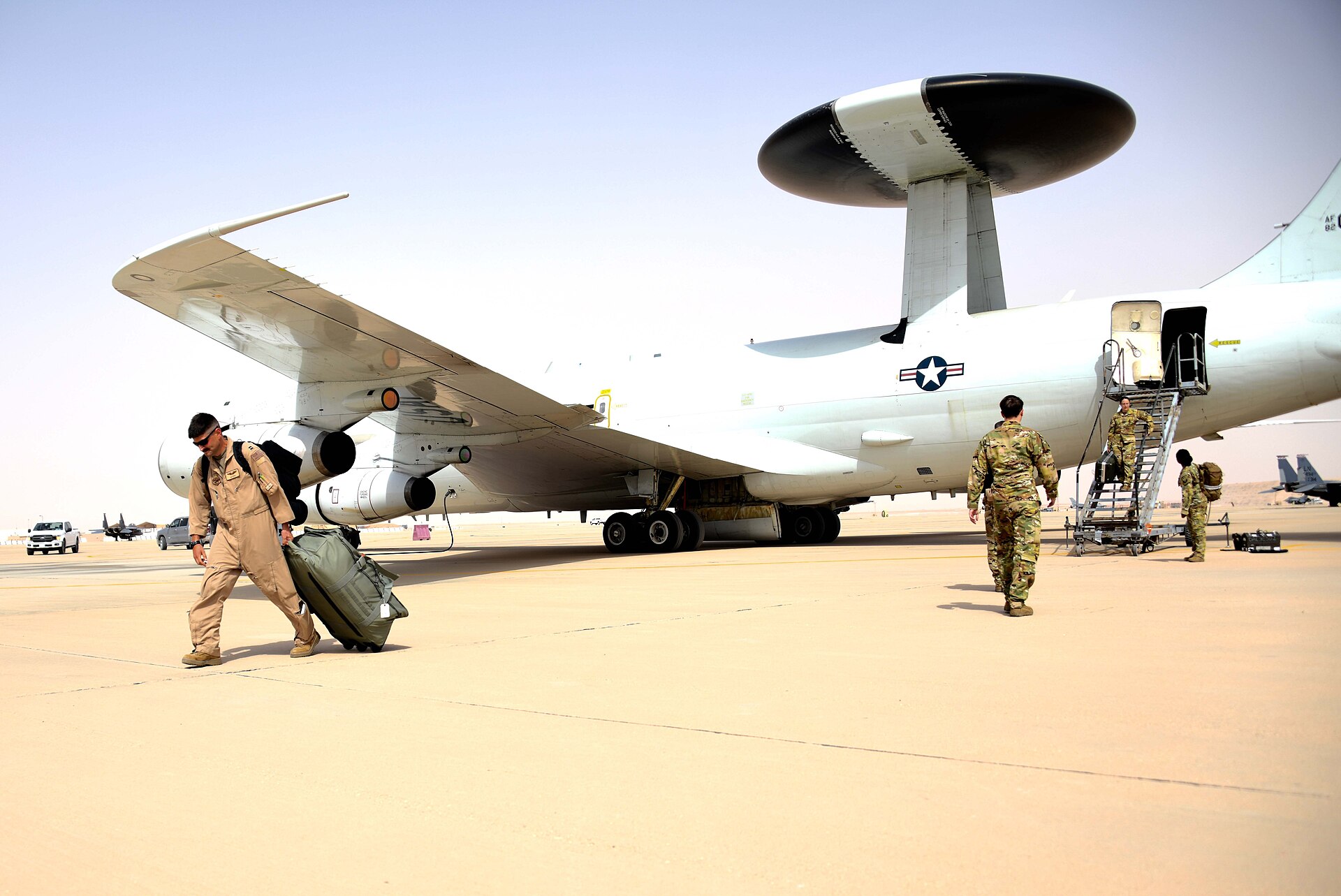
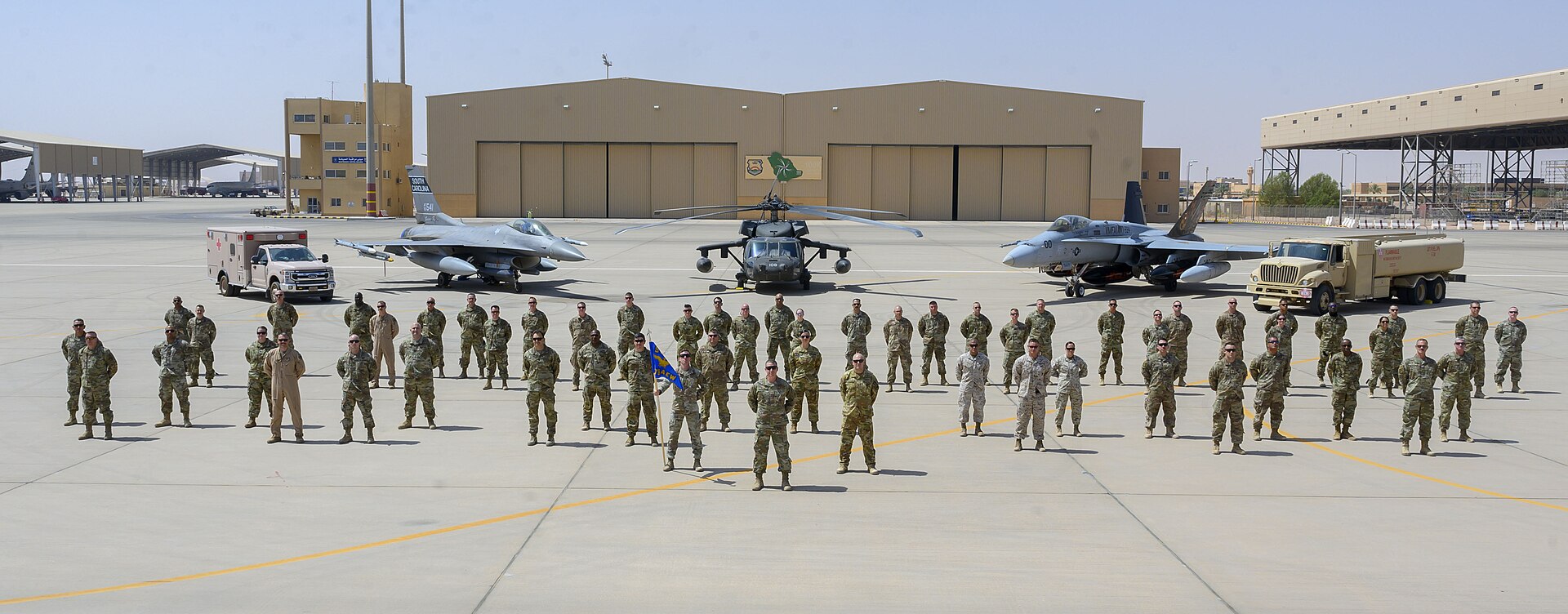
For Saudi Arabia, this creates a specific and acute legal problem that no amount of diplomatic silence can dissolve. Prince Sultan Air Base sits approximately 100 kilometres southeast of Riyadh, a metropolitan area of over eight million people. The base hosts approximately 2,300 US military personnel, F-22 Raptors, KC-135 Stratotankers, THAAD and PAC-3 missile defense systems, and — until March 27, when one was destroyed — E-3 Sentry AWACS aircraft that provided the airborne command-and-control architecture for Operation Epic Fury. If Iran strikes Prince Sultan after issuing a categorical public warning, and Saudi Arabia took no visible precautionary action (no evacuation order, no public acknowledgement of the threat, no diplomatic demand for de-hosting), then Riyadh’s legal exposure under IHL’s precautionary obligations is substantial — not as the attacker, but as the host state that absorbed a warning and chose, publicly, to do nothing with it.
This is not an academic distinction. The International Criminal Court’s complementarity framework and the International Court of Justice’s advisory opinions on the use of force have both emphasized that states have affirmative obligations to protect civilian populations from foreseeable harm — and a public, categorical, command-level warning from the attacking party is the definition of foreseeability. Saudi Arabia’s silence is not plausible deniability; it is documented awareness.
What Saudi Arabia Condemned — and What It Did Not
The Saudi Foreign Ministry’s May 17 response architecture is a masterpiece of selective outrage, and the selection itself is the signal. Within hours of the Barakah drone strike, Riyadh issued a formal condemnation calling the attack on the UAE’s nuclear facility “a threat to the security and stability of the region” — language that positions Saudi Arabia as a responsible regional actor concerned with nuclear safety and civilian protection. The statement was carried by Arab News, distributed through SPA (the Saudi Press Agency), and designed for international consumption. It is the kind of statement Saudi Arabia issues when it wants the world to know it has spoken, and on Barakah, it wanted the world to know.
On Zolfaghari’s declaration that US bases on Saudi soil — specifically, within 100 kilometres of Saudi Arabia’s capital — “will be deactivated,” there was nothing. Not a condemnation, not a dismissal, not a defiant assertion of sovereign hosting rights, not even the formulaic “the Kingdom rejects threats to its territory” language that costs nothing diplomatically and commits to nothing operationally. The absence was verified across every official Saudi channel: the Ministry of Foreign Affairs, the Saudi Press Agency, the Royal Court communications office, and MBS’s own social media infrastructure, which is typically the first channel to respond to perceived provocations. The specific, deliberate nature of the silence — condemning an attack on a neighbour’s nuclear plant while saying nothing about a threat to your own airbase — cannot be accidental. It is a policy choice, and the policy it reveals is that Riyadh has chosen to absorb the warning rather than force a public confrontation that would require it to either defend its hosting posture or abandon it.
The divergence becomes even more revealing when you consider what Saudi Arabia has said in the past about lesser threats. When Houthi drones struck peripheral Saudi infrastructure in 2019-2023, the Kingdom routinely issued same-day condemnations naming the attacking party and affirming sovereign rights. When the IRGC’s March 16 facility-specific warnings named Saudi industrial sites, Saudi Arabia’s response was muted but at least registered through back-channel acknowledgements reported by Al Arabiya. On May 17, faced with the most explicit base-targeting threat of the entire war, Riyadh chose total public silence — and that silence, arriving on the same day as a loud condemnation of the Barakah strike, tells you that the Kingdom distinguishes between threats it can safely condemn (attacks on others) and threats it cannot safely acknowledge (warnings about its own complicity).
The Reuters Revelation: Co-Belligerency as Documented Fact
Reuters reported on May 12 — five days before Zolfaghari’s declaration — that Saudi Air Force jets launched covert strikes on Iranian soil in late March 2026, citing two Western officials and two Iranian officials independently confirming the operations. The strikes produced measurable results: Iranian attacks on Saudi Arabia dropped 76 percent in the subsequent week, from over 105 strikes during March 25-31 to approximately 25 during April 1-6. Riyadh has not publicly acknowledged the strikes, has not claimed them, and has issued no statement confirming or denying Reuters’ reporting — maintaining, in the face of four-source confirmation from both sides of the conflict, the fiction of non-belligerency that collapsed the moment Saudi ordnance hit Iranian targets. The attribution problem extends northward: three drones launched from Iraqi airspace reached Saudi Arabia on May 17, the same week Iraq’s PMF conducted its “Imposing Sovereignty” operation across Anbar — and the NSC will vote Tuesday on options that share a corridor with both.
This context transforms Zolfaghari’s warning from a general threat against host states into a specific warning addressed to a co-belligerent. Under the Hague Convention V of 1907, a neutral state may host defensive military assets without forfeiting neutrality — but the threshold for co-belligerency is crossed when the host state’s territory becomes integral to offensive operations against the adversary, and it is crossed again, categorically, when the host state conducts its own offensive strikes against the adversary from that territory. Saudi Arabia crossed both thresholds: Prince Sultan Air Base served as the primary operational hub for US offensive air operations against Iran (co-hosting of offensive operations), and Saudi jets struck Iranian soil directly (independent offensive action). The IRGC’s legal position — that Gulf states hosting bases used for offensive operations are “accomplices” whose facilities constitute military objectives under Article 51 self-defense — gained four-source empirical confirmation from Reuters before Zolfaghari ever spoke.
The implication for Saudi Arabia’s silence is therefore not merely diplomatic but legal: acknowledging Zolfaghari’s warning publicly would require Riyadh to either affirm its hosting posture (confirming co-belligerency and accepting the legal exposure) or announce restrictions on US base usage (contradicting the May 7 lifting of base-access restrictions and signalling a retreat that Washington would not tolerate). Silence is the only response that preserves both the fiction of non-belligerency and the reality of continued hosting — at least until the next strike arrives.
Prince Sultan Air Base: Already Struck, Already Bleeding
Zolfaghari’s warning addresses a base that Iran has already hit — and hit with consequences that the United States publicly acknowledged. On March 27, an IRGC strike on Prince Sultan Air Base destroyed one E-3 Sentry AWACS aircraft, a platform valued at approximately $500 million and one of only 16 in the entire US Air Force inventory, while damaging five KC-135 Stratotanker aerial refuelling aircraft that formed the logistical backbone of Operation Epic Fury’s deep-strike missions into Iranian territory. Army Sergeant Benjamin Pennington, 26 years old, died on March 8 from wounds sustained on March 1 — the first US service member to die on Saudi soil in this conflict. By April 8, Operation Epic Fury had produced 13 US killed and 381 wounded, casualties sustained overwhelmingly at Gulf-hosted facilities that exist because host states chose to make their territory available for American power projection.
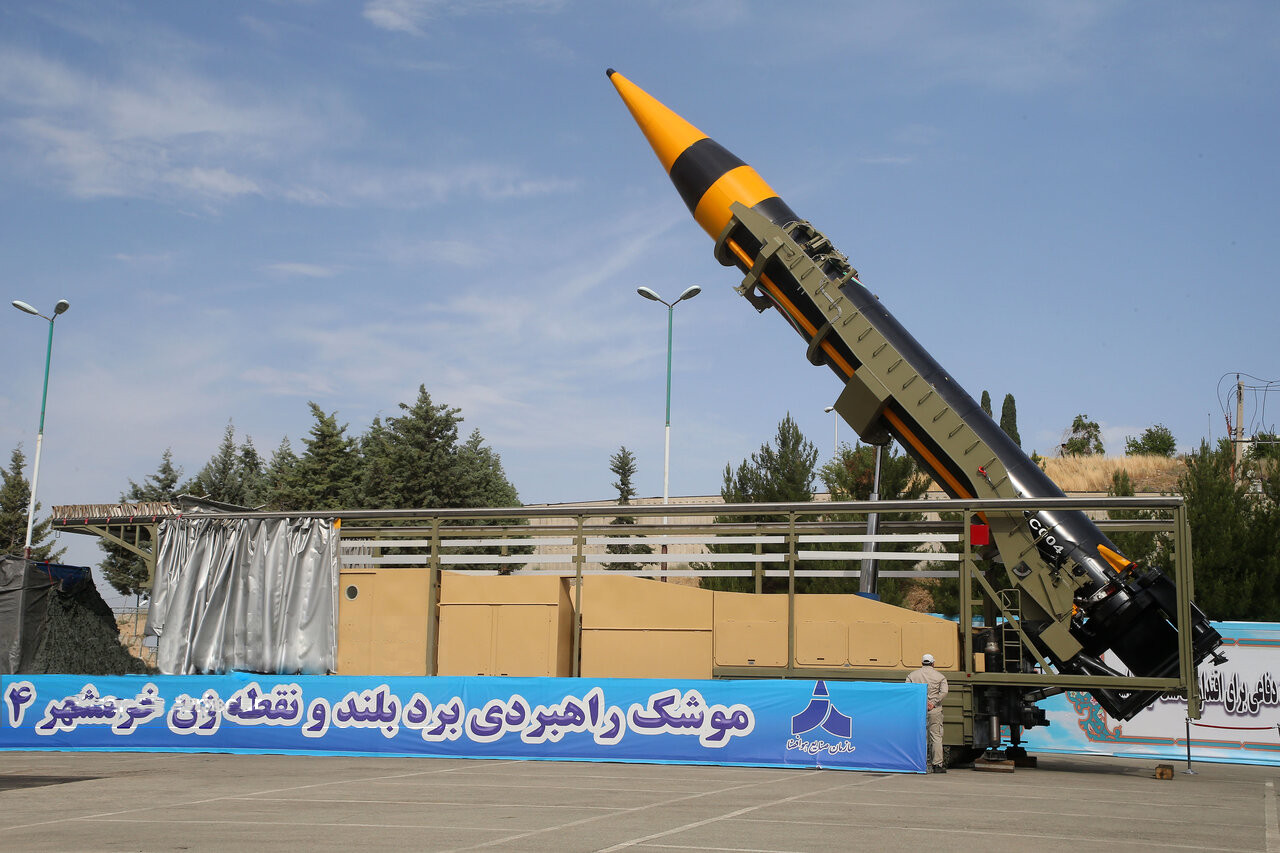
The military reality at Prince Sultan is therefore not a hypothetical vulnerability but a demonstrated one. Iran has already proven it can reach the base (approximately 1,100-1,300 kilometres from Iranian launch sites in Khuzestan, well within the 1,000-2,000 kilometre range of the Khorramshahr medium-range ballistic missile), has already proven it can destroy high-value assets there (an irreplaceable AWACS aircraft), and has already killed American personnel on the facility. US intelligence assessments reported by the New York Times on May 13 confirm that 30 of 33 Iranian missile sites remain operational and approximately 70 percent of the prewar stockpile has been retained, with roughly 90 percent of underground launch facilities still accessible — meaning that Iran’s capacity to execute Zolfaghari’s warning is not degraded in any strategically meaningful way despite nearly three months of US strikes.
A detailed breakdown of Iran’s Hormuz missile reconstitution during the ceasefire — including which sites survived untouched and which were rebuilt after the May 7–8 strikes — is now available.
| Metric | Data | Source |
|---|---|---|
| US personnel stationed | ~2,300 | Army Times |
| Distance to Riyadh | ~100 km | Defence Industry EU |
| Distance from Iranian launch sites | ~1,100-1,300 km | Army Recognition |
| E-3 Sentry destroyed (March 27) | 1 ($500M, 1 of 16 in USAF) | The Aviationist |
| KC-135s damaged (March 27) | 5 | NBC News |
| US KIA, Operation Epic Fury (to April 8) | 13 | Army Times/CENTCOM |
| US WIA, Operation Epic Fury (to April 8) | 381 | Army Times/CENTCOM |
| Khorramshahr CEP at range | ~30 metres | Army Recognition |
| Iranian missile sites operational | 30 of 33 | NYT / US intelligence, May 13 |
| Prewar missile stockpile retained | ~70% | NYT / US intelligence, May 13 |
The Abqaiq Pattern: Absorbing Warnings Without Acknowledging Them
Saudi Arabia has done this before — received an operational warning, absorbed it, hardened quietly, and said nothing publicly — and the precedent matters because it reveals an institutional pattern rather than a one-off diplomatic fumble. In September 2019, when Iranian-linked drones and cruise missiles struck the Abqaiq processing facility and Khurais oil field (temporarily halving Saudi oil output), subsequent US intelligence reporting — cited by Congressional Research Service analysts in the attack’s aftermath — indicated that Saudi Arabia had activated missile defense radar at Abqaiq in the days before the strike, suggesting that Riyadh received some form of advance intelligence or warning and chose to harden the site without publicly acknowledging the threat or demanding international action beforehand. The pattern — receive warning, prepare quietly, maintain public posture of normalcy, absorb the strike, condemn afterwards — is consistent with what we observe in May 2026.
The difference in 2026 is that the warning is public, categorical, and issued through an official military spokesperson on a platform that ensures permanent archival. The March 16 Tangsiri warnings were semi-public (issued through Iranian media and repeated on Telegram channels monitored by intelligence services), but Zolfaghari’s May 17 statement is fully public, in English, on X, addressed to an international audience, and explicitly categorical (“all U.S. military bases in the southern Persian Gulf”). There is no ambiguity about whether Saudi Arabia received it — the entire world received it simultaneously. The 2019 Abqaiq pattern of quiet absorption relied on the private nature of the warning; in 2026, the warning is a matter of public record, which means Saudi silence is not discreet prudence but documented inaction, and that distinction matters under IHL’s precautionary framework.
Does Saudi Arabia Still Control What Happens on Its Own Soil?
Saudi Arabia demonstrated during Project Freedom (May 4-7, the US-led Hormuz reopening operation) that it retains a functional veto over US offensive operations from its territory — imposing and then lifting restrictions on US military use of Saudi bases and airspace in a sequence that proved Riyadh can say no to Washington and that Washington, faced with the refusal, complied. The Wall Street Journal and Iran International both reported the restriction and its subsequent lifting, establishing that the US military presence at Prince Sultan operates under Saudi sovereign consent that can be withdrawn or conditioned at Riyadh’s discretion. This is not a colonial arrangement where the host state lacks agency — it is a negotiated partnership where the host chooses, repeatedly, to permit operations that make its own territory a lawful target.
That choice — and it is a choice, exercised actively, demonstrated as recently as ten days before Zolfaghari’s warning — is what transforms Saudi silence from passive inaction into active policy. Riyadh is not a small state without options, lacking the leverage to demand that the United States relocate its operations or reduce its offensive profile. It is a state that demonstrated its veto power, used it briefly, then deliberately restored the conditions that make Prince Sultan a target. MBS rejected MBZ’s call for a joint strike on Iran and then struck alone through Saudi Air Force jets — a sequence that proves Saudi decision-making is sovereign, independent, and deliberate. The silence on Zolfaghari’s warning is therefore not helplessness. It is a calculated bet that absorbing the warning without response preserves more options than responding would.
What Silence Buys — and What It Costs
Saudi silence on the base-deactivation warning buys three things in the short term: it avoids confirming co-belligerency (which would invite broader Iranian targeting of Saudi civilian infrastructure under an expanded self-defense rationale), it avoids a public confrontation with Washington over base hosting (which would strain the relationship at a moment when Trump is deliberating escalation in the Situation Room), and it avoids forcing a domestic conversation about what it means that a foreign military base 100 kilometres from the capital has been publicly marked for destruction by an adversary that has already proven it can hit it. Each of these avoidances is rational in isolation, and together they constitute a strategy of deliberate ambiguity — remaining publicly uncommitted while privately continuing the co-belligerent posture that Reuters documented five days earlier.
What silence costs is harder to measure in the short term but potentially catastrophic in the medium term. Under IHL, Saudi Arabia’s documented awareness of a categorical threat to a site near a civilian population of eight million creates a precautionary obligation that silence does not discharge — if Prince Sultan is struck again, and civilian casualties occur in Riyadh or its suburbs from debris, interceptor failures, or missile overshoots (Khorramshahr CEP of 30 metres means a targeting error at the edge of the envelope could place warheads inside residential areas), Saudi Arabia’s failure to publicly acknowledge the threat, issue civilian warnings, or take visible precautionary measures becomes a legal liability rather than a diplomatic advantage. The 2019 Abqaiq model — absorb and condemn afterwards — worked because Abqaiq is an industrial facility in a sparsely populated area; Prince Sultan is within the blast radius of a capital city, and the legal calculus is different.
The deeper cost is strategic: by remaining silent on the specific base-targeting threat while loudly condemning the Barakah attack on the UAE, Saudi Arabia has signalled to Iran that Riyadh treats the base warning as fundamentally different from the nuclear-facility attack — more dangerous, more real, more likely to be executed. That signal, read correctly by Iranian intelligence (and they read it correctly; Khatam al-Anbiya’s entire institutional purpose is reading adversary signals), confirms that the warning achieved its intended effect: psychological preparation of the target state for the strike’s arrival. Silence is not deterrence — it is confirmation that deterrence has already failed in the other direction, that Iran has successfully deterred Saudi Arabia from even acknowledging the threat, which is a form of capitulation that invites escalation rather than preventing it. On May 18, that dynamic acquired a new dimension: Trump named MBS publicly as one of three Gulf leaders who asked him to stand down a scheduled Iran strike, a disclosure that documents Trump’s naming of Saudi Arabia as the agent of restraint and adds a layer of public liability that silence alone can no longer manage.
FAQ
Has Iran previously followed through on public warnings to strike specific Gulf targets?
Yes, with a 100 percent execution rate during this conflict. IRGC Navy chief Tangsiri issued named-facility evacuation warnings on March 16 — including Saudi Arabia’s Samref Refinery and Jubail Petrochemical Complex — and both were subsequently struck. The institutional pattern since February 2026 is that Khatam al-Anbiya’s public warnings function as operational notifications rather than political bluster, which is why the intelligence community treats them as actionable indicators rather than propaganda. The distinction from pre-war Iranian rhetoric (which often went unfulfilled) is that wartime warnings are issued through the operational command chain rather than political leadership, and the command chain has demonstrated both capability and willingness to execute.
Could Saudi Arabia legally demand US withdrawal from Prince Sultan to reduce its own IHL exposure?
Under the bilateral Status of Forces framework governing US presence, Saudi Arabia retains full sovereign authority to restrict, condition, or terminate US military access — a power it exercised as recently as May 4-7 during Project Freedom. Legal scholars at the US Naval War College have noted that host-state consent is the foundational legal basis for foreign military presence, and withdrawal of consent would legally require US departure regardless of operational preference. However, demanding withdrawal would simultaneously end the THAAD and PAC-3 air defense umbrella protecting Riyadh itself, creating a security dilemma: the base that makes Saudi Arabia a target also provides the defense architecture that protects it from becoming one. This is the structural trap that Prince Sultan’s presence has always represented.
What is the difference between Zolfaghari’s May 17 statement and ordinary Iranian threats against Gulf states?
Three factors distinguish this from routine threat inflation: the speaker’s institutional authority (Khatam al-Anbiya Central Headquarters is the apex military command, not a political office or propaganda outlet), the language construction (“will be deactivated” rather than conditional or aspirational framing), and the coordination with simultaneous operational actions (Barakah strike, zero Hormuz transits, Trump’s forced Situation Room deliberation). Pre-war Iranian threats were issued by political figures through domestic media and typically included conditional language (“if they do X, we will Y”); wartime Khatam al-Anbiya declarations are issued by operational commanders through international channels in unconditional future tense — a grammatical and institutional distinction that intelligence professionals use to differentiate signalling from notification. The NSC meets May 19 to formalise that deliberation into a strike decision — or a delay that leaves Saudi Arabia holding both the launchpad and the pilgrims for seven more days.
What would a proportionate Saudi response to the warning look like under international norms?
Standard state practice when receiving a credible public military threat to sovereign territory includes: formal diplomatic protest through the protecting power (Switzerland handles US-Iran communications; Pakistan serves as Iran’s protecting power in several Gulf states), activation of civil defense protocols in affected areas, public acknowledgement of the threat paired with affirmation of sovereign hosting rights, and communication to the threatening party through back-channels that strikes on the specified targets would trigger specific consequences. Saudi Arabia’s complete silence departs from all four normative responses, suggesting that Riyadh has either concluded that public acknowledgement would be more escalatory than silence (possible but historically unprecedented for a threat of this magnitude) or that it has communicated through back-channels while maintaining public ambiguity (consistent with the Abqaiq pattern but legally insufficient given the public nature of this warning).
Does the “deactivate” language suggest a specific operational method?
Military linguists have noted that “deactivate” is not standard IRGC threat vocabulary — previous warnings used “destroy,” “strike,” or “target.” The passive construction (“will be deactivated”) may indicate an operational concept that goes beyond kinetic strike: electromagnetic disruption of base communications and radar systems, sustained missile harassment designed to render facilities operationally non-functional without destroying them entirely, or coordinated pressure (including threats to host-state civilian infrastructure) designed to make continued hosting politically untenable for the Gulf governments. The ambiguity may be deliberate, allowing Iran to claim fulfilment through any degradation of base functionality rather than requiring physical destruction — a lower threshold that expands the timeline and methods available while maintaining the categorical certainty of the declaration.