MUSCAT — On May 13, a delegation led by Abbas Baqerpour, director general for International Legal Affairs at Iran’s Foreign Ministry, sat down with Omani counterparts in Muscat to continue drafting a bilateral framework for the Strait of Hormuz. Not a ceasefire annex. Not a confidence-building measure. A legal instrument requiring vessels to obtain advance permits from both Iran and Oman before transiting the world’s most consequential oil chokepoint.
No other country was at the table. Not the United States, which spent weeks in Islamabad attempting to broker a multilateral memorandum of understanding before the process collapsed. Not Saudi Arabia, whose crude exports depend on Hormuz despite the East-West Pipeline bypass to Yanbu. Not the UAE, whose commercial ports sit on the strait’s southern approach.
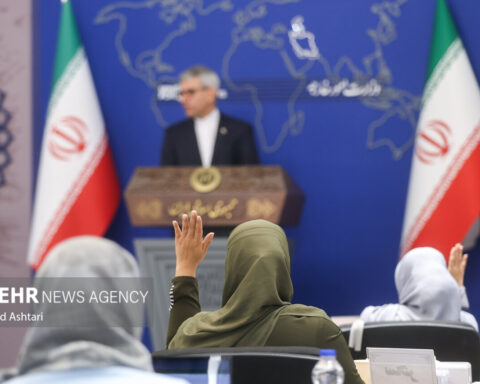
Five days later, Iranian Foreign Ministry spokesman Esmaeil Baghaei confirmed the talks were ongoing. “Contacts and consultations between the two countries on this matter continue without interruption,” he told reporters, adding that “the strait is too vital for just one nation to control.” The framing was diplomatic. The instrument being drafted in Muscat is not.
What Iran and Oman are constructing is a bilateral governance mechanism for the Strait of Hormuz — one designed to convert Iran’s wartime control of the waterway into a durable, treaty-backed administrative arrangement. It is being built by legal specialists, not diplomats. It is advancing on a timeline Iran sets. And it rests on a legal foundation that neither Washington nor Riyadh can easily dismantle, because it embeds an UNCLOS signatory as co-administrator of a strait that Iran insists falls outside the UNCLOS transit passage regime entirely.
The mechanism is not a new concept. Iranian Deputy Foreign Minister Kazem Gharibabadi announced on April 2 that Iran and Oman were in the “final stages of drafting” a joint framework under which vessels would need advance coordination with both countries to transit. That was six weeks before the May 13 expert session — a timeline consistent with treaty-level drafting, not exploratory conversation.
For Saudi Arabia, the implications run deep. Riyadh spent years cultivating Oman as its quiet channel to Tehran — the secret meetings in Baghdad and Muscat that produced the 2023 China-brokered restoration of diplomatic ties traveled through Omani facilitation. Iran has now used that same channel to build a Hormuz governance framework that excludes Riyadh entirely. On May 20, Foreign Minister Prince Faisal bin Farhan praised Trump’s decision to cancel the planned strike on Iran and called on Tehran to “seize this opportunity.” The posture is accommodation — and accommodation does not lend itself to contesting a governance mechanism your own intermediary is co-drafting.
The Middle East briefing 3,000+ readers start their day with.
One email. Every weekday morning. Free.
The question at the center of this process is not whether Iran controls Hormuz militarily. It does, provisionally — the IRGC’s Persian Gulf Security Authority has processed just 45 transits since April 8, against a pre-war baseline that would have seen more than 1,200 in the same period. What matters is whether Iran is locking that control into a legal-diplomatic architecture built to survive the ceasefire, the MOU process, and whatever follows.
Table of Contents
- What Was Decided in the Muscat Expert Talks?
- The 1974 Treaty and the Lane That Defines the Strait
- Why Did Oman Stop Facilitating and Start Drafting?
- The Legal Asymmetry Iran Built the Mechanism Around
- Where Is Saudi Arabia?
- The Resolution That Passed and the Vote Oman Skipped
- What Survives the Ceasefire?
- Frequently Asked Questions
What Was Decided in the Muscat Expert Talks?
The Iranian delegation was led not by a political envoy but by a career specialist in treaty negotiation and maritime boundary disputes. Baqerpour’s presence in Muscat signals that the bilateral process has moved past political discussion and into the drafting of legal text. Both delegations affirmed their sovereign territorial jurisdiction over the strait.
The joint statement’s language was precise. Both sides, according to PressTV’s readout of the session, “emphasized their sovereign rights and jurisdictions over the strait, stressing that it is part of the territorial waters of both countries.” The phrase “territorial waters” — rather than “international strait” — is doing deliberate legal work. Under the UN Convention on the Law of the Sea, straits used for international navigation are subject to a transit passage regime that coastal states cannot suspend or restrict. By framing Hormuz as territorial waters jointly administered by two sovereign states, the Muscat mechanism sidesteps that framework and asserts a governance model grounded in the older “innocent passage” regime, which permits conditions, fees, and suspension.
The drafting timeline reinforces the seriousness. Gharibabadi’s April 2 announcement placed the talks in “final stages.” The expert session followed six weeks later. Baghaei’s May 18 confirmation described “uninterrupted” consultations. Three public statements across seven weeks, each escalating in specificity: from political announcement to technical drafting session to confirmation of continuous process. Iran’s announcement of a formal toll mechanism earlier in the conflict followed the same pattern — public declaration first, operational reality already in place by the time anyone responded.
Iranian Foreign Minister Abbas Araghchi supplied the mechanism’s operational logic during the ceasefire discussions. Passage through Hormuz during any ceasefire window would remain “under management by the IRGC,” he said, and “after that, Iran and Oman will charge fees on ship transit.” Military control first. Bilateral administration second. The Muscat talks are drafting the instrument for that second phase.
The 1974 Treaty and the Lane That Defines the Strait
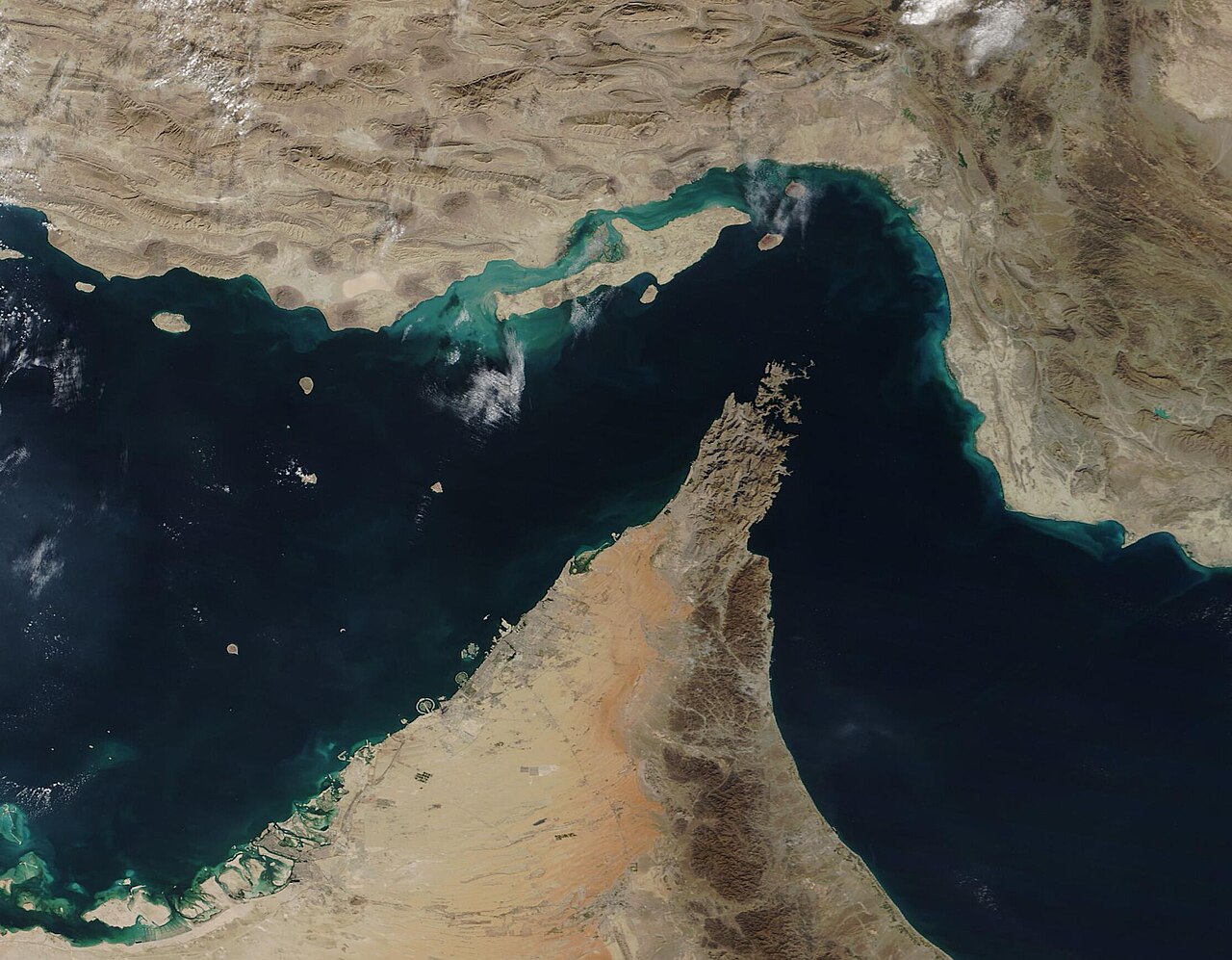
The Strait of Hormuz, at its narrowest, spans 21 nautical miles — covered entirely by the overlapping territorial seas of Iran and Oman. The Traffic Separation Scheme established by the International Maritime Organization routes inbound vessels (those entering the Persian Gulf) through the northern lane and outbound vessels through the southern lane, with a two-mile buffer zone between them.
The inbound lane — the one that every commercial tanker uses to reach Saudi, Kuwaiti, Iraqi, and Emirati loading terminals — runs entirely through Omani territorial waters. This is not a navigational convenience or a diplomatic courtesy. It is a jurisdictional fact established by the Iran-Oman continental shelf and maritime boundary treaty signed on July 25, 1974, which delineated the median line between Iranian and Omani territorial seas within the strait.
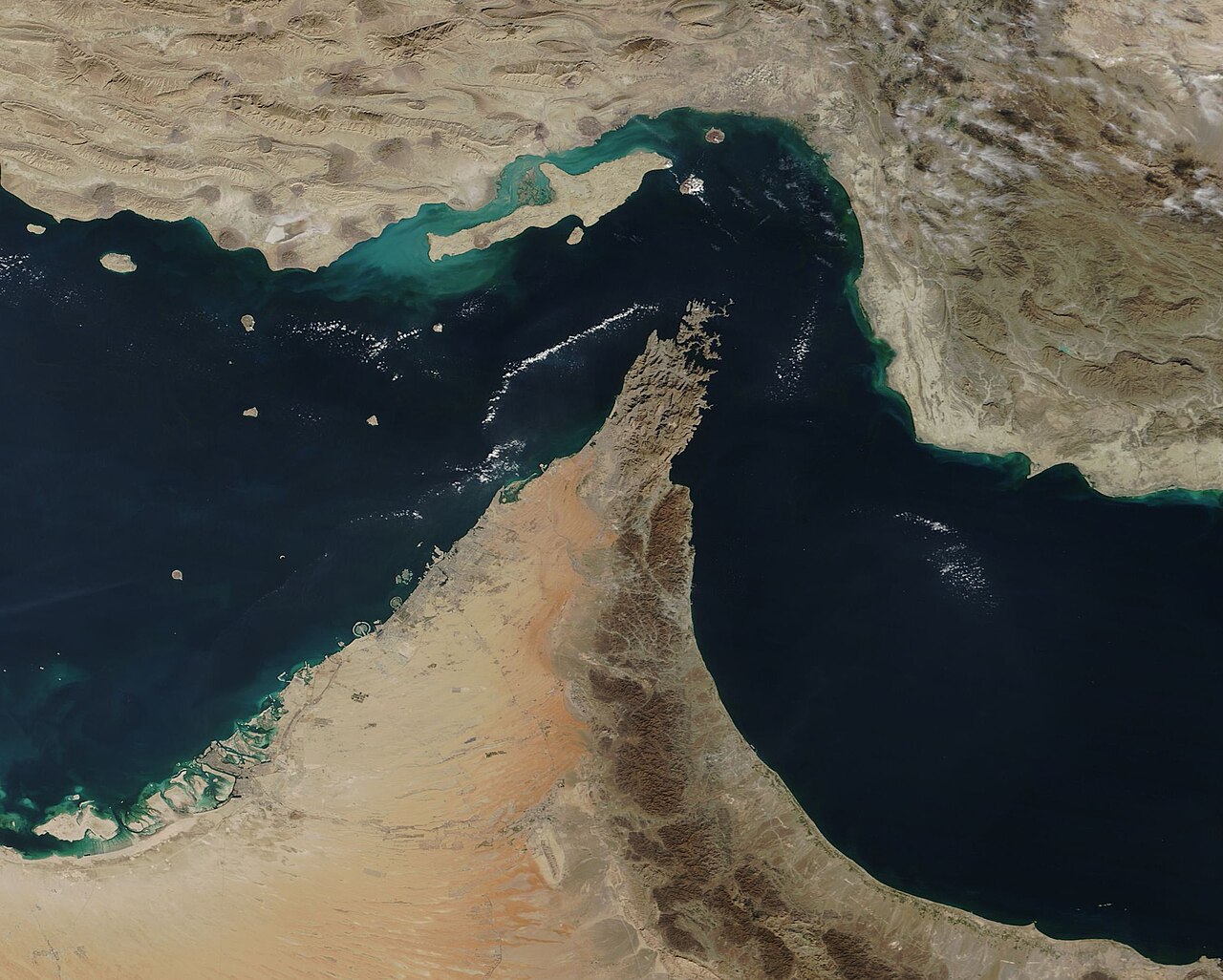
Oman’s participation in the Muscat mechanism is therefore not symbolic. It is jurisdictionally necessary. Any permit system governing strait transit that lacks Omani enforcement authority on the inbound lane would be incomplete — ships could theoretically claim they were transiting Omani, not Iranian, waters. A bilateral framework that includes both Iran and Oman covers both lanes, both directions, and the full width of navigable water. There is no gap to sail through.
Western coverage of the Hormuz crisis has focused almost exclusively on Iranian military capabilities — the IRGC Navy’s fast boats, the mines, the anti-ship missile batteries on Abu Musa and the Tunbs. The military dimension is by definition temporary. It depends on the war continuing, the ceasefire failing, or the IRGC maintaining its current posture indefinitely. The legal dimension is different. A bilateral governance treaty anchored to the 1974 maritime boundary would survive any ceasefire, any change of government in Tehran, and any future Security Council resolution — because it would rest on the same jurisdictional foundation that the shipping lanes themselves rest on.
Why Did Oman Stop Facilitating and Start Drafting?
The collapse of the US-Iran MOU process in Islamabad forced Iran to build a bilateral alternative. Oman — the only other country with territorial jurisdiction over Hormuz — was already positioned as Tehran’s preferred interlocutor. What changed was not the relationship but its nature: Oman shifted from hosting other countries’ conversations to co-authoring a governance instrument with direct implications for international maritime law.
Oman’s role as the Gulf’s quiet intermediary is decades old. The Muscat back-channel between the United States and Iran dates to mid-2012, when Jake Sullivan — then Hillary Clinton’s Director of Policy Planning, later Biden’s National Security Advisor — traveled secretly to Oman to meet Iranian officials. Those meetings produced the framework that became the Joint Comprehensive Plan of Action. When Saudi Arabia sought to restore diplomatic ties with Iran after a seven-year rupture, the back-channel ran through Baghdad and Muscat, with Omani facilitation helping produce the 2023 China-brokered agreement.
The distinction between facilitating and drafting is not academic. Oman’s traditional model — unlike Qatar’s, which involves active mediation and public ownership of process — has been to provide the room, the logistics, and the discretion. Muscat hosts; it does not co-author. The Hormuz bilateral mechanism represents a departure from that model so fundamental that Chatham House flagged it in an April 2026 analysis: “Oman may be considering a partnership with Iran over the Strait, which could be expanded to include more regional security partners.”
The trigger was the Islamabad impasse. Araghchi told reporters that Iran had been “inches away from an MoU” at the Islamabad talks but encountered “maximalism, shifting goalposts and blockade” from the American side. Whether that characterization is accurate is beside the structural point: Iran concluded the multilateral track was dead and pivoted to a bilateral instrument with the only other country whose participation makes the instrument legally complete.
Oman had its own reasons to engage. Foreign Minister Badr Albusaidi told CBS News that a US-Iran deal was “within our reach” — a statement that positioned Muscat not as a passive host but as an active stakeholder in the outcome. Oman’s economy depends on strait stability more immediately than Iran’s does: the Sohar port complex, the Duqm special economic zone, and the country’s LNG export infrastructure all require predictable maritime transit. A governance mechanism that regularizes Hormuz passage — even one co-administered with Iran — may serve Omani commercial interests better than prolonged uncertainty. Qatar’s LNG dependency operates on a different axis: why Rasheeda remains held while Al Kharaitiyat was cleared illustrates how Iran uses selective bilateral clearance — not a uniform toll mechanism — to reward specific diplomatic relationships, independent of the broader Muscat governance track.
The Carnegie Endowment for International Peace recommended in April that the GCC treat “Oman’s diplomatic positioning” as a “complementary asset” to UAE military capability. The formulation assumed Oman’s positioning serves collective Gulf interests. The Muscat mechanism complicates that assumption. If Oman is co-drafting a governance framework that formalizes Tehran’s administrative claim to Hormuz, the asset is complementary to Iranian interests — with Omani sovereignty as the legitimizing layer.
The Legal Asymmetry Iran Built the Mechanism Around
Iran signed the United Nations Convention on the Law of the Sea in 1982. It never ratified. The decision has been maintained across four decades, multiple governments, reformists and hardliners alike — because it serves a specific legal purpose.
Iran’s position, articulated consistently by the Foreign Ministry and in academic forums, is that the UNCLOS transit passage regime (Articles 34 through 45, which establish that ships and aircraft have a right of uninterrupted transit through international straits that coastal states cannot suspend) does not bind non-parties. Tehran instead invokes the older customary international law regime of “innocent passage,” which permits coastal states to set conditions, charge fees, and suspend passage entirely when their security is threatened.
The Iranian Foreign Ministry stated the position directly in May 2026: “The attack on the Islamic Republic of Iran, as a coastal state, prompted Tehran to adopt a series of measures under international law to defend its national sovereignty, territorial integrity, and national security. These actions are permitted under international law and Iran’s domestic rules.” The language is defensive, but the operative claim is broad: Iran asserts an unrestricted right to regulate Hormuz passage under the innocent passage regime, unbound by UNCLOS provisions it never ratified.
Oman occupies a different legal position — and a more interesting one. It ratified UNCLOS, which should in principle commit it to the transit passage regime. But Oman filed a reservation that Chatham House described in unambiguous terms: Oman “has added statements affirming its ‘full sovereignty over its territorial sea’, and seeks to reserve its right to require prior permission for passage of warships. UNCLOS rules out reservations of this kind.” Article 309 of the convention prohibits reservations outright. Article 310 permits declarations that do not purport to exclude or modify the convention’s legal effect. Oman’s declaration does precisely what Article 310 says it cannot do.
The Muscat mechanism exploits this asymmetry with a logic that is difficult to counter within existing international law. Iran, as a non-party to UNCLOS, faces a legitimacy deficit when asserting governance authority over an international strait — most of the world recognizes transit passage rights regardless of Iran’s objections. But by embedding Oman as a co-administrator, the bilateral framework gains something Iran cannot manufacture alone: formal association with an UNCLOS signatory. Oman’s participation allows the mechanism to be presented as a cooperative arrangement between a ratifying state and a non-party, rather than a unilateral assertion by a country that rejected the convention for the explicit purpose of preserving its ability to restrict or close the strait.
Chatham House’s April 2026 analysis was direct on this point: “Iran must be a party to any agreement over the Strait. Mediators should therefore consider options that are palatable to the regime.” The Muscat mechanism is palatable. It gives Iran administrative authority over Hormuz while clothing that authority in Omani legitimacy and the language of shared sovereignty.
Where Is Saudi Arabia?
Excluded entirely. Riyadh spent years cultivating Oman as its back-channel to Tehran — the same channel Iran has now used to build a governance framework that locks Saudi Arabia out. The kingdom’s public endorsement of diplomatic restraint, delivered by bin Farhan on May 20, prevents Riyadh from contesting the Muscat mechanism without contradicting its own accommodation posture at the worst possible moment.
The history is instructive. In 2016, when Saudi Arabia severed diplomatic relations with Iran after protesters stormed the Saudi embassy in Tehran, Oman maintained ties with both capitals. Riyadh understood the value and relied on it: Muscat became the discreet channel through which messages could travel when no other pathway existed. The secret meetings in Baghdad and Muscat that preceded the 2023 restoration of Saudi-Iranian relations depended on Oman’s willingness to host, facilitate, and keep quiet.
That channel still exists. What has changed is its function. Iran has converted Saudi Arabia’s intermediary into a co-drafting partner for a Hormuz governance instrument from which Riyadh is absent. The kingdom that cultivated Omani discretion as a diplomatic asset now confronts the product of that discretion — a bilateral framework it cannot enter, cannot publicly contest, and cannot acknowledge without revealing how thoroughly its go-between has been repurposed.
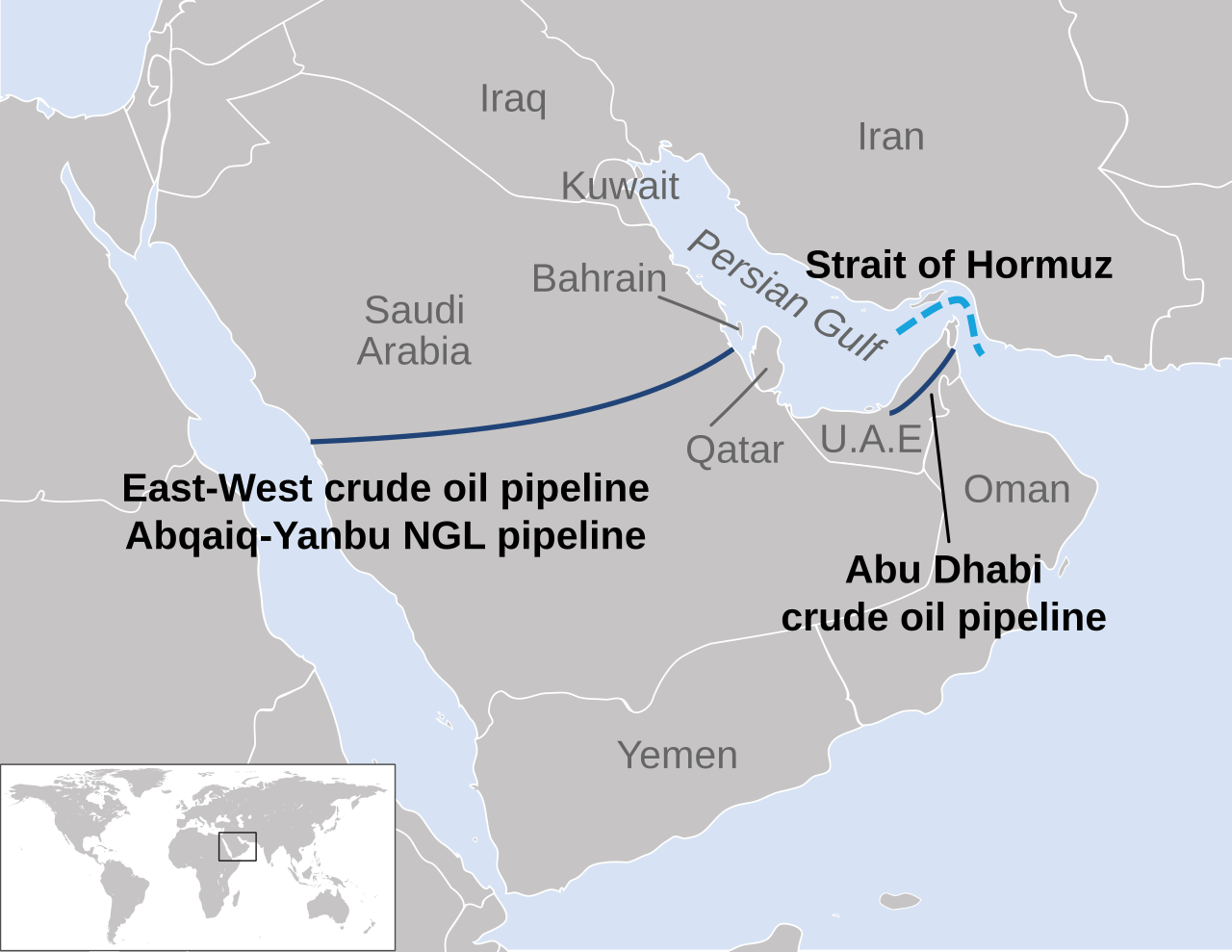
Saudi Arabia’s physical response to Hormuz vulnerability has been the East-West Pipeline, capable of moving up to 7 million barrels per day from the Eastern Province to the Yanbu terminal on the Red Sea. It is a meaningful infrastructure bypass — one that shapes the kingdom’s post-war oil recovery calculus — but it addresses only the energy dimension of Iran’s Hormuz hold. Aramco CEO Nasser’s own mid-June deadline underscores the gap: the East-West Pipeline has reached its 7 mbpd throughput ceiling, but Yanbu’s export port is capped at 5 mbpd with no disclosed expansion timeline — meaning pipeline capacity cannot substitute for Strait access even when the pipeline is running at full tilt. A bilateral governance mechanism that embeds Iran and Oman as co-administrators of strait transit creates a legal-diplomatic reality that no pipeline can counter. Ships carrying goods to and from Saudi ports in the Gulf — container vessels, LNG carriers, naval logistics, desalination equipment — still transit Hormuz.
The timing compounds the constraint. Bin Farhan’s May 20 statement calling on Iran to “seize this opportunity” committed Saudi Arabia to accommodation at precisely the moment it would need a confrontation posture to challenge Hormuz governance. Riyadh cannot credibly oppose the Muscat mechanism while simultaneously praising the diplomatic restraint that gave Iran the space to draft it.
The fiscal picture narrows the options further. Saudi Arabia’s Q1 2026 budget deficit reached $33.5 billion — 194 percent of the full-year target. PIF cash reserves have fallen to approximately $15 billion, the lowest level since 2020. Riyadh’s diplomatic bandwidth is already consumed — between ceasefire architecture that has not yet produced a durable outcome and the recognition that it holds no veto over Israeli military decisions that could collapse the process overnight. The kingdom is not in a position to fund a competing governance initiative, antagonize Oman, or absorb the diplomatic cost of opening a new front at a moment when every front it has is already under strain.
The Resolution That Passed and the Vote Oman Skipped
On May 13 — the same day Iranian and Omani legal experts sat down in Muscat — the Bahrain-US co-sponsored resolution on freedom of navigation through the Strait of Hormuz reached the UN Security Council with 112 co-sponsors. Saudi Arabia signed. Kuwait signed. Qatar and the UAE signed. Oman did not.
China and Russia vetoed the resolution. A separate measure, Security Council Resolution 2817, passed 13-0-2 (China and Russia abstaining) and affirmed freedom of navigation in principle — but established no enforcement mechanism, no governance framework, and no operational architecture for ensuring vessels can actually transit the strait without obstruction or fees. It was a statement of principle without a plan.
Oman’s absence from the 112-nation co-sponsor list received minimal attention in Western media coverage. It deserved more. A country actively co-drafting a bilateral Hormuz governance mechanism with Iran cannot simultaneously co-sponsor a resolution demanding unrestricted freedom of navigation through the same waterway. The abstention was not procedural. It was a policy decision — one consistent with the Muscat mechanism’s logic and legible as a signal to Tehran that Oman’s commitment to the bilateral track is not hedged by parallel participation in multilateral frameworks designed to counter it.
The practical effect is stark. The UN resolution that could have established a multilateral governance alternative was vetoed. The resolution that passed has no operational content. The Islamabad MOU process that might have produced a framework acceptable to multiple parties has stalled. The only active legal-drafting process for Hormuz governance — the only process currently producing text — is the bilateral mechanism in Muscat. Iran and Oman are the sole parties putting pen to paper, and they are doing so without any structural obligation to accommodate the 112 countries that co-sponsored a resolution that no longer exists. A second UNSC enforcement draft is now heading toward a vote with 137 co-sponsors — and the same structural veto problem: why Saudi Arabia’s UNSC co-sponsorship strategy leads to an outcome it cannot prevent.
What Survives the Ceasefire?
The Muscat mechanism is designed to outlast the war. Iran has insisted that Hormuz governance must be settled before nuclear talks begin, making the bilateral framework a precondition for the broader diplomatic process. If signed before a ceasefire’s terms address the strait, the treaty becomes a fait accompli that any future negotiation must accommodate rather than a proposal that future negotiation might reject.
Iran’s sequencing demand has been consistent and explicit: Hormuz first, nuclear file second. Araghchi stated this in early May, and the ordering has held through every subsequent round of diplomatic contact. The nuclear dossier — enrichment caps, monitoring protocols, sanctions relief — is the prize Washington wants. Hormuz is the price Iran is extracting before that conversation opens. The Muscat mechanism is the instrument for setting that price in legal text before anyone can negotiate it downward.
The logic is fait accompli applied to international law. Draft the treaty. Sign it with the only other country that has jurisdictional standing. Cite it as the existing arrangement. Force anyone who objects to propose a replacement rather than a prevention. This is structurally harder to undo than a unilateral assertion — a bilateral treaty requires both parties to agree to its dissolution, and Oman has no obvious incentive to dissolve an instrument that formalizes its own sovereign role in Hormuz governance.
Iran has already demonstrated this strategy with the IRGC’s Persian Gulf Security Authority, which functions as a de facto customs and transit authority at Hormuz despite having no basis in any international agreement. Ships pay hundreds of thousands of dollars in coordination fees to the PGSA. Russia and China transit without charge — a preferential structure that embeds geopolitical alignment into the fee schedule itself. The PGSA operates as if it were a permanent institution, and the longer it does so, the closer that fiction gets to reality. On May 22, Iran went further: the PGSA published a formal jurisdiction map anchoring its claimed maritime management zone to two points on UAE sovereign territory, prompting five GCC states to file a joint protest with the International Maritime Organization. Oman did not sign.
The Muscat mechanism would formalize what the PGSA has improvised. A bilateral treaty between Iran and Oman establishing a joint permit system for Hormuz transit would convert the IRGC’s wartime toll collection into a treaty-backed fee structure administered by two sovereign states with recognized territorial jurisdiction. It would also create a structural lock: once transit fees are embedded in a bilateral instrument with an UNCLOS signatory, extracting them requires Oman to agree — and Oman would be surrendering both revenue and a sovereign governance role it did not previously hold.
PressTV’s coverage of the Muscat talks framed them as building “sustainable security” and providing “better services to vessels.” The language of service delivery — permits, coordination, fees — is the language of administration, not blockade. That distinction carries legal weight. A blockade is an act of war subject to international challenge under the laws of armed conflict. An administrative framework between two coastal states with territorial jurisdiction is an exercise of sovereignty. Iran is converting one into the other.
Araghchi’s ceasefire terms contained the mechanism’s clearest operational preview: IRGC management during the transition, bilateral fee collection after. The sequencing was explicit and deliberate. The Muscat talks are not about the war. They are about what replaces it — and who writes the rules for the strait when the guns go quiet.
Saudi Arabia’s lobbying position was tested directly on May 23, when MBS joined a seven-nation call urging Trump to accept. The strategic costs of Saudi Arabia’s deal endorsement — enrichment rights Riyadh does not possess, a toll timeline Riyadh does not control, and sanctions relief that recapitalises the force that built the architecture Riyadh needs dismantled — are the price the kingdom is paying for a seat it does not hold.
Frequently Asked Questions
Does the Iran-Oman Hormuz mechanism violate UNCLOS?
The legal question is genuinely contested, not settled. UNCLOS Article 38 establishes transit passage rights through international straits, and Article 44 prohibits coastal states from suspending transit. Iran argues these provisions do not bind it as a non-party. The closest adjudicated precedent is the Corfu Channel Case (ICJ, 1949), in which the International Court of Justice ruled that Albania could not prevent British warships from transiting the Corfu Strait — but that case involved a single coastal state acting unilaterally, not a bilateral arrangement between both coastal states of a shared strait. No international tribunal has ever ruled on whether a joint coastal-state governance mechanism for a strait violates the transit passage rights of third parties. The mechanism’s designers appear to be aware of this gap.
Could other Gulf states join the mechanism later?
Chatham House noted the framework “could be expanded to include more regional security partners.” The UAE has existing maritime boundary agreements with Oman along the Musandam Peninsula and could theoretically participate — Abu Dhabi controls Fujairah, the only major Gulf oil terminal outside the strait, giving it a different risk calculus than Riyadh. However, expansion would dilute Iran’s bilateral control: the current two-party structure gives Tehran maximum influence over terms. Qatar has no Hormuz coastline and lacks jurisdictional standing — yet Doha has carved out a distinct dual role: co-signing the GCC’s IMO protest against Iran’s jurisdiction map while simultaneously sending a negotiating team to Tehran on the same day, a position that preserves Qatar’s channel to both sides without committing to either governance framework. Bahrain, which co-sponsored the competing UN resolution with the United States, is positioned as a direct opponent of the mechanism’s premise.
What precedents exist for bilateral strait governance?
The closest analogue is the Montreux Convention of 1936, which governs the Turkish Straits and gives Ankara authority to restrict warship tonnage, transit timing, and submarine passage. But Montreux was negotiated multilaterally and involves a single coastal state. The Strait of Malacca is managed cooperatively by Malaysia, Indonesia, and Singapore through the Cooperative Mechanism established in 2007 — but all three are UNCLOS parties operating within the transit passage framework, not outside it. The Iran-Oman situation is structurally distinct: one party rejects the governing convention, the other ratified it with a reservation the convention itself prohibits. There is no clean precedent for this combination.
How would a formalized permit system affect shipping and insurance costs?
Lloyd’s of London has classified the Persian Gulf as a Listed Area since the onset of hostilities, with war-risk insurance premiums adding an estimated 1 to 3 percent of hull value per transit — costs passed directly to importers and consumers. A formalized bilateral fee structure could reduce the unpredictability premium by publishing tariff schedules, but it introduces a second legal exposure that the current IRGC arrangement does not: bilateral treaties can be cited by insurers as evidence of a normalized administration rather than a conflict zone, potentially shifting how war-risk riders are structured. A treaty-governed strait is commercially different from a blockade — and that distinction may affect whether maritime insurers reduce premiums or use the treaty as cover to redefine what counts as a war-risk event.
Has Oman publicly confirmed its role as co-drafter of the mechanism?
No. Omani public statements have not characterized the Muscat talks as treaty drafting. Foreign Minister Albusaidi’s CBS News interview framed Oman’s regional role in terms of facilitating a broader US-Iran accommodation, not co-authoring a bilateral Hormuz instrument. The characterization of the Muscat process as treaty-level drafting originates from Iranian sources — Gharibabadi’s “final stages of drafting” statement and Baqerpour’s presence as the legal affairs director general. Oman’s public silence on the mechanism’s legal character is itself informative: Muscat has neither confirmed nor denied the drafting characterization, maintaining the ambiguity that has defined Omani statecraft for decades. The silence serves both parties — Iran gets to announce progress, Oman retains deniability.
Meanwhile, the 39-day diplomatic silence since Islamabad has allowed the IRGC to entrench a parallel toll regime at Hormuz that operates independently of any governance mechanism Muscat and Tehran may be drafting.
Saudi Arabia’s exclusion from the Muscat mechanism coincided with a separate diplomatic misalignment: on May 20, Bin Farhan publicly backed a Trump HEU position that Trump had already walked back five days earlier — underscoring how far Riyadh’s public posture now lags the actual negotiating positions of both Washington and Tehran.
The Oman-mediated track fed directly into the fifth round of US-Iran nuclear talks, held in Rome on May 23 — the most recent attempt to convert the Muscat governance discussions into a signed framework. Why Rome ended without a deal, and what that means for the Muscat channel.
While Oman co-drafted a Hormuz governance mechanism and the US ran talks in Rome, Pakistan’s field marshal Munir arrived in Tehran on the same weekend carrying a defence treaty that binds Islamabad to Saudi Arabia — yet Saudi Arabia remained absent from both tracks. The Munir mission and what the two-city no-seat reality means for the kingdom’s strategic position.
Senator Tom Cotton’s letter to Treasury Secretary Bessent, sent May 22, demands sanctions on Oman as a facilitating entity under the PGSA framework — the first Congressional push to sanction Oman over the toll regime and the most direct legislative challenge yet to the Muscat co-drafting arrangement described above.