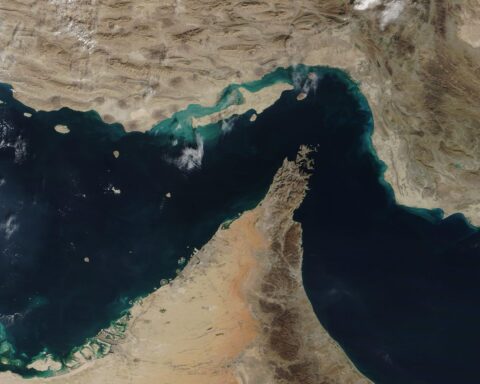

DHAHRAN — Saudi Arabia’s OPEC+ production quota for June 2026 is 10.291 million barrels per day. In April, the kingdom produced 6.879 million. The difference — 3.41 million barrels per day, and widening — is not a compliance problem in any sense the cartel’s monitoring framework was designed to measure. It is the distance between what Riyadh writes on paper and what the Strait of Hormuz permits to leave the Gulf.
On June 7, Energy Minister Prince Abdulaziz bin Salman will chair the 66th JMMC session — simultaneously the 41st OPEC and non-OPEC Ministerial Meeting — where a compliance report will show Saudi Arabia delivering between 67 and 75 percent of its stated target. Three consecutive quota increases since the Strait’s closure have added roughly 186,000 barrels per day to Saudi Arabia’s paper allowance. Over the same period, Saudi production fell by more than 880,000 barrels per day, bringing the ratio of paper increase to physical loss to approximately 1:5.
Across the Gulf, a former cartel member pumps without any quota ceiling at all. The UAE exited OPEC on May 1, freeing ADNOC from a 3.5 million barrel-per-day cap and opening 1.35 million barrels of previously constrained capacity. Abu Dhabi’s Habshan-Fujairah pipeline moves up to 1.8 million barrels per day through a route that bypasses Hormuz entirely. Brent closed at $103.94 on May 22, more than $34 below its April 7 wartime peak.
Table of Contents
- How Wide Is Saudi Arabia’s Production Gap?
- What Can the June 7 JMMC Actually Decide?
- Why Is the UAE Now Saudi Arabia’s Biggest OPEC Problem?
- Brent Below the Breakeven
- What Happens If the Capacity Audit Runs During a Blockade?
- Who Controls Saudi Oil Production in 2026?
- The Swing Producer Cannot Swing
- Frequently Asked Questions
How Wide Is Saudi Arabia’s Production Gap?
Saudi Arabia’s production-to-quota shortfall reached 3.41 million barrels per day in April 2026, up from 2.53 million in March. Actual output of 6.879 million barrels per day against a quota of 10.291 million represents a compliance rate of approximately 67 percent — driven entirely by Hormuz transit constraints rather than deliberate production decisions, according to Rystad Energy.
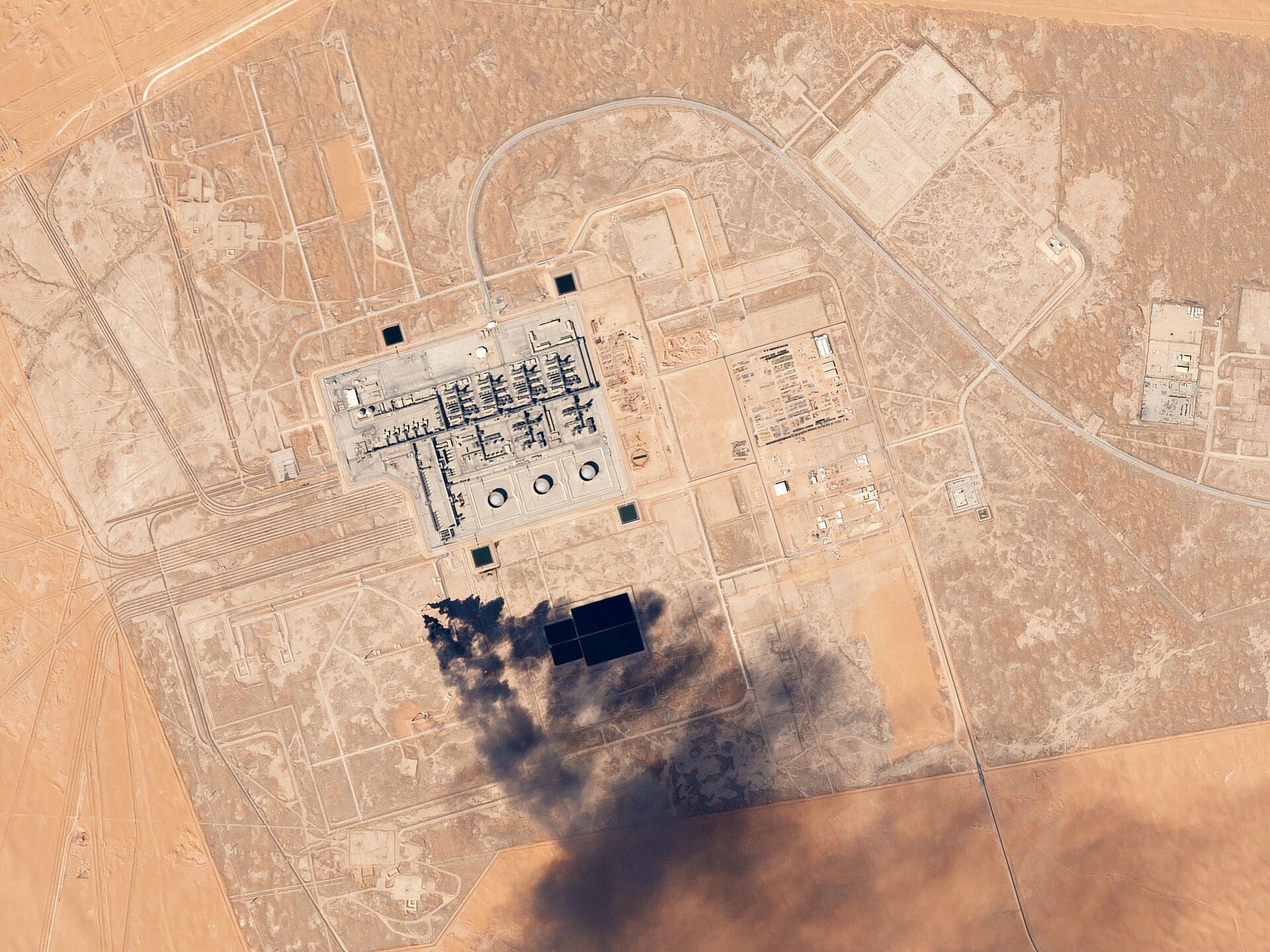
The decline accelerated between March and April. Saudi Arabia self-reported 7.76 million barrels per day to OPEC for March. By April, OPEC secondary sources placed output at 6.879 million — a drop of 881,000 barrels per day in a single month while the quota was raised by 62,000. Aramco’s Maximum Sustainable Capacity remains 12 million barrels per day; more than 4 million barrels of that capacity now sit behind a strait that has permitted 45 commercial transits since April 8, a throughput rate of 3.6 percent of the pre-war baseline.
| Metric | Value | Source |
|---|---|---|
| Aramco Maximum Sustainable Capacity | 12.0 mbpd | Aramco |
| June 2026 OPEC+ Quota | 10.291 mbpd | OPEC+ |
| March 2026 Actual Production | 7.76 mbpd | OPEC (self-reported) |
| April 2026 Actual Production | 6.879 mbpd | OPEC secondary sources |
| April Production Gap | 3.41 mbpd | Rystad Energy |
| Khurais Offline Capacity | 0.3 mbpd | Saudi Ministry of Energy |
| Hormuz-Suppressed Capacity | 4+ mbpd | Aramco |
| Hormuz Transits Since April 8 | 45 | Windward.ai |
Priya Walia of Rystad Energy has stated the distinction plainly: the production-to-quota gap reflects Strait of Hormuz constraints, not deliberate supply management. Raising a number on paper does not produce additional physical barrels when export infrastructure is blocked. OPEC’s compliance framework was designed to catch countries cheating by overproducing. It has no mechanism for a founding member that physically cannot ship.
The Middle East briefing 3,000+ readers start their day with.
One email. Every weekday morning. Free.
Aramco CEO Amin Nasser placed the stakes in temporal terms on May 11, telling CNBC that the market would normalise “only in 2027” if the Strait did not reopen within “a few weeks from today” — language that pinpointed mid-June as the scenario dividing line between a recoverable disruption and a structural repricing of Gulf export capacity. ADNOC CEO Sultan Al Jaber offered a grimmer timeline: Q1 to Q2 2027 as the earliest normalisation date, even under immediate Hormuz resolution.
The cartel-wide numbers compound the Saudi shortfall. Total OPEC+ output in March 2026 ran at 27.68 million barrels per day against a collective quota of 36.73 million — a gap of 9 million barrels per day that Rystad characterised as the worst quarterly compliance failure in OPEC history. Al Jazeera described the June quota increase as “largely symbolic as US-Israel war on Iran disrupts Gulf supplies,” a characterisation OPEC delegates confirmed to Bloomberg. Unlike every previous compliance crisis since the cartel’s founding, the gap is driven by physical blockade rather than quota violations.
What Can the June 7 JMMC Actually Decide?
The JMMC can recommend three outcomes: maintaining the current quota with boilerplate language about exceptional circumstances, reducing it to reflect actual production, or formally invoking force majeure due to the Hormuz blockade. None is cost-free for Riyadh. The June 7 session doubles as the 41st full Ministerial Meeting, where recommendations become ratifiable decisions.
The first option — hold the quota, acknowledge nothing specific — is the likeliest because it has already been chosen three times. At each JMMC session since the Strait’s closure, the committee reaffirmed Saudi Arabia’s prevailing quota, noted “disruption-related” compliance shortfalls without quantifying them, and moved to the next agenda item. The language has settled into a formula: “exceptional circumstances” requiring “continued monitoring” — a phrase that traders, refiners, and shipping desks have watched repeated across three consecutive sessions while pricing forward contracts accordingly.
The second option — reduce the quota to approximately 7.5 to 8 million barrels per day — is the honest-accounting path. It would align the nominal target with what Saudi Arabia can demonstrably ship via its Yanbu Red Sea terminal and whatever Gulf-side volumes clear the IRGC’s toll. It would also hand Tehran a concession worth more than any toll revenue: formal OPEC acknowledgment that Iran’s naval blockade has reduced the world’s largest oil exporter to a medium-tier producer. The reduction would permanently lower Saudi Arabia’s baseline heading into the 2027 capacity audit, converting a temporary disruption into a structural demotion within the cartel’s own allocation framework.
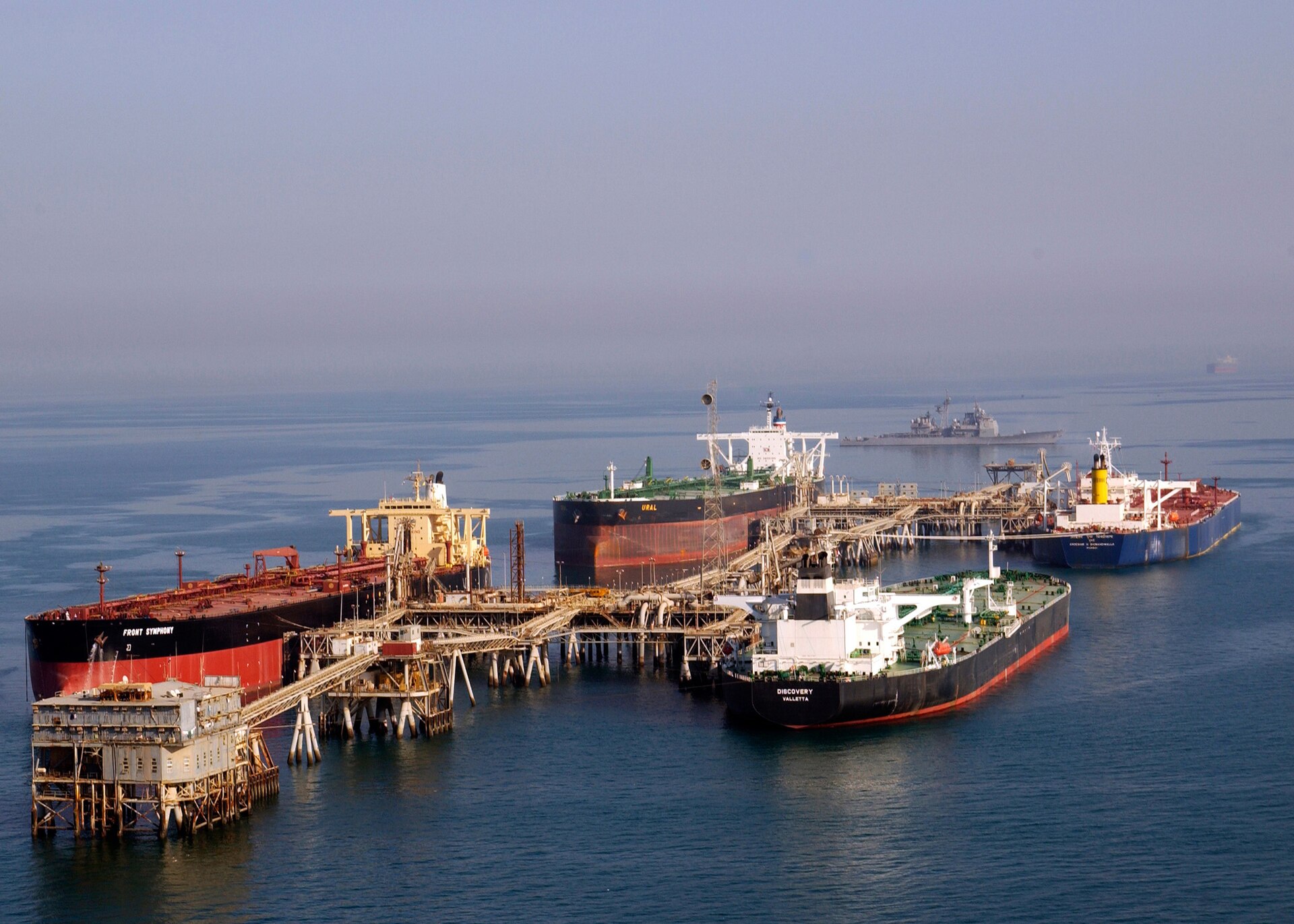
The third option — explicit force majeure — has no modern OPEC precedent. Declaring that Saudi production is constrained by external military action would require consensus from a committee that includes Russia and Iraq, two of Iran’s closest operational partners and among the five states exempted from the IRGC’s Hormuz toll. A force majeure declaration would formally certify, in an OPEC ministerial communiqué, that Tehran controls Saudi output — the precise concession Riyadh has spent three months of diplomatic language trying to avoid.
The compliance report itself will arrive in a format designed for a different kind of failure. OPEC’s monitoring framework measures production against quota to identify members producing above their ceiling — the chronic disease of cartel management since the organization’s 1960 founding. The June 7 report will show Saudi Arabia below its ceiling by the largest margin ever recorded for any OPEC member in any quarter. “Non-compliance” means overproduction; “exceptional circumstances” is the only available phrase for a member that underproduces by a third of its allocation.
The JMMC has convened 65 times. At none of those sessions has the cartel’s largest producer arrived with a third of its quota physically undeliverable.
Why Is the UAE Now Saudi Arabia’s Biggest OPEC Problem?
The UAE left OPEC on May 1, 2026, ending a 58-year membership and freeing ADNOC from a quota ceiling of 3.5 million barrels per day. Abu Dhabi’s Habshan-Fujairah pipeline bypasses Hormuz entirely, delivering up to 1.8 million barrels per day to Fujairah — capacity Saudi Arabia cannot match while its volumes remain trapped at the Strait.
Helima Croft, managing director and global head of commodity strategy at RBC Capital Markets, identified the structural shift earlier this year: meaningful spare capacity is concentrated almost exclusively in Saudi Arabia and the UAE, giving the two Gulf producers outsized influence over the 2026 price trajectory. The observation was accurate, but the war has split it in two. Saudi spare capacity is largely stranded behind Hormuz. Emirati capacity flows through infrastructure that was purpose-built to operate independently of the Strait.
The timing of the UAE’s exit compounds the structural problem. Abu Dhabi walked out of the cartel four weeks before the June 7 JMMC — a meeting at which OPEC+ will discuss quota compliance that the UAE is no longer bound by and market conditions that the UAE is actively reshaping. A directive from Sheikh Khaled bin Mohamed bin Zayed on May 15 instructed ADNOC to accelerate construction of a second West-East pipeline that, once complete, will double Fujairah’s export capacity to approximately 3.6 million barrels per day by 2027.
The OPEC+ June increase of 188,000 barrels per day was negotiated when the UAE was still a member. Abu Dhabi’s former share is now unconstrained — ADNOC can produce whatever it chooses, at whatever pace the Abu Dhabi Executive Council directs, without reference to any OPEC schedule. At the June 7 session, the remaining cartel members will deliberate over a collective symbolic increase while their most capable non-member competitor scales output outside the room.
The market-share arithmetic runs against Saudi Arabia in either direction. If Hormuz reopens and Saudi production returns to full capacity, every additional Saudi barrel enters a market that EIA projects at $79 per barrel by 2027 — below the kingdom’s fiscal breakeven. If Hormuz stays closed, UAE market share gains calcify while Saudi volumes remain trapped. ADNOC’s 2027 production target of 5 million barrels per day is roughly the level Saudi Arabia claims as its quota today — without delivering it.
Brent Below the Breakeven
Brent crude has fallen from its April 7 wartime peak of $138 per barrel to $103.94 on May 22 — a decline of $34 in six weeks. The April average of $117 per barrel has given way to a May range of $104 to $106, pressured by softening demand indicators and the first signs of non-Hormuz supply adjustment. US consumer sentiment dropped to 44.8 on May 23 (well below the 48.2 forecast), with five-year inflation expectations at 3.9 percent — data pointing toward demand destruction in the world’s largest oil-consuming economy.
The forward curve is steeper than the spot decline suggests. The EIA’s May 2026 Short-Term Energy Outlook projects Brent at $89 per barrel for Q4 2026 and a full-year 2027 average of $79 — numbers premised on Middle East production normalising over the period. Goldman Sachs commodity analyst Daan Struyven placed his Q4 2026 estimate at $90 per barrel in an April 26 note, his fourth upward revision since the war began in February. Wood Mackenzie’s “quick peace” scenario, contingent on Hormuz reopening by June, projects Brent easing to $80 by year-end and $65 through 2027. With Brent now trading below $100 for the first time this month, the IMF’s $86.60 fiscal breakeven is no longer a forecast scenario but the operative constraint on Saudi budget planning.
| Date / Period | Brent ($/bbl) | Source |
|---|---|---|
| April 7, 2026 (wartime peak) | $138 | EIA / Trading Economics |
| April 2026 average | $117 | EIA STEO May 2026 |
| May 22, 2026 | $103.94 | Trading Economics |
| Q4 2026 forecast | $89 | EIA STEO May 2026 |
| Q4 2026 forecast | $90 | Goldman Sachs (Struyven) |
| 2027 average forecast | $79 | EIA STEO May 2026 |
| 2027 scenario (quick peace) | $65 | Wood Mackenzie |
For Saudi Arabia, every point on this curve intersects a fiscal constraint. The IMF calculates the kingdom’s fiscal breakeven at above $90 per barrel; Bloomberg Economics, incorporating PIF domestic spending commitments, places it at $111. Aramco’s Q1 2026 realised crude price was $76.90 per barrel — already below the IMF threshold — producing net income of $33.59 billion on volumes that predated the worst of the Hormuz disruption. Goldman Sachs estimates the full-year 2026 fiscal deficit at $80 to $90 billion, or 6 to 6.6 percent of GDP, excluding PIF’s off-balance-sheet commitments such as the $23 billion HUMAIN portfolio announced in May.
The Q1 fiscal deficit of SR125.7 billion ($33.5 billion) consumed 194 percent of the full-year target in a single quarter. The kingdom’s oil revenue now faces lower volumes from the Hormuz constraint arriving simultaneously with a price trajectory the EIA projects reaching $79 by 2027. PIF’s cash position has declined to approximately $15 billion — 1.6 percent of assets under management, its lowest level since 2020.
Aramco’s Q1 results preview the revenue compression ahead. That net income was earned at a realised price that predated both the steepest Hormuz disruption and the sharpest Brent decline. Q2 revenues will reflect higher prices (April averaged $117) but substantially lower volumes — the kind of arithmetic in which higher revenue per barrel on far fewer barrels tends to net negative, and has been netting negative since the Strait closed.
The revenue compression is confirmed by the broader macroeconomic data: official Q1 GDP figures show the Hormuz closure’s fiscal fingerprint — a SAR 125.7 billion quarterly deficit, a 7.2% oil-sector contraction, and private non-oil growth that decelerated 82% from its 2025 quarterly average.
What Happens If the Capacity Audit Runs During a Blockade?
OPEC+ agreed in late 2025 that from 2027, production quotas will be set by audited Maximum Sustainable Capacity, with the assessment window running January through September 2026. If the Hormuz blockade and the Khurais outage persist, Saudi Arabia’s audited capacity could be permanently reduced — a wartime disruption converted into a lower quota for every year thereafter.
The mechanism was designed to reward investment. Prince Abdulaziz bin Salman described it as “fair and transparent” when the agreement was finalised, a framework that would “reward those who invest and those who believe there is growth.” Saudi Arabia invested more than any other OPEC member in expanding its Maximum Sustainable Capacity to 12 million barrels per day — a figure certified by Aramco’s engineering assessments. The audit was supposed to validate that investment and lock in a correspondingly larger quota share.
Six months into the assessment window, Saudi Arabia cannot demonstrate sustained output above 7 million barrels per day. Khurais — which contributed 300,000 barrels per day before the April attack — remains offline with no restoration timeline published by the Ministry of Energy. An auditor measuring what Saudi Arabia can deliver during the January-to-September window will record something closer to 7 or 8 million barrels per day than 12 million. The difference between certified MSC and audited demonstrated capacity could cost the kingdom 3 to 4 million barrels per day in its post-2027 quota allocation.
The UAE’s exit from OPEC adds a second dimension to the audit problem. Abu Dhabi’s capacity — unconstrained and demonstrably deliverable via Fujairah — will be assessed against Saudi Arabia’s constrained capacity during the same January-to-September window. An audit conducted during 2026 will record ADNOC sustaining near 5 million barrels per day while Aramco cannot sustain 8 million.
The assessment window closes at the end of September 2026. For Saudi Arabia to demonstrate its full 12 million barrel-per-day capacity to auditors, the Strait would need to reopen, Khurais would need to restart, and Aramco would need to sustain production at or near MSC for several months — a sequence that Nasser’s own public timeline, placing normalisation in 2027, appears to preclude.
Who Controls Saudi Oil Production in 2026?
Iran’s Hormuz blockade has transferred effective control of Saudi oil output from Riyadh to Tehran. The IRGC’s Persian Gulf Strait Authority, operational since May 18, charges up to $2 million per VLCC in yuan or Bitcoin; its five exempted states — Russia, China, India, Iraq, Pakistan — are the same bloc providing Iran veto cover at the UN Security Council.
The toll architecture is designed to outlast any ceasefire. Iranian Foreign Ministry spokesman Esmaeil Baghaei stated on May 21 that Iran has decoupled Hormuz governance from nuclear negotiations — the toll is framed as a sovereign transit fee under domestic Iranian law, not a wartime measure subject to a peace agreement. The PGSA statute is a 12-article piece of legislation that passed committee on April 21 and awaits full parliamentary ratification. A system improvised as a war measure in April has been given legislative architecture by May.
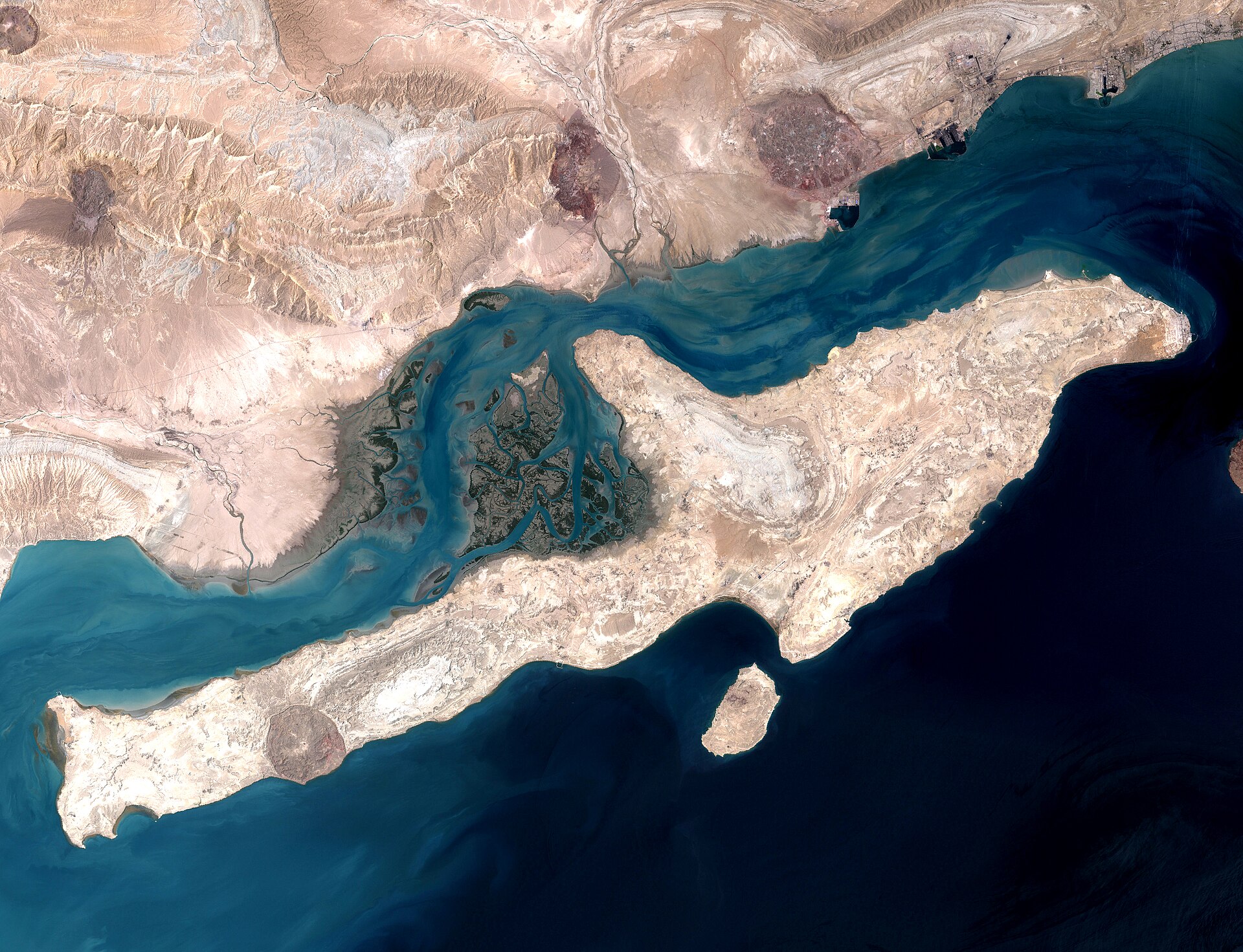
The physical evidence of Tehran’s control is visible in shipping data. At Kharg Island — Iran’s primary oil export terminal — 27 tankers including 18 VLCCs were holding in a queue as of May 21, up 93 percent from 14 on May 14. The queue represents managed throughput, not disorder: Iran processes transits selectively, controlling which volumes clear the Strait and at what price. The filtration rate is calibrated in Tehran, not requested from Riyadh.
For the June 7 JMMC, this presents a question no agenda item is designed to address. Saudi Arabia’s production level is no longer a function of wellhead capacity or quota allocation — it tracks however many tankers the IRGC permits through the Strait. Prince Abdulaziz bin Salman will present a quota of 10.291 million barrels per day at the session. The PGSA toll schedule — denominated in yuan and Bitcoin, at prices Tehran sets unilaterally — will not appear in the JMMC compliance report.
The Swing Producer Cannot Swing
Saudi Arabia built its OPEC authority on a specific capability: the ability to flood the market to punish quota cheaters, and to withdraw supply to raise prices. In 1985, King Fahd opened the taps to crash oil from $30 to $10, disciplining members who had been overproducing at Saudi expense. In 2014, the kingdom chose market share over price in a production surge that drove Brent below $30 by early 2016. Both episodes rested on the same premise — that Saudi Arabia could produce more than anyone else, faster, and sustain the pain longer.
The premise is intact in engineering terms. Aramco’s Maximum Sustainable Capacity of 12 million barrels per day has not been physically degraded; wells, gathering stations, and processing facilities remain functional outside of Khurais. But a swing producer that cannot deliver crude to its customers cannot discipline the cartel. Saudi Arabia entered the June quota cycle with more than 4 million barrels per day of capacity stranded east of the IRGC’s toll perimeter.
Historical OPEC compliance data illustrates what Saudi Arabia has lost. Between 1993 and 2005, total OPEC production exceeded quotas in every single quarter — average overproduction of 6.7 percent, according to data compiled by ScienceDirect. Saudi Arabia’s own overproduction was relatively restrained at 3.2 percent, a deliberate strategy of preserving headroom that could be deployed as either punishment or reward. That headroom required surplus capacity and open export routes — conditions Saudi Arabia last held simultaneously in February 2026.
The 2014 episode is now inverted. Then, Saudi Arabia chose to suppress price by increasing volume — a deliberate act of market management that cost revenue but preserved authority over the cartel. Now, Saudi Arabia would prefer to defend price but cannot produce the volume: Iran is the party suppressing supply, not through OPEC coordination, but through naval control of the export route. The June 7 JMMC will be the fourth consecutive session at which Saudi production and Saudi quota move in opposite directions.
Frequently Asked Questions
Has OPEC ever suspended a member’s quota due to external conflict?
Iraq’s quota was suspended after the 1990 Kuwait invasion and again after the 2003 US-led invasion; Libya’s was effectively suspended during the 2011 civil war. In each case, the affected state had lost sovereign control of its territory or its production infrastructure had been physically destroyed. Saudi Arabia in 2026 retains full control of its fields and refineries — it has lost only the export route, a distinction OPEC’s charter does not specifically address. The closest precedent is Iran’s own quota treatment during the 1980-88 tanker war, when OPEC maintained Iran’s nominal allocation while actual output fluctuated with the conflict — a template more instructive for Riyadh’s current position than the Iraq or Libya cases.
What is the Yanbu terminal bottleneck?
Saudi Arabia’s East-West pipeline was restored to 7 million barrels per day capacity on April 12 following Iranian missile damage. But the Yanbu Red Sea export terminal at the pipeline’s western terminus can physically handle approximately 5 million barrels per day — a constraint imposed by berth availability, storage tank capacity, and loading equipment rather than pipeline flow. Even if Aramco redirected all available crude westward, the kingdom’s Red Sea export ceiling remains 5 million barrels per day. Yanbu also serves domestic refineries on the western coast, further reducing the volume available for export loading.
How does the PGSA toll compare to pre-war Hormuz transit costs?
Before the war, transiting the Strait of Hormuz cost commercial tankers effectively nothing beyond standard fuel, crew, and insurance expenses — typically under $50,000 per VLCC passage — because the Strait is an international waterway under UNCLOS Article 38 transit passage provisions. The PGSA’s toll of up to $2 million per VLCC represents an effective surcharge of roughly $1 to $1.50 per barrel on a fully loaded 2-million-barrel supertanker. Payment must be rendered in yuan or Bitcoin; US dollars are not accepted, adding currency-conversion and sanctions-compliance risk for Western-flagged carriers that had previously transited at no regulatory cost.
What would happen to Brent if Hormuz reopened immediately?
Wood Mackenzie’s “quick peace” scenario projects Brent easing to approximately $80 per barrel by end-2026 and $65 through 2027 if the Strait reopens by June. But immediate reopening would not produce immediate price normalisation: more than 600 tankers have been displaced from their pre-war routing, repositioning requires a minimum of two to three weeks, and Asian refineries that rescheduled maintenance cycles around the disruption would need additional weeks to resume pre-war procurement patterns. Nasser placed the market normalisation horizon at 2027 under any reopening scenario; Al Jaber cited Q1 to Q2 2027 as the earliest plausible date.