RIYADH — The Phase 1 framework between Washington and Tehran, confirmed in detail by Axios on May 24, contains a clause that the White House has not featured in any public statement and that Saudi Arabia’s Ministry of Foreign Affairs has not acknowledged: Iran will clear mines from the Strait of Hormuz — the corridor through which Saudi Arabia ships roughly five million barrels of crude per day eastward — in exchange for sanctions waivers and unrestricted oil sales, under terms Riyadh was never invited to negotiate. By designating mine removal as an Iranian deliverable rather than demanding the surrender of an illegal military capability, Washington has accepted that Tehran controls the threat environment inside Saudi Arabia’s primary export route, a concession that no Saudi official shaped, no Saudi diplomat initialled, and no Saudi spokesperson has publicly contested.
The mine-clearance provision is not a footnote to the deal’s architecture — it is the operational centrepiece of Phase 1, and its implications for Saudi sovereignty over Hormuz transit expose the distance between a kingdom that lobbied for the deal and a kingdom that had any hand in writing it. The clause concedes more than it recovers, fails to address the institutional toll regime Iran has built around the strait, and reduces Saudi Arabia’s most consequential security interest — the safe passage of its crude exports — to a line item in a bilateral agreement between two governments, neither of which exports a single barrel through Hormuz.
Table of Contents
- What Does Phase 1 Actually Exchange?
- Mine Clearance as Concession, Not Surrender
- Can Iran Actually Clear Its Own Mines?
- Where Are America’s Minesweepers?
- Does the PGSA Survive Phase 1?
- Why Does Phase 2 Nuclear Deferral Compound Saudi Exposure?
- Five Rounds, Zero Saudi Input
- What Tehran Heard
- Frequently Asked Questions
What Does Phase 1 Actually Exchange?
The Axios report lays out Phase 1’s core exchange with unusual specificity: Iran clears mines it deployed in the Strait of Hormuz after the US-Israeli strikes of March 2026, and in return, Washington lifts the port blockade it imposed on Iranian facilities and issues sanctions waivers permitting Iran to sell oil freely on international markets. The principle, as Axios describes it, is “relief for performance” — Iran controls the pace at which sanctions are relaxed by controlling the pace at which it removes mines from the strait, a formulation that hands Tehran the operational clock while committing Washington to reciprocal economic concessions on a timeline neither party can fully predict, given that the Pentagon’s own classified Congressional briefing in April estimated full mine clearance could take six months.
Phase 2 opens a thirty-day Track 2 window for nuclear negotiations after Phase 1 is operational — meaning the economic and operational concessions (sanctions relief, oil sales, blockade removal) are exchanged before nuclear terms are locked down. A senior Iranian source told Axios that Iran has not agreed to hand over its stockpile of highly enriched uranium and that the nuclear issue “was not part of the preliminary agreement,” a characterisation that Foreign Minister Araghchi reinforced when he described the nuclear track as being in “deadlock” with HEU removal “postponed.” Al Jazeera reported on May 6 that the United States had concluded simultaneous resolution of the war, Hormuz, and the nuclear question “is not currently feasible” — a diplomatic formulation that accepted Iran’s core sequencing demand: war and strait first, enrichment later, and Saudi Arabia’s fiscal and export exposure absorbed in the gap between the two phases.
The sequencing determines who bears risk during that gap. Iran receives sanctions relief and resumed oil revenue during Phase 1; the United States receives mine clearance and a de-escalated strait; and Saudi Arabia — which was excluded from all five rounds of direct talks and from the Track 2 nuclear framework, according to Carnegie Endowment analysts Andrew Leber and Alexander Worby — receives the promise that its primary export corridor will eventually be restored to navigability, on a timeline set by Tehran’s mine-clearance schedule and Washington’s satisfaction with Iranian compliance. The kingdom is not a party to the exchange; it is a downstream beneficiary in theory and an absorbed externality in practice.
Mine Clearance as Concession, Not Surrender
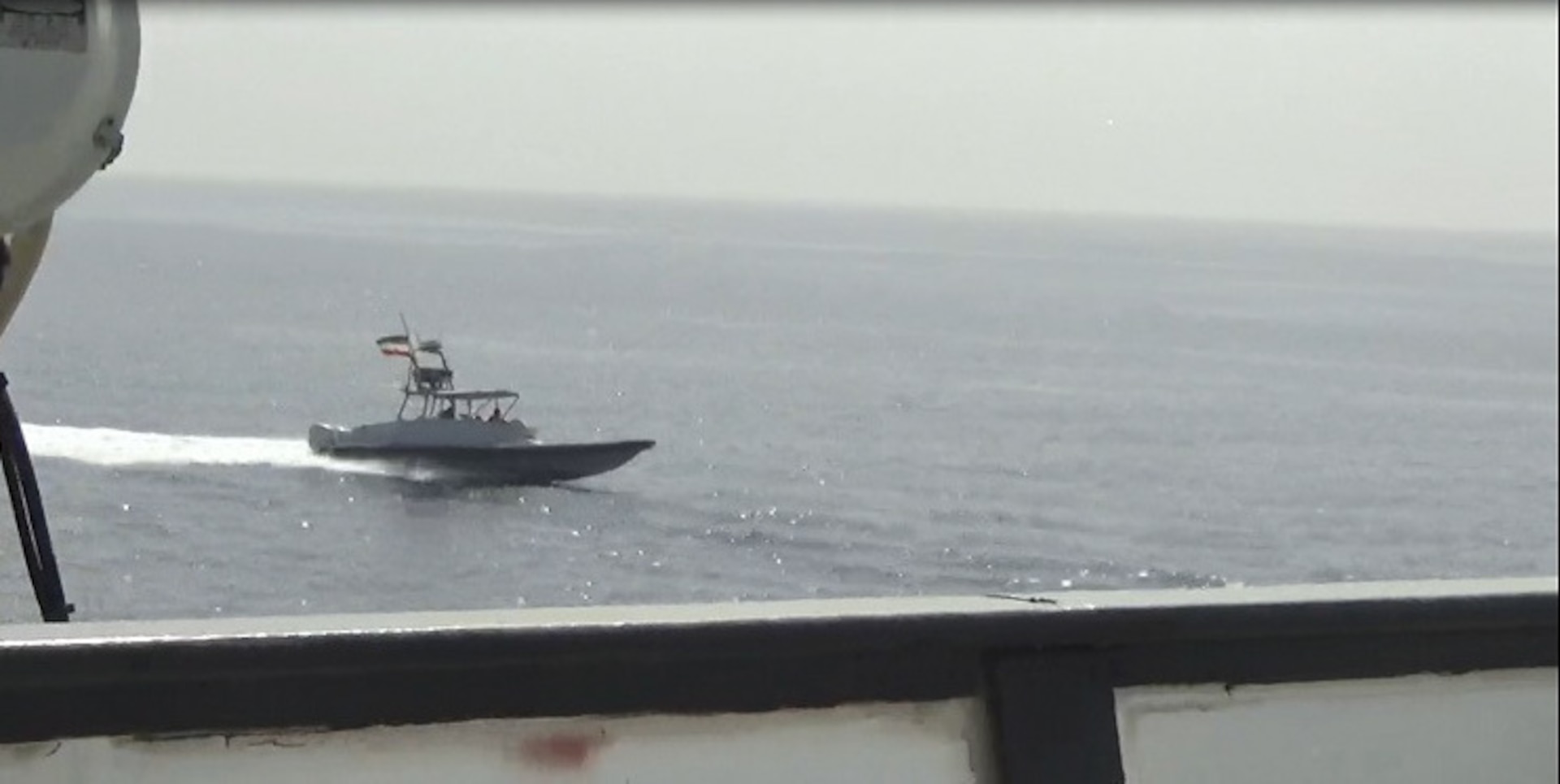
The distinction between demanding that Iran surrender an illegal capability and accepting mine clearance as a negotiated deliverable is not semantic — it is the difference between a legal framework in which Iran’s mine-laying constitutes an act of war under international maritime law and one in which it constitutes a bargaining chip to be exchanged for economic concessions. The Phase 1 framework adopts the second framing, and in doing so establishes a precedent that will outlast the deal itself: Iran laid between two thousand and six thousand mines in the strait using small IRGC boats and Ghadir-class submarines after the US-Israeli strikes of March 2026, according to the New York Times (via Euronews, April 11), and the deal asks Iran to remove them — not as a condition of ceasefire compliance, not as a precondition for talks, but as a performance obligation in exchange for sanctions relief.
The Middle East briefing 3,000+ readers start their day with.
One email. Every weekday morning. Free.
During the 1987-88 Tanker War, Iran deployed mines that struck the USS Samuel B. Roberts on April 14, 1988, tearing a fifteen-foot hole in the hull, and the reflagged Kuwaiti tanker USS Bridgeton in July 1987 during the first Operation Earnest Will convoy. But in that conflict, Iran made no formal jurisdictional claim over the strait — the mines were a tactic deployed without legal superstructure, and their removal was not negotiated but imposed by US naval operations. In 2026, the Persian Gulf Shipping Authority, a twelve-article domestic Iranian statute operational since May 18, transforms the ad hoc IRGC enforcement of the Hormuz blockade into a permanent administrative infrastructure with codified toll rates, permit systems, and exemptions for allied states — meaning the mine-clearance clause operates within a context where mines are not merely weapons but instruments of a proclaimed jurisdictional regime that Phase 1 does not address, does not reference, and does not condition relief upon dissolving.
“The Strait of Hormuz is a capability equivalent to an atomic bomb.”
— Mohammad Mokhber, Iran’s First Vice President, Al Jazeera, May 9, 2026
What Phase 1 asks Iran to do is partially demobilise a capability that Tehran’s most senior officials openly describe as a strategic deterrent — and the deal compensates Iran for doing so, establishing the precedent that mine-laying in an international shipping corridor produces not unconditional demand for removal but a bilateral negotiation in which removal is traded for economic concessions. Iran has no reason to interpret Phase 1 as setting a prohibition on future mine-laying when the framework treats past mine-laying as a service to be compensated rather than an offence to be punished.
Can Iran Actually Clear Its Own Mines?
The Phase 1 framework commits Iran to a task that Pentagon officials have privately assessed may be beyond Tehran’s capacity to perform within the deal’s own timeline, and possibly beyond it altogether. The classified Congressional briefing reported by the Washington Post on April 22 estimated that fully clearing Hormuz of mines — locating, identifying, neutralising, and verifying the removal of every device across one of the world’s most heavily trafficked waterways — could take six months, a timeline that would push elevated fuel prices through the November midterm elections and well beyond the sixty-day Phase 1 operational window that Axios describes.
The problem is not merely one of time but of knowledge. The New York Times reported on April 11 that the IRGC deployed mines chaotically using small boats, that Iran does not possess complete records of how many mines were laid or where, that some devices have drifted from their original positions in the strong Hormuz currents, and that neither Tehran nor Washington has a comprehensive picture of the threat field. Iran has virtually no modern minesweeping capability — its mine-laying capacity (IRGC fast boats, Ghadir-class submarines) vastly exceeds its mine-clearing capacity, as USNI Proceedings documented in April 2026 — which means the deliverable to which Iran has committed is one it may not be technically able to fulfil regardless of political will, a reality that US negotiators accepted when they wrote the clause.
CENTCOM did not wait for a framework to begin addressing the problem. On April 11, the command announced that USS Frank E. Petersen Jr. (DDG-121) and USS Michael Murphy (DDG-112) had begun preliminary mine clearance using unmanned underwater vehicles equipped with sonar, operating under combat conditions without a negotiated framework and without the dedicated minesweeping ships that the US Navy had deployed in every previous Hormuz crisis since 1987 — an ad hoc approach driven not by tactical preference but by the absence of purpose-built alternatives. The gap between what Phase 1 promises and what existing capabilities can deliver is measured not in diplomatic ambiguity but in months, hulls, and the coordinates of mines that no one recorded.
Where Are America’s Minesweepers?
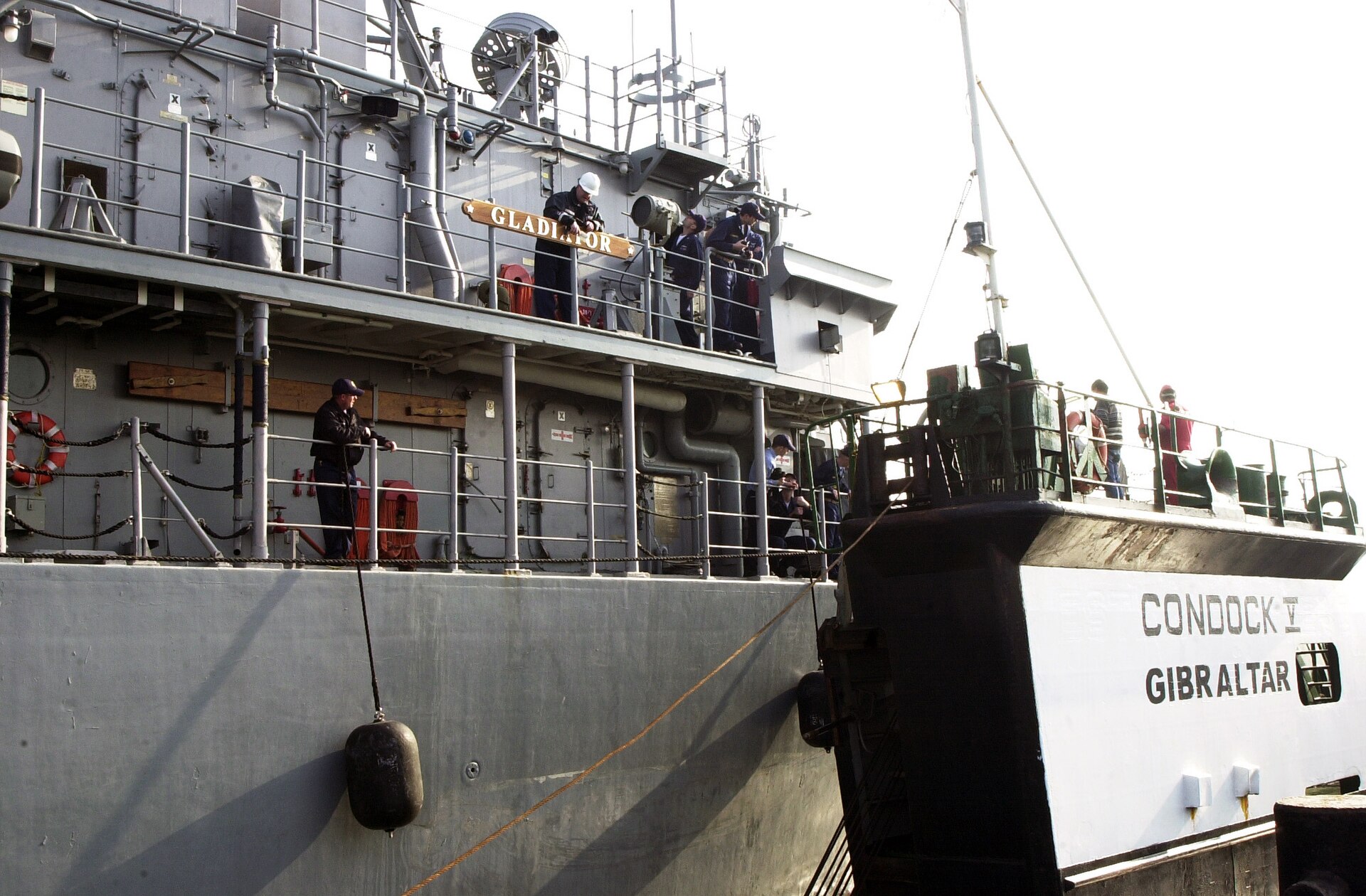
The United States decommissioned its last dedicated mine countermeasures ships from the Gulf nine months before the crisis began, a decision that shapes every element of Phase 1’s mine-clearance commitment. On September 25, 2025, the Navy retired its four remaining Avenger-class MCM ships from their forward-deployed base in Bahrain — USS Devastator (MCM-6), USS Sentry (MCM-3), USS Dextrous (MCM-13), and USS Gladiator (MCM-11), according to USNI News — removing the purpose-built wooden-hulled vessels designed to operate in the magnetic and acoustic environments that mines exploit and leaving the Fifth Fleet without dedicated MCM platforms in the theatre where three decades of operational history suggested they would be needed most.
The parallel to 1987 is difficult to dismiss as coincidence. When USS Bridgeton struck an Iranian mine during the first Operation Earnest Will convoy in July 1987, the US Navy had no mine countermeasures ships in the Gulf; the Avenger-class program was accelerated as a direct result of that operational failure, and the class served continuously in Bahrain for the next thirty-eight years. Four decades after the Bridgeton incident, the Navy decommissioned the ships that lesson produced, and USNI Proceedings published a piece in April 2026 titled “The Crisis in Mine Countermeasures” documenting that the Littoral Combat Ship modules intended to replace the Avengers face persistent operational problems that have not been resolved in testing. The UK Royal Navy has partially filled the gap: the Washington Post and Fortune reported on May 23-24 that several hundred British sailors aboard RFA Lyme Bay are staged for Hormuz mine clearance, awaiting a peace agreement before commencing operations, with British officials estimating the effort will require “months” and “as many ships as possible.”
None of this staging — the British naval deployment, the CENTCOM UUV operations, the multinational effort that will eventually be required to make Saudi Arabia’s export corridor navigable again — was negotiated with Saudi input, authorised under Saudi-consulted terms, or conditioned on Saudi participation in the planning or execution. The kingdom whose economy depends most directly on the corridor’s safety has no role in determining when or how that safety is restored, and the capability gap that makes restoration slow is a consequence of American force-structure decisions taken a year ago in which Saudi Arabia’s vulnerability was not the operative consideration.
| Factor | Detail | Source |
|---|---|---|
| Mines deployed | 2,000–6,000 (uncharted, drifting) | NYT / Euronews, Apr 11, 2026 |
| Pentagon clearance estimate | 6 months (full clearance) | Washington Post, Apr 22, 2026 |
| Phase 1 operational window | 60 days | Axios, May 24, 2026 |
| US MCM ships in Gulf | Zero (last 4 decommissioned Sep 25, 2025) | USNI News, Sep 25, 2025 |
| Iran MCM capability | Virtually none (no modern minesweepers) | Euronews / USNI Proceedings, Apr 2026 |
| UK staging | Several hundred sailors, RFA Lyme Bay | WaPo / Fortune, May 23-24, 2026 |
| CENTCOM ad hoc clearance | DDG-121, DDG-112 with UUVs, combat conditions | CENTCOM / DefenseScoop, Apr 11, 2026 |
| IRGC mine documentation | Coordinates not systematically recorded | NYT, Apr 11, 2026 |
Does the PGSA Survive Phase 1?
Phase 1 clears mines from the strait but leaves the institutional infrastructure that Iran erected around them entirely intact — the mine-clearance clause makes no reference to the Persian Gulf Shipping Authority, does not require the toll regime’s suspension, and does not condition sanctions relief on the PGSA’s dissolution or reform. The PGSA is not a wartime measure that dissolves with a ceasefire; it is a twelve-article domestic statute that passed committee on April 21, establishing a permanent administrative body with the authority to issue transit permits, collect tolls of up to two million dollars per VLCC payable in yuan, and exempt Russia, China, India, Iraq, and Pakistan from payment — a list of exemptions that mirrors the UN Security Council’s veto structure closely enough to guarantee that no multilateral body will challenge the regime’s legality. As of May 24, the Washington Post reported 240 ships queued for PGSA permits and 33 transits completed in the preceding twenty-four hours, an operational throughput that represents roughly two per cent of pre-crisis traffic but that, through its very functioning, establishes Iranian administrative control as the default condition of strait passage.
Iran’s Fars news agency stated on May 23 that Hormuz will remain “exclusively under the authority of Iran,” including shipping routes, passage timings, and permits — a characterisation that contradicts the Trump administration’s public framing of the deal as reopening the strait but is entirely consistent with the Phase 1 text as Axios reported it. Senator Roger Wicker called the arrangement a potential “disaster” in which “everything accomplished by Operation Epic Fury would be for naught,” while Mike Pompeo was blunter: “Open the damned strait. Deny Iran access to money.” Senator Thom Tillis placed himself close to Pompeo’s position, telling The Hill on May 24 that “I’m not too far away from where Pompeo is, to be honest with you.”
The distinction between a mined strait and a tolled strait matters less to Saudi Arabia than the continuity of the underlying principle: that Iran determines who passes and under what conditions. Mines enforce that principle through violence; the PGSA enforces it through bureaucracy and fee collection, with hundreds of ships already in the queue and exemptions structured so that the three states most capable of challenging the system — Russia, China, and India — have no economic incentive to do so. Phase 1 addresses the mines and leaves the institution that made mining a jurisdictional act rather than a military one untouched, unmentioned, and fully operational.
Why Does Phase 2 Nuclear Deferral Compound Saudi Exposure?
The nuclear deferral transfers risk from the party that needs urgent resolution — Saudi Arabia, absorbing an estimated seven hundred million dollars per day in lost export revenue according to prior analysis — to the party that benefits from extended timelines: Iran, which will have sanctions relief flowing and oil revenue restored before Track 2 nuclear talks begin. Araghchi has made clear that Iran treats Phase 2 not as the deal’s culmination but as a separate, lower-priority process to be engaged from a position of restored economic strength rather than sanctions-induced weakness.
The 2015 JCPOA took 103 days from the April 2 Lausanne framework to the July 14 final agreement, and its implementation was simultaneous: on Implementation Day, January 16, 2016, Iran’s nuclear obligations and the lifting of sanctions took effect together, ensuring that neither party received its concessions before the other. The 2026 structure is categorically different: Phase 1 exchanges economic and operational concessions before Phase 2 nuclear terms are negotiated, let alone agreed. Iran receives the deal’s economic benefits — sanctions waivers, unrestricted oil sales, port-blockade removal — while retaining its entire nuclear programme intact (440 kilograms of uranium enriched to 60 per cent, per IAEA-confirmed stockpile data), with enrichment deferring to a Phase 2 track that Tehran has already characterised as deadlocked. For Saudi Arabia, which Carnegie confirmed has “no seat at the table” in either phase, the deferral means the kingdom absorbs the full fiscal cost of the crisis — a first-quarter deficit of $33.5 billion, consuming 76 per cent of the full-year target in three months — while waiting for a nuclear outcome it cannot influence in a negotiation it cannot attend.
Ghalibaf reinforced the strategic logic of delay when he told Eurasia Review on May 23 that “our armed forces have rebuilt themselves during the ceasefire period” — treating the pause not as a step toward resolution but as a reconstitution window that Phase 2’s thirty-day nuclear track extends further into the summer. Netanyahu’s security cabinet responded by demanding that any final agreement include “dismantling Iran’s nuclear enrichment sites and removing its enriched nuclear material,” a maximalist position that an Israeli source told Axios left Netanyahu’s “hair on fire” — and that Phase 1’s sequencing makes functionally impossible to achieve, because the economic pressure that might have compelled Iranian nuclear concessions will have been spent before the nuclear negotiation begins.
Five Rounds, Zero Saudi Input
Saudi Arabia was excluded from all five rounds of US-Iran direct negotiations — from the initial Islamabad session through the Omani-mediated channel that produced the Rome Round 5 on May 23 — and from the Track 2 nuclear framework that will govern Phase 2, according to Carnegie’s April 2026 assessment by Leber and Worby. The kingdom’s Ministry of Foreign Affairs has issued no statement on the Axios deal terms, the mine-clearance clause, the PGSA’s survival under Phase 1, or the nuclear deferral to Phase 2. The silence is partly imposed by the Hajj calendar — Arafah Day falls on May 26, and Saudi Arabia cannot politicise the pilgrimage with a foreign-policy statement that would dominate coverage during Islam’s most sacred rites — but the liturgical constraint does not explain why no Saudi position was communicated privately to Washington before the framework was confirmed, or why Riyadh’s input is absent from every reported draft of the three separate MOU documents in circulation.
The kingdom is not passive; it is active but without purchase on the deal’s substance. Crown Prince Mohammed bin Salman conducted a multi-leader call sequence in the days before the framework’s confirmation, lobbying for the deal’s completion while having no ability to shape its terms — a posture that Carnegie described as being unable to determine either outcome, whether the deal is signed or collapses. Foreign Minister Bin Farhan publicly endorsed Trump’s Iran approach on May 20, five days after Trump softened his HEU demands in the Hannity interview and thirteen days after the PSAB access crisis that saw forty-three US aircraft grounded at Prince Sultan Air Base was quietly resolved under terms that remain undisclosed in all public reporting. The sequence — access blocked, access restored, public endorsement — suggests a kingdom that is managing its relationship with Washington rather than managing the deal itself.
What makes the exclusion structurally damaging rather than merely diplomatically awkward is the mine-clearance clause’s direct implications for Saudi export infrastructure. The kingdom’s eastward capacity runs through Hormuz; the Yanbu terminals on the Red Sea coast handle approximately five million barrels per day through the East-West Pipeline, but that represents a ceiling against twelve-million-barrel-per-day nameplate production capacity, not surge headroom that could compensate for a constrained strait. Every day that Hormuz remains operationally limited — by mines, by PGSA tolls, or by the pace of Iran’s mine-clearance performance — costs Saudi Arabia revenue on a timeline set by a bilateral deal between Washington and Tehran that treats the kingdom’s fiscal emergency as a background condition rather than a negotiating input.
What Tehran Heard
The deal’s architecture communicates a message to Tehran that no public statement from Washington can retract: the threat environment inside the Strait of Hormuz is an Iranian asset to be managed through bilateral negotiation with the United States, not an illegal condition to be reversed unconditionally. The deterrent that Mokhber compared to a nuclear weapon has been met not with a demand for disarmament but with a compensation package — sanctions relief, oil revenue, blockade removal — that validates the strategic logic of mine deployment and treats the capability’s partial demobilisation as a performance to be rewarded rather than an obligation to be imposed. The distinction between a capability surrendered because it is illegal and one exchanged for economic concessions is the distinction between a precedent that deters future escalation and one that prices it.
Iran has been explicit about what Phase 1 does not change. Fars news agency described a post-deal status quo in which the PGSA continues processing permits, the toll architecture remains operational for non-exempt vessels, and the institutional framework for reasserting control stays available whenever Tehran judges the strategic calculus warrants it. Ghalibaf’s claim that the ceasefire was used to reconstitute Iranian armed forces treats Phase 2’s thirty-day nuclear window not as a bridge toward resolution but as an extension of that advantage — and the mine-clearance clause’s six-month operational reality against a sixty-day framework window stretches it further into the autumn.
The kingdom is running a deficit that has consumed three-quarters of its full-year budget target in a single quarter, against an economy whose revenue depends on a corridor that Phase 1 treats as a US-Iran bilateral management problem. When Hajj concludes and the MOFA’s enforced silence lifts, Riyadh will face not a choice about whether to endorse the deal — that signal has already been sent — but about how to protect sovereignty over a corridor whose threat environment, clearance timeline, toll architecture, and governance framework were all negotiated in rooms where no Saudi official sat.
Frequently Asked Questions
What specific mine types did Iran deploy in the Strait of Hormuz?
Iran’s naval mine inventory includes the EM-52 rocket-propelled rising mine — one of the most difficult devices to detect and neutralise because it rests on the seabed and launches upward when triggered by a passing vessel’s acoustic or magnetic signature — and the domestically produced SADAF-02 bottom-influence mine, which Iran publicly displayed during military exercises as recently as 2024. The IRGC also deployed older moored contact mines, cheaper to produce but equally lethal when their positions are uncharted, dropped from small fast boats in patterns that defied systematic grid placement. The variety of mine types complicates clearance because each requires different detection methods: acoustic sweeps for influence mines, visual identification for moored contact mines, and magnetometer passes for bottom-influence devices — meaning no single-pass clearance approach will locate all threats, and multiple sweeps with different sensor packages are required for each sector of the strait.
Could Saudi Arabia challenge the PGSA through international maritime law?
UNCLOS Part XV provides for compulsory dispute settlement through the International Tribunal for the Law of the Sea in Hamburg, and Saudi Arabia could theoretically file a case arguing that the PGSA violates the right of transit passage guaranteed under Articles 38-44. However, Iran ratified UNCLOS in 1998 with reservations that legal scholars at Chatham House argue could be invoked to contest ITLOS jurisdiction over strait-governance disputes, and even a successful filing would face procedural timelines measured in years rather than months — the South China Sea arbitration between the Philippines and China took three years and seven months from filing to ruling, during which China continued its maritime activities unimpeded by the proceedings. Filing a legal challenge while simultaneously lobbying for Phase 1’s completion would create a diplomatic contradiction that Riyadh shows no sign of accepting, and the ITLOS route offers no interim relief mechanism that could suspend the PGSA’s operations during adjudication.
What happens if Iran cannot clear all mines within Phase 1’s sixty-day window?
The Axios framework describes Phase 1 as operating on a “relief for performance” basis, meaning sanctions waivers are tied to Iranian mine-clearance progress, but no reporting has detailed what constitutes sufficient performance — whether Iran must clear all mines, a specified percentage of surveyed sectors, or merely demonstrate sustained good-faith effort using whatever capabilities it possesses. The ambiguity is consequential because the Pentagon’s six-month estimate makes completion within sixty days physically implausible, creating a scenario in which partial clearance could trigger proportional sanctions relief while leaving residual mines in active shipping lanes that Saudi, Qatari, and Kuwaiti tankers must transit. Humanitarian demining experience suggests the problem compounds rather than resolves over time: the Ottawa Treaty’s ten-year clearance deadlines have been extended repeatedly for countries like Cambodia and Afghanistan where the scale of contamination exceeded initial assessments — a dynamic that the IRGC’s undocumented, current-affected deployment patterns make highly likely to recur in the Hormuz shipping channel.
Does Phase 1 affect the OPEC+ June 7 quota decision?
The OPEC+ Joint Ministerial Monitoring Committee meets on June 7, thirteen days after the Phase 1 framework was confirmed, and faces a structural problem that the deal complicates rather than resolves. Saudi Arabia’s approved production quota stands at 10.291 million barrels per day, but actual output runs closer to 7.76 mbpd because Hormuz constraints make the remaining 2.5 mbpd effectively undeliverable through eastern terminals. If Phase 1 creates market expectations of eventual Hormuz reopening, other OPEC+ members may press for quota increases that Saudi Arabia still cannot physically pump through a mined and tolled corridor, generating downward price pressure from anticipated supply additions without corresponding revenue for the kingdom. Meanwhile, Iran’s sanctions waivers under Phase 1 would bring an estimated 1.5-2 mbpd of currently suppressed Iranian production capacity back to international markets, competing directly with Saudi crude for Asian refinery contracts at a time when Riyadh cannot respond by increasing its own eastward-bound output.