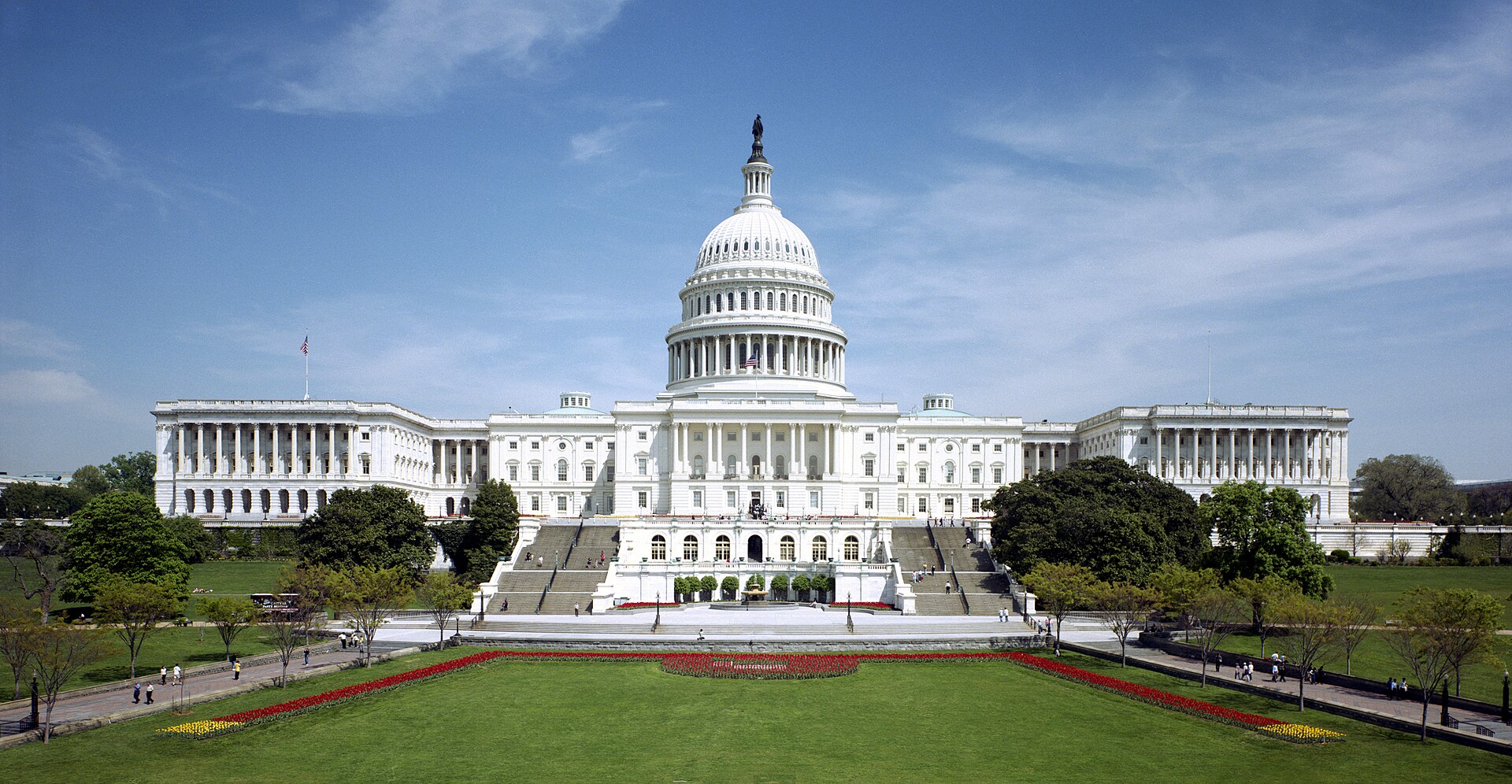

WASHINGTON — President Donald Trump told reporters at the G7 summit in Évian, France, on June 16 that he will send the Iran memorandum of understanding to Congress for review — a pledge that introduces legislative uncertainty three days before the June 19 Geneva signing ceremony and the start of sixty-day Phase 2 nuclear negotiations.
“I never thought about sending, never even thought about it, but I will. I will send it to Congress,” Trump said, according to The Hill.
The announcement caught Capitol Hill unprepared. Senate Majority Leader John Thune, a South Dakota Republican, told The Hill he had not seen the MOU text. “I don’t think even the people who follow this stuff closely up here know much about it,” Thune said. The document Trump now proposes to submit is, by CNBC’s account, “about a page and a half” long — a broad framework that Trump and Vice President JD Vance digitally co-signed on June 15, with Iran’s Parliament Speaker Mohammad Bagher Ghalibaf signing for Tehran.
Whether Congress can do anything with the document depends on a question that neither party has settled: does the MOU qualify as a nuclear agreement under the Iran Nuclear Agreement Review Act of 2015, or is it a ceasefire framework that falls outside the statute’s scope? The answer determines whether Trump’s promise carries legal weight or procedural courtesy — and whether Iran, which already canceled one signing date citing American “instability,” gains fresh evidence that no US commitment outlasts domestic politics.
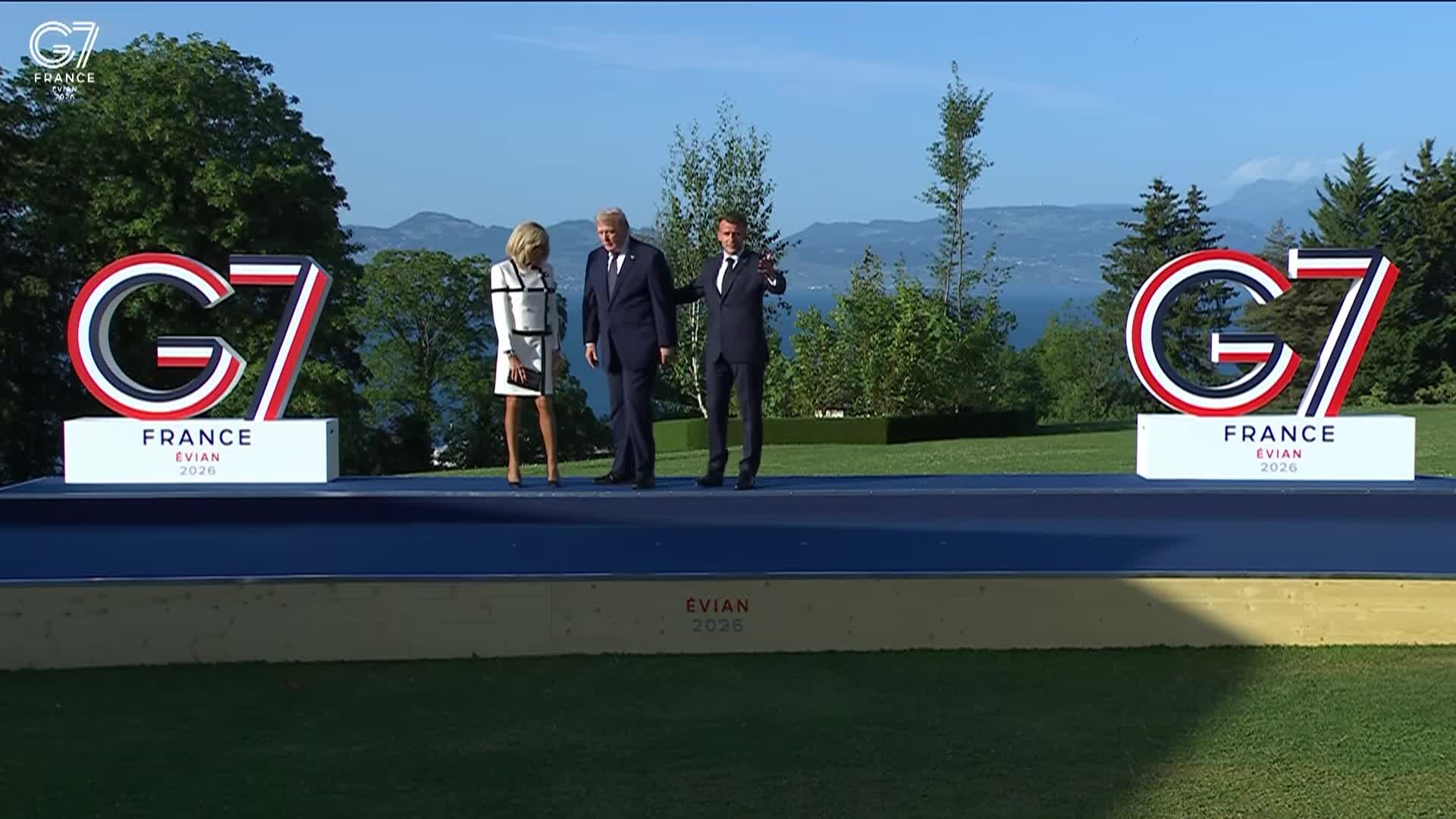
Table of Contents
What INARA Actually Requires
The Iran Nuclear Agreement Review Act, signed into law on May 22, 2015, establishes a process for congressional review of US agreements relating to Iran’s nuclear program. The president must transmit the full text within five calendar days of reaching such an agreement. A thirty-day review window follows, during which sanctions relief cannot take effect. Congress may pass a joint resolution of disapproval — but the president can veto that resolution, and overriding the veto requires sixty-seven Senate votes.
That threshold has proved insurmountable. When the Obama administration submitted the Joint Comprehensive Plan of Action under INARA in 2015, Republicans held the Senate majority but could not assemble the votes to override. The Obama State Department had formally classified the JCPOA as “not a treaty or executive agreement, not a signed document” — a “politically negotiated agreement.” It went to Congress under INARA anyway. The review period expired. The deal took effect.
The Middle East briefing 3,000+ readers start their day with.
One email. Every weekday morning. Free.
Trump withdrew from the JCPOA unilaterally in May 2018. No congressional vote was required, because no congressional vote had ratified it.
Sen. Tom Cotton of Arkansas, a Republican, stated what the precedent makes plain. “If they want the most durable and lasting kind of deal, then they want to bring it to the Senate and have it voted on as a treaty,” Cotton told Fox News. “An agreement between the American president and a foreign leader can be reversed by future presidents, which President Trump rightly did seven years ago today.”
Cotton is not wrong about durability. Article II, Section 2 of the Constitution requires two-thirds of senators present — effectively sixty-seven votes — for treaty ratification. No Iran agreement has come close to that margin. Calling for a treaty vote is, in practice, calling for no deal.
Does the MOU Count as a Nuclear Agreement?
The MOU’s first phase contains no nuclear provisions. All enrichment limits, verification arrangements, and the disposition of Iran’s uranium stockpile are deferred to Phase 2 — the negotiations that begin at the June 19 Geneva ceremony and run sixty days.
This creates a classification problem INARA’s drafters did not anticipate.
Sen. Tim Kaine of Virginia, a Democrat who helped write the statute, told Jewish Insider that whether INARA applies “is a question of what it includes.” If the MOU covers only ports, straits, and a ceasefire, it may not require congressional submission. If it contains nuclear elements, Kaine said, “it might have to come to Congress.”
Some Republican senators have adopted the narrower reading, telling Jewish Insider that the MOU does not need submission under INARA because it is a ceasefire framework rather than a nuclear agreement. The Congressional Research Service took a different view. CRS Insight IN12678, published this year, confirmed that INARA applies to US agreements “relating to Iran’s nuclear program.”
The distance between “containing nuclear elements” and “relating to Iran’s nuclear program” is where the MOU now sits. Phase 1 includes no enrichment terms. But the framework creates the architecture for nuclear talks that begin in days — the timeline, the negotiating structure, the enforcement mechanism. Whether that makes it a nuclear agreement, or an agreement about someday having a nuclear agreement, is a question no one in Washington has authoritatively answered.
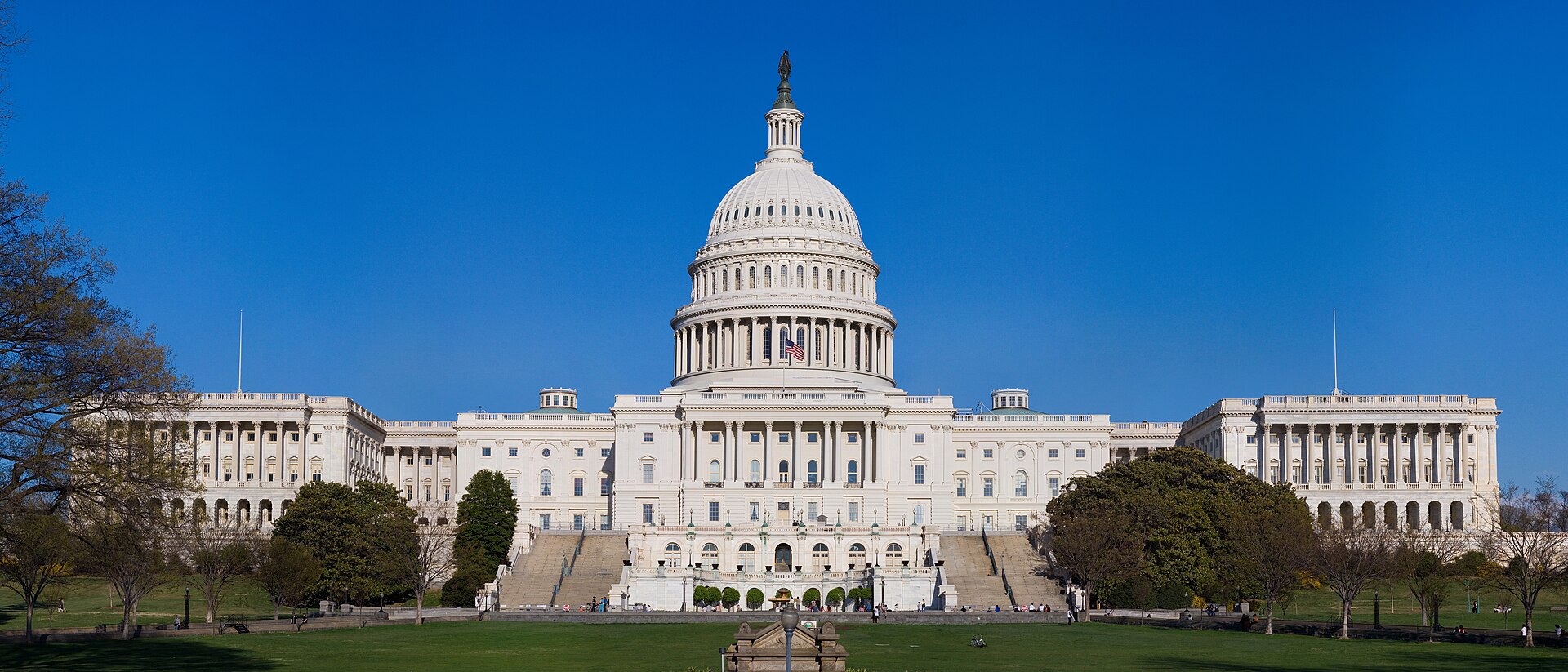
The Senate Has Not Read the Document
Thune’s admission that even close followers of the issue “know” little about the MOU was notable for its candor. Pressed on his primary concern, the majority leader said: “My understanding of what it entails — again, not having seen anything — I think the issues are going to be compliance.”
He identified compliance as his central concern about a document whose compliance provisions he has not read.
Senate Minority Leader Chuck Schumer responded to Trump’s Évian statement by demanding that top congressional leaders be briefed and that the full Congress receive its own briefings. CNBC reported Trump had “signaled he could send details to Congress” — hedged language that left room for the commitment to narrow. The Hill’s reporting, based on Trump’s direct quote, was less ambiguous.
Sen. Lindsey Graham of South Carolina, a Republican usually aligned with Trump on Iran, offered measured skepticism. “Somewhat concerned that Iran’s view of the agreement seems different than what the American negotiating team is claiming,” Graham told The Hill. He added: “Time will tell.” Trump, asked about Graham’s concerns, told reporters Graham was “fine.”
The pattern across the Senate is consistent. Senators from both parties want to see the document. Several want briefings. A few want a formal vote. None of them can stop the deal without sixty-seven votes they do not have.
The UNSC Route That Bypasses the Senate
The MOU contains its own answer to the ratification question. The document specifies that the final agreement produced by Phase 2 negotiations will be approved through a binding UN Security Council resolution — not a vote of the US Senate.
This is the same approach the Obama administration used for the JCPOA. UN Security Council Resolution 2231, adopted in July 2015, gave the nuclear deal the force of international law, imposed obligations on all UN member states, and operated entirely outside the Senate’s treaty power. Trump’s 2018 withdrawal demonstrated that the United States could stop complying regardless, but the resolution itself remained in effect.
The UNSC route serves two functions. It gives the agreement international legal standing that a bilateral US-Iran document would lack. And it bypasses Article II, Section 2 of the Constitution — the clause granting the Senate authority to advise and consent on treaties. A Security Council resolution is not a treaty. It is a multilateral instrument adopted by an international body in which the United States holds one vote and a veto.
Cotton and other Republican hawks grasp what this means. Their demand for treaty ratification is a demand to change the legal vehicle through which the agreement takes effect. The MOU does not route through the Senate. It routes through New York.
Written With Active Distrust
Iran’s Deputy Foreign Minister Kazem Gharibabadi told Tasnim News Agency that the MOU “does not mean trusting the enemy; it has been written with active distrust.” Foreign Minister Abbas Araghchi, speaking to Tasnim in remarks carried on NBC’s live blog, said: “We have seen agreements go unimplemented, and we have seen agreements torn up.”
Both officials were referring to the JCPOA. Iran complied with the deal’s nuclear provisions for three years — certified quarterly by the International Atomic Energy Agency — before Trump withdrew. The experience left Tehran with a specific institutional memory: American domestic politics can nullify any agreement regardless of its international legal standing.
Trump’s Évian promise to send the MOU to Congress sharpens that memory. Iran watched the G7 endorse the MOU days before the scheduled Geneva ceremony. Now it watches the same president invite a legislative body that has not read the document into the review process. Iran canceled the original June 14 signing through spokesman Esmail Baghaei, who cited American “hesitation” and “instability.” The congressional reaction since Évian adds weight to that assessment.
Vance, for his part, projected confidence. The United States has “all the cards,” the vice president told CNBC on June 15, and there are “a lot of details to figure out.” The details include Iran’s 440.9 kilograms of uranium enriched to sixty percent — enough for multiple weapons, according to nonproliferation analysts — and an IAEA inspection regime locked out of key Iranian facilities for over 107 days. Phase 2 gives negotiators sixty days to resolve questions that Trump told the G7 were not worth bothering about.
What Does Congressional Review Mean for Riyadh?
Saudi Arabia holds no seat at any of the negotiation tracks that produced the MOU. It has no role in the Geneva ceremony. It has no vote in the US Congress and no veto at the UN Security Council. What it has is exposure.
The Persian Gulf Security Agreement embedded in the MOU framework imposes a “service fee” of approximately one dollar per barrel on vessels transiting the Strait of Hormuz. At Saudi Arabia’s pre-war export volume of 5.5 million barrels per day, that amounts to roughly two billion dollars per year — paid to Iran for passage through a waterway that remains mined and requires forty to fifty days of clearance before the first commercial cargo can transit.
The kingdom’s fiscal position leaves no margin for the fee or the delay. Saudi Arabia posted a first-quarter deficit of 125.7 billion Saudi riyals — $33.5 billion — the largest quarterly shortfall on record. Brent crude trades near $79 per barrel against a fiscal breakeven estimated between $108 and $111. Aramco cut its July official selling price for Asian buyers by six dollars per barrel, the steepest reduction since 2022, for cargoes that cannot load because the strait they must transit remains closed.
For Riyadh, the congressional review question is not abstract. A deal that collapses in Washington leaves the Hormuz closure in place without a diplomatic framework to address it. A deal that survives — as INARA’s veto arithmetic makes likely — saddles the kingdom with a multi-billion-dollar annual fee negotiated without Saudi input. The kingdom’s exclusion from the allied demining coalition Trump blocked at Évian means it cannot accelerate the operational timeline either. No outcome currently on the table was shaped by Saudi Arabia, and every outcome carries a Saudi cost.
Frequently Asked Questions
What is the Iran Nuclear Agreement Review Act?
INARA (Public Law 114-7) was signed on May 22, 2015, weeks before the JCPOA was finalized in Vienna. It requires the president to transmit the complete text of any agreement relating to Iran’s nuclear program to Congress within five calendar days. During the subsequent thirty-day review period, all Iran-related sanctions relief is frozen — a provision that would delay any financial unfreezing Iran expects under the MOU, including the $24 billion in released assets that Foreign Minister Araghchi has publicly claimed. Congress can pass a resolution of disapproval, but the president retains veto power. Overriding that veto requires a two-thirds supermajority in both chambers, a threshold that has never been reached on any Iran-related measure in the statute’s eleven-year history.
Can Congress realistically block the MOU?
The arithmetic makes blocking effectively impossible. When Republicans controlled fifty-four Senate seats during the 2015 JCPOA review, they could not reach even the sixty-vote cloture threshold to advance a disapproval resolution to a floor vote — let alone the sixty-seven needed to override President Obama’s veto. The current Senate has fifty-three Republicans. Even unanimous Republican opposition would require fourteen Democratic senators to cross party lines on an override vote. No analyst or senator quoted in current reporting has described that scenario as plausible. Trump’s own language may have been softer than the headlines suggest: CNBC reported he “signaled he could send details to Congress,” hedging that contrasts with The Hill’s more definitive account of his direct quote.
What must Phase 2 negotiations resolve before August?
Phase 2 begins at the June 19 Geneva signing ceremony and runs approximately sixty days, placing the deadline near August 18, 2026. Negotiators must address Iran’s 440.9 kilograms of uranium enriched to sixty percent purity — documented in IAEA report GOV/2026/8 — along with long-term enrichment limits and the restoration of IAEA verification access. International inspectors have been locked out of key Iranian nuclear facilities for at least 107 days as of June 16, according to IAEA reporting and analysis by the Institute for Science and International Security. If Phase 2 produces an agreement with explicit nuclear provisions, INARA’s applicability becomes difficult to dispute regardless of how the Phase 1 framework was classified.
Why does the MOU route through the UN Security Council instead of the Senate?
A binding UN Security Council resolution carries international legal authority over all 193 member states and does not require Senate advice and consent under the US Constitution. The JCPOA used this mechanism through Resolution 2231 in 2015, giving the nuclear deal a legal foundation that existed independently of American domestic politics — even after Trump withdrew in 2018, the resolution remained in effect for other signatories. The UNSC route also introduces a variable absent from the Senate process: Russia and China, as permanent members, hold veto power over any new Iran-related resolution, giving Moscow and Beijing direct influence over the deal’s international legal standing that the US Senate does not possess.