
RIYADH — Saudi aviation authorities issued a coordinated NOTAM sequence on the evening of July 13, 2026, closing four southern civilian airports — Abha International, Jizan’s King Abdullah bin Abdulaziz, Najran, and Sharurah — after a Houthi barrage of six ballistic missiles and drones targeted Abha and King Khalid Air Base at Khamis Mushait, with the closures extended through at least 1500Z on July 16, according to bulletins tracked by OPSGROUP.
The four NOTAMs carried identical validity windows of 17:10 to 17:14 UTC on July 13 — a four-minute administrative signature confirming a single command decision rather than a sequential response to unfolding threats. The coordinated shutdown removes the entire southern civilian air network from service at a moment when Riyadh’s PAC-3 interceptor inventory sits at roughly 400 rounds from a pre-war stock of 2,800, an 86 percent depletion the kingdom has not publicly reconciled with its coverage obligations at Abqaiq, where 7 million barrels per day of processing capacity underwrites approximately 7 percent of global oil supply.
Table of Contents
- Four NOTAMs, One Decision
- The Sanaa Runway Strike That Triggered the Barrage
- Can Riyadh Cover the South and Abqaiq at the Same Time?
- Why Sharurah’s Inclusion Changes the Threat Map
- The Coalition Response That Did Not Happen
- Airlines and Passengers Absorb the Cost
- The 2022 Truce Terminated Without a Signature
- Background: Abha Under Fire, 2019 to 2026
- Frequently Asked Questions
Four NOTAMs, One Decision
OPSGROUP’s July 2026 flight-safety bulletin logged the closure sequence with unusual precision: OEAB Abha International, OEGN Jizan (King Abdullah bin Abdulaziz Airport), OENG Najran, and OESH Sharurah were all closed under NOTAMs stamped between 17:10 and 17:14 UTC on July 13, a four-minute administrative window that industry observers read as evidence the decision was made at a single command level and pushed to the field simultaneously rather than airport by airport as threats developed. The four fields span roughly 500 kilometres west-to-east across Saudi Arabia’s southern border, which in practical terms means the entire southern civilian aviation corridor was pulled offline in a single stroke.
The closures were later extended through at least 1500Z on July 16, according to OPSGROUP’s rolling advisory, meaning that by the third day of the disruption the kingdom’s aviation regulator had not returned any of the four fields to service — an unusually long uniform closure for a region that has absorbed sporadic Houthi fire for the better part of a decade. The extension carried no public reasoning from GACA, and Saudi state media confined itself to interception claims and general assurances about the “security situation.”
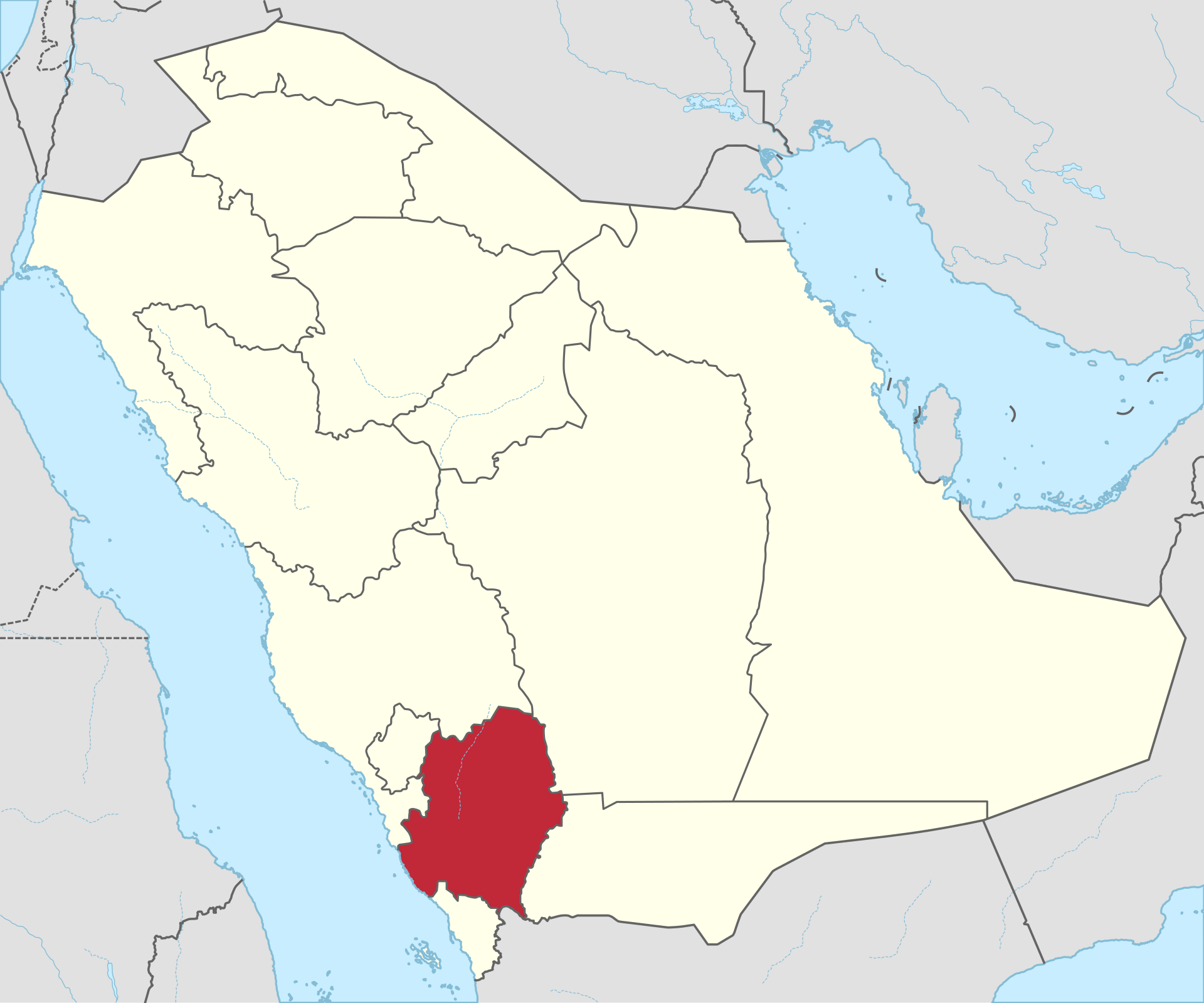
What the simultaneity indicates, in the reading offered by Safe Airspace and the OPSGROUP advisory, is that ESCAT — the Emergency Security Control of Air Traffic protocol governing the southern Jeddah FIR — was either activated or held in a posture that assumes activation at any moment, a condition applicable whenever Saudi defences are actively repelling Yemen-origin attacks. That protocol allows the regulator to blank the entire southern airspace on short notice, and the July 13 window suggests it was exercised in something close to its maximum configuration.
The Sanaa Runway Strike That Triggered the Barrage
The immediate trigger was a Saudi strike on the runway of Sanaa International Airport earlier on July 13, an operation the Foundation for Defense of Democracies documented as an attempt to block a Mahan Air flight — the Iranian carrier under longstanding US sanction — that was returning a Houthi delegation from Tehran after the group had attended Ali Khamenei Sr.’s state funeral. The delegation, according to FDD’s July 14–15 reporting, included an intelligence official, and the aircraft was ultimately diverted to another Houthi-controlled field after the runway was damaged.
The Middle East briefing 3,000+ readers start their day with.
One email. Every weekday morning. Free.
The Houthi response arrived within hours in the form of six ballistic missiles and drones aimed at Abha International Airport and King Khalid Air Base at Khamis Mushait, the Saudi Air Force’s primary southern hub, according to reporting from The Hormuz Letter and Pakistan Observer. Unverified footage circulating on July 13 showed smoke rising from King Khalid Air Base, though Saudi authorities did not confirm damage and the coalition spokesperson limited public comment to a claim that ballistic missiles “launched by the terrorist Houthi militia toward the southern region” had been intercepted, per Saudi Gazette on July 14.
“Their willingness to attack Sanaa Airport to prevent flights from arriving or departing gives Yemen the right to strike their airports and to impose on them a siege just as they have done to us.”
— Unnamed Houthi political bureau member, Al Jazeera, July 14, 2026
That statement matters more than the routine warnings issued by Yahya Saree, the Houthi military spokesperson, because it frames the airport closures not as collateral damage from a missile exchange but as an intended policy outcome — a mirrored siege designed to impose on Saudi commercial aviation the same denial regime the coalition has imposed on Sanaa. Saree himself was blunter in operational terms, warning airlines to treat his group’s threats “seriously until the blockade on Sanaa International Airport is lifted,” in remarks carried by the Washington Post on July 13.
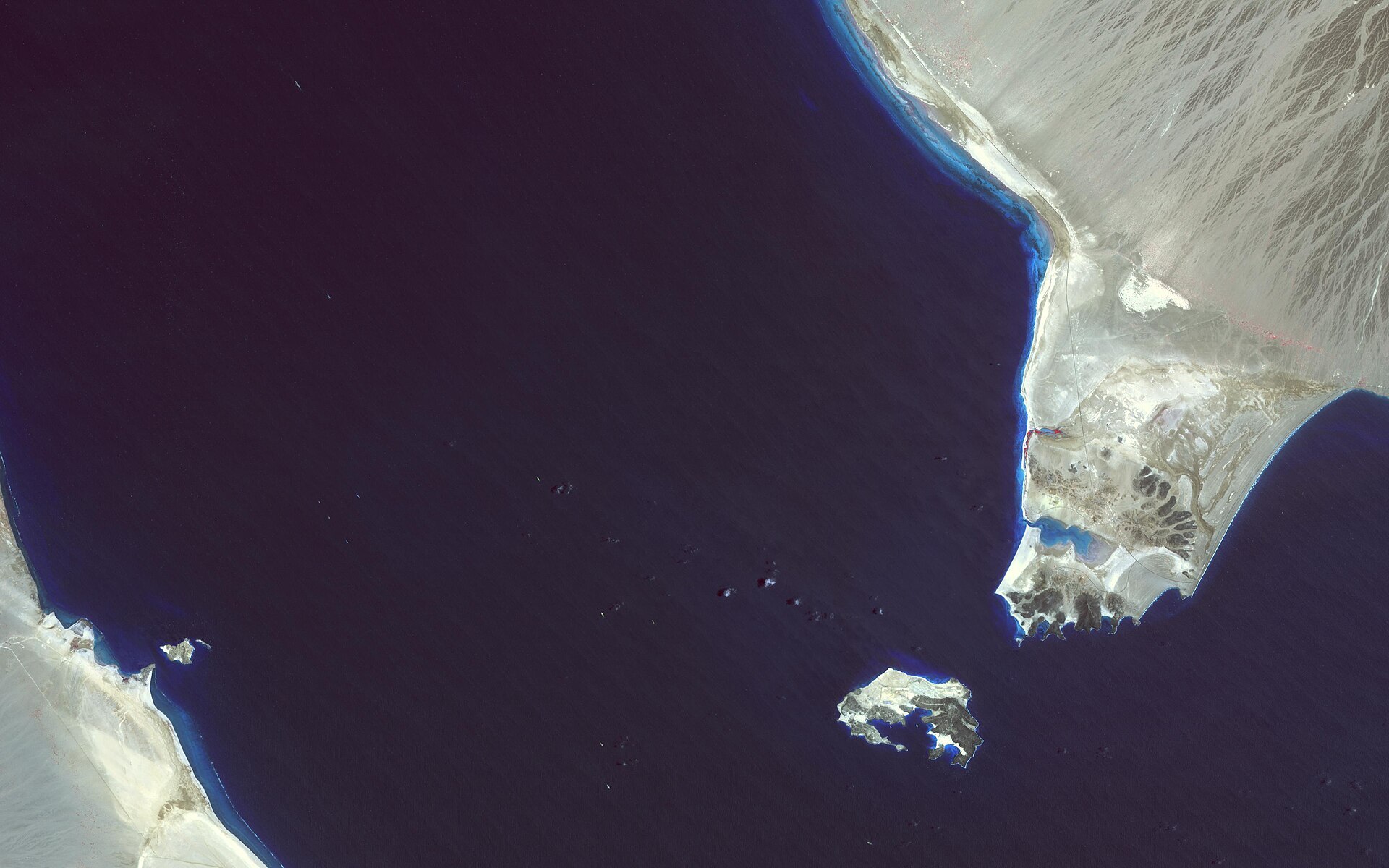
Iran’s involvement in the July 13 exchange extended beyond the Mahan Air delegation flight: sources briefed on the matter told Reuters that Tehran had separately asked the Houthi movement to stand ready to close the Bab al-Mandeb strait if the United States strikes Iranian power infrastructure — a directive that would sever Saudi Arabia’s Red Sea oil export corridor at the same moment Hormuz remains functionally closed. Iran’s conditional order to close Bab al-Mandeb maps the full dual-chokepoint threat to the kingdom’s export architecture.
Can Riyadh Cover the South and Abqaiq at the Same Time?
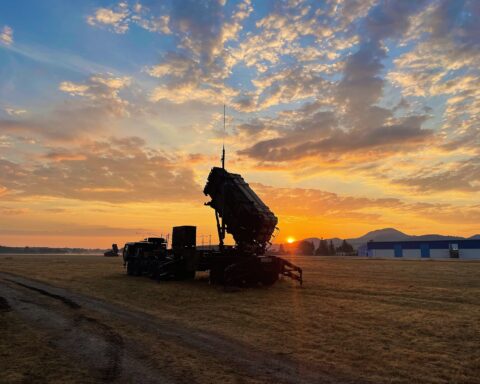
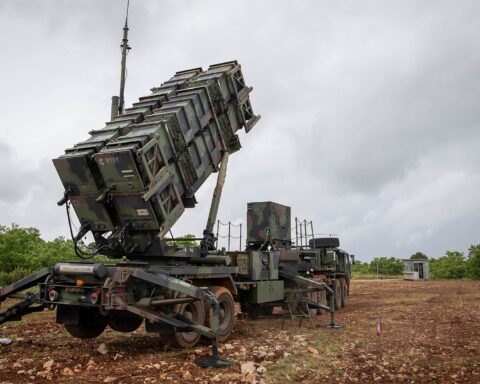
The arithmetic of Saudi air defence in the summer of 2026 is not comforting for anyone attempting to underwrite four southern airports and Abqaiq at once. The 86 percent depletion, documented in HOS reporting on the PAC-3 withholding pattern and confirmed against DSCA notifications, is not recoverable on any near-term timeline: the January 30, 2026 DSCA approval of 730 PAC-3 MSE missiles worth $9 billion does not translate into deliverable rounds before mid-2027 at the earliest.
The Lockheed Martin production ceiling is the binding constraint, and it is not one Riyadh can buy its way around. The Camden, Arkansas facility produces roughly 620 PAC-3 rounds per year for all global customers combined — US Army, Taiwan, Poland, Germany, Japan, and every other buyer competing for the same output stream — and the physics of the interceptor limits each battery’s effective radius against ballistic threats to roughly 15 to 20 kilometres. That constraint forces the kingdom’s four documented PAC-3 deployment corridors — Eastern Province and Abqaiq, Yanbu, Riyadh, and Hejaz — to be treated as fixed geographical commitments, not a fungible pool that can be surged to Abha or Jizan without exposing the nodes those batteries were positioned to defend in the first place.
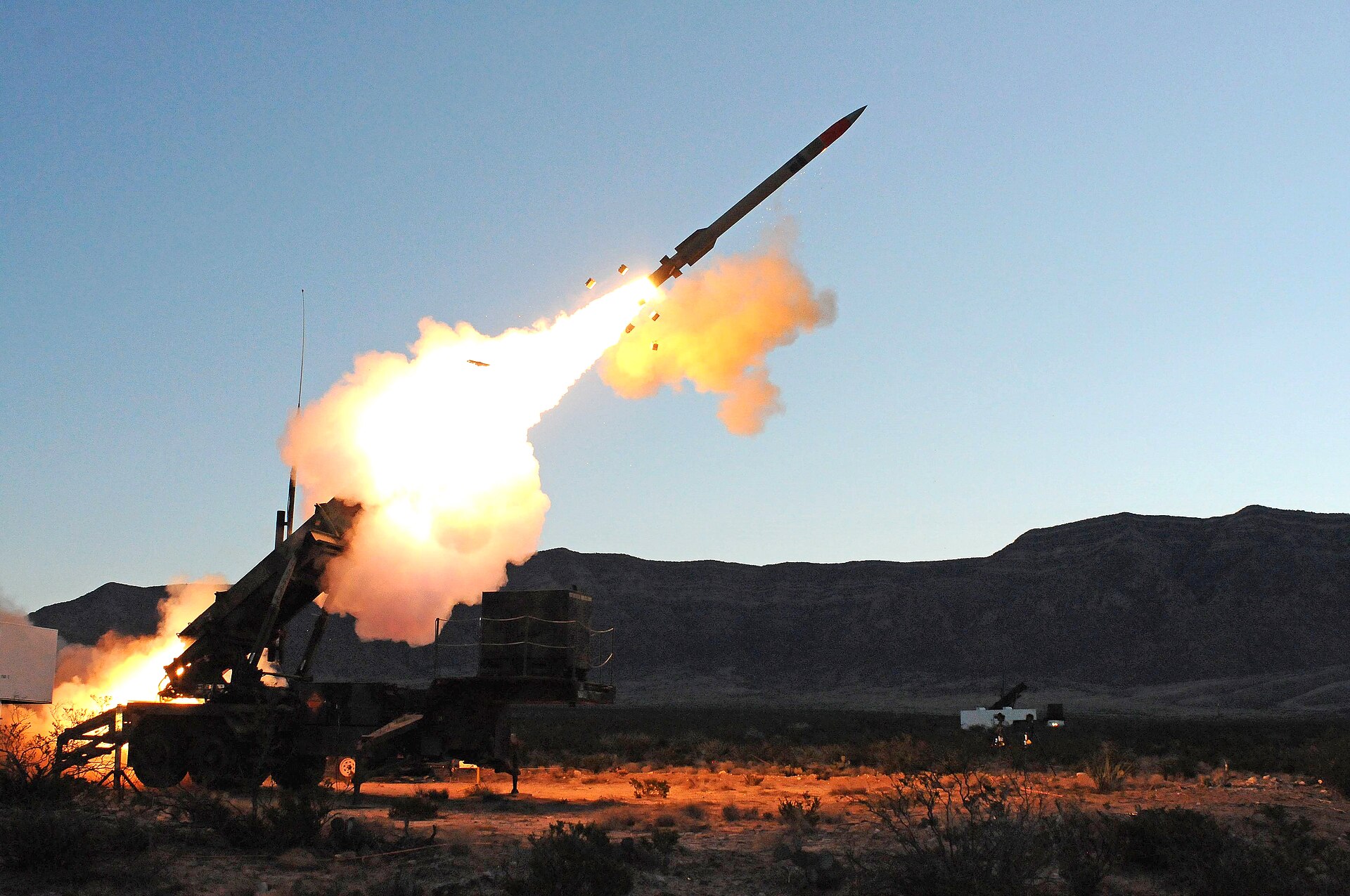
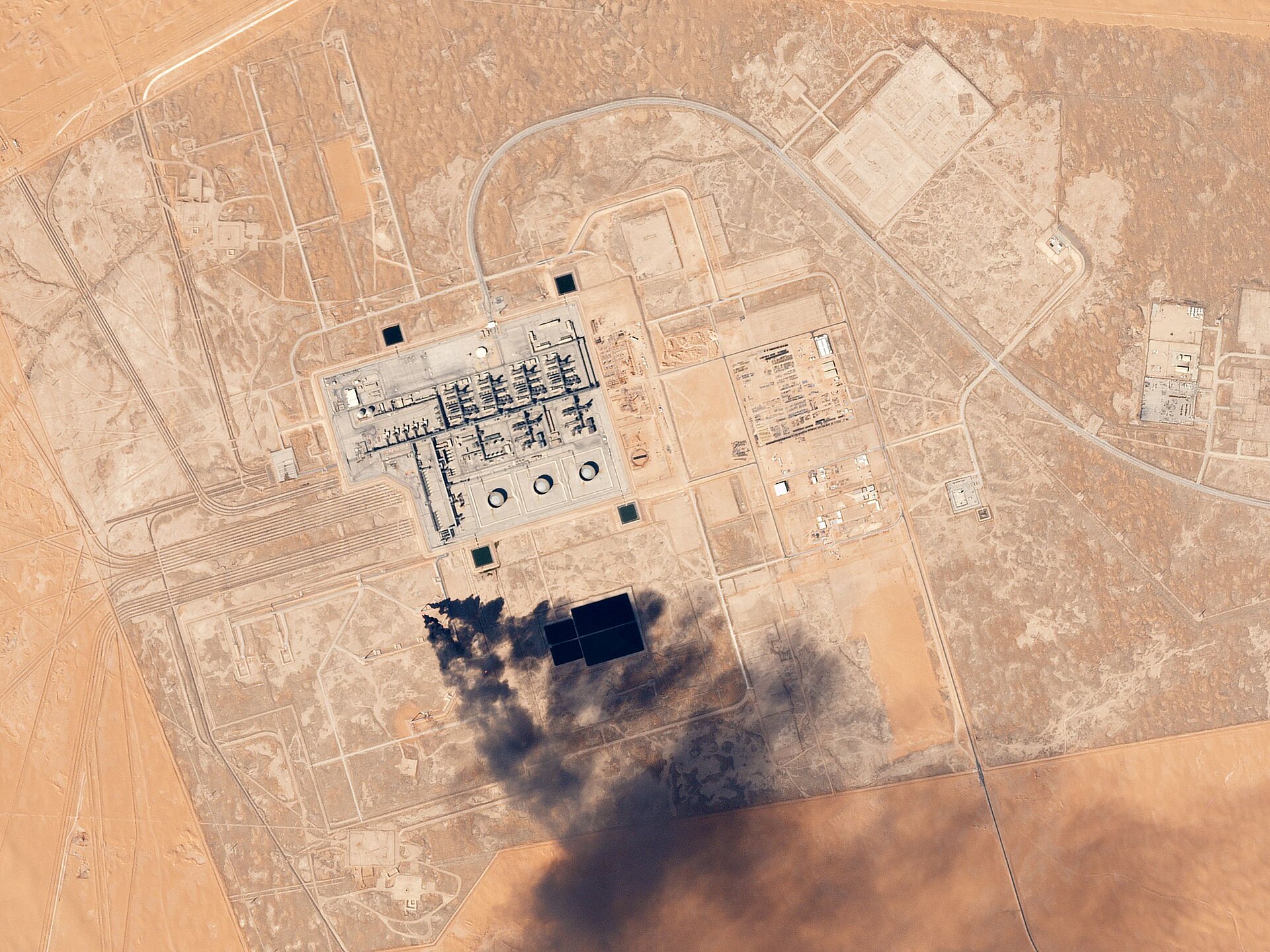
None of those four corridors covers a southern border sector, meaning the closed airports depend either on a surge of mobile units pulled from elsewhere or on lower-tier systems never designed to intercept the terminal-phase ballistics the Houthis have been iterating on since 2019. Abqaiq — analysed at length in last week’s HOS coverage — processes 7 million barrels per day and underwrites roughly 7 percent of global oil supply, sits within Iranian and Houthi ballistic range, and cannot be traded against any other target without triggering an oil-market response the kingdom’s fiscal position — an IMF breakeven near $86.60 against a Brent price around $84.73 — cannot absorb.
What the July 13 to July 16 closure window reveals is a triage posture Riyadh has not publicly acknowledged. Either the kingdom is holding PAC-3 rounds in reserve for Abqaiq and letting the southern civilian corridor accept the ESCAT closure as a cheaper substitute for kinetic defence, or it is drawing down interceptors in the south at a rate that further compresses the northern coverage envelope — and both readings imply the same underlying scarcity.
Why Sharurah’s Inclusion Changes the Threat Map
Of the four closed airports, Sharurah is the one that warrants specific attention because it had not previously appeared in NOTAM closure lists during the 2019–2021 Houthi campaign against Saudi civilian aviation. The field sits roughly 20 kilometres from the Yemen border, which makes it the closest of the four to Yemeni territory, and its inclusion in the July 13 sequence signals either a demonstrated expansion of Houthi range and precision or an assessed capability by Saudi authorities that Sharurah was now within the credible target set.
The Badr precision rocket, in the Center for Strategic and International Studies inventory of Houthi capabilities, ranges approximately 95 miles — about 153 kilometres — which places all four closed airports comfortably within reach, and the group’s ballistic and cruise missile inventory extends the threat envelope substantially further. What Sharurah’s first-time appearance tells the Saudi General Authority of Civil Aviation is that the target set is no longer confined to the well-known coastal and mid-range interior fields but now includes deeper inland civilian infrastructure that regulators had until this month treated as marginal.
The four airports together — Abha, Jizan, Najran, Sharurah — span the entire southern civilian corridor, and the fact that GACA elected to close the full width rather than harden any subset of them reinforces the reading that the regulator is operating with an intelligence picture too diffuse to defend selectively. If the threat could be localised, the response would have been localised. It was not.
The Coalition Response That Did Not Happen
As of the July 16 closure extension, the most consequential fact of the July 13 exchange is what did not follow it: zero Saudi counter-retaliatory airstrikes on Houthi targets since the Sanaa Airport runway operation. Both RANE/Stratfor and Al-Monitor’s July 15 newsletter flagged that absence as consistent with the four-year Saudi restraint posture that has defined the kingdom’s Yemen policy since the 2022 informal de-escalation.
“Riyadh still appears keen to avoid a return to full-scale war, while the Houthis have so far stopped short of launching a broader campaign against Saudi territory.”
— RANE/Stratfor threat assessment, July 2026
The coalition spokesperson’s July 14 statement carried by Saudi Gazette confined itself to the language of interception and control, with the Ministry of Defence saying the security situation was under control. There was no naming of specific Houthi military targets, no communication of retaliatory intent, and no reference to the coordinated port threats — Hodeidah, Ras Isa, As-Salif, and Sanaa Airport — that coalition spokesman Turki al-Maliki had issued on July 4, a rhetorical package HOS documented earlier this month as offense-only signalling from a defence posture that cannot support offensive execution.
Al-Monitor’s newsletter on July 15 framed the moment more directly than most, noting that “Saudi Arabia’s southern front is back” — a formulation that treats the July 13 exchange as the reopening of a theatre Riyadh had spent four years attempting to close, and one that the kingdom’s current interceptor arithmetic is not equipped to sustain at pre-2022 intensity.
Airlines and Passengers Absorb the Cost
Travel and Tour World and Khaleej Times both logged approximately 208 cancellations and between 150 and 158 delays across Saudi airports in the wake of the July 13 barrage, with Saudia accounting for the large majority of the cancellations. Foreign operators affected included Qatar Airways, Etihad, FlyDubai, Flynas, Air Cairo, and Nile Air — nearly the full width of Gulf and regional commercial aviation dependent on Saudi airspace for southern approaches.
The deeper cost is the one not yet on any balance sheet: the insurance and hull-war premium adjustment that follows confirmed Houthi capability to close four Saudi civilian airports in a single administrative window. Because ESCAT is an on-off condition rather than a graduated response — any active repulsion of Yemen-origin attacks can trigger a full-corridor closure — carriers cannot price this risk in advance. That uncertainty will land on hull-war underwriters over the next several weeks.
The 2022 Truce Terminated Without a Signature
The July 13 exchange constitutes, per Al Jazeera’s July 13 reporting and Al-Monitor’s July 15 assessment, the first direct Saudi-Houthi military exchange in approximately four years — a termination of the 2022 informal de-escalation that rested not on any signed document but on mutual restraint, and that Yahya Saree explicitly declared closed when he described the barrage as ending the “de-escalation phase” of Yemen’s war. Because there is no formal ceasefire text, there is no procedural mechanism to reactivate it.
What existed between Riyadh and Sanaa after the 2022 UN-mediated pause was a shared operational understanding, and its destruction on July 13 leaves the parties without an off-ramp architecture — a situation compounded by the collapse of the wider Houthi truce structure documented in HOS reporting on the broader truce termination, and by the coalition’s absorbed losses at sea that HOS covered in the context of the wider shield collapse.
The Pipeline Guarantor of Signing Authority arrangement, with $253 million outstanding at a burn rate of $5.5 million per day and an August 18 deadline, sits underneath all of this as a fiscal constraint that limits how long Riyadh can absorb both southern airspace closures and the deferred cost of the wider Iran-adjacent posture. Every day the four airports remain closed is a day the kingdom is paying for defence with revenue it has not booked and cannot easily replace at current Brent pricing. On July 20, the conditional Bab al-Mandeb order became a declaration: the Houthis announced a maritime blockade of Saudi Arabia, closing Bab al-Mandeb to all Saudi-flagged and Saudi-bound shipping — sealing the kingdom between two blocked sea corridors for the first time.
Background: Abha Under Fire, 2019 to 2026
Abha International Airport has been a Houthi target since June 2019, when a Quds-1 cruise missile struck the arrivals hall and killed one person while wounding 47 — the first successful strike on a Saudi civilian airport in the current war cycle. Three additional attacks followed through July 2019, and in February 2021, four Houthi drones struck Abha and damaged a Flyadeal Airbus A320 on the ground, the first confirmed aircraft damage at a Saudi civilian field.
What separates the July 13, 2026 barrage from the 2019–2021 campaign is the coordinated multi-airport closure that followed it. Previous Houthi strikes on Abha generated field-specific NOTAMs and reroutes, but did not trigger the simultaneous closure of Jizan, Najran, and Sharurah under a single four-minute administrative window. The 2026 sequence is therefore not a repeat of the earlier campaign but an escalation of the regulatory response to it, driven by an intelligence and interceptor picture that no longer permits selective defence.
King Khalid Air Base at Khamis Mushait, the second named target in the barrage, is co-located with the civilian aviation corridor in a way that means any credible threat to the base is also a credible threat to the neighbouring civilian traffic. That co-location has been operationally convenient for decades and is now a structural liability.
Frequently Asked Questions
Which Houthi missile systems can reach all four closed airports?
The Badr-P and Badr-F precision rockets, with ranges of roughly 95 to 160 miles, cover all four airports from northern Yemen launch points. The Houthis’ Toufan medium-range ballistic missile and Quds-series cruise missiles extend the envelope further, placing every southern Saudi civilian field within reach of multiple platform types simultaneously — which is why GACA closed the full corridor rather than a subset.
Are the four southern airports likely to reopen soon?
OPSGROUP’s July 2026 bulletin logged the closures as extended through at least 1500Z on July 16, and there was no public GACA statement projecting a return-to-service window as of that extension. Because the ESCAT protocol governing the southern Jeddah FIR is a condition-based framework tied to active repulsion of Yemen-origin attacks rather than a fixed-duration order, any reopening will depend on Saudi authorities’ assessment of ongoing Houthi launch capacity rather than a calendar date.
What is ESCAT and why does it close airports without a direct strike?
ESCAT — Emergency Security Control of Air Traffic — is a NATO-originated protocol adopted by Gulf states that grants aviation regulators authority to blank entire flight information regions when defences are actively engaging an incoming threat. It is an on-off instrument: unlike a weather hold or a temporary restriction, ESCAT cannot be applied selectively to one runway while leaving another open. When Saudi air defences engage Yemen-origin ballistics anywhere in the southern Jeddah FIR, the entire corridor comes down — which is why four airports were closed by a single decision even though none was directly struck on July 13.
What is the Mahan Air connection that triggered the Sanaa runway strike?
Mahan Air is an Iranian carrier under longstanding US Treasury sanctions for its role in transporting IRGC personnel and materiel across the region, and the July 13 flight was returning a Houthi delegation, including an intelligence official, from Tehran after the group attended Ali Khamenei Sr.’s state funeral, according to Foundation for Defense of Democracies reporting on July 14 and 15, 2026. The Saudi strike on the Sanaa runway was designed to prevent the aircraft from landing, and the flight was ultimately diverted to another Houthi-controlled field after runway damage rendered Sanaa International unusable.
Does the 2022 Saudi-Houthi truce have any legal standing to be revived?
The 2022 de-escalation was never formalised as a signed ceasefire and rested entirely on mutual restraint between Riyadh and the Houthi leadership in Sanaa, meaning there is no treaty text, no monitoring body, and no procedural mechanism through which a revival could be legally activated. Yahya Saree’s July 13 declaration that the barrage ended the “de-escalation phase” of Yemen’s war is therefore both a statement of fact and a statement of the parties’ legal exposure: without a formal instrument, the pause existed only for as long as both sides continued to observe it, and neither is currently observing it.