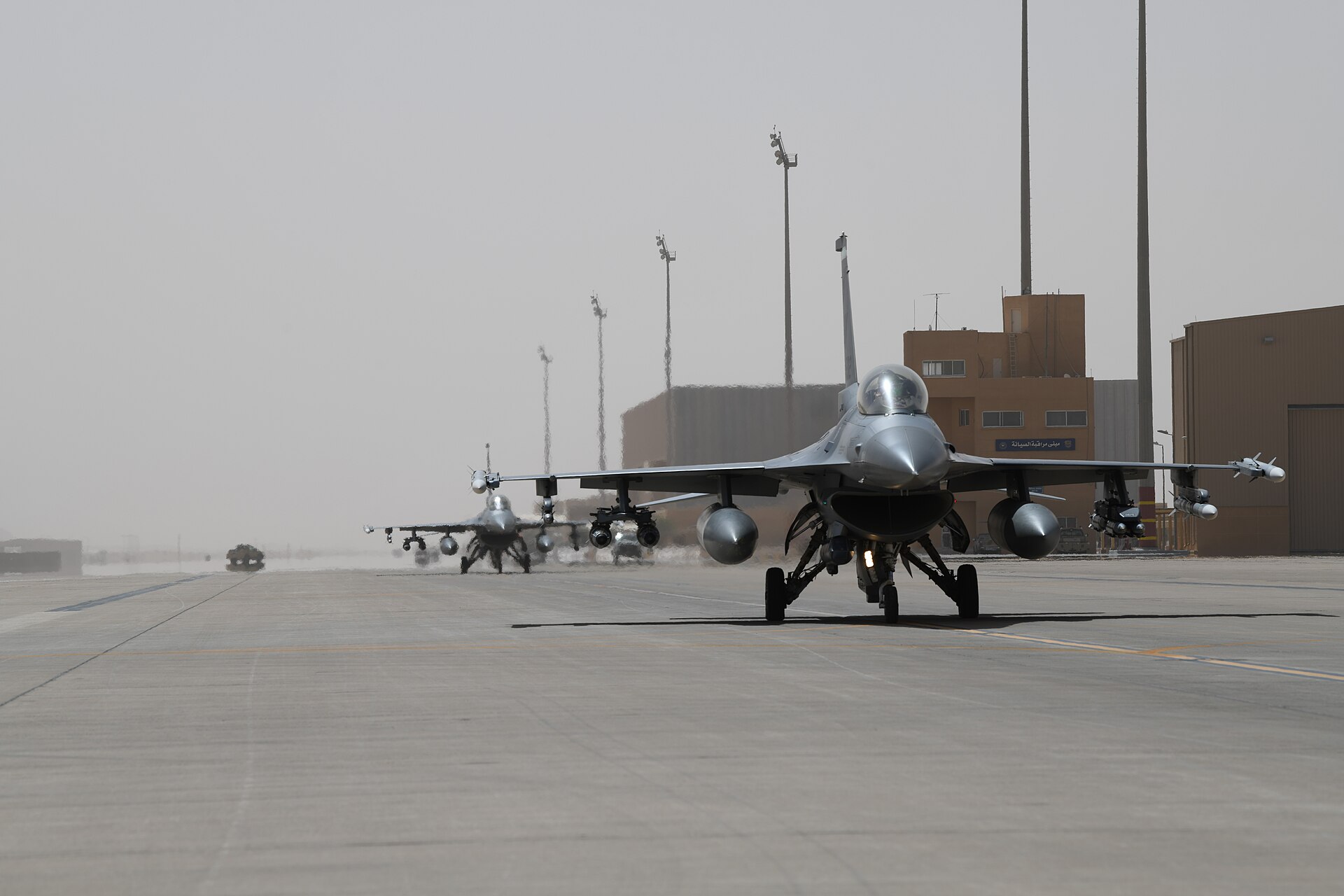
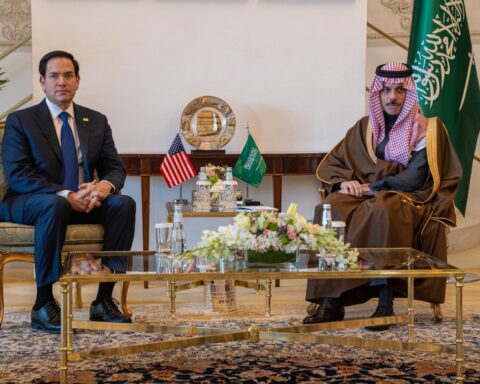
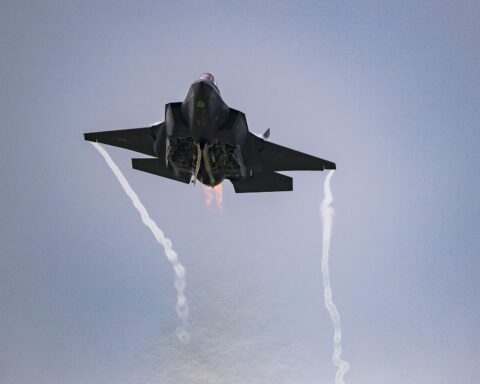
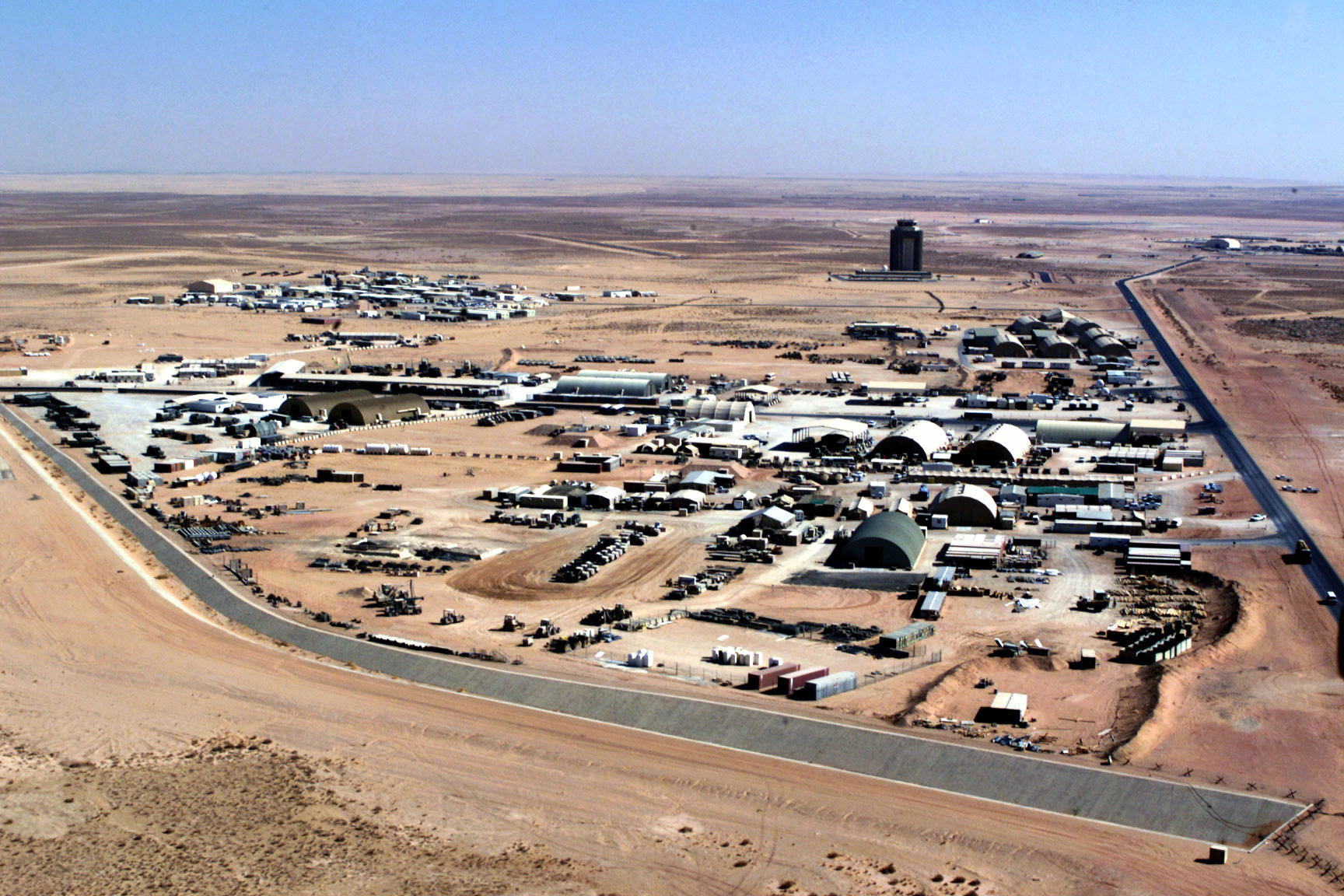
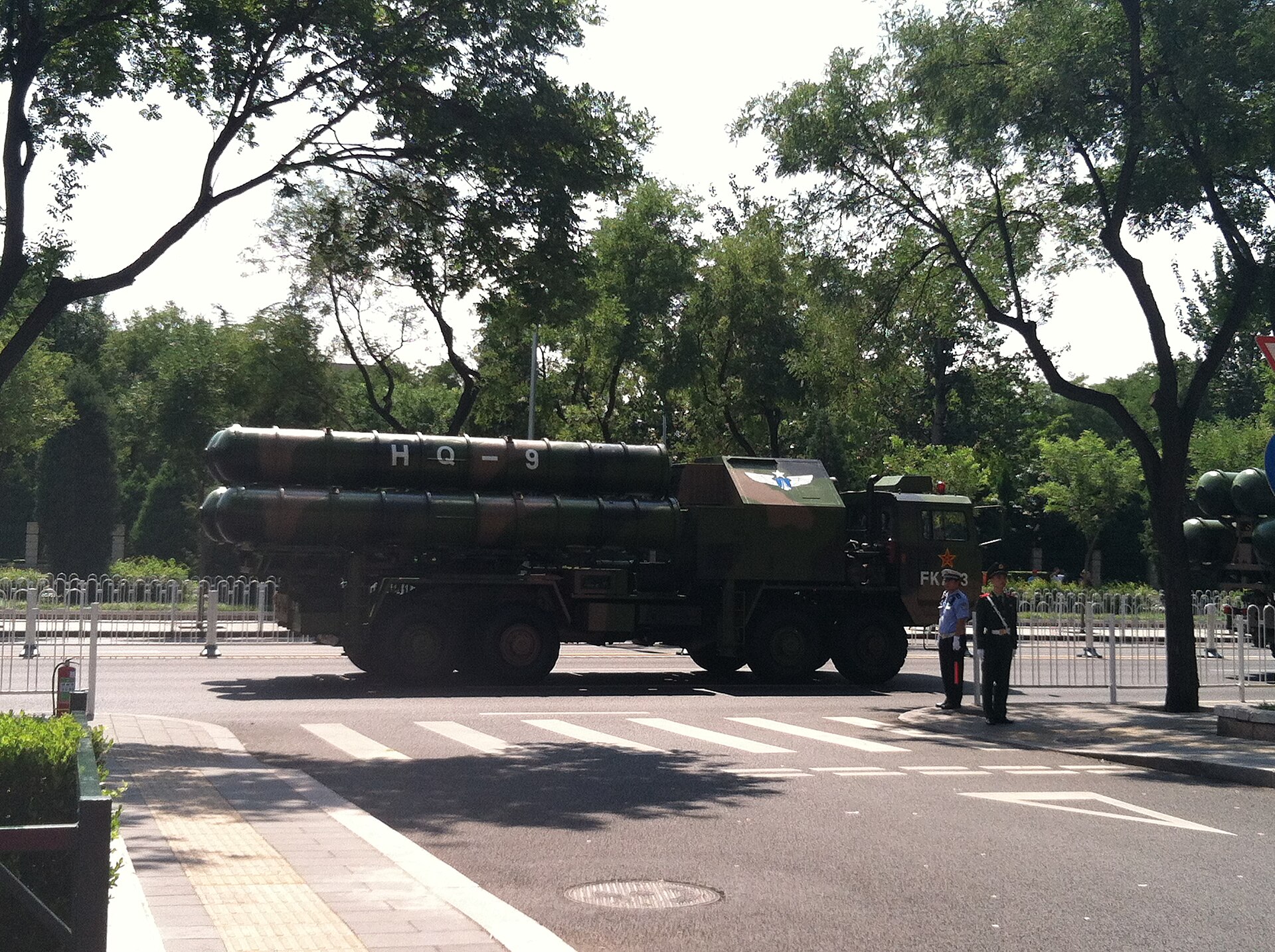
RIYADH — Iran struck Prince Sultan Air Base south of Al-Kharj on July 17 for the third time since March, with state broadcaster IRIB announcing that the installation was targeted because American aircraft were refuelling there for Operation Epic Fury sorties into Iranian airspace. The only long-range air defense system operational at the base — a single HQ-9 battery deployed by Pakistan under the September 2025 Strategic Mutual Defence Agreement and operated exclusively by Pakistani military personnel — has never recorded a confirmed combat intercept in any theatre where it has been fielded.
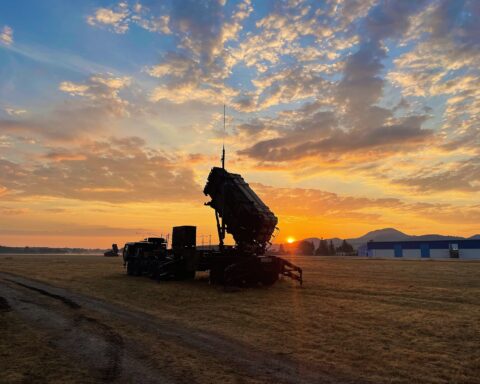
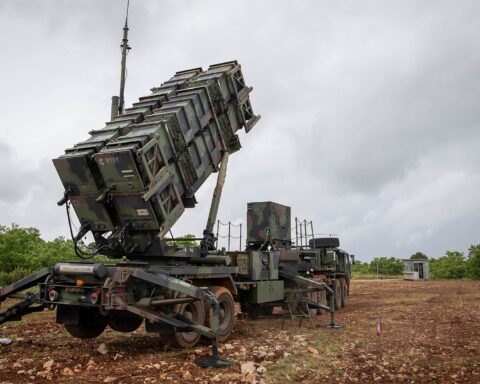
The battery was the replacement for a depleted American-supplied interceptor stockpile at PSAB, where only 400 of the original 2,800 PAC-3 rounds remain — an 86 percent depletion rate that has left the base’s air defence dependent on a system with no proven combat capability. Pakistan’s deployment package includes 8,000 troops, approximately sixteen JF-17 Block III fighters, and one HQ-9 battery, all fully financed by Riyadh under the terms of a defence pact that treats an attack on Saudi Arabia as an attack on Pakistan itself. The HQ-9 has now been present in three separate combat environments without a single documented successful intercept: Pakistan during Operation Sindoor in May 2025, Iran during US-led strikes in March 2026, and Prince Sultan Air Base itself.
In this article:
The Third Strike on Prince Sultan
IRIB’s statement on July 17 was direct: “Following the refueling of American aircraft at the Prince Sultan Air Base south of the city of Al-Kharj in Saudi Arabia, the base has been targeted by missile attacks.” Videos purporting to show impact damage circulated on social media within hours, though as the Caspian Post reported on July 18, “neither Washington nor Riyadh has officially confirmed the authenticity of the footage or the reported strike.” Saudi Arabia’s Ministry of Foreign Affairs issued a formal denial through Arab News the same day, without specifying what it was or was not denying.
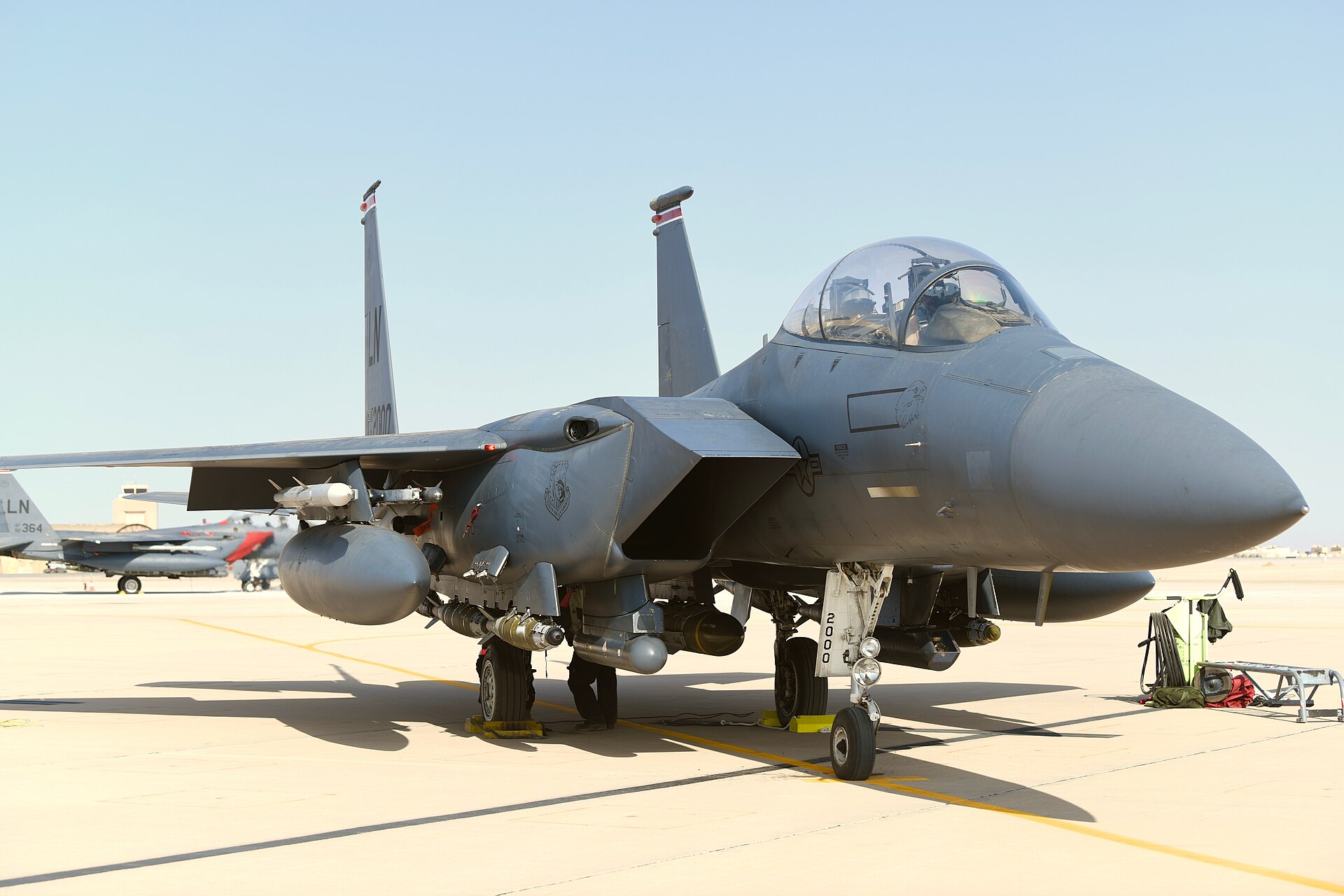
The denial sits against a documented record that makes it harder to sustain with each successive attack. On March 14, Iranian strikes damaged or destroyed five KC-135 Stratotanker refuelling aircraft at PSAB, according to The Aviationist. Two weeks later, on March 27, a salvo of six ballistic missiles and 29 drones struck the installation again — this time destroying a Boeing E-3G Sentry airborne early warning aircraft worth $270 million, one of only 16 remaining in the US Air Force inventory, and wounding between 10 and 15 American service members, according to the Washington Post, PBS News, and Al Jazeera reporting from March 27-28. Army Sgt. Benjamin N. Pennington, 26, died of wounds sustained in an earlier Iranian strike on the base on March 1, according to NBC News.
The March attacks were confirmed through satellite imagery, open-source intelligence, and NBC News photo verification showing the E-3G’s tail section detached and its rear fuselage burned out. The July 17 attack has not been independently verified to the same standard, but Iran’s claim and the circulating video follow a pattern of Iranian strikes on PSAB that has only intensified since the broader US-Iran campaign escalated. WION News reported on July 18 that “Iranian missiles and drones” struck the base, wounding US soldiers, though the exact casualty count from the latest strike remains unconfirmed.
The Middle East briefing 3,000+ readers start their day with.
One email. Every weekday morning. Free.
Where Was the HQ-9?
Pakistan deployed the HQ-9 battery to Saudi Arabia in May 2026 under the Strategic Mutual Defence Agreement, according to the Times of Islamabad and The Daily Star. The system is operated exclusively by Pakistani military personnel — not Saudi or American crews — and functions as a standalone package integrated with Pakistan’s own command-and-control architecture rather than with Saudi Arabia’s existing air defense network, according to Defence Security Asia reporting from May 2026. The Jerusalem Post noted that Pakistan “deploys the defenses as part of a package because of their interoperability with other Pakistani systems,” a formulation that carries an embedded concession: the HQ-9 is not interoperable with anything else at the base.
The manufacturer’s claimed specifications sound adequate on paper — a 200-kilometre engagement range against aircraft and 50 to 100 kilometres against ballistic targets, with a 30-kilometre altitude ceiling, according to Army Recognition and the Missile Defense Advocacy Alliance. The system uses semi-active radar homing in its terminal guidance phase, which means the fire-control radar must continuously illuminate the target until the interceptor arrives — a tracking geometry that is vulnerable to saturation attacks and to anything that manoeuvres in its terminal descent, which is precisely what Iran’s Fattah-2 hypersonic glide vehicle does at speeds that Iranian state media PressTV claims reach Mach 15 in midcourse flight.
Daily Pakistan reported on July 18 under the headline “Iran’s strike on Sultan Air Base puts Pakistan-Saudi Defense Pact in spotlight” — but did not address whether the HQ-9 attempted an engagement, whether Pakistani operators received warning of inbound missiles, or what the battery’s status was when the strike occurred. No outlet covering the July 17 attack has published a statement from Pakistan’s military confirming or denying that the HQ-9 was engaged, and neither Islamabad nor Riyadh has offered any account of the system’s performance during any of the three strikes on PSAB.
Zero for Three — The HQ-9’s Combat Record
The HQ-9 family’s combat record is now the most extensively documented peacetime marketing success that has failed every wartime test it has faced. During Operation Sindoor in May 2025, Indian Air Force Su-30MKI fighters launched two BrahMos-A air-launched cruise missiles at Pakistan’s Nur Khan Airbase near Rawalpindi, and Pakistan fired approximately 18 HQ-9B interceptors in response, according to Indian Defence Research Wing. The result was zero confirmed intercepts — both BrahMos missiles struck their targets, an 0-for-18 record that prompted Brandon J. Weichert, national security writer at The National Interest, to call the system “a Frankenstein’s Monster” reverse-engineered from Russian S-300 technology.
Post-strike debris analysis from Sindoor revealed what Business Today India reported as “software instabilities in the fire control computers, high exposure to electronic warfare, and failures to integrate with the air defense network.” Indian electronic warfare jamming pods and decoy systems had effectively blinded the HQ-9’s fire-control radars before the BrahMos missiles arrived, and the battery positions themselves had been identified through satellite imagery and social media leaks — allowing India to target the launchers directly. Russian military analyst Andrei Martyanov offered an assessment that dispensed with diplomatic hedging: the HQ-9B “cannot intercept anything supersonic — or even anything subsonic.”
The second documented failure came three months ago, when HQ-9B batteries deployed by Iran were destroyed during coordinated US-Israeli strikes in March 2026. Meta-Defense reported on March 25 that the Chinese-supplied air defense assets were “neutralized or destroyed before mounting effective responses” — knocked out, the report added, “within the first hour” of operations that combined advanced electronic warfare with coordinated strike packages.
Three theatres across two continents, and the system’s confirmed combat intercept total remains at zero — a record that would normally disqualify a weapons platform from deployment at any installation where real threats are expected. That the HQ-9 was sent to PSAB regardless reflects less a judgment about the system’s capability than the fact that, after the PAC-3 stockpile approached exhaustion and no American resupply materialised, it was the only long-range air defense system anyone was willing to put on the ground.
Can the HQ-9 Talk to Saudi Arabia’s Radar Network?
Even if the HQ-9’s interceptors functioned as the manufacturer claims, the system faces a structural problem at PSAB that no software patch or operator training can address: it cannot receive targeting data from the sensors around it. The HQ-9 uses Chinese command-and-control data protocols that are incompatible with the US and NATO-standard Integrated Air Defense System architecture that Saudi Arabia operates, according to analysis by Defence Security Asia and the defence publication Quwa.org. Quwa.org separately documented the same protocol incompatibility in Azerbaijan’s deployment of the system, where the HQ-9 operated in identical isolation from the host country’s broader sensor network.
In operational terms, the Pakistani-manned battery at PSAB cannot receive early warning cueing from Saudi radar stations, from American Patriot fire-control radars at other installations, or from whatever airborne sensor capacity remains after the E-3G Sentry that provided PSAB’s airborne early warning was destroyed in the March 27 strike. The HQ-9 battery depends entirely on its own organic radars to detect, track, and then continuously illuminate the incoming threat through the terminal phase of the intercept — a detection-to-engagement sequence that compresses fatally when the inbound weapon is a manoeuvring hypersonic glide vehicle arriving at speeds that exceed anything the system has ever attempted to engage.
The data-link isolation turns what should be a networked, layered air defense architecture into a standalone point-defence system relying on its own sensors with no external cueing — functioning, in effect, as an air defence battery that does not know a missile is coming until its own radar picks it up. As previous HOS reporting has documented, Saudi Arabia has encountered integration failures across multiple defence procurement programmes, but the HQ-9’s isolation at PSAB is not a compatibility bug awaiting a fix — it is a fundamental architectural divide between Chinese and Western military data standards that cannot be bridged by a field modification.
Pakistan’s Rules of Engagement Remain Classified
The fourth problem is not technical but political, and it may explain more than the other three combined. The Strategic Mutual Defence Agreement between Pakistan and Saudi Arabia is classified, and Pakistan’s rules of engagement for the HQ-9 battery at PSAB have never been publicly disclosed, as Asia Times reported in its May 2026 analysis of the deployment. What is public is the characterisation that Asia Times attributed to the arrangement: Pakistani military personnel deployed during the Iran conflict “will primarily have an advisory and training role” — language that multiple defence analysts read as Islamabad’s hedge against being formally classified as a co-belligerent in a direct US-Iran conflict.
The distinction carries operational weight that reaches well beyond legal semantics. If Pakistan’s HQ-9 battery at PSAB engages and destroys an Iranian ballistic missile, Islamabad has conducted a direct act of war against Iran in defence of an American military installation on Saudi soil — an action that would expose Pakistan to Iranian retaliation against its own territory, against the 8,000 Pakistani troops deployed in the Kingdom, and against a diplomatic relationship with Tehran that Islamabad has spent years maintaining in parallel with its Saudi commitments. The “advisory and training” framing suggests that Pakistan may have drawn a line between deploying the system to PSAB and authorising its use against Iranian weapons — a constraint that would mean the HQ-9 functions at the base as a signal of presence rather than as an operational interceptor.
Islamabad warned Tehran publicly that any assault on Saudi Arabia would cross a “red line” and be treated as aggression against Pakistan itself. Iran struck PSAB on March 14, on March 27, and again on July 17 — three crossings of a line that has produced no documented Pakistani military response from the system sent to enforce it.
What Remains at Prince Sultan
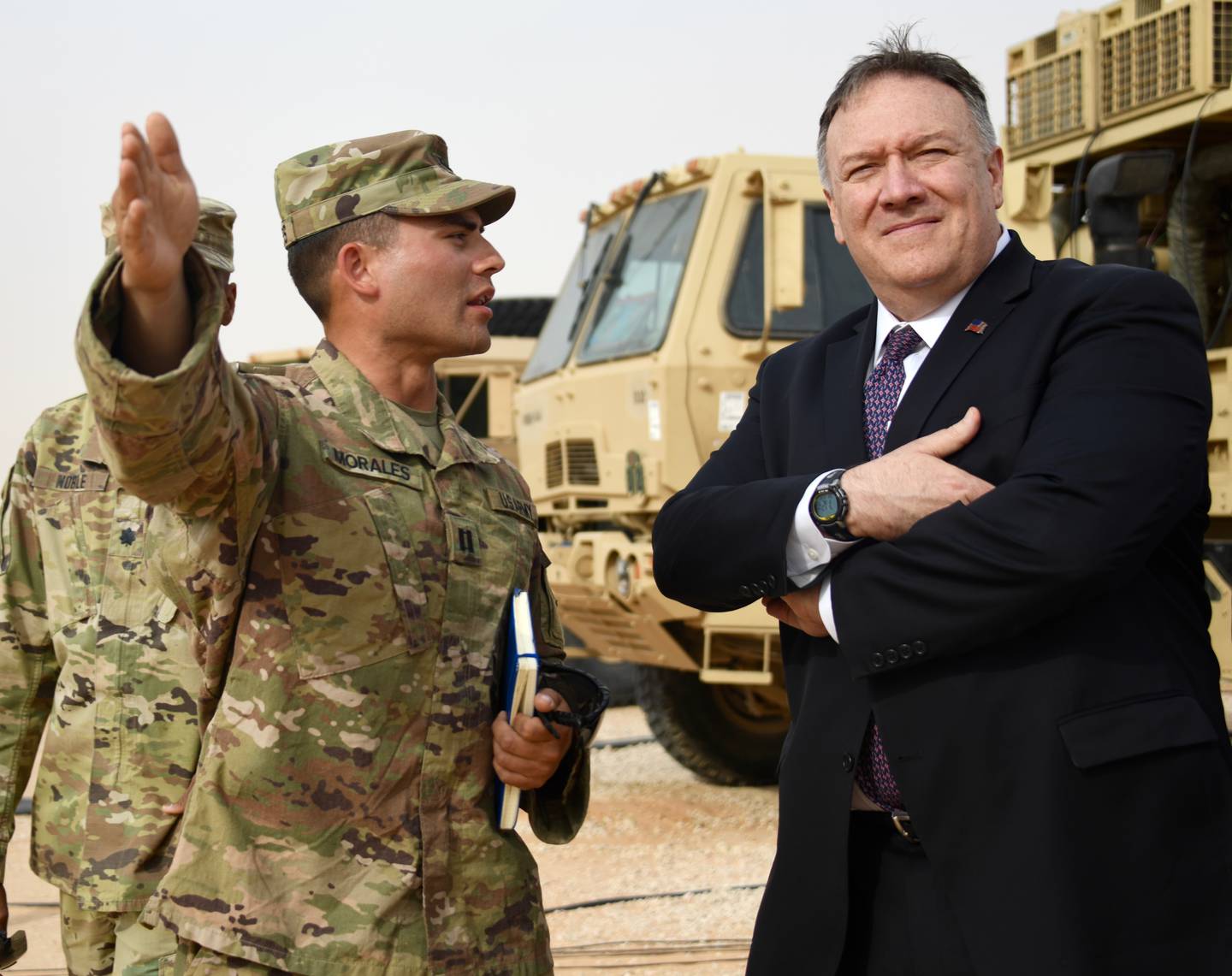
Prince Sultan Air Base now sits behind an air defense layer that consists of 400 remaining PAC-3 interceptors from an original inventory of 2,800, one HQ-9 battery with zero confirmed combat intercepts and no data link to Saudi Arabia’s sensor network, and approximately 2,300 American service members whose safety depends on one or both of those systems performing when the next salvo arrives. The E-3G Sentry that provided the base’s airborne early warning capability was destroyed in March, five KC-135 tankers were damaged or destroyed in the same period, and the Houthis have separately identified Saudi Arabia’s energy infrastructure as their next target set — a threat that would stretch whatever interceptor capacity remains across a far wider defensive perimeter than PSAB alone.
Asia Times assessed the Pakistan deployment as reflecting “growing Gulf uncertainty rather than a replacement of American power,” a reading that the sequence of strikes on PSAB has done nothing to weaken. The question is no longer whether the HQ-9 can stop an Iranian missile — three theatres and zero intercepts have supplied an answer that neither Islamabad nor Beijing has chosen to contest publicly. The question is what Riyadh does with a base whose last defensive layer has been present for every strike and has stopped none of them.
Background
The HQ-9 is a Chinese-manufactured long-range surface-to-air missile system derived in part from Russia’s S-300 platform, using semi-active radar homing in its terminal guidance phase — a design choice that requires the fire-control radar to continuously illuminate the target until the interceptor arrives, making the system inherently vulnerable to electronic countermeasures and to incoming weapons that manoeuvre unpredictably in their final approach. The system has been marketed internationally as a cost-effective alternative to American Patriot and Russian S-400 platforms, though its combat deployments in Pakistan, Iran, and Venezuela between 2025 and 2026 have not produced a documented intercept to support those claims.
The Strategic Mutual Defence Agreement between Pakistan and Saudi Arabia, signed on September 17, 2025, by Crown Prince Mohammed bin Salman and Pakistani Prime Minister Shehbaz Sharif, provides for mutual defence obligations under which an attack on either country is treated as an attack on both, permitting response “using all available military means.” The agreement allows for a potential deployment ceiling of up to 80,000 Pakistani troops, though the current deployment at PSAB and other Saudi installations stands at approximately 8,000, with Saudi Arabia bearing the full financial cost of the deployment including equipment maintenance and personnel support.
Frequently Asked Questions
How does the Fattah-2 compare to the BrahMos that the HQ-9 failed to intercept in Pakistan?
The BrahMos-A cruise missile that struck Nur Khan Airbase during Operation Sindoor in May 2025 travels at approximately Mach 2.8 to 3.0, according to publicly available Indian defence specifications. Iran’s Fattah-2 hypersonic glide vehicle claims a midcourse velocity of Mach 15 and a terminal-phase speed exceeding Mach 5, according to Iranian state media PressTV and Western defence analysts — roughly one-and-a-half to five times faster than the weapon the HQ-9 already failed to engage. If the system’s fire-control computers could not track and engage a Mach 3 cruise missile during Sindoor, the prospect of engaging a weapon arriving at Mach 5 or above while executing terminal-phase manoeuvres falls outside the system’s demonstrated — and, according to Missile Defense Advocacy analysts, designed — engagement envelope.
Could THAAD intercept the Fattah-2?
The Terminal High Altitude Area Defense system intercepts ballistic missiles at altitudes between 40 and 150 kilometres — well above the HQ-9’s 30-kilometre ceiling — using a hit-to-kill kinetic warhead that physically collides with the target rather than detonating a proximity-fused fragmentation charge. Whether THAAD could engage a manoeuvring hypersonic glide vehicle remains untested in combat, and the US Missile Defense Agency has publicly acknowledged the challenge of intercepting weapons that alter their trajectory during terminal descent. The US has not publicly confirmed whether THAAD batteries are deployed at PSAB, and no THAAD engagement against an HGV-class threat has been recorded in any theatre.
Has any country cancelled an HQ-9 purchase after the combat failures?
Turkey selected the HQ-9’s export variant, designated FD-2000, in 2013 over competing American Patriot and European SAMP/T bids, but cancelled the deal in 2015 under sustained NATO pressure — primarily over the same data-link incompatibility with Western IADS architecture now visible at PSAB, according to reporting at the time. No publicly announced HQ-9 cancellation has followed the 2025-2026 combat failures in Pakistan, Iran, or Venezuela, though several Gulf states that had been evaluating Chinese air defence systems have not proceeded with previously signalled procurement timelines since Operation Sindoor.
Why doesn’t Saudi Arabia operate the HQ-9 itself?
Saudi Arabia has never purchased, trained on, or independently operated the HQ-9 system. The Kingdom’s air defence doctrine and operator training are built around American-supplied Patriot PAC-2 and PAC-3 variants and, where deployed, the THAAD system — all of which use US-standard data protocols and integrate with Saudi Arabia’s Western-architecture IADS. The HQ-9 at PSAB arrived solely as part of Pakistan’s contribution under the Strategic Mutual Defence Agreement, with Pakistani crews trained on Chinese-language technical documentation and Chinese-origin maintenance protocols. Saudi personnel would require extensive retraining on an entirely different system architecture to operate the battery independently, a process that no source has reported is underway.
The question of why Saudi Arabia paid for a shield whose command authority sits in Islamabad and whose engagement rules remain classified is examined in Saudi Arabia Paid for the Shield It Cannot Fire — including the Sakhir Declaration silence, the PAC-3 sovereignty trap, and the structural gap between purchasing a defence system and being able to fire it.
The absence of HQ-9 engagement on July 18 coincided with a parallel collapse of the diplomatic architecture that had implicitly restrained targeting of Saudi soil: Khamenei’s personal repudiation of the Islamabad MOU removed the ceiling that had kept Saudi Arabia off Iran’s formal target list, meaning the July 18 strike occurred in a diplomatic vacuum as well as an air-defence one.
Iran’s ground-force targeting expanded further on July 19, when the IRGC claimed to have destroyed two US HIMARS launchers at Camp Arifjan in Kuwait — precision-fire systems that CENTCOM relies on for the same suppression-of-enemy-air-defences mission that the absence of functioning Saudi air defences had made more urgent.