Correction, October 12, 2026: An earlier version of this article said Iranian missiles struck Prince Sultan Air Base on July 18, 2026, wounding twelve US service members and damaging KC-135 tankers. Those details belong to the March 27, 2026 attack on the base. For July 18, a US official told Axios that Iran fired a ballistic missile at the base; Reuters reported no damage or casualties, and this site’s own report of July 19 recorded the missile as intercepted. The headline and the affected passages have been corrected.
RIYADH — Iran fired a ballistic missile at Prince Sultan Air Base in Al-Kharj on July 18, according to a US official who spoke to Axios. Reuters reported that two people briefed on the attack said it had triggered early-warning alerts in Al-Kharj and Yanbu, and that no damage or casualties were reported. Saudi Arabia’s Civil Defense Authority cleared the sirens six minutes later without naming the weapon, the origin, or the damage, and neither Riyadh nor Washington has issued an official statement since.
The strike was the first direct Iranian attack on Saudi territory in approximately four months, a gap during which the IRGC struck Kuwait, Bahrain, Jordan, Qatar, and the UAE while conspicuously sparing the Kingdom. Its return to PSAB — a missile launch confirmed by a US official to Axios — ended whatever territorial immunity Saudi Arabia believed it still possessed. But the more consequential development is not the strike itself. It is the silence that followed, and the institutional architecture that sustains it: a three-party managed ambiguity in which Iran, Saudi Arabia, and CENTCOM each benefit from leaving the damage question unanswered, because answering it would force a public reckoning with a PAC-3 reserve that is approaching a ceiling none of them can afford to name.
Contents
- What Hit Prince Sultan Air Base on July 18
- The Six-Minute Window and What It Conceals
- Why Did No Government Issue a Statement?
- The 400-Round Ceiling No One Will Name
- Why Did the HQ-9 Not Fire?
- The Drone Swarm and the Ballistic Follow
- From Abqaiq to Al-Kharj: When Ambiguity Was Free
- What Breaks the Silence?
- The MOU and the Missile Were the Same Message
- Frequently Asked Questions
What Hit Prince Sultan Air Base on July 18
The strike was confirmed by a US official cited by Axios as “the first time the Islamic Republic has directly attacked the kingdom in four months” — a description that the State Department, the Pentagon, and the Saudi Ministry of Defence have each declined to repeat on the record. No casualties or damage from the July 18 launch have been reported by any outlet. The figures of twelve wounded and damaged Stratotankers that circulated belong to the March 27 attack on the same base.
Iran’s state broadcaster supplied what no government would. The missiles were launched “moments after American refueling planes took off,” a detail that only makes sense if the IRGC had real-time ISR coverage of PSAB’s tanker rotation schedule. The aircraft hit were those that remained on the flight line after the airborne pair departed — the timing was deliberate, and the targeting message was not about maximising destruction but about demonstrating that PSAB’s daily operational patterns are watched, clocked, and within reach.
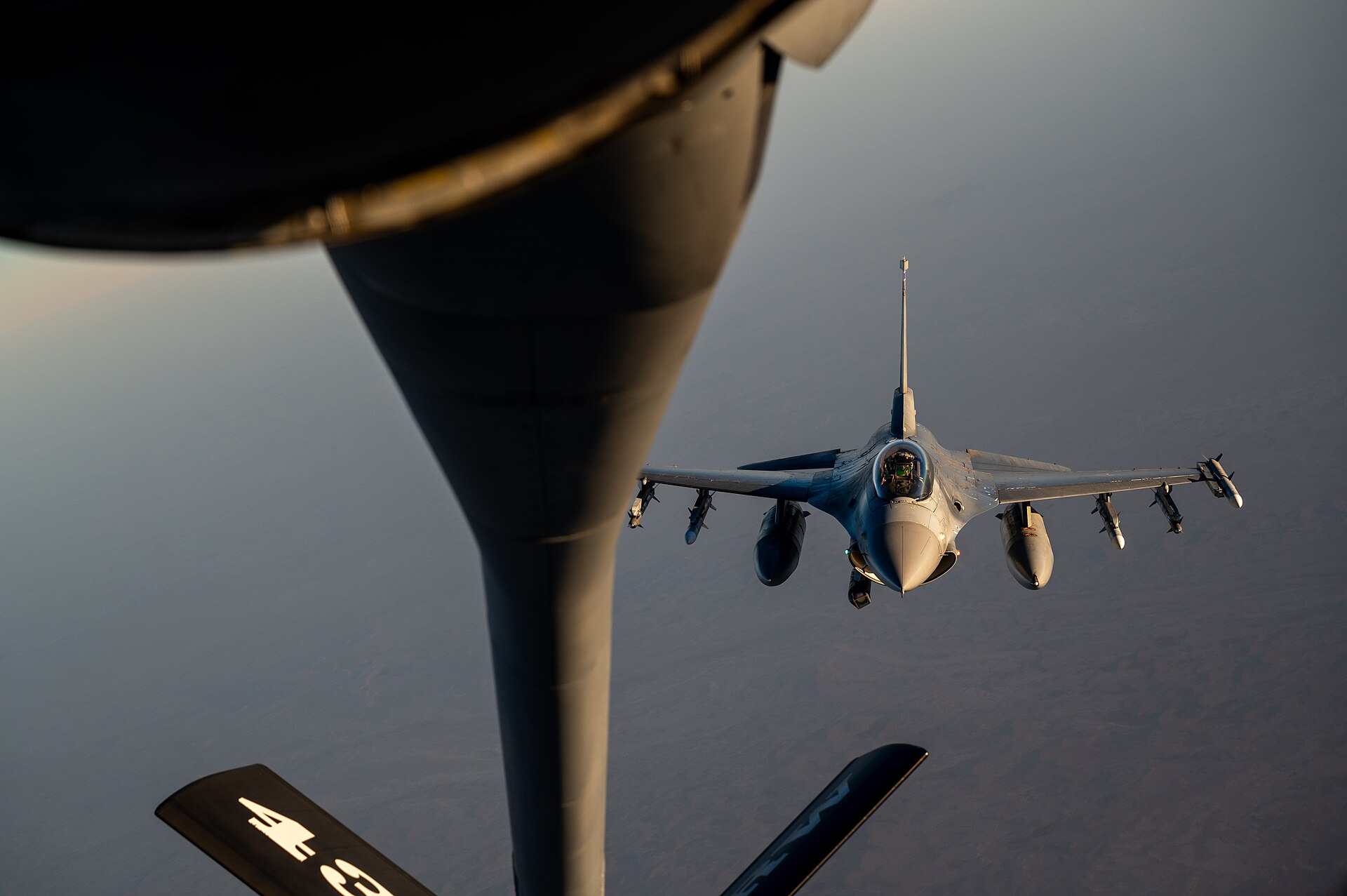
This was not PSAB’s first exposure. On March 14, Saudi air defences intercepted a ballistic missile targeting the base — an event Riyadh confirmed at the time. On March 27, a Fattah-2 struck and destroyed or severely damaged the E-3 Sentry AWACS, a $270 million aircraft that served as the airborne command-and-control backbone of the Saudi Integrated Air Defence System. A separate drone hit a residential building in Al-Kharj on approximately March 8, killing two civilians — an Indian national and a Bangladeshi national — and injuring twelve. What July 18 introduced was not range or capability, both of which Iran had demonstrated months earlier, but the re-establishment of Saudi territorial vulnerability after a period in which every other Gulf host nation absorbed strikes while PSAB remained conspicuously unstruck.
The Middle East briefing 3,000+ readers start their day with.
One email. Every weekday morning. Free.
The Six-Minute Window and What It Conceals
The National Early Warning Platform for Emergencies activated sirens in Al-Kharj and Yanbu simultaneously on the night of July 18. Six minutes later, the all-clear sounded across both governorates. The Civil Defense Authority’s subsequent statement said only that “relevant authorities monitored the situation on the ground around the clock and conducted a comprehensive assessment” — a sentence that names no projectile type, acknowledges no interception, and describes no outcome.
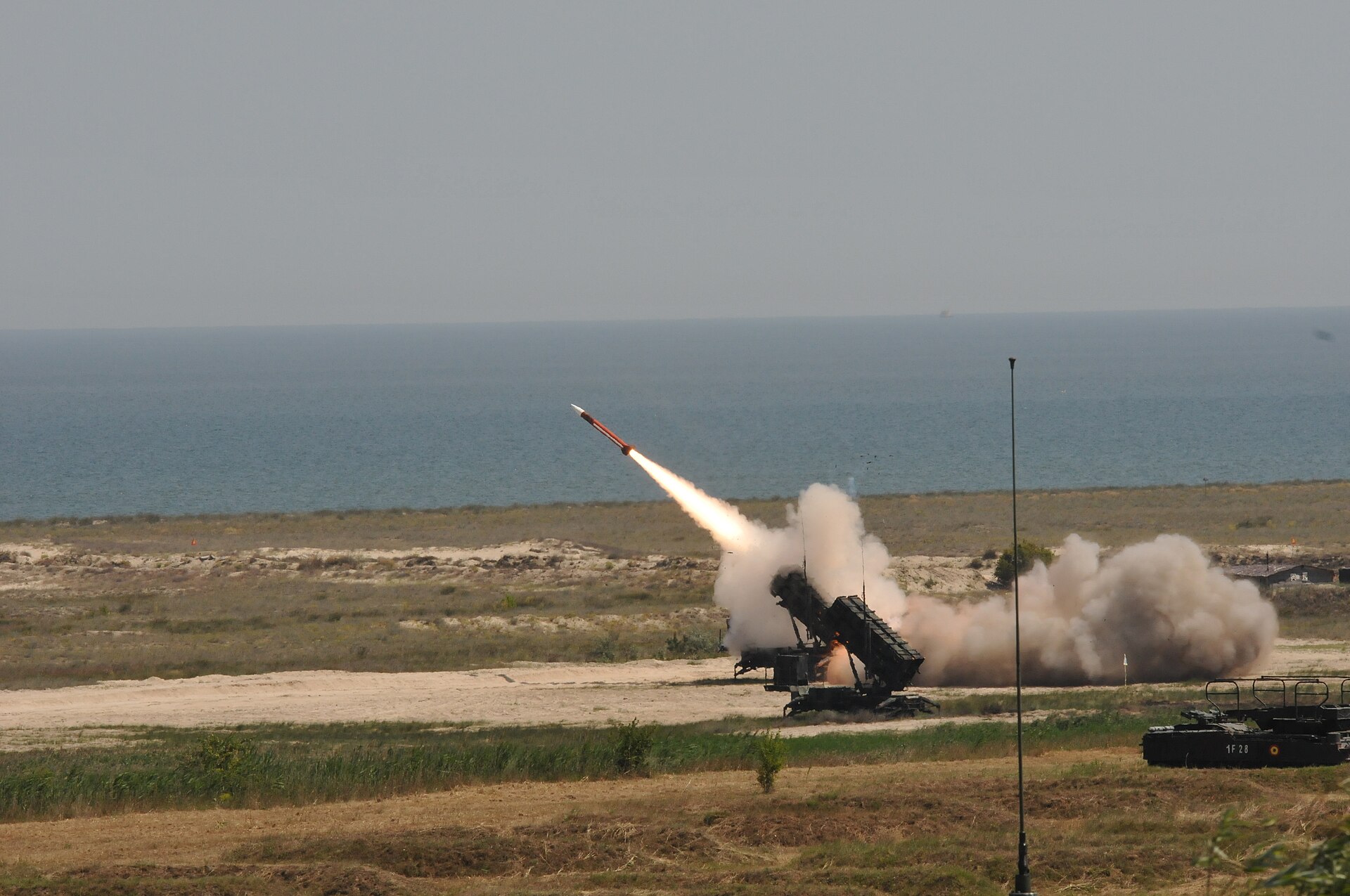
Six minutes is consistent with a single-salvo terminal engagement, not a sustained battle. A PAC-3 MSE engagement cycle — from radar acquisition to intercept — runs approximately 9 to 15 seconds per incoming threat in the terminal phase, with additional time for track discrimination when drones and ballistic re-entry vehicles arrive in the same window. A six-minute timeline accommodates a small number of threats tracked, engaged, and either intercepted or impacting before the all-clear protocol can activate. What that timeline does not accommodate is a public narrative, and the absence of one is the point.
The most recent prior Al-Kharj alert — June 8, 2026 — came with a technical explanation: a failed Yemeni missile that posed no threat to the city or the base. July 18 offered nothing comparable. The distinction matters because it is not bureaucratic. When Saudi Civil Defense explains the trigger, it implicitly confirms the source, the weapon type, and the defensive outcome. When it declines to, it preserves ambiguity across all three variables. In a state whose PAC-3 MSE stockpile has been reduced to approximately 400 rounds from a pre-war baseline of 2,800, preserving ambiguity about how many interceptors were expended on a given night is not a communications failure but a resource-conservation strategy conducted through silence.
Why Did No Government Issue a Statement?
Three governments had direct reason to acknowledge what happened at PSAB on July 18, and none did — not because they failed to coordinate, but because each party’s disclosure cost independently exceeded its disclosure benefit. The absence is structural convergence, not silence by accident.
Riyadh cannot confirm the strike without confronting two questions it has spent the war avoiding. The first is defensive: if an Iranian missile hit PSAB, the Sakhir Declaration — the GCC’s December 2025 summit declaration on collective defence — becomes the operative instrument, and invoking it requires publicly admitting what the Arab Center DC described as the core strategic dilemma: “the PAC-3 architecture is functionally exhausted.” The second is economic. Aramco’s August Arab Light OSP already dropped $11 month-on-month to $1.50 per barrel below Oman/Dubai, the largest such cut in over two decades and the lowest since June 2020. Confirming that Iranian ballistic missiles are landing on military installations 77 kilometres south of the capital forces a sovereign-risk reassessment that Riyadh’s fiscal position — a Q1 deficit of SAR 125.7 billion, with Aramco’s free cash flow at 0.85 times its quarterly dividend — is not structured to absorb.
Washington faces a different but parallel constraint. Confirming the strike means confirming that 2,300 US service members at PSAB are taking casualties at a base where 43 US warplanes have been grounded since Saudi Arabia’s Operation Project Freedom in May 2026. CENTCOM cannot describe a defensive engagement at PSAB without also describing the legal anomaly: the 1977 USMTM memorandum governing US presence is not a Status of Forces Agreement, and Project Freedom severed the operational relationship between American air power and Saudi host-nation authority. An official statement would invite the Congressional question that the Pentagon’s communications strategy is built to defer: why are American troops still at a base where their aircraft have been grounded by the host nation, absorbing Iranian fire under a legal framework that was designed for peacetime advisory missions?
Tehran’s restraint is asymmetric but equally deliberate. The IRGC confirmed striking “a US base in Saudi Arabia” — framing that avoids formally declaring war on the Kingdom while demonstrating that territorial immunity has ended. Absent from IRNA, Tasnim, and PressTV was any itemised damage claim at PSAB or any identification of specific Saudi military assets destroyed. By keeping the damage question ambiguous on its own side, Iran preserves the diplomatic flexibility it exercised when it kept Hormuz open under a selective transit-taxation regime rather than closing it outright: maximum coercive effect, minimum formal escalation. The result is what Modern Diplomacy described in May as “strategic ambiguity becoming the Gulf’s new deterrence doctrine,” in which actors “signal capability without full disclosure, impose costs without open acknowledgment, negotiate while coercing, and preserve deniability while demonstrating resolve.”
The 400-Round Ceiling No One Will Name
The managed ambiguity has a floor, and it is counted in interceptors. Saudi Arabia’s PAC-3 MSE stockpile — the terminal-phase defence that bore the full burden of the July 18 engagement — stands at approximately 400 rounds from a pre-war baseline of 2,800, an 86 percent depletion. Distributed across 108 launchers, the average remaining load is 3.7 rounds per launcher, below what a single reload cycle requires. CSIS analysts described the drawdown rate that produced this figure — approximately 63 rounds per day across 38 days of high-intensity combat between March 3 and early April 2026 — as having “no comparable precedent in the system’s operational history.”
| PAC-3 MSE Metric | Figure | Implication |
|---|---|---|
| Pre-war stockpile | 2,800 rounds | Baseline before Feb 28, 2026 |
| Current estimate (mid-July 2026) | ~400 rounds | 86% depleted |
| Rounds per launcher (108 launchers) | 3.7 average | Below single reload cycle |
| Pre-ceasefire daily depletion | ~63 rounds/day | <7 days sustained combat at prior rate |
| FMS resupply (notified Jan 30, 2026) | $9.4B for 730 rounds | No delivery before 2028 |
| Camden annual production ceiling | ~620 MSE/year | All global customers combined |
| Cost per PAC-3 MSE round | ~$4 million | vs $20K-$50K per Shahed drone |
Every interceptor fired is a data point that three governments are working to suppress. A six-minute engagement that expended even four PAC-3 MSE rounds reduced the remaining stockpile from 400 to 396 — a 1 percent draw on a reserve that already offers fewer than seven days of combat endurance at the rate sustained in March. This is why the all-clear was issued without detail: naming the number intercepted names the number spent, and the number spent, accumulated over the next salvo and the salvo after that, produces an arrival date at zero that energy markets, maritime insurers, and hostile targeting planners can each calculate independently. The question who defends Riyadh when the interceptors run out is not rhetorical — it is arithmetic, and the answer approaches faster each time the Civil Defense sirens sound.
Why Did the HQ-9 Not Fire?
The Chinese-supplied HQ-9 battery stationed at PSAB — Saudi-financed but nominally under Pakistani command, with approximately 8,000 Pakistani military personnel and 16 JF-17 fighters as the accompanying force package — did not engage on July 18. The PAC-3 bore the full intercept burden alone, as it did during the March strikes. The pattern is now three engagements deep and structurally entrenched.
The HQ-9’s silence is not a technical limitation alone, though the system’s combat record offers little confidence: it went 0-for-3 across engagements in 2025-2026, exhibiting vulnerability to electronic warfare during India’s Operation Sindoor, a separate deployment in 2025, and the March 2026 Iranian campaign. The deeper constraint is command authority. Pakistan’s operational control of the battery runs through a bilateral framework with Riyadh, not through data-link integration with the Saudi IADS. The HQ-9 operates as a standalone system whose engagement authority routes through Islamabad, and Islamabad is simultaneously maintaining a back-channel with Tehran and positioning itself as a potential mediator in the conflict — a role that would be instantly voided if a Pakistani-commanded battery fired at an Iranian ballistic missile on Saudi soil.
Pakistan’s declared red line — “attacks on Saudi Arabia are attacks on Pakistan,” per Reuters on July 18 — is precisely calibrated to avoid that test. The statement frames engagement authority around the principle of solidarity without specifying that the HQ-9 would fire at Iranian state missiles, as distinct from Houthi threats. Saudi Arabia paid for a shield whose command authority sits in a capital that cannot afford to use it, and the July 18 silence confirmed that the HQ-9’s deterrent value is diplomatic rather than kinetic — a symbol of Pakistani commitment that works only as long as it is never tested.
The Drone Swarm and the Ballistic Follow
Iran’s July 18 attack exploited a detection-engagement gap that Saudi Arabia’s degraded sensor architecture cannot close without hardware that does not exist in theatre. The Eurasian Times’ technical reconstruction — the most detailed open-source analysis of the strike — described a sequenced approach in which drone swarms functioned as low-cost attrition tools designed to force PAC-3 batteries into engagement against slower targets, opening a compressed window for faster ballistic re-entry vehicles to arrive during the battery’s reload or reorientation phase.
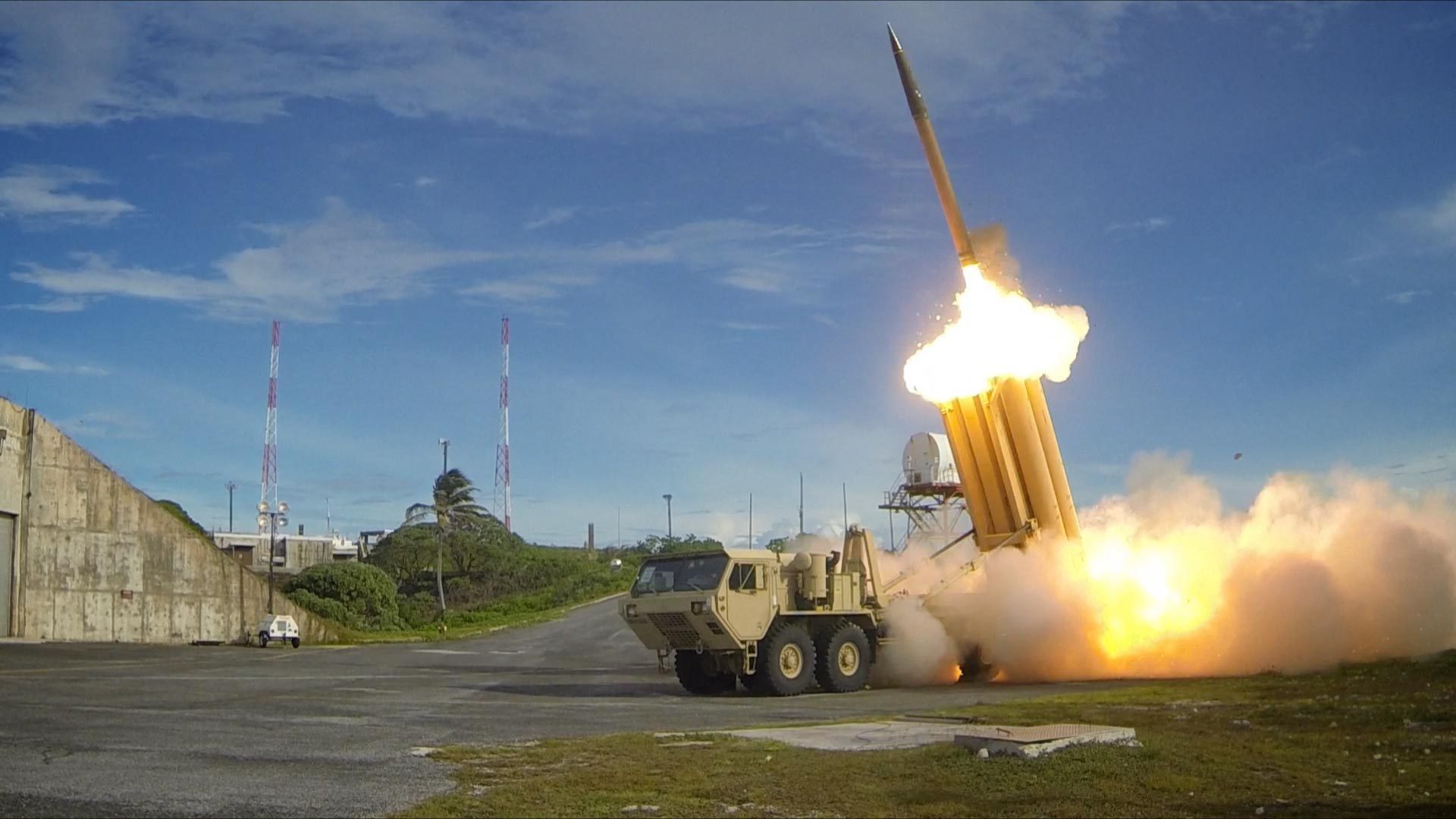
The tactic’s effectiveness at PSAB is amplified by a degradation chain that began on March 27. The AN/TPY-2 radar supporting the THAAD battery was damaged in the same strike that destroyed the E-3 Sentry AWACS — removing both the long-range sensor layer and the airborne command node in a single engagement. With THAAD’s primary sensor compromised and the system non-capable against drones, the full detection-to-intercept chain falls on the Patriot’s AN/MPQ-65 radar, which must simultaneously track incoming drones, discriminate between drone and ballistic threats, and cue PAC-3 MSE engagements in a timeline compressed by the absence of the sensor handoff that THAAD was designed to provide. Each drone that forces a PAC-3 engagement costs approximately $4 million per interceptor against a target worth $20,000 to $50,000 — a ratio the IISS characterised in its May 2026 “Rearming” assessment as “repeated use against far cheaper threats creating a strategic vulnerability.”
The IRGC’s April 2024 precedent against Israel offers the closest comparable: even against a multi-layered architecture with functioning THAAD, Arrow-2, Arrow-3, and Iron Dome, 10 to 20 percent of projectiles penetrated. PSAB’s architecture is substantially thinner — one PAC-3 layer with a damaged THAAD sensor, no Arrow equivalent, and a standalone HQ-9 that has never fired — and the penetration rate on July 18, whatever it was, is the number that all three governments have decided not to release. The KC-135 damage confirms that the rate was not zero.
From Abqaiq to Al-Kharj: When Ambiguity Was Free
The managed ambiguity that surrounds the July 18 strike has a direct institutional ancestor in the September 14, 2019 attack on Abqaiq — 18 drones and 7 cruise missiles that knocked out 5.7 million barrels per day of Saudi processing capacity, roughly 5 percent of global oil supply, without triggering a military response from either Riyadh or Washington. The Houthis claimed credit. Iran denied involvement. The United States pointed at Tehran without escalating. AEI’s Frederick Kagan identified the mechanism at the time: Iranian “artificial ambiguity about who perpetrated the attack has served the Iranian purpose of distorting the Western discourse and deflecting the debate away from focusing on Iranian escalation.”
In July 2026, the parties are reshuffled but the architecture is preserved. Iran strikes PSAB and confirms targeting “a US base in Saudi Arabia” without itemising damage. Saudi Arabia clears the sirens and issues no follow-up. The United States leaks confirmation through a single anonymous official and lets the story circulate in Israeli and Indian media rather than American. The strategic outcome — demonstrated vulnerability without formal escalation — serves all parties simultaneously, each for different reasons. Iran shows that Saudi territorial immunity has ended. Riyadh avoids confirming that the shield behind the silence is approaching exhaustion. Washington avoids explaining the anomalous position of 2,300 troops at a base where their aircraft are grounded.
What changed between 2019 and 2026 is not the ambiguity but its cost. In 2019, Saudi Arabia had 2,800 PAC-3 rounds in reserve, a functioning THAAD battery, an operational E-3 Sentry, and the institutional confidence that comes from knowing the shield behind the silence is real. The ambiguity cost nothing because the capability supported it. In July 2026, the stockpile is 86 percent depleted, the THAAD radar is damaged, the AWACS is destroyed, the HQ-9 will not fire, and the base that fell silent after the strike has no mechanism for restoring what it lost. The same silence that preserved strategic flexibility in 2019 now conceals a position that erodes with every salvo — and the IRGC, which broadcast the tanker departure schedule on state television, knows it.
What Breaks the Silence?
Three triggers force the managed ambiguity into public reckoning, each operating on a different timeline. The first is the most visceral: a visible miss. A future Iranian ballistic missile that strikes Riyadh’s residential infrastructure or causes mass Saudi civilian casualties collapses the political cost calculus overnight. The March 8 Al-Kharj residential hit killed two and injured twelve, but the victims were expatriate workers and the weapon was a drone — a combination that Riyadh could acknowledge without triggering systemic narrative disruption. A ballistic missile hitting a Saudi neighbourhood removes that option entirely, because the questions that follow — what was the intercept rate, how many rounds remain, why was THAAD not functional — are the questions the silence was designed to defer.
The second trigger is operational repetition. The six-minute all-clear functions as narrative containment once or twice before the pattern itself becomes informative. If Iran fires another salvo at PSAB within days and the Civil Defense timeline lengthens — or if the all-clear fails to activate — the gap between the communiqué and the physical reality becomes visible from three independent vectors: satellite imagery of the impact zone, hospital admission records at military medical facilities in Saudi Arabia and the UAE, and the logistics trail that CENTCOM’s resupply chain inevitably generates when interceptor stocks fall below operational minimums.
The third is Congressional, and it operates on the longest fuse. The PAC-3 depletion produces a paper trail that runs through FMS notifications, production allocation at Lockheed Martin’s Camden facility, and the appropriations process for the $9.4 billion resupply package notified in January. A hearing on the Iran war of the kind NPR characterised as imminent when it reported that the US and Iran had “blown past red lines” could force intercept-cost disclosure under questioning that CENTCOM’s communications posture — designed for press briefings, not sworn testimony — is structurally unable to withstand. Washington approved the rockets and withheld the shield, and the ledger behind that choice lives in documents that Congressional committees have the authority to subpoena.
The MOU and the Missile Were the Same Message
Iran’s Deputy Foreign Minister Kazem Gharibabadi declared the suspension of all commitments under the 14-point Islamabad Memorandum on July 18 — Day 31 of the 60-day window — simultaneously with the PSAB strike. The co-timing was structural, not coincidental. Gharibabadi framed Iran’s military operations as “self-defence,” a term that invokes Article 51 of the UN Charter, while the IRGC’s accompanying statement deployed Quranic authority: “Since there is no international institution to prevent the savagery of the US military, we have no path before us except the Quranic command: ‘Whoever attacks you, attack them in the same manner.’” The diplomatic suspension and the kinetic strike reinforced each other — the MOU removal cleared the restraining framework, and the strike demonstrated that the restraint had already been hollow.
Saudi Arabia had no institutional mechanism through which to register the change. The Kingdom was neither a signatory, a mediator, nor a formal observer to the Islamabad MOU. Its sole channel was Ambassador Enayati, and Foreign Minister Faisal bin Farhan’s July 14 de-escalation call — placed four days before the strike — received no response. The IRGC’s warning to Gulf states hosting US forces to “expect corresponding responses” was not addressed to Saudi Arabia’s foreign ministry or defence establishment but to the category of host nations, a framing that treats Saudi Arabia as interchangeable with Kuwait, Bahrain, and Qatar rather than as a sovereign with distinct bilateral standing. PSAB lost its deterrent before Iran fired, and the MOU suspension ensured that no diplomatic architecture remained to constrain the next round.
| Date | Event at PSAB / Al-Kharj | Official Response |
|---|---|---|
| ~March 8, 2026 | Drone strikes residential building in Al-Kharj: 2 killed, 12 injured | Confirmed publicly; casualties reported |
| March 14, 2026 | Ballistic missile targeting PSAB intercepted | Saudi MoD confirmed successful intercept |
| March 27, 2026 | Fattah-2 strikes PSAB; E-3 Sentry AWACS destroyed; AN/TPY-2 radar damaged | No Saudi statement; confirmed by Air & Space Forces Magazine |
| July 18, 2026 | Ballistic missile fired at PSAB; alerts in Al-Kharj and Yanbu; no damage or casualties reported | Civil Defense all-clear at 6 minutes; no official statement from Riyadh, CENTCOM, or Saudi MoD |
The IRGC told state television that its missiles were launched “moments after American refueling planes took off” from Prince Sultan Air Base — a sentence that said more about Iran’s surveillance of PSAB than any damage assessment could. Somewhere in Al-Kharj, a PAC-3 battery holds 3.7 rounds per launcher, and the next time those launchers fire, the count will drop closer to a figure that three governments, for three different reasons, have agreed not to say aloud.
Frequently Asked Questions
How many US service members have been killed in the Iran war as of July 19, 2026?
The total stood at 17. Two were killed on July 18 in a separate concurrent Iranian attack on Muwaffaq Salti Air Base in Azraq, Jordan — the same facility that absorbed 10 IRGC missiles earlier in the week, of which 8 were intercepted by MIM-23 Hawk batteries. One US service member remains listed as missing in action from the Jordan engagement. The 12 wounded at PSAB on July 18 are not included in the fatality count, though two remained in critical condition as of July 19. The cumulative toll since Operation Epic Fury began on February 28, 2026 is 17 killed and over 427 wounded across Saudi Arabia, Kuwait, Bahrain, Jordan, and Qatar.
Has Saudi Arabia struck Iran directly during this conflict?
Reuters reported on May 12, 2026, citing multiple sources, that Saudi Arabia had been conducting covert strikes inside Iran since March 2026 — a disclosure that collapsed the Kingdom’s formal non-belligerent status. Iranian attacks on Saudi Arabia fell by 76 percent in the weeks following Riyadh’s covert campaign, according to Reuters’ sources, suggesting a limited deterrent effect. The Saudi government has never confirmed or denied the strikes, and the revelation did not produce a formal Iranian declaration of war against Saudi Arabia — maintaining the same managed-ambiguity architecture on the Saudi-offensive side that the July 18 silence preserves on the Iranian-strike side.
What is the cost asymmetry between Iranian attack drones and PAC-3 MSE interceptors?
The manufacturing cost gap runs roughly 80:1 to 200:1 in the attacker’s favour — approximately $4 million per PAC-3 MSE round against $20,000 to $50,000 per Shahed-series drone. The IISS’s May 2026 assessment calculated that the 2,400 PAC-3 rounds expended between March and April 2026 represented approximately $9.6 billion in interceptor costs — against an incoming threat set whose total production cost was a fraction of that figure. The $9.4 billion FMS package notified to Congress in January 2026 for 730 replacement rounds would, at the March depletion rate, sustain fewer than 12 days of combat before requiring a second order that Lockheed Martin’s Camden facility cannot fill for at least two years.
Why were sirens activated in Yanbu — 900 kilometres from PSAB — at the same time?
The simultaneous Civil Defense activation in both Al-Kharj and Yanbu on July 18 indicated two distinct threat vectors arriving in the same engagement window, not a single missile on a deviant trajectory. A subsequent strike on the SAMREF refinery at Yanbu — a 400,000 barrel-per-day Aramco-ExxonMobil joint venture — was confirmed on July 19 when a Shahed drone hit the facility, with damage described as “under assessment.” The 900-kilometre separation between Al-Kharj and Yanbu means Iran simultaneously threatened both PSAB, the principal US military installation in the Kingdom, and the Red Sea export corridor through which 70 to 75 percent of Saudi crude now moves while Hormuz remains effectively closed. A Greek Patriot battery — approximately 120 to 130 Hellenic Air Force personnel, authorised in November 2025 and drawing from a separate interceptor pool — provides Yanbu’s terminal defence.
Could Iran close the managed-ambiguity gap by releasing its own damage assessment?
Iran has chosen not to, and the restraint is strategic rather than informational. The IRGC’s ISR capability — demonstrated by the state broadcaster’s citation of tanker departure timing — almost certainly includes post-strike imagery sufficient to produce a public damage assessment. Releasing it would serve Iran’s propaganda objectives but would simultaneously close the ambiguity window that currently works in Tehran’s favour: forcing Saudi Arabia and CENTCOM to either confirm or deny specific claims, triggering the intercept-cost disclosure chain that both are working to avoid, and potentially providing targeting intelligence to Saudi and US analysts about what Iranian sensors can and cannot resolve at PSAB. The ambiguity, in other words, is not ignorance — it is a shared asset whose value to each party depends on no party cashing it in.
Update, July 20: The Houthis declared a maritime blockade of Saudi Arabia, closing Bab al-Mandeb to Saudi-flagged and Saudi-bound shipping — trapping the kingdom between two blocked sea corridors simultaneously as Hormuz remains closed. Separately, the ninth night of US strikes expanded the campaign to eight Iranian cities, including Tabriz in the far northwest — the widest geographic arc since operations began on July 6 — as Secretary of State Rubio declared open-ended maritime enforcement, decoupled from the MOU timeline.
Update, July 18: The managed-ambiguity thesis this article describes acquired a new dimension the same evening. Mojtaba Khamenei’s written statement declared Trump’s MOU signature “utterly worthless and invalid” — voiding the ceasefire framework simultaneously with the strike on PSAB. The interaction between the kinetic event and the legal collapse is analysed in Mojtaba Voided the MOU from a Location No Official Can Name.
Update, July 20: Waves 21 and 22 of Operation Nasr-2 extended the campaign’s logic from interceptors and munitions to the ISR layer itself — striking the P-8A Poseidon maritime patrol aircraft at Aqaba and the early-warning radar at Ali al-Salem that generate the targeting data Saudi Arabia depends on for Abqaiq threat warning. What Watches the Gulf for Saudi Arabia Now? maps the ISR architecture warning Saudi Arabia of threats to Abqaiq and the gap that opens when it is degraded. CENTCOM also launched a second strike wave against Iran the afternoon of July 20 — the double-wave pattern confirmed for the second time in five days as the IRGC pushed Nasr-2 to wave 23.