DOHA — The second Doha round of indirect US-Iran talks closed on July 2 with two procedural deliverables — a goods-purchase mechanism allowing Iran limited access to its $6 billion in frozen Qatari-held assets, and a formal communication channel to document violations of the 60-day ceasefire MOU — but no resolution on the dispute both sides now publicly name as the central obstacle: whether Iran can charge ships to transit the Strait of Hormuz after August 18. Qatar and Pakistan confirmed what they called “positive progress” and announced talks would resume after the July 4–9 pause for the funeral of Supreme Leader Ali Khamenei, according to the Times of Israel and The Week.
The 47 days remaining on the MOU clock now carry a specific price tag. The Persian Gulf Strait Authority — Iran’s toll-collection body, operational since May 5 and sanctioned by OFAC three weeks later — suspended its per-vessel fees for the MOU’s duration, but that suspension expires automatically on August 18, and nothing agreed at Doha constrains what happens after. Every VLCC that sails through the Strait on August 19 could owe Tehran up to $2 million, according to Kurdistan24 and Euronews reporting on PGSA fee schedules before the suspension took effect.
Table of Contents
What Did Doha Actually Deliver?
Two things came out of Doha, both procedural, neither touching the fee question that both sides identify as the hardest remaining problem. The first is a goods-purchase mechanism for the $6 billion in frozen Iranian assets held in Qatar — refrozen after October 7, 2023 and inaccessible until now. Under the mechanism confirmed by Qatar’s FM and US officials, Iran can use a portion of the funds through Qatar’s Central Bank on a transaction-by-transaction basis, restricted to humanitarian goods, according to Middle East Monitor and Asianet Newsable. The funds have not been “released” in any direct sense, despite Iranian President Masoud Pezeshkian’s public claim on June 29 that “$6 billion of Iranian resources in Qatar will be released and returned,” as reported by the Washington Times.
The second deliverable is a communication channel for MOU violations — a formal reporting mechanism through which either side can flag breaches, with documentation requirements. Iranian Deputy FM Kazem Gharibabadi told Al Jazeera on July 1 that the channel “would be established by tomorrow” and that shortcomings in MOU implementation would henceforth be “reported, discussed and decided upon in a formal and documented manner.” The channel formalizes what had been an ad hoc process; the first Doha round produced working groups but no structured way to escalate complaints.
What Doha did not produce is any movement on the fee question — the one that determines whether Iran can institutionalize permanent revenue extraction from the world’s most important oil chokepoint. Neither US Special Envoy Steve Witkoff nor senior adviser Jared Kushner attended; technical-level delegations conducted indirect talks through Qatari and Pakistani mediators, according to CBS News.
Is There a Legal Difference Between a Fee and a Toll?
Iran says yes, and the country’s post-August 18 revenue stream depends on the distinction holding up under international pressure. Iranian FM Abbas Araghchi stated the position on June 14: “According to international law, it is not possible to levy a toll on passage through the Strait of Hormuz, but charges for services provided will be collected,” as reported by Euronews and The National News. Iran frames its charges under three categories — navigation services, environmental protection, and maritime security — and cites UNCLOS Article 26(2), the clause in international maritime law that permits coastal states to charge for “specific services rendered to the ship.” Iran’s ambassador to India described the fees as covering exactly those three categories, according to Kurdistan24.
The Middle East briefing 3,000+ readers start their day with.
One email. Every weekday morning. Free.
“According to international law, it is not possible to levy a toll on passage through the Strait of Hormuz, but charges for services provided will be collected.”— Abbas Araghchi, Iranian FM, June 14, 2026
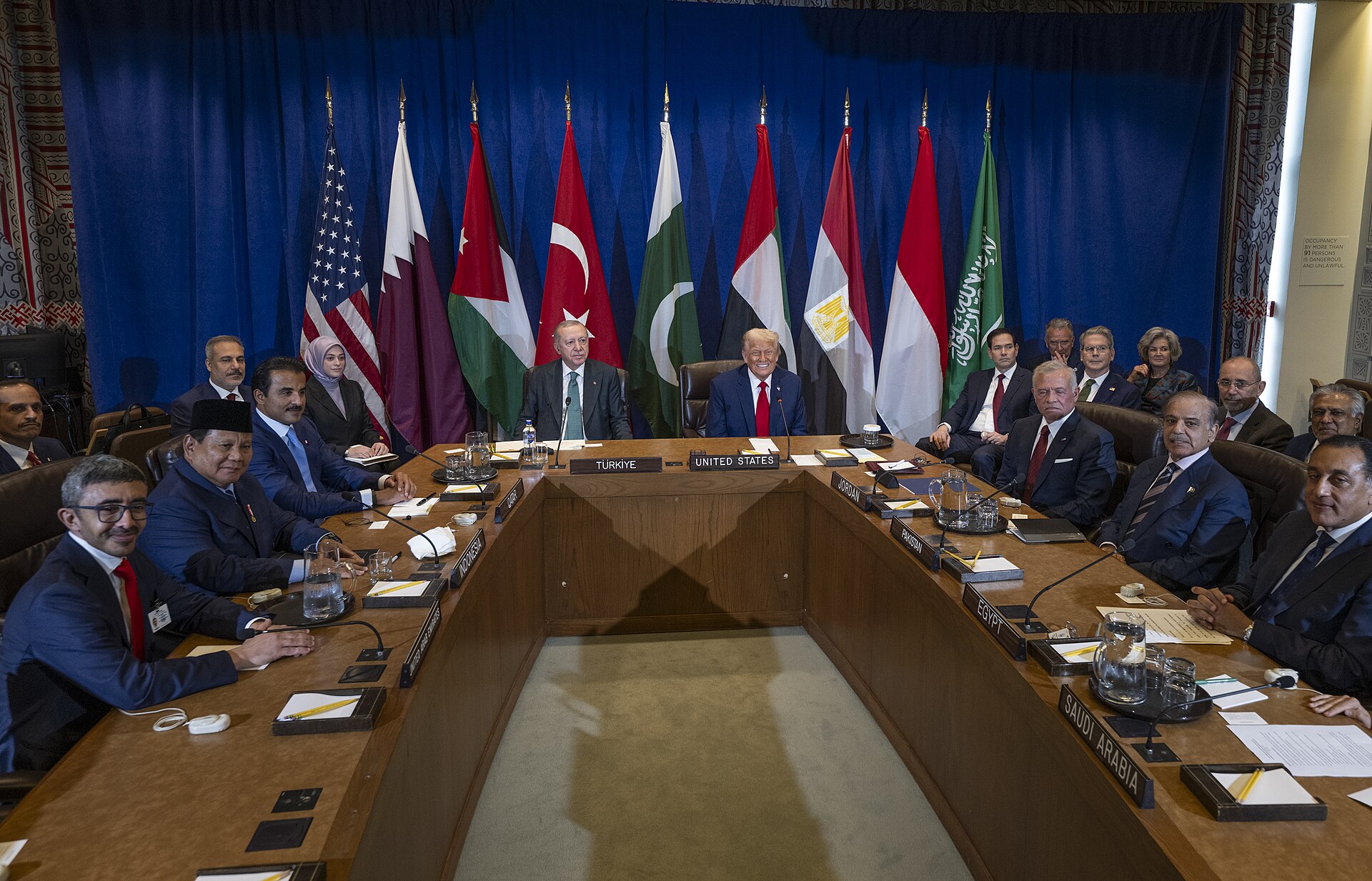
US Secretary of State Marco Rubio, speaking in Manama on June 25, rejected the distinction entirely. “You can call it a toll, you can call it a fee, whatever you want to call it — it’s a game of semantics,” he told Bloomberg and Al Jazeera. “That will never be an acceptable condition of any deal.” He went further, declaring that international waterways “do not belong to any nation state” and warning that Iranian charges would “spread like contagion” to other straits and canals worldwide, as reported by Arab News and Bloomberg. Rubio also claimed “zero support” among Gulf countries for any Iranian toll mechanism.
The legal terrain is genuinely contested, not just rhetorical. UNCLOS Article 44 bars bordering states from levying charges “by reason of passage alone” — but Iran is not a party to UNCLOS and has formally rejected Article 44 as binding customary international law, invoking the persistent-objector doctrine. Iran’s argument is that its charges are not for passage but for services, and that a non-party to the treaty is not bound by transit-passage provisions it never ratified. The distinction matters because the MOU text bans “tolls” during the 60-day window but does not define “service fees” or prohibit them after expiry — a gap Tehran appears to have negotiated deliberately.
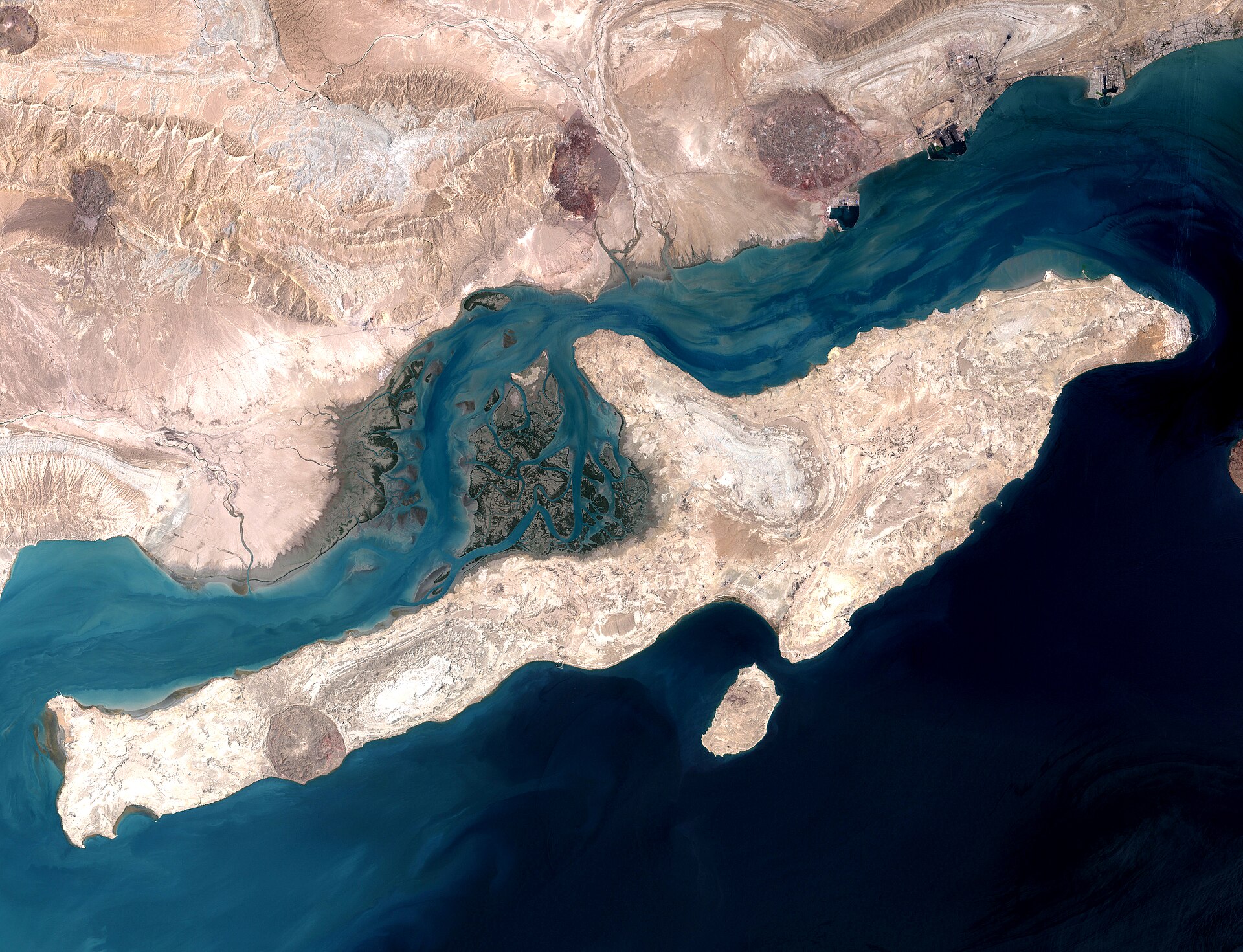
Oman is not neutral on this question, and its position weakens the American argument that the entire Gulf opposes the fee regime. Iran and Oman have established a joint working group on “maritime service fees,” with Oman’s FM Badr al-Busaidi declining to rule out fees modeled on the Malacca/Singapore voluntary pilotage structure, according to France 24. Tehran is offering Muscat a share of revenue and joint administration — turning the Strait’s other coastal state into a partner rather than an opponent. But the Malacca comparison has a structural flaw the US has not fully exploited in public: those fees are voluntary and vessel-requested, while the PGSA requires mandatory Vessel Information Declarations before any transit permit is issued.
Why Did Iran Open by Accusing the US of Violating the Deal?
The communication channel is not a neutral complaint box — Iran used it as a weapon before it was formally operational, and the choice of first complaint was calculated. Gharibabadi confirmed to Al Jazeera and Tribune India that the first Doha session specifically addressed US “violations of its obligations” under Clause 1 of the MOU, which requires cessation of hostilities on all fronts — including Lebanon.
Iran has been quietly flagging ongoing Israeli operations in Lebanon, with US support, as a breach of the ceasefire’s foundational clause, and the new channel gives that complaint a formal, documented status it previously lacked. When Iran reversed its Hormuz stand-down in late June, it cited the Lebanon violation as justification — establishing a pattern in which US breach comes first, Iranian escalation follows. The communication channel does not create an enforcement mechanism (the MOU lacks one entirely), but it creates a record, and if the MOU collapses, Iran wants a paper trail showing the US broke it first.
Majlis Speaker Mohammad Bagher Ghalibaf reinforced the framing by warning that Iran would “definitely react” to Persian Gulf ceasefire violations, as reported by Tribune India. Iranian state media — IRNA and PressTV — presented the Doha outcomes accordingly: progress on frozen assets and documented US compliance failures, with no mention of Iranian concessions on fees or any suggestion that the channel might be used to flag Iranian conduct.
Ghalibaf’s use of compliance language as a tactical instrument became clearer on July 3, when he conditioned all further negotiations on US implementation of five specific MOU articles — four of which require active American performance, none of which have a named arbiter to verify completion. Ghalibaf’s five-article compliance framework is less a checklist than a designed sequencing veto: every unfulfilled gateway clause is, by the text’s own terms, Washington’s failure.
The Frozen Six Billion: Goods, Not Cash
The $6 billion has been politically radioactive since October 2023, and the goods-purchase mechanism is designed to let both sides claim a partial win without either getting what it wanted. The money represents less than 6 percent of Iran’s estimated $100 billion-plus in total frozen assets globally, but its political weight exceeds its financial size: it was the only pool with an active release mechanism before the war began, as documented by The Hill and the Jerusalem Post.
The goods-purchase mechanism agreed on July 2 is the first operational step since the October 7 refreezing, and it is deliberately narrow: Qatar’s Central Bank acts as gatekeeper, approving purchases of humanitarian goods — food, medicine — on a transaction-by-transaction basis, according to Middle East Monitor and Asianet Newsable. Pezeshkian’s public claim that the funds would be “released and returned” in full was contradicted by both Qatar’s FM and US officials, who confirmed the funds remain frozen in the technical sense, with access limited to structured disbursements.
Iran may be playing a longer game: Pezeshkian has separately referenced $12 billion in total frozen Iranian assets in Qatar — suggesting a second pool beyond the Biden escrow — but the US has not confirmed any second pool exists. The goods-purchase mechanism, even in its limited form, establishes a precedent for accessing frozen funds through Qatari channels that Tehran could seek to expand in future rounds.
What Happens When the MOU Expires?
The MOU runs until August 18 — Day 60 of the ceasefire window. Forty-seven days remain as of July 2, and the PGSA’s fee suspension is tied to that clock. The MOU contains no provision for extension, no rollover clause, and no mechanism requiring a final deal to address fees after expiry.
The PGSA is already building the operational capacity to resume billing the day the MOU lapses. Even with fees suspended, ships must submit Vessel Information Declarations covering ownership, cargo, crew, and routing data before receiving transit permits, according to Windward.ai and Kurdistan24. Iran is collecting vessel intelligence, insurance records, and cargo manifests — the administrative infrastructure for fee collection — while the suspension runs. On August 19, the PGSA has everything it needs to start charging.
The financial exposure is concentrated on Saudi Arabia. At $5.5 million per day in mandatory PGSA pre-clearance fees — the rate before the MOU suspension — Saudi Arabia’s cumulative exposure from May 5 to July 1 was approximately $319 million, as previously reported. Aramco is already under pressure from a collapsing price structure: the Arab Light OSP has dropped $10 per barrel in two months, from a $19.50 premium over Oman/Dubai in May to $9.50 for July loadings, and free cash flow covers only 85 percent of the dividend obligation.
Riyadh holds zero seats in the Doha negotiating room where those fees will ultimately be settled. Saudi FM Faisal called Pakistan’s Dar the day Doha’s second round concluded — Islamabad has become the channel through which Riyadh attempts to shape a process it cannot formally join. The call simultaneously made Pakistan Saudi Arabia’s sole documented source of situational awareness on its own $242 million PGSA exposure; the informational dependency that created is analysed here.
“International waterways do not belong to any nation state. This is a foundational principle in the world today, without which the world would be in total chaos.”— Marco Rubio, US Secretary of State, Manama, June 25, 2026
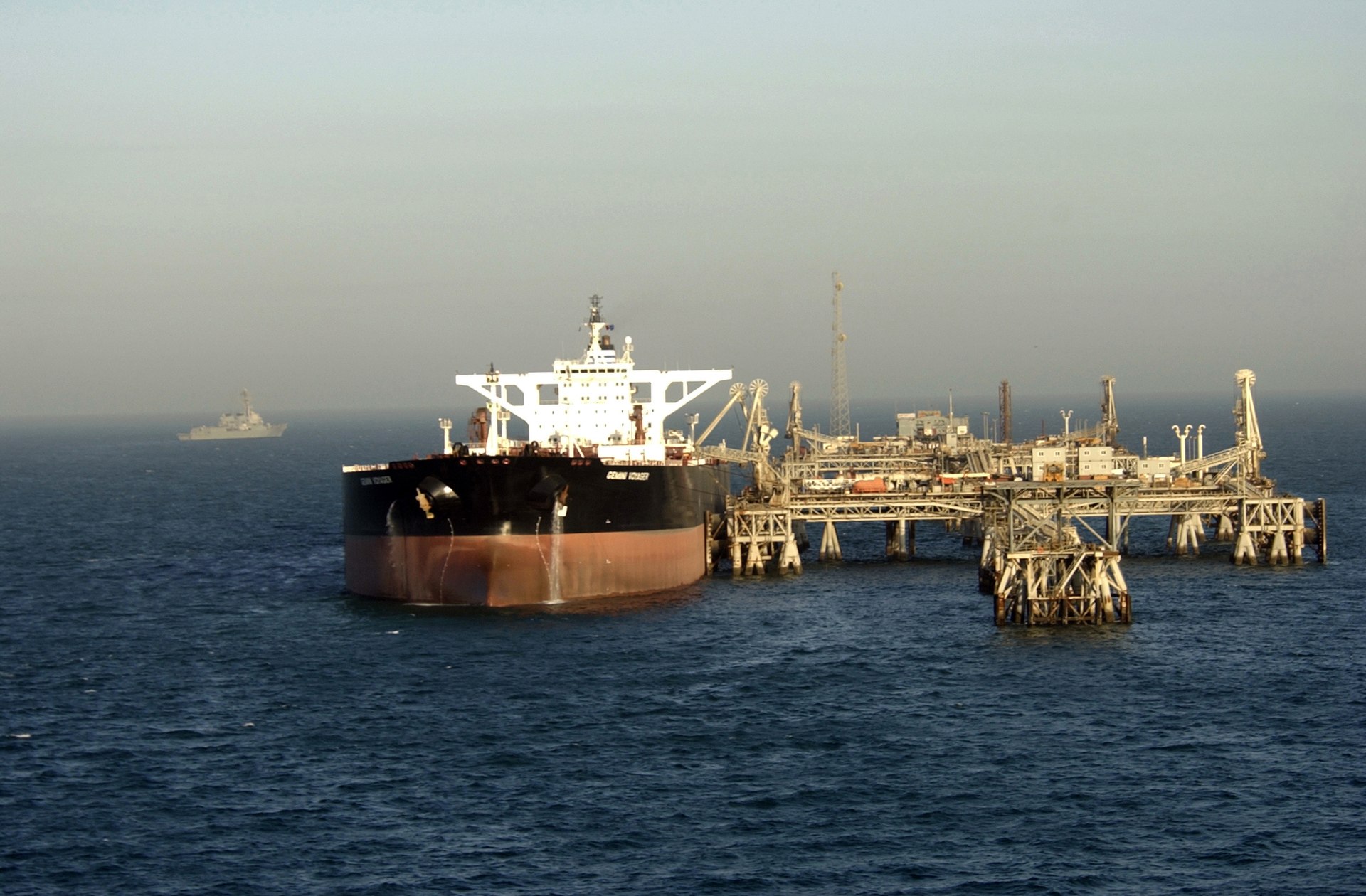
Rubio’s “zero support” claim from Manama sits uneasily alongside a complication the US itself created. The OFAC designation of the PGSA on May 27 means any company that transacts with the body to pay fees faces US secondary sanctions risk — the US has sanctioned the very entity that controls transit permits. Paying the fee to get the permit to move the cargo becomes a potential sanctions violation, while refusing to pay means ships cannot transit under Iran’s declared rules. The insurance market has already priced this impossibility into war-risk premiums that remain near conflict-era highs.
The Hormuz disruption is now 122 days old, with approximately five vessels per day transiting the Strait compared with a pre-conflict throughput of 93, according to Windward.ai vessel-tracking data — roughly 5 percent of the volume that once carried 20–21 percent of global oil supply and about 25 percent of LNG transits, according to the US Energy Information Administration. The funeral pause from July 4 to 9, with Riyadh not sending a senior delegation to Tehran, freezes diplomacy for nearly a week at a point when fewer than 40 days remain to resolve a dispute that two rounds of Doha talks have now declined to address.
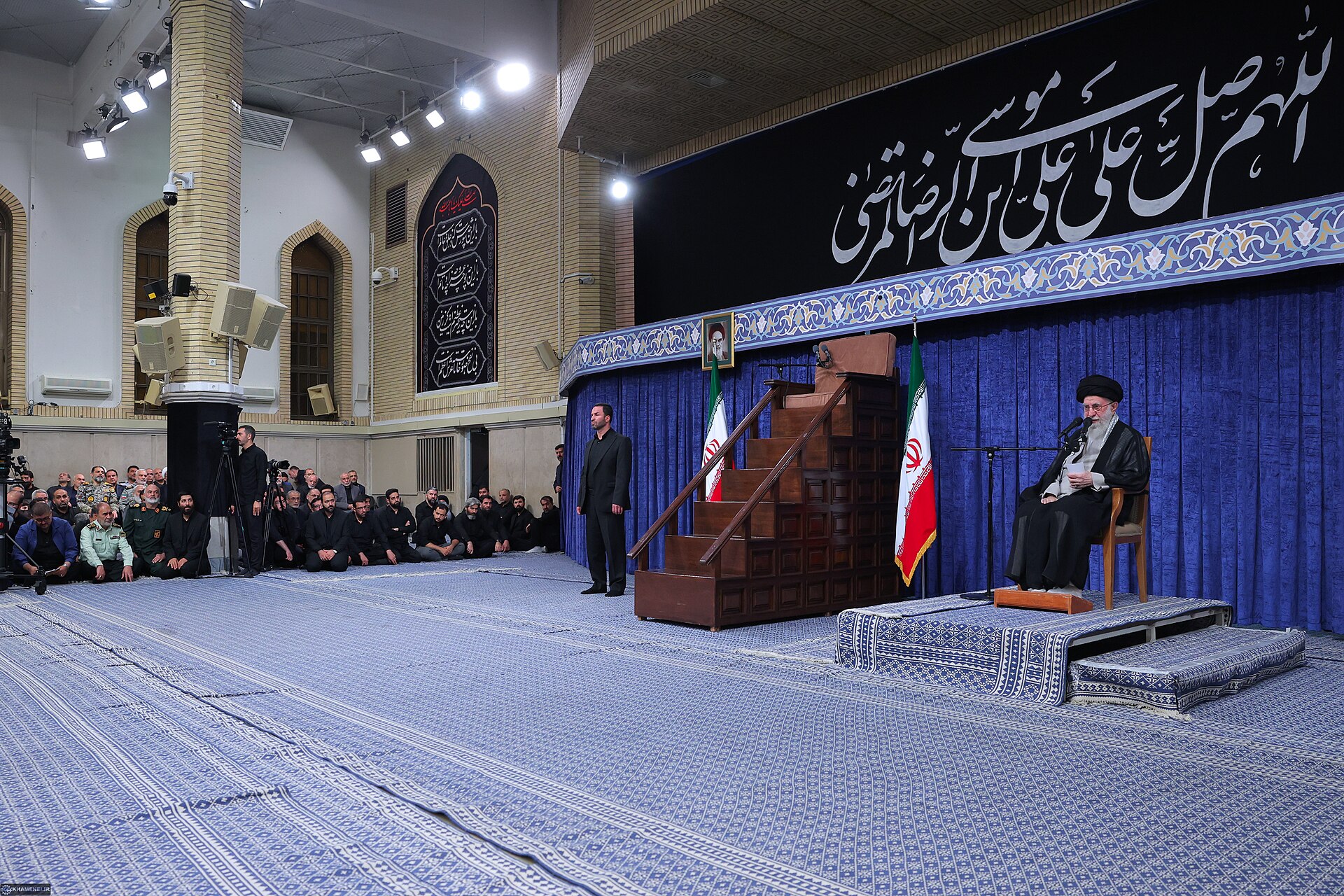
The six-day interval is also changing what round three will look like when it opens: how the six-day funeral pause is hardening both sides’ positions ahead of round three is documented in the on-camera oath-taking at Tehran’s Grand Mosalla, where every senior military and clerical figure is publicly committing to positions Ghalibaf will have to carry into the room.
Background
The PGSA was established on May 5, 2026, as Iran’s administrative body for Hormuz transit management. Three weeks later, on May 27, the US Treasury’s Office of Foreign Assets Control designated the PGSA as a sanctioned entity, making any financial transaction with the body a potential violation of US sanctions law. The designation created the compliance paradox that now defines Hormuz transit: the body issuing the permits is the body the US has made it illegal to pay.
The MOU — the 60-day ceasefire framework — was agreed in mid-June 2026 and runs until August 18. Its text explicitly suspends toll collection for the duration but contains no definition of “service fees” and no clause constraining the post-expiry fee regime. Iran negotiated both the suspension and the definitional gap, creating a window that simultaneously pauses revenue collection and preserves the legal architecture for resuming it.
Iran is not a party to UNCLOS and has formally rejected Article 44 — the provision prohibiting charges for transit passage alone — as binding customary international law, while invoking Article 26(2) of the same treaty as the basis for its fee categories. The China-Saudi joint statement on Hormuz freedom of navigation added another layer to the diplomatic contest, as Beijing committed to language with Riyadh that it declined to offer Tehran.
The $6 billion in Qatari-held frozen assets originated as South Korean oil revenue transferred to Qatar in September 2023 under the Biden administration’s prisoner-exchange agreement, with humanitarian-use restrictions administered through Qatar’s banking system. After October 7, 2023, the funds were refrozen and remained inaccessible until the goods-purchase mechanism agreed at Doha on July 2, 2026.
Frequently Asked Questions
What is the difference between the frozen $6 billion and the $3 billion discussed in earlier Doha rounds?
The $6 billion refers to South Korean oil revenue held in Qatari escrow since September 2023 — a specific, confirmed pool with a documented transfer history. The $3 billion reported by Al-Hadath after the first Doha round was described as a “preliminary agreement” on a first tranche from that same $6 billion pool, but US officials did not confirm the $3 billion figure, and the goods-purchase mechanism agreed on July 2 supersedes that framing entirely: rather than releasing a named tranche, the mechanism allows Iran to request individual humanitarian purchases without any upfront disbursement of principal. The $3 billion number has not reappeared in official US or Qatari statements since the first round.
Can Iran legally charge ships for transiting the Strait of Hormuz?
International maritime law does not give a clear answer because Iran is not a party to UNCLOS, the treaty that governs transit passage. UNCLOS Article 44 prohibits charges for passage alone, but Article 26(2) allows fees for “specific services rendered.” Iran claims its charges fall under Article 26(2), while rejecting Article 44 as non-binding under the persistent-objector doctrine. The US and most maritime nations treat transit passage through international straits as a right that cannot be charged for, but no international court has ruled on the specific question of Iranian Hormuz fees, and Iran’s non-party status means UNCLOS dispute-resolution mechanisms do not apply.
What role does Pakistan play in the Doha talks?
Pakistan serves as one of two mediators alongside Qatar, facilitating indirect shuttle diplomacy between US and Iranian delegations that do not meet face to face. The format involves separate rooms with mediators carrying proposals between them — a structure designed to allow both sides deniable, low-level engagement. Pakistan’s involvement reflects its diplomatic relationships with both Tehran and Washington, and Pakistani officials joined Qatar in confirming “positive progress” after the July 2 session. The shuttle format also explains the slow pace: every exchange requires mediator translation and relay, with no direct negotiation possible.
What is the Malacca/Singapore pilotage model that Iran and Oman are using as a template?
The Malacca and Singapore Straits charge vessels for voluntary pilotage and navigational aids under a cooperative authority shared by Indonesia, Malaysia, and Singapore — all three UNCLOS signatories. The fees are optional, vessel-requested, and collected by a multilateral body rather than a single coastal state. Iran’s proposed PGSA model differs on every dimension: fees are mandatory, permit-based, and collected by a sovereign Iranian body using Vessel Information Declarations that create pre-clearance obligations before any transit is granted. Oman’s involvement in a joint working group does not make the PGSA framework multilateral, but it gives Tehran a coastal-state partner capable of citing Malacca precedent in international forums, according to France 24 reporting on June 23.
What happens to ships already in transit when the MOU expires on August 18?
The MOU does not address transitional provisions for vessels mid-voyage when the fee suspension lifts. Ships that have already submitted Vessel Information Declarations and received PGSA transit permits under the suspension would face legal ambiguity: Iran could argue that new fee obligations attach at the point of Strait transit rather than at the point of permit issuance. The OFAC sanctions on the PGSA compound the problem, since any payment to the body — whether for fees or permit renewals — exposes the payer to US secondary sanctions risk. Shipping insurers have flagged this gap, and war-risk premiums already reflect the uncertainty of the August 18 transition.
The day after the Doha session closed, Ghalibaf used the newly established violation-communication channel to escalate. On July 3, he warned that Iran would “resume proportionate actions” if the US failed to meet Article 1 Lebanon obligations during the July 4–9 pause — the first test of whether the channel produces compliance or accelerates confrontation. Full coverage of the July 3 warning and its implications for the unmediated pause period. The pause resolved with a confirmed next round: Saudi-owned broadcasters Al Hadath and Al Arabiya reported on July 4 that talks will resume on July 11 in Islamabad, with nuclear issues explicitly on the agenda — the qualitative shift from the Doha monitoring format that the unresolved Hormuz fee dispute had been blocking. Field Marshal Munir’s role as senior Pakistani interlocutor, and Saudi Arabia’s continued exclusion from the room where its $253M PGSA exposure will be decided, are covered in full here. The mandate Iran’s delegation carries into Islamabad rests entirely on Mojtaba Khamenei’s conditional June 18 approval — a delegation structured as a veto that Pezeshkian cannot satisfy or override.
The fee dispute acquired a new dimension on July 4, when Iran’s ambassador in Beijing declared tolls “definite” and named China for preferential treatment. Iran’s ambassador subsequently declared fees “definite” while naming China for special treatment — a designation that creates a loyalty-sorting mechanism forcing every major crude importer to declare alignment before August 18.