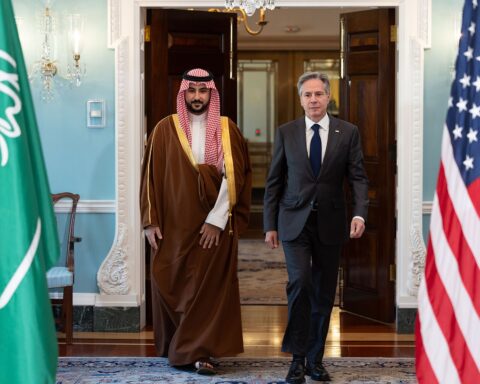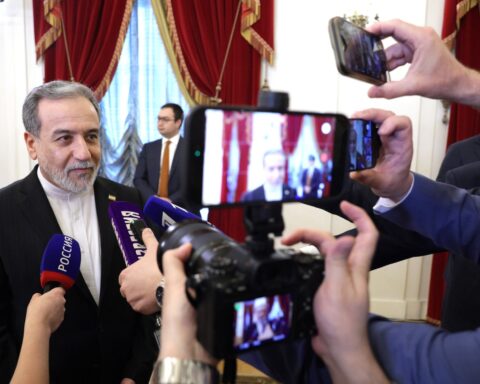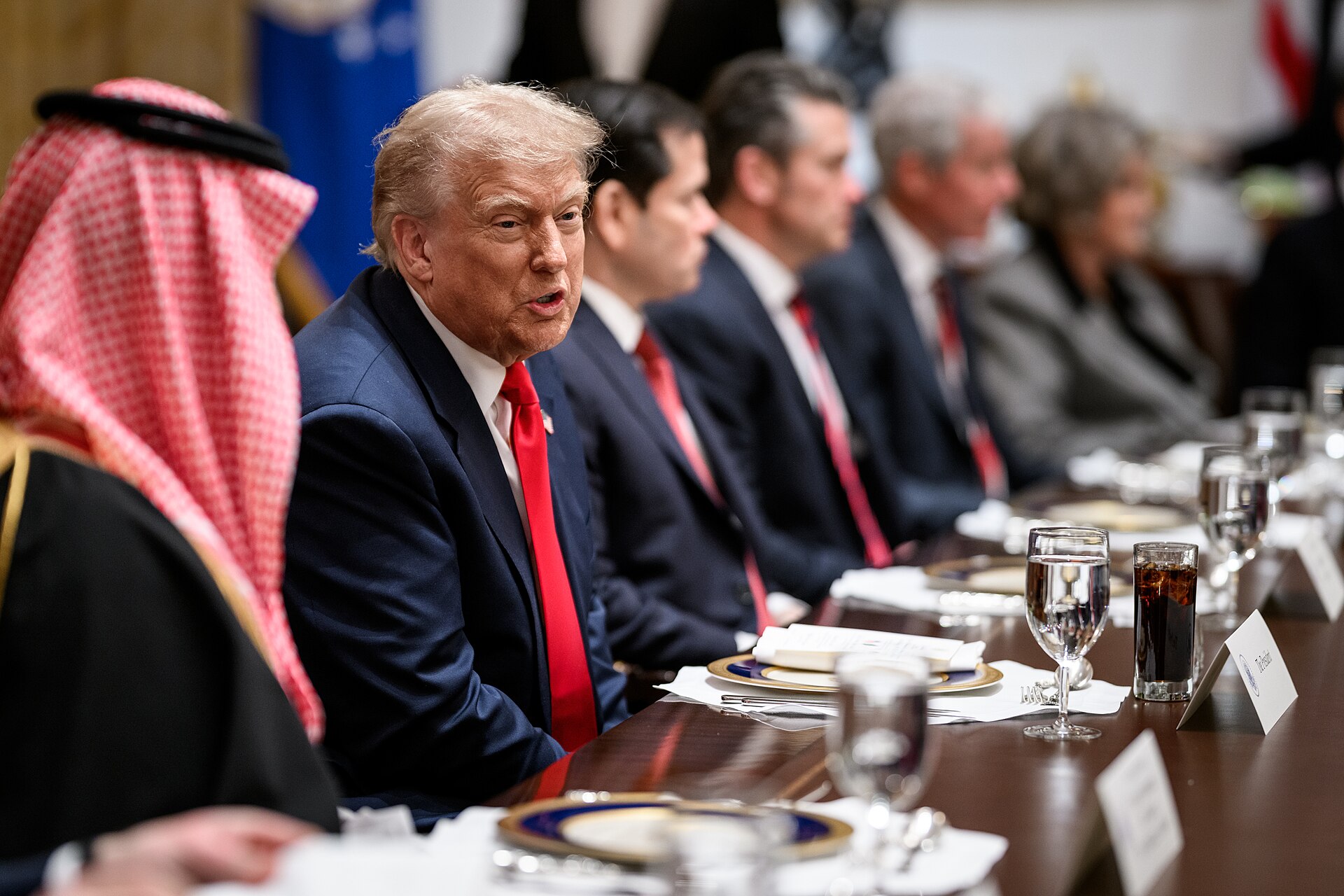

RIYADH — In April, a senior American official named Aryeh Lightstone flew to Riyadh with a single task: persuade Saudi Foreign Minister Faisal bin Farhan to release the $1 billion the kingdom had promised Donald Trump’s Board of Peace two months earlier. The World Bank trust account created to receive the fund’s money contained, as of June 1, exactly zero dollars — not just from Saudi Arabia, but from every country that had pledged, according to NPR and the Jerusalem Post. By July 1, Faisal wasn’t in Riyadh waiting for another American envoy to remind him about the cheque; he was in Beijing, sitting across from Wang Yi, collecting a Chinese endorsement of freedom of navigation in the Strait of Hormuz that Wang Yi had specifically declined to give Iran.
The timing was not accidental, and neither was the non-payment. Saudi Arabia’s $1 billion Board of Peace pledge fits a diplomatic pattern that Riyadh has refined over three American administrations: announce a number large enough to dominate the news cycle, extract the political benefit of the commitment, then hold the cash until the other side delivers something concrete in return. The 2017 $110 billion arms deal, the 2025 $600 billion trade commitment, and now the Board of Peace billion all follow the same architecture — the kingdom capturing the announcement while retaining the cheque as a live instrument of pressure, a strategy so consistent it deserves to be studied as doctrine rather than coincidence. The unpaid billion is not a fiscal problem for a government that spent SAR 64.7 billion on defence in Q1 2026 alone; it is a contract-enforcement problem, and from Riyadh’s perspective, the counterparty has not performed.
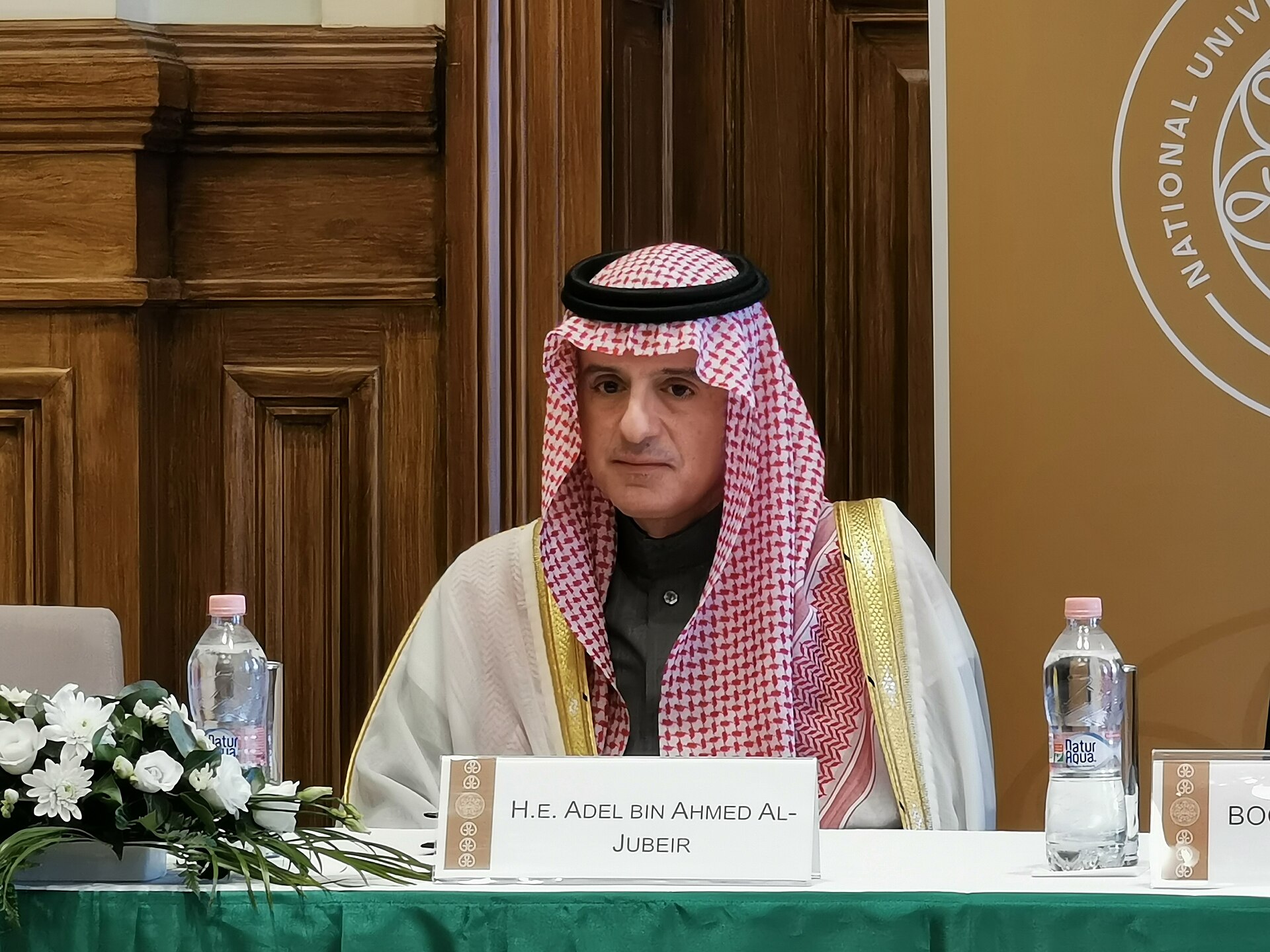
Table of Contents
- How Did the Board of Peace End Up With Zero Dollars?
- Thirteen Cents on the Dollar
- What Did Beijing Give Faisal That Washington Has Not?
- The MNNA That Guarantees Nothing
- Why Is Riyadh Holding the Cheque?
- A Month Without a Phone Call
- Can the Board of Peace Function Without Saudi Arabia?
- The Vice Closes
- Frequently Asked Questions
How Did the Board of Peace End Up With Zero Dollars?
Despite $17 billion in stated pledges from Gulf Arab states and other partners, not one dollar had been deposited into the Board of Peace’s World Bank trust account as of June 1, 2026, according to NPR and the Jerusalem Post. The UAE moved $100 million but routed it through a private JPMorgan Chase account that bypasses the fund’s governance structure entirely.
The House of Saud Daily Briefing
Saudi Arabia's news in 3 minutes, every morning. Free. See today's issue
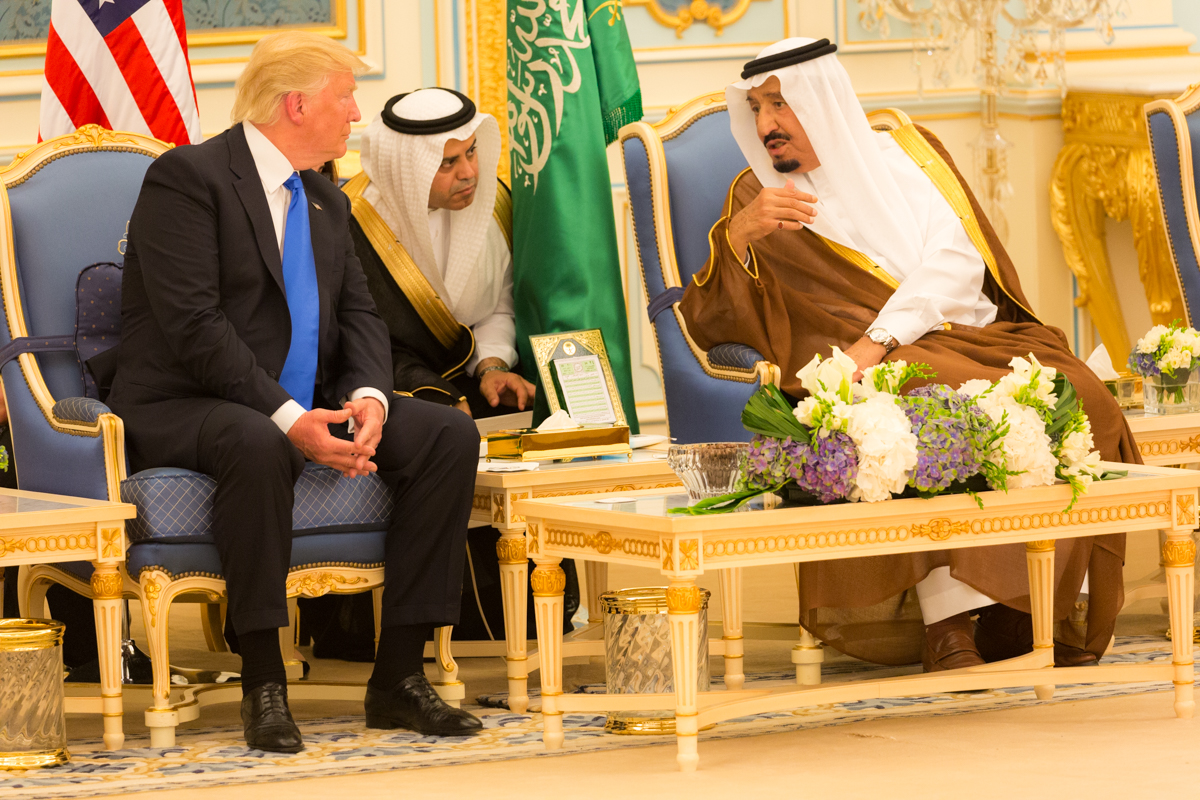
Saudi Minister of State Adel al-Jubeir announced the $1 billion pledge at the Board of Peace’s inaugural meeting in Washington on February 19, 2026, alongside commitments from Qatar — also $1 billion — the UAE, Kuwait, and other member states that brought the total to more than $17 billion in stated pledges. The fund was Trump’s signature Middle East initiative, a reconstruction and governance vehicle for post-conflict Gaza that the White House positioned as proof that the Abraham Accords framework could produce tangible, bankable results rather than just communiqués. Gulf states collectively pledged over $4 billion at that single February session, according to Anadolu Agency reporting from the event, a figure designed to dwarf anything the Biden administration had assembled.
Four months later, the formal fund was empty. The UAE had moved $100 million earmarked for a Palestinian police training programme through a JPMorgan Chase private account, but nothing entered the World Bank trust — and the distinction between those two channels matters more than it might appear. The UAE was the only Gulf state to move any cash at all, and it moved that cash into a private banking arrangement that no independent auditor can examine and no congressional committee can subpoena.
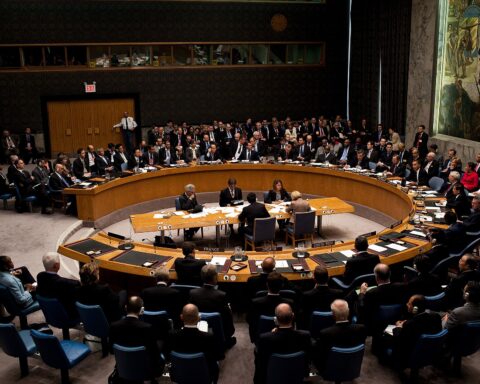
The UN Security Council took notice in language calibrated to avoid naming anyone while making clear that everyone was guilty. A report cited by Reuters noted that the Board of Peace itself had acknowledged “the gap between commitment and disbursement must be closed with urgency” — a formulation that, in the measured vocabulary of international institutions, amounts to an admission that the fund existed on paper only. Washington’s response was to dispatch Lightstone to Riyadh in April, a trip that Middle East Eye reported was specifically aimed at “shoring up” the Saudi pledge, and that multiple diplomatic sources described as a direct acknowledgment that non-disbursement was not an administrative delay but a deliberate hold by the kingdom’s leadership.
Thirteen Cents on the Dollar
The Board of Peace pledge is not the first time Saudi Arabia has announced a number that dominated the news cycle and then held the financial execution on its own timeline. Bruce Riedel at the Brookings Institution described the 2017 $110 billion arms deal — the one Trump announced during his first Riyadh visit with a golden orb and a sword dance — as “fake news,” noting that “there were a bunch of letters of interest or intent, but not contracts.” By 2018, the actual pipeline of deliverable arms sat between $14.5 billion and $25 billion, depending on which letters of intent eventually converted into binding procurement — thirteen to twenty-three cents on every dollar the announcement claimed.
“There were a bunch of letters of interest or intent, but not contracts. It’s fake news.”
Bruce Riedel, Brookings Institution, on the 2017 $110 billion Saudi arms deal
The mechanism was not deception; it was sequencing. Saudi Arabia signed enough documents to generate a $110 billion headline that Trump could take home as the largest arms deal in American history, while structuring every subsequent stage — the conversion of intent to contract, the production timelines, the delivery schedules — as contingent on American performance that Riyadh would judge on its own terms. The announcement was the product; the cash was the instrument. Both sides understood the arrangement, which is why neither side complained about it publicly — Trump had his headline, MBS had his options, and the gap between $110 billion and $14.5 billion was the space in which actual negotiations continued for years.
The 2025 iteration was larger and less plausible by design. During Trump’s second Riyadh visit in May 2025, Saudi Arabia committed to $600 billion in trade and investment with the United States, a figure the White House later inflated to “almost $1 trillion.” Fortune ran the arithmetic at the time and found the number would require the kingdom to spend roughly 60 percent of its entire GDP exclusively on American goods and services, quintuple its US import sourcing overnight — a structural impossibility that no one in either capital expected to materialise, because materialisation was never the point. NEOM completes the pattern from the domestic side: a $500 billion announced cost that concealed an internal estimate of $8.8 trillion, a population target that dropped from 1.5 million to under 300,000 after The Line’s suspension in September 2025, and a lesson that Saudi mega-commitments function as option-holding mechanisms rather than delivery schedules.
| Commitment | Year | Announced | Delivered / Disbursed | Conversion Rate |
|---|---|---|---|---|
| Arms deal (Trump I) | 2017 | $110 billion | $14.5–25 billion | 13–23% |
| Trade & investment (Trump II) | 2025 | $600 billion | Not quantified | Structurally impossible at announced scale |
| Board of Peace | 2026 | $1 billion | $0 | 0% |
What Did Beijing Give Faisal That Washington Has Not?
China gave Saudi Arabia explicit “freedom of navigation in the Strait of Hormuz” language in the July 2 joint readout — wording Beijing withheld from its Iran bilaterals. The United States has given Riyadh Major Non-NATO Ally status and an executive defence agreement, neither of which carries any binding obligation to defend the kingdom.
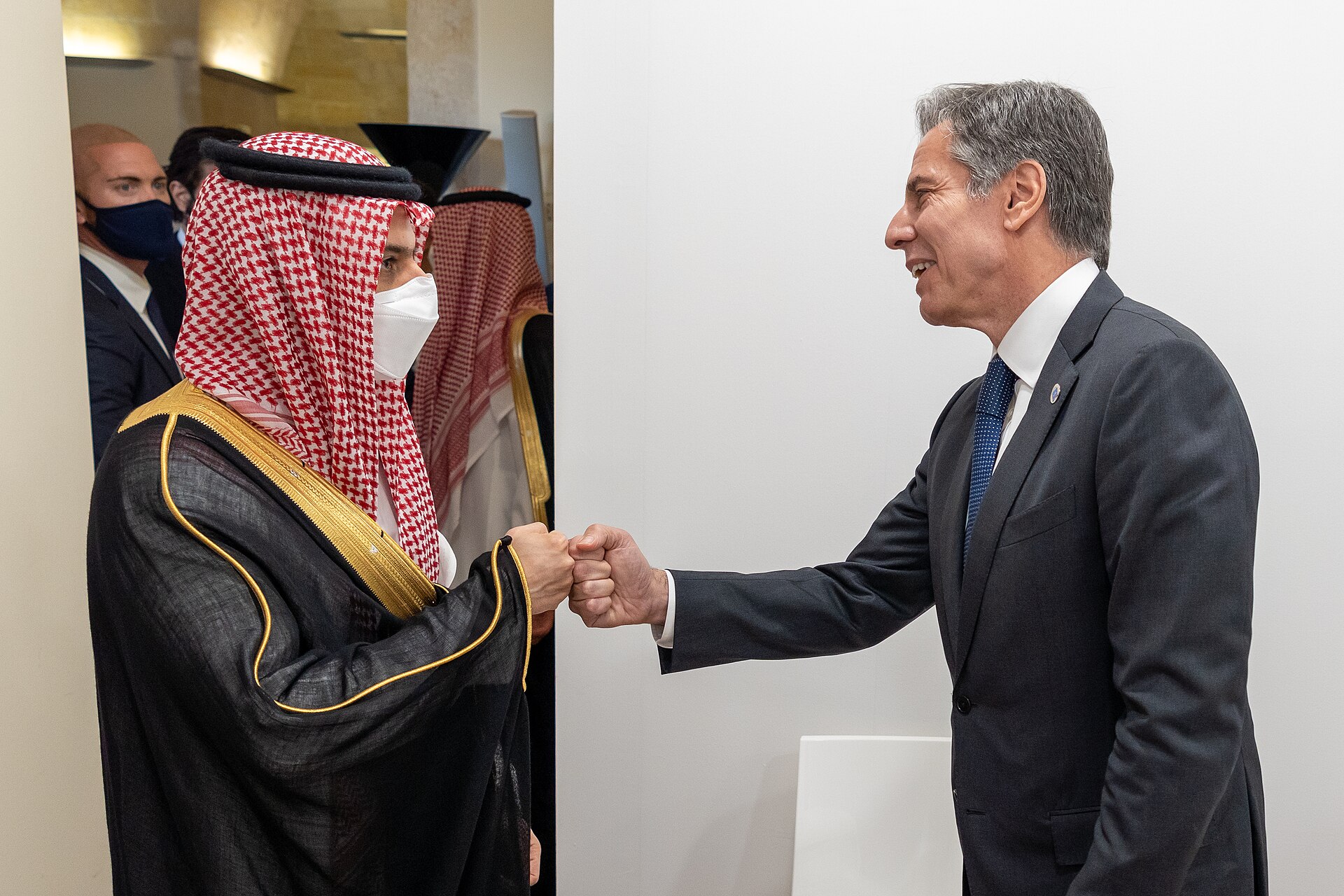
Foreign Minister Prince Faisal bin Farhan concluded a two-day visit to Beijing on July 2, meeting both Foreign Minister Wang Yi and Vice President Han Zheng in sessions that produced a joint readout endorsing “freedom of navigation in the Strait of Hormuz” — four words that carry more weight for their absence elsewhere than for their presence here. When Wang Yi met Iran’s interlocutors in equivalent bilateral settings, that language did not appear; China’s standard Iran formulation invokes “regional stability” and “respect for sovereignty” without specifying that the Strait should remain open to international shipping under conditions Iran does not unilaterally control. Faisal got what Araghchi did not, and the gap between those two readouts is the substantive outcome of the visit.
“The kingdom is widening its circle by leaning more on Beijing as a diplomatic counterweight to Washington and as a partner that can engage Tehran,” said Firas Maksad, a Middle East analyst at the Eurasia Group, in comments to Al-Monitor on July 2 that explicitly linked the Beijing trip to the unpaid Board of Peace pledge. The connection is not subtle, and Maksad’s framing — “counterweight” — captures a dynamic that has moved past hedging into active triangulation. Saudi-Chinese bilateral trade reached $106.1 billion in 2024, according to China’s Ministry of Foreign Affairs, making China the kingdom’s largest single trading partner by a comfortable margin, and the two countries mark the tenth anniversary of their comprehensive strategic partnership in 2026 — a relationship that has outlasted three American administrations and two Saudi crown princes without requiring a single mutual defence treaty, because China has never pretended to offer one.
Wang Yi’s own contribution during the visit — “talking is better than fighting, and dialogue is better than confrontation,” as reported by People’s Daily and Arab News — was anodyne enough to pass without much Western media attention, but its intended audience was not the international press. The statement, delivered while American officials were privately pressuring Riyadh to fund a Trump initiative, functioned as China’s version of a standing offer: we will give you diplomatic cover, maritime language, and trade volume without demanding that you fund our vanity projects. Faisal’s previous Beijing visit coincided with the Doha talks from which Saudi Arabia was excluded — a pattern of showing up in China precisely when Washington fails to include Riyadh in the room, and of collecting from Beijing what Washington either will not or cannot provide.
The MNNA That Guarantees Nothing
The backdrop to the unpaid billion is a security architecture that looks impressive on paper and guarantees nothing in practice, a gap that Riyadh understands with a precision that Washington appears to find inconvenient. Saudi Arabia became the United States’ twentieth Major Non-NATO Ally on January 23, 2026, when the Presidential Determination was published in the Federal Register — a status that provides preferential access to American arms exports, surplus defence equipment, and cooperative research programmes. What it does not provide, as multiple US analysts told ABC News, is “any legal obligation for the United States to defend Saudi Arabia.”
The Strategic Defense Agreement signed during MBS’s November 2025 Washington visit — the trip that Carnegie’s Emissary newsletter described with the headline “MBS Wanted Status. Trump Wanted Deals” — is an executive order, revocable by any future president without Senate action, without congressional notification, and without triggering any of the procedural safeguards that make NATO’s Article 5 difficult to unwind. The binding mutual defence commitment that Riyadh has sought since the 1945 Quincy Pact — through Truman, Eisenhower, Kennedy, every administration since — remains at zero, a legal reality that sits uncomfortably beside the hundreds of billions in announced commitments flowing in the other direction. Riyadh has been holding the bag for a security relationship in which the financial obligations are entirely Saudi and the defence obligations are entirely optional.
When the kingdom denied the United States access to Saudi bases and airspace for the Hormuz operation at the start of the conflict — a decision the Wall Street Journal confirmed and the Times of Israel reported in detail — Washington reportedly threatened to withhold interceptor deliveries until the kingdom capitulated, which it eventually did. The episode established something both sides already knew but had never tested: access is a bargaining chip with real, demonstrable, coercive value, and the side that needs something from the other can be made to pay for it in concessions rather than cash. The unpaid $1 billion is the financial version of the same move — a commitment that exists on the books, that Washington needs for its own credibility, and that Riyadh holds until the counterparty delivers something the kingdom values more than a press release.
Why Is Riyadh Holding the Cheque?
Because the cheque is not a payment — it is leverage. Saudi Arabia is withholding a sum that amounts to days of oil revenue for a government simultaneously running a multi-billion-dollar quarterly deficit and increasing its defence spending by double digits: the hold is not a fiscal constraint, it is a political condition. Riyadh wants a binding mutual defence treaty that survives the next American election, and the Board of Peace pledge waits until Washington delivers one.
The fiscal explanation is the easiest to dismiss and the one most commonly offered. Saudi Arabia ran a Q1 2026 deficit of SAR 126 billion — roughly $33.5 billion — more than doubling the Q1 2025 figure of SAR 59 billion, while military spending rose 26 percent year-on-year to SAR 64.7 billion in the same quarter. Brent crude, the benchmark that determines whether Saudi Arabia’s budget balances or bleeds, has spent weeks below $75 against a fiscal breakeven that ranges from $80 to $113 per barrel depending on whether social spending obligations are included, and the fiscal compression is real. But $1 billion is not a material sum for a government that can absorb a deficit of that scale and still function — it represents roughly two days of oil export revenue at current prices, a rounding error in the context of a $1.1 trillion economy that simultaneously found the resources to increase its military budget by a quarter.
The non-payment is a signal, not a shortfall, and Washington knows this because it sent Lightstone to Riyadh in April not to discuss payment mechanisms or banking logistics, but to ask why the money hadn’t moved — a conversation that only happens when both sides understand the hold is intentional. Saudi Arabia has consistently used the gap between announcement and disbursement as the space in which actual negotiations occur: the number gets the headlines, the cash waits for the deliverable, and the deliverable Riyadh wants — a Senate-ratified mutual defence treaty, or something functionally equivalent that cannot be revoked by executive whim — has not appeared in any American proposal since the Quincy Pact era.
What makes this instance different from the $110 billion arms deal or the $600 billion trade commitment is that the Board of Peace has a visible, public, politically consequential emptiness that neither of the earlier commitments possessed. The arms deal’s shortfall was an open secret that took journalists years to quantify and that most readers never noticed. The $600 billion figure was always understood, by everyone except perhaps Fox News viewers, as aspirational. But the Board of Peace has a World Bank account with a balance anyone can ask about, a UN Security Council citation noting its emptiness, and a political sponsor in Trump who has built his entire Middle East credibility around the fund’s existence — an architecture of transparency that turns Saudi non-payment from an accounting footnote into a diplomatic weapon with a public-facing dashboard.
A Month Without a Phone Call
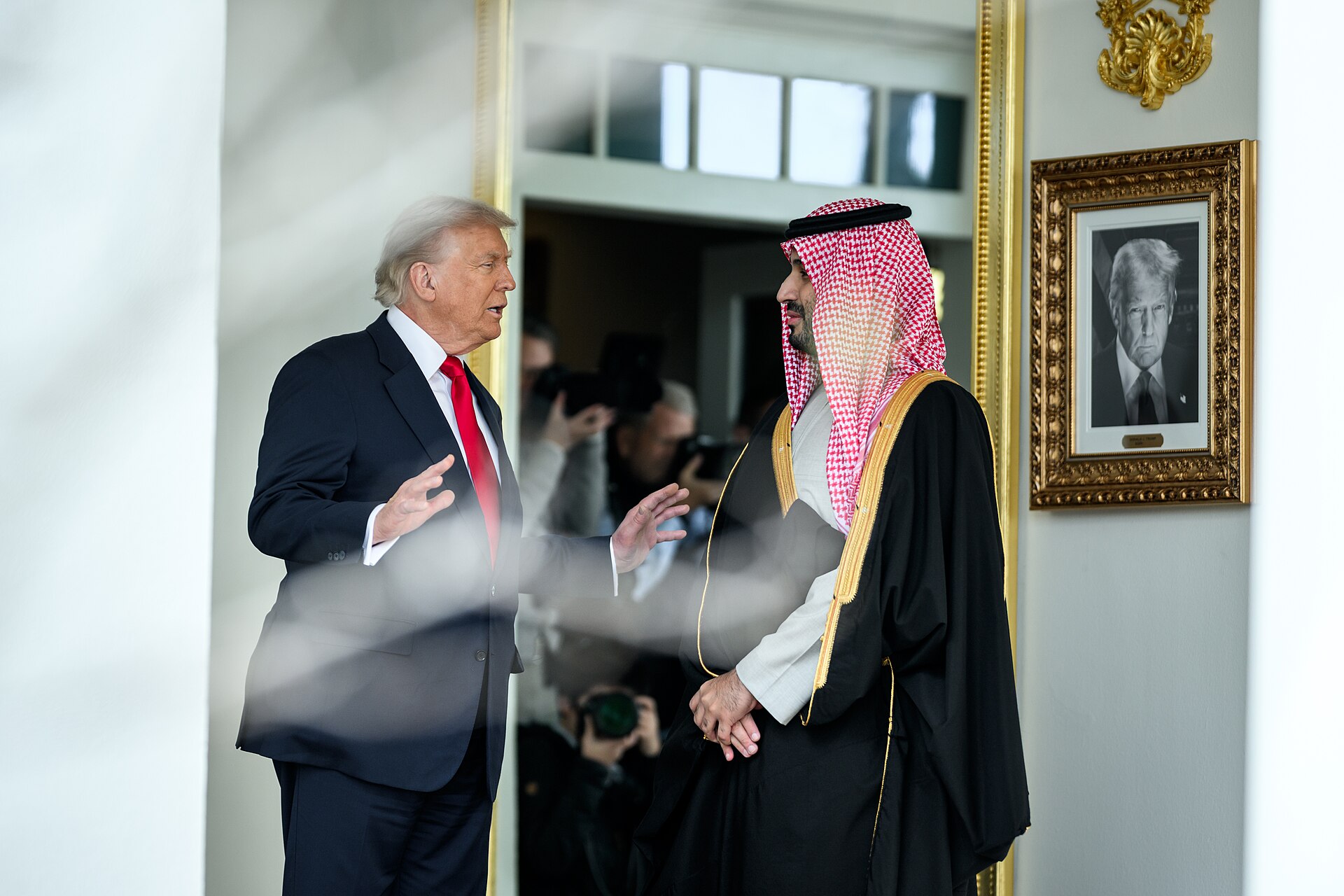
The last confirmed phone call between Trump and MBS took place on May 30, 2026 — more than a month of silence between two leaders whose relationship has been the most transactional in modern alliance politics. The gap would be unremarkable between Washington and Berlin, where NATO’s institutional plumbing keeps things moving regardless of whether leaders are speaking. Between Washington and Riyadh, where nearly everything runs through the personal channel between the president and the crown prince and where institutional mechanisms exist primarily to implement what those two men decide, a month without contact is a temperature reading that both capitals parse with care.
Trump made the silence louder when he told reporters that MBS “didn’t think he’d be kissing my ass” after a period in which the Saudi crown prince viewed the United States as weak — language that Al-Monitor reported Saudi officials registered as a deliberate public signal rather than an off-the-cuff remark, and that created a secondary problem for any eventual disbursement. The Wall Street Journal, citing people familiar with the relationship’s deterioration, reported that MBS has admitted to “playing major powers against each other” to secure American concessions — an admission of strategy that the Beijing visit makes more visible than Riyadh would normally prefer, and that Trump’s crude public language appears designed to punish rather than resolve.
Secretary of State Rubio’s decision to skip Saudi Arabia during his Gulf tour compounded the signal. Saudi officials interpreted the omission as a “calculated snub,” according to the WSJ, and Washington is now actively considering a troop withdrawal from Saudi Arabia following the kingdom’s initial refusal to provide bases for Iran strikes — a possibility explored in detail by recent reporting on the American drawdown. Riyadh’s response to the accumulating slights has followed the same pattern each time: no public complaint, no diplomatic protest, just the quiet intensification of the alternative — another Faisal trip to Beijing, another set of joint statements that give the kingdom something Washington hasn’t provided, and another month in which the Board of Peace account stays at zero.
Can the Board of Peace Function Without Saudi Arabia?
Not credibly. Saudi Arabia is the Arab world’s largest economy and the Gulf state whose payment signals to smaller pledging nations — Kuwait, Bahrain, Oman — whether a fund is real or theatrical. If Riyadh holds, the others have cover to hold, and the $17 billion in total pledges remains a collection of press releases.
The Board of Peace’s structural problem is not that Saudi Arabia hasn’t paid — it is that almost nobody has, and the exceptions have moved money through channels that bypass the fund’s own governance architecture entirely. Only the UAE has disbursed anything at all, and it routed those funds through a JPMorgan Chase private account rather than the World Bank trust designed to serve as the fund’s financial backbone — a decision that creates a precedent in which the one Gulf state actually spending money has opted out of the transparency mechanism, while the growing fracture between Abu Dhabi and Riyadh makes coordinated Gulf action on anything less likely by the month.
That dynamic has operated since the GCC’s founding in 1981: Saudi Arabia sets the pace, and every other Gulf state matches it or explains why it didn’t. The mechanism is informal but consistent across four decades of Gulf financial diplomacy — and it means the Board of Peace cannot be rescued by a coalition of smaller states while Riyadh waits.
Trump has staked personal credibility on the Board of Peace in a way that makes its emptiness a domestic political liability as much as a diplomatic one. He has described it as the framework that distinguishes his approach from Biden’s, as proof that Gulf states will pay for what American leadership delivers, and as the centrepiece of an eventual post-conflict Gaza settlement. Every week the World Bank account stays empty, those claims weaken — and Saudi Arabia, by holding the single pledge most visible to other potential contributors, has positioned itself as the gatekeeper of whether Trump’s fund becomes operational or remains, like the $600 billion trade commitment and the promised $3 billion in Doha before it, an announcement searching for a bank transfer that may never arrive.
The Vice Closes
The unpaid billion and the Beijing visit are not parallel moves running on separate tracks — they are the two jaws of the same instrument, and they close together. The withheld payment tells Washington that Riyadh will not fund American credibility until America delivers Saudi security in a form that survives the next election, while the Beijing meetings tell Washington that Riyadh has somewhere else to go if the answer remains no. Neither jaw works alone: withholding money without an alternative relationship would be a tantrum, and courting Beijing without withholding money would be a bluff that any American diplomat could call. Together, they constitute the most coherent financial-diplomatic pressure Saudi Arabia has applied to an American administration since the 1973 oil embargo, and they do so without raising a single barrel’s price or deploying a single soldier.
The asymmetry that makes this work is structural rather than tactical, and it favours Riyadh for the first time in the modern relationship. China gave the kingdom its core maritime security interest — explicit Hormuz freedom-of-navigation language — at no cost, asking nothing in return that Saudi Arabia wouldn’t have provided anyway through normal trade channels. The United States, by contrast, has given Riyadh a preferential arms-purchasing status that carries zero defence obligation, an executive order that any successor president can revoke before lunch, and a public statement from the sitting president about who is kissing whose body parts — none of which, individually or collectively, constitutes the binding security commitment the kingdom has been requesting since Franklin Roosevelt met Abdulaziz ibn Saud on the deck of the USS Quincy in February 1945. Riyadh’s parallel security track with Turkey, Pakistan, Egypt, and Qatar runs on the same logic: build enough alternative relationships that Washington cannot assume the kingdom has nowhere else to go, even if those alternatives cannot stop a ballistic missile.
Aramco’s revenue squeeze has made the kingdom’s fiscal position more visible without making the $1 billion more difficult to pay, which is the paradox Washington has to navigate: Riyadh can afford the cheque but has less reason to write it with each passing week, because every Trump insult makes payment look like capitulation and every Faisal trip to Beijing makes non-payment look like strategy. The Trump administration’s private decision to abandon the August 18 MOU deadline without announcing it publicly has compounded Riyadh’s exposure further: as analysis of that unreported reversal documents, the kingdom is now financing a framework whose only coercive mechanism has already been quietly removed. The cheque is written, the pen is in hand, and the kingdom is waiting for the same thing it has waited for across eight decades and fourteen American presidents — a signature on the other side of the table, on a document that means something the morning after Inauguration Day.
Frequently Asked Questions
What would it take for Saudi Arabia to release the billion?
A binding, Senate-ratified mutual defence treaty — or something functionally equivalent that cannot be revoked by executive order. Riyadh has pursued this commitment since the 1945 Quincy Pact through fourteen American presidents. The MNNA designation and the 2025 Strategic Defense Agreement both fall short because a future president could revoke either instrument before the Saudi payment even cleared the World Bank trust. The cheque exists; the condition it waits on has never been met.
Does Qatar’s matching $1 billion pledge substitute for Saudi Arabia’s?
No. Qatar’s pledge is equal in dollar terms but carries different geopolitical weight: Doha is the host of the US-Iran diplomatic track and has an incentive to keep American goodwill for reasons unrelated to Gaza. Saudi Arabia’s hold, by contrast, is explicitly political — the Lightstone mission confirmed it. A Qatar disbursement without Saudi follow-through would tell Washington that Riyadh’s position is deliberate, not diplomatic lag, and would increase rather than relieve pressure on the kingdom to explain itself.
What does the UAE’s JPMorgan payment channel mean for the Board of Peace’s future?
It creates a dangerous precedent: the only Gulf state that has moved any money at all has opted out of the fund’s official governance mechanism. If other states eventually disburse through private channels rather than the World Bank trust account, the Board of Peace will exist as two parallel systems — a formal World Bank structure with no money, and a network of private bilateral accounts with no public oversight, no independent audit trail, and no mechanism for the White House to claim credit for a functioning multilateral fund.
What is the connection between the Beijing visit and the Board of Peace pledge?
Al-Monitor’s July 2, 2026 analysis explicitly linked Faisal’s Beijing visit to the unpaid pledge, noting that Saudi Arabia “appears not to have made good on” the $1 billion commitment while simultaneously deepening its China relationship. The connection operates on two levels: operationally, the Beijing trip demonstrates that Riyadh has alternative diplomatic partnerships that can deliver substantive outcomes — such as China’s Hormuz freedom-of-navigation endorsement — without requiring financial pledges to American-led initiatives; strategically, it signals to Washington that the cost of leaving the Board of Peace account empty falls on Trump’s credibility rather than on Saudi Arabia’s diplomatic options, because the kingdom can point to productive bilateral outcomes in Beijing during the same week it declines to fund a Washington initiative.
The same week Faisal was in Beijing, Saudi Arabia had not confirmed any representative for the Khamenei state funeral in Tehran on July 3 — a conspicuous absence that underscores how far the Beijing-brokered rapprochement has eroded since Faisal attended Raisi’s funeral in May 2024.
The House of Saud Daily Briefing
Saudi Arabia's news in 3 minutes, every morning. Free. See today's issue