
Table of Contents
- The OPEC Exit as Legal Divorce
- How Did Saudi Arabia and the UAE Diverge on the Iran War?
- The New Saudi Security Architecture
- Can Pakistan’s Nuclear Umbrella Replace the GCC?
- What Does Saudi Arabia Lose Without the UAE?
- Abu Dhabi’s Parallel Architecture
- Is the New Saudi Architecture Strong Enough?
- What Does the UAE Do Next?
- Frequently Asked Questions
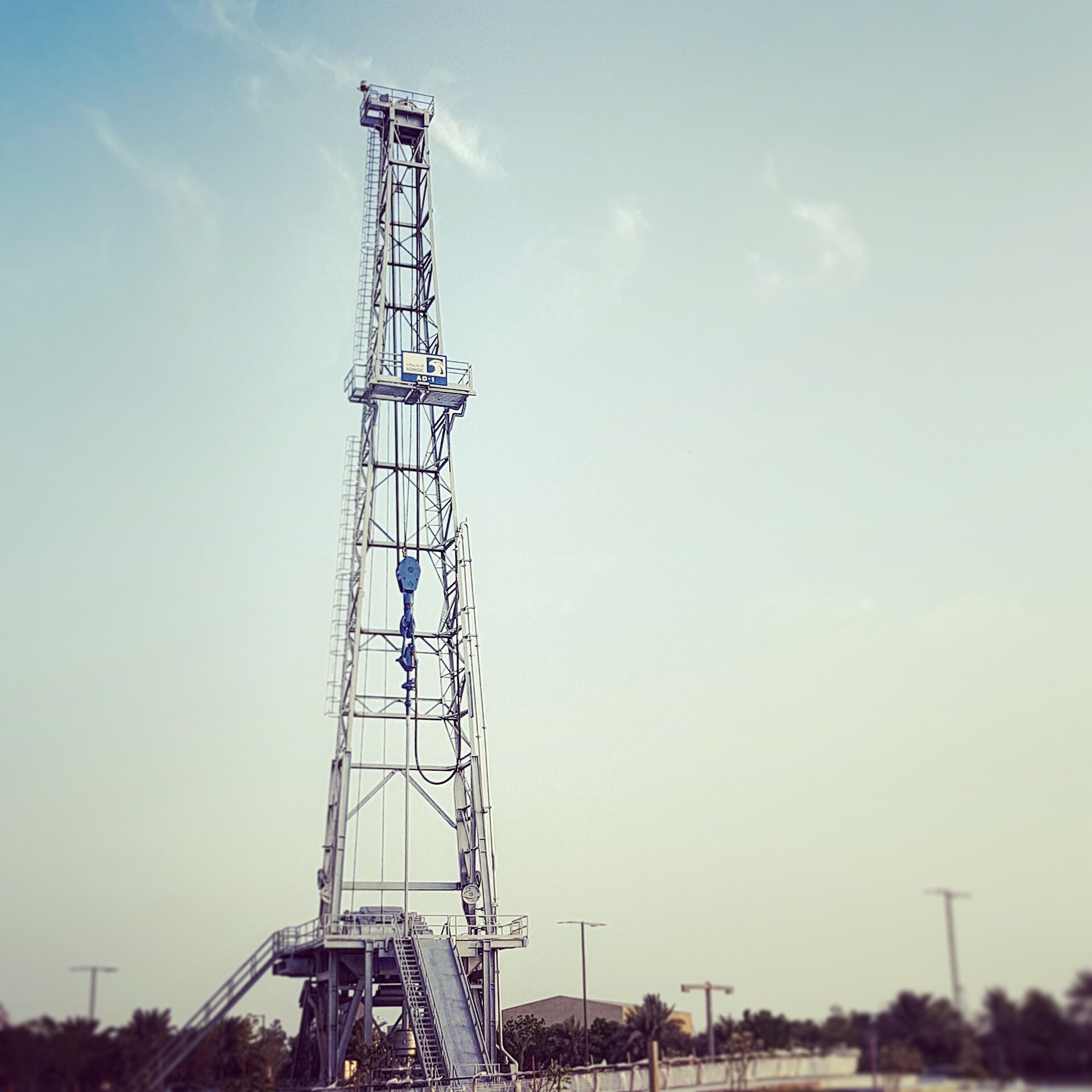
RIYADH — When the United Arab Emirates announced its withdrawal from OPEC on April 28, effective May 1, the official explanation was narrowly economic: Abu Dhabi wanted to produce oil at capacity without the quota constraints that had capped its output at 3.4 million barrels per day — roughly 30 percent below its estimated 4.5-million-bpd capacity. Within hours, the Abu Dhabi National Oil Company announced plans to award up to $55 billion in upstream and downstream contracts over two years, targeting 5 million bpd by 2027.
The real audience was not the oil market. It was Riyadh. The exit formalized a divergence that had been operational since the first Iranian missiles struck Emirati soil on February 28 — and arguably since Saudi forces struck Emirati arms shipments to Yemeni separatists three months before that. By July 1, Foreign Policy had published its assessment of the emerging order: a Saudi-led security axis comprising Qatar, Turkey, Pakistan, and Egypt. The UAE was not in it.
The Gulf Cooperation Council, founded in 1981 to project collective security against Iran, has not formally dissolved. No member has announced withdrawal. But the bloc’s two most powerful economies now operate under incompatible security architectures, divergent energy strategies, and opposing assessments of how to manage the Iranian threat. As of July 1, the IISS, the Carnegie Endowment, the Al Jazeera Centre for Studies, and Foreign Policy had all published analyses of the new Saudi-led configuration. In none of them did the UAE appear.
The rupture followed a decade of accumulating divergence: the 2017 Qatar blockade, the last major issue on which Riyadh and Abu Dhabi acted in concert; the Yemen proxy competition that began when the UAE withdrew most forces in 2019 and backed the Southern Transitional Council against Saudi-supported government forces; the September 2020 Abraham Accords, which built a UAE-Israel security architecture that excluded Saudi Arabia; and chronic OPEC+ quota violations that the cartel lacked mechanisms to enforce. In December 2025, Saudi Arabia struck Emirati arms shipments to Yemeni separatists — the first direct military confrontation between the two GCC founders.
The OPEC Exit as Legal Divorce
The UAE’s OPEC membership lasted 59 years. Its departure was not impulsive. Between January 2024 and July 2025, six OPEC+ members overproduced by a cumulative 4.779 million barrels per day, according to S&P Global and Aegis Hedging data. The UAE was consistently among those exceeding quotas. OPEC has no enforcement mechanism — production agreements rely on voluntary compliance, and for Abu Dhabi the gap between its 3.4-million-bpd quota and its roughly 4.5-million-bpd capacity represented approximately 1.1 million barrels per day of stranded production.
The timing was strategic. Abu Dhabi announced its OPEC withdrawal on April 28, the same day UAE officials negotiated a dollar swap line with US Treasury Secretary Scott Bessent — a financial backstop typically reserved for close economic allies. ADNOC immediately disclosed a $150-billion capital spending plan for 2026–2030.
The Middle East briefing 3,000+ readers start their day with.
One email. Every weekday morning. Free.
For Saudi Arabia, the exit compounded a severe fiscal picture. Aramco’s July Arab Light official selling price had been cut by $6 per barrel to a $9.50 premium over Oman/Dubai — a $10-per-barrel collapse in two months from the $19.50 all-time high set in May. With Brent at $71.99, well below the kingdom’s $108–111 fiscal breakeven, Saudi Arabia was already running a Q1 deficit of $33.5 billion against a $44-billion full-year target.
The UAE represented roughly 12 percent of OPEC output before its exit, according to the Middle East Council on Global Affairs. Its share of GCC GDP stands at approximately 25 percent, second only to Saudi Arabia’s 47 percent, based on IMF World Economic Outlook data from April 2026. Bilateral trade between the two kingdoms runs at approximately $20 billion per year, with the UAE holding $9.26 billion in Saudi investments and Saudi Arabia holding $4.36 billion in Emirati assets, according to UAE Ministry of Foreign Affairs figures.
How Did Saudi Arabia and the UAE Diverge on the Iran War?
Through fundamentally incompatible threat assessments. The Soufan Center’s May 14 intelligence brief identified the core split: MBS sought to manage Iran without confrontation; MBZ judged that the region’s destabilizing actors had to be confronted militarily. One kingdom absorbed more than 2,750 Iranian munitions and struck Iranian territory. The other maintained diplomatic contact with Tehran throughout. Six weeks of silence between MBS and MBZ closed the gap.
MBS assessed “the region cannot be transformed through military or confrontational action,” while MBZ believes “the region’s destabilizing actors must be confronted, including militarily.”
— Soufan Center IntelBrief, May 14, 2026
The operational divergence was total. Iran fired 550 missiles and more than 2,200 drones at the UAE between February 28 and the April 8 ceasefire, making Abu Dhabi the most heavily targeted country in the conflict, according to the Atlantic Council. On April 8, Emirati Mirage 2000-9 jets struck the NIRDC refinery on Iran’s Lavan Island — a condensate facility with reported capacity of approximately 60,000 bpd — the same day Pakistan brokered the ceasefire. Iran documented the strike in a UN Security Council filing on April 16. The Wall Street Journal confirmed it. The UAE neither confirmed nor denied.
Saudi Arabia took a categorically different path. Riyadh expelled Iran’s military attaché and four embassy staff on March 21, with Foreign Minister Prince Faisal bin Farhan declaring trust in Iran “shattered.” But Saudi Arabia refused to provide airspace for US strikes on Iran. It deployed no forces under the GCC’s first collective defense invocation in 45 years at the 167th Ministerial. And it maintained daily contact with Iran’s ambassador in Riyadh, reiterating that Saudi territory was not being used for offensive operations.
The Soufan Center reported that MBS and MBZ spoke twice in the first two weeks of the war. In the six weeks that followed, there were no calls.
The New Saudi Security Architecture
On July 1, Foreign Policy published an analysis naming the emerging Saudi-led security bloc: Qatar, Turkey, Pakistan, and Egypt — with the UAE conspicuously absent. The framing reflected military deployments, defense contracts, and diplomatic channels already in operation.
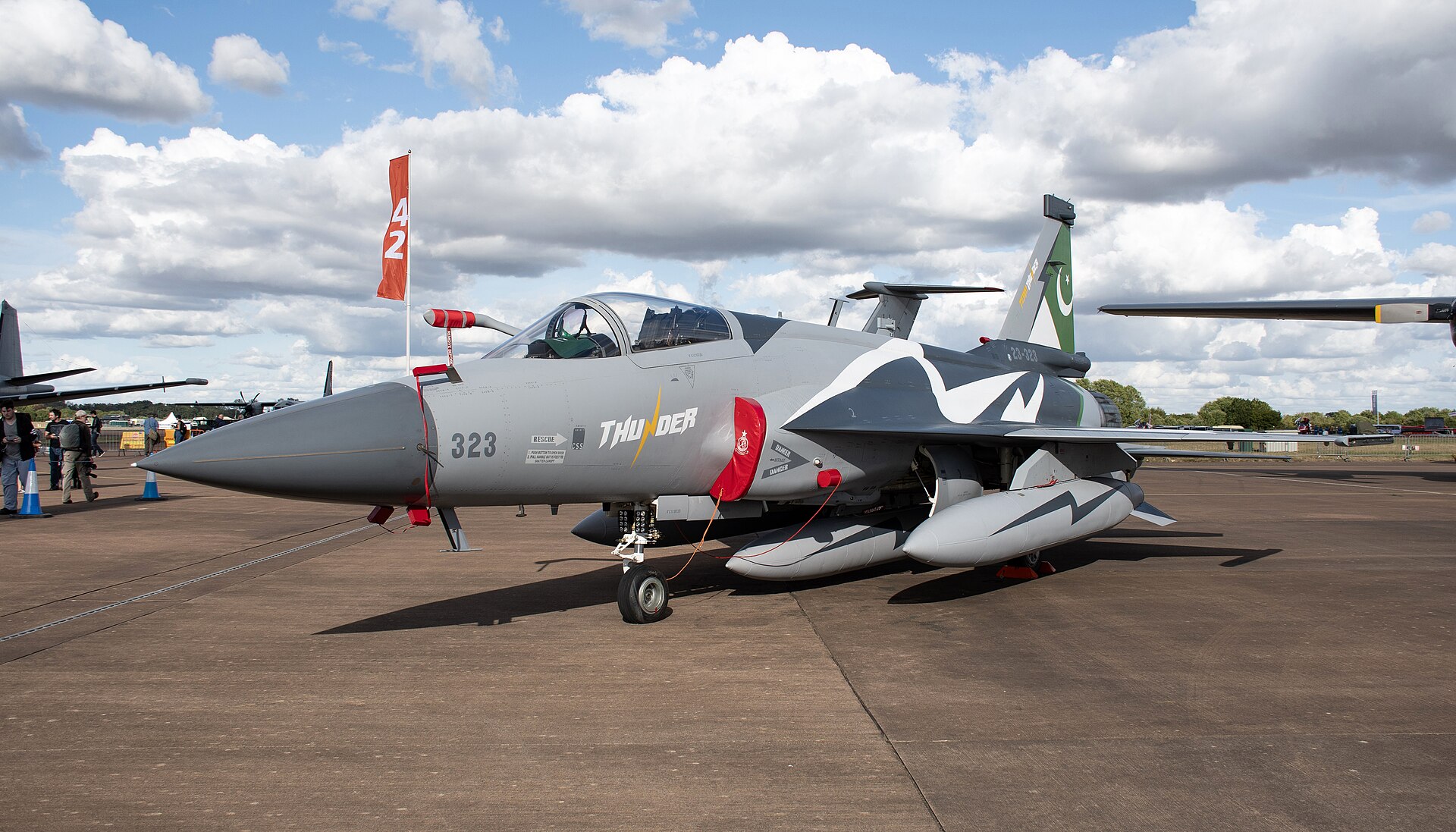
The heaviest structural element is Pakistan. The Saudi-Pakistan Strategic Mutual Defence Agreement, signed September 17, 2025 at Al-Yamamah Palace, was invoked during the Iran war. Pakistan deployed at least 8,000 troops and 16 aircraft to King Abdulaziz Air Base. Defense Minister Khawaja Asif publicly confirmed that under the SMDA, Islamabad would make “nuclear capabilities available to Saudi Arabia if required.” Pakistan maintains an estimated 170 nuclear warheads, with the Shaheen-III ballistic missile carrying a range of 2,750 kilometers — sufficient to cover the entire Persian Gulf theater.
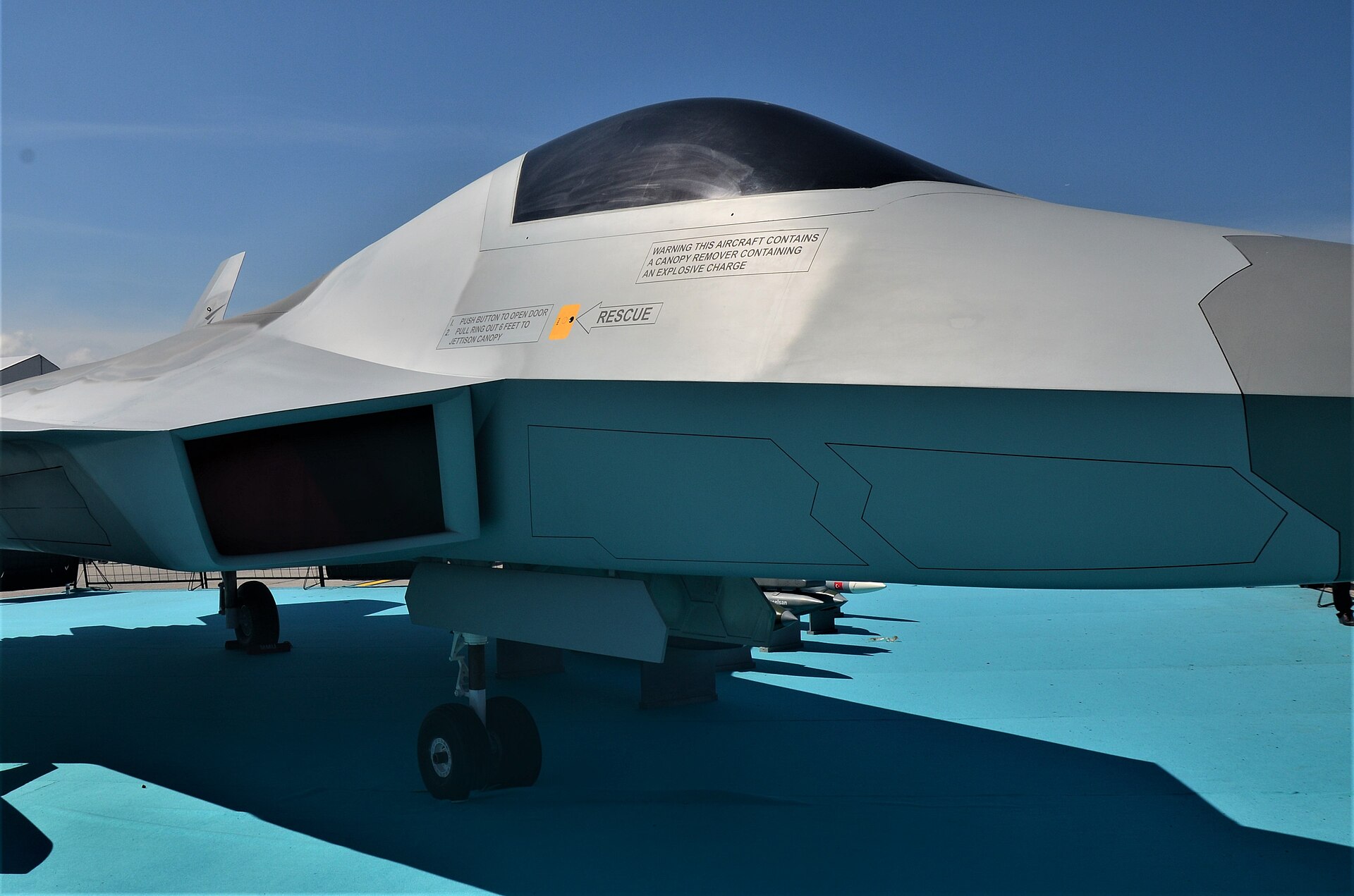
Turkey provides the industrial defense component. Saudi Arabia, Turkey, and Pakistan are pursuing joint production of the Turkish KAAN fifth-generation fighter through SAMI technology-transfer agreements, according to IISS and MEMRI reporting. Riyadh also secured what Abu Dhabi could not: in March 2026, Trump approved the sale of 48 F-35A jets to Saudi Arabia as part of the $142-billion US-Saudi defense framework signed May 13, 2025. Delivery is not expected before 2029. The UAE’s F-35 deal remains effectively dead — Abu Dhabi suspended negotiations over Huawei network incompatibility with US security requirements.
Qatar serves as the diplomatic channel to Iran. Doha brokered the oral stand-down that restored the MOU after both sides violated it and hosts the ongoing contacts that have defined the post-ceasefire diplomatic track. Saudi Foreign Minister Faisal was in Beijing on the same day Doha contacts proceeded without Riyadh — a signal of the kingdom’s diplomatic diversification beyond the Gulf. Egypt, the Arab world’s largest military, provides conventional mass, though its forces remain committed across Libya, the Sinai, and the Ethiopian GERD standoff. A detailed assessment of what each axis member actually delivers for Saudi air defense finds the countries Riyadh is aligning with politically are not the ones filling its defense gaps: actual hardware is coming from South Korea and Ukraine, not from Ankara, Islamabad, or Cairo.
Can Pakistan’s Nuclear Umbrella Replace the GCC?
Not in its current form. The IISS described Pakistan’s nuclear arsenal as underpinning the new alliance, “serving as a bulwark” — but nuclear deterrence addresses existential threats, not the cruise-missile defense, maritime domain awareness, and rapid-reaction capabilities the GCC was designed to provide. The deployed Pakistani forces at King Abdulaziz Air Base are infantry-heavy, not an integrated Gulf defense force. The new Saudi architecture has strategic depth but not operational capability.
The KAAN fighter remains years from operational deployment. The 48 F-35As approved for Saudi Arabia will not arrive before 2029 at the earliest. South Korean air defense systems — widely reported as part of Riyadh’s diversification strategy — have no confirmed delivery timeline. The new architecture is a procurement pipeline, not a functioning integrated defense system.
The Carnegie Endowment warned in April 2026 that “new pressures stemming from war can encourage zero-sum thinking in the bloc’s two main economic powerhouses: Saudi Arabia and the UAE. If these two powers are not on the same page, a bidding war for scarce U.S. air defense stockpiles could drive prices up for both.”
There is also the question of what the UAE demonstrated in combat. Abu Dhabi’s EDGE Group is the Gulf’s most advanced indigenous defense company. Its 80 Rafale F4 jets, delivered under a $17.2-billion deal signed in December 2021 with the first batch arriving January 29, 2025, gave the UAE a combat-proven strike capability that no member of the new Saudi axis possesses. The Lavan Island operation — executed against a defended target without coalition support — was the first offensive air strike by a Gulf state against Iran in the modern era.
What Does Saudi Arabia Lose Without the UAE?
The Gulf’s most capable military partner and its second-largest economy. The UAE absorbed the heaviest Iranian bombardment of any country in the conflict, struck Iranian territory on April 8, and maintained economic operations throughout. No member of the new Saudi axis has been tested under comparable conditions. What Riyadh gains is an alliance in which no member hosts Israeli military assets and no member has struck Iranian territory — a configuration that permits diplomatic engagement with Tehran but loses the combat credibility the UAE demonstrated.
The practical military gap extends beyond weapons platforms. The UAE’s Armed Forces — approximately 63,000 active personnel according to the IISS Military Balance — are among the most combat-experienced in the Arab world, having deployed continuously in Yemen since 2015 and in the Iran war since February 2026. They operate under US-standard doctrine with interoperable communications and have conducted joint exercises with American and French forces for over a decade. Pakistan’s deployed troops at King Abdulaziz Air Base — 8,000 strong — have no comparable Gulf operational history.
The Al Jazeera Centre for Studies identified a structural incompatibility at the core of the split: the Saudi-led bloc is defined by containing Iran and “pushing back against Israel to define limits to its military adventurism.” The UAE, bound by the Abraham Accords and hosting Israeli military personnel and air-defense systems on its soil, cannot pursue either objective.
The economic entanglement is harder to unwind than the security architecture. Cross-investment positions totaling $13.6 billion, shared supply chains across petrochemicals, logistics, and finance, and the UAE’s role as a re-export hub for Saudi goods create dependencies that neither government has publicly addressed. Dubai’s Jebel Ali port handles the majority of Saudi Arabia’s non-oil imports destined for the Eastern Province. Multiple Saudi companies maintain regional headquarters in Dubai International Financial Centre and Abu Dhabi Global Market.
Abu Dhabi’s Parallel Architecture
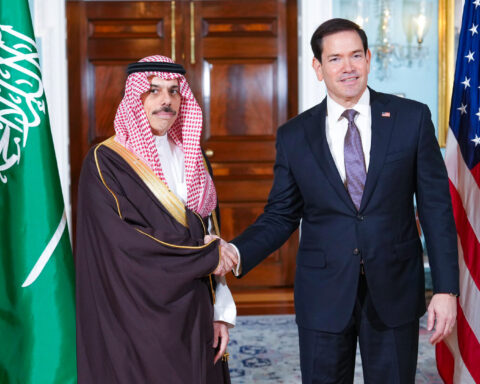
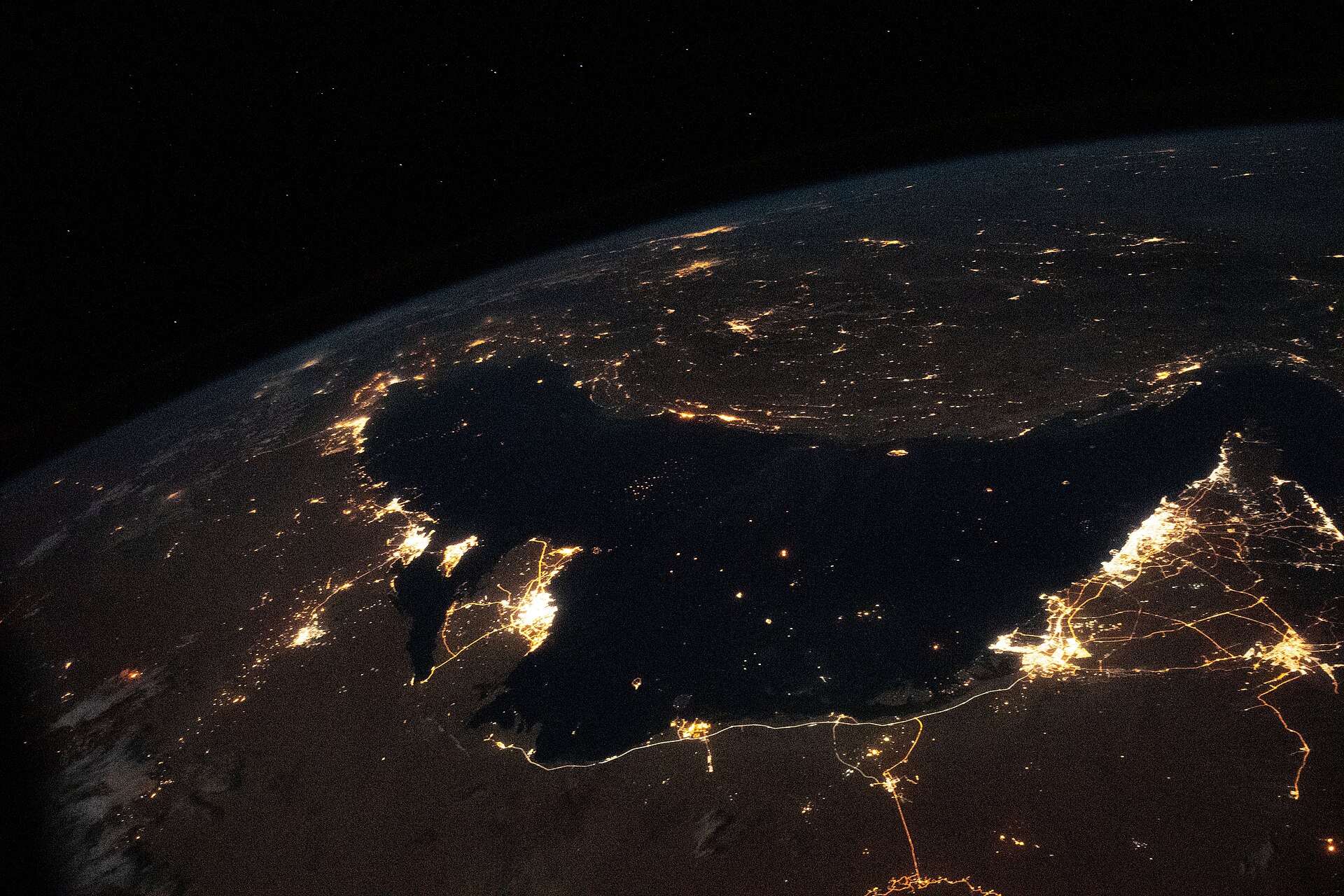
The UAE is not adrift. While Saudi Arabia assembled its quadrilateral, Abu Dhabi deepened a bilateral security architecture with the United States and Israel that has no GCC equivalent. Secretary Rubio held direct security talks with UAE Foreign Minister Sheikh Abdullah bin Zayed on April 26. Two days later, on April 28 — the same day Abu Dhabi announced its OPEC exit — Treasury Secretary Bessent finalized the dollar swap line with the UAE.
Israel’s involvement represents the sharpest departure from GCC norms. Iron Dome batteries operated by IDF personnel were deployed on UAE soil during the war — the first-ever foreign deployment of the system in active conflict, confirmed by US Ambassador Mike Huckabee on May 11, 2026. UAE Presidential Diplomatic Adviser Anwar Gargash told CNN in April that “Israeli influence will become more prominent in the Gulf, not less,” adding that Israel “did not even envision this closeness when we signed the Abraham Accords.”
Foreign Affairs assessed in 2026 that the UAE “wants recognition as a leading power on par with France or Japan and does not want a war with Iran to get in the way of that transformation.” Abu Dhabi’s actions track with that assessment: the $150-billion ADNOC expansion announced alongside the OPEC exit, 80 French-built fighters that struck Iranian territory in April, Israeli-operated air defense systems, and the US dollar swap line — all are components of an architecture built for a Gulf without a GCC anchor.
“The victim’s role has merged with that of the mediator … while the friend has turned into a mediator instead of being a steadfast ally and supporter.”
— Anwar Gargash, UAE Presidential Diplomatic Adviser, May 19, 2026
Gargash’s frustration surfaced publicly on May 19 in a social media post. The “friend” was Saudi Arabia. The “victim” was the UAE. The “mediator” was Qatar — which had gone from the target of a Saudi-UAE blockade in 2017 to the host of every substantive diplomatic contact in the Iran crisis. Gargash also declared that the UAE “prevailed through an epic national defense in the face of treacherous aggression.”
The result is two Gulf architectures operating in parallel. One state hosts Israeli military personnel, holds a US dollar swap line, and has struck Iranian territory. The other hosts Pakistani troops under a nuclear umbrella agreement and pursues a Turkish fifth-generation fighter. They share a 457-kilometer land border and adjacent waters in the Persian Gulf.
Is the New Saudi Architecture Strong Enough?
Not yet — and the gap is structural, not merely temporal. The architecture has strategic depth: Pakistan’s nuclear deterrent, Turkey’s defense-industrial capacity, Qatar’s diplomatic access, Egypt’s conventional mass. What it lacks is integration, tested interoperability, and the geographic proximity that made the GCC functional. As of July 2026, it remains a network of bilateral agreements, not an operational alliance.
Capability Comparison: GCC Core vs. New Saudi Axis
| Capability | GCC (Saudi-UAE Core) | New Saudi Axis |
|---|---|---|
| Nuclear deterrent | None | Pakistan ~170 warheads (Shaheen-III, 2,750 km range) |
| 5th-gen fighter | UAE F-35 deal suspended | KAAN (development); Saudi F-35A ×48 (delivery 2029+) |
| Combat-proven strike air | UAE 80 Rafale F4 (Lavan Island, April 8) | No equivalent currently deployed |
| Indigenous defense industry | EDGE Group (UAE) | SAMI (Saudi) + TAI (Turkey) — integration pending |
| Integrated air defense | Iron Dome + Patriot + THAAD (UAE) | Patriot (Saudi); South Korean systems (timeline TBD) |
| Gulf troop deployment | UAE Armed Forces (~63,000 active) | Pakistan 8,000+ at KAAB; Egypt committed elsewhere |
| Iran diplomatic channel | UAE bilateral (pre-war); Saudi-Iran 2023 rapprochement | All five maintain Tehran embassies; Qatar as primary channel |
| Institutional framework | GCC Secretariat + Peninsula Shield (est. 1984) | Bilateral treaties; no multilateral structure |
Each axis member carries a structural caveat. Pakistan’s 8,000 troops arrived after the war’s most dangerous escalatory phase, not during it. Turkey’s contribution is primarily industrial: the KAAN is a development program, not a deployed capability. Egypt’s military, while the Arab world’s largest, is configured for its own threat environment and has never sustained a Gulf-theater deployment.
The architecture also faces a geographic challenge. Pakistan is approximately 1,500 kilometers from the Arabian Gulf; Turkey is farther. Qatar, the only axis member with Gulf littoral proximity, maintains armed forces of roughly 25,000 — a fraction of the UAE’s. The GCC’s structural advantage was geographic density: six states sharing a single strategic waterway, with pre-positioned forces and deployment timelines measured in hours.
The new axis also lacks the institutional infrastructure the GCC accumulated over four decades: a permanent secretariat, joint military command structures, standardized procurement processes, and intelligence-sharing protocols. If Iran tested Saudi Arabia’s eastern flank again, the response would require ad hoc coordination among capitals with no shared operational doctrine.
What the architecture does possess is something the GCC never achieved: consensus on Iran. Saudi Arabia, Pakistan, Turkey, Qatar, and Egypt all maintain diplomatic relations with Tehran. None is bound by the Abraham Accords. None hosts Israeli military assets on its soil. This alignment permitted Islamabad to broker the April 8 ceasefire, Ankara to maintain its trade corridor with Iran through northern Iraq, and Doha to host the post-ceasefire diplomatic contacts — roles that would have been structurally impossible for any Abraham Accords signatory. The architecture’s full design — how each partner was selected, what function it replaces, and what Abu Dhabi’s absence reveals — is analyzed in Riyadh Built the Post-War Order Around Abu Dhabi’s Empty Chair.
What Does the UAE Do Next?
Abu Dhabi has three non-exclusive options: deepen the US-Israel bilateral and operate as a standalone Gulf power; seek post-war accommodation with Iran, using its pre-war trade relationship as leverage; or wait for Saudi Arabia’s replacement architecture to reveal its limitations and renegotiate terms. No formal mechanism exists for any of them.
The pre-war signals support the accommodation track. UAE-Iran bilateral trade made the UAE Iran’s second-largest trading partner after China, according to the Stimson Center. Mohammed bin Zayed met President Pezeshkian at the BRICS Kazan summit in fall 2024 — the first official UAE-Iran presidential meeting. UAE Foreign Minister Sheikh Abdullah led a state visit to Tehran in July 2024. Abu Dhabi closed its Tehran embassy on March 1, 2026 — day two of the war.
Iran’s operational behavior during the conflict contained a potential signal. Despite making the UAE its primary military target, no ADNOC offshore producing field was reported struck — though whether this reflects Iranian operational constraints, targeting doctrine, or deliberate preservation of a post-war economic relationship has not been confirmed by either side. The pre-war diplomatic groundwork has not been formally repudiated: the MBZ-Pezeshkian summit at BRICS Kazan was the most senior Gulf-Iran meeting of 2024, and neither side has declared the channel closed.
The historical parallel most frequently invoked — the 2017 Qatar blockade, resolved at AlUla in January 2021 — does not apply. That crisis involved a diplomatic embargo among allies who shared the same security architecture. The current rift maps onto wartime military divergence, competing energy strategies, and explicitly incompatible security alliances. The UAE hosts Israeli military personnel and is bound by the Abraham Accords. Saudi Arabia’s new axis is defined in part by constraining Israeli military action. No AlUla mechanism exists for this configuration.
What remains genuinely unknown is whether MBZ views the current trajectory as sustainable. Abu Dhabi demonstrated in war that it could absorb sustained Iranian bombardment, maintain economic operations, and execute an offensive strike on Iranian soil — a performance record unmatched by any other Gulf state. Neither the UAE nor Saudi Arabia has proposed a bilateral mechanism for addressing the divergence.
Frequently Asked Questions
When was the GCC founded and what was its original purpose?
The GCC was established on May 25, 1981 in Abu Dhabi, as a direct response to the Iranian Revolution and the Iran-Iraq War. Its six members — Saudi Arabia, the UAE, Kuwait, Bahrain, Qatar, and Oman — shared concerns about Iranian expansionism and Iraqi instability. The Peninsula Shield Force was created in 1984 as the bloc’s joint military arm but was deployed operationally only once before 2026 — during the Bahrain intervention of 2011.
Has a GCC member ever left the bloc?
No GCC member has formally withdrawn. The closest precedent was Qatar during the 2017–2021 blockade, when Saudi Arabia, the UAE, Bahrain, and Egypt severed diplomatic relations and closed borders. Qatar remained a member throughout. The AlUla Declaration of January 5, 2021 restored relations, though the underlying issues — Qatar’s ties to Turkey, its relationship with the Muslim Brotherhood, and its engagement with Iran — were papered over rather than resolved. The current Saudi-UAE rift lacks even the procedural pathway that AlUla provided.
How does the Saudi-UAE split compare to NATO’s Turkey tensions?
Turkey’s purchase of the Russian S-400 system, its exclusion from the F-35 program, and its military operations against US-backed Kurdish forces in Syria offer a structural parallel: a major alliance member pursuing security relationships incompatible with the bloc’s collective framework. The critical difference is institutional. NATO has binding mechanisms — Article 5, SACEUR command authority, standardized force goals, and decades of integrated military planning — that the GCC lacks entirely. Turkey remains in NATO because the cost of leaving exceeds the cost of internal friction. The GCC has no equivalent binding structure.
Could rising oil prices reunite Saudi Arabia and the UAE on energy policy?
Unlikely, and the structural gap is widening. Saudi Arabia’s breakeven is $108–111 per barrel (IMF). The UAE’s pre-exit figure of $50–55 per barrel reflects a diversified, lower-spending economy — but the $150-billion ADNOC capital program and the additional $55 billion in upstream contracts announced in April 2026 will push UAE breakeven higher as capex scales up. Even so, the underlying incentives point in opposite directions: Riyadh needs supply restraint to push prices up; Abu Dhabi needs volume to service its expansion. The OPEC exit removed the last institutional mechanism for resolving that conflict.
What happens to GCC defense institutions?
The GCC Secretariat in Riyadh continues to operate. Joint exercises remain on the calendar. But the bloc’s customs union, first proposed in 2003, remains incomplete more than two decades later. The common currency, targeted for 2010, was never implemented. The Peninsula Shield Force’s 2026 invocation — the first collective defense call in 45 years — produced declarations but no collective military response. Institutional decay preceded the current Saudi-UAE rift; the divergence has exposed it, not created it. Iraq’s OPEC exit threat — Baghdad has since signalled it may follow Abu Dhabi out of the cartel rather than accept further quota cuts — adds a second front to that institutional unravelling, a development analysed in Iraq’s OPEC Exit Threat Leaves Saudi Arabia Defending a Cartel Alone. The remaining seven-member subgroup pressed ahead regardless: OPEC+’s fifth consecutive output increase for August — 188,000 barrels per day — was ratified on July 5, with Aramco simultaneously cutting Asian crude prices to their lowest premium since the pre-war period, compressing Saudi revenue at both the volume and price margin simultaneously.