
RIYADH — The new Saudi-led quintet — Saudi Arabia, Qatar, Turkey, Pakistan, Egypt — is engineered around a single subtraction: the United Arab Emirates. Every function Abu Dhabi once performed inside the Gulf Cooperation Council is now sourced from a partner outside it, and the substitution list reads as an autopsy of the Saudi-Emirati alliance rather than a wish list for a post-war order.
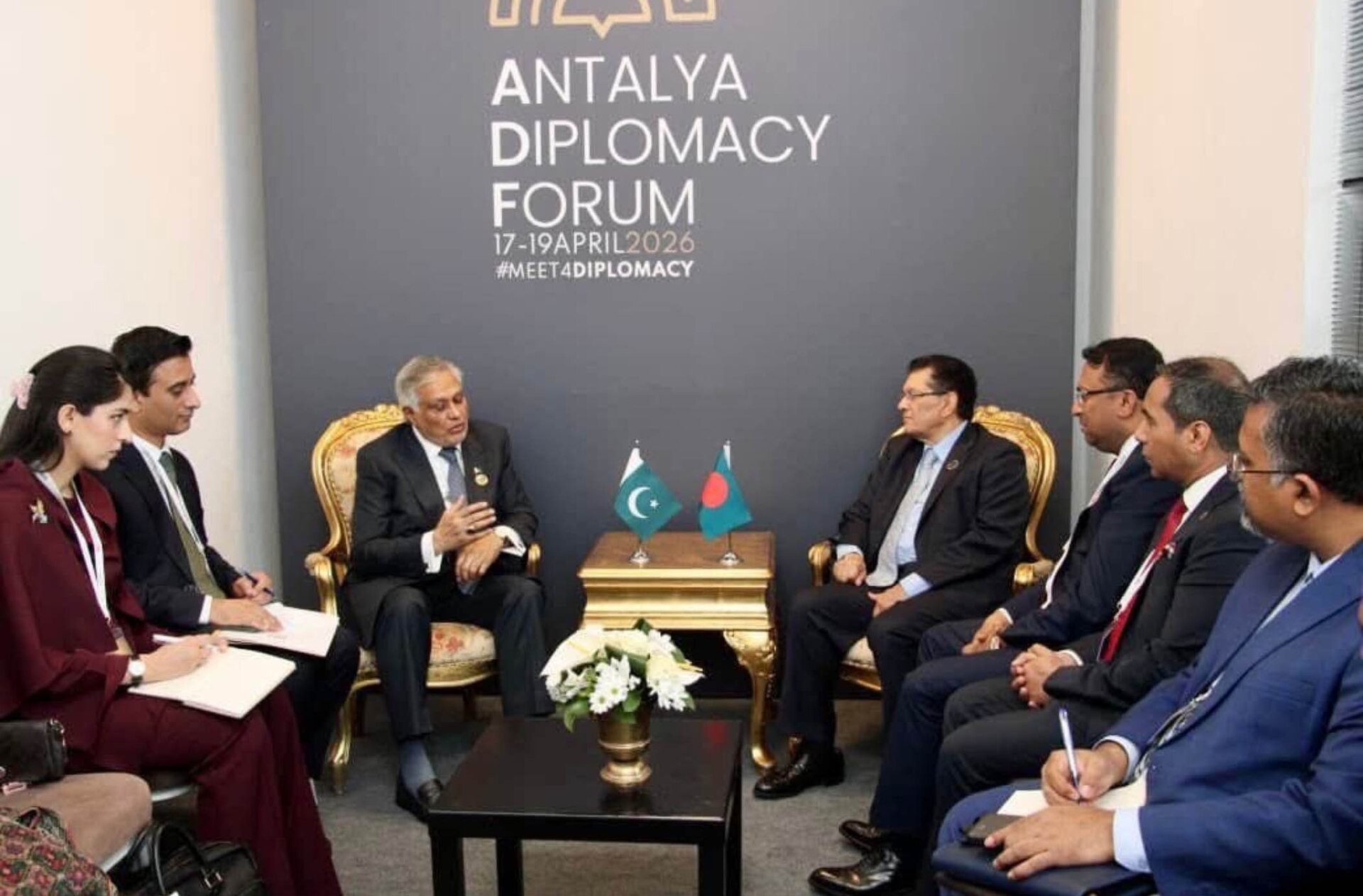
Foreign Policy named the grouping on July 1, 2026, describing it as a diplomatic and strategic coordination mechanism with two stated goals: containing Iran and pushing back against Israeli territorial expansion. What the framing missed is that the coalition is also a demotion notice for the GCC. Four foreign-minister meetings in thirty-one days — Riyadh on March 18–19, Islamabad on March 29, Islamabad deputy ministers on April 14, Antalya on April 17–19 — produced a working consultation architecture without a single GCC signature block. Qatar joined as the fifth member for the diplomatic layer. The security quadrilateral remains Turkey, Saudi Arabia, Egypt, Pakistan. The UAE was not invited, has not asked to join, and has not publicly explained its absence. Its silence is the most legible statement it has issued in six months.
Table of Contents
- What is the Saudi-led quintet, and why does it exclude the UAE?
- The Function-Substitution Map
- Is this a durable institution or a crisis coalition?
- Why did Riyadh make Pakistan the load-bearing pillar?
- Turkey’s NATO Credential and Erdoğan’s Mediation Capital
- Qatar: The Doha Channel and the Financial Legitimacy Layer
- What does Egypt bring beyond Arab League cover?
- The UAE as Adversary Rather Than Absentee
- IMCTC and Baghdad Pact: Two Precedents Pointing in Opposite Directions
- Frequently Asked Questions
What is the Saudi-led quintet, and why does it exclude the UAE?
The quintet is a five-state consultation mechanism — Saudi Arabia, Qatar, Turkey, Pakistan, Egypt — coordinating on Iran containment and pushback against Israeli expansion, with a security quadrilateral (Turkey-Saudi-Egypt-Pakistan) beneath a diplomatic layer that includes Doha. The UAE is excluded because Abu Dhabi’s Israel alignment, its Muslim Brotherhood designation, and its January 2026 weapons-supply rupture with Riyadh made shared membership operationally incompatible.
The mechanism has no charter, no headquarters, no secretariat, no communiqués beyond bilateral readouts, and no enforcement clause. The International Institute for Strategic Studies described it in May 2026 as having “evolved beyond ad hoc crisis response into a recognisable security architecture” while noting the absence of institutionalisation, shared threat assessment, and enforcement. That description is the most generous available. Al Jazeera Centre for Studies, writing on May 14, called it a “convergence of necessity” whose “flexibility remains both its principal strength and its key vulnerability.” Nothing in the drafting language commits any member to any obligation the member does not later ratify bilaterally.
The exclusion of the UAE is not a matter of quiet disagreement between capitals. Saudi airstrikes hit UAE-supplied weapons convoys in Yemen in January 2026 — the first direct military action inside the Saudi-Emirati rivalry. Cinzia Bianco of the European Council on Foreign Relations put the diagnosis in a single sentence — “The Saudi-Emirati strategic alliance…has collapsed” — and the quintet is what Riyadh built on top of that collapse. Prince Turki al-Faisal, the former Saudi intelligence chief, told IPS Journal that “had the Israeli plan to ignite war between us and Iran succeeded, the region would have been plunged into ruin and destruction,” and the quintet is oriented around that counterfactual, not around the GCC’s institutional map.
The Function-Substitution Map
Read the quintet as a substitution list and Abu Dhabi’s absence stops being a puzzle. Every member fills a role the UAE could once have filled inside the GCC and no longer will. The table below is the architecture in its bare form.
The Middle East briefing 3,000+ readers start their day with.
One email. Every weekday morning. Free.
| Member | Function Riyadh Sources From It | UAE Equivalent (Historical) | Reason UAE No Longer Provides It |
|---|---|---|---|
| Qatar | Doha mediation channel with Washington and Tehran; financial legitimacy layer | Abu Dhabi backchannel to Washington | UAE channel now runs through Israel-aligned Abraham Accords track |
| Turkey | NATO membership credential; Erdoğan personal mediation capital; MKE weapons supply | Emirati F-35 pathway and CENTCOM basing depth | F-35 track suspended; UAE hosted the meetings Rubio held after skipping Riyadh |
| Pakistan | Nuclear-state legitimacy; 250M Sunni demographic weight; Article 5–equivalent defence pact; 8,000 troops at King Abdulaziz Air Base | UAE ground forces (small, expeditionary) | UAE demanded repayment of $3.5B loan from Pakistan and deported Pakistani workers post-Iran conflict |
| Egypt | Arab League legitimacy; 110M population; Suez Canal chokepoint interest | UAE-brokered Arab consensus formation | UAE competes with Egypt on Red Sea port consolidation from Sudan to Somaliland |
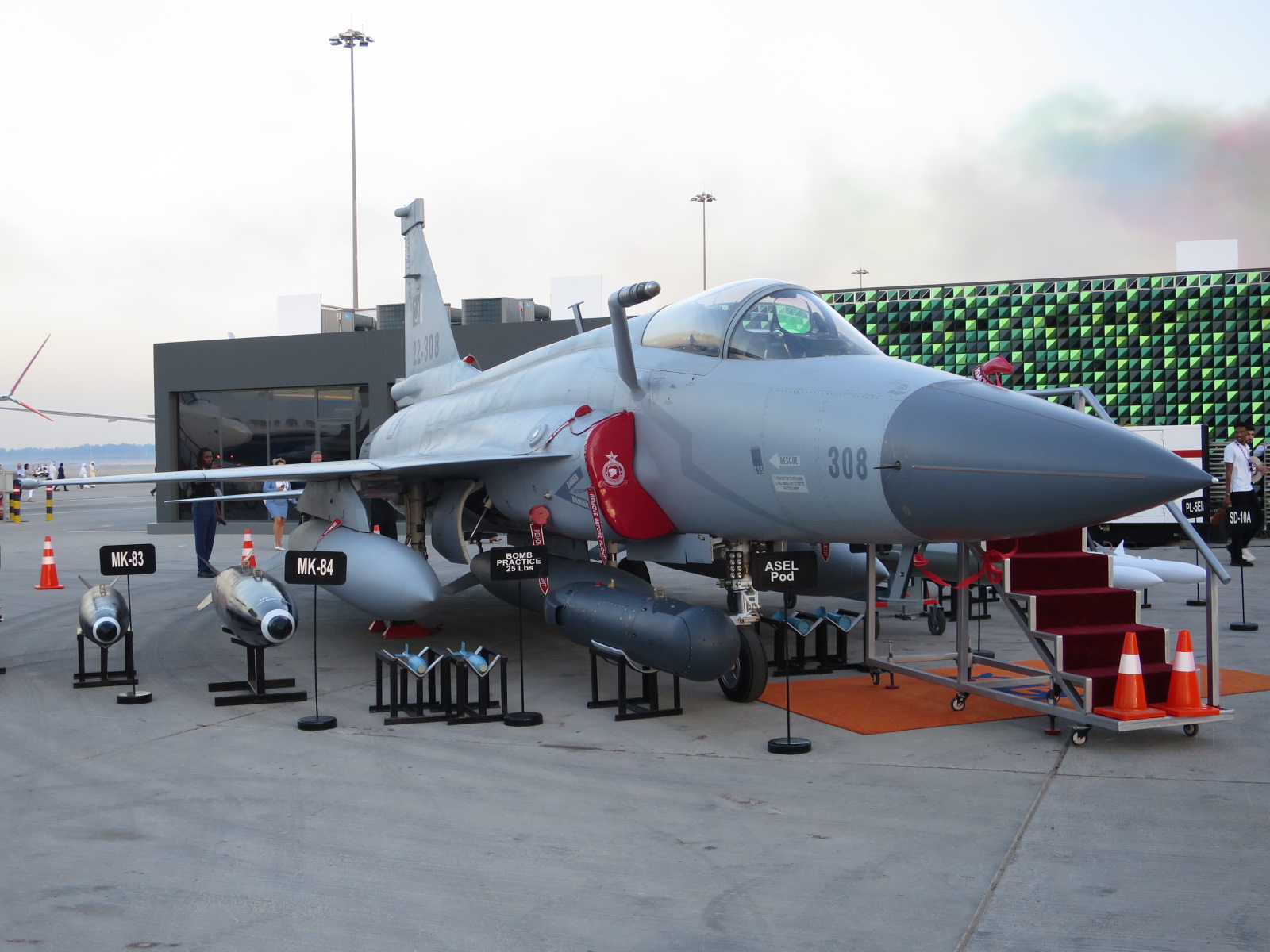
The row that matters most sits third. The Strategic Mutual Defence Agreement Saudi Arabia signed with Pakistan in September 2025 — “attacks on either nation constitute attacks on both” — is the first Article 5–equivalent language Riyadh has ever obtained from a nuclear-armed partner, and Yoel Guzansky of the Institute for National Security Studies confirmed on June 2, 2026 that by April Pakistan had positioned 8,000 troops, a fighter squadron, unmanned aerial vehicles, and air-defence systems at King Abdulaziz Air Base. The Emirati force posture never approached that number and never carried that clause.
Turkey enters the map through a February 2026 bilateral military agreement with Egypt, layered atop a $350 million export deal from Turkish arms firm MKE to Egypt’s Ministry of Defence, documented by the OSW Centre for Eastern Studies. Two of the four security quadrilateral members thus arrived with a signed defence relationship of their own before Riyadh convened them. The quintet did not create Turkey-Egypt coordination — it inherited it.
Is this a durable institution or a crisis coalition?
The quintet is a crisis coalition with institutional aspirations that have not yet cleared any of the tests that convert one into the other. It has produced no treaty text, no ratifications, no secretariat, no funding formula, and no dispute-resolution language. Its cohesion currently rests on shared exposure to two concurrent crises — Iran and Israeli expansion — and on the absence of a rival framework that any member prefers.
The full military substance — and its limits — of the alignment is assessed in the analysis of what Turkey, Pakistan, Egypt, and Qatar actually bring to Saudi air defense: Turkish drones that cannot intercept ballistic missiles, Pakistani nuclear ambiguity aimed at India, Egyptian conventional mass configured for Sinai, and Qatari purchasing power that cannot buy manpower. Durability of a security bloc gets measured against three thresholds. The first is whether members will accept binding commitments that constrain future national choices. The second is whether members will share a threat assessment specific enough to survive a change of government in any one capital. The third is whether members will fund a permanent operational apparatus. The Islamic Military Counter Terrorism Coalition, launched by Riyadh in December 2015 with a Pakistani general as first commander, cleared none of the three and still exists on paper a decade later — 34 members at launch, 43 by May 2025, formally active, operationally negligible. The Royal United Services Institute has documented that IMCTC persisted “through bureaucratic inertia even after losing operational relevance.” The precedent shows that Saudi-led coalitions do not need to succeed to survive. They only need to avoid formal dissolution.
The quintet has a floor problem the IMCTC did not. IMCTC’s mandate — counter-terrorism in the generic — was vague enough that no member had to explain what it had done. The quintet’s mandate is specific: contain Iran, resist Israeli expansion. Both objectives will be tested in months, not decades. When Pakistan next faces India in a live crisis — and the shared Balochistan border of 909 kilometres with Iran, plus a Shiite population above 20 percent, guarantees Islamabad reads its threat hierarchy as India first, Iran second — Riyadh will discover whether the September 2025 pact travels in both directions or only one. The Baghdad Pact of 1955 also included Turkey and Pakistan; it collapsed when Pakistan went to war with India in 1965 and 1971 without partner support. The relevant historical analogy is not IMCTC. It is Baghdad.
Why did Riyadh make Pakistan the load-bearing pillar?
Pakistan carries the quintet because it supplies three things no other member can: a nuclear-weapons state’s implicit umbrella, the Sunni Muslim demographic weight that dwarfs the rest of the coalition combined, and the only Article 5–equivalent defence commitment Riyadh holds with any state. Turkey brings NATO credentials but no bilateral defence guarantee to Saudi Arabia. Egypt brings Arab League cover but a peace treaty with Israel that constrains its options. Pakistan brings both signature and hardware.
The September 2025 Strategic Mutual Defence Agreement changed the arithmetic of Saudi deterrence. Before it, the Kingdom’s ultimate security guarantor was the United States under an unwritten understanding that had held since 1945 and that Riyadh spent much of 2025 watching erode. On May 4, 2026, Saudi Arabia denied US forces the use of Prince Sultan Airbase for Operation Project Freedom. Secretary of State Marco Rubio’s subsequent Gulf tour — reported by the Wall Street Journal on July 2 and by The Defense Post on May 9 — visited the UAE, Kuwait, and Bahrain and explicitly skipped Riyadh. When a Secretary of State organises an itinerary around avoiding a partner, the partner’s file is being reclassified in Washington. Pakistan’s presence at King Abdulaziz Air Base is what a hedging strategy looks like in physical form.
Islamabad brings a second asset that Riyadh needs and Abu Dhabi has actively worked to deny. Pakistan and Qatar co-mediated the US-Iran Doha talks that concluded on July 1 with what the mediators called “positive progress.” Saudi Arabia held zero formal seats in those talks — a detail catalogued in the coverage of the Doha working groups — but Islamabad’s presence in the room is a proxy Riyadh can read. The UAE, meanwhile, demanded repayment of a $3.5 billion loan from Pakistan and began deporting Pakistani workers after the Iran conflict, according to Guzansky’s INSS reporting. Abu Dhabi’s Pakistan policy is now openly extractive at the exact moment Riyadh is buying Islamabad’s political time.
The demographic weight matters diplomatically. Combined quintet population is roughly 500 million — Pakistan 250 million, Egypt 110 million, Turkey 85 million, Saudi Arabia 35 million, Qatar 3 million. In any multilateral setting where Sunni Muslim demographic weight functions as legitimacy currency, the quintet claims the largest bloc in the region.
Turkey’s NATO Credential and Erdoğan’s Mediation Capital
Ankara supplies the quintet with a NATO membership card Riyadh cannot use directly but can point at. Turkey’s Article 5 obligations to the North Atlantic Treaty do not extend to Saudi Arabia — no clause bends that way — but Turkish participation in the security quadrilateral establishes a channel through which NATO logistics, intelligence sharing, and interoperability standards can reach Saudi and Egyptian forces without a bilateral US treaty relationship. Hakan Fidan, the Turkish foreign minister, has been the coalition’s most visible spokesman. In March 2026 he told Middle East Eye, “We are exploring how, as countries with a certain degree of influence in the region, we can combine our strengths to solve problems.” In April he told OSW Centre for Eastern Studies, “Either we come together and learn to solve our own problems ourselves, or an external hegemon will come and either impose solutions that serve its own interests.”
The Fidan formulation contains a deliberate ambiguity about the identity of the “external hegemon.” Publicly it means the United States. Privately, according to two European diplomats cited by Al Jazeera Centre for Studies, it also means Israel — which explains why Kristin Diwan of the Arab Gulf States Institute in Washington told Middle East Eye that “the Emiratis have leaned into their accommodation with the Israelis since the Abraham Accords. With the Saudis unable and unwilling to follow them…they have increased coordination with the other non-Arab regional power, Turkey.” Diwan’s sentence describes a substitution, and the substitution is the story.
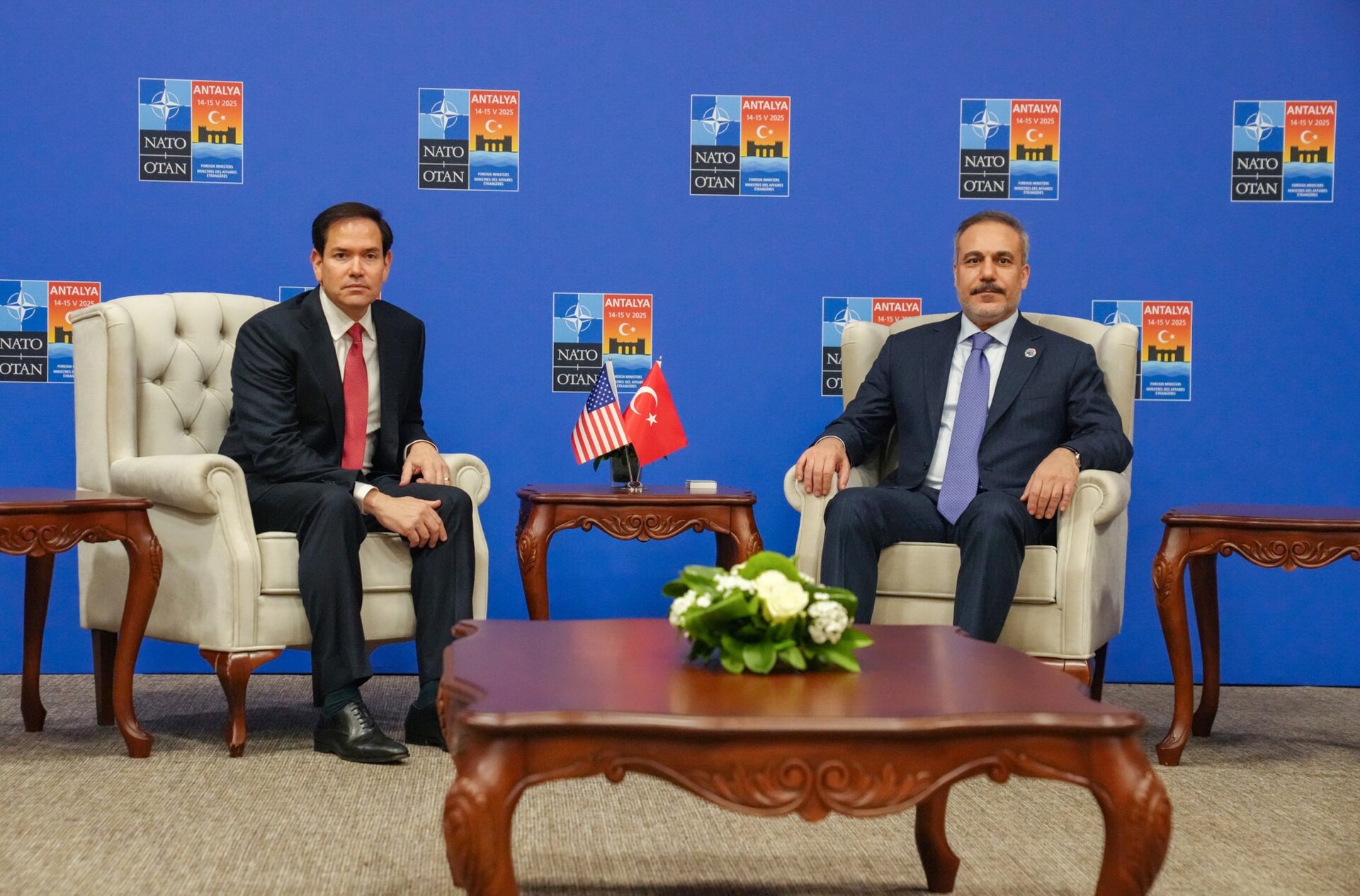
Erdoğan’s personal mediation capital is a resource the quintet monetises. Turkey is the only quintet member with active diplomatic channels to Moscow, Kyiv, Tehran, and Doha simultaneously. Ankara’s ability to speak to actors Riyadh cannot address directly — the Iranian foreign ministry above the technical-talks level, Hamas political leadership, the Muslim Brotherhood-adjacent networks in Cairo — is a specific service the coalition purchases with the diplomatic legitimacy Turkey receives in return. Fidan told Daily Sabah in April that the talks were “not aimed at forming a military alliance, but rather at ending conflicts, enhancing stability, and fostering economic development” — a formulation designed to avoid triggering the Baghdad Pact echo that Turkish and Pakistani participation would otherwise invite.
“Either we come together and learn to solve our own problems ourselves, or an external hegemon will come and either impose solutions that serve its own interests.”Hakan Fidan, Turkish Foreign Minister, OSW Centre for Eastern Studies, April 24, 2026
Qatar: The Doha Channel and the Financial Legitimacy Layer
Qatar is the quintet’s fifth member for reasons the March 18, 2026 Iranian strike on the Ras Laffan gas facility crystallised. Doha was hit on the same day the first quadrilateral foreign-minister meeting convened in Riyadh — a coincidence of dates that the coalition members treated as evidence rather than accident. Qatar’s exposure to Iranian escalation is now identical to Saudi Arabia’s in structural terms, and the diplomatic mechanism it operates through the Al Udeid channel is the only functioning Iran-US mediation venue in the region.
The Doha channel’s utility can be measured by who has used it. Qatar co-mediated the US-Iran talks that concluded on July 1 with the working-group announcement covered in the working-groups analysis. The Doha framework carries the Iranian negotiating team’s confidence in a way no Saudi-hosted equivalent could — a legacy of Qatar’s 2010s hosting of Taliban political offices, its ownership of Al Jazeera’s Arabic-language footprint, and its status as the only Arab capital Tehran considers procedurally neutral. Riyadh gets a mediation service without hosting it, and Doha gets a coalition insurance policy without joining the security quadrilateral formally.
The financial legitimacy Qatar contributes is separate from the mediation function. Qatar Investment Authority holds sovereign-wealth assets estimated above $520 billion. Its willingness to co-underwrite Egyptian and Pakistani fiscal support during the coalition-forming period — reported through bilateral central-bank channels rather than communiqués — provided the operational grease for the March-to-April meeting sequence. The UAE’s Abu Dhabi Investment Authority carries larger reserves but has directed them toward Israel-aligned reconstruction bets: Gaza reconstruction contracts, West Bank co-optation instruments, and Red Sea port consolidation from Sudan to Somaliland. Bianco’s characterisation of the Emirati posture as “mercantilist and futurist” is a polite way of noting that Abu Dhabi’s capital is chasing a different regional map than Riyadh’s.
What does Egypt bring beyond Arab League cover?
Egypt supplies Arab League legitimacy, the Suez Canal chokepoint interest, and a 110 million-strong population whose absorption of Gaza-adjacent instability is the region’s single largest humanitarian risk. Cairo’s Suez Canal revenues were roughly $7.2 billion in the 2023–2024 fiscal year and have been depressed by Red Sea shipping disruptions since — Egypt’s economic pain gives it a specific incentive to join any stabilisation framework, and the quintet is currently the only one on offer.
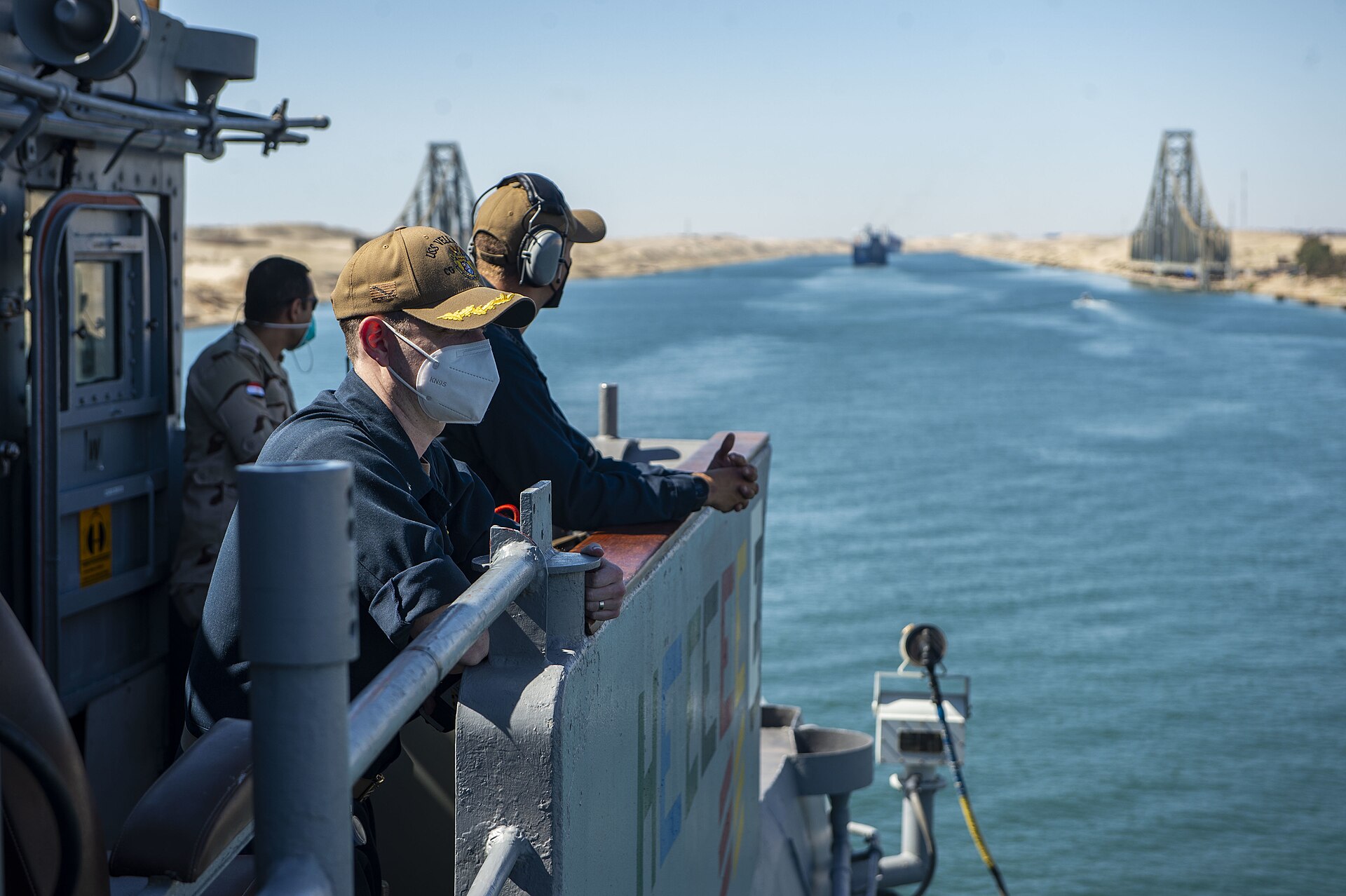
The February 2026 Turkey-Egypt bilateral military agreement was the coalition’s foundational document even though the coalition did not yet exist. When Turkish MKE simultaneously signed the arms export deal with Egypt’s Ministry of Defence, the two states created interoperability facts on the ground that Riyadh could then plug into. Egyptian Foreign Minister Badr Abdelatty described the objective plainly at the Antalya Diplomacy Forum on April 18: the four nations were “hammering out a security deal designed to end the current conflict and prevent it from breaking out again.” Abdelatty’s word choice — “current conflict,” singular — reflected the Cairo view that the Iran crisis and the Israeli-expansion crisis are one file, not two.
Egypt also carries the coalition’s weakest domestic-political position. President Sisi’s government faces a fiscal squeeze intensified by the canal revenue shortfall, an IMF program with tight conditionality, and a Gaza border management burden that no other quintet member shares. Cairo needs the coalition more than the coalition needs Cairo, which makes Egypt the member most likely to accept coordination language that constrains its future choices. In an alliance measured by which member has the fewest exit options, Egypt is the pillar.
The UAE as Adversary Rather Than Absentee
Abu Dhabi’s absence from the quintet is not a passive omission. The UAE is running an actively counter-Riyadh regional strategy across multiple files simultaneously, and the quintet was designed with that strategy as a known input rather than an unknown risk.
The rupture was military before it was diplomatic. Saudi airstrikes in January 2026 hit UAE-supplied weapons in Yemen — the first direct kinetic exchange in what had until then been a rivalry conducted through proxies and press leaks. Hesham Alghannam of the Carnegie Middle East Center told Middle East Eye the Saudi-UAE crisis is “more serious” than the 2017 Qatar blockade because it reflects “competing regional strategies.” Guzansky reported in INSS on February 11 that Mohammed bin Salman had allegedly called Mohammed bin Zayed a “traitor” and threatened consequences “exceeding Qatar’s 2017–2021 blockade.” That is language a Saudi crown prince does not use about a partner he intends to reconcile with.
The UAE’s OPEC exit on May 1, 2026 — the subject of the OPEC withdrawal analysis — was announced without prior Riyadh consultation, an “unprecedented violation of Gulf coordination norms” in the phrasing of the Horn Review’s May 22 assessment. UAE capacity of 4.85 million barrels per day against a quota near 3.5 million was the technical grievance; the strategic grievance was that Abu Dhabi could afford the move — its fiscal breakeven of roughly $49 per barrel gives it operating room Riyadh’s $90 breakeven does not — and used the differential as a weapon rather than a shared resource.
The Israeli alignment file completes the substitution logic. The UAE received more Iranian missile strikes than all other Gulf Cooperation Council states combined during the conflict, and Israeli counter-drone systems intercepted 95 percent or more of the projectiles aimed at Emirati targets — an ECFR figure attributed to Bianco. Rather than treating that exposure as a basis to demand Israeli restraint, Abu Dhabi deepened the security relationship. The UAE’s designation of the Muslim Brotherhood as a terrorist organisation under domestic law makes shared membership with Ankara and Doha structurally impossible: Erdoğan’s AKP and Qatar’s political culture both carry Brotherhood-adjacent DNA that Abu Dhabi’s threat matrix cannot accommodate. The Emirati red line is a design constraint, not an accident of temperament.
Sultan Mohammed Al-Nuaimi of the Emirates Center for Strategic Studies posed the internal question in a Middle East Council on Global Affairs interview on March 16: “Are we six states that have a bloc, or are we one bloc made up of six states?” The framing was ostensibly about the GCC. In practice it functioned as an Emirati exit interview. The quintet’s formation three months later answered Al-Nuaimi’s question in a way the UAE had not anticipated: Riyadh chose to build a bloc that does not require GCC membership at all.
IMCTC and Baghdad Pact: Two Precedents Pointing in Opposite Directions
The historical analogies available to the quintet cut against each other. IMCTC — the Islamic Military Counter Terrorism Coalition — teaches that Saudi-led multilateral structures can persist for decades through bureaucratic inertia without operational relevance. The Baghdad Pact of 1955 teaches that coalitions including Turkey and Pakistan can collapse when Pakistan’s India-facing threat priority overrides regional coordination.
IMCTC’s survival mechanics are worth reading closely. Launched in December 2015 with a Pakistani general, Raheel Sharif, as its first commander, IMCTC grew from 34 members at inception to 43 by May 2025. It has no operational deployments, no counter-terrorism successes attributable to it as an institution, and no visible budget line item outside member state contributions. RUSI’s analysis notes that IMCTC “never had Article 5-equivalent language with any member” — a design choice that turned out to be a survival feature. When members carry no binding obligations, they cannot be seen to have violated any. The coalition persists because failure has no evidentiary threshold.
The quintet has already crossed the threshold IMCTC avoided. The September 2025 Saudi-Pakistan Strategic Mutual Defence Agreement contains language — “attacks on either nation constitute attacks on both” — that IMCTC deliberately excluded from its own founding documents. That clause is the coalition’s strategic asset and its most acute vulnerability. It creates a fact that can be tested. IMCTC survived by remaining untestable.
The Baghdad Pact analogy points at the specific way the test can fail. When Pakistan fought India in 1965 and 1971, the Baghdad Pact partners — the United Kingdom, Turkey, Iran under the Shah, and Iraq before its 1958 revolution — provided no meaningful support because none of their treaty obligations bent that way. Pakistan’s threat hierarchy today remains India first, Iran second, everything else third. The next India-Pakistan crisis will pose the same question the Baghdad Pact failed: does the coalition travel with Pakistan into a fight the other members do not share?
Al Jazeera Centre for Studies’ formulation — the quintet as a “convergence of necessity” whose “flexibility remains both its principal strength and its key vulnerability” — is the correct diagnosis. Flexibility is what allows the coalition to survive the first stress test. Flexibility is also what prevents it from graduating into an institution that can survive the second.
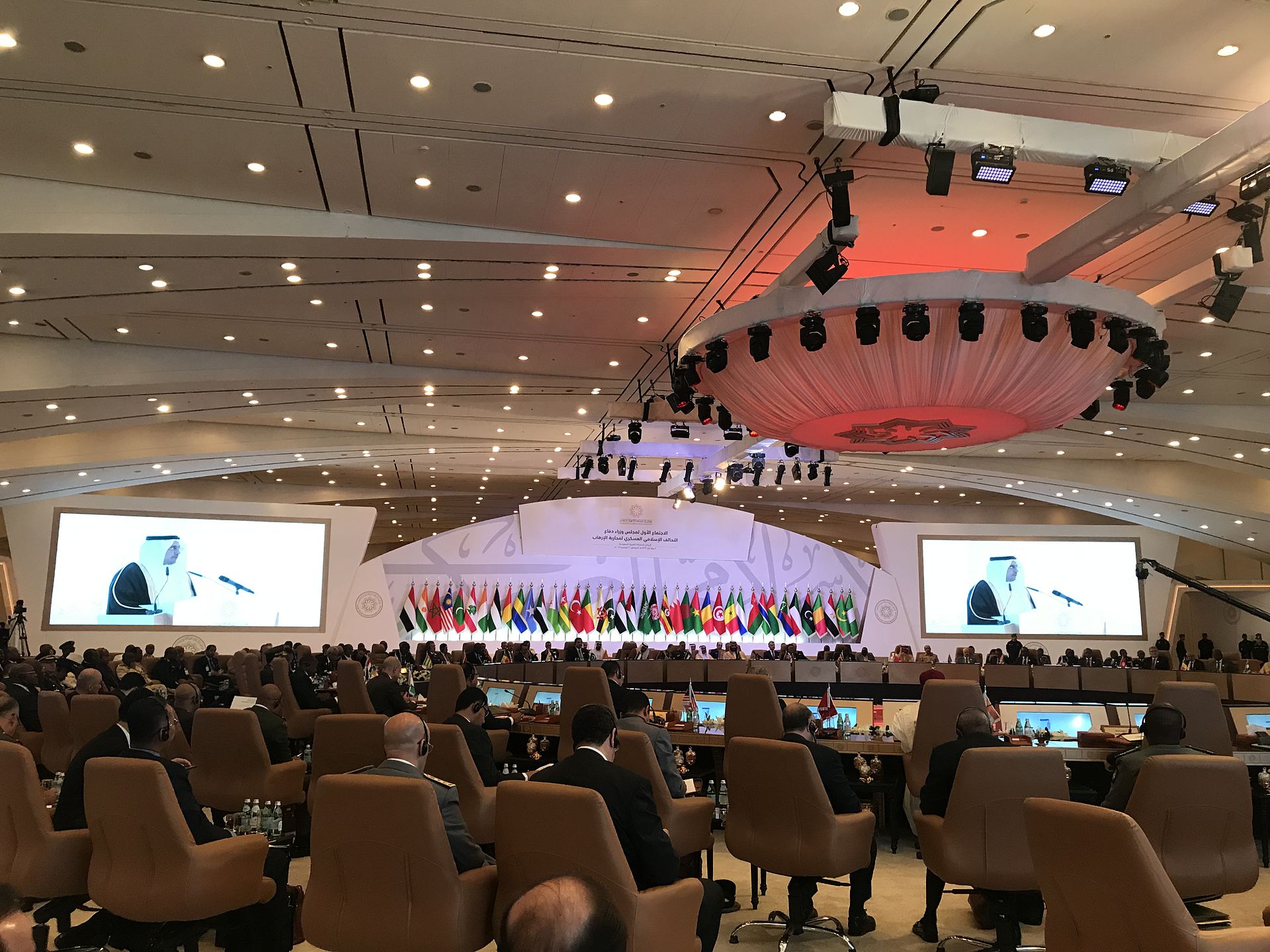
The comparative reading in the GCC collective defence analysis is directly relevant. When the GCC declared “attack on all” during the Iran crisis, not one soldier moved. The quintet’s founders watched that outcome. They built the new architecture around the assumption that a coalition whose largest binding commitment is a bilateral Saudi-Pakistan agreement, rather than a multilateral clause, is more likely to be honoured than one whose signatures multiply the deniability. The bet is that fewer members with harder commitments outperforms more members with softer ones. The bet is untested. The Chinese diplomatic accommodation catalogued in the Hormuz language coverage and the Beijing outreach in Faisal’s China visit reflect the same underlying calculation: Riyadh is compounding partnerships rather than concentrating them.
Frequently Asked Questions
What is the legal status of the Saudi-Pakistan Strategic Mutual Defence Agreement, and has Pakistan’s Parliament ratified it?
The September 2025 agreement was signed at the executive level and has not been submitted to Pakistan’s National Assembly for formal treaty ratification as of July 2, 2026, according to Islamabad-based analysts at the Institute of Strategic Studies Islamabad. Under Pakistan’s 1973 Constitution, executive defence agreements bind the government but not the state absent parliamentary approval — a distinction that becomes operative only if a future government seeks to disavow the clause. No ratification legislation has been tabled.
Has the UAE issued any formal response to the quintet’s formation?
Abu Dhabi’s Ministry of Foreign Affairs and International Cooperation has not issued a press statement referring to the quintet by name. Emirati state media outlets — The National and WAM — have covered the individual FM meetings as bilateral events without characterising them as a coalition. The one substantive Emirati commentary came from Sultan Mohammed Al-Nuaimi of the Emirates Center for Strategic Studies in March 2026, whose remarks focused on GCC internal architecture rather than the quintet directly.
Does the quintet have any economic or trade dimension beyond security coordination?
Working-level discussions on a Saudi-Egypt-Pakistan trilateral trade facilitation mechanism were reported by Dawn on May 8, 2026, focused on remittance corridors and food-security procurement — Saudi wheat and rice imports routed through Egyptian and Pakistani suppliers. Turkey is a separate track under the existing Turkey-Gulf Cooperation Council Free Trade Agreement framework, dormant since 2005 but revived in Fidan’s April 2026 Antalya remarks. No consolidated economic charter exists.
Which regional states have declined observer status or been declined observer status in the quintet?
Jordan requested informal association in April 2026 through King Abdullah II’s diplomatic advisor and was politely deferred, according to two Amman-based sources cited by Middle East Eye — Riyadh cited Jordanian dependency on US security assistance as an incompatibility. Iraq’s foreign ministry indicated interest through Fuad Hussein’s office; the response referred Baghdad to bilateral tracks. Oman, characteristically, has neither requested nor been offered any role, preserving its mediation neutrality with Iran.