
DHAHRAN — Donald Trump declared the United States the “Guardian of the Strait of Hormuz” on July 13 and announced a 20 percent toll on all cargo transiting the waterway — a levy that lands on Saudi tankers already carrying Iran’s Persian Gulf Strait Authority fee of roughly a dollar per barrel and war-risk insurance premiums that have reached $2.25 per barrel on a loaded VLCC, creating a combined extraction stack that could cost Riyadh between $36 million and $59 million per day on the 2 to 3 million barrels it cannot reroute through Yanbu. Saudi Arabia endorsed freedom of navigation in a joint statement with China twelve days ago, holds no seat at either the US-Iran talks in Doha or the multilateral track in Islamabad, and as of July 13 had issued no public response to the toll — silence that, in the operational logic of both collectors, functions as consent to fiscal terms no one in Riyadh negotiated.
Table of Contents
- The Arithmetic of Double Extraction
- What Does the 20 Percent Toll Cost Saudi Arabia Per Day?
- Why Can’t Saudi Arabia Route Around Hormuz?
- Two Guardians, One Strait
- Does Riyadh Have a Legal Instrument to Contest Either Toll?
- The Breakeven Gap No Toll Can Close
- Who Negotiates for Saudi Arabia When No One Invited It?
- The Precedent That Did Not Exist
- Frequently Asked Questions
The Arithmetic of Double Extraction
Two separate toll regimes now claim the right to extract revenue from the same barrel of Saudi crude before it clears the Strait of Hormuz. Iran’s PGSA, which Tehran established in early 2026 and which the US Treasury designated a Specially Designated National on May 27, charges approximately one dollar per barrel on Saudi crude — a fee that accumulated $253 million in outstanding obligations before the Iran-US memorandum of understanding disintegrated, with a nominal payment deadline of August 18 that no one in Riyadh has publicly acknowledged or disputed. Trump’s toll, announced via Truth Social and framed as reimbursement for the cost of “providing safety and security to this very volatile section of the World,” levies 20 percent on the value of all cargo transiting the strait — not only crude oil but petrochemicals, LNG, and container freight — which at Brent’s July 13 price of approximately $82 per barrel amounts to $16.40 on every barrel of Saudi crude passing through, sixteen times the Iranian rate on the same shipment.
The Bruegel Institute, in its 2026 analysis “Could a Hormuz toll solve the oil crisis and who pays?”, identified the structural trap awaiting Gulf exporters: because they account for roughly 20 percent of global oil supply, their ability to pass a toll forward to consumers through higher world prices is severely constrained, and what Bruegel terms (1 − θ) of the toll per barrel — the fraction that cannot be shifted to buyers — falls back on the exporter’s netback as a direct revenue reduction. War-risk hull premiums, which Lloyd’s market and Howden Re priced at 2.5 to 5 percent of vessel value per Hormuz voyage in their March 2026 assessments, add another $0.75 to $2.25 per barrel on a two-million-barrel VLCC cargo, according to Fairway ETA and Lloyd’s List data. The combined extraction stack — PGSA fee, US toll, and insurance premium — reaches $18 to $20 per barrel before the crude enters the open ocean, on barrels that Aramco is already selling at a discount of $1.50 below the Oman-Dubai benchmark in its August official selling price.
What Does the 20 Percent Toll Cost Saudi Arabia Per Day?
The toll’s announcement and its immediate market reaction are covered in the companion news report; what follows is the structural arithmetic beneath the headline. At Brent’s July 13 price of $82 per barrel, a 20 percent toll on cargo value equals approximately $16.40 per barrel. On Saudi Arabia’s residual Hormuz-dependent exports of 2 to 3 million barrels per day — the fraction that cannot be rerouted through the East-West Pipeline and Yanbu — the US toll alone costs $33 million to $49 million daily, or approximately $15 billion annualized at midpoint, before the concurrent PGSA fee and war-risk insurance are added.
The answer turns on how much Saudi crude still passes through Hormuz, and that volume is not zero. Saudi Arabia exported approximately 5 million barrels per day through the strait before the IRGC’s closure declaration in early 2026, and the kingdom has since pushed its East-West Pipeline to the structural ceiling of 7 million barrels per day, but domestic refinery demand of roughly 1 million barrels per day and Red Sea port constraints at Yanbu cap the actual export bypass capacity at 2 to 3 million barrels per day. The residual gap, an equivalent 2 to 3 million barrels per day that cannot be redirected away from Hormuz, now sits in the toll zone of both collectors.
| Extraction Layer | Per Barrel | Daily Cost (2M bpd) | Daily Cost (3M bpd) |
|---|---|---|---|
| US toll (20% of $82 Brent) | $16.40 | $32.8 million | $49.2 million |
| Iran PGSA fee | $1.00 | $2.0 million | $3.0 million |
| War-risk hull insurance | $0.75–$2.25 | $1.5–$4.5 million | $2.25–$6.75 million |
| Combined per-barrel extraction | $18.15–$19.65 | $36.3–$39.3 million | $54.45–$58.95 million |
The annualized toll exposure at the midpoint of the residual range — 2.5 million barrels per day — runs to approximately $15 billion per year on the US toll alone, a sum that arrives when Aramco’s free cash flow covers its dividend at just 0.85 times and the company has already cut its Arab Light official selling price by $10 per barrel from the May peak to retain Asian buyers redirecting purchases toward Russian and Iranian crude available outside the Hormuz toll zone. The PGSA layer is smaller in per-barrel terms but carries its own coercive mechanism: $253 million in accumulated fees with an August 18 deadline, which Saudi Arabia can neither pay — because the PGSA’s OFAC designation makes any transfer a US sanctions violation — nor formally refuse without risking Iranian enforcement measures against Saudi-flagged vessels in the strait.
The Middle East briefing 3,000+ readers start their day with.
One email. Every weekday morning. Free.
Brent climbed from approximately $79 to $82 on the blockade announcement, and the superficial reading is that higher prices offset the toll — but the arithmetic runs against a producer-exporter. The price increase delivers roughly $3 per barrel of additional revenue on all Saudi exports worldwide, which at a combined Gulf and Red Sea volume of approximately 5 million barrels per day amounts to about $15 million per day in incremental top-line revenue, while the US toll applied to the 2 to 3 million barrels per day that transit Hormuz costs $33 to $49 million per day — exceeding the price rally’s benefit by more than two to one and leaving the net fiscal effect of the “Guardian” declaration negative for Saudi Arabia from the moment it was announced.
Why Can’t Saudi Arabia Route Around Hormuz?
The Petroline — the 1,200-kilometer East-West Pipeline from Abqaiq in the Eastern Province to the Yanbu terminal on the Red Sea — was built as a strategic hedge against exactly this scenario, and it is at maximum capacity with no expansion available on any timeline that matters for the current crisis. Saudi Arabia hit the pipeline’s hard physical ceiling of 7 million barrels per day on March 11, 2026, and that number has not increased since because additional throughput requires a multi-year expansion project that was never commissioned, an infrastructure gap that reflects the decades-long assumption — now invalidated — that Hormuz would remain open, unmetered, and free. After the domestic refinery draw at the Yanbu complex and loading-infrastructure constraints at the port, the kingdom can export approximately 2 to 3 million barrels per day through the Red Sea, and the consequences of that cap were visible when Saudi oil exports fell 36 percent between February and June 2026 as the kingdom paused Gulf terminal loadings at Ras Tanura and Juaymah, according to Bloomberg and Oxford Institute for Energy Studies data.
Rystad Energy confirmed on July 12 that “tanker traffic through the Strait of Hormuz has essentially stopped,” and CENTCOM’s announced reinstatement of the US naval blockade on Iranian-bound shipping — effective July 14, with force authorized against non-compliant vessels — adds a military enforcement layer to a waterway that now carries a sovereign toll, an insurance surcharge, and a naval interdiction regime simultaneously. During that export contraction, the revenue impact was partially cushioned by Brent prices above $90 driven by supply scarcity, but the current configuration is structurally worse: prices have fallen to $82 while the strait remains contested, meaning the kingdom faces volume constraints and price compression at the same time — a combination the Petroline cannot solve because the pipeline addresses routing, not pricing, and every barrel that exits through Yanbu instead of Ras Tanura still sells at the same discounted official selling price.
Two Guardians, One Strait
Abbas Araghchi responded to Trump’s declaration within hours, posting on X that “whoever provides secure and safe passage of commercial vessels through the Strait of Hormuz should be compensated for this service” and asserting that “Iran has always been the GUARDIAN of the Strait and will remain so FOREVER.” The statement would be unremarkable sovereignty boilerplate from a foreign minister defending territorial prerogatives — except for one line near the end that restructures the dispute entirely: “20% is of course too much.” Araghchi was not contesting the legitimacy of a Hormuz toll; he was disputing the rate and the identity of the collector, and in doing so he pulled Iranian and American positions into the same conceptual frame — both governments now agree that transit through Hormuz should generate revenue for whichever power controls passage, and both claim that power is theirs.
Whoever provides secure and safe passage of commercial vessels through the Strait of Hormuz should be compensated for this service. Iran has always been the GUARDIAN of the Strait and will remain so FOREVER… 20% is of course too much.
Abbas Araghchi, Iranian Foreign Minister, X post, July 13, 2026
The convergence is not merely rhetorical. Iran’s PGSA, which predated Trump’s announcement by months, already operates a tiered fee structure that classifies transit states by their diplomatic relationship with Tehran — a framework in which China received an explicit “friendly nation” carve-out while Saudi Arabia did not, according to deputy interior minister Rahmani Fazli’s June designation. Iran and Oman had been in discussions as of May 2026, reported by Bloomberg, over a permanent institutionalized toll system for Hormuz, with Oman serving as the co-legitimizing strait state under UNCLOS and thereby granting Iran’s collection regime a layer of international legal standing that Trump’s unilateral declaration conspicuously lacks. The Iranian military joint command underscored the territorial claim on July 13 by stating that “the United States had no role in determining the future of the strait,” a position that, whatever its strategic intent, is consistent with the law of the sea, which designates Iran and Oman as the strait states and accords no governance authority to a naval power that stations carriers in the waterway but holds no territorial jurisdiction over its waters.
For Saudi Arabia, the convergence between Iranian and American toll logic produces a situation with few diplomatic exits: Riyadh opposes the PGSA toll because it pays it, and it cannot publicly oppose the US toll because the same government levying the charge provides the Patriot batteries and intelligence architecture on which Saudi air defense depends. The kingdom’s July 1 joint statement with Beijing endorsing freedom of navigation in Hormuz was drafted against Iran, but its operative language applies with equal force to the toll announced by Saudi Arabia’s principal security guarantor twelve days later, and Riyadh’s silence on Trump’s declaration leaves the joint statement as a principle the kingdom invokes selectively — which, for the purposes of both toll collectors, means it holds against neither.
Does Riyadh Have a Legal Instrument to Contest Either Toll?
UNCLOS Articles 37 through 44 prohibit tolls on transit passage through international straits, but the United States never ratified the convention, placing the US toll outside the treaty’s dispute-resolution framework entirely. Saudi Arabia could invoke UNCLOS against Iran’s PGSA — Iran is a signatory — but has not done so, and Riyadh’s July 1 freedom-of-navigation statement with China now applies inadvertently to the toll announced by its own security partner.
The legal architecture is clear in text, if not in jurisdiction. Article 42 enumerates the categories of regulation a strait state may impose — safety of navigation, pollution prevention, fishing, and customs enforcement on loading or unloading within the strait state’s territory — and tolls are deliberately absent from that list, as the International Maritime Organization affirmed on July 13 when it stated that it “stands firmly against charging fees for passage through straits used for international navigation” and that “there is no legal basis through which to introduce mandatory tolls simply to transit through a strait.” Hadef & Partners, the UAE-based law firm, concluded in its legal analysis during the crisis that Article 42’s enumeration is exhaustive rather than illustrative, meaning the omission of tolls is a deliberate prohibition — though one that binds only UNCLOS signatories, a category that does not include the United States.
Saudi Arabia’s own diplomatic record compounds the difficulty. The July 1 joint statement with Beijing endorsing freedom of navigation was worded broadly enough to cover any toll on Hormuz transit by any actor, including one imposed by the country that guarantees Saudi Arabia’s eastern air defense perimeter, and as of July 13 Riyadh had issued no public statement contesting the US levy — declining even the formulaic objections that Japan, South Korea, and the European Union registered within hours of the announcement. The White House, for its part, did not respond to questions on how the 20 percent would be collected, by whom, or through what administrative mechanism, leaving the toll simultaneously announced by the president, condemned by the IMO, mirrored by Iran’s foreign minister, and operationally undefined — a revenue instrument that exists as a political declaration but not yet as a functioning collection system.
The Breakeven Gap No Toll Can Close
The toll does not create Saudi Arabia’s fiscal problem — it deepens a deficit that was already widening before Trump spoke. Brent at $82 per barrel sits $4.60 below the IMF’s fiscal breakeven estimate of $86.60 for the Saudi budget, and the gap between the market price and what the kingdom requires widens dramatically under Goldman Sachs’s consolidated breakeven of $108 to $111 per barrel, which incorporates PIF spending, NEOM obligations, and off-budget Vision 2030 commitments that the IMF’s headline number excludes. The IMF had already cut Saudi 2026 GDP growth to 1.7 percent on the basis of Hormuz disruption alone; the toll adds a fiscal extraction layer the Fund’s model did not contemplate because no such mechanism existed when the forecast was published.
Every dollar of per-barrel extraction at Hormuz comes directly off the netback that funds both Aramco’s dividend and the Saudi state budget, and at a residual Hormuz volume of 2.5 million barrels per day each additional dollar of toll translates to roughly $900 million per year in forgone government revenue. The Q1 2026 fiscal deficit of SAR 125.7 billion — approximately $33.5 billion — demonstrates that expenditure has not adjusted to the revenue compression: Saudi government spending continued to grow through the first quarter on the assumption that Hormuz would reopen under the MOU framework and that Brent would stabilize in the mid-eighties, neither of which has materialized. The OPEC+ quota hikes Saudi Arabia voted for continue to release additional barrels into an oversupplied market, and the toll inserts a permanent wedge between the gross price of Saudi crude and the net proceeds the treasury receives — a structural cost that, unlike a temporary disruption, creates a constituency for its own continuation once an enforcement apparatus is built.

Who Negotiates for Saudi Arabia When No One Invited It?
Saudi Arabia holds no signatory role, no mediator status, and no observer seat at either the US-Iran bilateral channel in Doha or the multilateral framework that reconvened in Islamabad on July 11. The Rubio-Faisal call on July 11 produced no joint statement, no readout addressing the toll or the PGSA, and no indication that Saudi Arabia’s fiscal exposure was discussed at any length — leaving the kingdom without a diplomatic instrument to contest terms it had no part in setting.
The diplomatic exclusion is structural, not incidental. When Saudi Foreign Minister Faisal bin Farhan endorsed the Iran-US MOU on June 13, he did so through a Pakistani intermediary rather than at the negotiating table, and when the Iran-Oman sovereignty language that forms the legal architecture of the PGSA was drafted into the Doha framework, Saudi Arabia was not in the room. Deputy Foreign Minister El-Khereiji’s condolence visit to President Pezeshkian following Khamenei’s death — conducted at deputy level rather than ministerial, while China sent He Wei at comparable rank — established the ceiling of the kingdom’s Iran channel: sub-FM, protocol-focused, and carrying no negotiating weight on the questions of toll rates, transit terms, or PGSA enforcement.
The IRGC’s Phase 3 strikes on July 13 — hitting US positions in Bahrain, Kuwait, Jordan, and Oman on the same day Trump announced the toll — demonstrate that the military escalation and the economic extraction mechanism are running on parallel tracks, and that Saudi Arabia’s territory and fiscal infrastructure sit in the convergence zone of both without Riyadh controlling the tempo of either. The US-Saudi military relationship, already fractured by the Operation Project Freedom standoff in which Saudi Arabia grounded 43 US warplanes at Prince Sultan Air Base for four days in May, offers no channel through which Riyadh could request a toll exemption without conceding both the toll’s legitimacy and the kingdom’s dependence on the same naval presence that has reframed its services as billable.
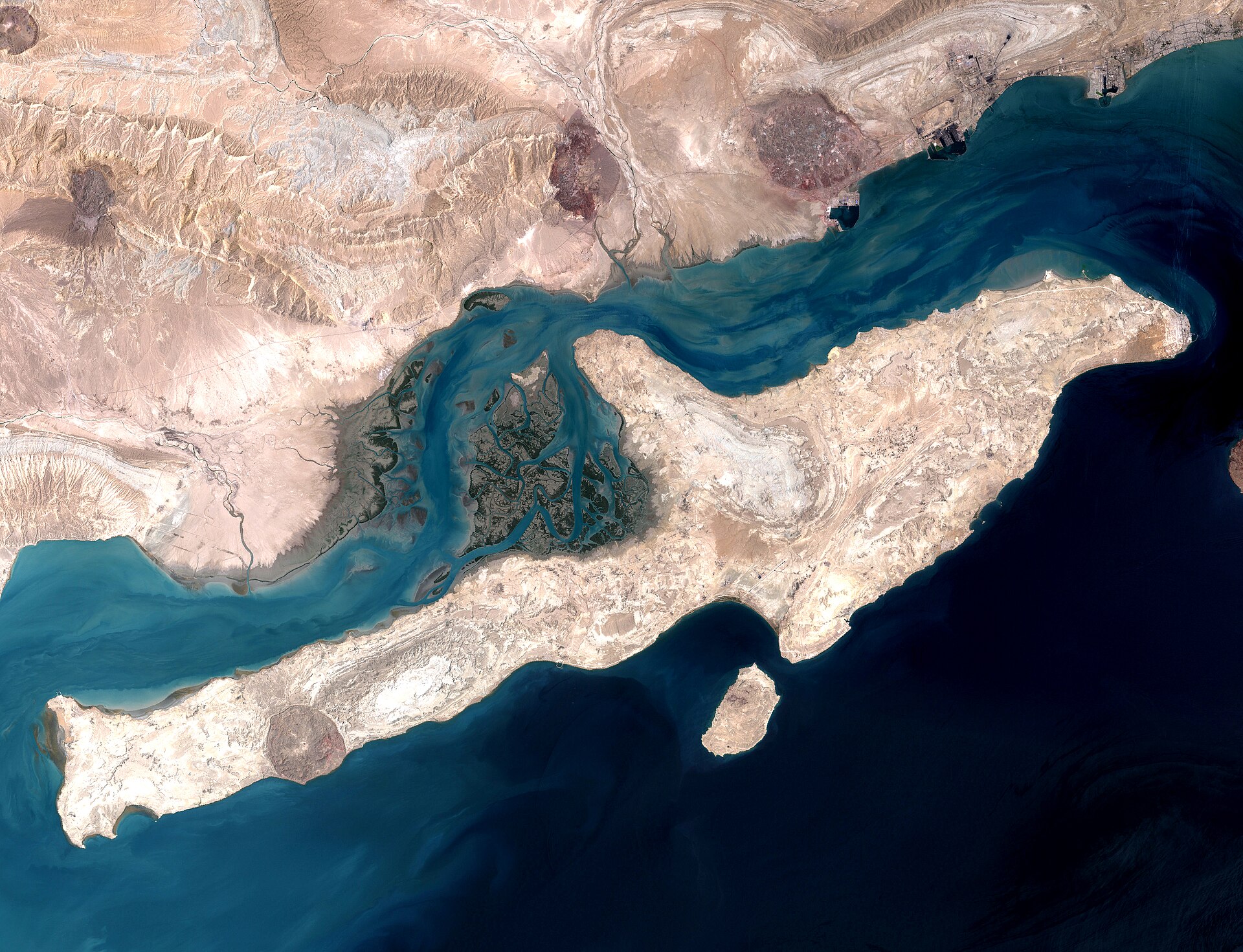
The military escalation continued on July 16, when CENTCOM struck cruise missile storage bunkers and coastal defense positions on Greater Tunb Island — the first US strikes on a Persian Gulf island in the campaign and a further degradation of the IRGC Navy’s forward anti-ship missile capacity at the western mouth of the Strait of Hormuz, the waterway whose toll arithmetic this article examines.
The Precedent That Did Not Exist
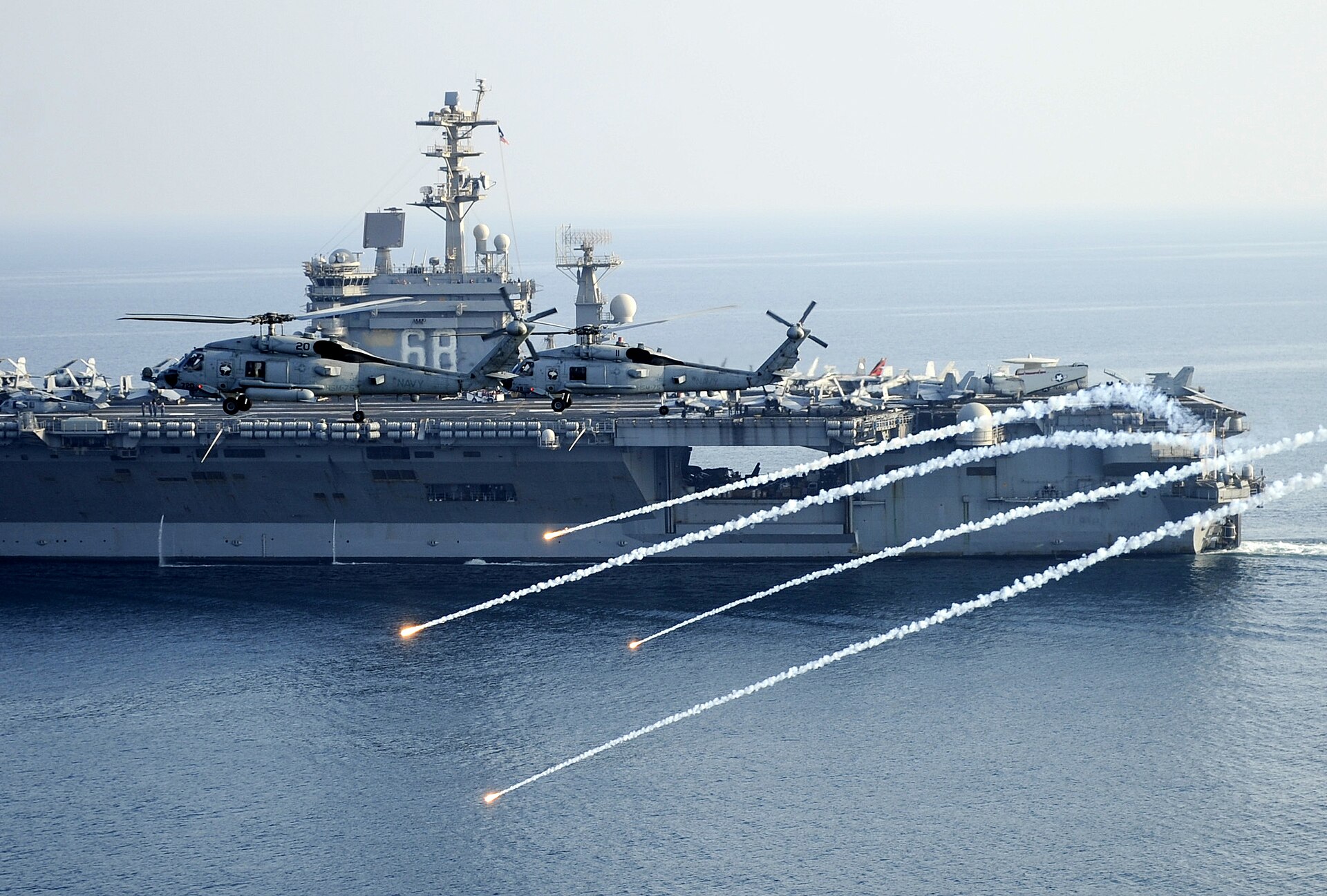
No non-strait-state has ever levied transit fees on an international strait under the framework of self-declared guardian status, and the historical episode Trump’s announcement most closely resembles — Operation Earnest Will, the 1987–88 US naval escort of reflagged Kuwaiti tankers through Hormuz during the Iran-Iraq tanker war — operated under precisely the opposite principle. Earnest Will treated freedom of navigation as a public good funded by the US defense budget and provided at no cost to the transiting states, a model that successive administrations maintained through Operation Sentinel and the International Maritime Security Construct even as the fiscal burden of Hormuz presence climbed into the billions annually. The “Guardian” declaration converts that public good into a revenue instrument, and the conversion has no precedent in the Suez Canal — where Egypt charges transit fees as the territorial sovereign under a concession framework — or in the Turkish Straits, where Ankara’s Montreux Convention tolls are levied by the strait state itself, not by an external power asserting custodial authority from the flight deck of an aircraft carrier.
The distinctive feature of the crisis lies not only in the scale of lost flows and production, but also in the uncertainty surrounding whether secure and toll-free navigation through Hormuz can be restored.
Bassam Fattouh, Director, Oxford Institute for Energy Studies, April 2026
The transformation carries consequences beyond the immediate fiscal burden on Saudi Arabia. If a naval power can declare itself “Guardian” of a strait and levy transit fees on the basis of that self-designation, the principle extends to the Strait of Malacca, the Bab el-Mandeb, the Denmark Strait, and every international waterway where a major navy maintains a standing presence — a precedent that Saudi Arabia’s own Red Sea exports, routed through the Bab el-Mandeb to reach European markets, would be vulnerable to under any future application by any power that stations warships there. Bassam Fattouh, director of the Oxford Institute for Energy Studies, wrote in April 2026 that the central uncertainty of the Hormuz crisis was whether “secure and toll-free navigation” could be restored, and three months later the answer is that toll-free navigation cannot be restored — not because the waterway is physically impassable, but because both of the powers that claim authority over it have concluded that passage should generate revenue, and the party that pays in either scenario is the kingdom whose crude fills the tankers, whose budget depends on the netback, and whose voice is absent from every room where the terms are set.
Frequently Asked Questions
Has any country agreed to pay the 20 percent Hormuz toll?
No government has accepted the toll, and no collection mechanism exists as of July 13. The White House did not respond to press questions about how the 20 percent levy would be administratively implemented — whether through port-state billing, flag-state invoicing, or CENTCOM interdiction of non-paying vessels. Japan, South Korea, and the European Union issued formulaic objections within hours of the announcement; GCC member states, including Saudi Arabia, the UAE, and Kuwait, remained publicly silent, a divergence in response that reflects the Gulf states’ reluctance to contest a US policy publicly while simultaneously depending on American military assets for air and missile defense.
Could Saudi Arabia challenge the US toll at the International Court of Justice?
The standard treaty-based route — UNCLOS Part XV dispute resolution — does not apply because the United States never ratified the convention, and no bilateral investment treaty between Washington and Riyadh contains an arbitration clause broad enough to cover a unilateral transit levy. Saudi Arabia could theoretically invoke customary international law or the framework agreements that underpin US basing rights at Prince Sultan Air Base, but the political cost of suing Washington during an active conflict with Iran — in which Riyadh depends on US Patriot batteries, intelligence-sharing architecture, and the CENTCOM command structure — would likely exceed any relief a court could order, and no Saudi legal challenge has been filed or publicly discussed.
What happens to the $253 million in outstanding PGSA fees if Saudi Arabia cannot pay?
The PGSA’s designation as an OFAC Specially Designated National on May 27 means any payment by Saudi entities would constitute a US sanctions violation, exposing Aramco and Saudi financial institutions to secondary sanctions risk from the Treasury Department. Non-payment does not extinguish Iran’s claim; Tehran has cited August 18 as the deadline and retains enforcement discretion ranging from tanker interdiction to cargo seizure to blanket denial of passage for Saudi-flagged vessels. The fees function as a coercive instrument regardless of whether they are collected — a standing demand that Iran can activate, escalate, or deploy as a negotiating chip at Islamabad at any time, and whose mere existence raises the risk premium on Saudi-origin Hormuz cargoes.
Is there a historical precedent for a non-strait-state charging transit fees on an international waterway?
No non-riparian power has imposed transit fees on an international strait in the post-UNCLOS era. The closest historical analogy is the Danish Sound Dues, levied on ships entering the Baltic Sea from the fifteenth century until their abolition by the 1857 Copenhagen Convention — but Denmark was the strait state with recognized territorial sovereignty over the Øresund, a jurisdictional basis that no external naval power, including the United States, possesses over Hormuz. The United States has historically championed the principle that freedom of navigation is incompatible with unilateral toll regimes on international waterways, a position that successive administrations maintained from the Open Door policy through the negotiation of the Hay-Pauncefote Treaty governing the Panama Canal, and that the “Guardian” declaration reverses for the first time in American diplomatic history.