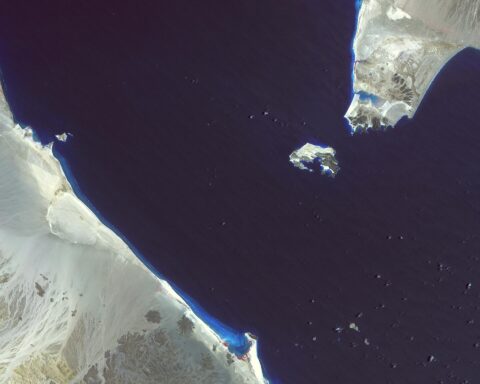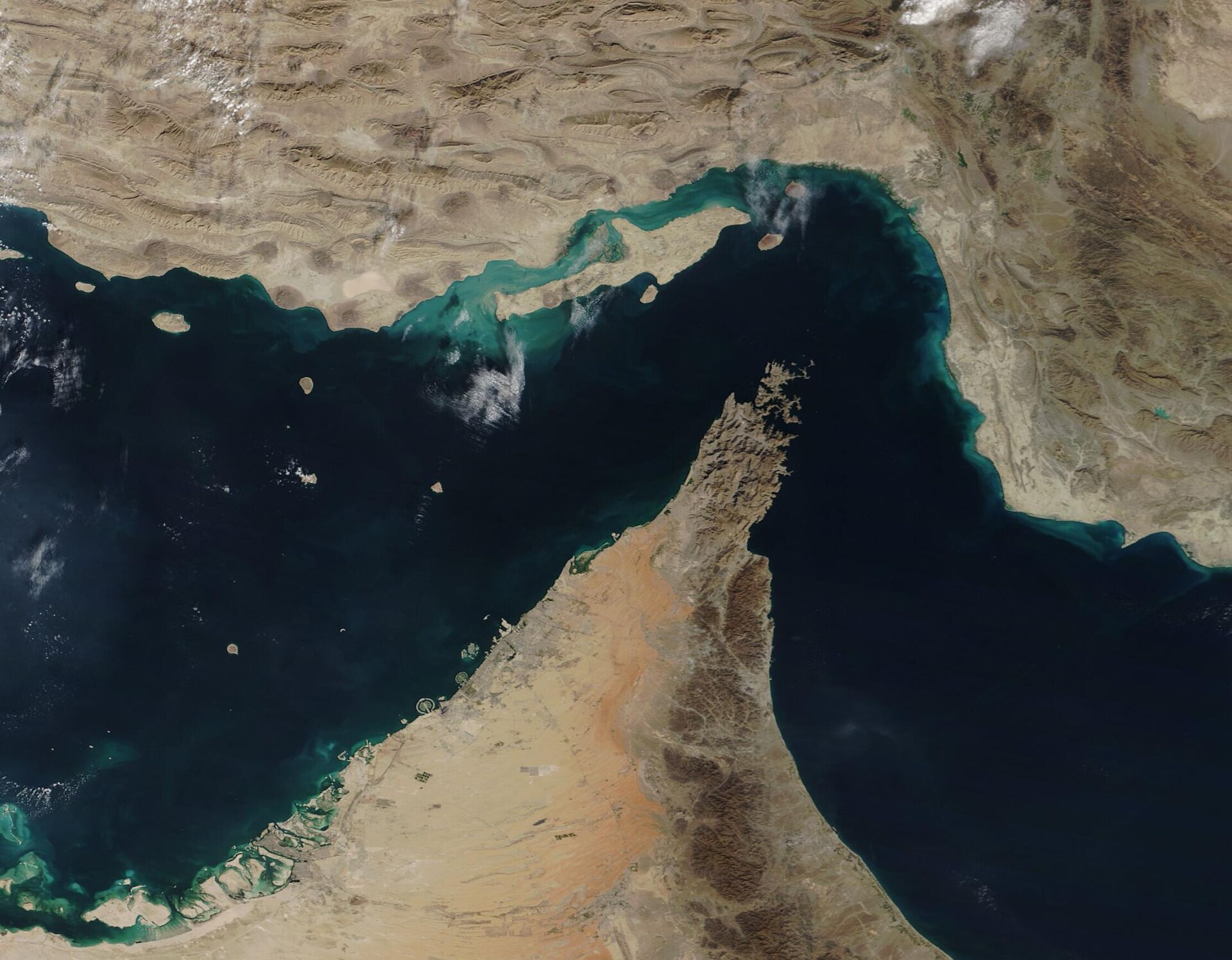

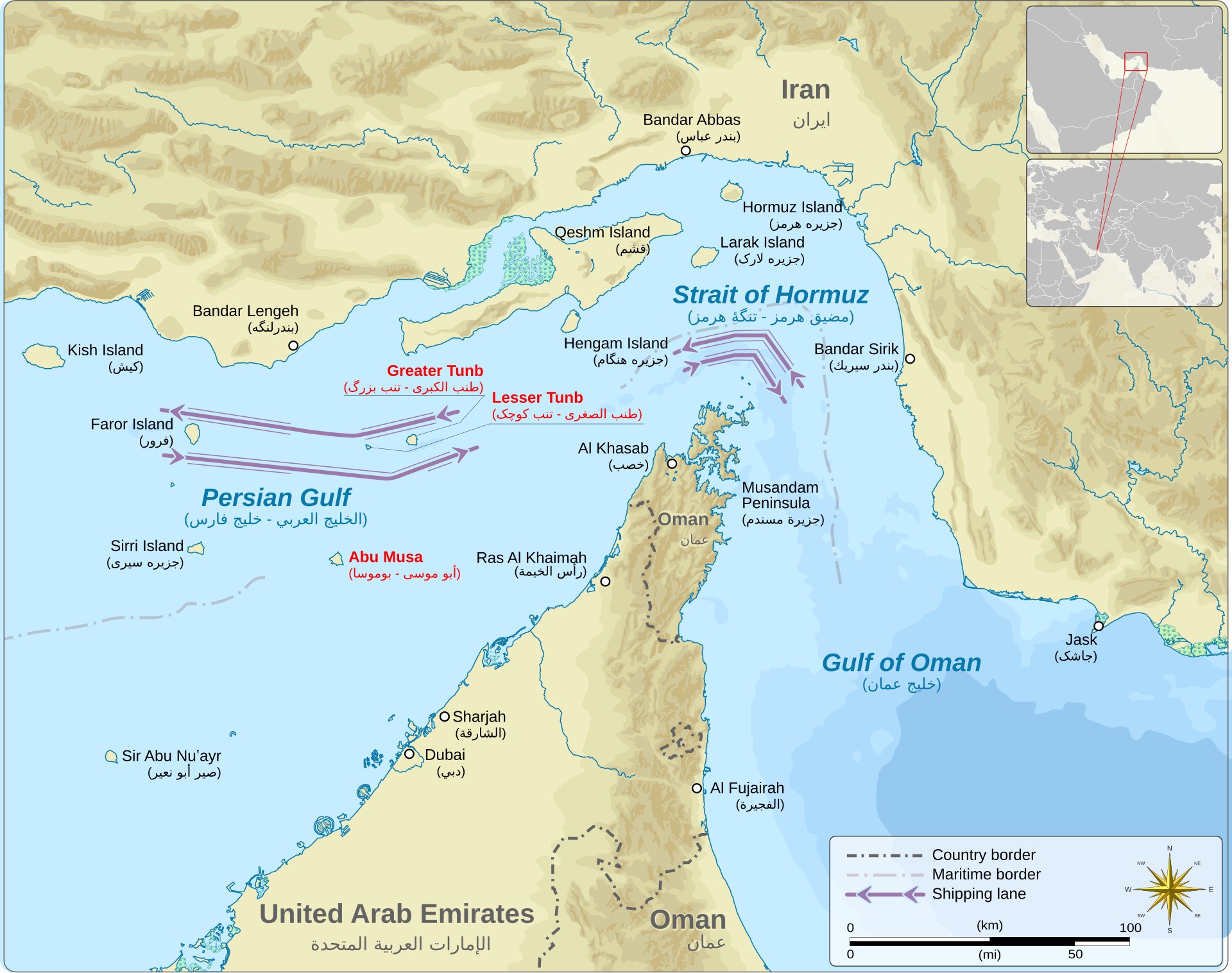
DUBAI — US Central Command struck Greater Tunb Island on Wednesday in a 90-minute wave of airstrikes that destroyed cruise missile storage bunkers and coastal defense positions, the first time American forces have bombed a Persian Gulf island since the air campaign against Iran began five days ago. The island, roughly two miles wide and 30 miles south of the Iranian coast, sits at the western mouth of the Strait of Hormuz — where live shipping counts showed just four commercial vessels in transit on July 16, against a pre-crisis baseline of approximately 84 per day.
Neither Abu Dhabi nor Riyadh issued a public statement on the strikes. Bloomberg reported on July 15 that only one tanker was berthed at Saudi Arabia’s primary Gulf export terminals, with facilities described as “mostly empty” — the US is bombing Iranian missile positions on a disputed island while the Saudi crude those positions threaten has largely stopped moving.
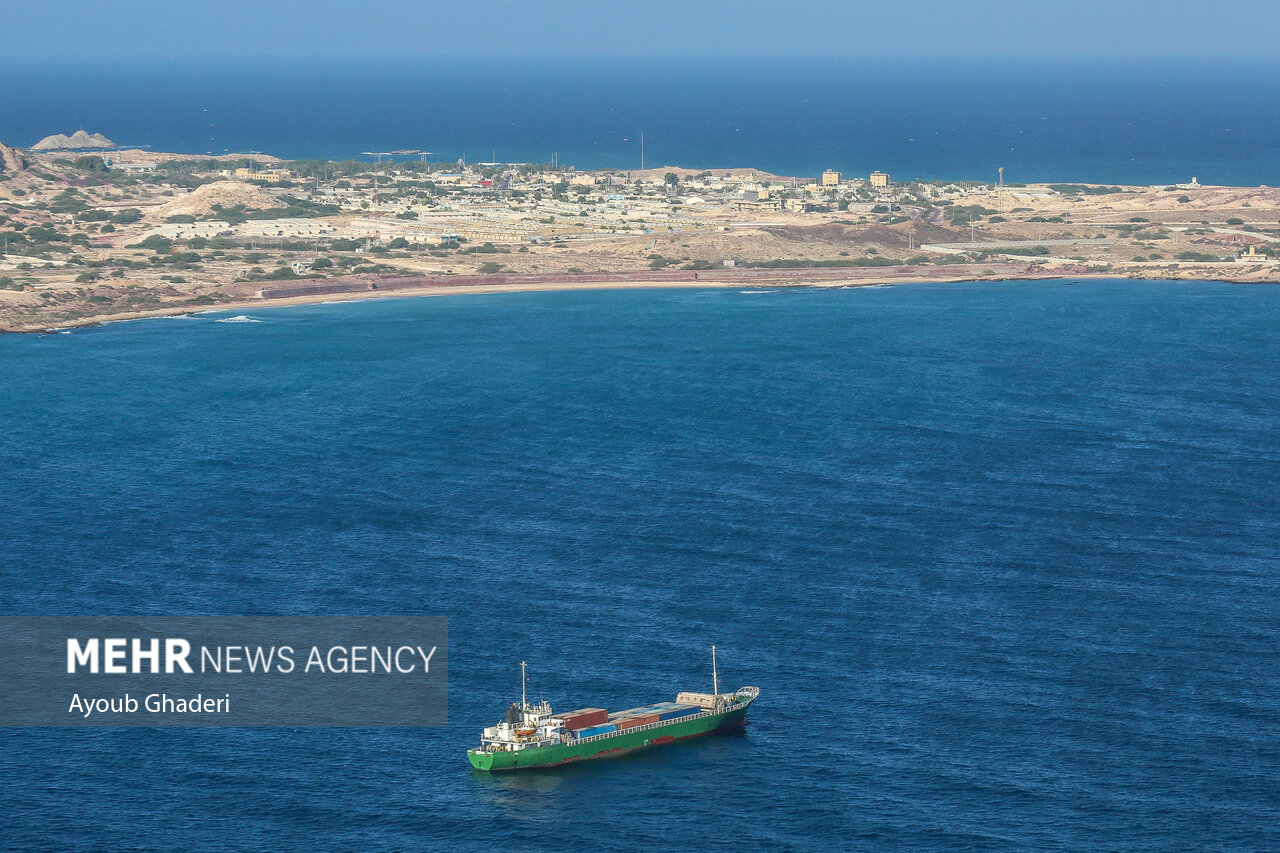
Table of Contents
What Did CENTCOM Hit on Greater Tunb?
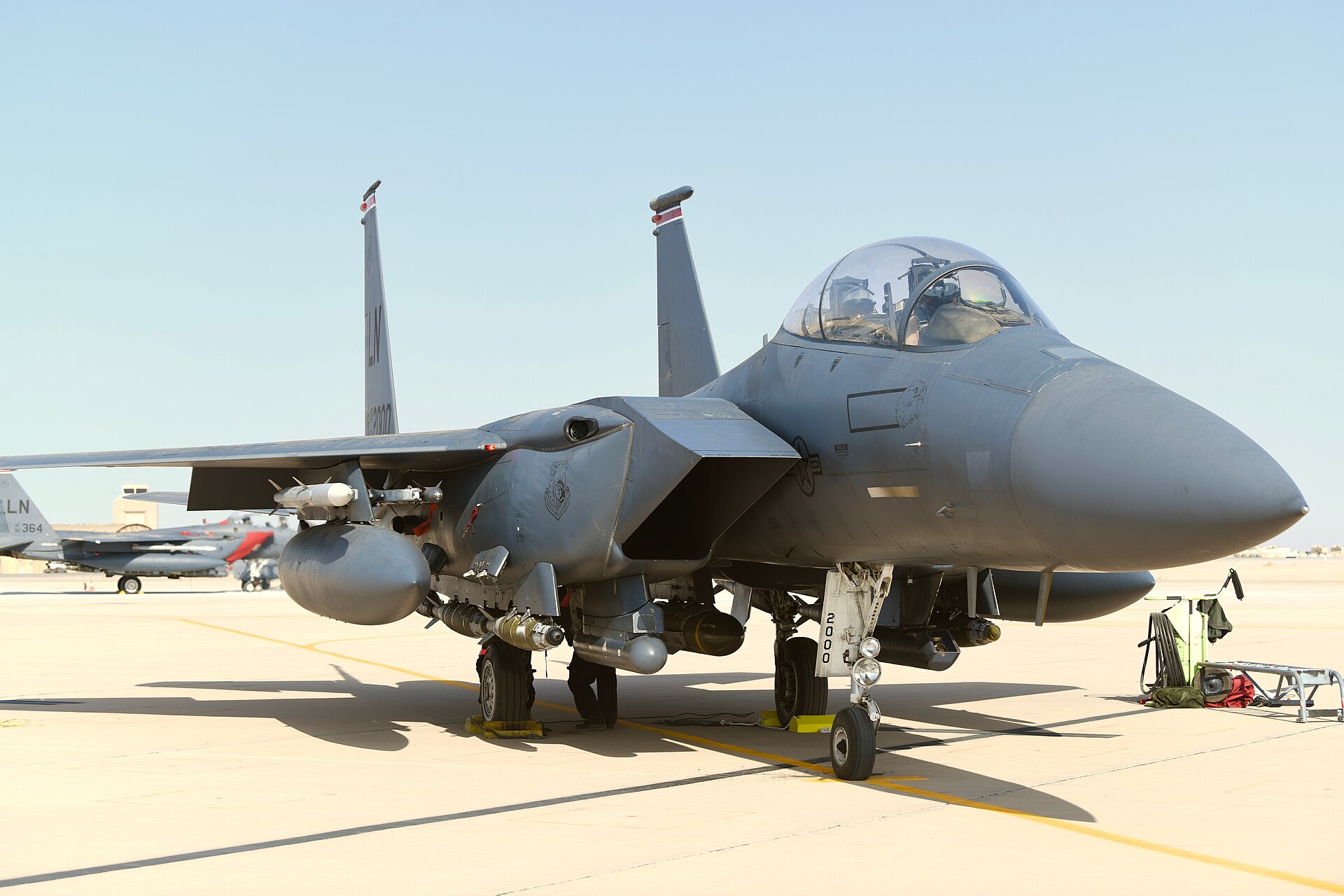
CENTCOM described the island as hosting a “vast network of underground bunkers” constructed by the Islamic Revolutionary Guard Corps Navy for cruise missile storage and launch operations. The strikes employed 5,000-pound bunker-buster munitions against hardened underground positions in daylight, a weapons selection designed to collapse tunnel infrastructure that lighter ordnance would leave intact and a tactical choice that signals confidence in the suppression of Iranian air defenses across the theater.
The IRGCN, which operates independently of Iran’s regular navy, had turned Greater Tunb into a forward node for anti-ship cruise missiles capable of covering the full width of the Strait of Hormuz. Both the Noor — a Chinese C-802 derivative with a range of 120 to 170 kilometres, designed to skim the sea surface and evade ship-based radar — and the longer-range Qader, reaching 200 to 300 kilometres, fired from coastal launchers. Island tunnels made those launchers harder to pre-target from carrier-based aircraft: the infrastructure sat inside rock rather than in the open emplacements that CENTCOM has spent months hitting on the mainland.
The Greater Tunb operation extends a campaign that has struck more than 140 Iranian military targets since Operation Epic Fury launched on February 28. Following the collapse of the 60-day MOU on July 7, CENTCOM conducted an initial wave of 300-plus strikes in three nights — hitting 60-plus IRGC fast attack craft in the July 7 wave alone and destroying or incapacitating more than 120 Iranian naval vessels across the campaign. The current consecutive daily strike series, of which Greater Tunb is day five, has targeted Iranian coastal defense, missile facilities, and island infrastructure systematically since July 12. “The strikes further degraded Iran’s ability to attack commercial shipping in the Strait of Hormuz,” CENTCOM stated on July 16.
The Island Iran Seized Two Days Before the UAE Existed
Greater Tunb, Lesser Tunb, and Abu Musa have been administered by Iran since November 30, 1971, when the Imperial Iranian Navy seized all three — the Tunbs from the emirate of Ras al-Khaimah, Abu Musa via a coerced memorandum of understanding with Sharjah. The seizure happened two days before the UAE’s formal independence on December 2, timing that meant the islands were taken from individual emirates rather than from a sovereign state that did not yet exist in international law. “We renew our demand to end Iran’s occupation of the UAE’s three islands,” the UAE Embassy in Washington states in its standing position, adding that “history and international law bear testimony to the UAE’s sovereignty.”
The Middle East briefing 3,000+ readers start their day with.
One email. Every weekday morning. Free.
Iran took the Greater and Lesser Tunbs outright against Ras al-Khaimah’s objection, and Tehran has rejected International Court of Justice adjudication ever since. Iran’s standing position — that the islands “always belonged to it as it had never renounced possession” — renders Wednesday’s strikes, in Tehran’s reading, an American attack on sovereign Iranian territory, a framing that will be deployed domestically regardless of the IRGCN military infrastructure that made the island a target.
The sovereignty contest has been intensifying independently of the air campaign. In May 2026, Iran asserted jurisdiction over UAE and Oman waters via a new Strait of Hormuz map, and the Trump administration pressed the UAE that same month to seize Lavan Island, a separate Iranian-held territory, with one former senior US security official telling The Telegraph: “Go take ’em! It would be UAE boots on the ground instead of US.” Responsible Statecraft, the Washington policy journal, warned in April 2026 that any forces stationed on the islands “would be sitting ducks, vulnerable to Iran’s missiles, drones, and potentially artillery,” and that securing them “would require capturing Iran’s entire 950-mile Persian Gulf coastline.”
Why Has the UAE Said Nothing?
The National, Abu Dhabi’s government-aligned English-language newspaper, headlined the strikes as hitting “Iranian-occupied Greater Tunb island” — the UAE’s preferred territorial language — but no official government statement followed. The editorial framing was the statement, delivered through a media proxy that Abu Dhabi can disown as policy if pressed, and as of July 16 no Emirati official had spoken publicly about an American military operation on land the UAE considers its own sovereign territory.
The silence has a logic that extends across the Gulf. If Abu Dhabi welcomes the strikes, it validates a US military action on territory it claims — territory it would presumably want returned intact, not cratered by 5,000-pound bunker-busters. If it condemns the strikes, it aligns publicly with Iran’s sovereignty claim over islands the UAE has spent 55 years calling occupied. And if it stays quiet, which is what happened, it accepts being irrelevant to events unfolding on its own claimed soil — but quiet is the only posture that doesn’t trigger an immediate contradiction.
“Regional energy exports are either shared by all, or denied to all.”
— IRGC, via IRNA, July 15, 2026
The IRGC closed the remaining escape routes. That threat, published through the official Islamic Republic News Agency on July 15, was aimed at every Gulf state whose crude transits the Strait of Hormuz, and any public celebration of the Greater Tunb strikes by a Gulf Arab government would place the celebrating state inside the IRGC’s stated targeting doctrine. Saudi Arabia’s silence on an island it has no sovereignty claim to mirrors the UAE’s silence on an island it does claim — a symmetry that says as much about the IRGC’s coercive reach as any CENTCOM damage assessment does about American firepower.
How Much of Iran’s Interdiction Capacity Survives?
More than 120 Iranian naval vessels have been destroyed or incapacitated since the air campaign launched on February 28, including 60-plus IRGC fast attack craft hit in the July 7 wave alone, and on July 15 the M/T Belma — a Curacao-flagged tanker heading to Iran’s Kharg Island crude export terminal — was disabled by AGM-114 Hellfire strikes on its smokestack, the first vessel stopped since the naval blockade was reimposed on July 14. The fast-boat swarm that defined Iran’s asymmetric naval doctrine for two decades has been substantially dismantled as a massed threat.
But the degradation has limits that five days of airstrikes do not reach. Iran’s mine stockpile — estimated by Western defense analysts at 5,000 to 6,000 rounds — is not vulnerable to air attack while dispersed in hardened storage, and minelaying requires only small craft that are harder to interdict across nearly a thousand miles of coastline than the fast boats CENTCOM has already been hunting. The Noor and Qader anti-ship cruise missiles that the Greater Tunb bunkers stored are also deployed at distributed launch sites along Iran’s Persian Gulf coast, and destroying one forward island node does not eliminate the battery network that IRGC engineers deliberately built for redundancy across multiple firing positions.
Iran’s Foreign Minister Nasser Baghaei underlined the intent to absorb and continue: “No plans for negotiations, focused on defending the country,” he said on July 16, per CNN and Al Jazeera. The IRGC claimed on the same day to have struck US military sites in the Gulf in response, and Tasnim News Agency — the IRGC-affiliated outlet — reported Iranian air defenses activated in Tehran’s eastern and western zones to counter “enemy reconnaissance aircraft,” with at least seven Iranian personnel killed in US strikes on a military base at Bampur overnight. A Levant Files analysis in July 2026 had warned of a possible US ground operation with an Arab partner targeting the Hormuz islands, an escalation that would shift the contest from air degradation to territorial occupation — and from a campaign the US can sustain at distance to one it cannot.
Saudi Crude and the Pipeline That Has Never Been Tested
The commercial reality behind the military campaign is visible in a single Bloomberg data point from July 15: one tanker berthed at Saudi Arabia’s primary Persian Gulf export installations, facilities described as “mostly empty.” The brief pickup in loadings between June 26 and July 7 collapsed when the resumed strikes and Iran’s retaliatory attacks on supertankers made the Strait of Hormuz functionally impassable for unescorted commercial traffic, returning Saudi Gulf exports to the near-zero state that defined the worst weeks of the crisis.
Live transit data quantifies the scale: four vessels on July 16, seven on July 15, 13 the day before, against a pre-crisis baseline of roughly 84 per day. CNBC reported on July 13 that more than 8 million barrels transited Hormuz that Sunday “with military assistance,” meaning every barrel of Saudi crude leaving the Gulf now requires a US Navy escort — a dependency the Trump administration has priced at a proposed 20 percent toll on all cargo shipped through the strait under the American “guardian” umbrella.
Saudi Arabia’s East-West Pipeline bypasses Hormuz entirely, routing crude to the Red Sea terminal at Yanbu at a stated capacity of 7 million barrels per day, per Aramco’s March 2025 disclosure. But as both CNBC and Brookings have noted, “sustainable flows have not been tested at this level,” and with Brent trading at $84.73 to $85.92 on July 15 — below Saudi Arabia’s IMF fiscal breakeven of approximately $86.60 per barrel — the gap between pipeline capacity on paper and pipeline revenue in practice is measured in billions per quarter. The Red Sea outlet carries its own exposure from Houthi attacks on shipping in the southern approaches, and the IRGC’s July 15 threat to close “all other export corridors” suggests Tehran views the pipeline bypass not as a Saudi escape route but as the next front.
Background
Operation Epic Fury launched on February 28, 2026, as the US air campaign against Iranian military infrastructure across the Gulf theater. The current phase resumed on July 7 after the collapse of the 60-day diplomatic MOU. The Greater Tunb operation on July 16 was the first targeting of a Persian Gulf island in the campaign.
The sovereignty dispute over Greater Tunb, Lesser Tunb, and Abu Musa dates to November 30, 1971, when Iran’s Imperial Navy seized all three islands as British forces completed their withdrawal from the Gulf. The UAE has maintained its sovereignty claim since independence two days later, and Iran has rejected international adjudication. The IRGC Navy — which operates independently from Iran’s regular navy, the IRIN — built Greater Tunb and the adjacent islands into forward-deployed nodes for coastal defense and anti-ship missile operations, turning a sovereignty dispute into an active military flashpoint whose resolution now involves American ordnance.
Frequently Asked Questions
Has the US struck the other disputed islands — Lesser Tunb and Abu Musa?
No, Greater Tunb is the only island target in the current campaign. Lesser Tunb has been uninhabited since 1971, when Iran displaced its small Arab population of fewer than 200 people, and its military value as an IRGCN forward position is limited compared to Greater Tunb’s underground bunker complex. Abu Musa has a more complicated legal status due to the 1971 MOU with Sharjah and a mixed civilian population that includes both Iranian and Arab residents, factors that make kinetic targeting a different calculation entirely.
Can Iran still mine the Strait of Hormuz despite the air campaign?
Iran’s mine stockpile is estimated at 5,000 to 6,000 rounds, one of the largest inventories in the region, and mines are stored in dispersed hardened facilities that air strikes cannot reliably reach. During the 1987-88 tanker war, Iran deployed an estimated 100 to 200 mines and disrupted Gulf shipping for months — the frigate USS Samuel B. Roberts nearly sank after hitting a single Iranian M-08 contact mine in April 1988, an incident that triggered Operation Praying Mantis, the largest American surface naval engagement since World War II. Iran’s current mine inventory dwarfs that deployment by a factor of 25 to 60, and minelaying requires only small craft that are harder to track than the fast attack boats CENTCOM has systematically destroyed.
What is the difference between the IRGC Navy and Iran’s regular navy?
Iran operates two separate naval forces with distinct chains of command. The Islamic Republic of Iran Navy (IRIN) is the conventional fleet — frigates, corvettes, one Kilo-class submarine from Russia, and a patrol presence in the Gulf of Oman and Indian Ocean. The IRGC Navy (IRGCN) controls asymmetric operations inside the Persian Gulf and the Strait of Hormuz: fast attack craft, coastal cruise missile batteries, mine warfare, island garrison forces, and the tunnel infrastructure on Greater Tunb. The Greater Tunb bunkers were IRGCN facilities, not IRIN, and the personnel and launch systems inside them reported to the IRGC’s parallel military hierarchy rather than to Iran’s Ministry of Defence.
How much Saudi crude normally transits the Strait of Hormuz?
Before the crisis, Saudi Arabia exported roughly 6 to 7 million barrels per day from its Persian Gulf terminals at Ras Tanura and Ju’aymah, the vast majority of which transited Hormuz to reach buyers in Asia, Europe, and elsewhere. The East-West Pipeline provides an alternative route to Yanbu on the Red Sea, bypassing Hormuz entirely at a stated capacity of 7 million barrels per day, but this capacity has never been tested at sustained maximum throughput and the Yanbu port infrastructure has a practical loading ceiling of approximately 3 to 4 million barrels per day. The gap between pipeline capacity and port capacity means a full diversion from the Gulf is not physically possible without expansion work that would take years, not weeks.
What is Trump’s proposed 20 percent Hormuz toll?
On July 13, the Trump administration proposed a 20 percent toll on all cargo transiting the Strait of Hormuz under US naval escort, framing the charge as payment for the American “guardian” role in keeping the waterway open. The toll would apply regardless of cargo type or flag state, converting a military operation into a revenue mechanism. For Saudi Arabia, whose Gulf terminals were mostly empty as of July 15, the toll compounds an already severe fiscal pressure: Brent crude was trading below the kingdom’s IMF breakeven of $86.60 per barrel, meaning any Saudi crude that does transit Hormuz arrives on the market carrying a cost the selling price may not cover.