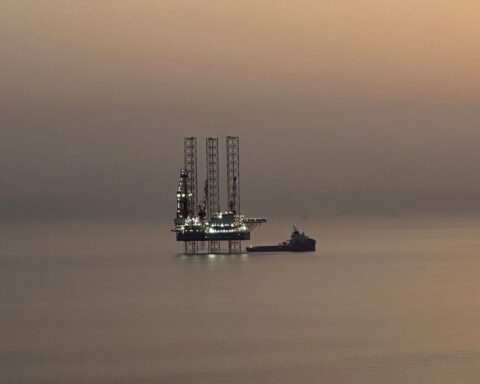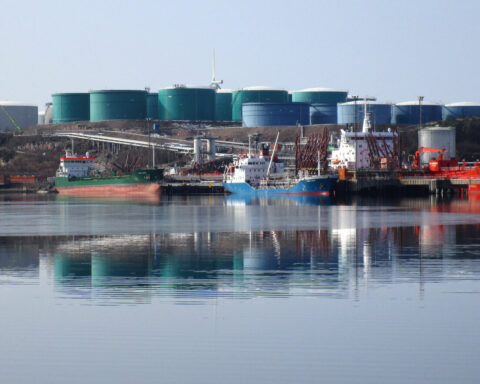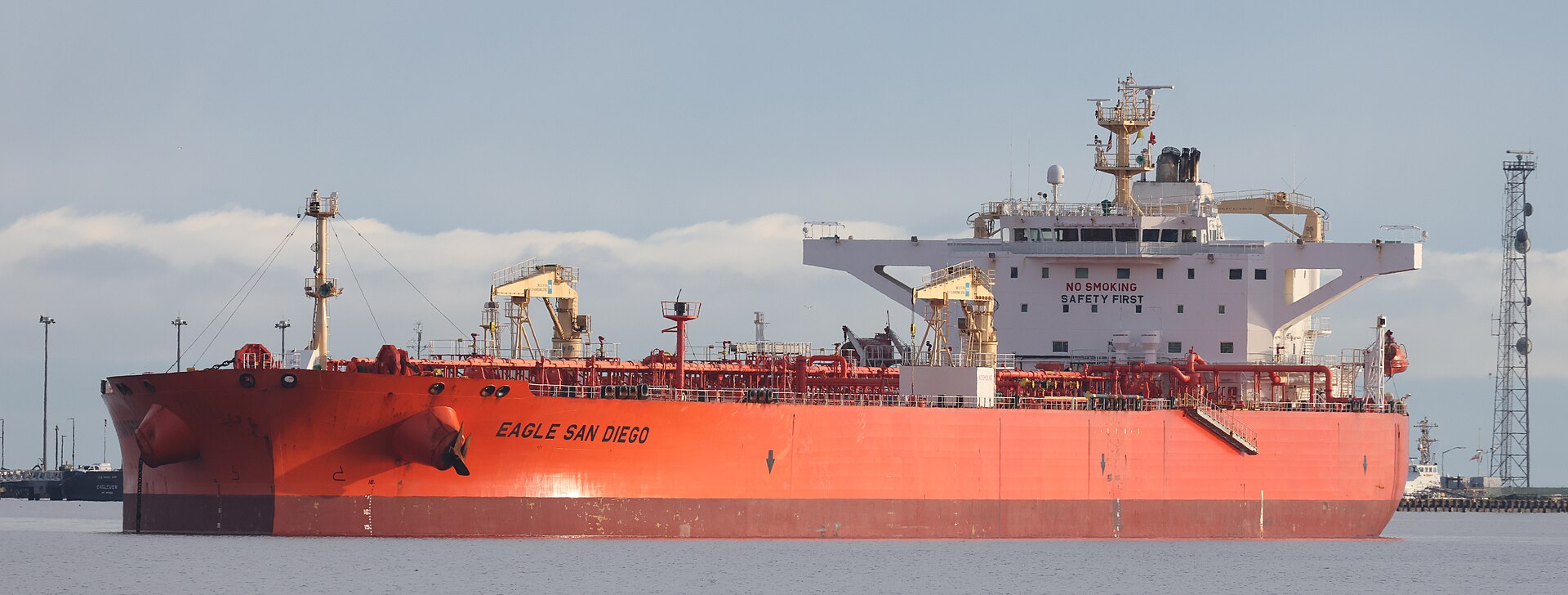

JEDDAH — Two tankers carrying Saudi crude reversed course in the Red Sea on Tuesday, July 21, the day after the Houthis declared their maritime blockade, turning back 2.7 million barrels of Saudi crude mid-voyage and converting a declared embargo into measurable export disruption.
The VLCC Xin Long Yang, carrying approximately two million barrels loaded at Yanbu and bound for China, altered course toward the Suez Canal on July 21, according to vessel tracking data reported by The National and Hydrocarbon Processing. The Aframax Rodos, loaded with roughly 700,000 barrels of Saudi crude bound for India, made the same turn on the same day. Neither vessel continued south toward Bab al-Mandeb.
The U-turns mark the first confirmed physical disruption of Saudi crude exports since Houthi military spokesman Brigadier-General Yahya Saree declared the blockade effective on Al-Masirah TV on July 20, framing it as “an eye for an eye” against what the Houthis call twelve years of Saudi-imposed siege on Yemeni ports. Both cargoes were loaded at Yanbu — the Red Sea terminal Saudi Arabia spent four decades building as its Hormuz bypass.
Table of Contents
What Turned the Tankers Around?
The Xin Long Yang is a very large crude carrier with a nominal capacity exceeding two million barrels. Loaded at Yanbu, Saudi Arabia’s primary Red Sea export terminal, the vessel’s charted destination was a Chinese refinery port. AIS tracking data reviewed by The National showed the ship altering heading north toward the Suez Canal on July 21 rather than continuing south through Bab al-Mandeb — the 32-kilometre-wide strait separating Yemen from Djibouti.
The Aframax-class Rodos, carrying approximately 700,000 barrels of Saudi crude bound for an Indian port, executed a similar course reversal on the same day, according to reporting by The National and Al Bawaba. Both vessels had loaded at Yanbu before Saree’s blockade declaration but were transiting after it took effect.
| Vessel | Class | Cargo (barrels) | Origin | Destination | Status July 21 |
|---|---|---|---|---|---|
| Xin Long Yang | VLCC | ~2,000,000 | Yanbu | China | Diverted north toward Suez |
| Rodos | Aframax | ~700,000 | Yanbu | India | Diverted north toward Suez |
The combined 2.7 million barrels represent one day’s snapshot. But the routing decisions were made independently — one Chinese-chartered VLCC, one Greek-flagged Aframax — carrying cargo to separate destination markets, with no enforcement action reported against either vessel.
The Middle East briefing 3,000+ readers start their day with.
One email. Every weekday morning. Free.
Rerouting north through the Suez Canal and around the Mediterranean adds approximately 10,000 miles compared to the direct southward exit through Bab al-Mandeb, according to Air7Seas logistics data. The Cape of Good Hope alternative adds roughly 3,800 nautical miles and ten to fourteen transit days, according to Straits.live. Both routes increase voyage costs, tie up tanker capacity, and delay delivery to refineries that price Saudi crude on loading-to-discharge schedules.
Houthi forces had emailed “most global shipping companies” warning against loading at Saudi ports, Qz.com reported on July 21. The emails did not specify enforcement mechanisms. The 2023-2025 Red Sea crisis — during which sporadic Houthi drone and missile attacks forced major container lines into permanent Cape of Good Hope diversions — had already priced credibility into the threat. Seatrade Maritime noted that a formal blockade declaration amplified deterrent effects beyond episodic harassment.
The Yanbu Inversion
The East-West Pipeline — known as Petroline — was authorised by King Khalid in 1979 after the Iranian Revolution exposed Saudi Arabia’s near-total dependence on the Strait of Hormuz for crude exports. Completed in 1981 at a cost of approximately $2.5 billion, the 1,201-kilometre pipeline carries crude from the Eastern Province fields to Yanbu on the Red Sea coast, bypassing Hormuz entirely. An NGL pipeline conversion in 2026 brought total capacity to seven million barrels per day, according to the Pipeline Journal and Fortune.
The strategy worked — until Sunday. As Hormuz traffic collapsed under the Iran-US conflict to roughly 10 to 12 transits per day — an 89 percent reduction from the 84-to-88-ship-per-day baseline, according to CNBC and the Foundation for Defense of Democracies — Saudi Arabia executed the inversion its planners had designed. Yanbu loadings surged to approximately 4.7 million barrels per day around July 13, Hydrocarbon Processing and Discovery Alert reported. By mid-July, roughly 75 percent of total Saudi crude exports were flowing through the Red Sea terminal, up from 15 to 20 percent before the crisis.
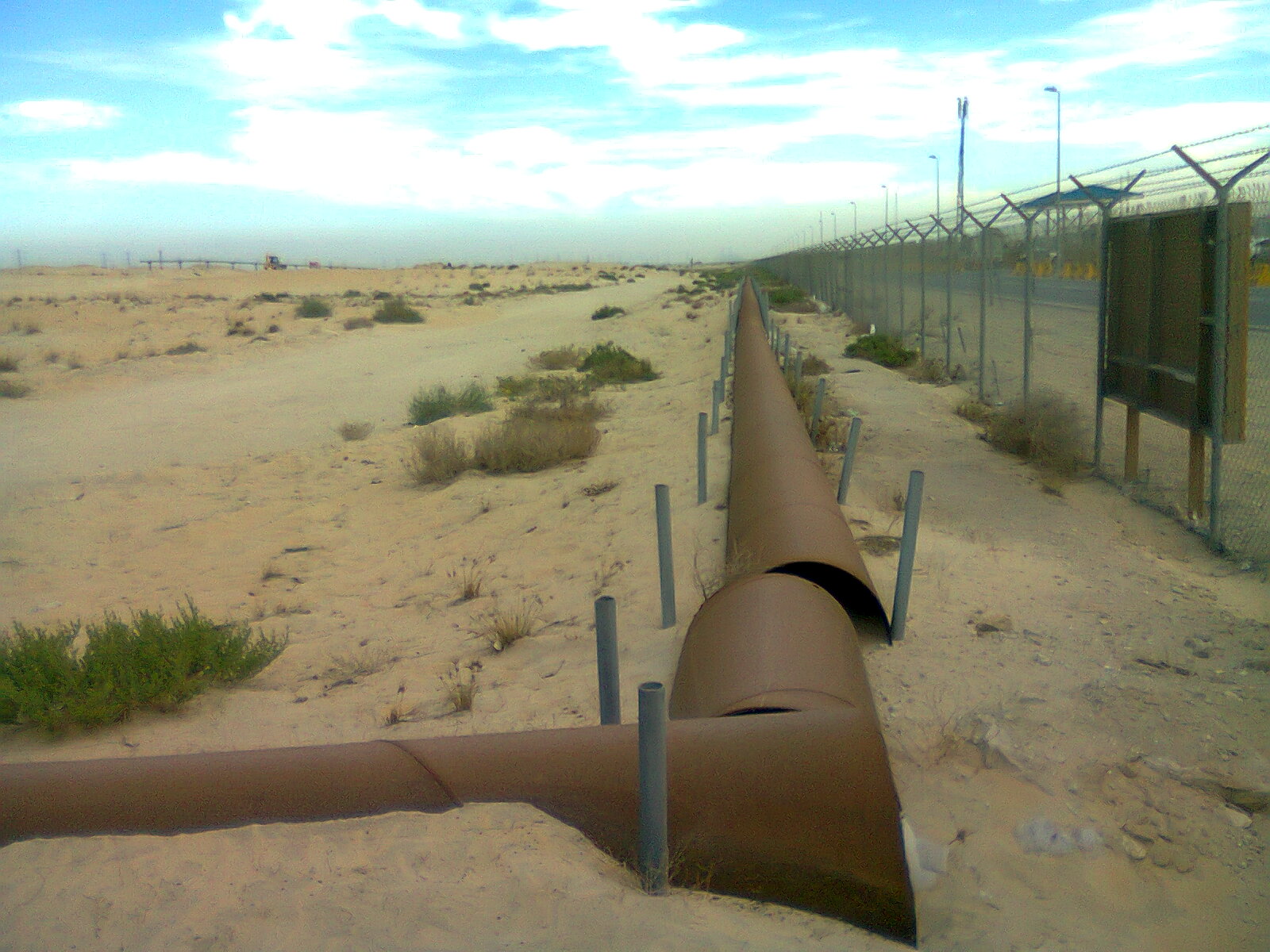
The pipeline was operating at full capacity. The port was near its structural loading limit. And then the only maritime exit from Yanbu came under declared blockade on July 20.
Update, October 12, 2026: Gulf News, citing Bloomberg ship-tracking data, later reported that the Xin Long Yang re-approached and transited the Bab al-Mandab Strait.
Neil Quilliam, Associate Fellow in the Middle East and North Africa Programme at Chatham House, told The National: “The Houthis are signalling that they are prepared to expand the confrontation from Yemen’s territory into the Red Sea maritime domain.”
Can the Houthis Enforce What They Declared?
The Houthis control Yemen’s western coastline but not the opposite shore of Bab al-Mandeb, which belongs to Djibouti. They possess no conventional navy capable of maintaining a surface blockade. The War Zone noted that “harassment is fundamentally different from systematic interdiction” — a distinction that separates a declared blockade from an enforced one under international maritime law.
The tanker data from July 21 suggests the distinction may matter less than expected. Commercial operators do not require a legal blockade to reroute; they require a credible threat. The Houthis demonstrated that credibility across three years of Red Sea attacks, and the email campaign targeting global shipping companies extended the warning directly to charterers loading Saudi cargo.
Saree framed the blockade as reciprocal. “We affirm the right of our great people to respond to the blockade with a blockade,” he said on Al-Masirah TV, as reported by the Associated Press and the Times of Israel on July 20. Nasruddin Amer, Deputy Head of the Houthi media office, wrote on X that the Bab al-Mandeb strait “will be closed” in response to Saudi Arabia’s “unjust blockade on Yemenis for over 10 years,” NBC News and Al Jazeera reported.
The only recorded prior closure of Bab al-Mandeb occurred during the 1973 Yom Kippur War, when Egypt and South Yemen interdicted the strait. That operation required control of both shores, according to Horn Review. The Houthis hold one.
Iran reportedly directed the Houthi blockade activation as economic pressure mirroring US sanctions, triggered by CENTCOM strikes on Iranian infrastructure, the Washington Times and the Foundation for Defense of Democracies reported. The Houthis explicitly threatened any vessel within “operational reach” loading Saudi cargo — targeting Chinese, Indian, and Greek charterers, not Saudi-flagged vessels alone, according to Qz.com.
What Did Riyadh Say?
The Saudi Foreign Ministry said Riyadh would take “all necessary measures” to protect its ships, according to multiple outlets reporting on July 20 and 21. The statement cited rights under the United Nations Convention on the Law of the Sea. It contained no mention of Royal Saudi Navy deployments, Royal Saudi Air Force sorties, or coalition interdiction plans.
The Saudi-led coalition spokesman called Houthi claims of a Saudi blockade of Yemeni ports “disinformation,” The National reported on July 21. The coalition said it had “already begun implementing safety measures” but did not identify what those measures were.
Brent crude hit $91.42 intraday on July 21, its highest level since June 11, on a four-percent overnight rally driven by the blockade news, according to Trading Economics and Bloomberg.
Fatih Birol, Executive Director of the International Energy Agency, said in comments reported by Al Jazeera and Gulf News between July 17 and 21: “The escalation in hostilities affecting the Strait of Hormuz and energy infrastructure in the region increases security of supply concerns and uncertainty over the market outlook.” Threats to Bab al-Mandeb, he added, “have added to those concerns.” The world “should be worried” if the situation does not improve.
No Corridor Left
Before the Iran-US conflict, approximately 80 to 85 percent of Saudi crude exports transited the Strait of Hormuz, according to CNBC and multiple 2026 industry sources. The East-West Pipeline existed as insurance — a bypass that could absorb a fraction of total output if Hormuz were disrupted.
When Hormuz traffic collapsed, Saudi Arabia activated the bypass in full. The pipeline reached its seven-million-barrel-per-day ceiling. Yanbu absorbed three-quarters of exports. The inversion held for approximately seven days before the Houthi declaration. By October 12, the IRGC had compounded the pressure, striking at least three tankers in 48 hours near Hormuz while accusing CENTCOM of directing an oil-smuggling operation through the same waters.
Bab al-Mandeb carried 7.4 million barrels per day of oil in June 2026 — approximately seven percent of global oil production — according to Defence Security Asia and the IEA. Full simultaneous disruption of both Hormuz and Bab al-Mandeb would block roughly 25 percent of global oil and gas supply and 30 percent of global container shipping, Defence Security Asia and Al Jazeera reported.
The IMF had already cut Saudi Arabia’s 2026 growth forecast to 1.7 percent on Hormuz disruption alone. That projection predated Yanbu’s effective closure as an export terminal. Hormuz was carrying 34 million barrels on fleets the market could barely track before the strait’s traffic fell by nine-tenths.
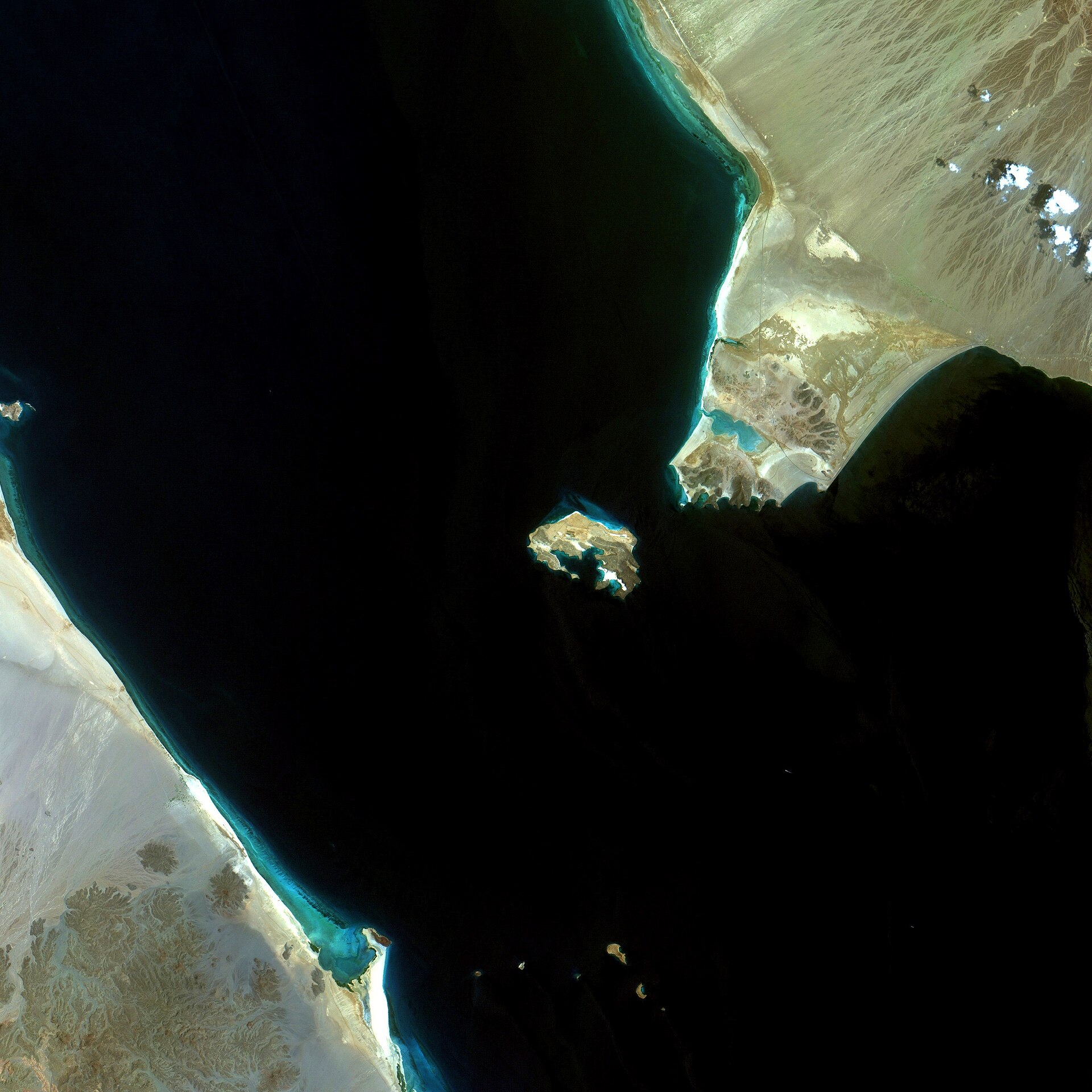
Yanbu’s structural loading capacity — approximately 4.7 million barrels per day — was already near its limit before the blockade, according to Hydrocarbon Processing. Even partial reopening of Bab al-Mandeb would not resolve the throughput constraint at the terminal itself. The port lacks berth depth and loading infrastructure to handle incremental volume beyond its current ceiling.
Background
The Houthi movement, formally Ansar Allah, has controlled much of northern Yemen including the capital Sanaa since 2014. A Saudi-led coalition intervened militarily in 2015, beginning an air and naval campaign that imposed restrictions on Yemeni ports — restrictions the Houthis and international humanitarian organisations have characterised as a blockade. The Saudi-led coalition maintains that its naval operations comply with UN Security Council resolutions and are directed at preventing arms smuggling.
Between 2023 and 2025, the Houthis conducted a sustained campaign of attacks on commercial shipping in the Red Sea and Gulf of Aden, initially framed as solidarity with Palestinians during the Israel-Gaza conflict. Those attacks — involving anti-ship ballistic missiles, cruise missiles, and explosive-laden unmanned surface vessels — disrupted trade through the Suez Canal corridor and forced major container lines to divert around the Cape of Good Hope.
The current blockade declaration represents a shift from targeting third-party shipping to explicitly targeting Saudi exports. Saree’s July 20 statement described it as “comprehensive and decisive escalation” and warned against “any foolish act committed by the reckless Saudi enemy,” the Associated Press reported.
Frequently Asked Questions
Have any Saudi crude tankers been physically attacked since the blockade declaration?
No vessel had been attacked as of July 21. The Xin Long Yang and Rodos rerouted on the basis of the declared threat environment and direct warnings emailed to shipping companies — not in response to kinetic engagement. The blockade’s initial effectiveness has been entirely deterrence-based, mirroring the 2023-2025 pattern in which Houthi attacks on unrelated commercial vessels created sufficient perceived risk to redirect traffic without targeting specific cargoes directly. Whether the Houthis escalate to enforcement actions against vessels that do not comply remains an open question.
Could Saudi Arabia export crude overland instead of by sea?
Saudi Arabia has no operational overland crude export route. The Trans-Arabian Pipeline (Tapline), which once carried Saudi crude to the Lebanese port of Sidon on the Mediterranean coast, ceased operations in 1990. The Iraqi Pipeline through Saudi Arabia (IPSA), built during the Iran-Iraq War to carry Iraqi crude to the Red Sea, was shut down after Iraq’s 1990 invasion of Kuwait; its Saudi segment was subsequently converted to carry domestic water. Reactivating either system would require years of reconstruction through conflict zones and across multiple national borders. The only functioning alternative to Hormuz remains the East-West Pipeline to Yanbu — which terminates at the same maritime chokepoint the Houthis have now declared blocked.
What is the legal status of the Houthi blockade under international maritime law?
A blockade under international law requires a formal declaration, effective enforcement, impartial application, and authorisation by a recognised belligerent party. The Houthis control territory and conduct sustained military operations but are not internationally recognised as a sovereign government, complicating their standing to declare a lawful blockade. Saudi Arabia’s citation of UNCLOS in its July 20 response implicitly framed the Houthi action as piracy rather than a belligerent blockade — a distinction that affects whether third-party navies can intervene under existing UN mandates or whether new authorisation would be required.
How much revenue does Saudi Arabia lose per day of blockade?
At pre-crisis export volumes of approximately 7.5 million barrels per day and a Brent price of $91.42, Saudi Arabia’s gross daily crude revenue runs to roughly $685 million. Not all of that is at immediate risk — crude rerouted through Suez or the Cape of Good Hope still reaches buyers, though with higher freight costs and longer delivery windows. The direct financial impact falls on voyage economics: war-risk insurance premiums have reached approximately two percent of hull value, roughly eight times pre-crisis levels, according to multiple shipping industry sources. Aramco’s term contract pricing, set monthly through Official Selling Prices, does not adjust for individual voyage disruptions, meaning the added cost is absorbed by charterers and destination refiners rather than the Saudi treasury in the near term.
Has any country offered to escort Saudi tankers through Bab al-Mandeb?
No government had publicly offered naval escort for Saudi crude tankers as of July 21. The US Navy’s Combined Maritime Forces operate in the region, and Operation Prosperity Guardian — launched in December 2023 — was designed to protect commercial shipping in the Red Sea. But that mission was built around international commercial traffic, not a single exporter’s national crude flows. Riyadh’s own Royal Saudi Navy had not announced convoy operations or escort protocols. The coalition’s statement referenced “safety measures” without specifying whether those included naval escort, expanded air patrols, or engagement with Djibouti to help secure the western shore of Bab al-Mandeb.
Riyadh’s diplomatic answer to the stranded crude came through bilateral phone calls rather than coalition channels: Athens Got the Call the Red Sea Could Not traces Faisal bin Farhan’s July 23 circuit through Athens, Doha, and Amman as tanker reversals were still accumulating.
Editor’s note, October 12, 2026: The headline of this article was changed from “Day One Stranded 2.7 Million Barrels of Saudi Crude at Sea”. The tankers turned back on July 21, the day after the blockade was declared, and the larger of the two later transited Bab al-Mandab, so the cargo was not stranded. A sentence giving Saudi loadings through Bab al-Mandeb as 9.5 million barrels per day has been removed because the figure exceeds total Saudi crude exports and no source supports it.