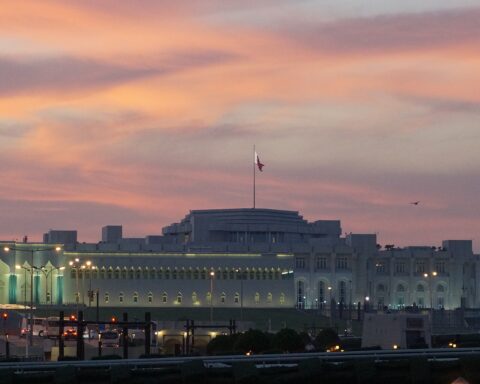
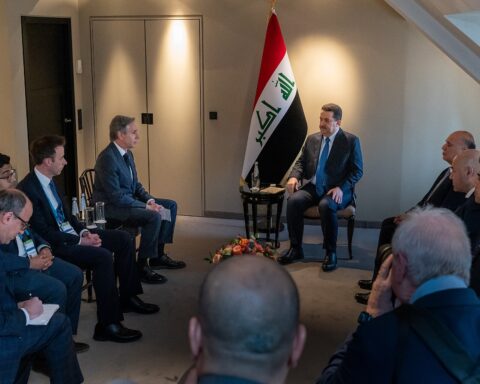
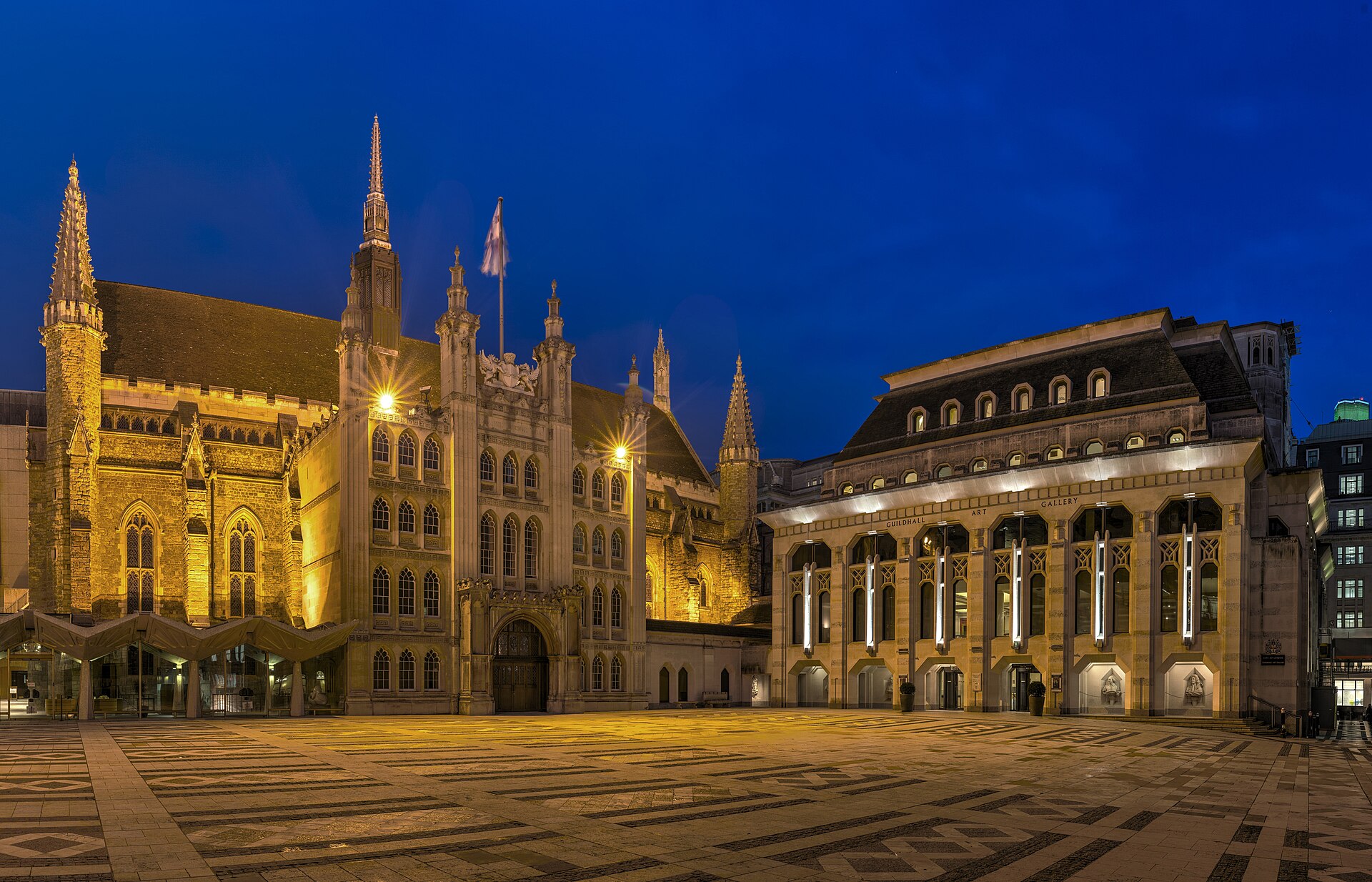
LONDON — When Gulf and British delegations meet at Guildhall on Tuesday, October 20, they will be attending the only high-level GCC diplomatic forum still standing on the calendar. The UK-GCC Strategic Dialogue was built to carry a trade deal over the line; it now has to carry a war that has struck Riyadh’s main airport, choked the Strait of Hormuz and pushed the Saudi budget deficit to 245bn riyals.
The meeting was first set for April 14 and postponed because of “recent developments in the region and uncertainty over air travel.” Six months later the developments have multiplied and the air travel has not improved — the Foreign Office now advises against non-essential travel to all of Saudi Arabia. On October 15 the EU-GCC summit, due in Riyadh on October 24, was postponed with no new date.
So the senior figures expected at Guildhall, GCC Secretary-General Jassem Al-Budaiwi among them, will gather to discuss a free trade agreement that was concluded in May and is not yet in force. Britain can offer Saudi Arabia a Sky Sabre battery, an RAF Voyager tanker and a market. It cannot offer warships for Hormuz, a shield against ballistic missiles or a substitute for Washington.
None of that makes the meeting unimportant. It makes it overloaded — a forum designed for tariff schedules, rules of origin and investment pledges, now asked to stand in for every other room that has closed.
Table of Contents
- Why Is the UK-GCC Strategic Dialogue the Only Summit Left?
- A Trade Agenda Drafted for Peacetime
- What Is Britain Actually Providing Saudi Arabia Militarily?
- What Can London Not Give Riyadh?
- The Strait Underneath Every Tariff Line
- How Exposed Is Britain Itself?
- Riyadh Arrives With a Thinner Budget
- Who Else Has Sent Something
- What Would a Wartime Deliverable From Guildhall Look Like?
- Frequently Asked Questions
Why Is the UK-GCC Strategic Dialogue the Only Summit Left?
The UK-GCC Strategic Dialogue is the only high-level GCC forum left because its main counterpart collapsed. The EU-GCC summit, scheduled for Riyadh on October 24, was postponed indefinitely on October 15 with no replacement date. The London meeting, itself delayed from April 14, is confirmed for October 20 at Guildhall, with more than 350 senior leaders expected.
The two postponements tell different stories. London’s April delay was framed as logistics — the region was unsettled and flights were uncertain, so the meeting moved. Brussels’ October delay, announced nine days before Gulf and European leaders were due to sit down in the Saudi capital, came with no date attached at all.
The Middle East briefing 3,000+ readers start their day with.
One email. Every weekday morning. Free.
That distinction matters to anyone who has watched how Riyadh reads diplomatic calendars. A postponement with a new date is a scheduling problem. A postponement without one is a judgement about the host city, and in this case the host city was Riyadh, whose main airport was struck on October 10.
The result is an inversion of the original plan. The summit that was meant to bring Europe to Riyadh will not happen; the dialogue that brings Gulf officials to London will. The Saudi capital has gone from host to guest within the same month.
| Forum | Original date | Venue | Status as of October 17 | Source |
|---|---|---|---|---|
| UK-GCC Strategic Dialogue | April 14, 2026 | London | Postponed in April; confirmed for October 20 at Guildhall | Zawya; GCC Business News / Khaleej Times |
| EU-GCC summit | October 24, 2026 | Riyadh | Postponed indefinitely on October 15; no new date | The National / QNA |
The April wording now reads strangely. The meeting was pushed back, in part, over “uncertainty over air travel.” It goes ahead in October while the Foreign, Commonwealth and Development Office tells British nationals not to make non-essential trips to Riyadh, Jeddah or Dammam — an advisory widened after the strike on King Khalid International Airport.
A Trade Agenda Drafted for Peacetime
The UK-GCC free trade agreement was opened in June 2022, in a Gulf preoccupied with diversification, giga-projects and post-pandemic recovery. Its negotiators were working on tariff lines and services access, not convoy schedules. Talks concluded on May 20, 2026.
The headline terms are generous by the standards of British trade policy since leaving the European Union. Tariffs are eliminated on 93% of UK goods entering the GCC, worth an estimated £580m a year in tariff savings, according to the Department for Business and Trade. Total bilateral trade stands at £53bn, of which British exports account for roughly £35bn, and the government projects the deal could lift trade by a fifth.
| UK-GCC FTA metric | Figure | Source |
|---|---|---|
| Negotiations opened | June 2022 | Dentons / EY / King & Spalding |
| Negotiations concluded | May 20, 2026 | Dentons / EY / King & Spalding |
| UK goods with GCC tariffs eliminated | 93% | AGBI / UK Department for Business and Trade |
| Annual tariff savings | £580m | AGBI / UK Department for Business and Trade |
| Total UK-GCC bilateral trade | £53bn | AGBI / UK Department for Business and Trade |
| UK exports to the GCC | ~£35bn | AGBI / UK Department for Business and Trade |
| Projected trade increase from the FTA | A fifth | AGBI / UK Department for Business and Trade |
| Change in UK exports to the Gulf since February 2026 | Down by up to 25% | Neil Quilliam, Chatham House (Arab News) |
| Status | Concluded; not yet in force | Dentons / EY / King & Spalding |
The last two rows of that table sit awkwardly beside the rest. Neil Quilliam, of Chatham House’s Middle East and North Africa programme, told Arab News this month that British exports to the Gulf have fallen by as much as 25% since February. The tariff gains are being eroded before the agreement has entered force.
Quilliam’s explanation is simple enough to fit on a customs form: tariff reductions deliver their full benefits only when the trade routes they depend on are secure. A container of British machinery bound for Dammam does not care whether the duty on it is zero if the vessel carrying it cannot get insurance to enter the Gulf.
The order of events is instructive. The Strategic Dialogue that was supposed to showcase the agreement was postponed in April; the negotiators concluded the text on May 20 anyway. The deal was finished in the same spring that the meeting meant to celebrate it could not be held.
This is the first sense in which Guildhall is overloaded. The agenda was drafted to celebrate a concluded negotiation and push it toward implementation. The delegates will arrive knowing that the trade the deal was meant to grow has already shrunk, for reasons no clause in the text addresses.
There is also a quieter problem of sequencing. A deal that is concluded but not in force is a promise, not a framework. For Gulf governments facing wartime budgets, the gap between “concluded” on May 20 and whatever date the agreement finally takes effect is not a technicality — it is the period during which the agreement’s benefits remain theoretical.
What Is Britain Actually Providing Saudi Arabia Militarily?
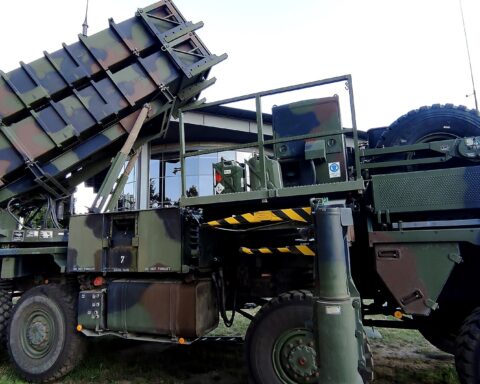
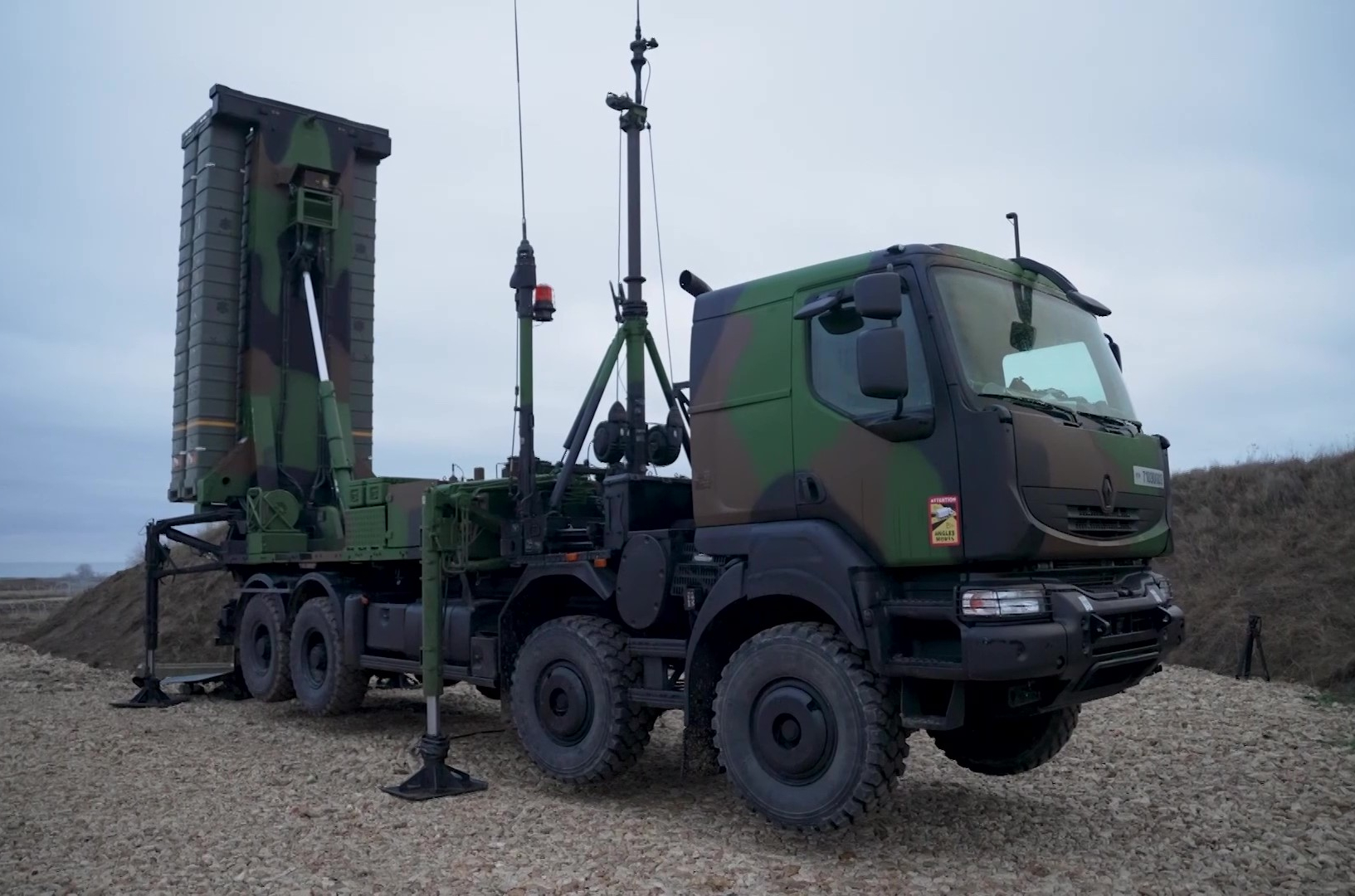
Britain’s military contribution to Saudi Arabia consists of a Sky Sabre air defence battery at King Fahd Air Base, announced on March 31, and a single RAF Voyager tanker flying from RAF Akrotiri in Cyprus to refuel Saudi jets, confirmed on September 22. Sky Sabre has a range of 25km and cannot intercept ballistic missiles.
When Defence Secretary John Healey announced the Sky Sabre deployment, he said the system “will integrate into Saudi and regional air defences.” The phrasing was careful. Integration means plugging a short-range layer into a network that already exists; it does not mean Britain is taking responsibility for the kingdom’s airspace.
The tanker followed six months later. Prime Minister Andy Burnham confirmed on September 22 that Britain would provide “defensive” air-to-air refuelling for Saudi aircraft, accepting the request on the advice of his defence and foreign secretaries. The mission was described as “time-limited.”
The UK mission protects “regional stability, vital trade and energy supplies.” — Prime Minister Andy Burnham, September 22, 2026
By September 23, the Voyager had completed 14 operational missions, according to Al Jazeera. One aircraft, based on a British Sovereign Base Area in Cyprus, flying under a mandate its own government has labelled temporary.
| UK asset | Location | Announced | Stated purpose / limits | Source |
|---|---|---|---|---|
| Sky Sabre air defence battery | King Fahd Air Base, Saudi Arabia | March 31, 2026 | “Integrate into Saudi and regional air defences”; 25km range; cannot intercept ballistic missiles | The National; Janes |
| One RAF Voyager tanker | RAF Akrotiri, Cyprus | September 22, 2026 | “Defensive” air-to-air refuelling for Saudi jets; “time-limited”; 14 missions by September 23 | GOV.UK; Al Jazeera; The National |
| RAF Regiment at Akrotiri | RAF Akrotiri, Cyprus | March 2026 | Downed “multiple Iranian drones overnight” | GOV.UK |
The third row is the one that receives least attention in London. In March, the RAF Regiment at Akrotiri downed “multiple Iranian drones overnight,” according to the government’s own account. British forces have been in direct kinetic contact with Iranian projectiles for months — before the tanker was approved, and well before Guildhall was confirmed.
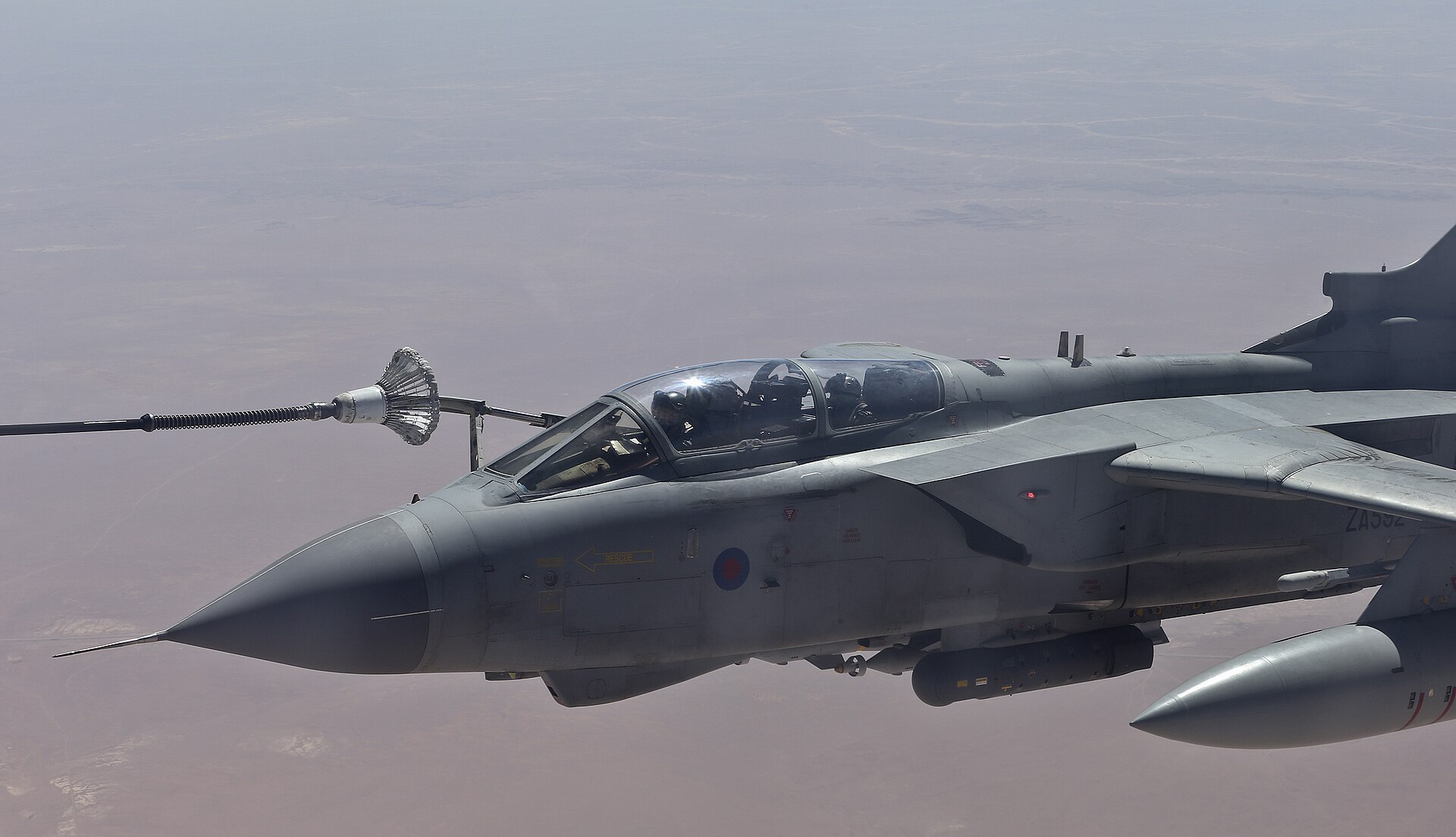
Read together, the British contribution is real, specific and narrow. It protects a base, extends the endurance of Saudi aircraft and defends a British airfield that happens to sit within range of Iranian drones. Each element was announced separately, with its own careful verb.
What Can London Not Give Riyadh?
London cannot provide ballistic-missile defence, cannot escort tankers through Hormuz, and cannot replace the American security guarantee. Sky Sabre is not designed for ballistic threats, Britain has not sent ships to reopen the strait, and US Defence Secretary Pete Hegseth has publicly criticised the UK for that absence.
Hegseth’s criticism, reported by Al Jazeera on September 23, landed the day after Burnham announced the tanker. Washington’s message was that a refuelling aircraft is not a navy. It arrived against a background of American ambivalence that runs in the other direction.
On October 5, Secretary of State Marco Rubio said of the US-Saudi defence agreement that “we intend to live by” it. Five days later, after the strike on King Khalid International Airport, President Donald Trump offered a different register: “They’re able to defend. The Saudis are good fighters.”
“They’re able to defend. The Saudis are good fighters.” — President Donald Trump, October 10, 2026, after the strike on King Khalid International Airport
The gap between those two statements is the space Britain is being asked, implicitly, to fill — and the space it plainly cannot. The kingdom’s exposure to ballistic and cruise missiles has been a recurring subject on these pages, from the Madinah cruise missile intercept to the question of why Washington does not trust Saudi skies. Sky Sabre’s short-range envelope addresses the low end of that threat.
On Hormuz, the British option was put on paper in May. Chatham House proposed a UK-France naval coalition to escort shipping through the strait. London has not acted on it.
Two months before that, in March, Quilliam and his Chatham House colleague Kristian Alexander argued that Gulf states should no longer rely on America for security guarantees. It is a conclusion with an obvious corollary that the paper did not need to state: if not America, then whom? Britain, at Guildhall, will be one of the few governments in the room that could plausibly be asked — and the answer it can give is a Sky Sabre battery and a tanker.
The Strait Underneath Every Tariff Line
Every number in the free trade agreement rests on a narrower number: the width of the shipping lanes through the Strait of Hormuz. Roughly 20 million barrels of oil a day pass through it — about a fifth of seaborne oil trade — along with 20% of global LNG.
For the Gulf states themselves, the strait is not only an export route. More than 70% of GCC food imports transit Hormuz. Quilliam has warned that regional food stockpiles could sustain the Gulf for only “a few months” if the strait stays blocked.
| Strait of Hormuz indicator | Figure | Source |
|---|---|---|
| Oil transiting the strait | ~20m barrels/day (~20% of seaborne oil trade) | 2026 Strait of Hormuz crisis record |
| Share of global LNG | 20% | 2026 Strait of Hormuz crisis record |
| GCC food imports transiting the strait | More than 70% | Quilliam / Reuters |
| War-risk insurance premium | 0.125% rising to 0.2–0.4% | 2026 Strait of Hormuz crisis record |
| Ships stranded in the Gulf (by April 21) | 2,000 | 2026 Strait of Hormuz crisis record |
| Mariners stranded (by April 21) | 20,000 | 2026 Strait of Hormuz crisis record |
| Numbered incidents in attack log (as of October 13) | 103 | 2026 Strait of Hormuz crisis record |
War-risk insurance premiums have moved from 0.125% to between 0.2% and 0.4% of a vessel’s value. That is the mechanism by which insurance, rather than a formal blockade, closed the strait for many operators. By April 21, some 2,000 ships and 20,000 mariners were stranded inside the Persian Gulf.
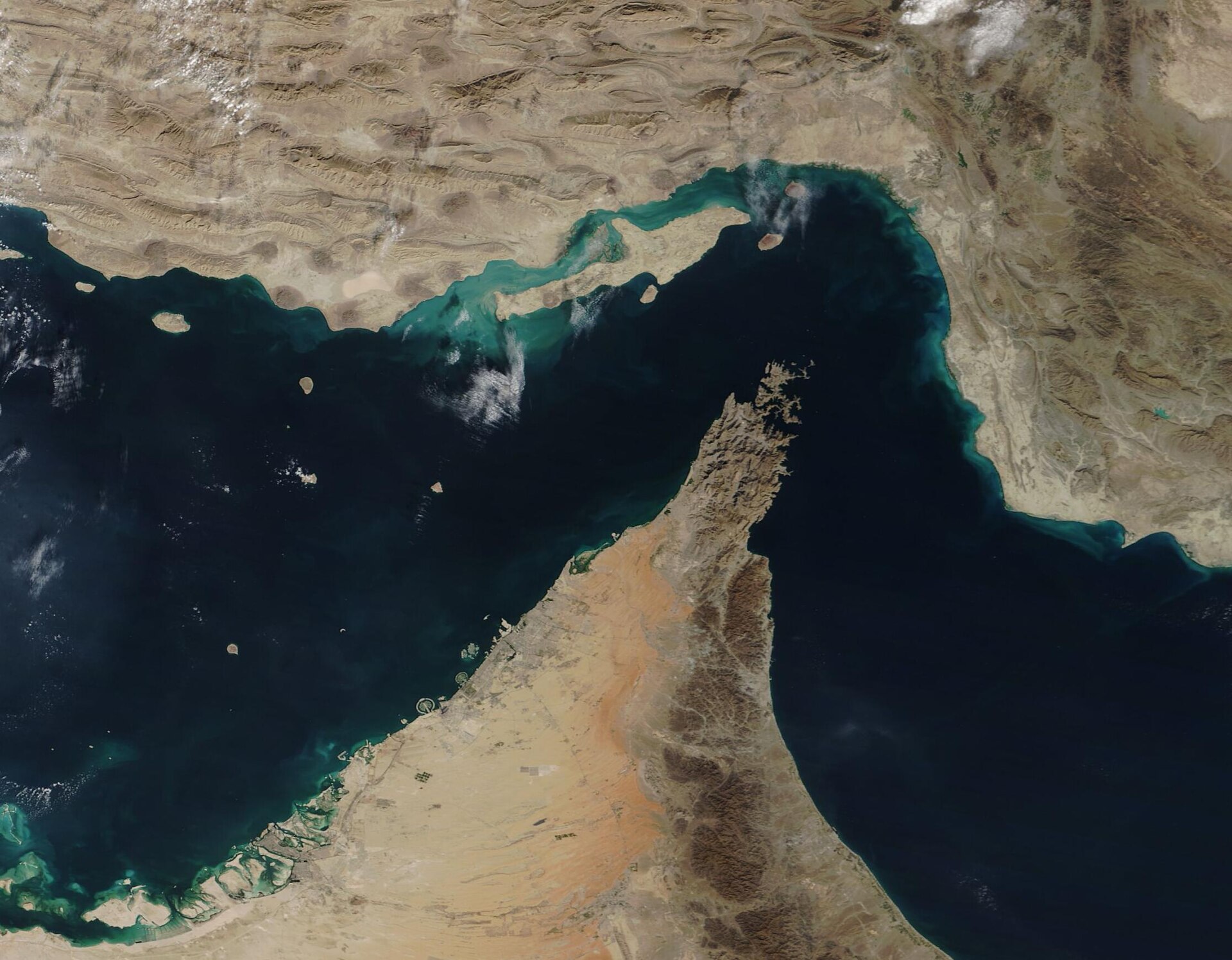
As of October 13, the attack log for the strait had reached 103 numbered incidents. The free trade agreement does not mention any of them, because it was not written to. Its tariff schedules assume a ship can leave a British port and arrive in the Gulf on a predictable timetable, at a predictable premium.
A trade agreement can remove a duty. It cannot touch a war-risk premium, a stranded crew or a mine. The instruments that govern those are naval and diplomatic, and they are not on the agenda of a trade dialogue.
This is why Quilliam’s observation about secure trade routes cuts deeper than it first appears. Britain negotiated the commercial terms of access to the Gulf while lacking — and, so far, declining to build — the naval means to keep that access open. The tariff line and the shipping lane are the same policy, administered by different ministries.
How Exposed Is Britain Itself?
Britain is no longer a distant supplier to a Gulf war. MI5’s Director-General warned this month that Iran is shifting toward “harder targets, like military sites,” citing Diego Garcia, Akrotiri and Fairford as part of a pattern. London has accused Iran of attempted sabotage at RAF Fairford, which Tehran’s ambassador categorically rejected.
The MI5 assessment, reported by CBS News on October 13, places three British military installations in a single list. One is in the Indian Ocean, one in Cyprus, one in Gloucestershire. The common thread is that each is connected, in Tehran’s reading, to the war.
Iran’s ambassador in London, Ali Moussavi, “categorically rejected” the British accusations over Fairford and demanded that the UK present evidence, according to The National. Tehran’s position is that British military support to the Gulf is hostile interference, not neutral protection. That framing sits uneasily alongside Iranian diplomacy elsewhere — Iran is arming the war it wants to mediate.
The accusation and the denial now travel together through every British statement on the Gulf. London describes its refuelling mission as “defensive”; Tehran places that same aircraft on the hostile side of the war it frames as Western aggression. Both labels apply to the same flight, from the same base.
The domestic exposure changes what Guildhall means for the British side. Ministers and officials who attend will be discussing Gulf trade in a country whose security service has said, on the record, that Iran is moving toward military targets on British sovereign territory. The Akrotiri base that launches the Voyager is the same base whose RAF Regiment has already downed Iranian drones.
For the Gulf delegations, the exposure runs the other way. The FCDO advisory covers Riyadh, Jeddah and Dammam, not only the capital. A British executive who wants to follow up on Tuesday’s conversations in person is being told by his own government not to go.
Riyadh Arrives With a Thinner Budget
The Saudi delegation will walk into Guildhall carrying the weight of a revised budget. Reuters reported on September 30 that the 2026 deficit had been revised up from the 165bn riyals originally budgeted. The same report put Saudi Arabia’s real GDP forecast for 2026 at a contraction of 3.6%.
These are not abstract figures for a trade conversation. A contracting economy imports less, defers projects and reconsiders the sequence in which commitments are honoured. The deal Britain concluded in May was priced for a Gulf that was growing.
The deeper concern is the one set out in how Vision 2030 made Saudi Arabia a global systemic risk: the kingdom’s development programme bound foreign capital, contractors and supply chains to Saudi delivery timelines. When those timelines slip under fire, the counterparties in London feel it as well.
In that context, the tariff savings promised by the FTA look modest beside the fiscal hole Riyadh is managing. That is not an argument against the agreement. It is an observation about scale — about what a trade deal can and cannot do for a state fighting through a recession it did not budget for.
The question the Saudi side is likely to bring to London is therefore not “when do tariffs fall?” but “what else is on the table?” The British answer, on the evidence available, is the same Sky Sabre battery, the same tanker and an agreement still awaiting the steps that would bring it into force.
Who Else Has Sent Something
Britain is not the only partner whose support Riyadh can count. France has confirmed troops, radars and air defences for Yanbu, on the kingdom’s Red Sea coast. Pakistan and Turkey are deploying under the Makkah defence pact, according to Al Jazeera on September 25.
The Makkah arrangement has its own limits, explored in whether the Makkah defence agreement can fight the war it was invoked for. But its existence changes the comparison. Paris has committed to the defence of a specific Saudi port; Islamabad and Ankara have sent forces under a treaty. London has sent a battery and a tanker and is hosting a trade meeting.
None of these partners, separately or together, replaces what the United States can bring. That is the reality the Chatham House authors pointed to in March, and the one Rubio and Trump illustrated in the space of five days in October. The Gulf states are assembling coverage from several capitals, each offering a piece.
Riyadh’s diplomacy has adjusted accordingly. It has made its own accusations against Tehran and sought commitments from partners one by one. Guildhall is one more bilateral stop on that circuit — except that, with Brussels postponed, it is now the only multilateral GCC stage available this month.
That is the distinction that matters for Britain. In a crowded calendar, the UK-GCC dialogue would have been one forum among several, judged on its trade content. In an empty one, it is judged on everything.
What Would a Wartime Deliverable From Guildhall Look Like?
A wartime deliverable from Guildhall would be something the FTA text does not contain: a timetable for bringing the agreement into force, a British position on shipping security in Hormuz, or a clearer commitment on how long air-defence and refuelling support will last. None of these appears in the reporting on the meeting so far.
The first is within London’s gift and the Gulf states’ together. Moving a concluded deal into force is administrative and political work, not military. It would not reopen a single shipping lane, but it would turn May’s promise into something Gulf finance ministries could plan around.
The second is harder. Chatham House has already drafted the option — a UK-France escort coalition — and London has left it on the shelf since May. Hegseth’s criticism means any British move on Hormuz will now be read in Washington as a response to pressure, and in Tehran as escalation. MI5’s warning about Fairford, Akrotiri and Diego Garcia describes what that escalation might cost.
The third is the most modest and perhaps the most telling. The Voyager mission is “time-limited” by the government’s own description. Gulf officials attending Guildhall have reason to ask what that limit is, and the public record does not yet contain one.
There is a version of Tuesday in which none of these questions is asked aloud. Trade dialogues have their own rhythm — panels, communiqués, memoranda of understanding signed in side rooms — and the format rewards caution. A delegation that came for tariff schedules can leave with tariff schedules and call the day a success.
Beyond those three, the meeting’s value may lie less in what it produces than in the fact that it happens at all. With the EU-GCC summit postponed indefinitely, Al-Budaiwi’s presence in London is the GCC secretariat’s only confirmed high-level European appointment on the calendar. Presence is a thin deliverable, but in October 2026 it is not nothing.
On Tuesday, the trade Burnham cited will be on the agenda at Guildhall. The energy supplies are still passing, at higher premiums, through a strait that now keeps a numbered log of attacks.
Frequently Asked Questions
When will the UK-GCC free trade agreement take effect?
No date has been set. Concluding negotiations is only the first stage: the text must still undergo legal scrubbing, be formally signed and then be ratified by all six GCC member states — Saudi Arabia, the UAE, Qatar, Kuwait, Bahrain and Oman. Whether the agreement has been formally signed, or only politically concluded, has not been confirmed.
Why did the EU-GCC summit matter so much to Europe?
Energy dependence. According to European Commission figures cited by The National on October 8, more than 75% of the EU’s imports from the GCC are fuel. A summit in Riyadh would have been Europe’s principal high-level channel to its Gulf energy suppliers during the Hormuz crisis, which makes its indefinite postponement costly for Brussels as well as for Gulf capitals.
What can the Sky Sabre system at King Fahd Air Base actually engage?
Sky Sabre can engage up to 24 projectiles simultaneously, according to Janes. It cannot, however, intercept ballistic missiles, which leaves the kingdom’s most dangerous threat category to other systems.
Are other major Saudi events this month at risk?
Two are unresolved. Riyadh Season is scheduled to open on October 21, and the Future Investment Initiative conference is set for October 26–29. Neither has been confirmed as proceeding as planned, and the King Khalid International Airport’s reopening status has also not been confirmed — a direct constraint on international attendance.
How has Russia responded to the conflict?
Moscow frames the war as “US and Israeli aggression against Iran” and has called for a ceasefire, according to the Washington Institute. It has made no public comment on the UK-GCC Strategic Dialogue specifically, though its framing places British military support to Saudi Arabia on the side of the conflict Russia criticises.