WASHINGTON — Lindsey Graham died on July 12 at his Capitol Hill home, hours after returning from Kyiv, and with him died the only active mechanism connecting Saudi-Israeli normalization to the United States Senate. The August trip he had coordinated with Jared Kushner, Steve Witkoff, and Ron Dermer — visits to both Israel and Saudi Arabia, targeting intensive September talks and a deal framework by November — collapses with no successor architecture and no senator who holds the three credentials Graham carried simultaneously.
The loss is structural, not sentimental. Graham sat on both the Senate Armed Services and Foreign Relations committees, giving him direct oversight of the treaty ratification pathway any normalization agreement would require. He maintained personal access to MBS through Princess Reema bint Bandar and Prince Faisal bin Farhan. He held AIPAC trust and Ron Dermer’s direct line. The PGSA fee clock — $253 million outstanding, accruing $5.5 million per day past the August 18 deadline — gave Riyadh an urgent reason to convert normalization talks into concrete security concessions. That conversion required a Senate broker. Graham was the only one.
Table of Contents
- The August Architecture
- What Three Credentials Did Graham Hold Simultaneously?
- The PGSA-Normalization Linkage No Outlet Has Reported
- Who in the Senate Can Replace Graham’s Triple Access?
- Why Did INSS Declare Normalization Off the Table in February?
- The Dermer-Kushner-Witkoff Channel Without Its Senate Anchor
- What Does Saudi Arabia’s Diplomatic Exclusion Mean for Normalization?
- South Carolina’s Special Election and the Timeline Gap
- Frequently Asked Questions
The August Architecture
Graham’s August plan was not an aspiration. It was a scheduled operation with named participants and a fixed timeline. Axios reported on July 12, citing Graham’s circle, that he had “discussed the initiative with Trump and U.S. envoys Jared Kushner and Steve Witkoff, and they had agreed to pursue it in a coordinated way.” Dermer — who had stepped back from formal Israeli government service in late 2025 but returned in March 2026 as Netanyahu’s Lebanon representative during the Iran War — was briefed and aligned.
The sequence was specific: August visits to both countries, intensive talks through September, components of a deal framework in place by November. Graham had spoken directly with Princess Reema bint Bandar and Prince Faisal bin Farhan — the Saudi ambassador to Washington and the foreign minister — to coordinate the Saudi leg. He described normalization as “the defining prize of a broader postwar settlement in the Middle East — one that could outlast the military campaign against Iran and fundamentally reshape the region.”
His last public remark, made hours before his death on July 12, carried the weight of a man running three files at once: “I can’t die now. I still need to do the Russia sanctions, get Iran sorted out and do Israeli-Saudi normalization.” He had visited Kyiv on July 10 — his 71st birthday — meeting Zelensky, his tenth trip to Ukraine since 2022. Emergency responders answered a chest-pain call at approximately 8:30 p.m. at his Capitol Hill residence. The preliminary cause: aortic dissection due to arteriosclerotic cardiovascular disease.
Mid-May 2026, as Iranian strikes escalated across the Gulf, Graham began urging Trump to make normalization “the centerpiece of a broader regional ‘day-after’ plan for the war.” He had worked the file across two administrations and understood that the war created a window peacetime diplomacy had failed to open. In October 2024, during a visit to Jerusalem, he had offered Netanyahu a specific instrument: a Senate-ratified defense treaty modeled on the US-Japan and US-Australia alliances. That offer went unrealized under Biden. Under Trump, with Kushner elevated to peace envoy and the Iran War rewriting every regional calculation, Graham revived it — extending the Abraham Accords template to the one Arab state that had not signed.
The Middle East briefing 3,000+ readers start their day with.
One email. Every weekday morning. Free.
What Three Credentials Did Graham Hold Simultaneously?
Graham held three credentials no other sitting senator combines: dual membership on Senate Armed Services and Foreign Relations, giving him treaty ratification oversight and defense appropriations influence; personal trust with AIPAC and direct access to Ron Dermer, Netanyahu’s most consequential foreign-policy operator; and a direct personal channel to MBS through Princess Reema and Prince Faisal, built over years of normalization advocacy dating to at least October 2024.
The first credential is procedural but irreplaceable. Any Saudi-Israeli normalization agreement modeled on the structure Graham himself proposed in October 2024 — “a treaty through the Senate between the United States and Saudi Arabia, a defense agreement like you have in Japan and Australia,” as he told Netanyahu in Jerusalem — requires Senate ratification. That ratification runs through Foreign Relations for the treaty text and Armed Services for the defense components. Graham sat on both. The two committees operate on distinct calendars, distinct staffs, and distinct political logics. Bridging them from outside is possible. Bridging them with the authority of a sitting member on both is a different order of access.
The second credential is relational. Haaretz wrote on July 12 that Graham “knew how to speak Trump’s language like few others, and there is no obvious successor among Republican hawks with his charisma and access.” Ynet’s Amit Segal was blunter: “Israel Loses Its Greatest Friend on Capitol Hill.” Graham’s relationship with Dermer — the architect of the Abraham Accords who sat with Trump, Kushner, and Witkoff at Mar-a-Lago after November 2024 — gave him a direct pipeline into Netanyahu’s decision-making that no other senator could replicate.
The third credential made the August trip possible. Graham had cultivated a working relationship with Saudi leadership that went beyond courtesy calls. He had spoken directly with both Princess Reema and Faisal bin Farhan to build the trip logistics. In December 2025, at the Jerusalem Post Washington Conference, he articulated MBS’s precondition in a formulation that could only have come from a private briefing — subtly different from the official Saudi line and more workable as a negotiating frame.
The PGSA-Normalization Linkage No Outlet Has Reported
No competing coverage — Axios, Haaretz, the Jerusalem Post, The Hill — has connected Graham’s death to the Persian Gulf Security Agreement fee clock. The connection is direct. Saudi Arabia owes $253 million in outstanding PGSA fees, with accrual rising to $5.5 million per day after August 18. The August normalization trip was the only diplomatic vehicle through which Riyadh could have sought PGSA relief as a concession linked to normalization progress.
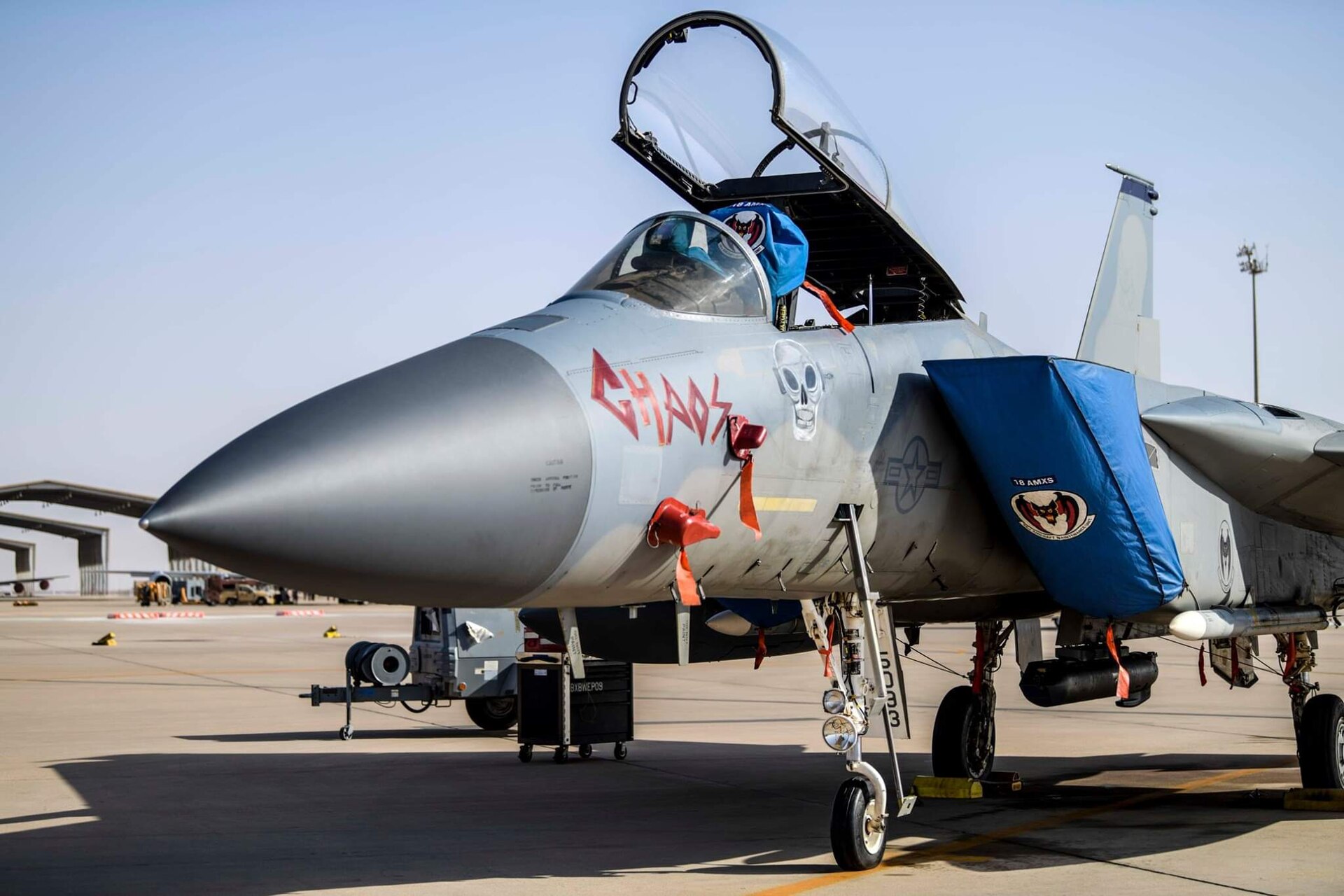
The linkage operates on multiple levels. Saudi Arabia’s PAC-3 stockpile stands at approximately 400 of 2,800 rounds — 86 percent depleted — with no DSCA delivery expected before 2028. Operation Project Freedom, in which Saudi Arabia grounded 43 US warplanes at Prince Sultan Air Base in May 2026, left the 1976/1977 SOFA in a legal vacuum the Pentagon has not resolved. A punitive drawdown of the 2,300 US personnel at PSAB has been under review since July 1. Each of these pressure points — PGSA fees, PAC-3 resupply, PSAB legal status — represents a concession Washington could offer in exchange for Saudi movement on normalization. Graham was the senator positioned to package that trade, and the only one with committee jurisdiction over both the defense and treaty dimensions.
Morgan Ortagus observed in June 2026 that MBS is prioritizing “security and succession over Israel normalization.” That ordering is itself the argument for linkage. If MBS ranks security first, normalization becomes viable only when it delivers security outcomes — PGSA fee forgiveness, PAC-3 resupply acceleration, PSAB legal rehabilitation. Graham’s August trip was designed to build normalization on the foundation of Saudi security needs, not despite them. Without a Senate broker who can credibly promise defense concessions in exchange for diplomatic movement, the two tracks — security and normalization — run in parallel with no junction.
| Saudi Security Pressure Point | Current Status | Normalization Linkage |
|---|---|---|
| PGSA Fees | $253M outstanding; $5.5M/day after Aug 18 | Fee relief as concession for normalization progress |
| PAC-3 MSE Stockpile | ~400/2,800 rounds (86% depleted); no DSCA delivery before 2028 | Resupply acceleration tied to normalization timeline |
| PSAB Legal Status | 1976/1977 SOFA in legal vacuum; punitive drawdown under Pentagon review | SOFA restoration contingent on normalization commitment |
| Operation Project Freedom | 43 US warplanes grounded May 2026; 2,300 US personnel at risk | Basing-rights rehabilitation embedded in normalization package |
Who in the Senate Can Replace Graham’s Triple Access?
No sitting senator holds all three of Graham’s credentials. Tom Cotton, the Arkansas Republican, is the most frequently cited normalization advocate. He described Saudi Arabia in September 2024 as “key to our regional alliance structure against Iran” and sits on Armed Services and Intelligence. But Cotton does not sit on Foreign Relations. He has no reported personal channel to Saudi leadership — no equivalent of Graham’s direct conversations with Princess Reema and Prince Faisal. His AIPAC relationship is strong but functionally distinct from Graham’s co-architect role with Dermer on the normalization file.
Jim Risch of Idaho chairs Foreign Relations but does not sit on Armed Services and has no reported personal relationship with MBS or Princess Reema. Marco Rubio held both committee seats before becoming Secretary of State, but he is now in the executive branch — and his sole post-“rupture” contact with Saudi leadership was Princess Reema’s July 10 visit, conducted at ambassador level — containment, not coordination. Ted Cruz sits on Foreign Relations and Commerce but not Armed Services, and his Saudi relationship is adversarial on multiple fronts.
Lindsey Graham knew how to speak Trump’s language like few others, and there is no obvious successor among Republican hawks with his charisma and access. His death leaves an open question: Who will take up the mantle as the most effective conduit for Netanyahu’s messages to Trump?
Haaretz, July 12, 2026
The problem is not finding someone who supports normalization in principle — most Republican senators do. The problem is finding someone who can walk into both the Israeli Prime Minister’s office and the Saudi Royal Court with the authority of a senator who controls the treaty pathway and the defense appropriations pathway. Graham built that dual access over years. His October 2024 visit to Netanyahu in Jerusalem, during which he offered the Senate treaty framework, was not a first meeting. It was the culmination of a relationship that gave him standing to make binding offers on the Senate’s behalf.
Why Did INSS Declare Normalization Off the Table in February?
Israel’s Institute for National Security Studies published Memo No. 2103 on February 23, 2026, concluding that Saudi-Israeli normalization is “off the table” and that Saudi Arabia “identifies more risks than opportunities in normalizing.” The assessment reflected a specific constraint: MBS had established an explicit red line at the November 2025 Washington summit, making normalization contingent on “irreversible steps toward an independent Palestinian state.” INSS characterized this as a structural commitment rooted in domestic legitimacy calculations, not a negotiating tactic.
Graham’s August trip was designed to work around that conclusion, not refute it. His strategy, as conveyed to Kushner and Witkoff, was to embed normalization within a “broader postwar settlement” that could satisfy MBS’s Palestinian-state precondition through phased steps rather than upfront delivery. The distinction between “irreversible steps toward” a Palestinian state and the establishment of a Palestinian state is the space in which Graham intended to operate. That space requires a trusted interlocutor who can simultaneously assure Israel that the steps are reversible enough to be acceptable and assure Saudi Arabia that they are irreversible enough to justify normalization. Graham was credible on both sides of that gap.
Prince Faisal bin Farhan’s public position, per INSS attribution, is that normalization “is not on the table so long as a Palestinian state has not been established” — framed as “a strategic principle, not a bargaining tactic.” Graham’s December 2025 rendering of MBS’s position — that MBS “will not recognize Israel unless he can secure an outcome better for the Palestinians” — is subtly different. “An outcome better for the Palestinians” is broader than “an independent Palestinian state.” That interpretive latitude was Graham’s working material. Who, if anyone, now possesses the standing to exploit it is unclear.
The Dermer-Kushner-Witkoff Channel Without Its Senate Anchor
The executive-branch architecture for normalization — Kushner as peace envoy, Witkoff as senior adviser, Dermer as Netanyahu’s representative — remains intact. But that architecture was designed to operate with a Senate anchor who could credibly promise ratification. Kushner can negotiate terms. Witkoff can shuttle between capitals. Dermer can deliver Netanyahu’s positions. None of them can guarantee that the Senate will ratify a treaty, appropriate defense funds, or restructure the PGSA fee schedule in Riyadh’s favor. Graham could make that guarantee with the weight of dual committee membership behind it.
Witkoff’s track record on the Saudi file is already uncertain. His meetings with MBS produced what The Hill described as “mixed signals” on normalization readiness. Kushner’s elevation to peace envoy gave the executive side more bandwidth, but Kushner operates without Senate credentials — his authority derives from presidential appointment, not institutional position. The Abraham Accords, which Dermer helped architect, did not require Senate treaty ratification because they were structured as executive agreements with Bahrain and the UAE. Graham’s explicit proposal — a Senate-ratified defense treaty modeled on the US-Japan and US-Australia alliances — is a different category of commitment, requiring two-thirds Senate consent to ratify and the same margin to abrogate. No one currently in the executive channel controls that threshold.
Dermer’s position compounds the difficulty. Recalled to government in March 2026, his formal authority is narrow and Lebanon-specific. His informal influence — as the Abraham Accords architect who sat with Trump at Mar-a-Lago — operates in the executive sphere. He needs a Senate counterpart who can convert executive understandings into legislative commitments. As of July 13, he does not have one. Graham’s May 2026 post on X framed the ambition that now has no Senate carrier: “I have been working on and supportive of normalization between Saudi Arabia and Israel for years. This historic agreement would effectively end the Arab-Israeli conflict.”
What Does Saudi Arabia’s Diplomatic Exclusion Mean for Normalization?
Saudi Arabia holds zero seats at any of the three tracks created by the MOU framework: Doha (diplomatic), Geneva (nuclear), and Lake Lucerne (monitoring). The Islamabad talks on July 11 — Day 23 of 60, the one venue adjacent to Saudi interests — produced no reported outcome. Riyadh was excluded from the negotiating table despite bearing direct financial exposure to the PGSA fee schedule the MOU created and despite the ceasefire’s collapse on July 8.
Normalization with Israel was the one diplomatic track Riyadh could have opened on its own terms, outside the MOU architecture from which it is excluded. Graham’s August trip would have created that track — bilateral, Saudi-Israeli, with US Senate backing, independent of the Doha-Geneva-Lake Lucerne framework. The trip’s collapse leaves Riyadh without a self-directed diplomatic vehicle. Pakistan holds relationships Riyadh cannot replicate. Iran’s signing authority remains contested. The normalization track was the one door Riyadh could have opened without permission from Tehran, Doha, or Islamabad.
Iran’s overnight strikes on five Gulf states on July 11-12 — Phase 3 of the IRGC escalation sequence, with three Qatari civilians injured including one child in the first confirmed GCC civilian casualties — and the formal IRGC declaration of Hormuz closure on July 12 compress the timeline further. Saudi Arabia is simultaneously absorbing kinetic attacks, watching its PGSA exposure compound past the August 18 deadline, and doing both without a diplomatic instrument or a Senate intercessor. MBS asked for regime change and received a war he cannot end. Graham’s normalization architecture was the closest thing to a Riyadh-initiated off-ramp that existed in the Senate.
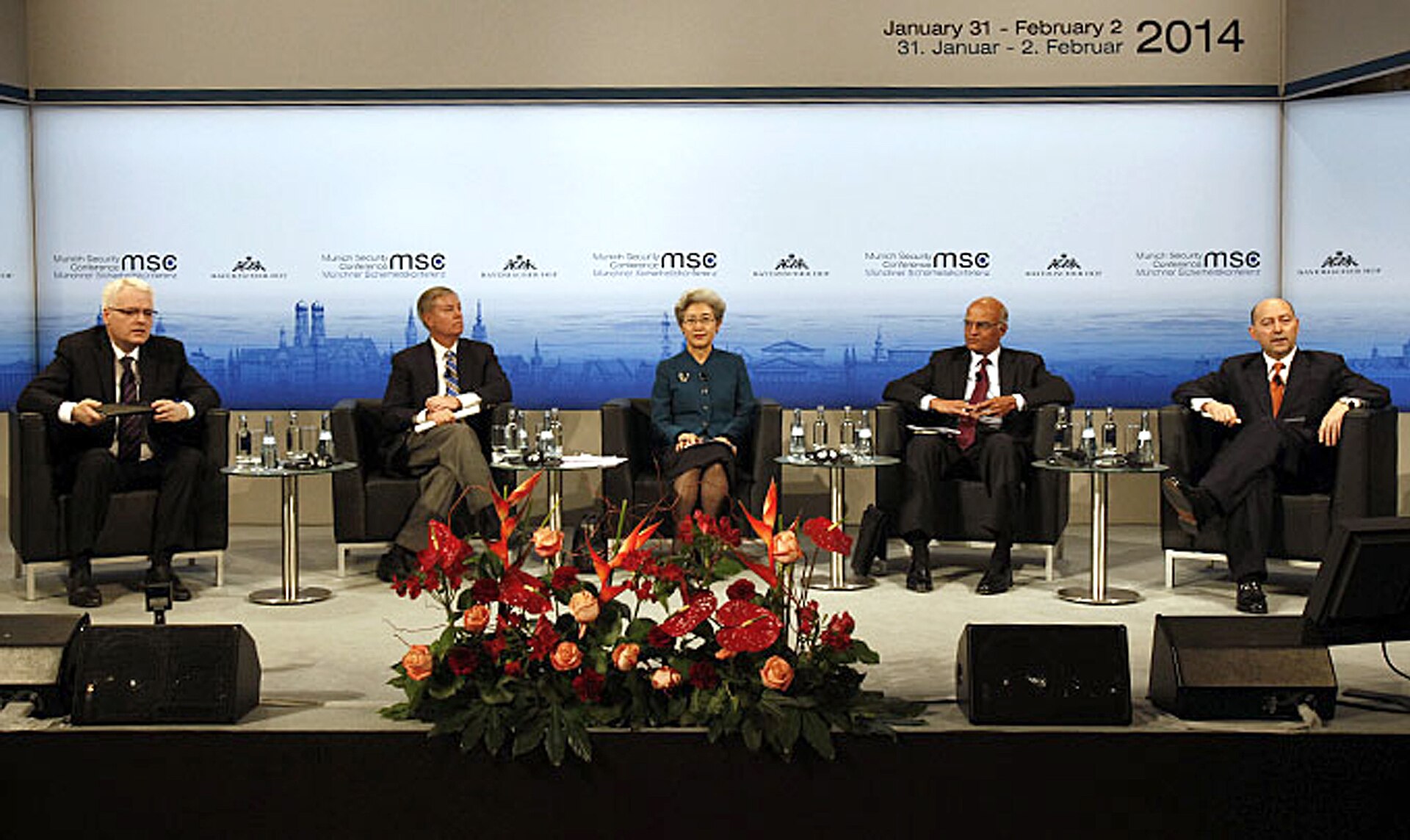
South Carolina’s Special Election and the Timeline Gap
South Carolina Governor Henry McMaster will appoint a temporary replacement to Graham’s seat. State law then triggers a special primary election on August 11, with a possible runoff on August 25. The earliest a permanent successor could take office is late August or early September — after the August 18 PGSA deadline and well past the window Graham had identified for his normalization visits.
The timeline gap is precise. Graham’s August trip was scheduled for the first half of the month. The PGSA deadline falls on August 18. The special primary falls on August 11. Any appointed replacement will spend their initial weeks navigating a Senate with competing demands, zero existing Gulf relationships, and no committee assignments. McMaster’s likely choices skew toward South Carolina political figures rather than foreign-policy specialists — Governor Nikki Haley’s 2013 appointment of Tim Scott to Jim DeMint’s vacated seat drew from the state legislature, not the foreign-policy establishment, and McMaster’s record offers no indication he would choose differently. Even an appointee with national-security experience would require months to build the institutional relationships Graham constructed over two decades in the Senate. Committee assignments for an appointed senator are subject to caucus negotiation and seniority, and dual placement on Armed Services and Foreign Relations — which Graham held by virtue of his 2003 Senate tenure — is not available to a freshman appointee on request.
The gap is not temporary in the way Senate vacancies usually are. Graham’s value on normalization was not a function of his vote — it was a function of accumulated relational capital in Riyadh, Jerusalem, and the committee structure. That capital is not transferable by gubernatorial appointment. Kash Patel’s FBI announced an investigation into Graham’s “sudden death” on July 12, adding a procedural layer that may delay any successor’s access to Graham’s files, contacts, or ongoing diplomatic conversations.
| Date | Event | Normalization Impact |
|---|---|---|
| July 12, 2026 | Graham dies at 71; IRGC declares Hormuz closed | August trip collapses; normalization mechanism removed |
| August 11, 2026 | SC special primary election | No successor can replicate Graham’s credential set |
| August 18, 2026 | PGSA deadline; $5.5M/day accrual begins | No Senate broker to negotiate PGSA-normalization trade |
| August 25, 2026 | Possible SC primary runoff | Permanent successor still without committee seats |
| September 2026 | Graham’s target for intensive talks | Window passes with no interlocutor in place |
| November 2026 | Graham’s target for deal framework | Framework has no Senate architect |
Frequently Asked Questions
Did Graham have a formal presidential mandate for the normalization initiative?
Graham operated with presidential awareness and coordination, not a formal mandate. Axios reported he had “discussed the initiative with Trump” and that Trump, Kushner, and Witkoff “agreed to pursue it in a coordinated way.” This is distinct from a presidential directive or special-envoy appointment. Graham’s initiative was self-generated and Senate-based, which gave it institutional independence from the executive branch — any commitments he made on treaty ratification carried the weight of a senator’s authority, not delegated presidential power. His May 2026 X post framed the work as personal advocacy sustained “for years,” not an assigned portfolio. That independence was part of his value to both sides: he could make offers to Riyadh that the White House could neither formally authorize nor disavow.
Could normalization proceed as an executive agreement without Senate ratification?
The Abraham Accords with Bahrain and the UAE were structured as executive agreements that did not require Senate consent. In theory, Kushner and Witkoff could pursue Saudi normalization on the same basis. But Graham had explicitly proposed a higher-commitment instrument — “a treaty through the Senate… a defense agreement like you have in Japan and Australia.” MBS’s precondition of “irreversible steps toward an independent Palestinian state” implies Saudi Arabia would demand a commitment level only Senate ratification provides. An executive agreement can be reversed by the next president on day one. A Senate-ratified treaty requires two-thirds consent to abrogate. For a kingdom planning in generational timelines and facing $5.5 million in daily PGSA exposure, the difference between a presidential handshake and a Senate-ratified treaty is the difference between an understanding and a guarantee.
What did adversary media make of Graham’s death?
Al Jazeera published a “controversial figure” profile on July 12, framing Graham as a hawk whose removal could benefit regional diplomacy — positioning his death as the loss of an obstacle rather than an asset. This framing aligns with Qatar’s broader posture as a victim-mediator following the July 12 Iranian strikes. Qatar has issued no normalization signal. The adversary-media narrative treats normalization as an Israeli-American project imposed on the region, erasing Riyadh’s agency and its specific security incentives — PGSA, PAC-3, PSAB — for pursuing the deal. Iranian state media did not address Graham’s normalization work in their obituary coverage, focusing instead on his sanctions advocacy and his record of anti-Iran legislation.
Has any other country offered to broker Saudi-Israeli normalization?
No state has publicly offered mediation on Saudi-Israeli normalization since Graham’s death. The existing frameworks — Doha for diplomacy, Geneva for nuclear issues, Lake Lucerne for monitoring — address the Iran-US conflict, not the Saudi-Israeli relationship. China, which received friendly-nation Hormuz fee exemptions from Iran, has positioned itself as an alternative Gulf security guarantor but has shown no interest in brokering Saudi-Israeli ties — and its Hormuz fee carve-out creates a structural conflict of interest with Riyadh’s PGSA exposure. Turkey brokered a 2023 Saudi-Iran rapprochement through Beijing but lacks the US Senate treaty-ratification access that was central to Graham’s architecture. The normalization file requires a Senate carrier with dual-committee authority and bilateral personal access in both Riyadh and Jerusalem. As of July 13, no senator has claimed it.