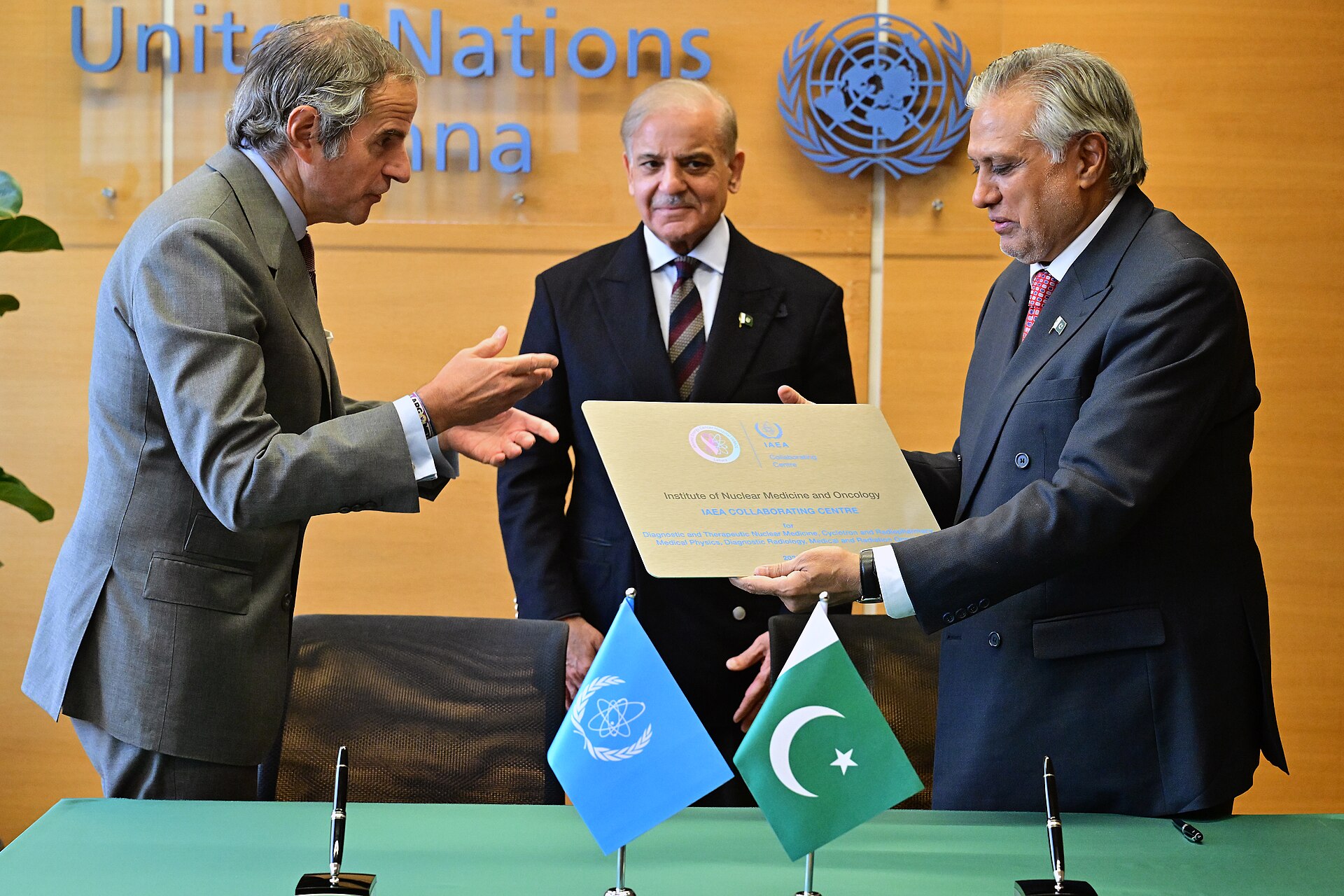
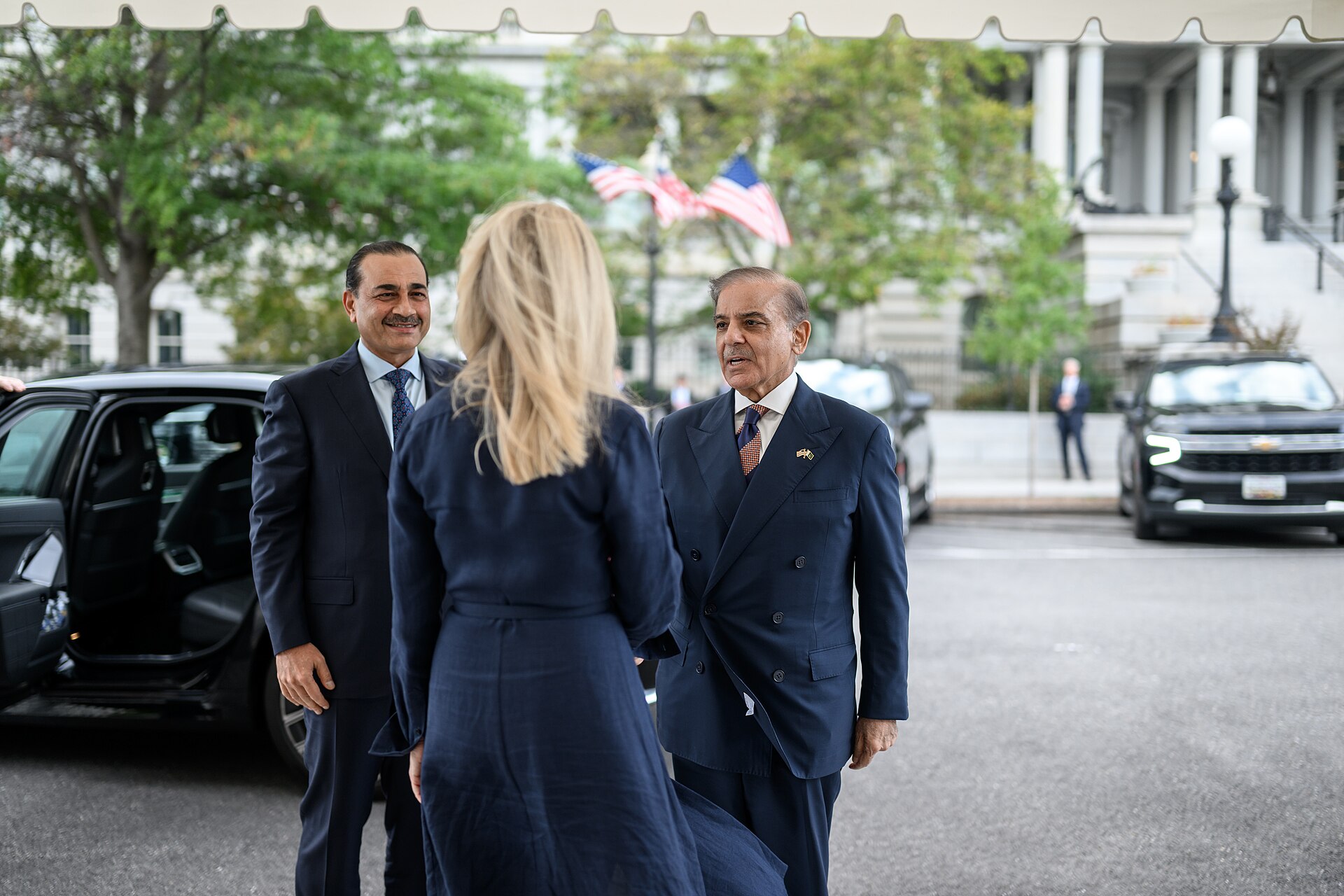
ISLAMABAD — Pakistan signed the Islamabad Memorandum of Understanding on June 18, 2026, as guarantor of the US-Iran framework. Not as witness. Not as observer. Not as informal supporter. Prime Minister Shehbaz Sharif’s signature — applied in person in Islamabad after US President Trump and Iranian President Pezeshkian signed electronically from their respective capitals — formalized a structural role that no Arab Gulf state was offered and none has been invited to join. Field Marshal Asim Munir signed alongside him as co-signatory, placing Pakistan’s military chief as a named party to a diplomatic instrument whose terms cover sanctions relief, frozen assets, and the Iranian nuclear file.
n
When the third round of US-Iran technical talks convenes in Islamabad on July 14-15 — with the nuclear agenda formally on the table for the first time — Pakistan’s guarantor role moves from document to operation. Saudi Arabia, holding $253 million in outstanding PGSA exposure with no mechanism to contest or reduce it, has no seat at any of the three negotiating tracks, no signatory status, and receives information about the framework only when Pakistan’s foreign minister decides to call Prince Faisal. The guarantor decides what the excluded party knows.
n
n
The Middle East briefing 3,000+ readers start their day with.
One email. Every weekday morning. Free.
Table of Contents
n
- n
- How Did Pakistan Move From Mediator to Guarantor?
- The Architecture of Structural Displacement
- What Does Saudi Arabia’s $253 Million PGSA Exposure Rest On?
- Saudi Arabia Learns What Pakistan Chooses to Share
- Can Pakistan Serve Riyadh’s Cash and Tehran’s Framework Simultaneously?
- The Nuclear File Opens on Day 26 Without a Verified Baseline
- Who Absorbs the Blame If the Framework Collapses?
- Frequently Asked Questions
- n
n
n
n
n
n
n
n
n
n
n
n
How Did Pakistan Move From Mediator to Guarantor?
n
Pakistan’s transition from mediator to guarantor was formalized on June 18, 2026, when Prime Minister Sharif signed the Islamabad MOU as guarantor and Field Marshal Munir signed as co-signatory. The distinction is structural: a mediator facilitates conversation between parties; a guarantor bears responsibility for the framework’s integrity after the parties leave the room. No Arab Gulf state holds either role.
n
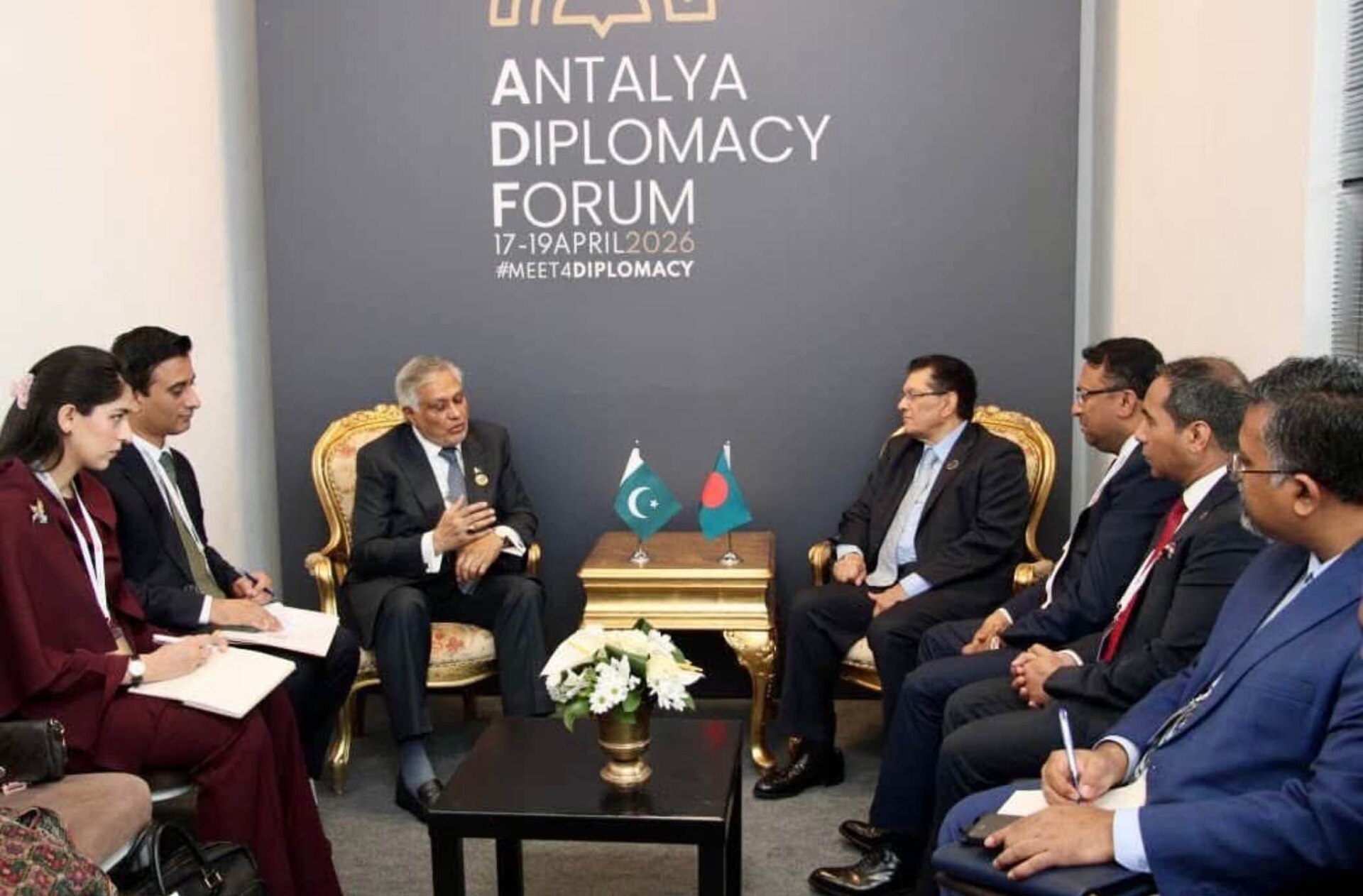
The MOU designates three active negotiating tracks: Doha for diplomatic discussions, Geneva for the nuclear file, and Islamabad for implementation. Pakistan and Qatar serve as co-mediators across the process. But Pakistan’s guarantor role separates it from Qatar: Doha facilitated the diplomatic track but did not sign the document. Pakistan both mediates and guarantees — a dual standing no other state in the process holds.
n
The JCPOA’s P5+1 structure at least permitted indirect Gulf input through the US delegation. The Islamabad MOU’s architecture provides no equivalent channel. Saudi Arabia was acknowledged only informally — Pakistani President Zardari referenced Riyadh’s “informal support” — but it was not named as a participant in any track. Iran split the talks and locked Riyadh out of both the Doha and Islamabad channels before the MOU was signed, and the MOU codified that exclusion.
n
Munir’s role as co-signatory is historically anomalous. Military chiefs do not sign diplomatic memoranda — foreign ministers and heads of state do. His attendance at the Khamenei funeral in Tehran on July 3, alongside Prime Minister Sharif, confirmed his position as Pakistan’s primary interlocutor with Iran’s military establishment.
n
His documented ties to the IRGC dating from his 2016-17 period as ISI director general explain why Iranian hardliners accepted Pakistan’s guarantor candidacy despite deep suspicion of Pakistani-Saudi financial entanglement. Munir opens the nuclear track Saudi Arabia cannot enter — because his name, not Prince Faisal’s, appears on the document that governs it.
n
The Diplomat characterized the arrangement as the first time Pakistan has held “standing in both the diplomatic and military dimensions of a major regional security process simultaneously.” This is not mediation in the Norwegian or Omani sense — good offices extended at discretion and withdrawn without cost. Pakistan’s institutional credibility is now bound to the framework’s survival. If the MOU collapses, Pakistan absorbs the reputational cost.
n
The Architecture of Structural Displacement
n
Saudi Arabia operates across zero of the three active MOU tracks.
n
| MOU Track | Location | Mediator(s) | Saudi Arabia Status |
|---|---|---|---|
| Diplomatic | Doha | Qatar, Pakistan | No seat |
| Nuclear | Geneva | TBD | No seat |
| Implementation | Islamabad | Pakistan | No seat |
n
n
The Arab Center DC described this exclusion as “structural, not procedural” in its June 2026 analysis, “Limiting the Damage: Saudi Arabia and the Islamabad Memorandum.” The assessment was specific: none of the three mediating states have indicated any intention to bring Riyadh into the room. Saudi Arabia was not excluded because it failed to request entry. It was excluded because the framework was built without a door.
n
IISS Senior Fellow Hasan Alhasan went further. In a June 2026 analysis, he characterized the MOU as a “disastrous turning point for the regional security order” and found that Arab Gulf states are “publicly supporting” the deal only “to avoid further hostilities.”
n
“A disastrous turning point for the regional security order.” — Hasan Alhasan, Senior Fellow, IISS, June 2026
n
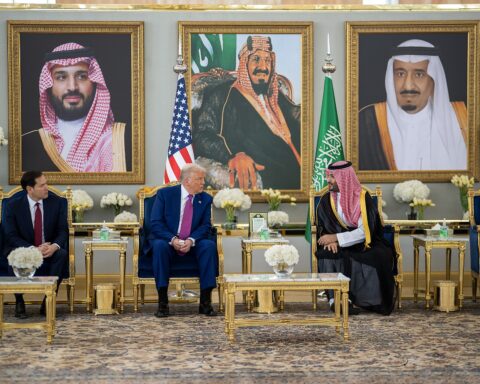
The MBS-Trump call on July 11 — placed as the Islamabad session was being scheduled — covered “security of navigation and maritime passage” according to Saudi state media. Al Arabiya published what it described as a “final draft” of the US-Iran deal that omitted all nuclear terms. The framing was deliberate: Riyadh prefers to define the MOU as a shipping-and-sanctions arrangement, not a nuclear negotiation. Saudi state media have consistently presented the framework in these terms since June. The July 14-15 agenda, which places nuclear issues on the formal table for the first time, makes that framing untenable.
n
This is not exclusion as a passive outcome of US-Iran bilateralism. This is Pakistan’s elevation as active structural displacement. The guarantor role grants Islamabad institutional standing that supersedes Riyadh’s regional weight on the question that defines this crisis: who is in the room, and who is not.
n
n
What Does Saudi Arabia’s $253 Million PGSA Exposure Rest On?
n
Saudi Arabia’s PGSA exposure — $253 million outstanding, accruing at $5.5 million per day toward an August 18 activation — is governed by a framework whose guarantor is Pakistan, whose mediators are Pakistan and Qatar, and whose signatories are the United States and Iran. Riyadh holds no formal mechanism to contest, modify, or delay the PGSA within the MOU structure.
n
The PGSA charges approximately one dollar per barrel on vessels transiting a five-nautical-mile corridor between Qeshm and Larak. At pre-war Saudi export volumes, the implied annual cost exceeds $2 billion. Saudi Arabia has no bilateral channel with Tehran that could yield a “friendly-nation” exemption — the classification China secured from Rahmani Fazli — and no diplomatic relationship with Iran that would support an application for one. Beijing received its carve-out because it was classified as a friendly state. Riyadh has no such classification to invoke and no forum in which to apply for one.
n
The countdown to August 18 continues to compress. The PGSA exposure functions as a structural hostage to the framework’s survival. If the 60-day MOU window produces a deal, Saudi shipping costs become a predictable line item in a framework Riyadh did not design and cannot amend.
n
The MBS-Trump call addressed maritime security. It did not produce a mechanism. MBS asked for regime change and received a war he cannot end — and the shipping agreement appended to that war is priced by a guarantor in Islamabad, not a partner in Washington.
n
Saudi Arabia Learns What Pakistan Chooses to Share
n
Pakistan’s Ministry of Foreign Affairs confirmed that Foreign Minister Ishaq Dar called Saudi Foreign Minister Prince Faisal after the Doha round. The ministry described the call as covering “the regional situation especially the recent round of mediations in Doha.” Saudi Arabia’s response was characterized in the Pakistani readout as expressing “satisfaction on the positive progress.”
n
The word does structural work. “Satisfaction” is the Pakistani ministry’s characterization of the Saudi response — a framing that renders acquiescence as endorsement. A state that holds no seat at any negotiating track, receives information through one party’s foreign minister, and expresses satisfaction with progress it cannot independently verify is not exercising diplomatic agency. It is receiving a briefing on terms set by the briefer.
n
Saudi Arabia received no readout from the American or Iranian side. The Dar-Faisal call is unilateral — initiated by Pakistan. It is discretionary — Pakistan decides its timing, its content, and its characterization of what happened in the room. And it is revocable — nothing in the MOU structure obligates Pakistan to continue providing it.
n
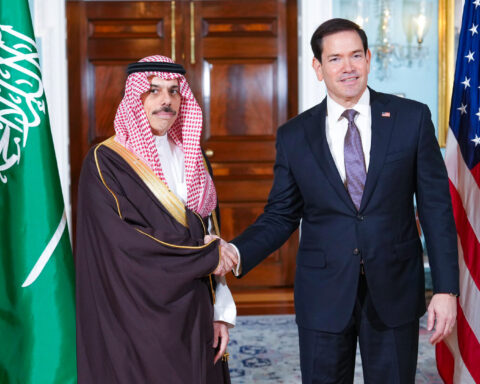
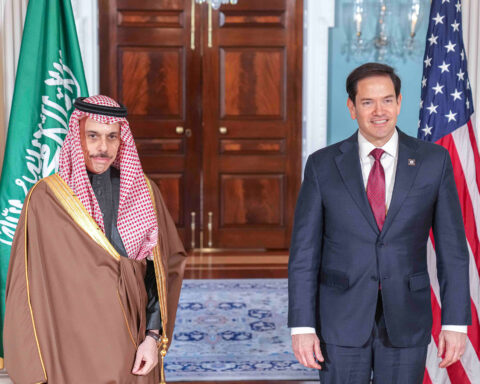
Riyadh’s own channel to Washington reinforces the asymmetry. Princess Reema met Rubio on July 10 at ambassador grade. Faisal did not. Saudi Arabia’s highest-level diplomatic access to the MOU runs through Pakistan’s foreign minister on one side and its own ambassador on the other.
n
Neither channel operates at the level where framework decisions are made. Pakistan’s foreign minister briefs Saudi Arabia on what happened. Saudi Arabia’s ambassador briefs Washington on what Riyadh wants. Neither flow gives Saudi Arabia standing to shape the outcome.
n
Pakistan’s MoFA framed the Dar-Faisal briefing as evidence of Pakistan’s diplomatic centrality — not of Saudi dependency. That framing is structurally accurate. Pakistan controls the information flow because the guarantor is the only party with standing in the room and a relationship with the excluded party outside it. The information monopoly is not a byproduct of Riyadh’s diplomatic failure. It is a feature of the guarantor architecture.
n
Can Pakistan Serve Riyadh’s Cash and Tehran’s Framework Simultaneously?
n
Pakistan holds $8 billion in Saudi cash deposits at the State Bank of Pakistan, depends on Saudi financial support for its $7 billion IMF Extended Fund Facility, and serves as the guarantor of a framework that structurally excludes Saudi Arabia. The conflict of interest is embedded in the architecture and cannot be resolved through diplomatic reassurance.
n
Saudi Arabia extended a $3 billion support package in April 2026, with a $2 billion tranche deposited on April 15. Pakistan’s IMF EFF — $7 billion total, $4.8 billion disbursed through the May 2026 third review — relies on Saudi financial backing as a structural precondition that analysts cite explicitly. Without the Saudi deposits undergirding Pakistan’s foreign exchange reserves, the IMF program’s fiscal assumptions weaken.
n
The question is whether that financial dependency translates into advocacy within the MOU framework. The structural answer is that it cannot. Pakistan’s guarantor obligations run to the framework’s integrity, not to an excluded party’s preferences. Advocating for Saudi re-entry would compromise the guarantor’s perceived neutrality with Iran — the party whose compliance Pakistan is supposed to guarantee.
n
Tehran accepted Pakistan’s candidacy in part because Munir’s IRGC ties and Islamabad’s diplomatic record with Iran suggested the guarantor would not function as a Saudi proxy. Active Saudi advocacy would confirm precisely the suspicion Pakistan’s candidacy was designed to allay.
n
The conflict runs deeper than bilateral loyalty. The Iran-Pakistan gas pipeline — shelved since 2014 under US sanctions pressure — represents the most concrete economic benefit Pakistan can extract from the MOU’s success. Pakistan formally placed the project on hold and opted for an out-of-court settlement with Iran on the arbitration dispute. Islamabad has signaled willingness to revive the pipeline if Washington grants a sanctions waiver under the MOU framework.
n
Revival would deliver gas to Pakistan’s energy-starved southern provinces — a domestic political dividend that aligns the guarantor’s institutional interest with the framework’s survival. Saudi Arabia’s concerns about the MOU’s terms are, from Islamabad’s institutional perspective, friction against the economic gains the guarantor role was designed to enable.
n
| Pakistan Dependency | Amount | Terms | Structural Effect |
|---|---|---|---|
| Saudi SBP cash deposits | $8B total ($3B April 2026) | Rolling, discretionary renewal | Financial dependency on excluded party |
| IMF Extended Fund Facility | $7B ($4.8B disbursed) | Saudi support as fiscal precondition | Guarantor’s stability requires excluded party |
| Iran-Pakistan gas pipeline | Shelved | Pending US sanctions waiver | Framework success = Pakistan’s energy dividend |
| MOU guarantor role | Non-monetary | No enforcement mechanism specified | Standing without instruments |
n
n
Pakistani analysts at the Institute of Strategic Studies Islamabad frame the guarantor role as consistent with “strategic autonomy” — maintaining simultaneous relationships with Iran, Saudi Arabia, the United States, and China without subordinating any one to another. Their reference point is post-9/11: alignment with Washington after 2001 yielded debt rescheduling from more than a dozen bilateral creditors, renewed IMF support, and direct American assistance.
n
The same analysts acknowledge the limits of the precedent. “Pakistan failed to convert that advantage into lasting structural progress after 9/11,” as one assessment noted. The guarantor role presents the same question: whether structural standing converts to structural gain, or whether it dissipates — as the post-9/11 dividend did — once the crisis that created the standing passes.
n
n
The Nuclear File Opens on Day 26 Without a Verified Baseline
n
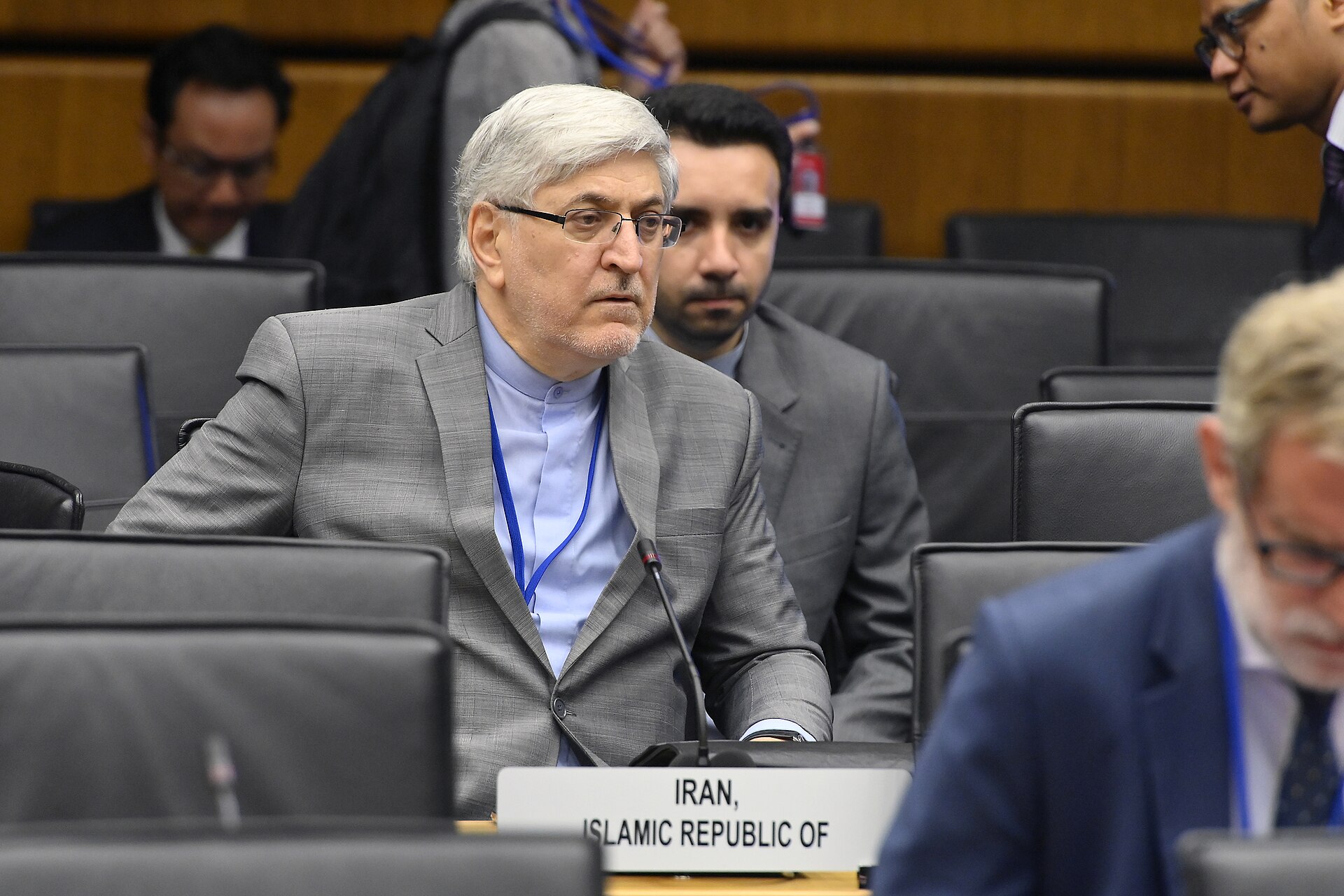
Article 13 of the Islamabad MOU covers nuclear issues. It specifies none of them. Enrichment ceilings, verification protocols, inspectorate access, stockpile disposition — all are deferred to a “satisfactory framework being agreed upon in the final deal.” The Arms Control Association assessed the document as “fundamentally, a non-nuclear deal that leaves key nuclear issues unresolved.” The 60-day timeline, the Association found, is “unrealistically compressed for verification architecture alone.” US negotiators, it concluded, “were ill-prepared for serious nuclear negotiations with Iran.”
n
“Fundamentally, a non-nuclear deal that leaves key nuclear issues unresolved.” — Arms Control Association, “Assessing the Islamabad MOU and the U.S.-Iran Nuclear Negotiations,” June 2026
n
The July 14-15 session is the first where the nuclear file appears on the formal agenda. It arrives under conditions that make verification structurally impossible. The IAEA has not conducted inspections at Iranian nuclear facilities for 121 days. Iran’s estimated highly enriched uranium stockpile stands at 440.9 kilograms per the last verified report. The nuclear discussion opens on Day 26 of a 60-day clock with no verified baseline, no agreed enrichment ceiling, and no framework for reestablishing one.
n
Iran’s Foreign Ministry spokesman stated that frozen assets “will be released and will be employed with absolute liberty by Iran” — a maximalist framing that positions the July 14-15 assets discussion as directly adversarial. Iranian state media reported the US “agreed to release $12 billion of frozen Iranian assets.” Washington did not confirm the figure. Confirmed frozen Iranian assets total approximately $7 billion held in South Korea, with additional holdings in Iraq, China, Japan, Luxembourg, and India.
n
Pakistan is the guarantor of this process. Pakistan also holds approximately 170 nuclear warheads per SIPRI’s 2025 estimate, making it the only state in the MOU architecture that is simultaneously a guarantor, a nuclear power, and a non-signatory to the Non-Proliferation Treaty. Who Pakistan speaks for at the Security Council on nuclear questions is already contested. That contestation acquires different weight when Pakistan is also the guarantor of a nuclear negotiation whose outcome shapes the enrichment rights of a neighboring state.
n
The Saudi dimension introduces a parallel asymmetry. The US-Saudi 123 Agreement, signed in May 2026 alongside a $142 billion arms package, allows Saudi Arabia to pursue uranium enrichment. The Arms Control Association found the agreement “will open the door to some type of Saudi uranium enrichment program” and “will not require the more intrusive IAEA monitoring that the UAE accepted” under its own 2009 123 Agreement — which included a “gold standard” prohibition on enrichment and reprocessing that the Saudi agreement explicitly omits.
n
MBS stated in a 2018 CBS interview: “If Iran develops nuclear weapons, Saudi Arabia will do the same.”
n
The July 14-15 nuclear talks will shape what Iran’s enrichment ceiling looks like. Saudi Arabia has no seat at the table where that ceiling is being set — but holds a signed agreement that enables its own enrichment program in response to whatever ceiling emerges.
n
Who signs for Iran remains unresolved on the other side of the table. Mojtaba Khamenei has been absent for 127 days. His conditional MOU approval — “different view… granted permission” — left the terms of conditionality undefined. The Supreme Leader holds a veto whose parameters are unspecified, exercised by an authority who has not appeared in public since March. The nuclear file opens with the guarantor present, the excluded party absent, and the approving authority missing.
n
n
Who Absorbs the Blame If the Framework Collapses?
n
Pakistan. The guarantor’s name is on the document. If the 60-day window closes without a nuclear agreement, Pakistan absorbs reputational damage for a framework it guaranteed but could not enforce — holding no snapback mechanism, no treaty-level obligation, and no UN Security Council resolution backing its guarantor function.
n
The comparison to the JCPOA is instructive for what it reveals about the gap. The 2015 agreement operated under UN Security Council Resolution 2231. Its enforcement mechanism was the snapback: any permanent member could trigger the reimposition of sanctions. The guarantor states were the signatories themselves; their obligations were legally binding under international law. Pakistan’s guarantor role in the Islamabad MOU operates under no equivalent UNSC resolution, no snapback provision, and no treaty-level obligation. It is a guarantee backed by political standing, not institutional instruments.
n
The closer precedent is Minsk. France and Germany served as guarantors of the Minsk II Agreement (2015) through the Normandy Format — a structure of quarterly summits between Merkel, Hollande, Putin, and the Ukrainian president that produced joint communiqués but no compliance. Post-invasion admissions by former Chancellor Angela Merkel and former President François Hollande — that the framework was used to “buy time” for Ukrainian rearmament — destroyed its credibility retroactively.
n
The European Council on Foreign Relations identified the structural failure in its post-mortem: guarantors that cannot enforce create the political fiction of diplomacy while the underlying conflict continues. If the 60-day MOU window collapses, Pakistan inherits the same exposure — a state that lent its name to a process it was never equipped to compel.
n
For Saudi Arabia, the implications compound along every axis of the framework. Riyadh’s PGSA exposure is backed by a guarantee from a state that holds no enforcement mechanism over either signatory. Its information about the framework arrives through a channel controlled by a state with its own financial interest in the framework’s success.
n
Its nuclear future — whether the July 14-15 talks produce enrichment constraints that bind or enable Iran’s program — is being decided in a room Riyadh cannot enter, guaranteed by a state that depends on Riyadh’s deposits, and governed by an MOU that Riyadh did not sign.
n
Saudi Arabia holds $8 billion in deposits at the State Bank of Pakistan, a $142 billion arms agreement with the United States, and a 123 Agreement granting enrichment rights. It holds no seat in any of the three rooms where the framework that prices its shipping, constrains its rival’s nuclear program, and defines the postwar Gulf security order is being negotiated. Pakistan holds the guarantee. The $8 billion purchases many things. It does not purchase standing in the room.
n
Frequently Asked Questions
n
Has any Arab Gulf state formally requested observer status at the Islamabad talks?
n
No Arab Gulf state has submitted a formal request for observer status at any of the three MOU tracks as of July 11, 2026. Saudi diplomatic engagement has been limited to post-round phone briefings initiated by Pakistan. The UAE, Bahrain, Kuwait, and Oman have not publicly commented on the observer question. Qatar, as co-mediator, holds institutional access but has not advocated for broader GCC participation in the framework. The institutional contrast with the JCPOA — where the EU served as coordinator and Gulf states could channel input through P5+1 delegations — is structural, not incidental.
n
What specific enforcement mechanisms does Pakistan’s guarantor role include?
n
None specified in the MOU text. Unlike the JCPOA, which operated under UNSCR 2231 with a formal snapback provision, the Islamabad MOU contains no enforcement clause, no dispute resolution mechanism, and no procedure for the guarantor to compel compliance from either signatory. Pakistan’s guarantor role is structurally comparable to the Normandy Format guarantee of Minsk II — political standing without enforcement tools. Both the ECFR and the Carnegie Endowment have identified enforcement-absent guarantees as the primary vulnerability in mediated frameworks, particularly when the guarantor’s own interests diverge from those of the parties it is meant to hold accountable.
n
Could Saudi Arabia withdraw its deposits at Pakistan’s central bank as pressure on the guarantor?
n
Withdrawal or non-renewal of Saudi deposits would destabilize Pakistan’s foreign exchange reserves and jeopardize its IMF program. Saudi Arabia has never publicly linked these deposits to Pakistan’s MOU role. Withdrawing them would also damage Riyadh’s relationship with a nuclear-armed neighbor sharing a border with Iran — and the one state that controls the information channel Riyadh currently depends on for MOU visibility. The deterrent, such as it is, runs in both directions.
n
What happens to the PGSA if the MOU framework collapses before August 18?
n
The PGSA was negotiated within the MOU framework but operates through a separate implementing mechanism administered by Iran. If the MOU collapses, the PGSA’s legal status becomes contested. Iran would likely continue to enforce transit fees unilaterally as a de facto toll on Hormuz passage, while the United States and its allies would lack a framework within which to negotiate relief, exemptions, or legal challenges. Saudi Arabia’s PGSA exposure would revert to a bilateral Iran-Saudi dispute with no mediating structure, no guarantor, and no enforcement mechanism on either side — a situation in which Iran’s de facto control of the Qeshm-Larak corridor gives it unilateral pricing power over Saudi crude transit.
nn
Pakistan’s position as Riyadh’s sole information pipeline was confirmed when FM Dar briefed Faisal while PM Sharif was simultaneously in Tehran — a structural dependency examined in full in Faisal Got the Call — Riyadh Did Not Get the Seat.
While the Islamabad round was delayed to July 14-15, Iran FM Araghchi arrived in Muscat on July 11 for direct ministerial-level talks with Oman FM Busaidi on Hormuz transit governance — the bilateral channel that Article 13 of the MOU designates as Hormuz’s primary mechanism, and one from which Saudi Arabia is, again, entirely absent. The Muscat session and its place in Saudi Arabia’s structural exclusion is examined in Muscat Holds the Only Hormuz Channel Still Open.
The following day, the UAE’s Ministry of Foreign Affairs issued its most expansive multi-country condemnation of Iranian military action, naming Iran as responsible for attacks on Bahrain, Kuwait, Qatar, Jordan, and Oman — a statement that further fragmented the Gulf diplomatic consensus on which any Pakistan-brokered guarantee would need to rest. The UAE condemnation is examined in UAE Condemned Iran for Attacks on Five Gulf States.