
n
RIYADH — Saudi Arabia is running a direct diplomatic channel with Iran through European intermediaries — Austria offering Vienna for technical nuclear discussions, France relaying Saudi Hormuz positioning through its own Tehran-direct line — while the formal Islamabad Memorandum framework, from which Riyadh holds no seat, no signatory role, and no observer status, convenes this week — delayed from its originally scheduled July 11 date to July 14-15 after CENTCOM strikes in Khuzestan — with nuclear issues, sanctions, and frozen assets on the agenda. The channel’s structural problem is not access but authority: Mojtaba Khamenei, 127 days into his tenure as Supreme Leader without a single public appearance or audio statement, holds the sole constitutional power under Article 176 to validate any agreement touching the Supreme National Security Council, and his June 18 conditional approval of the MOU — “I had a different opinion” but the SNSC and Pezeshkian “accepted responsibility” — imposed an open-ended veto that only he can lift.
n
Whoever Iran has placed opposite Saudi Deputy FM Waleed El-Khereiji in the back-channel either cannot close anything requiring that confirmation or is operating outside the veto architecture entirely. Riyadh is investing diplomatic capital in a channel that can explore and maintain, but with the MOU’s 60-day clock at Day 23 and PGSA fees mounting by the day toward a fast-approaching hard deadline, the back-channel is not a supplementary instrument — it is the only one Saudi Arabia has.
n
The Middle East briefing 3,000+ readers start their day with.
One email. Every weekday morning. Free.
Table of Contents
n
- n
- The Channel and Its Constitutional Ceiling
- What Does Saudi Arabia’s Iran Back-Channel Actually Look Like?
- Why Can No One on Iran’s Side Close a Deal?
- Islamabad Meets and Riyadh Watches
- Austria, France, and the Back Door to Tehran
- How Does $253 Million in PGSA Exposure Force Riyadh’s Hand?
- The Oman Problem
- Can a Channel That Cannot Close Still Serve Saudi Arabia?
- Frequently Asked Questions
- n
n
n
n
n
n
n
n
n
n
n
n
n
The Channel and Its Constitutional Ceiling
n
The Saudi-Iran back-channel exists because the 2023 Beijing Agreement created a trilateral committee — China, Saudi Arabia, Iran — that survived everything the war threw at it: the February 28 strikes on Tehran, the collapse of direct US-Iran talks, Saudi Arabia’s progressive exclusion from the Islamabad framework, and the death of Supreme Leader Ali Khamenei himself. The committee met in March 2024, November 2024, and December 2025, the last session chaired by Iran’s Deputy FM Majid Takht-Ravanchi, Saudi Arabia’s El-Khereiji, and China’s Vice FM Miao Deyu, according to a Chinese MFA press release. That December meeting, held weeks before the current escalation cycle accelerated, remains the last structured Saudi-Iran contact before the war footing.
n
What the trilateral framework provides is continuity — the institutional memory of a diplomatic relationship that predates the crisis and the standing to hold conversations without requiring a new mandate each time. What it does not provide, and was never designed to provide, is treaty-level authority. Takht-Ravanchi can discuss, signal, and report upward, but he cannot commit Iran to any outcome requiring Supreme National Security Council action, because SNSC decisions require confirmation from the Supreme Leader under Article 176 of the Iranian constitution, and no mechanism exists for delegating that power.
n
This distinction between access and authority would be academic if Mojtaba Khamenei were functioning as a normal head of state — receiving briefings, issuing guidance, confirming or rejecting SNSC recommendations in something approaching real time. Al-Monitor and US News reported on July 10 that more than 20 Iranians contacted by Reuters in recent weeks voiced concern about his continued absence, with the analysis characterizing his invisibility as “becoming a liability for the Islamic Republic.” Iran’s back-channel interlocutor can explore positions with Saudi Arabia; whether anyone on Iran’s side of the table has the constitutional standing to convert those positions into binding commitments is the question the channel cannot answer from within its own structure.
n
What Does Saudi Arabia’s Iran Back-Channel Actually Look Like?
n
The Saudi back-channel to Iran operates on at least three parallel tracks, none carrying treaty-level authority but which together constitute the most extensive Saudi-Iran diplomatic infrastructure since the Beijing normalization. The first and most institutionalized is the China-brokered trilateral committee, where El-Khereiji serves as Riyadh’s designated sub-FM Iran channel and committee chair. Tasnim News Agency acknowledged this track on June 25 when it reported that Iran and Saudi Arabia had held discussions on “regional developments,” with Iranian officials briefing the Saudi side on “the status of ongoing negotiations and progress in implementing previously agreed understandings” — language that confirms the channel’s existence while carefully refusing to assign it any formal negotiating weight.
n
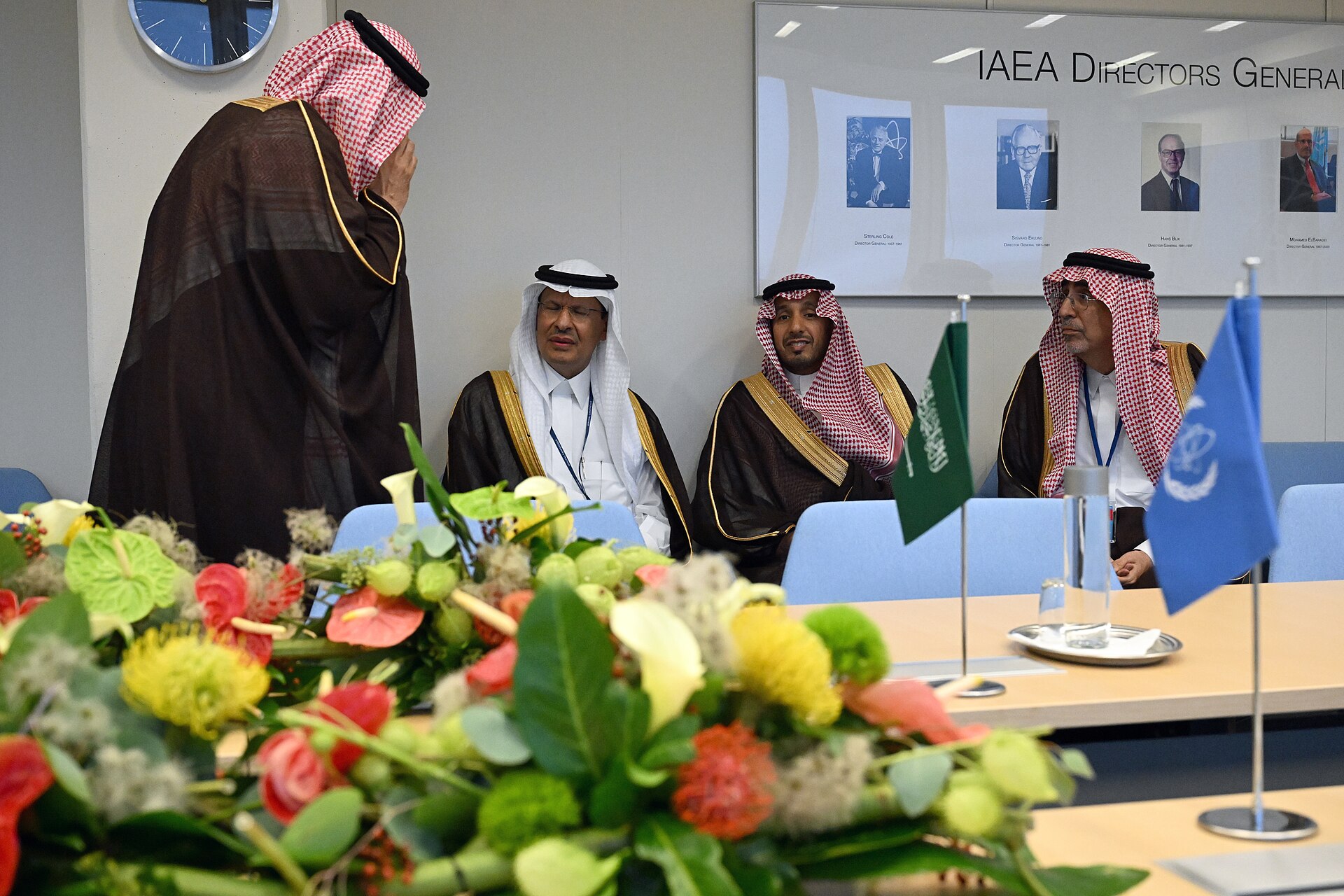
The second track runs through European capitals. Austrian FM Beate Meinl-Reisinger met Faisal bin Farhan in Vienna on June 17 — the same day the Islamabad Memorandum was signed — and offered to host technical discussions on Iran’s nuclear programme, emphasizing the IAEA’s central role and jointly welcoming the MOU. France serves a different function entirely: MBS placed a call to Macron on July 11 deploying identical Hormuz language to the Saudi Press Agency formula used in other diplomatic readouts — the “security of navigation and maritime passage” formulation, deployed three times in thirteen days across the Macron call, the Faisal-Busaidi Muscat meeting (July 8), and the SPA’s own readout. Austria provides a venue and an institutional connector to the IAEA; France provides a relay to Iranian decision-makers through a European intermediary that Tehran has independent reason to engage.
n
The third track, less structured but diplomatically active, runs through Muscat, where Faisal met FM Badr bin Hamad Al Busaidi on July 8 and issued a joint statement emphasizing “waterway security and freedom of navigation.” The Carnegie Endowment for International Peace assessed in June that the real negotiations on Iran’s nuclear programme “will be resolved, if at all, in Oman or another back-channel between Washington and Tehran,” with a conclusion that applies equally to Riyadh’s own channels: Europe — and by extension, Saudi Arabia — will be “informed of the outcome, not consulted on its design.”
n
n
| Islamabad Track | Saudi Back-Channel | |
|---|---|---|
| Mandate | MOU (60-day, expires ~Aug 16-18) | None (diplomatic maintenance) |
| Formal parties | United States, Iran, Pakistan (mediator) | Saudi Arabia, Iran (China framework) |
| Facilitation | Pakistan, Qatar (co-mediators) | Austria (venue), France (relay), Oman (Hormuz) |
| Saudi Arabia’s status | Excluded — post-round briefings from Dar | Principal |
| Nuclear agenda | Explicit (sanctions, frozen assets, programme) | None |
| Iranian authority level | Pezeshkian / SNSC (Mojtaba conditional) | Deputy FM (Takht-Ravanchi) |
| Ratification path | Article 176 — Mojtaba confirmation required | Article 176 — same bottleneck |
| Deadline pressure | ~37 days to MOU expiry | 38 days to PGSA waiver expiry |
n
n
Why Can No One on Iran’s Side Close a Deal?
n
Mojtaba Khamenei’s June 18 conditional approval of the Islamabad Memorandum did more than register reluctance — it created a ratification architecture that requires his personal confirmation to resolve. When he wrote that he had “a different opinion” but that “the SNSC and President Pezeshkian accepted responsibility,” the conditionality was left structurally open: Mojtaba did not specify what would satisfy his objections, the SNSC cannot self-adjudicate whether its own actions meet the Supreme Leader’s unstated criteria, and no timeline was attached. The only entity that can declare the conditions met is the office that imposed them.
n
“I had a different opinion [on the MOU], but the Supreme National Security Council and President Pezeshkian accepted responsibility.” — Mojtaba Khamenei, written statement, June 18, 2026
n
This matters for the Saudi back-channel because any outcome that touches SNSC jurisdiction — which includes virtually everything Riyadh wants to discuss, from Hormuz governance to regional security arrangements to the PGSA fee regime — requires the same confirmation chain. Takht-Ravanchi at the deputy FM level can hold sophisticated technical discussions, explore Saudi positions, and report upward to Pezeshkian and the SNSC, but he cannot confirm that what he has negotiated satisfies Mojtaba’s open-ended conditionality, because no one in Tehran has communicated the criteria for satisfaction.
n
The incapacity question compounds the authority gap. Reuters reported in April that Mojtaba had potentially lost a leg in the February 28 strikes; US Defense Secretary Hegseth stated on-record that he was “wounded and likely disfigured.” Mojtaba did not attend the state funeral for his father (July 4-9), did not send a written message, and according to Al Jazeera, Iranian security officials declined his request to attend the Mashhad burial, citing Israeli targeting risk. Whether the absence reflects physical incapacity, security constraints, or political calculation, the diplomatic effect is identical: the one person whose constitutional authority is required to convert any back-channel exploration into a binding commitment has been communicating exclusively through written statements and has issued no guidance on the MOU’s conditionality since June 18.
n
The Iranian constitution provides one alternative path: Article 111 allows a three-person Temporary Leadership Council — the president, the head of the judiciary, and a Guardian Council jurist — to exercise Supreme Leader functions if formal incapacity is declared. No such declaration has been made, and Iranian state media has instead doubled down on characterizing Mojtaba as being in “full health,” a position that four months of total public absence has made progressively harder to defend as anything other than an assertion the system needs to be true rather than one it can prove.
n
n
Islamabad Meets and Riyadh Watches
n
The Islamabad Memorandum framework is meeting this week — delayed from its originally scheduled July 11 date after CENTCOM strikes in Khuzestan pushed the session to July 14-15 — with Pakistan’s Gen. Asim Munir presiding as host and mediator. Munir is dual-credentialed through IRGC ties from his 2016-17 intelligence posting and as MOU co-signatory who attended Ali Khamenei’s funeral. The agenda includes nuclear programme issues, sanctions relief, and frozen assets, three domains where Saudi Arabia holds zero formal standing to influence the outcome. The nuclear track in particular opens questions that will reshape the region’s security architecture for a generation, and Riyadh’s information about the proceedings will arrive through Pakistani FM Ishaq Dar’s post-round telephone briefing — a courtesy call, not a consultative role.
n
The session’s original July 11 date was first reported by Saudi media — Al Hadath and Al Arabiya — rather than by any of the three formal parties, a pattern where leaking scheduling details has become Riyadh’s most visible lever on the process. Saudi Arabia endorsed the MOU through a Faisal-Dar phone call on June 13, four days before the signing ceremony, in what the Arab Center Washington DC characterized as Saudi Arabia being “acknowledged without granting Riyadh treaty status, a seat at the Phase 2 nuclear track, or exemption from PGSA fees.” The kingdom pre-endorsed an agreement it could neither shape nor sign and received nothing structural in return.
n
The exclusion has deepened since June. Al Jazeera reported on July 1 that Iran’s designated post-Doha communication channel runs through Qatar, not Riyadh; Pakistan and Qatar revived a bilateral back-channel on July 10 without Saudi participation. The Soufan Center’s June 30 assessment captured the paradox: “It was Pakistan, with help from Turkey and Saudi Arabia, that brokered the temporary ceasefire,” while “European leaders travel and make calls but others are setting the pace and direction.” Saudi Arabia receives credit for brokering but no seat at the table it helped build — and the broader strategic predicament facing MBS is that Riyadh is simultaneously excluded from the formal peace process and exposed to its outcomes, a combination that the ambassador-level downgrade with Washington and the Operation Project Freedom episode have made harder to manage than at any point since the war began.
n
Austria, France, and the Back Door to Tehran
n
The European facilitation layer reflects a convergence of two separate calculations: European capitals searching for relevance in a diplomatic process that has sidelined them, and Riyadh searching for any available entry point into negotiations it cannot access through the formal framework. The EU Institute for Security Studies advised in its 2026 assessment that Europeans should “focus less on reviving past diplomacy and more on facilitating regional arrangements on maritime security and crisis management” — a circumscribed brief that maps almost exactly onto what Austria and France are actually providing. Both are offering Saudi Arabia facilitation nodes, not mediation authority, and both sides appear to understand the distinction even as they maintain the diplomatic fiction that the contacts carry independent weight.
n
“The real negotiations on Iran’s nuclear programme will be resolved, if at all, in Oman or another back-channel between Washington and Tehran. Europe will be informed of the outcome, not consulted on its design.” — Carnegie Endowment for International Peace, June 2026
n
Austria’s value proposition is specific and bounded: Vienna houses the IAEA, which will certify or reject any nuclear agreement’s verification provisions, and FM Meinl-Reisinger positioned her June 17 offer to host technical discussions as institutionally grounded rather than politically ambitious. The joint welcoming of the MOU with Faisal gave Riyadh a European diplomatic partner on the nuclear track’s periphery — a position far from the negotiating table but closer than the telephone briefings from Dar that otherwise constitute Saudi Arabia’s only information pipeline on the nuclear file.
n
France operates as routing infrastructure rather than a venue, and the mechanics are visible in the diplomatic record. MBS deployed the identical “security of navigation and maritime passage” formulation to Macron that the Saudi Press Agency used in other readouts — establishing a coordinated Saudi Hormuz position routed through multiple channels simultaneously. France’s value to Riyadh is its direct channel to Tehran and its Hormuz coalition co-chairmanship, which allows Saudi positioning to reach Iranian decision-makers through a European intermediary. Whether this additional routing produces substantive outcomes or simply provides Riyadh with the reassurance that its positions are circulating more widely is a question the diplomatic record through early July leaves genuinely open.
n
How Does $253 Million in PGSA Exposure Force Riyadh’s Hand?
n
The Persian Gulf Shipping Agreement fee waiver expires August 18 — thirty-eight days from today — with Saudi Arabia’s outstanding liability at $253 million and accumulating at $5.5 million per day. Riyadh holds no seat at any track where the PGSA’s terms are being negotiated: the Islamabad framework has the formal mandate, and the Iran-Oman bilateral channel handles Hormuz governance specifics. The El-Khereiji back-channel is the only direct line where Saudi Arabia can raise PGSA concerns as a principal rather than a briefed third party, and that line terminates at an Iranian deputy FM who lacks the authority to settle anything without Supreme Leader confirmation.
n
The August 18 deadline converges with the MOU’s own 60-day clock, which expires around the same date — a synchronization that is structural, not coincidental, because the PGSA fee regime was designed as pressure infrastructure and Iran has deployed it accordingly. IRGC Commander Rahmani Fazli classified China as a “friendly nation” exempt from Hormuz transit fees, a designation Saudi Arabia has not received, creating a triple bind for Riyadh: acceptance legitimizes the entire PGSA construct and Iran’s fee-setting authority over the strait, rejection risks an explicit hostile classification with escalatory implications, and silence defaults to acceptance. An unnamed Iranian senior official told PressTV on June 26 that “safe passage is not guaranteed in the Strait of Hormuz without Iran’s coordination,” a formulation that treats all transiting states, Saudi Arabia included, as petitioners rather than sovereign equals navigating international waters.
n
The financial exposure layers onto a broader fiscal squeeze that leaves Riyadh with less room to absorb open-ended costs. Aramco’s free cash flow covers only 0.85 times its dividend commitment, the Q1 2026 deficit reached SAR 125.7 billion, and the NEOM project’s $16 billion cancellation reflects budgetary pressures already forcing priority cuts elsewhere. The PGSA fees at current accumulation are manageable in isolation, but combined with oil-price erosion — Brent trading below its pre-war level despite an active Gulf conflict — and the absence of any formal channel through which to negotiate terms, the fees function as a slow-moving financial instrument that Saudi Arabia can neither contest at the table nor afford to let compound indefinitely.
n
The Oman Problem
n
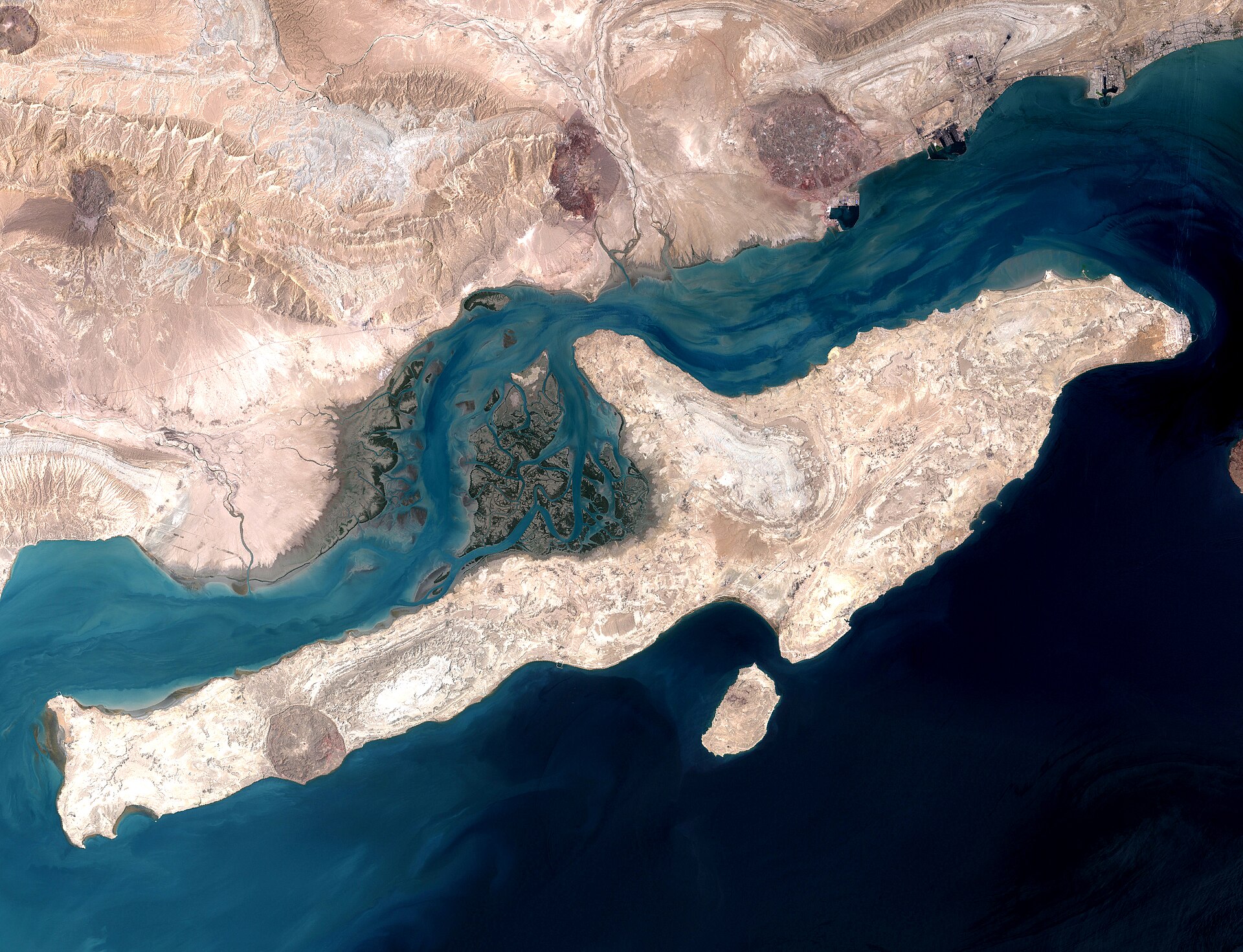
Faisal bin Farhan’s July 8 visit to Muscat and the joint statement with FM Al Busaidi on “waterway security and freedom of navigation” appeared to position Oman as a Saudi-aligned facilitation node for Hormuz governance. The problem is that Oman is simultaneously co-architect of the PGSA fee regime with Iran, a role Tehran made explicit when it announced development of “new arrangements concerning the Strait of Hormuz with the collaboration and cooperation of the state of Oman” — framed pointedly as bilateral with Muscat, without reference to Riyadh or any other Gulf capital. Saudi Arabia is attempting to attach itself to an Omani-Iranian construct without an Iranian invitation, and the Faisal-Busaidi joint statement, however diplomatically aligned its language, does not change the underlying architecture.
n
The 2013 precedent makes the structural inversion clear. Oman served as the original US-Iran back-channel venue that produced the JCPOA negotiations, a role predicated on Muscat’s perceived neutrality between Tehran and Washington. The 2026 configuration inverts that model entirely: Oman is no longer a neutral venue but a co-architect of the Hormuz governance framework that Iran is deploying as financial pressure against Saudi Arabia and other Gulf transiting states. From Riyadh’s perspective, Muscat’s neutrality has been structurally compromised — which reframes the Faisal-Busaidi meeting less as a channel to Iran through Oman than as an attempt to prevent Omani-Iranian Hormuz governance from consolidating entirely without Saudi input.
n
n
Foreign Policy captured the broader compensatory strategy in its July 1 assessment: a new Saudi-led axis has formed with Qatar, Turkey, Pakistan, and Egypt — but without the UAE — as a parallel influence vehicle because “the GCC itself is unlikely to unify on Iran.” The axis provides political weight and multiple relay channels to Iranian interlocutors, but it cannot substitute for a formal seat at either the Islamabad track or the Omani-Iranian Hormuz framework, both of which will produce outcomes that Saudi Arabia will have to accept regardless of what El-Khereiji’s back-channel explores or what Faisal’s Muscat communiqués declare.
n
Can a Channel That Cannot Close Still Serve Saudi Arabia?
n
The case for the back-channel’s residual value does not depend on its ability to produce signed agreements — it depends on whether maintaining a direct line to Iran’s deputy FM level prevents surprises, preserves Saudi equities in discussions that would otherwise proceed entirely without Riyadh’s input, and positions the kingdom to move quickly if the authority question on Iran’s side resolves through Mojtaba’s recovery, an Article 111 invocation, or some informal workaround the Iranian system develops under sustained pressure. The Arab Center Washington DC described Saudi Arabia’s back-channel role as “acknowledged without granting Riyadh treaty status,” a formulation that captures both the channel’s limitation and its modest utility: acknowledgment is not a seat, but for a state systematically excluded from every formal framework touching its own security and financial exposure, it is a starting position rather than nothing.
n
The risk is that the back-channel becomes a substitute for the structural access Riyadh needs rather than a bridge toward it. If Saudi Arabia treats the El-Khereiji channel and the European facilitation nodes as adequate — if the ability to have conversations replaces the drive to shape outcomes — then the back-channel functions as a diplomatic sedative, absorbing energy that would otherwise push harder for formal standing at the Islamabad table or the Hormuz governance negotiations. The operational test is whether the channel generates information and positioning advantages that Riyadh cannot obtain through the Dar telephone briefings alone, and the evidence for that remains thin: Iran publicly characterizes the Saudi channel as routine “consultations,” has assigned it no formal weight, and has built the post-Doha communication architecture through Qatar.
n
The MOU clock is running, the PGSA meter turns daily, and the Islamabad talks are convening this week with nuclear issues on the agenda and Saudi Arabia watching from outside the room. El-Khereiji’s back-channel is open and staffed, the Austrian and French facilitation nodes are active, and MBS is routing positioning through every available relay. The question that sits over all of it is one the Saudi side of the line cannot answer: who on Iran’s end has the authority to say yes?
n
Frequently Asked Questions
n
Has Iran publicly acknowledged the Saudi back-channel?
n
Yes, but in deliberately minimizing terms. Tasnim News Agency reported on June 25 that Iran and Saudi Arabia held discussions on “regional developments,” with both sides emphasizing “the importance of continuing consultations, maintaining diplomatic channels, and strengthening joint cooperation to support regional stability.” The language confirms the channel’s existence while categorizing it as routine diplomatic housekeeping rather than a negotiating track — a framing that gives Tehran the flexibility to characterize or deny the channel’s scope depending on what serves Iran’s broader positioning within the Islamabad framework, where it holds a formal seat and Saudi Arabia does not.
n
What role does China play in the Saudi-Iran channel today?
n
China brokered the original 2023 Beijing Agreement and chairs the trilateral committee through Vice FM Miao Deyu, who attended the most recent session in December 2025. Beijing occupies a contradictory position in 2026: it is the institutional guarantor of the Saudi-Iran channel while simultaneously benefiting from the PGSA fee regime, having been classified by IRGC Commander Rahmani Fazli as a “friendly nation” exempt from Hormuz transit fees — a designation Saudi Arabia has not received. This dual position means China has less structural incentive to press Iran toward concessions in the Saudi channel than it did in 2023, when the normalization served Beijing’s broader Gulf investment strategy. Whether China will convene a fourth trilateral session during active hostilities remains unclear, and neither Beijing nor Riyadh has publicly requested one since the December 2025 meeting.
n
How does this back-channel compare to the 2013 Oman channel that preceded the JCPOA?
n
The 2013 Oman channel connected two principals — the United States and Iran — who both held the constitutional authority to negotiate and ratify outcomes within their respective systems. That channel produced the interim Joint Plan of Action within months of its first substantive session. The 2026 Saudi back-channel connects a principal (Saudi Arabia, through its deputy FM) with an Iranian interlocutor at the matching deputy FM level, but with a structural asymmetry the 2013 version did not have: Iran’s Takht-Ravanchi has technical authority to discuss positions but no constitutional path to ratify anything requiring SNSC confirmation, because that ratification requires Supreme Leader approval under Article 176 and the current Supreme Leader has been absent from the process since issuing his conditional statement on June 18. The 2013 channel had a viable endpoint from the start; the 2026 channel, as currently constituted, does not.
n
Could Saudi Arabia join the Islamabad framework as a formal participant or observer?
n
The MOU’s three-party architecture — the United States, Iran, and Pakistan as mediator, with Qatar as designated co-mediator — contains no observer provision, and no party has publicly proposed creating one. Pakistan FM Ishaq Dar maintains contact with Riyadh through post-round telephone briefings, but these are information-sharing courtesy calls rather than consultative participation with any weight on the negotiating text. Foreign Policy reported on July 1 that Saudi Arabia is instead building a parallel influence bloc with Qatar, Turkey, Pakistan, and Egypt — excluding the UAE — precisely because the GCC “is unlikely to unify on Iran” and direct Islamabad participation is structurally foreclosed. The Saudi approach has been to maximize bilateral influence with the mediators themselves, particularly Pakistan and Qatar, rather than to seek formal observer status that none of the sitting parties has shown any willingness to grant.
n
On July 11, as talks in Islamabad were scheduled to open without a Saudi representative, MBS called Trump directly — upgrading the channel from ambassador to head of state in under twenty-four hours. The call, and what Riyadh asked for in it, is examined in MBS Called Trump as Islamabad Talks Started Without Riyadh.
On July 11 — the same day MBS placed that call — Iranian FM Araghchi arrived in Muscat to hold direct ministerial talks with Oman FM Busaidi on Hormuz transit governance, confirming his role as Iran’s active principal in the only channel that governs the waterway Saudi Arabia cannot afford to leave unresolved. The Araghchi visit and what it means for Riyadh’s back-channel exposure is examined in Muscat Holds the Only Hormuz Channel Still Open.
n