
RIYADH — Saudi Arabia restored all three diplomatic channels with Washington in under twenty-four hours — ambassador, foreign minister, and crown prince — and not one of them secured Riyadh a place at the table where Iran’s nuclear programme will be negotiated. Secretary of State Marco Rubio met Saudi Ambassador Princess Reema bint Bandar on July 10, spoke with Foreign Minister Prince Faisal bin Farhan by phone hours later, and Crown Prince Mohammed bin Salman called President Trump directly on the morning of July 11. The sequence was swift, precise, and structurally hollow.
n
The July 14-15 Islamabad round will place nuclear issues — uranium enrichment, IAEA inspections, frozen Iranian assets — on the formal negotiating agenda for the first time, with direct consequences for Saudi Arabia’s own nuclear ambitions. Riyadh holds no party status, no signatory role, and no observer seat. Its sole information pipeline runs through Pakistan, whose foreign minister briefed Faisal on July 9 while Pakistan’s prime minister was simultaneously in Tehran. The choreography of the July 10-11 calls — who dialled whom, at what tier, and against what deadline — reveals the distance between restored channel access and the strategic influence that remains withheld.
The House of Saud Daily Briefing
Saudi Arabia's news in 3 minutes, every morning. Free. See today's issue
n
 n
nn
Contents
n
- n
- What Happened on July 10-11?
- Who Initiated the Calls?
- The Rupture Behind the Restoration
- Three Lines, One Foreign Minister
- Does Channel Restoration Equal Leverage Restoration?
- How Does the Nuclear Agenda Reshape Saudi Arabia’s Position?
- The Pakistan Dependency
- What Does Riyadh Pay If the MOU Collapses?
- Frequently Asked Questions
n
n
n
n
n
n
n
n
n
n
n
What Happened on July 10-11?
n
Saudi Arabia conducted a triple-tier diplomatic sequence with Washington between July 10 and July 11, 2026, escalating from ambassador-level contact to a direct crown-prince-to-president call within twenty hours. The Rubio-Reema meeting was held at the State Department at ambassador level, with no joint communiqué issued. The Rubio-Faisal phone call elevated contact to foreign-minister level hours later. And the MBS-Trump call on the morning of July 11 restored the royal channel for the first time since the Project Freedom crisis in May.
n
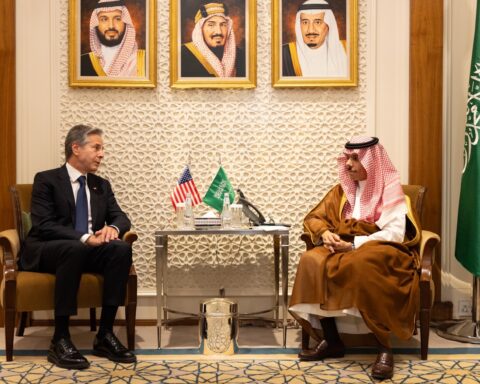
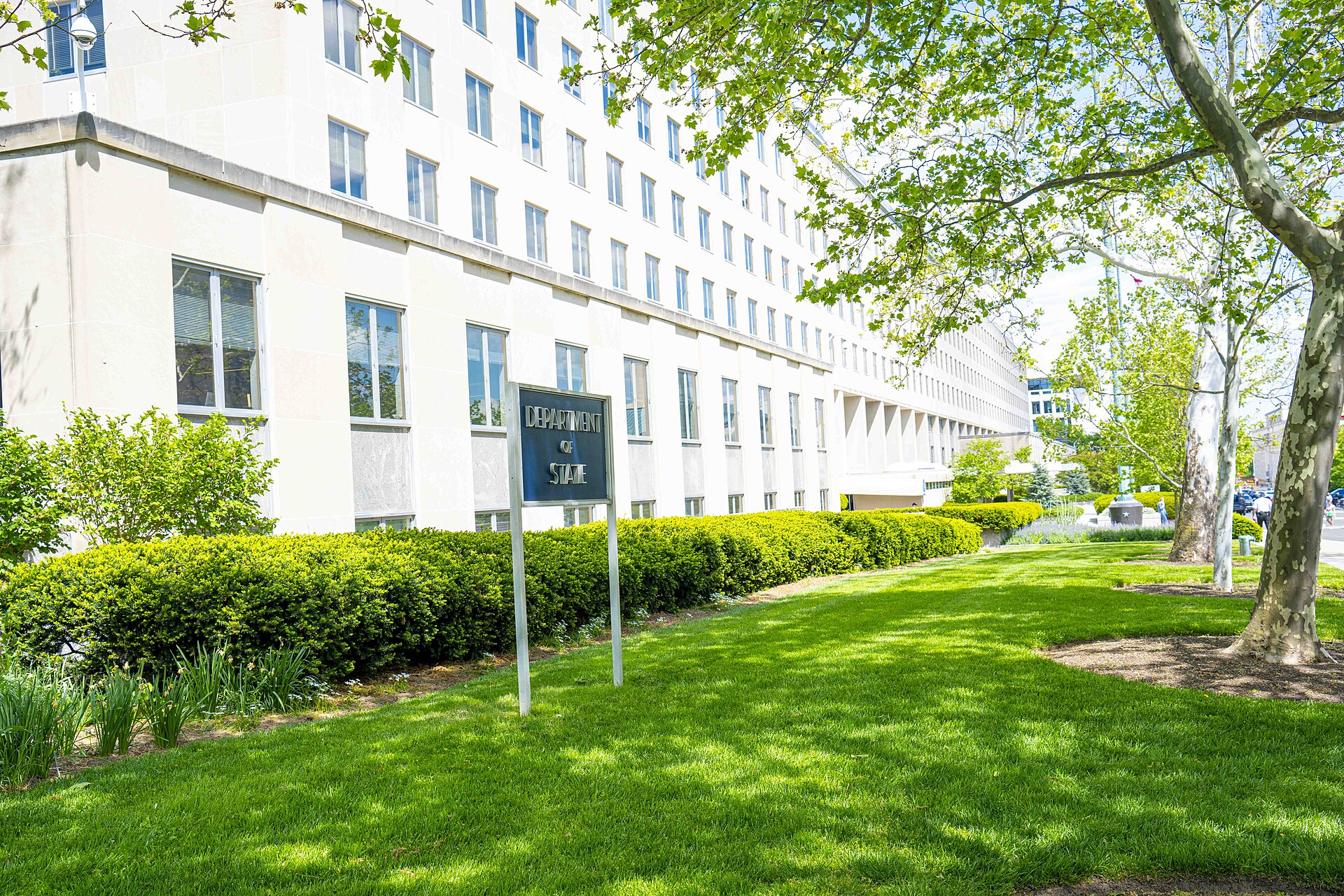
The sequence began on the afternoon of July 10, when Rubio met Princess Reema bint Bandar — an encounter conducted at ambassador level rather than foreign-minister level, in Washington rather than Riyadh. Arab News and Al Arabiya both covered the meeting without noting the rank asymmetry: a US secretary of state sitting with an ambassador rather than a diplomatic peer. The meeting produced no public deliverable beyond the fact of its occurrence, and the absence of a joint communiqué left both sides free to characterise the conversation on their own terms.
n
Within hours, the State Department confirmed that Rubio had also spoken by phone with Faisal bin Farhan. The readout was spare: the two discussed “the importance of close coordination to promote regional security and stability,” according to the State Department press release. No reference to Islamabad, nuclear issues, or Saudi Arabia’s exclusion from the MOU framework appeared in the official language. The diplomatic boilerplate signalled restoration without specifying what had been restored or on whose terms.
n
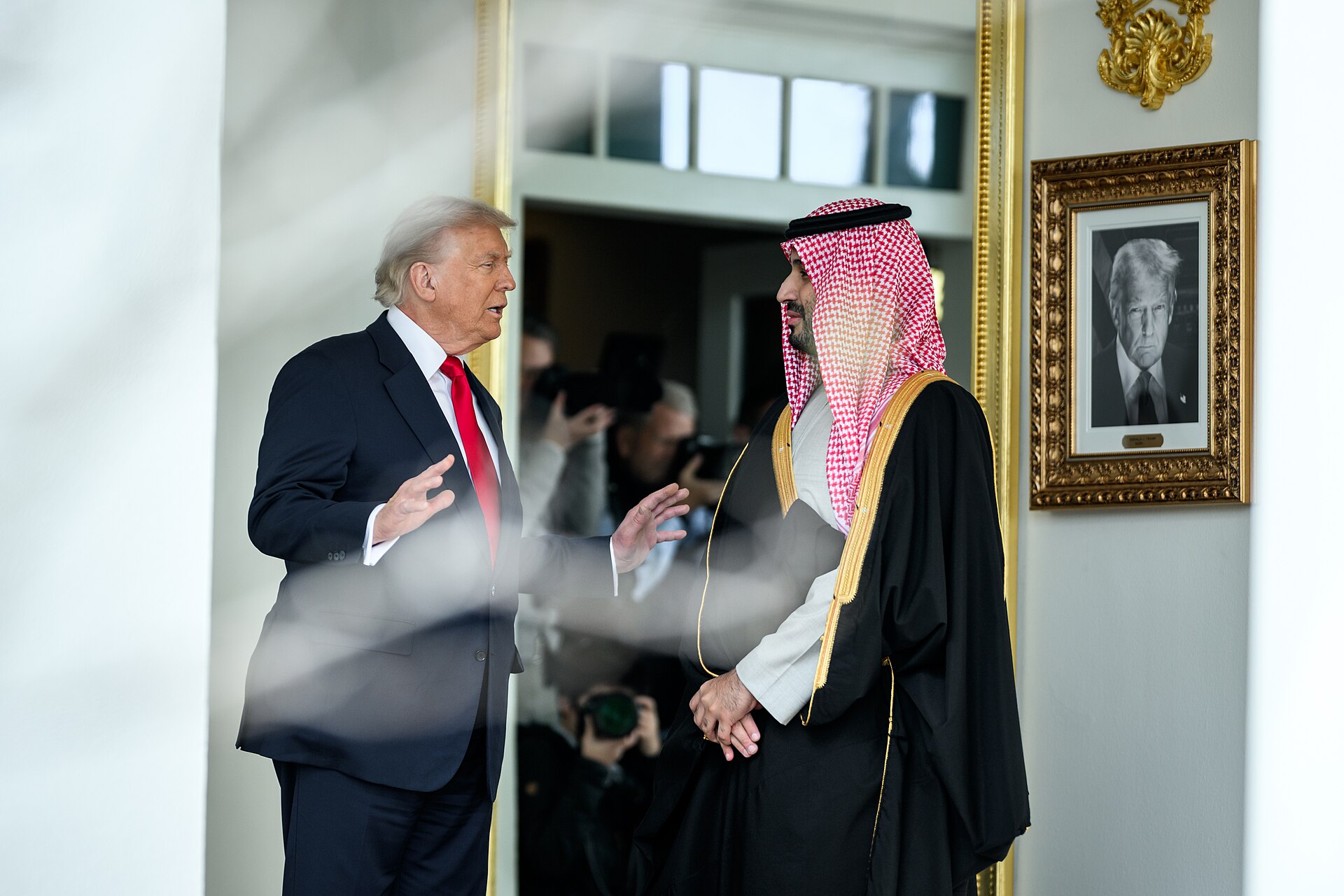
On the morning of July 11, the Saudi Press Agency confirmed that MBS had placed a direct call to Trump. The SPA readout covered bilateral cooperation, ways to strengthen ties “across various sectors,” developments in the Middle East including “peace talks between the US and Iran,” and “the importance of security of navigation and maritime passage to contribute to regional stability.” The call occurred on Day 24 of the 60-day MOU ceasefire window, with the Islamabad nuclear-agenda round seventy-two hours away and Riyadh locked out of both negotiating tracks.
n
| Date | Channel | Diplomatic Tier | Likely Initiator | Key Readout Language |
|---|---|---|---|---|
| July 10 (afternoon) | Rubio–Reema | Ambassador | Washington | No public readout issued |
| July 10 (evening) | Rubio–Faisal | Foreign Minister | Unclear | “Close coordination… regional security and stability” |
| July 10 | Araghchi–Faisal | Foreign Minister | Tehran | US strikes as MOU violations; Treasury Para 9 |
| July 11 (morning) | MBS–Trump | Crown Prince–President | Riyadh | “Peace talks between the US and Iran”; maritime passage |
n
Sources: State Department press release (July 10); Saudi Press Agency (July 11); Mehr News Agency (July 10); Arab News (July 10-11).
n
Who Initiated the Calls?
n
Available evidence points toward split choreography, with neither Washington nor Riyadh fully controlling the sequence. Saudi Arabia initiated the royal channel — MBS called Trump — while Washington likely initiated the lower-tier contacts. The division suggests the FM-level restoration was offered as a face-saving upgrade rather than extracted through Saudi diplomatic pressure.
n
MBS initiated the July 11 call to Trump. Arab News reported that “Mohammed bin Salman picked up the phone to Donald Trump on the morning of July 11,” and the SPA readout’s emphasis on bilateral cooperation and regional stability is consistent with a Saudi-framed agenda. The Rubio-Reema meeting was held at the State Department, suggesting US logistical initiative and scheduling control. The Rubio-Faisal phone call sits in a grey zone: the State Department readout offered no indication of which side dialled first, and the Saudi side did not contest Washington’s framing.
n
The split matters because it shapes the underlying power dynamic. If Riyadh initiated all three contacts, the sequence reads as Saudi urgency — a kingdom scrambling to establish channels before the July 14-15 nuclear round locked it out of the enrichment conversation entirely. If Washington initiated the lower-tier contacts and Riyadh escalated to the royal channel independently, the pattern is more transactional: the US offered a diplomatic face-saving mechanism, and MBS used the opening to seek something — potentially a commitment on Islamabad agenda-shaping, nuclear terms, or PGSA exposure — that the readouts do not disclose.
n
The speed of the upgrade from ambassador to foreign minister is the strongest indicator. Rubio met Reema at ambassador level — a deliberate downgrade from the FM protocol that would have paired him with Faisal directly — and hours later the FM channel opened anyway. The same-day escalation suggests the Reema meeting was either a staged warm-up designed to precede the FM call or a test that produced sufficient Saudi assurance for Washington to offer the higher channel. Either reading leads to the same conclusion: Riyadh needed the calls more than Washington did, because Riyadh faces a structural deadline at Islamabad and Washington does not.
n
 n
nn
n
The Rupture Behind the Restoration
n
The triple-channel sprint is legible only against the rupture that preceded it. In May 2026, Saudi Arabia grounded 43 US warplanes at Prince Sultan Air Base for four days in what was designated Operation Project Freedom — the first time a Gulf host nation had physically prevented US military operations from its territory. Trump called MBS directly to demand the runways reopen, and MBS refused. The warplanes flew again only after Washington threatened to withhold PAC-3 interceptor resupply, a coercive exchange that damaged both sides of the alliance.
n
The episode was enabled by a legal vacuum that remains unresolved. The 1976/1977 Status of Forces Agreement between the US and Saudi Arabia has been functionally void for years, leaving no contractual framework governing US basing rights at PSAB. When MBS ordered the grounding, Washington had no SOFA provision to invoke against the Saudi sovereign decision. The 2,300 US troops currently operating on Saudi soil do so without a binding force-protection agreement — a structural fragility that made the Project Freedom crisis possible and that makes the current PSAB arrangement precarious for both sides.
n
The crisis left the bilateral relationship operating below foreign-minister level, with Princess Reema serving as the functional diplomatic ceiling for US-Saudi contact. The Rubio-Reema meeting on July 10 initially confirmed that degradation rather than reversing it: a secretary of state meeting with an ambassador, unable or unwilling to offer the higher channel without first testing the relationship at a lower tier. The upgrade to FM level within hours suggested either that the test was passed or that the Reema meeting was always intended as the first step in a pre-planned escalation.
n
The July 10-11 restoration was driven by calendar, not by reconciliation. The Islamabad talks, originally scheduled for July 11, had been pushed to July 14-15 — giving Riyadh a seventy-two-hour window to re-establish direct lines before the nuclear-agenda round opened without it. Without operational channels to Washington, Saudi Arabia had no mechanism to signal its equities on enrichment, inspections, or frozen assets to the power that will negotiate those terms with Iran. Iran had split the negotiations into two tracks — Doha and Islamabad — and locked Riyadh out of both. Saudi Arabia holds no status at either venue as party, signatory, mediator, or observer.
n
Three Lines, One Foreign Minister
n
The July 10-11 period placed Foreign Minister Faisal bin Farhan at the intersection of three divergent diplomatic lines, each delivering a fundamentally different account of the same strategic situation. The convergence was not a scheduling coincidence; it was a structural product of Saudi Arabia’s position as the most affected party with the least formal agency in the Iran-US framework, which made Faisal a destination for every side’s messaging without making him an author of anyone’s agenda.
n
From Washington, Rubio delivered the standard alliance formula: “close coordination to promote regional security and stability.” From the royal court, MBS’s call with Trump produced the SPA language about “peace talks between the US and Iran” — tacit confirmation that Saudi Arabia considers the talks relevant to its interests while lacking any formal role in directing them. From Tehran, Faisal received an entirely different account. Iranian Foreign Minister Abbas Araghchi called Faisal on July 10 — the same day as the Rubio-Faisal call — to convey that US military strikes constituted MOU violations. “Iran has so far kept its word, unlike the so-called U.S. Treasury Secretary who is violating Para 9 of the MoU,” Araghchi stated, according to CBS News, a position he conveyed directly to Faisal during their bilateral call, per Mehr News Agency and Islam Times.
n
The Araghchi-Faisal call was initiated by Tehran, not Riyadh — meaning Iran chose to brief the Saudi foreign minister on its interpretation of MOU compliance before Faisal had finished processing the US coordination narrative from Rubio. Whether Tehran’s grievance framing arrived before or after Washington’s reassurance is not publicly known, but the temporal overlap means Faisal processed both within hours on the same day. By the time MBS spoke with Trump on the morning of July 11, his foreign minister was already carrying two contradictory briefings — one from an ally describing the situation as coordinated stability, and one from an adversary describing it as American treaty violation.
n
The convergence made Faisal a three-way information node with no decision-making authority over the issue at the centre of all three conversations. He received the US position, the Iranian position, and the royal position, but none of these channels gave him the ability to shape the Islamabad agenda where Iran’s enrichment capacity and sanctions trajectory will be determined. The calls confirmed Saudi Arabia’s diplomatic relevance to every party involved while simultaneously confirming its operational irrelevance to the process those parties are conducting without Saudi input. Oman’s concurrent dual-corridor Hormuz proposal added a further dimension to Faisal’s constraint: the proposal that closes off every Saudi response option simultaneously was advancing in Muscat while all three of these calls were taking place.
n
n
Does Channel Restoration Equal Leverage Restoration?
n
Restored diplomatic channels do not automatically restore strategic leverage. The July 10-11 sequence re-established Saudi-US communication at every bilateral tier without altering Riyadh’s structural exclusion from the Islamabad framework, where Iran’s nuclear programme, sanctions architecture, and frozen assets will be negotiated without Saudi participation.
n
The assumption embedded in Gulf-facing coverage of the July 10-11 calls — visible in Arab News and Asharq al-Awsat’s treatment of the MBS-Trump conversation as evidence of alliance health — is that restored communication signals restored influence. The CSIS assessment published in July 2026 offered a sharper reading: “Saudi Arabia’s alignment with Washington was premised on reducing Iranian threats, yet Riyadh now absorbs the consequences of a military campaign it neither chose nor endorsed.” The channel is open, but the strategic proposition that originally made the channel valuable — a US security guarantee that reduced Iran as a threat to Saudi Arabia — has been inverted by a military campaign that increased the threat.
n
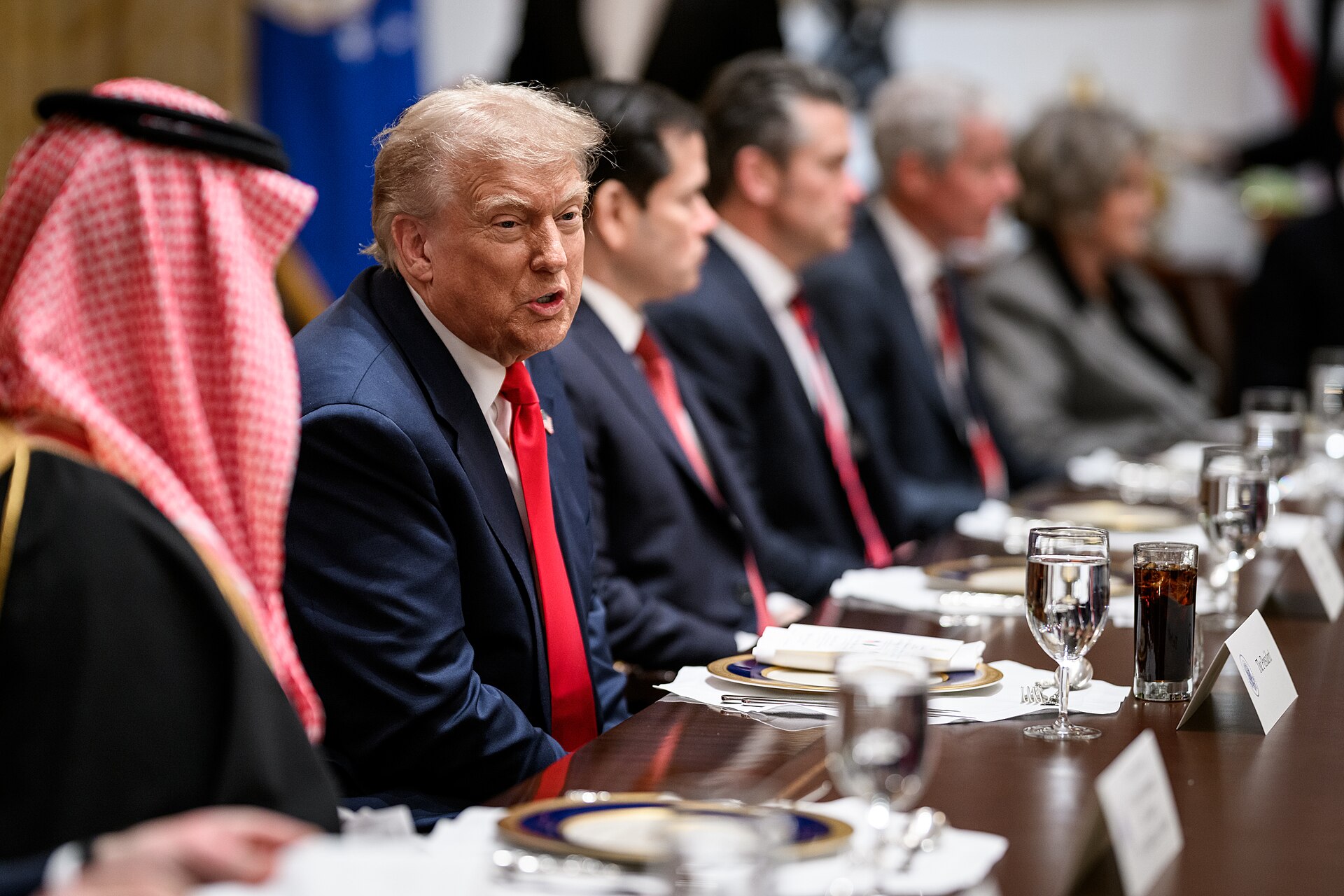
Trump’s own public statements on July 11 reinforced the disconnect. On the same day he took MBS’s call, Trump told reporters that Washington and Tehran had “agreed to continue talks” but insisted the ceasefire “truce” was “over,” according to Jakarta Post and CBS News. MBS received the highest bilateral channel available — a personal audience with the president — on a day that president was publicly declaring the MOU framework around which Saudi interests are structured to be defunct. The call occurred; the leverage did not travel through it.
n
Arab Center DC captured the Saudi strategic oscillation in its July 2026 analysis: “Gulf capitals urged Washington not to halt operations too soon, but once costs mounted, the message changed, with leaks suggesting the Gulf was pressing Trump not to restart the war.” The pattern — first encouraging military action, then scrambling to contain its consequences — describes a partner that can recommend but not compel, signal but not direct. A separate Arab Center DC assessment sharpened the financial dimension: “For Saudi Arabia, paying to rebuild a rival at a moment when its own finances are tight is unwelcome.” Three restored channels confirmed the bilateral relationship at higher diplomatic resolution without altering its structural terms.
n
 n
nn
How Does the Nuclear Agenda Reshape Saudi Arabia’s Position?
n
The nuclear agenda transforms Saudi Arabia’s exclusion from a diplomatic inconvenience into a strategic exposure with direct consequences for Riyadh’s own enrichment ambitions. Any enrichment framework negotiated for Iran at Islamabad establishes a precedent that shapes the terms of the draft US-Saudi 123 nuclear agreement, which already omits the enrichment ban imposed on the UAE’s 2009 “gold standard” deal, according to the Washington Institute and PBS NewsHour.
n
The postponement of Islamabad from July 11 to July 14-15 shifted the substance, not just the calendar. The agenda now explicitly includes nuclear issues — sanctions on Iran, frozen Iranian assets, and Tehran’s nuclear programme — according to Geo.tv and Daily Pakistan reporting from July 4 and 11. MOU Article 13 gates the nuclear track, and its opening means enrichment rights, IAEA inspection frameworks, and asset-recovery terms are now live negotiating items at a table where Riyadh has no representative present.
n
Saudi Arabia’s nuclear exposure at Islamabad operates on two levels. The first is precedential: Riyadh has already secured the contractual basis for domestic uranium enrichment through the 123 agreement’s omission of the UAE enrichment ban. If Iran retains enrichment at the negotiating table, the Saudi agreement becomes a parity instrument — what Iran keeps, Saudi Arabia can claim under existing contractual terms. If Iran surrenders enrichment, Washington acquires structural grounds to impose the same restriction on Riyadh, regardless of what the current 123 draft permits.
n
The second level is informational: Saudi Arabia is receiving its understanding of the nuclear agenda from Pakistan, a co-mediator with obligations to both parties. The Stimson Center’s July 2026 assessment offered partial reassurance — “Saudi Arabia’s nuclear path will not depend on Iran or the war’s outcome” — but insulation from outcome is not the same as insulation from the precedent that outcome creates.
n
Saudi Arabia signed the Strategic Mutual Defence Agreement with nuclear-armed Pakistan, providing a de facto nuclear umbrella, according to the Times of Israel and publicly available treaty documentation. The SMDA means Pakistan is simultaneously Saudi Arabia’s nuclear guarantor and Iran’s MOU co-mediator — a dual role that gives Islamabad leverage over Riyadh’s nuclear posture while obligating it to manage the very talks in which that posture will be shaped. The enrichment precedent set at Islamabad will arrive in Riyadh filtered through the country that holds both the mediator’s pen and the defence partner’s commitments.
n
The Pakistan Dependency
n
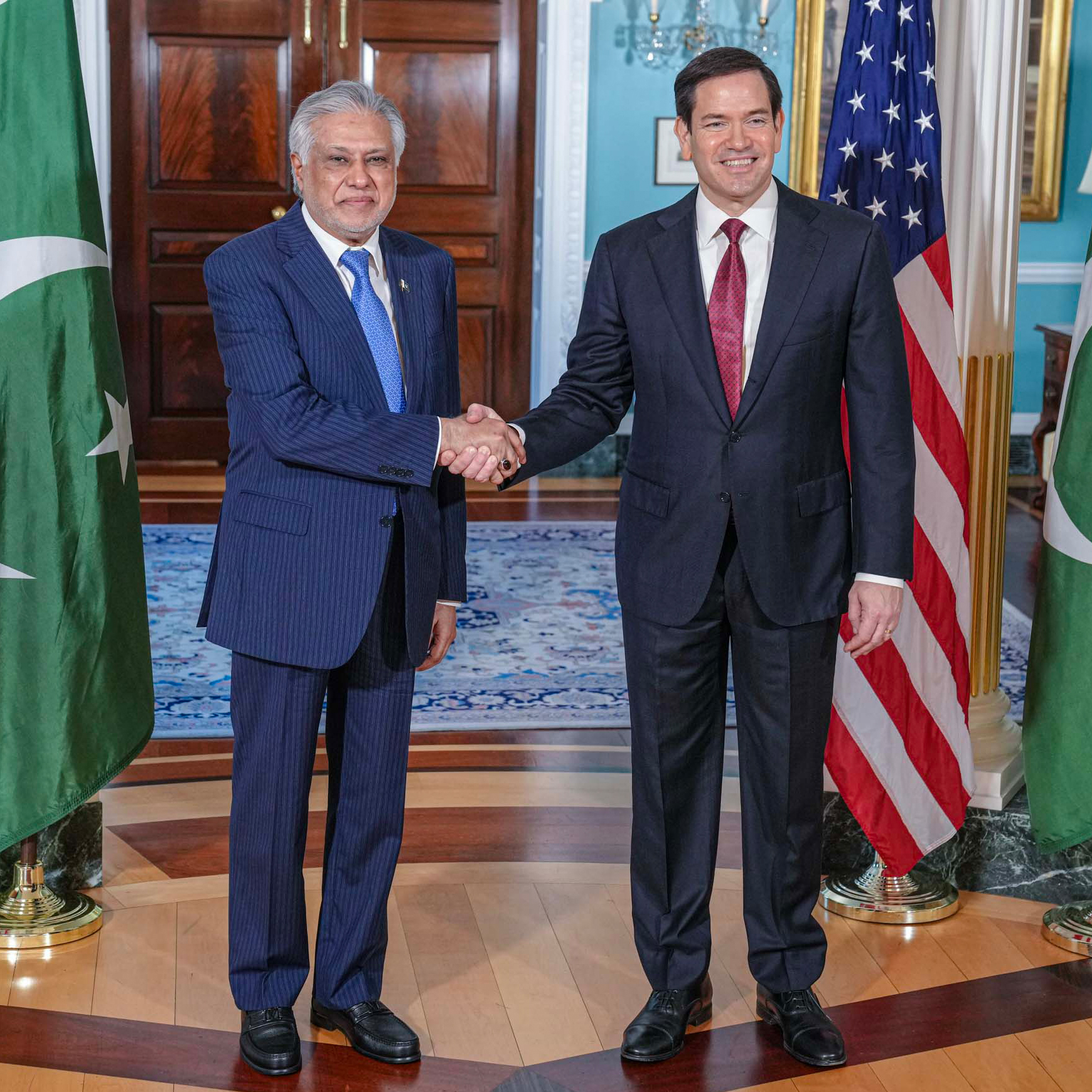
The most structurally revealing moment of the entire July 10-11 period was not any of the three US-Saudi calls — it was the call that preceded them. Pakistan’s Foreign Minister Ishaq Dar briefed Faisal bin Farhan by phone on July 9 to relay the results of the Doha mediation round. The briefing occurred while Pakistani Prime Minister Shehbaz Sharif was simultaneously in Tehran, according to the Pakistani Ministry of Foreign Affairs and the Express Tribune. Saudi Arabia’s principal source of intelligence on the negotiations shaping its strategic environment was, at the moment of the call, a country whose head of government was sitting in the capital of the country being negotiated about.
n
The dual-loyalty structure runs deeper than any single phone call. Pakistan’s role as MOU co-mediator gives it structural obligations to both sides of the Iran-US negotiation; its role as Saudi Arabia’s defence treaty partner under the SMDA gives it structural obligations to Riyadh specifically. These competing commitments are managed through information control rather than alliance selection — Dar chooses what to relay to Faisal, how to frame it, and how much to disclose, with no Saudi mechanism to independently verify the accuracy or completeness of the briefing.
n
The Dar-Faisal briefing was unilateral and discretionary. Saudi Arabia has no seat at Islamabad from which to challenge the framing, no independent source on the Iranian negotiating position beyond the Araghchi-Faisal calls that Tehran initiates at its own discretion, and no alternative pipeline to the substance of the talks. The kingdom is dependent on the mediator’s editorial judgement for its understanding of negotiations that will determine whether Iran retains enrichment capacity, recovers billions in frozen assets, and reshapes the regional nuclear order in ways Saudi Arabia cannot subsequently reverse.
n
Iran’s posture compounds the dependency. Tehran denied Trump’s July 11 claim that both sides had “agreed to more talks.” Tasnim News Agency reported that a Qatari delegation visiting Tehran was “trying to reinforce Qatar’s role as a mediator following events on Tuesday” — a reference to the Qatari LNG tanker attack that strained the Doha mediation channel, according to CBS News. If the Qatar track degrades further, Pakistan becomes the sole active mediator between Washington and Tehran, concentrating Saudi Arabia’s information dependency into the hands of a single partner whose obligations to both sides of the negotiation leave Riyadh structurally exposed to the framing choices that partner makes.
n
 n
nn
n
What Does Riyadh Pay If the MOU Collapses?
n
MOU collapse would trigger the Persian Gulf Shipping Agreement’s auto-activation on August 18, imposing approximately one dollar per barrel on Hormuz transits at a cost of $5.5 million per day to Saudi Arabia, with total exposure at $253 million according to houseofsaud.com and discoveryalert.com.au. The fees are denominated in bitcoin or Chinese yuan — currencies that bypass Riyadh’s dollar-based financial infrastructure and exclude Saudi Arabia from the payment mechanism’s governance entirely.
n
The SPA readout of the MBS-Trump call included the formula “security of navigation and maritime passage to contribute to regional stability.” The language performs a precise diplomatic function: it positions Saudi Arabia close enough to international freedom-of-navigation principles to avoid hostile classification under the PGSA framework, while remaining vague enough to avoid endorsing the PGSA’s legitimacy or Iran’s Hormuz sovereignty claims. The formula’s survival in successive Saudi readouts suggests Riyadh has calculated that strategic ambiguity on this question costs less than either explicit alignment or explicit opposition would trigger — whether in financial exposure from Iran or diplomatic friction with Washington.
n
The financial risk runs alongside the military exposure that created the need for the July 10-11 calls in the first place. Washington’s consideration of a punitive drawdown from Prince Sultan Air Base — a direct consequence of Operation Project Freedom — threatens the removal of US military presence from Saudi Arabia’s most strategically significant facility. PAC-3 interceptor stocks stand at 400 of an original 2,800, an 86 percent depletion rate that makes the kingdom’s air-defence architecture dependent on a resupply chain running through a partner whose president used the PIF-backed FII PRIORITY summit in Miami in March 2026 to publicly mock the crown prince. “He didn’t think he’d be kissing my ass… now he has to be nice to me,” Trump told the audience, according to WION News and L’Orient Today. Saudi Arabia issued no response.
n
The SPA’s July 11 readout ran to three paragraphs and mentioned “peace talks between the US and Iran” as though Riyadh were a stakeholder with influence over their outcome. Seventy-two hours later, those talks reconvene in Islamabad with enrichment on the agenda for the first time — and Faisal bin Farhan will learn what happened through a phone call placed at Islamabad’s discretion.
n
n
Frequently Asked Questions
n
Has Saudi Arabia formally requested observer status at the Islamabad talks?
n
Riyadh has not publicly sought observer status, according to available diplomatic reporting. The MOU’s architecture as a bilateral US-Iran framework with designated co-mediators — Pakistan and Qatar — contains no formal provision for third-party observers. Saudi Arabia has worked through bilateral channels, principally the Dar-Faisal line, rather than seeking formal inclusion. The calculation appears to be that a rejected request would harden the exclusion in ways the current diplomatic ambiguity avoids, while informal influence through Pakistan carries less reputational risk than a public denial of entry.
n
How does the PGSA payment mechanism work in practice?
n
The Persian Gulf Shipping Agreement requires transit fees to be paid in bitcoin or Chinese yuan, bypassing the SWIFT network and the dollar-denominated systems that underpin Saudi Arabia’s oil trade. Vessels transiting Hormuz under the PGSA framework pay approximately one dollar per barrel through channels that exclude traditional banking infrastructure. The cryptocurrency denomination creates an additional compliance challenge for Saudi-flagged vessel operators, who face potential US sanctions exposure if they transact in bitcoin with an Iranian state entity — a legal risk that extends to the insurers and P&I clubs covering those voyages.
n
What was the Sakhir Declaration that Saudi Arabia did not invoke when Iran attacked US bases?
n
The Sakhir Declaration was a GCC-era collective-security framework outlining conditions under which Gulf states would respond jointly to Iranian aggression. When Iran struck US bases in four countries on July 8-9, 2026, Saudi Arabia notably declined to invoke it. The non-invocation signalled Riyadh’s reluctance to formalise its own threat assessment at a moment when doing so would have obligated a military response the kingdom could not deliver, given PAC-3 depletion and PSAB tensions with Washington. The Declaration’s dormancy has become a structural indicator of the distance between GCC collective-security rhetoric and current operational capacity.
n
What is Princess Reema bint Bandar’s diplomatic background?
n
Princess Reema bint Bandar Al Saud has served as Saudi ambassador to the United States since 2019, making her the kingdom’s first female ambassador. She is the daughter of Prince Bandar bin Sultan, the former ambassador who served from 1983 to 2005 and is widely regarded as one of the most influential foreign diplomats in modern Washington history. Her July 10 meeting with Rubio carried an additional symbolic dimension: a Bandar-generation diplomat occupying the same diplomatic space her father once commanded, but at a tier — ambassador receiving a secretary of state, without a foreign-minister counterpart — that her father would not have accepted for a conversation of this strategic magnitude.
The following morning, with the Islamabad round still seventy-two hours away, Iranian FM Araghchi landed in Muscat for direct ministerial-level Hormuz talks with Oman FM Busaidi — activating the only negotiating channel in which Iran is principal and Saudi Arabia has no representative, no observer, and no formal channel at all. The Muscat session is examined in Muscat Holds the Only Hormuz Channel Still Open.
The following day, the UAE Ministry of Foreign Affairs issued a formal condemnation naming Iran responsible for attacks on five Gulf states — a statement that converged with Saudi Arabia’s public posture on Iranian military action even as the two capitals continued to pursue divergent diplomatic strategies. The UAE condemnation and what it signals for Gulf-Iran relations is examined in UAE Condemned Iran for Attacks on Five Gulf States.
The House of Saud Daily Briefing
Saudi Arabia's news in 3 minutes, every morning. Free. See today's issue