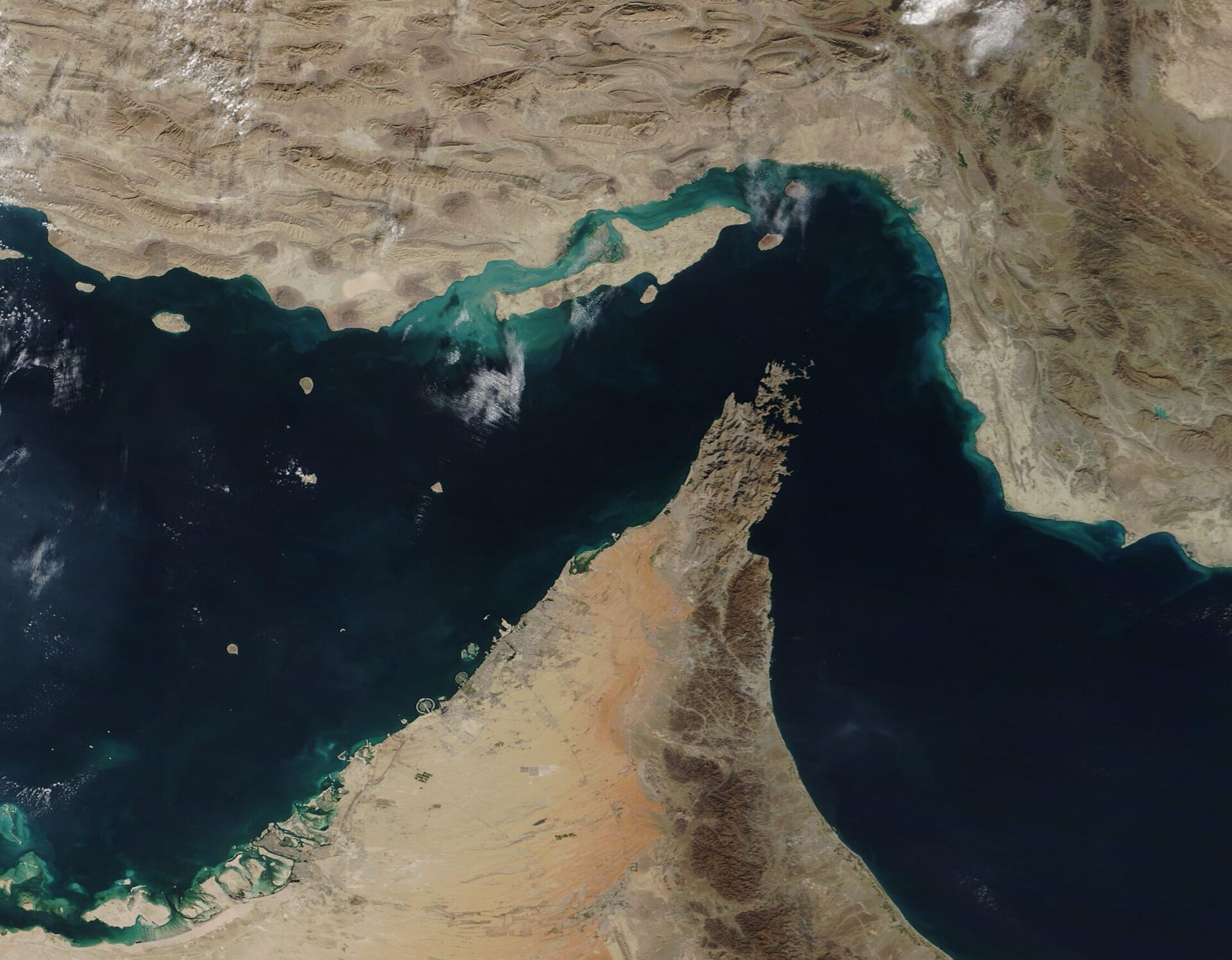

TEHRAN — Mostafa Taheri did not ask Iran’s parliament for permission to send warships into the Strait of Hormuz, or to mine the shipping lanes, or to seize another tanker. He asked it for an invoice book. The Industries Commission member’s call for annual transit fees on the seventeen undersea cables running beneath Hormuz — a figure he put at fifteen billion dollars a year — landed in Tehran on May 14, 2026 with the same dry administrative confidence that the Persian Gulf Strait Authority used nine days earlier when it began emailing tanker operators a forty-question registration form. The cables carry roughly thirty percent of the world’s intercontinental data and an estimated ten trillion dollars in daily financial flows, and Iran has now decided, on paper, that it is the landlord.
The point of the assertion is not whether Iran can collect. The point is whether anyone can pay. Six days before Taheri spoke, the US Treasury’s Office of Foreign Assets Control had already pre-emptively criminalised the answer, and that closed loop — Tehran’s right to charge, Washington’s right to sanction the payer — is the architecture of the trap.
Table of Contents
- Why Iran is Charging for Cables Instead of Cutting Them
- The OFAC Trap Was Set Before Taheri Spoke
- What Actually Runs Through Those Seventeen Cables?
- Tasnim’s Three-Phase Plan and the China Template
- How Does Iran Claim Jurisdiction It Has Never Ratified?
- The Vision 2030 Bandwidth Problem
- Why is Big Tech Already Running Fiber Beside Iraqi Oil Pipelines?
- Serious Institutional Intent, or a Probe of Corporate Resolve?
- What Comes Next
- Frequently Asked Questions
Why Iran is Charging for Cables Instead of Cutting Them
The maritime version of this play is by now familiar — the Persian Gulf Strait Authority, founded May 5, 2026, took the IRGC’s tanker-fee improvisation and turned it into an email address, a permit number, and a forty-question disclosure form covering cargo, beneficial ownership, crew nationality, and onward destination. The cable assertion is the same operating system running a different application. There is no fleet to deploy, no choke point to mine, no missile inventory to spend; there is only a registration desk, a fee schedule, and the implication that the alternative to paying is the kind of “accident” the Stimson Center’s Masha Kotkin described when she warned that in active military operations “if a vessel is struck and loses maneuverability, it could drag an anchor across these lines, triggering a blackout that satellite systems simply cannot fix.”
That distinction — administrative extraction rather than physical sabotage — is the entire point. Cutting a cable invites the kind of NATO-coded response that followed the Baltic Sea incidents of 2024, where China-flagged vessels suspected of severing fiber drew formal alliance condemnation and joint maritime patrols. Sending Meta and Microsoft an invoice for cable transit invites a Treasury Department memo and a corporate counsel meeting, which is a slower, quieter, and far more useful weapon for a regime trying to demonstrate sovereignty without burning down its own ceasefire.
Iran’s IRGC operational crescent from Jask to Siri Island is the kinetic backstop; the cable fee is the diplomatic and economic instrument that sits on top of it. The combination tells Western firms that compliance with Iranian sovereignty claims is the price of operating beneath waters Iran controls — and that the alternative is not negotiation but indefinite uncertainty.

The OFAC Trap Was Set Before Taheri Spoke
On May 1, 2026 — two weeks before Taheri’s parliamentary remarks — the Office of Foreign Assets Control published an alert that reads, on its face, as a response to tanker fees but functions in practice as a pre-emptive ruling on any payment architecture Iran might build. The alert warns “U.S. and non-U.S. persons about the sanctions risks of making these payments to, or soliciting guarantees from, the Iranian regime for safe passage,” and it closes every laundering route a corporate finance team might consider: cash, digital assets, “in-kind” arrangements, offsets, and even “charitable donations” routed through the Iranian Red Crescent, the Bonyad Mostazafan foundation, or Iranian embassy accounts.
The Middle East briefing 3,000+ readers start their day with.
One email. Every weekday morning. Free.
The reach is the bit that matters. Non-US persons — Singaporean cable operators, French maintenance contractors, Emirati landing-station consortia, the European hyperscaler subsidiaries that actually own the fiber — face “exposure to sanctions for engaging in transactions with the Government of Iran and the IRGC,” with the standard secondary-sanctions cudgel of correspondent-banking cut-off held in reserve. A French engineer paying a fifty-thousand-dollar cable-licensing fee in Tehran becomes the same compliance problem as a Greek shipowner paying two million for tanker passage, which is why the double-blockade architecture Bloomberg described in April applies with even greater force to digital infrastructure: the IRGC controls the seabed, the US controls the banking system, and the customer is caught in the gap.
The legal status of Mostafa Taheri’s fifteen-billion-dollar figure is therefore almost irrelevant. What matters is that an Iranian parliamentarian, attached to the Industries Commission, has placed a number on the table that any prudent corporate counsel must now treat as a potential demand — and that paying that demand, even hypothetically, has been criminalised in advance. The Tasnim three-phase plan published May 9 and the OFAC alert of May 1 form a single mechanism, with Tehran writing the bill and Washington pre-arresting anyone who picks it up.
That same dynamic — Tasnim as Iran’s preferred instrument for shaping international financial markets — was deployed again on May 18, when the agency reported an unconfirmed US oil sanctions waiver, moving Brent $4 lower before any US official could confirm or deny the claim. The OFAC architecture that closes the payment route for cable fees is the same architecture that makes any reported sanctions carve-out immediately market-moving: markets price the possibility before Washington can respond.
Non-U.S. persons may risk exposure to sanctions for engaging in transactions with the Government of Iran and the IRGC.
OFAC Alert, US Treasury, May 1, 2026
What Actually Runs Through Those Seventeen Cables?
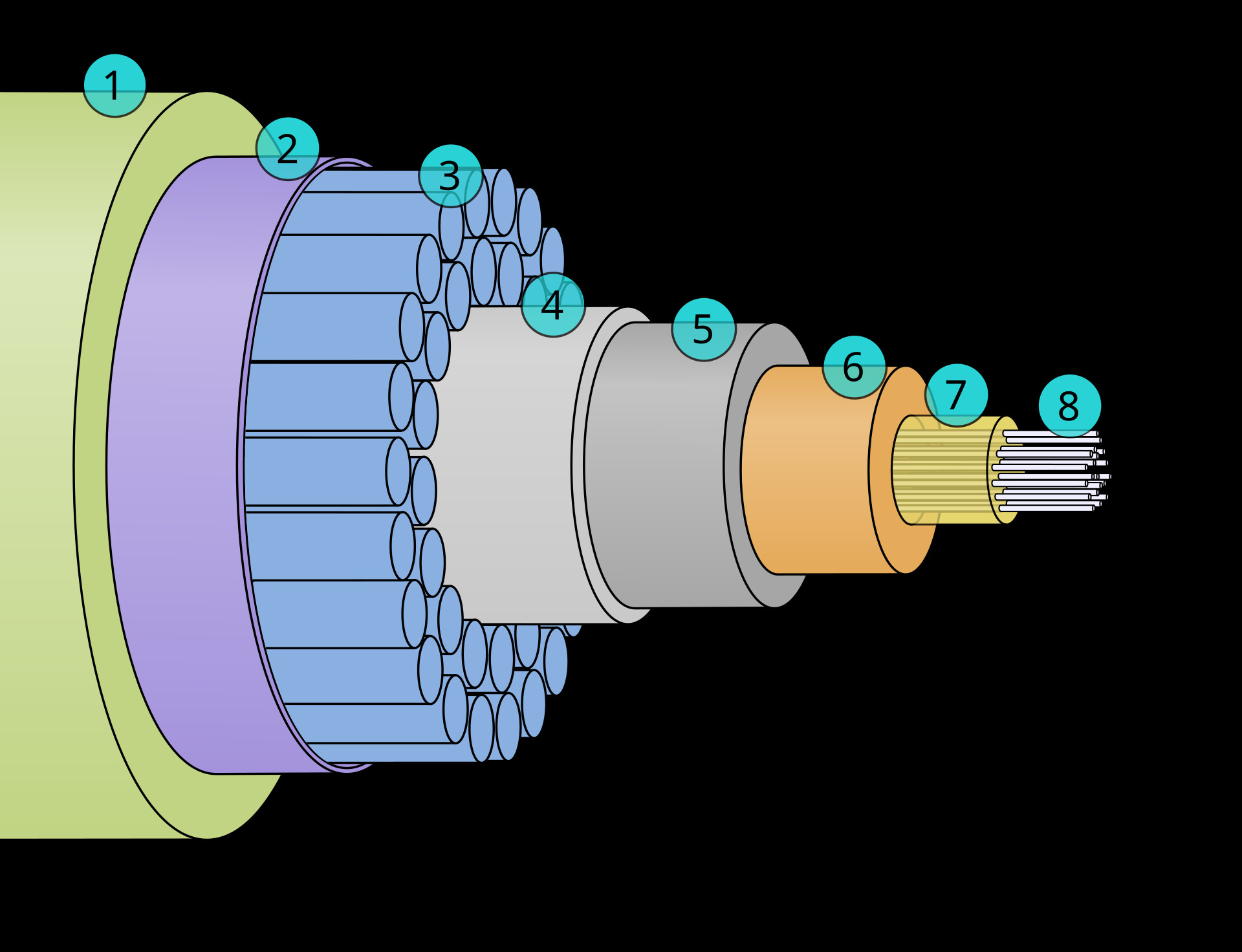
TeleGeography’s 2026 submarine map counts seventeen cables either transiting Hormuz or running through the Persian Gulf corridor that empties through it, and the named systems are the ones every major Gulf institution and Western tech firm depends on: Asia-Africa-Europe 1, the FALCON Network, the Gulf Bridge International system that physically connects every Gulf state including Iran itself, and the twenty-five-thousand-kilometre Europe-Persia Express Gateway that runs from Frankfurt through the Middle East to Mumbai and on toward Southeast Asia. The 2Africa Pearls extension, designed to add Oman, the UAE, Qatar, Saudi Arabia, Bahrain, Kuwait, Iraq, Pakistan, and India to Meta’s globe-girdling system, was meant to come online in 2026 and is now stalled. The SeaMeWe-6 buildout, which would have routed through the Gulf to Bahrain and crossed Saudi Arabia overland to Europe, has slipped indefinitely, and the cable-laying vessel Ile De Batz has been stranded off Dammam since March 2026 because no insurer or operator will authorise it to enter contested waters.
What runs through the existing cables is harder to caricature than the headlines suggest. Tasnim’s $10 trillion daily financial-flow figure — SWIFT traffic, cloud data, general internet — has been picked up across Iran International, WION, and the IBTimes “20% Global Traffic Weapon” framing, and the figure’s spread matters less than what it proxies: a share of intercontinental routing large enough that a serious disruption shows up not as a regional outage but as latency spikes in São Paulo, packet loss in Singapore, and trading-desk complaints in London by Tuesday morning.
| Cable system | Route relevance | Status (May 2026) | Significance |
|---|---|---|---|
| AAE-1 (Asia-Africa-Europe 1) | Hong Kong to Marseille via Hormuz corridor | Operational, exposed | Core Asia-Europe data backbone |
| FALCON Network | Egypt to India via full Gulf coast | Operational, exposed | Connects every Gulf landing station |
| Gulf Bridge International | Intra-Gulf, includes Iran landing | Operational | Iran has physical access at landing |
| EPEG (Europe-Persia Express Gateway) | Frankfurt to Mumbai, 25,000 km | Operational | Lands in Iran; Iran-controlled segment |
| 2Africa Pearls (Meta extension) | Designed to connect 9 Gulf/South Asian states | Delayed, 2026 build halted | Planned Gulf-coast reinforcement lost |
| SeaMeWe-6 | Singapore to France via Bahrain/Saudi overland | Delayed; Ile De Batz stranded Dammam | Saudi overland bypass on hold |
Fars News went a step beyond Tasnim’s transit-fee framing and suggested in coverage picked up by Euronews on May 15 that Iran could monitor data traffic flowing through the cables, including SWIFT messages, cloud workloads, and general internet flows. The technical reality of bulk-monitoring encrypted fiber at landing-station scale is considerably harder than the rhetoric implies — and the IRGC-aligned outlets know this — but the rhetorical claim has the same function as the fee assertion: it forces every Western firm with Gulf-routed traffic to assume the worst case and price the contingency.
Tasnim’s Three-Phase Plan and the China Template
Tasnim’s May 9 article, titled in translation “Three practical steps for generating revenue from Strait of Hormuz internet cables,” is the closest thing to an institutional blueprint Iran has published, and the three phases describe an arc that moves from extraction to capture to control. Phase one charges foreign companies an initial licensing fee and an annual renewal — the bog-standard concession model, indistinguishable in form from the way every Gulf state charges for port access or telecoms spectrum. Phase two requires Meta, Amazon, Microsoft, and Google to “operate under Iranian law” and to cooperate with Iranian tech firms on infrastructure terms, which translates into local-partnership requirements, data-residency obligations, and the kind of operational disclosure that Western compliance officers cannot reconcile with their own sanctions exposure.
Phase three is the one that gives the game away: Iranian companies receive exclusive control over cable maintenance and repair, turning every fault, every shark bite, every dragged anchor into a revenue event and a sovereignty assertion. The framing Tasnim chose for the package — turning Hormuz into a “strategic center for legitimate wealth creation” — is not bluster but doctrine, and it borrows directly from a template Iran has watched Beijing perfect in the South China Sea, where, as Jamestown Foundation analysts have documented, China’s permitting requirements for foreign cable-repair vessels in its claimed territorial waters have already pushed multinationals to reroute planned cables and reschedule maintenance windows by weeks.
The Iranian version of the Chinese template arrives with a twist the Chinese version never needed: the explicit framing of cable sovereignty as a war asset rather than a regulatory regime, deployed mid-ceasefire by a regime whose authorisation ceiling — the IRGC commanders below an absent Khamenei — has been the structural problem in every negotiation Tehran has entered since the spring. Sam Zabin, the CSIS fellow whose work on Gulf data infrastructure has been the most clear-eyed in the Western press, told Rest of World that the US has never integrated this infrastructure into regional security planning the way it integrates oil — a gap the cable assertion has now forced into the open.
How Does Iran Claim Jurisdiction It Has Never Ratified?
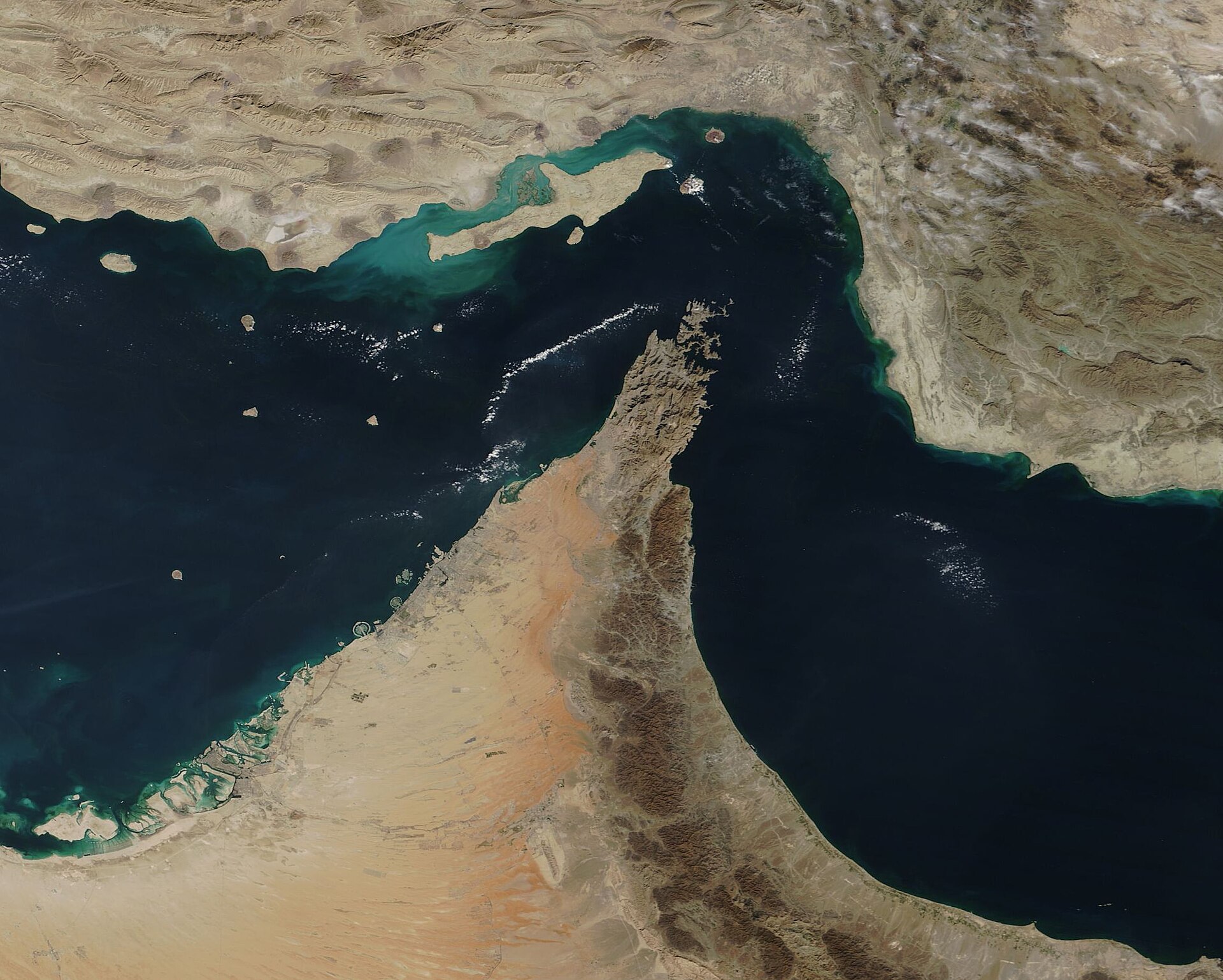
The legal scaffolding Iran is using rests on a particular, deliberate inconsistency. The United Nations Convention on the Law of the Sea creates two relevant regimes for cables — Article 79, which says coastal states “may not impede the laying or maintenance” of cables on the continental shelf, and Article 2(2), which extends a coastal state’s full sovereignty to the seabed and subsoil within its twelve-nautical-mile territorial sea. The Strait of Hormuz is twenty-one nautical miles wide at its narrowest point, which means the entire seabed sits inside Iran’s and Oman’s overlapping territorial waters with no high-seas corridor in between, and Iran’s claim is that the broader sovereignty clause governs the cables rather than the narrower continental-shelf protection.
The complication, which PressTV’s May 11 explainer treats as a feature rather than a bug, is that Iran has never ratified UNCLOS. Tehran signed the convention in 1982 but never put it through the Majlis, which means Iran simultaneously invokes UNCLOS territorial-sea sovereignty language when it suits — to claim seabed jurisdiction — and disclaims UNCLOS transit-passage obligations when those are inconvenient, on the ground that non-parties cannot bind it. The argument is internally incoherent as a matter of treaty law, and Chatham House analysts have been blunt about it; what it lacks in coherence it makes up in operational usefulness, because the same coastal state that refuses to recognise an American warship’s right of transit passage now also refuses to recognise a cable operator’s right of unimpeded maintenance.
RFE/RL analysts told the wire service on May 11 that the cable-fee proposals are “more of a threat than a viable plan,” and as a matter of enforceable international law that is correct. As a matter of practical risk for a hyperscaler whose general counsel has to sign off on a route through Iranian-claimed waters, the legal incoherence is the threat — because the only thing more difficult than complying with a clear sanctions regime is complying with one that has no clear interlocutor on the other side.
The Vision 2030 Bandwidth Problem
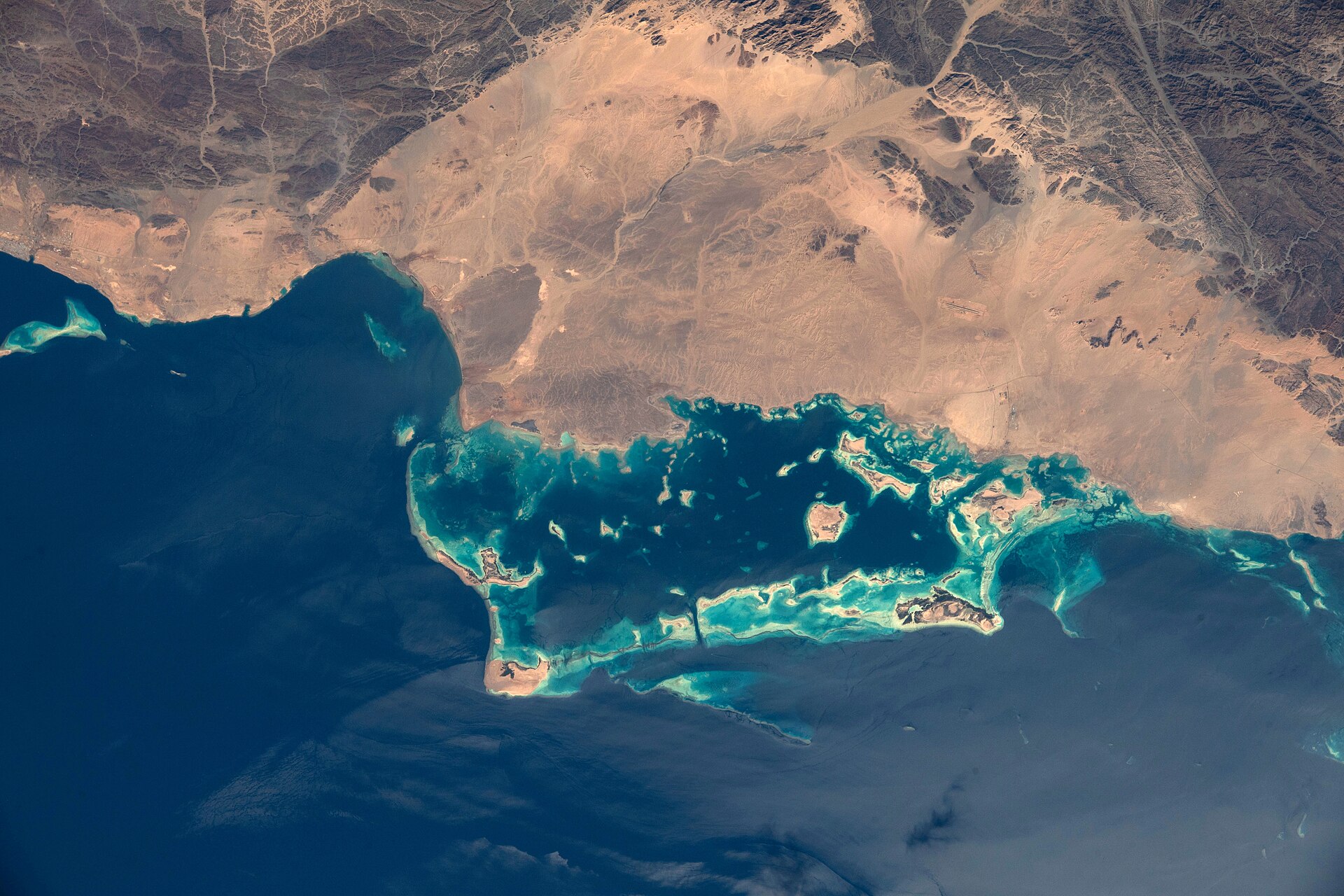
Saudi Arabia’s structural exposure to the Hormuz cable assertion is more limited than the geographic intuition suggests, and more dangerous than the headline numbers admit. The kingdom’s four Red Sea landing stations — Jeddah, Yanbu, Duba, and Haql — carry the vast majority of its international bandwidth, which is why the SubmarineNetworks.com cable atlas treats Saudi Arabia’s Gulf coast as a secondary rather than primary fiber footprint. The east-coast exposure was meant to grow with 2Africa Pearls and SeaMeWe-6 coming online in 2026, and that planned reinforcement is the bit Iran’s assertion has frozen, with Meta’s extension halted and the Ile De Batz still tied up off Dammam after two months without authorisation to move.
The strategic problem is that Vision 2030’s downstream commitments — the NEOM gigaproject, the AI data-centre buildout the Public Investment Fund has been negotiating with Nvidia and the hyperscalers, the cloud-region investments that underwrite the $142 billion Trump-Riyadh weapons package’s economic narrative — all assume bandwidth growth that the Red Sea cables alone cannot deliver. Saudi telecoms officials understood this well before Taheri’s parliamentary remarks, which is why stc Group, majority-owned by the PIF, signed an eight-hundred-million-dollar contract in February 2026 to build SilkLink, a four-thousand-five-hundred-kilometre overland fiber route that crosses Syria from Jordan and lands at Tartus on the Mediterranean. Ooredoo of Qatar committed a further five hundred million dollars to an overland Iraq-Turkey-Europe alternative the same quarter.
The investment timing is the diagnostic. Riyadh and Doha began building Hormuz-bypass fiber three months before Tehran formally asserted authority over it, which means the Gulf’s two most digitally ambitious states had already concluded — on private operational data, not on Iranian press releases — that the Persian Gulf cable route was a compromised asset to be designed around rather than defended through. The May PMI contraction that registered the first negative audit of Vision 2030’s Phase 3 sits inside the same logic: when the long-term infrastructure assumptions wobble, the medium-term economic indicators register it first.
| Bypass project | Operator | Value | Route | Status |
|---|---|---|---|---|
| SilkLink overland fiber | stc Group (Saudi PIF majority) | $800 million | Saudi-Jordan-Syria-Tartus (Mediterranean) | Contracted Feb 2026 |
| Iraq-Turkey-Europe overland | Ooredoo (Qatar) | $500 million | Qatar-Iraq-Turkey-EU | Committed 2026 |
| Iraqi oil-pipeline fiber piggyback | “Most if not all” hyperscalers | Undisclosed | Iraq overland, alongside crude pipelines | Operational |
| 2Africa Pearls (Hormuz reinforcement) | Meta consortium | Not disclosed | Through Gulf, multi-state | Delayed 2026 |
| SeaMeWe-6 (Hormuz reinforcement) | Multi-consortium | Not disclosed | Bahrain landing, Saudi overland | Delayed; Ile De Batz stranded |
Why is Big Tech Already Running Fiber Beside Iraqi Oil Pipelines?
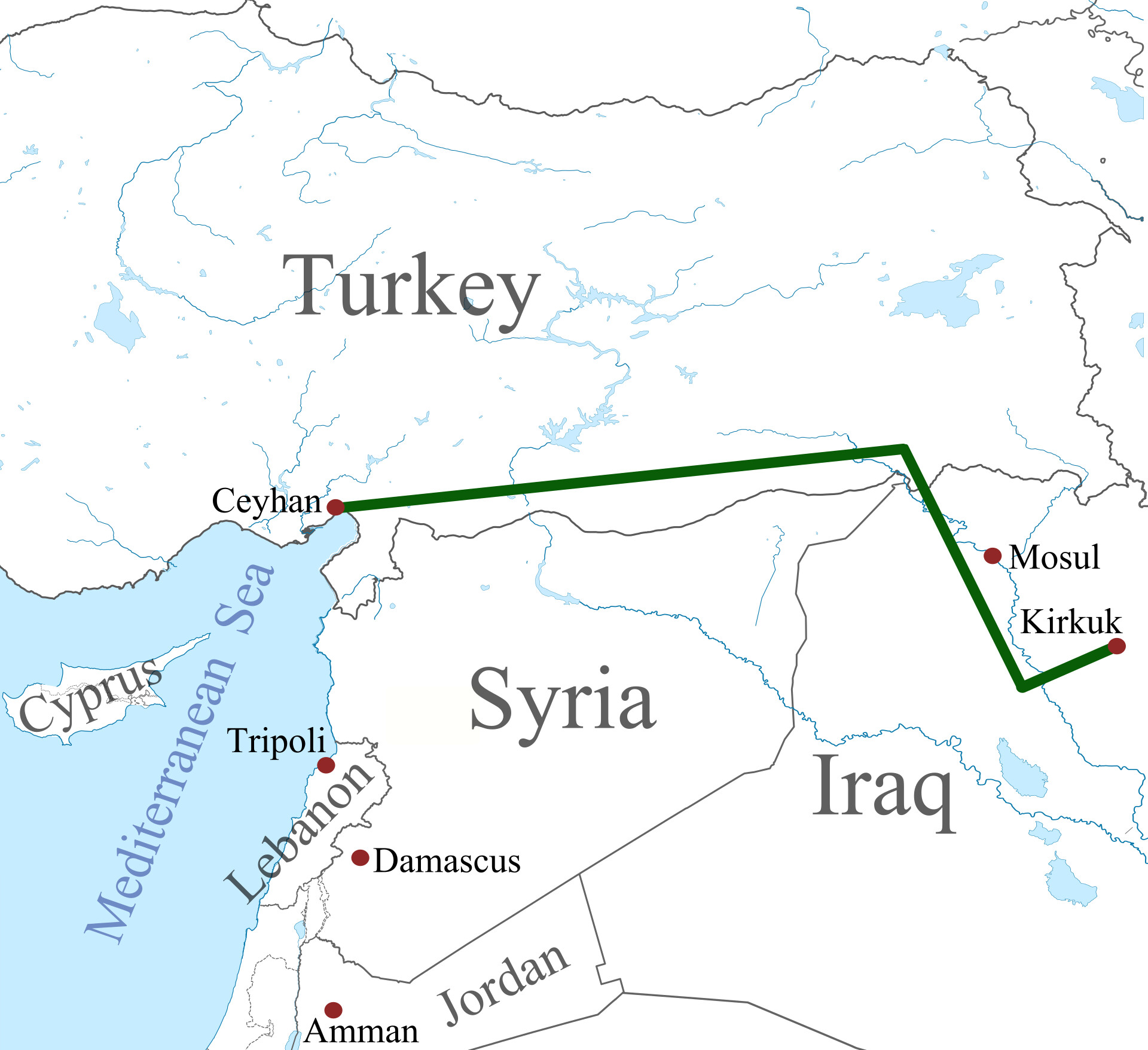
Rest of World’s reporting on the Gulf AI corridor produced the single most revealing line on this story so far, attributed to industry sources and paraphrasing the operational reality: “most if not all the hyperscalers” routing Gulf data through fiber laid alongside Iraqi crude-oil pipelines, using the same physical corridor that moves Kirkuk crude north to Turkey. Amazon, Microsoft, Google, and Meta — the firms whose Gulf data-centre footprints have been the headline economic deliverable of the entire Trump-MBS arms-and-AI bargain — have evidently concluded that the under-Hormuz routing is too compromised to bet a hyperscale region on, and have quietly diversified into a corridor whose primary strategic vulnerability is the same Iraqi crude infrastructure Iran has spent the past eighteen months threatening through Kataib Hezbollah and the Popular Mobilisation Forces.
The substitution is rational but recursive. The hyperscalers fled Hormuz to escape Iranian coercion; the corridor they fled to runs through Iran’s most established proxy theatre, where the same regime can apply pressure through different instruments. Sam Zabin’s framing in the same Rest of World piece — that the US has not yet integrated Gulf data infrastructure into its regional security planning the way it integrates oil — is the diagnosis the cable assertion has now forced into the open, because the Iraqi bypass is a workaround, not a hedge, and a workaround in a single contested geography is not a strategy.
The Strategic Subsea Cables Act of 2026, introduced this year in Washington, is the policy response in early form — a formal acknowledgement that cable infrastructure should be treated as a national-security asset rather than as private telecoms plant. Whether the legislation moves before Iran’s permitting regime starts issuing actual invoices is the operational question, and the timeline is not generous: the Persian Gulf Strait Authority took ten days to go from announcement to active vessel correspondence, and the Tasnim three-phase template gives every indication of being ready to repeat the trick.
The Gulf data infrastructure has never been tested this way. The U.S. needs to treat Gulf data infrastructure the way it treats oil, integrating it into contingency planning and regional security coordination.
Sam Zabin, fellow, Center for Strategic and International Studies, to Rest of World, 2026
Serious Institutional Intent, or a Probe of Corporate Resolve?
The fifteen-billion-dollar figure deserves to be examined the way Saudi production figures are examined — with attention to who is producing the number and what political function it serves. Mostafa Taheri is not a senior figure in Iran’s economic establishment; the Industries Commission is a parliamentary body whose pronouncements do not require Supreme National Security Council sign-off and do not commit the IRGC to anything. Iranian fiscal arithmetic does not reach fifteen billion through any plausible aggregation of the cable-operator universe — the entire global submarine-cable market is in the tens of billions in capex per year, and transit fees of any defensible magnitude get to single-digit billions at the absolute outer bound.
The number is therefore most usefully read as an information-warfare probe, calibrated to do three things at once: anchor a negotiating position, signal institutional seriousness to domestic constituencies, and force Western corporate counsel to internalise the worst-case scenario before any actual invoice arrives. The Trump administration’s nuclear proposal sent to Iran’s third security chief in four months ran into exactly the authorisation-ceiling problem this cable assertion exploits — there is no clear Iranian counter-party who can bargain on behalf of the regime, which means every parliamentary call for revenue from foreign assets has to be treated as potentially the official line, because nobody can credibly disavow it.
The Tasnim three-phase plan and the PressTV May 11 explainer take the probe a step further by giving it doctrinal shape, and the framing of cable sovereignty as a reshaping of “global internet governance” is the most ambitious element. Iran is not claiming the cable transit fee on technocratic grounds — it is claiming a structural rewrite of who governs the seabed, modelled on the same Chinese template that has already pushed Western firms out of South China Sea cable routing. The probe is what the Iranians can credibly deny if it fails; the doctrine is what they install if Western firms blink.
What Comes Next
The most useful early indicator will be whether the Persian Gulf Strait Authority’s email address, [email protected], begins corresponding with named cable operators the way it has begun corresponding with tanker operators, and whether the forty-question disclosure form gets adapted from vessels to fiber. The second indicator is whether Meta, Microsoft, or one of the named hyperscalers files a public statement on Iranian cable claims — they have so far stayed completely silent, which is itself a tell, because corporate counsel does not write press releases about exposures it does not believe are material. The third is whether the Strategic Subsea Cables Act of 2026 receives committee markup before the end of the summer, which is the Washington legislative cycle that determines whether the cable infrastructure gets the same security framework as the cable-laying vessels did.
Two facts close the picture without needing further argument. Cooper’s claim that ninety percent of Iran’s mines have been destroyed while the strait remains closed is the maritime version of the cable problem — the kinetic threat has been substantially reduced and the strategic effect has not, because the threat was never the principal instrument. And the SilkLink contract that Mohammed bin Salman’s PIF signed in February, three months before any Iranian parliamentarian had said the word “cable” in public, demonstrates that the firms with the most accurate operational data on Gulf risk had already priced the Hormuz cable route as a loss months before the rest of the world heard about it.
Tehran is not betting it can collect fifteen billion dollars. It is betting that the assertion itself is worth more than the collection — that in a sovereignty contest run on paper rather than at sea, the side with the registration desk wins as long as the other side keeps showing up to argue about jurisdiction. The OFAC alert closed the payment route. The hyperscalers closed the routing assumption. The cable, for now, is still in the water.
Frequently Asked Questions
What is the Persian Gulf Strait Authority and why does it matter for cables?
The PGSA was founded on May 5, 2026 as Iran’s institutional vehicle for converting the IRGC’s improvised tanker-fee regime into a formal permitting authority, with an active email address ([email protected]), a forty-question vessel-disclosure form, and the same Article 2(2) UNCLOS territorial-sea argument Iran is now extending to cables. The body’s significance to the cable-fee question is structural: it provides the administrative template that Tasnim’s three-phase plan presupposes, and it has demonstrated the speed at which Iran can move from announcement to active correspondence with foreign operators — ten days, in the tanker case.
Has Iran ever cut a Hormuz cable?
There is no public, verified instance of Iran physically severing a Hormuz-corridor undersea cable, and the strategic logic the Stimson Center’s Masha Kotkin laid out — that cable damage in active military operations is more likely to be unintentional, from dragged anchors on damaged vessels, than deliberate — explains why Iran has avoided the kinetic option. The 2024 Baltic Sea cable cuts, attributed to China-flagged vessels, drew an immediate NATO response that demonstrated the deterrence cost of overt sabotage; Iran’s administrative-extraction model is calibrated precisely to stay below that threshold.
Could Iran actually monitor SWIFT traffic through the cables?
The technical claim from Fars News, picked up by Euronews on May 15, that Iran could surveil SWIFT messages and cloud workloads transiting the fiber, runs into the operational reality that interbank messaging is encrypted end-to-end at the application layer and would require landing-station-scale tap infrastructure plus key access that Iran does not possess. The rhetorical value of the claim, however, is independent of its technical feasibility — it forces Western banks and cloud providers to treat the cable route as a potential interception risk and to price contingency routing accordingly, which is the same effect Iran achieves whether or not the underlying capability is real.
Why have major US tech firms not commented publicly?
Corporate counsel at Meta, Microsoft, Amazon, and Google operates under a disclosure regime in which public statements about specific sovereign-risk exposures create securities-disclosure obligations and become discoverable in shareholder litigation; the silence is consistent with active risk-management rather than absence of concern. Rest of World’s reporting that “most if not all the hyperscalers” are already routing through the Iraqi oil-pipeline corridor is the operational answer the public statements are not providing — the firms are diversifying away from the Hormuz route while declining to characterise the threat that drove the diversification.
What is the Strategic Subsea Cables Act of 2026?
Introduced in the US Congress in 2026, the legislation represents the first formal American policy shift to treat undersea cable infrastructure as a strategic national-security asset on a par with energy and shipping. SubmarineNetworks.com’s tracking of the bill notes it would create new federal coordination mechanisms for cable security, expand Coast Guard and Navy escort authority for cable-laying and repair vessels, and authorise Treasury action against actors imposing fees on cable transit — the last provision aimed structurally at the Iranian assertion, even where Iran is not named.
Iran’s formal announcement of the PGSA toll mechanism and its legal architecture — including how First VP Aref closed the intra-regime split and why European operators face an OFAC trap on every transit — is examined in Iran Announces Formal Hormuz Toll Mechanism — 74 Days After the IRGC Already Built One.
On May 19, Al-Hadath’s broadcast of Hormuz “agreements” extended this pattern to Saudi state media: the channel’s report is best read as Riyadh’s public filing of the OFAC carve-out demand, not a diplomatic announcement.