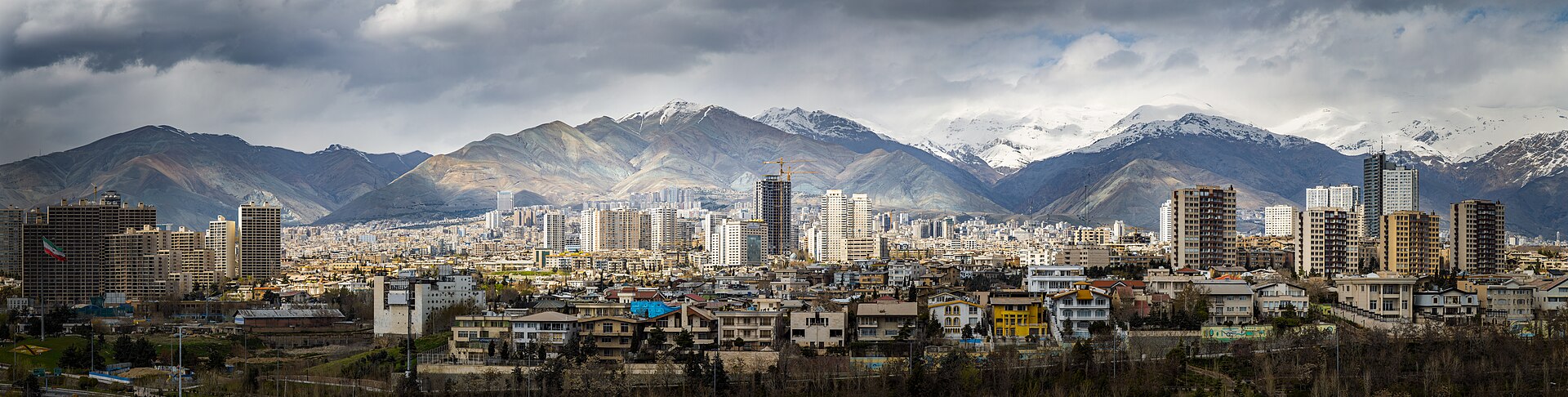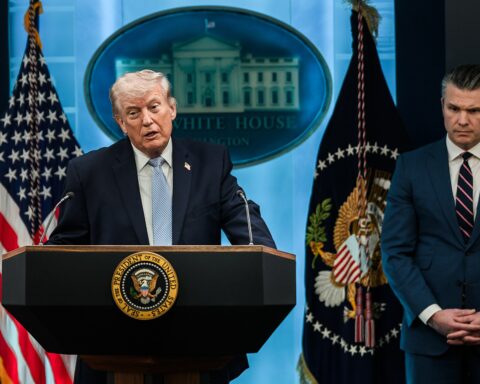

TEHRAN — Donald Trump sent Iran a new nuclear proposal on May 16, 2026, warning that Tehran must “move quickly, or something bad is going to happen.” The proposal — a 14-point memorandum of understanding demanding Iran halt enrichment for at least 12 years and surrender its estimated 440 kilograms of highly enriched uranium — arrived at the Supreme National Security Council, the body that has managed Iran’s nuclear dossier since the program’s inception. In the four months since the war began, two successive SNSC chiefs have been killed and a third appointed. The last Iranian official who ran a successful nuclear negotiation with the United States, Ali Shamkhani — SNSC Secretary from 2013 to 2023 — was killed on February 28 in his capacity as Defense Council Secretary, the same day the International Atomic Energy Agency lost access to Iran’s nuclear facilities.
The structural problem facing Washington’s proposal is not diplomatic but institutional. Iran’s Foreign Minister Abbas Araghchi can negotiate texts, describe the two sides as “inches away” from agreement, and hold press conferences in which he declares willingness to proceed “the moment we feel that they are serious.” But Araghchi reports to the SNSC. The SNSC reports to the Supreme Leader. And the SNSC is now run by Mohammad Bagher Zolghadr, a former IRGC Joint Staff Chief who — according to Al Jazeera’s March 24 reporting — “complained about the negotiating team’s approach” before his appointment and whose approval any negotiated outcome must now pass through.
The appointment chain: Shamkhani (killed February 28), Ali Larijani (killed March 17), Zolghadr (appointed March 24). Each replacement was drawn from deeper within the IRGC’s institutional core. Trump’s May 16 proposal now reaches a decision-making body whose composition was reshaped by the same US-Israeli strikes that destroyed Iran’s declared enrichment infrastructure.
Table of Contents
Trump’s Fourteen Points
The core demand — zero enrichment capability — was stated without qualification by US Middle East Envoy Steve Witkoff. “We cannot allow even 1 percent of an enrichment capability,” Witkoff told the Times of Israel. “Enrichment enables weaponization.” The demand exceeds anything Washington has publicly sought since the nuclear program became an international dispute in 2002. The 2015 JCPOA permitted enrichment to 3.67 percent; even the Trump administration’s 2018-2020 “maximum pressure” campaign did not formally demand zero capacity.
Trump framed the proposal as final. “At this moment there will never be a deal unless they agree that there will never be nuclear weapons,” the president said on April 29, according to Axios. He described the naval blockade imposed on Iranian ports since April 13 as “somewhat more effective than the bombing” — a reference to the US-Israeli strikes that have destroyed much of Iran’s declared enrichment infrastructure.
The 14-point framework requires Iran to hand over its entire enriched uranium stockpile to a third country — not Russia, which the US rejected as custodian despite a formal offer from Rosatom. Russian nuclear adviser Dmitry Gorchakov called the proposal “a win-win” because “Iran can trust Russia more than it trusts Washington,” the Moscow Times reported on April 20. Washington suggested an unspecified third country instead, leaving no agreed-upon recipient for any transfer.
The Middle East briefing 3,000+ readers start their day with.
One email. Every weekday morning. Free.
Any violation of the enrichment moratorium would automatically extend its duration — a ratchet mechanism absent from the JCPOA. Vice President Vance’s earlier position had demanded 20 years. Iran countered with five. The current framework’s 12-year floor represents movement from both sides that neither has accepted.
Who Is Left to Receive It?
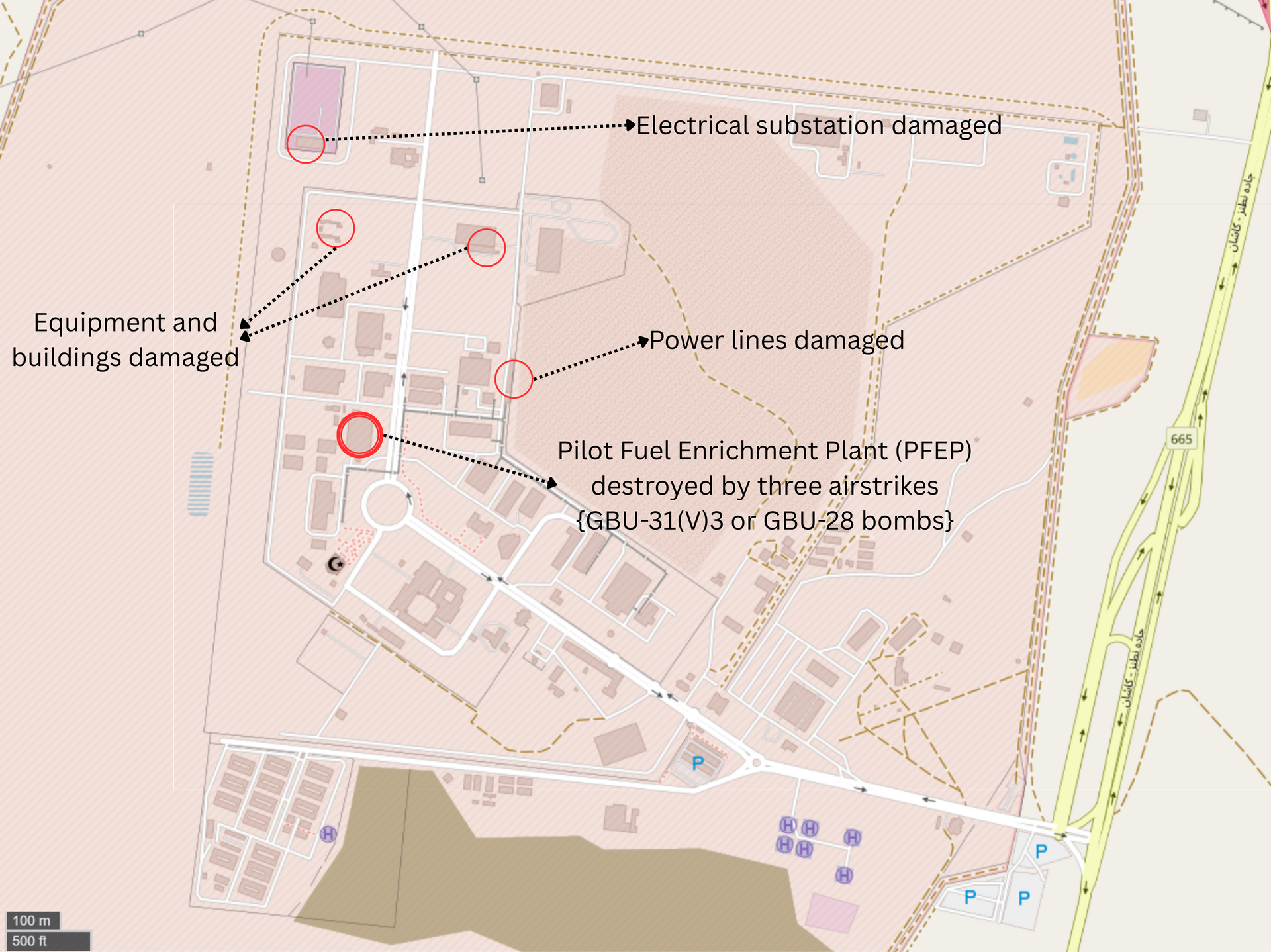
Iran’s nuclear dossier has been managed through the Supreme National Security Council since the program’s disclosure in 2002. The SNSC Secretary — not the Foreign Minister — holds institutional authority to evaluate proposals, set red lines, and report recommendations to the Supreme Leader. The Foreign Minister negotiates; the SNSC decides. Since February 28, 2026, two SNSC Secretaries have been killed in office and a third appointed.
Ali Shamkhani served as SNSC Secretary from September 2013 to May 2023 — nearly a decade spanning the JCPOA’s negotiation, signing, implementation, and collapse. No other Iranian official possessed comparable operational experience with international nuclear agreements. After leaving the SNSC, he was appointed Secretary of the Defense Council in June 2025. He was killed on February 28, 2026, in a US-Israeli airstrike targeting a Defense Council meeting in Tehran, Al Jazeera reported.
Ali Larijani — appointed SNSC Secretary to manage the war-era nuclear portfolio — was killed on March 17, 2026, seventeen days after Shamkhani. Al Jazeera reported the strike targeted a “security coordination meeting.” Larijani had served as Parliament Speaker from 2008 to 2020 and represented a conservative but institutionally pragmatic faction capable of bridging reformists and IRGC commanders.
Seven days after Larijani’s death, on March 24, the Supreme Leader’s office announced Mohammad Bagher Zolghadr as the new SNSC Secretary. Zolghadr’s biography: former IRGC Joint Staff Chief, former deputy commander of the Basij, former deputy interior minister under Mahmoud Ahmadinejad. Al Jazeera described him as the gatekeeper whose “approval” any negotiating team outcome must receive. Before his appointment, he had publicly “complained about the negotiating team’s approach” — a reference to Araghchi’s diplomatic track.
What Died on February 28
Shamkhani’s tenure at the SNSC coincided with every phase of the last successful US-Iran nuclear agreement. He managed the back-channel that produced the 2013 interim deal, oversaw the technical negotiations leading to the July 2015 signing, and ran the implementation architecture that allowed the JCPOA to survive its first three years. When the Trump administration withdrew in May 2018, Shamkhani managed Iran’s calibrated escalation — the step-by-step enrichment increases designed to pressure Europe without crossing the weapons threshold.
His institutional memory was specific. He knew which compromises had been explored and abandoned, which IRGC commanders had quietly acquiesced to which constraints, and which red lines were genuinely immovable versus those that served as negotiating positions. He had served as IRGC Navy Commander from 1990 to 1997, meaning he held credibility within the security establishment that a civilian diplomat could never possess. When Shamkhani told the IRGC a deal was acceptable, the IRGC had historical reason to listen.
On May 30, 2025, nine months before his death, Shamkhani posted a statement on X responding to Trump’s declaration that “we can take whatever we want, we can blow up whatever we want.” Shamkhani wrote: “Accessing Iran’s nuclear sites and ‘blowing up infrastructure’ is a fantasy past US presidents shared. Iran is independent, with strong defenses, resilient people, and clear red lines. Talks serve progress, interests, and dignity, not coercion or surrender.” PressTV published the statement the same day.
“Accessing Iran’s nuclear sites and ‘blowing up infrastructure’ is a fantasy past US presidents shared. Iran is independent, with strong defenses, resilient people, and clear red lines.”
— Ali Shamkhani, May 30, 2025. Killed February 28, 2026.
In October 2025 — four months before his death — Shamkhani stated publicly that if he “returned to the defence portfolio” he would “move toward building an atomic bomb,” according to Iranian state media and regional outlets covering his remarks. Washington’s current demand is that Iran accept permanent zero enrichment capacity.
Does Araghchi Have Authority to Say Yes?
On May 15 — one day before Trump’s proposal was transmitted — Araghchi told Al Jazeera that Iran has “no trust” in the United States. He described the two sides as at a “deadlock” on enriched material and said the nuclear issue would be “postponed” to later negotiation stages: “We are in doubt about their seriousness, but the moment we feel that they are serious and they are ready for a fair and balanced deal, we will certainly proceed in the course of negotiations.”
The statement illustrates the structural gap. Araghchi can express willingness. He cannot commit the security apparatus. Under Article 110 of Iran’s constitution, the president has zero authority over the Islamic Revolutionary Guard Corps. Nuclear decisions flow through the Supreme Leader to the SNSC to IRGC command. The Foreign Minister negotiates texts; he does not authorize outcomes. President Masoud Pezeshkian publicly accused IRGC commanders Vahidi and Abdollahi in April of derailing the Islamabad ceasefire process — a confession that he lacked authority over his own security establishment.
The Institute for the Study of War identified IRGC commander Ahmad Vahidi as Tehran’s “current decision maker,” with nuclear talks dependent on his inner circle’s consent, the Washington Times reported on April 29. Vahidi — who carries an INTERPOL Red Notice for the 1994 AMIA bombing in Buenos Aires — controls the authorization that any proposal must receive. That gap remained operative on May 16 when Pakistan sent Interior Minister Mohsin Naqvi to Tehran in a parallel diplomatic track, even as Araghchi simultaneously told the BRICS foreign ministers’ meeting in New Delhi that the Pakistan mediation channel is “on a very difficult course.” Zolghadr’s SNSC appointment placed another IRGC figure at the institutional chokepoint. Ali Akbar Ahmadian, SNSC Secretary from May 2023 to August 2025 and now acting Defense Council secretary, previously called US-Iran negotiations “Satan’s temptation,” according to Iranian media reports from his tenure.
Andreas Krieg, writing in The Conversation in May 2026, described the dynamic: “Instead of being straightforward bargaining between statesmen, Washington’s real estate moguls turned negotiators are speaking to Iranian counterparts who are on a short lead held by the IRGC.” The authorization ceiling — the point above which no Iranian diplomat can commit without IRGC approval — now runs through Zolghadr, Vahidi, and Ahmadian. None served during the JCPOA era in roles that required them to manage its implementation. The practical result, as subsequent reporting demonstrated, is that Iran’s Foreign Ministry and its Supreme National Security Council responded to Trump’s proposal from entirely separate institutional positions — one acknowledging a deadlock, the other declining to acknowledge the proposal existed.
Where Does the 440 kg Go?
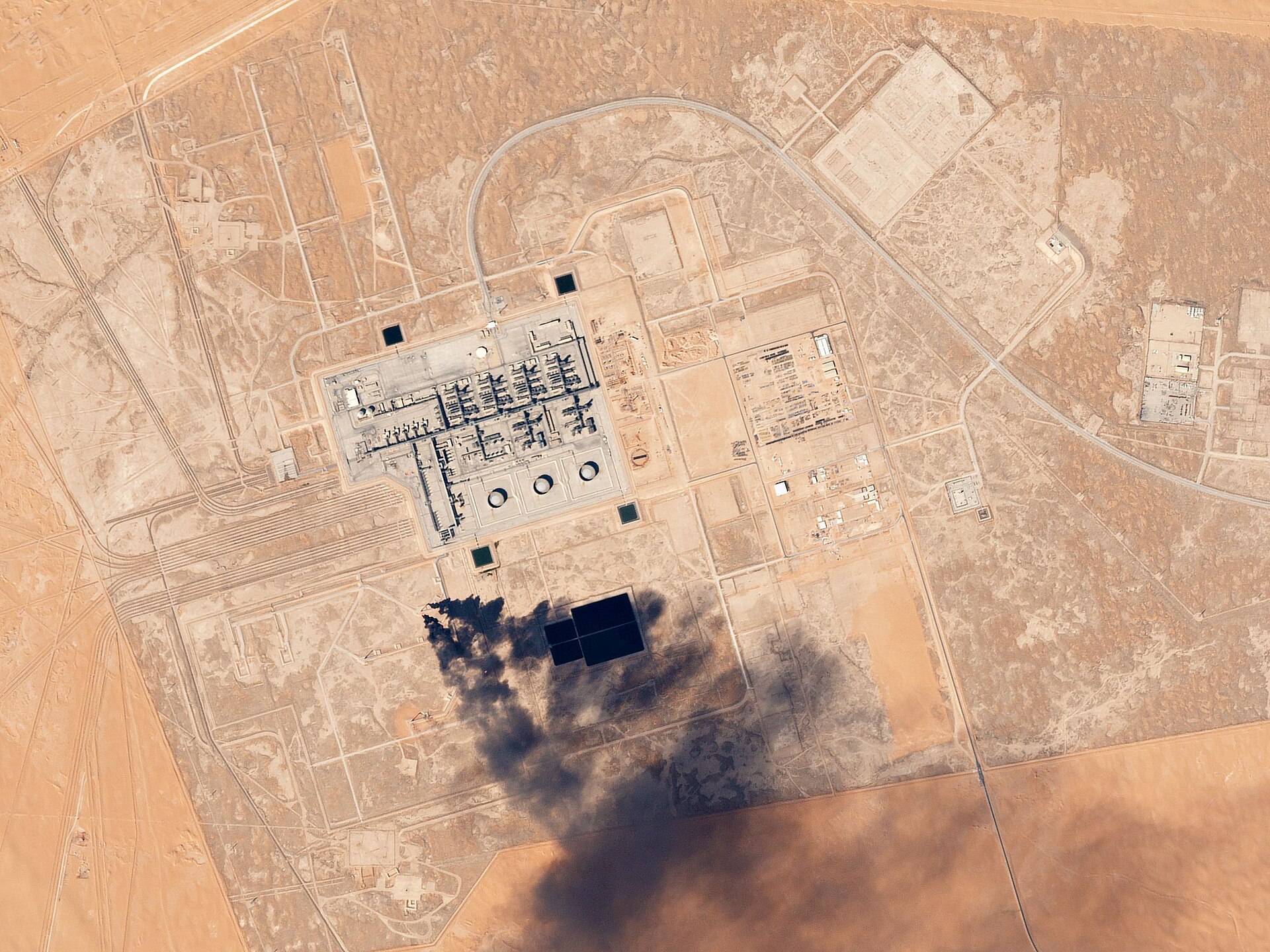
The substance of the deadlock centers on Iran’s estimated 440 kilograms of uranium enriched to 60 percent — far above the 3.67 percent permitted under the JCPOA and below the 90 percent weapons-grade threshold. Carnegie Endowment assessed in May 2026 that US-Israeli strikes had “rendered most of Iran’s known enrichment infrastructure inoperable,” but noted Iran retains the ability to reconstitute capacity “in smaller, clandestine facilities.” Without IAEA access — terminated February 28 — neither claim can be independently verified.
Iran’s 14-point counterproposal, submitted in early May, offered a freeze on enrichment for up to 15 years — longer than Washington’s 12-year demand — but proposed diluting some HEU and transferring the remainder to a third country with a return clause if the US exited any deal, according to Al Jazeera and Bloomberg reporting from May 3 to May 10. Trump rejected the counterproposal as “totally unacceptable” on May 10 and accused Iran of reneging on an earlier agreement to surrender the material.
Iranian Foreign Ministry spokesman Esmail Baghaei delivered two positions in the same period that are difficult to reconcile. He stated that “Iran’s enriched uranium is not going to be transferred anywhere under any circumstances,” according to the Arms Control Association, while separately indicating Iran would “blend down” some material. Iran’s UN Mission posted on May 2 that “legally, there is no restriction on the level of uranium enrichment, so long as it is conducted under the IAEA’s supervision” — a statement carrying its own complication, given that Iran had terminated IAEA supervision 63 days earlier.
Iranian MP Ebrahim Rezaei, a member of the National Security Committee, threatened on May 12 to enrich to weapons-grade 90 percent if the US resumed military strikes, Euronews reported. Parliament Speaker Ghalibaf — himself a former IRGC Aerospace Force commander who served from 1997 to 2000 — issued a broader ultimatum that Washington has “no alternative” but to accept Tehran’s nuclear rights or face failure, according to Al Jazeera.
Riyadh’s Parallel Calculation
Crown Prince Mohammed bin Salman has been pursuing a separate channel with Iran — a Helsinki-style non-aggression pact that bypasses the nuclear question entirely. The parallel track reflects Riyadh’s working assessment that the American channel is functionally dead at the level that matters: not at the Foreign Ministry, where Araghchi continues to speak, but at the SNSC, where commitments become binding.
Washington demands Iran surrender its enrichment program — a concession requiring SNSC authorization from officials who have explicitly rejected it. Riyadh is pursuing a bilateral commitment not to target each other’s territory, a dramatically lower bar that does not require the same depth of security apparatus buy-in. MBS rejected Abu Dhabi’s call for a joint strike on Iran and positioned Saudi Arabia as a potential interlocutor rather than a combatant.
The US-Saudi 123 Agreement draft does not prohibit Saudi enrichment — Washington is simultaneously demanding Iran destroy a capability it is helping a Gulf ally preserve. Iranian negotiators have cited this asymmetry repeatedly. Saudi Arabia conducted its own strikes on Iranian targets while publicly calling for peace, a duality that complicates neutrality claims in the nuclear channel but may strengthen Riyadh’s hand as a party that understands Iran’s military constraints firsthand.
The Saudi track targets territorial security — a domain within the Foreign Ministry’s competence — rather than nuclear capability, which requires IRGC authorization. Under Article 110 of Iran’s constitution, the Iranian Foreign Ministry can commit to non-aggression; it cannot commit the IRGC to dismantle enrichment infrastructure. The same authorization ceiling shapes Iran’s parallel sovereignty moves: the parliamentary cable-fee assertion — a claimed $15 billion annual toll on the seventeen undersea fiber systems crossing Hormuz — is likewise beyond the Foreign Ministry’s power to retract, for the same constitutional reasons examined in Iran’s Cable Fee Gambit and the OFAC Trap Beneath Hormuz.
Background and Context
The SNSC has historically served as the bridge between Iran’s civilian government and its military establishment on nuclear matters. Every JCPOA implementation decision — from centrifuge decommissioning sequences to inspector access protocols at Fordow and Natanz — was ratified through the body. Zolghadr has no record of managing such processes. His predecessors in the war period — Larijani and, before him, Ahmadian — were appointed without JCPOA implementation experience.
Frequently Asked Questions
What happened to IAEA monitoring after February 28?
IAEA access was terminated on February 28, 2026 — the same day Ali Shamkhani was killed in a US-Israeli airstrike in Tehran. Without inspectors on the ground, estimates of Iran’s current enrichment capacity and stockpile levels rely on pre-termination data and satellite imagery. The 440-kilogram HEU estimate dates to the last IAEA report before access was cut. Carnegie Endowment noted Iran retains the ability to reconstitute enrichment “in smaller, clandestine facilities” that may not be visible to overhead surveillance, making the current state of Iran’s program essentially unknown to outside observers.
Could Iran enrich to weapons-grade 90 percent?
The technical gap between 60 percent and 90 percent is smaller in separative work units than the gap between natural uranium (0.7 percent) and 60 percent — using advanced IR-6 centrifuge cascades, the final step could theoretically be completed in approximately 25 days per device. However, Carnegie’s May 2026 assessment indicates most known enrichment infrastructure was destroyed in US-Israeli strikes. Whether undeclared facilities exist capable of performing this enrichment is unknown. MP Rezaei’s May 12 threat to enrich to 90 percent was characterized by Western analysts as political signaling, though the absence of IAEA verification makes independent assessment impossible.
How does Trump’s demand compare to the 2015 JCPOA?
The JCPOA permitted Iran to enrich uranium to 3.67 percent, operate a limited number of first-generation centrifuges at Natanz, and maintain a research program at Fordow under IAEA monitoring. Trump’s May 16 proposal demands zero enrichment capacity, full surrender of all enriched material, and snap inspections with automatic moratorium extensions for violations. The JCPOA’s enrichment limits expired after 15 years; Trump’s framework has no expiration if violations are found. Iran’s counterproposal — 15 years with a return clause — more closely mirrors the JCPOA’s structure than Washington’s demand.
What is Iran’s Supreme National Security Council?
The SNSC is Iran’s supreme coordinating body for defense and security policy, established under Article 176 of the 1989 constitutional revision. Its membership includes the heads of the three branches of government, the chief of the Supreme Command Council of the Armed Forces, and a representative appointed by Khamenei. The secretary serves at the Supreme Leader’s pleasure and acts as gatekeeper for all security commitments including nuclear agreements. The Foreign Ministry is constitutionally required to report to the SNSC after every negotiation round — nuclear decisions are ratified through this body, not through the presidency or parliament. The same authorization ceiling shapes the US side: Operation Sledgehammer’s War Powers clock reset — renaming the campaign to restart the 60-day window — only functions if Saudi Arabia’s Prince Sultan Air Base remains available. MBS’s basing veto is the unacknowledged constraint on US operational timelines, analysed in Operation Sledgehammer Is a War Powers Clock-Reset. The Saudi Veto Is What Decides Whether It Runs.
Why does the US-Saudi 123 Agreement matter here?
The draft US-Saudi 123 Agreement — required under US law for nuclear cooperation — does not prohibit Saudi enrichment, unlike equivalent agreements Washington has signed with the UAE (which explicitly renounced enrichment in its 2009 123 Agreement). Iran’s negotiators cite this asymmetry: Washington demands Iran accept permanent zero enrichment while preserving enrichment rights for Saudi Arabia. The agreement has not been ratified and its terms remain under negotiation, but its existence provides Tehran with a rhetorical counterpoint in Non-Aligned Movement forums and complicates Washington’s framing of zero enrichment as a universal non-proliferation standard. For what the nuclear extraction option means for Saudi Arabia’s exposed position as the US weighs renewed strikes, see Saudi Arabia’s Reverse Co-Belligerent Trap: The Veto MBS Won’t Get Twice. For a full legal analysis of what the 123 Agreement does and does not prohibit — and how it breaks the UAE gold standard — see Washington’s Nuclear Gold Standard Stopped at the Saudi Border.