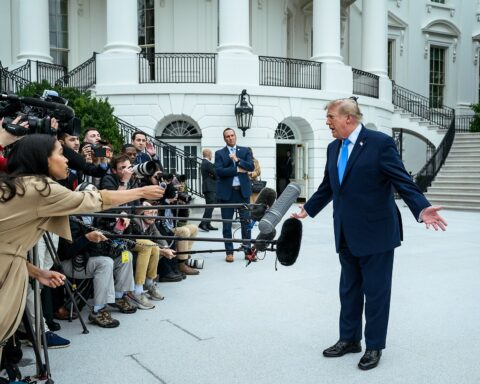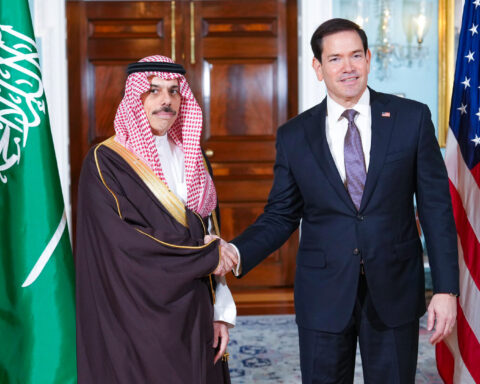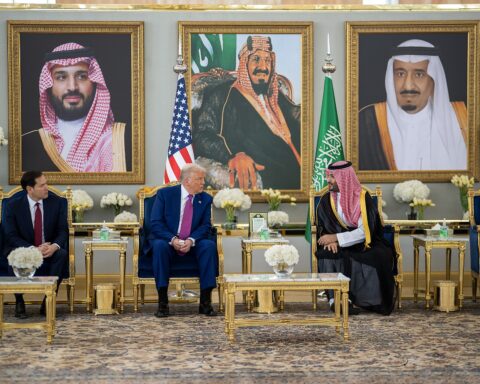

RIYADH — Saudi Arabia grounded a declared US military operation in under 36 hours. On May 4, Donald Trump announced “Project Freedom” — a naval and air campaign to reopen the Strait of Hormuz — without advance consultation with Riyadh or Kuwait City. Within hours, both Gulf states informed Washington that their airspace and military bases were closed to the operation. Two phone calls between Trump and Mohammed bin Salman followed. The first failed. The second succeeded, on terms neither government has disclosed. Nine days later, Trump landed in Riyadh to announce a $600 billion investment commitment and the largest arms deal in US-Saudi history.
The sequence was not a policy contradiction. It was a negotiation conducted in public, at operational speed, with a US carrier group already in position — and it inverted a relationship dynamic that Washington had taken for granted since 1990.
Contents
- Why Did Saudi Arabia Block Project Freedom?
- Prince Sultan Air Base: Closed, Reopened, Struck, Indispensable
- What Changed Between the Two Phone Calls?
- The Host-Nation Veto in Historical Context
- What Did Iran Actually Achieve?
- Saudi Arabia’s Denial and the Ambiguity MBS Prefers
- Has the Veto Been Spent?
- The $600 Billion Receipt
- FAQ
Why Did Saudi Arabia Block Project Freedom?
Saudi Arabia denied Prince Sultan Air Base and national airspace to Operation Project Freedom because the operation was announced without prior consultation and because Riyadh assessed it would trigger Iranian retaliatory strikes against Gulf states hosting US forces. Kuwait made the same calculation simultaneously, closing Ali Al Salem Air Base and its airspace corridor.
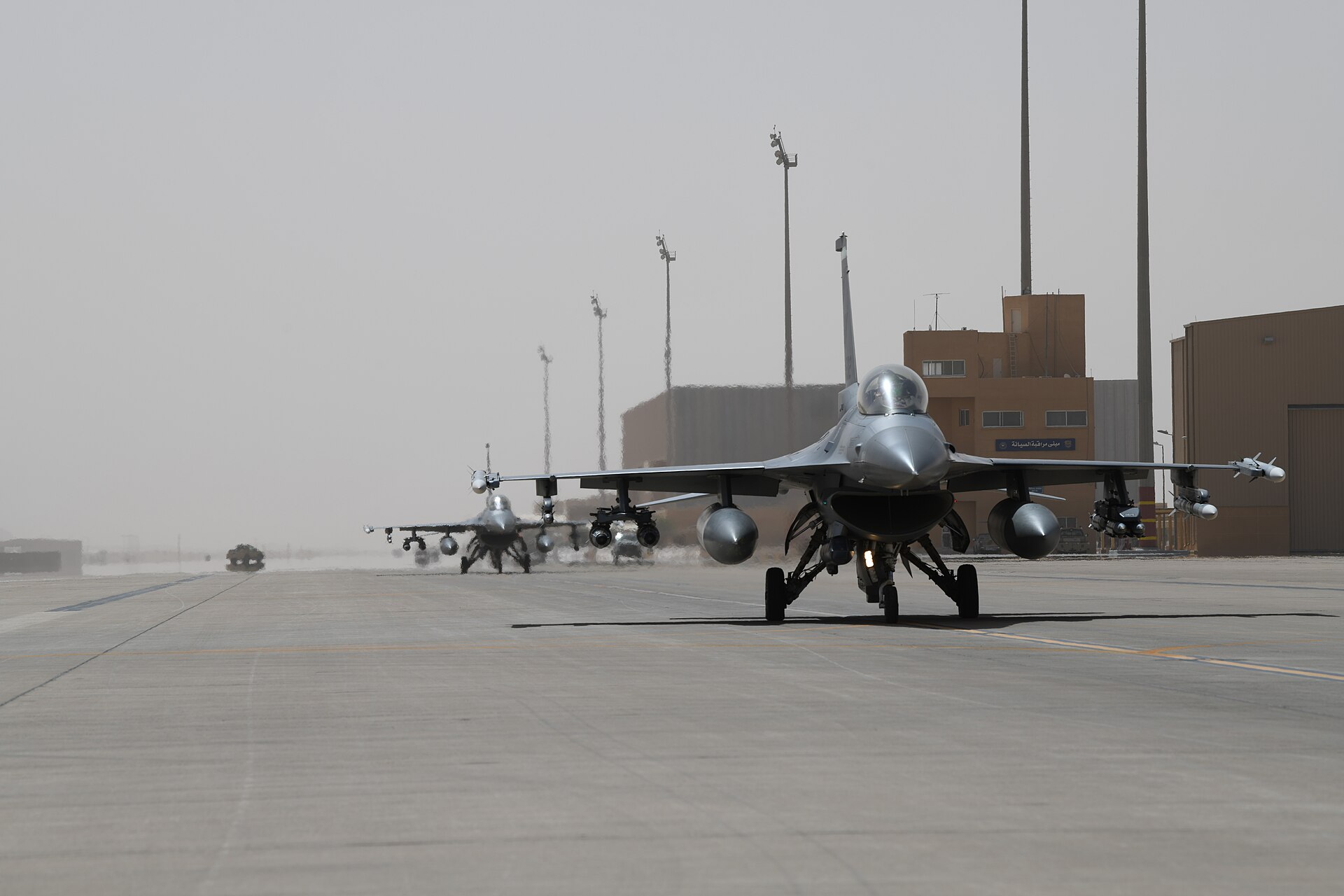
The geographic logic is unforgiving. Prince Sultan Air Base sits 90 kilometers southeast of Riyadh in al-Kharj governorate — the primary hub for US air operations across the CENTCOM area of responsibility. In February 2026, satellite imagery showed 13 KC-135 Stratotankers, six E-3G Sentry AWACS aircraft, four E-11A BACN communications planes, and multiple C-130 transports on its apron. Without PSAB’s tanker fleet, US strike and surveillance aircraft operating toward the Strait of Hormuz cannot maintain station time. Without Saudi airspace — 2.15 million square kilometers between the Red Sea and the Gulf — there is no viable overflight corridor from carrier assets in the Arabian Sea to the operational theater.
An unnamed US official told NBC News the constraint in plain language: “Because of geography, you need cooperation from regional partners to utilize their airspace along their borders, and in some cases there is no other way around.”
Saudi officials characterized Project Freedom to the New York Times as “not well thought-out.” The phrasing was diplomatic cover for a harder objection: Trump had publicly committed Gulf host nations to a confrontation with Iran without asking them first. On March 27, 2026, Iran hit PSAB with ballistic missiles — 12 to 15 US troops injured, multiple KC-135s damaged, one E-3G Sentry (a $500 million aircraft, one of 16 in the US fleet) effectively destroyed. The base continued operating. But the strike had demonstrated what Saudi planners already knew: hosting US offensive operations makes the host a co-belligerent target under Iranian doctrine.
The Middle East briefing 3,000+ readers start their day with.
One email. Every weekday morning. Free.
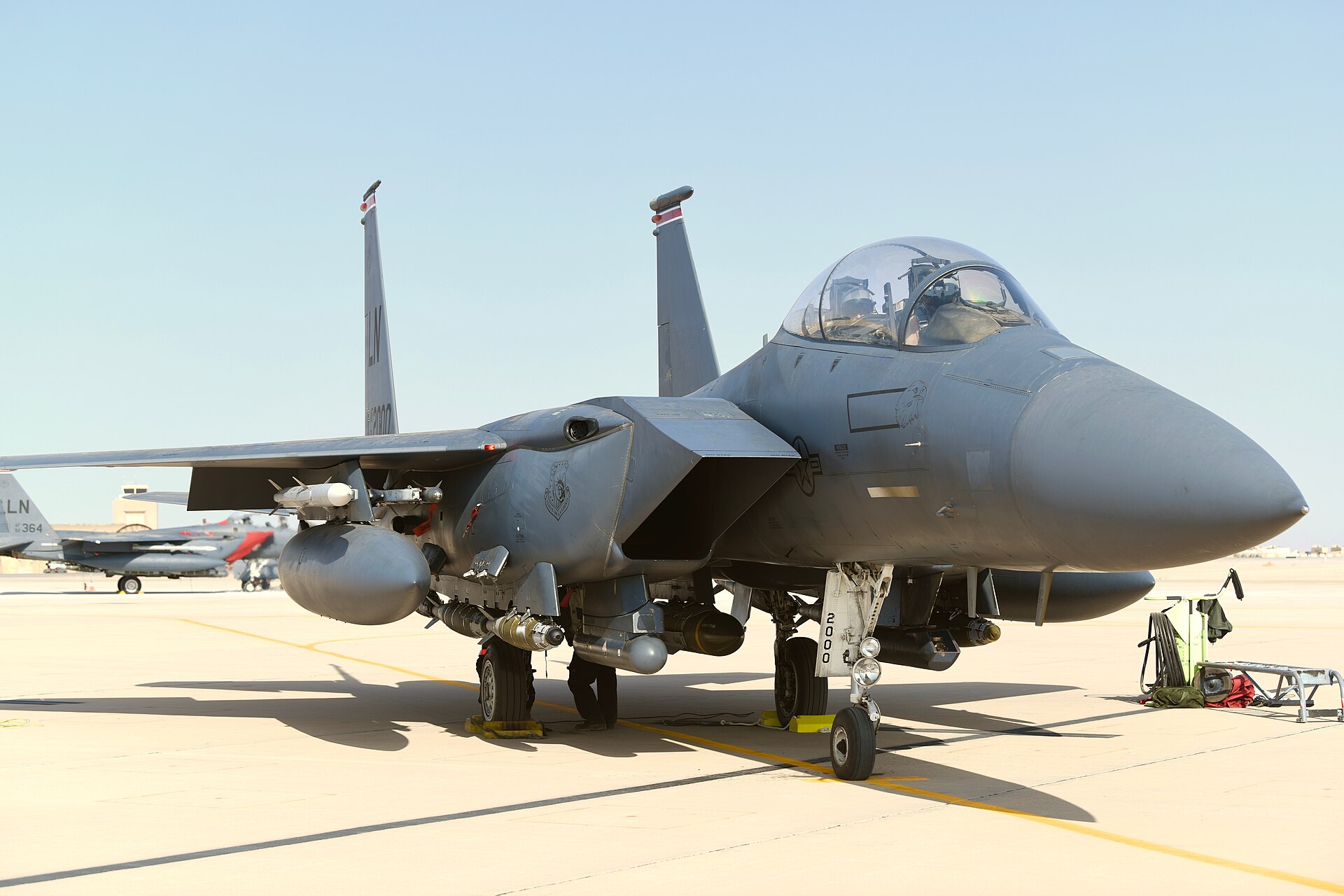
Secretary Rubio framed the operation’s purpose as humanitarian — to “save 23,000 civilians from 87 countries stranded in the Persian Gulf.” The framing was irrelevant to Saudi decision-making. Whether the objective was humanitarian or kinetic, the Iranian response would be calibrated to the platforms overhead, not the stated mission. And those platforms — 15,000 troops, Arleigh Burke-class destroyers, F-16 fighter squadrons, helicopter gunships, carrier-based aviation, and armed drones — were not configured for a civilian evacuation.
Trump announced the operation on Truth Social at a time when MBS was not consulted, was not informed, and learned of a military operation to be staged from his territory via social media. In the broader pattern of Saudi military decision-making during the Iran crisis, this was the one move MBS was unwilling to absorb passively.
Prince Sultan Air Base: Closed, Reopened, Struck, Indispensable
PSAB opened to US forces in November 1990, when 500,000 American troops deployed to Saudi soil for Desert Shield. After the Gulf War, it became the primary USAF installation in the Kingdom — but under a restriction that captures Saudi domestic sensitivities precisely. Only “defensive” aircraft were permitted. No Saudi government wanted to explain to its population why non-Saudi offensive platforms were flying from Saudi territory against Muslim-majority nations.
In 1996, after the Khobar Towers bombing killed 19 US airmen at Dhahran, operations consolidated at Prince Sultan — considered more defensible. By 2001, it housed the Combined Air Operations Center (CAOC) and was the nerve center of US air power across the Middle East.
Then Iraq. In 2003, Saudi Arabia granted base access for Operation Iraqi Freedom. The moment the conventional campaign ended, Crown Prince Sultan bin Abdulaziz — the base’s namesake — issued a joint statement with Secretary Rumsfeld: the United States had “no need whatsoever” for a continued military presence at PSAB. The Americans left. The base went dormant for 16 years.
| Period | Status | Key Constraint |
|---|---|---|
| Nov 1990 – Mar 1991 | Active (Desert Shield/Storm) | Full access granted |
| 1996 – 2003 | Primary USAF hub (post-Khobar) | “Defensive” aircraft only |
| 2003 | Iraq War access granted | Full access, briefly |
| 2003 – 2019 | Closed to US forces | Prince Sultan/Rumsfeld joint statement |
| 2019 – present | Reopened under Iranian threat | CENTCOM primary air hub by 2026 |
| March 27, 2026 | Struck by Iran | 12-15 US wounded; continued operating |
| May 4-5, 2026 | Access denied for Project Freedom | Saudi unilateral decision; reversed after 2nd call |
The 2019 reopening — under Trump’s first term, following Iranian attacks on Abqaiq and Khurais — was itself a Saudi concession. MBS permitted reestablishment because Iranian aggression had crossed a threshold that made the domestic political cost of hosting Americans lower than the security cost of not doing so. By 2026, PSAB had become what it was between 1996 and 2003: indispensable to US regional power projection, and therefore a point of negotiating advantage for whoever controlled its gates.
What Changed Between the Two Phone Calls?
The first Trump-MBS phone call following the Saudi denial failed to resolve the impasse. A second call succeeded. No official from either government has disclosed what terms were discussed or agreed in the second conversation. The $600 billion Saudi investment commitment and $142 billion defense cooperation agreement — the largest in US-Saudi history — were announced nine days later at the Trump-MBS summit in Riyadh.
NBC News reported both calls. The Wall Street Journal confirmed the sequence — first call, failure, second call, resolution. Neither outlet obtained the substance of the second conversation. The nine-day gap between the reversal and the summit suggests the deal’s architecture predated the crisis, but the crisis may have determined its final scale.
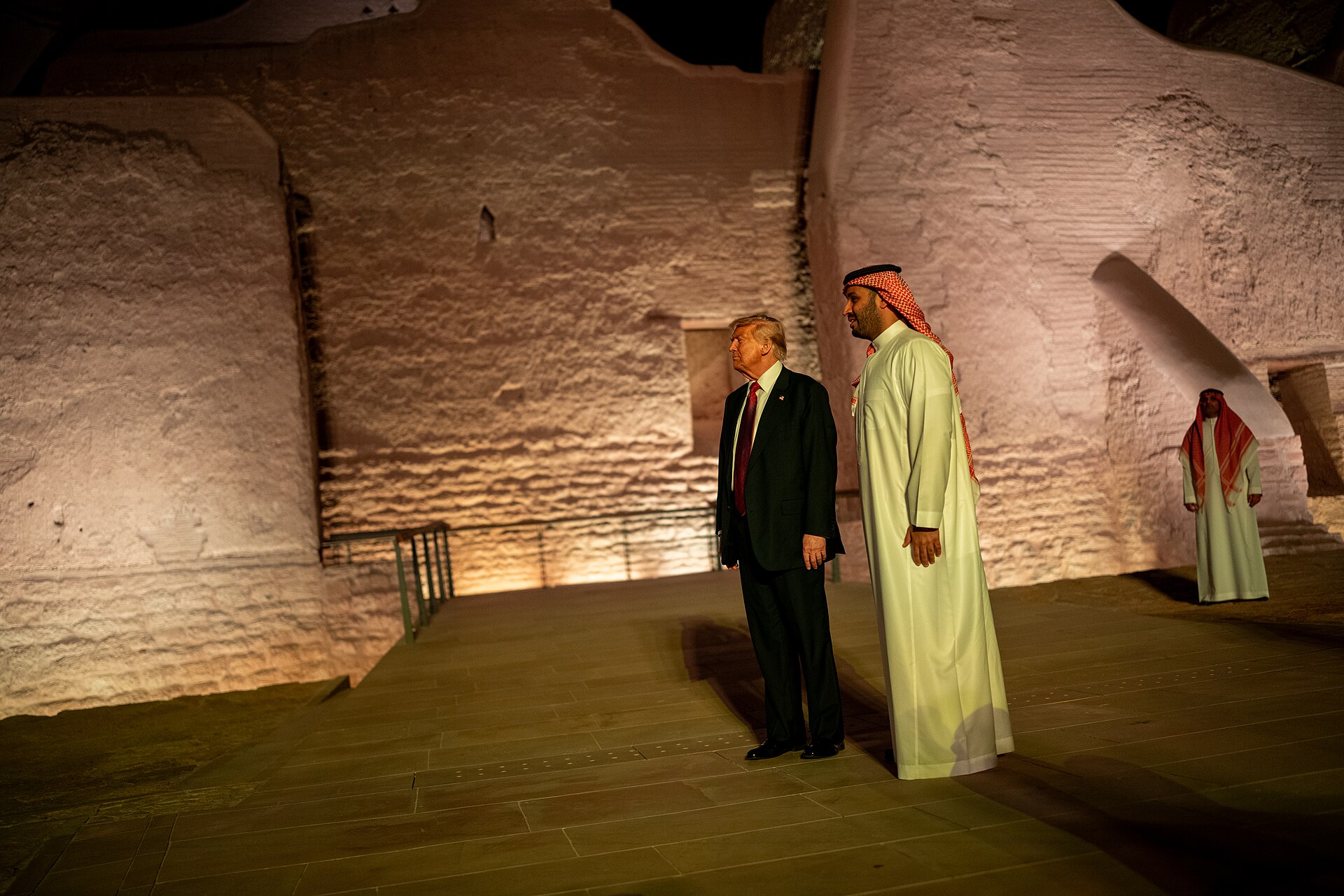
What MBS secured at the summit is public record. The CSIS post-summit analysis — titled “Mohammed bin Salman Got a Lot from Trump. What Did the United States Get?” — catalogued the Saudi deliverables: chips access for Saudi semiconductor ambitions, a pathway to F-35 procurement (beyond the immediate $142 billion F-15 and missile defense package), civil nuclear cooperation under a 123 Agreement that does not prohibit Saudi enrichment, critical minerals deals, and Major Non-NATO Ally designation. What Trump got, CSIS concluded, was “mainly a trillion-dollar soundbite” on foreign direct investment — commitments whose timeline, conditionality, and enforceability remain undefined.
Major Non-NATO Ally status grants procurement access — Saudi Arabia can now purchase US weapons systems on the same preferential terms as Australia, Japan, or Israel. It does not grant a defense guarantee. The MNNA designation carries no binding commitment for the United States to fight alongside Saudi Arabia if Iran strikes again. MBS bought $142 billion in American weapons and still no promise to fight. If America will not guarantee Saudi Arabia’s defense by treaty, then America’s access to Saudi territory for its own operations is not a right but a service — and services have prices.
The Host-Nation Veto in Historical Context
Base-access denial is not new. What happened on May 4, 2026 is structurally distinct from every prior case.
In October 1973, during the Yom Kippur War, the United States launched Operation Nickel Grass — an emergency airlift of weapons to Israel. Britain refused overflight. Italy refused staging access. Spain closed its bases. Portugal alone permitted use of Lajes Air Base in the Azores. The airlift succeeded via that single Atlantic waypoint, but the European refusals demonstrated that allied solidarity has limits when the operation targets a regional conflict the allies want no part of.
The 1973 precedent involved allied European states refusing to facilitate a US operation in a theater distant from their territory. They were not hosting the base from which the operation would launch. They were not under direct threat of retaliation. Their refusal was political, not existential.
In 1991, the calculus was inverted entirely. Saudi Arabia granted the United States total access — 500,000 troops, offensive air operations, ground invasion staging — because Iraq had invaded Kuwait and Saudi Arabia’s territorial integrity was at immediate risk. The US needed Saudi territory; Saudi Arabia needed US firepower. The alignment was complete.
In 2003, Saudi Arabia occupied an ambiguous middle position. It permitted some logistical overflight and granted PSAB access for the initial conventional campaign against Iraq, but the political discomfort was immediate and the Americans were asked to leave the moment conventional operations ended.
| Case | Denying State | Relationship to Base | Threat to Denier | Outcome |
|---|---|---|---|---|
| 1973 (Nickel Grass) | UK, Italy, Spain | Allied overflown state | Diplomatic (Arab oil embargo) | US rerouted via Azores |
| 1991 (Desert Storm) | None — Saudi granted | Host nation + threatened state | Existential (Iraqi invasion) | Full US access |
| 2003 (Iraqi Freedom) | Saudi Arabia (partial) | Host nation | Low (Iraq not threatening KSA) | Temporary access; US departed post-war |
| 2026 (Project Freedom) | Saudi Arabia + Kuwait | Host nation of primary base | High (Iranian retaliation) | US operation grounded; reversed after bilateral negotiation |
2026 is qualitatively different. The host nation of the primary operational base exercised a real-time veto during a declared military operation. Not weeks before deployment in diplomatic channels. Not as a third-party overflown state. The country housing the aircraft, the tankers, the AWACS, and the personnel told Washington: no. And the operation stopped.
No NATO ally has done this during an active operation. Turkey denied the US the northern front in 2003, but that was before hostilities began — a parliamentary vote blocking deployment, not a mid-operation shutdown. The Saudi action on May 4, 2026 is, in the modern alliance system, structurally unprecedented.
What Did Iran Actually Achieve?
Iran did not veto Project Freedom. Saudi Arabia did. But Tehran’s strategic communication apparatus immediately and correctly identified what had happened: Iranian deterrence had operated at second order. Iran did not need to intercept US aircraft or mine the Strait to stop the operation. It needed only to have established a credible retaliatory threat against Gulf host states — and those states did the rest.
PressTV ran the analysis within hours. On May 6: “Project Freedom perishes in 48 hours as Trump retreats under the wall of Iran’s asymmetric deterrence.” On May 8: “Iran’s firm response… proves Strait of Hormuz has only one master.” The IRGC Navy issued a conditional statement — it would allow “safe, stable transit” with “aggressor threats neutralized” — language that claimed de facto regulatory authority over international waters.
The Iranian thesis, stripped of its propaganda framing, contains a structural insight that Washington’s after-action analysis will have to reckon with. The IRGC’s assertion of operational control over Hormuz did not require direct confrontation with the US Navy. It required only that the Gulf states hosting US power projection believe — with evidence from March 27 at Prince Sultan, from the Ras Tanura strikes, from the Eastern Province barrages — that Iran would hit them for hosting it.
Second-order coercion: A threatens C (Gulf states) to prevent B (the United States) from acting. B’s power is real but geographically dependent on C’s consent. C withdraws consent. B is grounded.
Iranian and Saudi foreign ministers reportedly spoke on May 6 — the same day Trump announced the pause. PressTV framed the call as Saudi-Iran coordination against US unilateralism. The framing is self-serving but not entirely wrong. MBS had his own reasons for blocking the operation — reasons that had nothing to do with Iranian preferences and everything to do with bilateral pricing — but the objective effect was identical to what Iran would have chosen.
The adversarial claim that “the Strait has only one master” remains operationally false. The US naval blockade established April 13 continues. Forty-five transits have occurred since the April 8 ceasefire — 3.6% of pre-war baseline. Both the US and Iran exercise partial control. Neither exercises sovereignty. Iran’s ability to achieve its operational objective (preventing a US forcible reopening) through Saudi behavior rather than Iranian military action represents an escalation in the sophistication of its coercive architecture.
Saudi Arabia’s Denial and the Ambiguity MBS Prefers
On May 8, a Saudi source told the Middle East Monitor: “Washington continues to have regular access to Saudi airspace and military bases.”
The denial was delivered after access had already been restored — after the second phone call. It was technically accurate about the present tense while being materially misleading about what had happened 72 hours earlier. NBC News had already published, citing two US officials. The Times of Israel, Haaretz, NPR, Middle East Eye, and Democracy Now! had all confirmed the Saudi block independently.
The denial served both parties. MBS does not want to be the leader who publicly humiliated a US president by grounding his military operation. That framing — which PressTV was already pushing — makes Saudi Arabia look like an Iranian proxy achievement rather than an independent actor extracting bilateral concessions. Trump does not want to be the president whose military operation was vetoed by an ally. His Truth Social statement on May 5-6 reframed the pause as diplomatic magnanimity: “Project Freedom will be paused for a short period of time to see whether or not the Agreement can be finalized and signed.”
The New York Times reported this framing was misleading — that the actual cause was Saudi denial, not diplomatic progress with Iran. But both governments benefit from the cover story. MBS gets his price (the summit deliverables) without the public narrative of having defied Washington. Trump gets to claim the pause was his strategic choice, not a forced retreat. The veto happened. Its fruits were delivered at the summit. The official record says neither occurred.
Has the Veto Been Spent?
Having exercised the base-access veto once and extracted a $142 billion arms package plus $600 billion in investment commitments, MBS faces a structural question: can the instrument be used again, or has its one-time deployment established a precedent that the US will now route around?
The argument that the veto cannot be repeated rests on two pillars. First, the US will pre-consult for future operations — the embarrassment of Project Freedom’s 36-hour lifespan ensures that no future announcement will be made without prior Saudi buy-in. Second, the Pentagon will diversify basing — reducing single-point dependence on PSAB by distributing assets across Diego Garcia, Al Udeid (Qatar), Thumrait (Oman), and carrier-based aviation that requires no host-nation permission.
The counter-argument: pre-consultation is itself the victory. If the United States must now negotiate Saudi consent before announcing operations, MBS has achieved a permanent structural upgrade — from base-provider to co-decider. The veto does not need to be exercised again if its existence forces prior agreement. Every future operation planned through PSAB now carries an implicit Saudi consent requirement that did not exist operationally (whatever the legal framework said) before May 4, 2026.
Trump’s counter-threat — “Project Freedom Plus, meaning Project Freedom plus other things” — acknowledges that PSAB can be routed around while asserting it can be overcome. The “plus” implies capabilities that do not depend on Saudi basing: carrier aviation, long-range strike from Diego Garcia, submarine-launched platforms. Whether these actually substitute for PSAB’s tanker fleet and ISR assets in a sustained Hormuz operation is a military question the Pentagon has not answered publicly. Khatam al-Anbiya’s Zolfaghari answered a different question on May 17: IRGC’s Zolfaghari publicly declared all US Gulf bases will be “deactivated” — and Saudi Arabia’s silence on that warning is examined in the companion analysis.
Defense Secretary Hegseth’s statement that US forces “would not need to enter Iranian waters or airspace” suggests the operational concept relies on standoff — clearing mines and escorting convoys without penetrating Iranian defensive perimeters. That concept requires sustained air cover. Sustained air cover requires tankers. Tankers require a base within range. The math leads back to Prince Sultan or its geographic equivalent.
Saudi military spending increased 26% year-over-year in Q1 2026, according to Saudi Finance Ministry figures. The Kingdom’s Q1 fiscal deficit hit a record SAR 125.7 billion ($33.5 billion). MBS is simultaneously extracting maximum price from Washington for basing access while absorbing the fiscal cost of a war economy. The F-15 deliveries, the missile defense architecture, the MNNA procurement access — these are the materiel required for Saudi Arabia to eventually reduce its dependence on the very US presence whose terms it is now dictating. The downstream strategic consequence — specifically how publication of the plan to physically seize part of the Strait eliminated Saudi Arabia’s role as the gatekeeper of US basing access before any NSC vote — is examined in a companion analysis.
The $600 Billion Receipt
The Trump-MBS summit on May 13-14 produced headline numbers designed for domestic consumption in both capitals. The $600 billion “investment commitment” combines Saudi sovereign wealth fund allocations, private sector memoranda of understanding, and government-to-government frameworks across timelines ranging from immediate to 2035. CSIS characterized the FDI figure as “a trillion-dollar soundbite” — noting that Saudi investment commitments to the US predate the crisis and that the aggregate number conflates binding contracts with aspirational frameworks.
The $142 billion defense cooperation agreement is more concrete but still operates on delivery timelines measured in decades. It covers F-15SA advanced variants, integrated air and missile defense systems (including Patriot PAC-3 MSE and THAAD batteries), naval platforms, munitions, training infrastructure, and — the prize — a pathway to F-35 evaluation. No F-35 delivery date was announced. The “pathway” language means Saudi Arabia has been admitted to the queue, not handed the aircraft.
What MBS secured beyond hardware:
- Civil nuclear cooperation under a 123 Agreement that does not prohibit Saudi enrichment — a deliberate asymmetry with the Iran pressure campaign, which demands enrichment cessation
- Advanced semiconductor access for Saudi data center and AI ambitions
- Critical minerals agreements positioning Saudi Arabia in US supply chain diversification from China
- MNNA designation — procurement parity with Israel, Japan, and Australia
What MBS did not secure: a mutual defense treaty. No Article 5. No binding obligation for the United States to defend Saudi Arabia against Iranian attack. The $142 billion buys weapons. It does not buy the guarantee that those weapons will be supplemented by American ones if the next Iranian barrage exceeds what Saudi air defenses can absorb alone.
This gap — between procurement access and defense guarantee — is the structural asymmetry that defines the US-Saudi relationship after the veto. MBS has demonstrated he can deny the US operational access. The US has demonstrated it will pay for restoration of that access. Neither has committed to the other’s defense as a treaty obligation. The relationship remains transactional at its core — but the transaction now runs in both directions, at prices MBS sets in real time.
Frequently Asked Questions
What is Prince Sultan Air Base and why does it matter for US operations?
Prince Sultan Air Base (PSAB) is located in al-Kharj, 90 km southeast of Riyadh. It serves as the primary hub for US air operations across the entire CENTCOM area of responsibility. Its significance is primarily logistical: the base houses KC-135 aerial refueling tankers without which US combat aircraft cannot maintain time on station over the Strait of Hormuz. The base was named after Crown Prince Sultan bin Abdulaziz Al Saud, who served as Saudi Minister of Defense from 1962 until his death in 2011 — a 49-year tenure that itself illustrates the entanglement of Saudi defense policy with individual royal authority.
Did Kuwait also block the operation, and what happened to Kuwaiti access?
Kuwait simultaneously denied US base access (Ali Al Salem Air Base) and airspace overflight. The Kuwaiti denial received less attention because Saudi Arabia’s was operationally decisive — PSAB’s tanker fleet was the irreplaceable asset. Kuwait’s access was also reportedly restored, though the timeline and terms have not been separately reported. Kuwait hosts approximately 13,500 US military personnel across multiple installations, making it the second-largest US military footprint in the Gulf after Qatar’s Al Udeid. Kuwait’s motivation was identical to Saudi Arabia’s: fear of Iranian retaliation against host states. Kuwait’s population of 4.3 million and geographic exposure — its entire coastline faces Iran across 200 km of Gulf waters — makes it more vulnerable to Iranian ballistic missile attack than any other Gulf state except Bahrain.
Has the US reduced its military presence at Prince Sultan since the veto?
No public drawdown has been announced. The approximately 2,300 US personnel at PSAB remain in place. The reversal of the basing denial after the second Trump-MBS call restored the operational status quo — but with an altered power dynamic. Pentagon planning documents reference “distributed basing contingencies” across the CENTCOM theater, which military analysts interpret as hedging against future access disruptions. No physical redeployment of tanker or ISR assets from Prince Sultan has been observed in commercial satellite imagery through May 14, 2026.
What is the legal basis for Saudi Arabia denying base access to the US?
The US military presence at Prince Sultan Air Base operates under a bilateral defense cooperation agreement, not a Status of Forces Agreement (SOFA) with automatic operational authorities. Saudi Arabia retains sovereign control over its airspace and territory — there is no treaty provision granting the US unilateral operational authority from Saudi installations. This distinguishes PSAB from US bases in Japan, South Korea, or Germany, where SOFAs and security treaties create legal frameworks for US operational autonomy. The Saudi legal position is straightforward: the base is Saudi sovereign territory, US presence is by invitation, and that invitation can be conditioned, suspended, or revoked. The US has not publicly challenged this legal framework — doing so would undermine the premise of every other basing arrangement worldwide.
Could the US have conducted Project Freedom without Saudi or Kuwaiti cooperation?
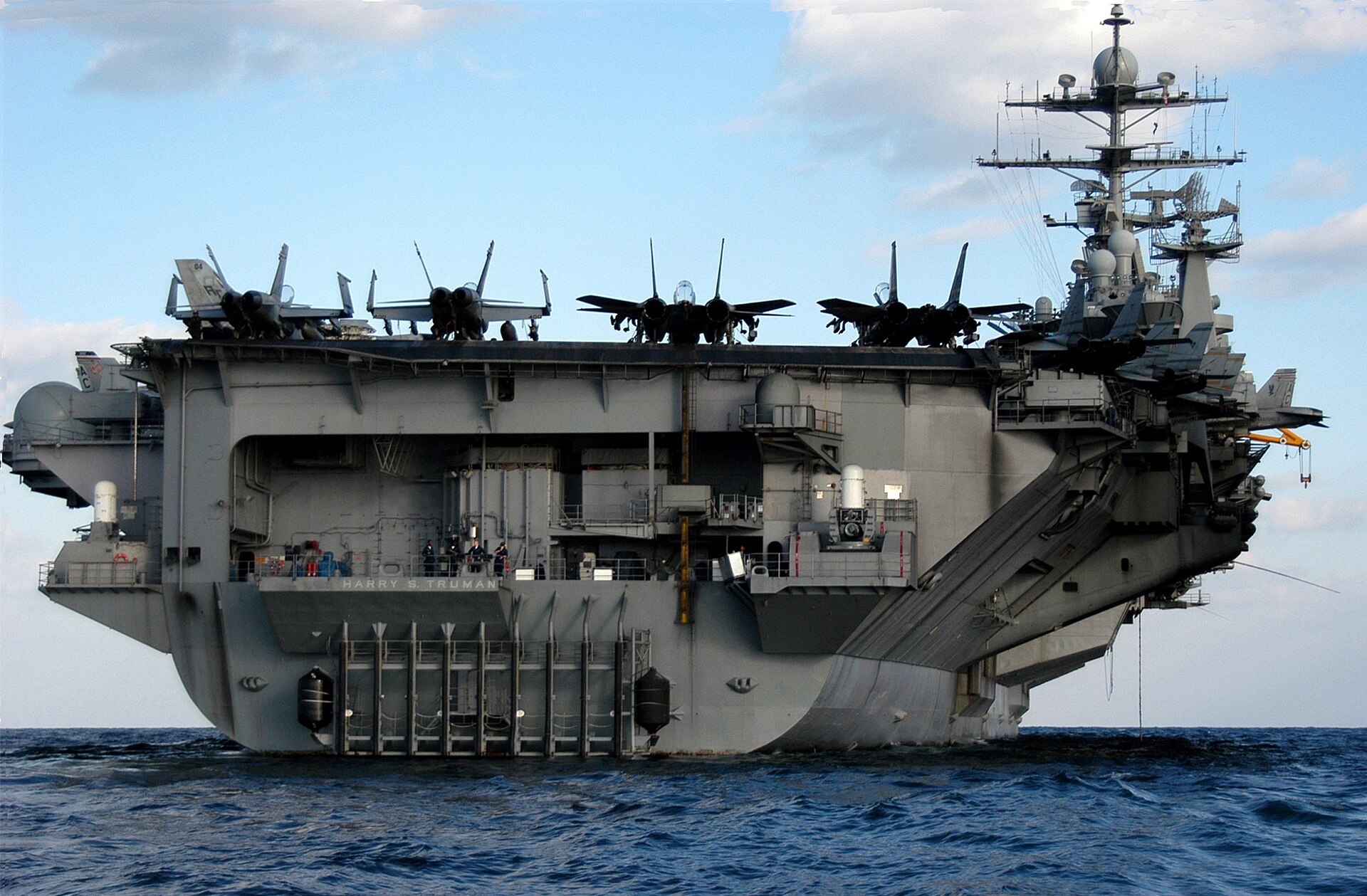
In theory, yes — but at dramatically reduced capability and higher risk. Carrier-based aviation from the USS Harry S. Truman (deployed to the Arabian Sea) can reach the Strait without overflying Saudi territory. B-2 bombers operating from Diego Garcia require no regional basing. However, sustained mine-clearing operations, 24-hour combat air patrol, and convoy escort — the stated operational requirements — demand aerial refueling tankers positioned within 1,500 km of the operating area. Al Udeid Air Base in Qatar is an alternative, but Qatar’s airspace access to Hormuz is also constrained by geography and Qatari political calculations (Doha maintains its own equities with Iran over the shared North Field/South Pars gas reservoir). The operational reality is that a Hormuz operation without Gulf state cooperation is possible for 48-72 hours of surge operations but unsustainable for the weeks-long campaign that mine clearance requires. How the Pentagon has tried to manage that dependency through the War Powers Resolution clock — rebranding Epic Fury as Operation Sledgehammer to reset the 60-day countdown — and why MBS’s basing veto ultimately decides whether that clock matters, is examined in a companion analysis. The precise timing of that decision — and what the operational window for renewed US-Israeli strikes on Iran means for the 860,000 pilgrims already inside the kingdom — is examined in a companion news analysis published May 17. The decision-authority gap between NSC authorization and operational execution — and how Saudi Arabia’s May 5 precedent constrains the Situation Room before Tuesday’s war cabinet meeting — is examined in what the May 19 NSC meeting actually decides.