
How the Iran War Ended Saudi Arabia’s Gulf Monopoly
ABU DHABI — The 2026 Iran war has permanently fractured the Saudi-led Gulf order that held for four decades, and no post-war summit or phone call between Mohammed bin Salman and Mohamed bin Zayed will reconstitute it. Abu Dhabi has used the war — which it did not start and could not stop — to construct a parallel model of Gulf statehood anchored in the Abraham Accords defense axis, unilateral oil production sovereignty, and a bilateral security architecture with Israel and the United States that operates entirely outside the GCC framework Riyadh designed and controlled.
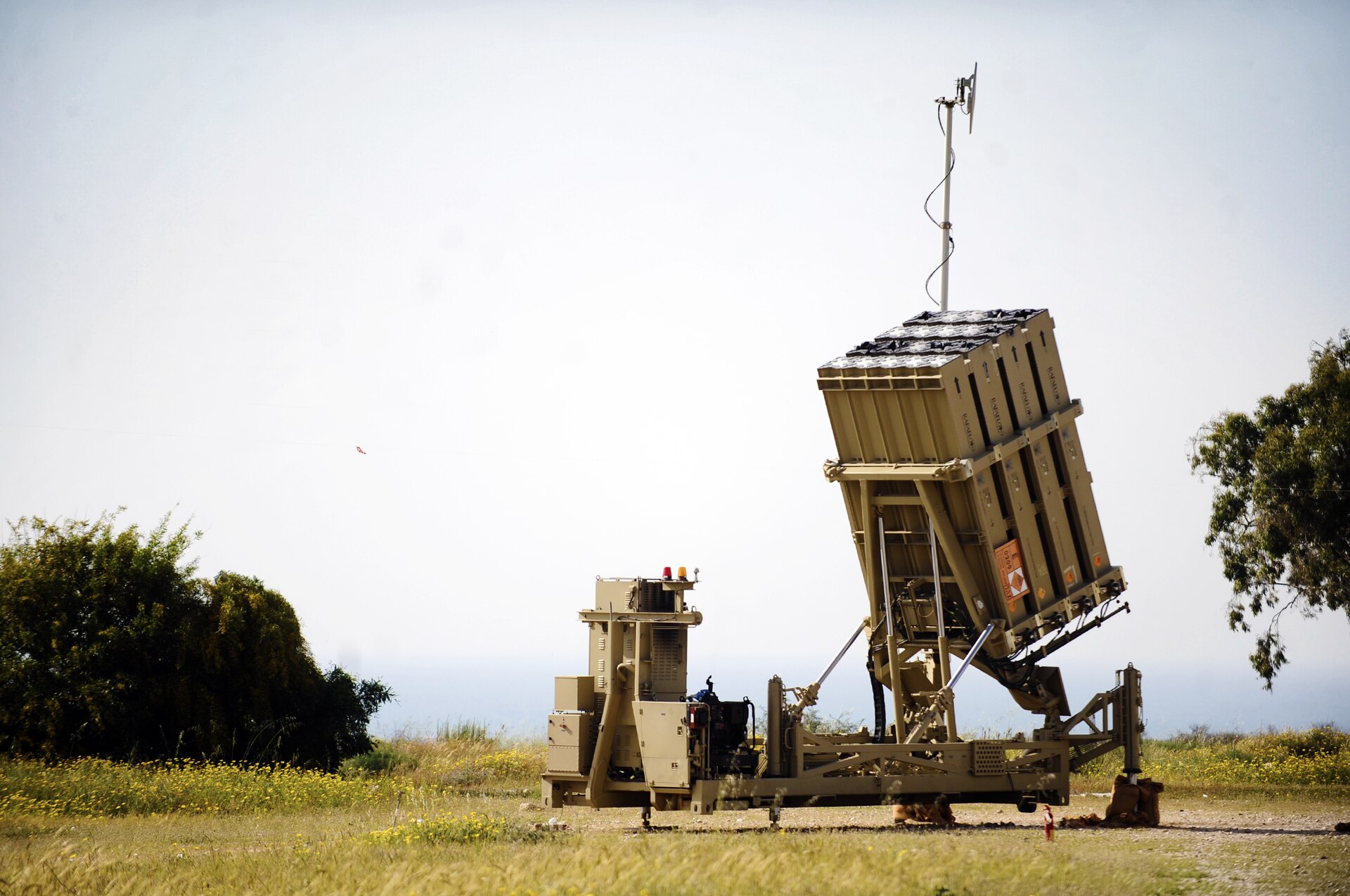
The evidence is structural, not speculative. The UAE exited OPEC on May 1 after 59 years without informing Saudi Arabia in advance. It hosted an Israeli Iron Dome battery and IDF personnel on Emirati soil — the first such deployment in the Middle East outside Israel. It pushed for a joint Gulf military strike against Iran that MBS refused. And it sent its foreign minister, not its president, to the emergency GCC summit convened in Jeddah to address the crisis. Each act, individually, is a policy decision. Taken together, they amount to a declaration of strategic independence.
Table of Contents
- What Did the UAE’s OPEC Exit Signal to Saudi Arabia?
- The Abraham Accords as Military Architecture
- Why Did MBZ Push for a Joint Strike That MBS Refused?
- Two Ceasefire Positions, Two Foreign Policies
- Does MBS’s Wartime Veto Over Washington Bind Abu Dhabi?
- The Informal Blocs Replacing the GCC
- What Happens to Saudi Oil Power When Hormuz Reopens?
- The GCC’s Structural Obsolescence
- Frequently Asked Questions
What Did the UAE’s OPEC Exit Signal to Saudi Arabia?
The exit signaled that Abu Dhabi no longer accepts Saudi Arabia’s authority to set Gulf production strategy. The UAE departed OPEC on May 1, 2026, after 59 years of membership, without informing Riyadh in advance — Foreign Policy reported that Abu Dhabi “did not even consult Riyadh” before the move. ADNOC’s production capacity of 4.85 million barrels per day exceeded its last OPEC+ quota of 3.41 million by 1.44 million barrels, a structural gap the cartel refused to close.
The timing was surgical. The announcement landed the same day MBS convened an emergency GCC summit in Jeddah to address the war’s economic consequences. ADNOC’s response was immediate — a $55 billion investment program in upstream and downstream projects through 2028, keyed entirely to unconstrained production. The target: 5 million barrels per day by 2027. These are not investments designed for return to a quota system. They are investments designed for permanent independence.

The fiscal arithmetic explains why Abu Dhabi could afford to move and Riyadh could not afford to follow. Saudi Arabia’s fiscal breakeven oil price — the per-barrel revenue needed to balance the national budget including PIF-funded megaprojects — sits around $90 per barrel, according to Bloomberg. Wood Mackenzie estimates give the UAE tolerance for sustained prices considerably lower, a buffer that makes an unconstrained production strategy economically rational even during wartime price volatility.
The scale of Saudi Arabia’s fiscal exposure became quantifiable on May 6, when the Ministry of Finance confirmed the fiscal arithmetic now constraining Riyadh’s options: a $33.5 billion Q1 deficit — the largest quarterly shortfall in the Kingdom’s history — running at a monthly burn rate of $11.2 billion against a revenue base that the production collapse has made structurally insufficient regardless of the Brent price.
The Middle East briefing 3,000+ readers start their day with.
One email. Every weekday morning. Free.
The Middle East Institute calculates that the UAE accounted for approximately 14 percent of OPEC’s total production capacity at the time of exit — the largest single-producer departure in the cartel’s history by capacity share. The Observer Research Foundation described it as “a structural break in the global oil order.” Saudi Arabia now bears the entire burden of production discipline within what remains of OPEC+, at a moment when its own output has collapsed — IEA data shows Saudi production fell from 10.4 million barrels per day in February to 7.25 million in March, a 30 percent drop that the IEA called “the largest disruption on record.”
The Abraham Accords as Military Architecture
When Israel deployed an Iron Dome battery and IDF personnel to the UAE in late April — the first such deployment outside Israeli territory — the Abraham Accords completed a transition from diplomatic agreement to operational military alliance. The deployment followed a direct phone call between MBZ and Benjamin Netanyahu, reported by Axios on April 26. Israel also deployed Iron Beam, a prototype laser interception system, and the Spectro drone-detection platform alongside Iron Dome, according to Defence Security Asia.
The hardware integration predated the war. Since the 2020 normalization, the UAE had acquired Israeli-made Barak and Spyder air-defense systems, embedding Israeli technology structurally into Emirati force architecture. By the time Iranian missiles arrived, the interception systems that defended Abu Dhabi were already partly Israeli-built, Israeli-maintained, and Israeli-linked through shared targeting data. The war did not create this architecture. It activated it under fire and proved it worked.
The legislative codification followed. On March 26, 2026, Senators Ted Budd and Joni Ernst introduced the Abraham Accords Defense Cooperation Act, which would establish a Pentagon-run “US–Abraham Accords Defense Cooperation Initiative” covering counter-UAS capabilities, ground-based air defenses, special operations, and intelligence-sharing with all Abraham Accords signatories. The bill creates a statutory framework — not dependent on any single administration’s preferences — for trilateral US-Israel-UAE defense cooperation that sits entirely outside the GCC. Budd and Ernst are positioning it for inclusion in this year’s National Defense Authorization Act.
The financial anchor is equally structural. In spring 2025, the UAE pledged $1.4 trillion in US investments — the largest foreign investment commitment to Washington at that time, per Axios. That commitment made the Abraham Accords relationship load-bearing for both economies well before the first Iranian missile was fired. RUSI’s observation that the war “grew UAE-Israel security ties” in ways testing “normalization’s peril and promise” describes the trajectory: normalization has crossed from the commercial and diplomatic domain into shared battlefield data, joint interception operations, and coordinated kill chains.
Why Did MBZ Push for a Joint Strike That MBS Refused?
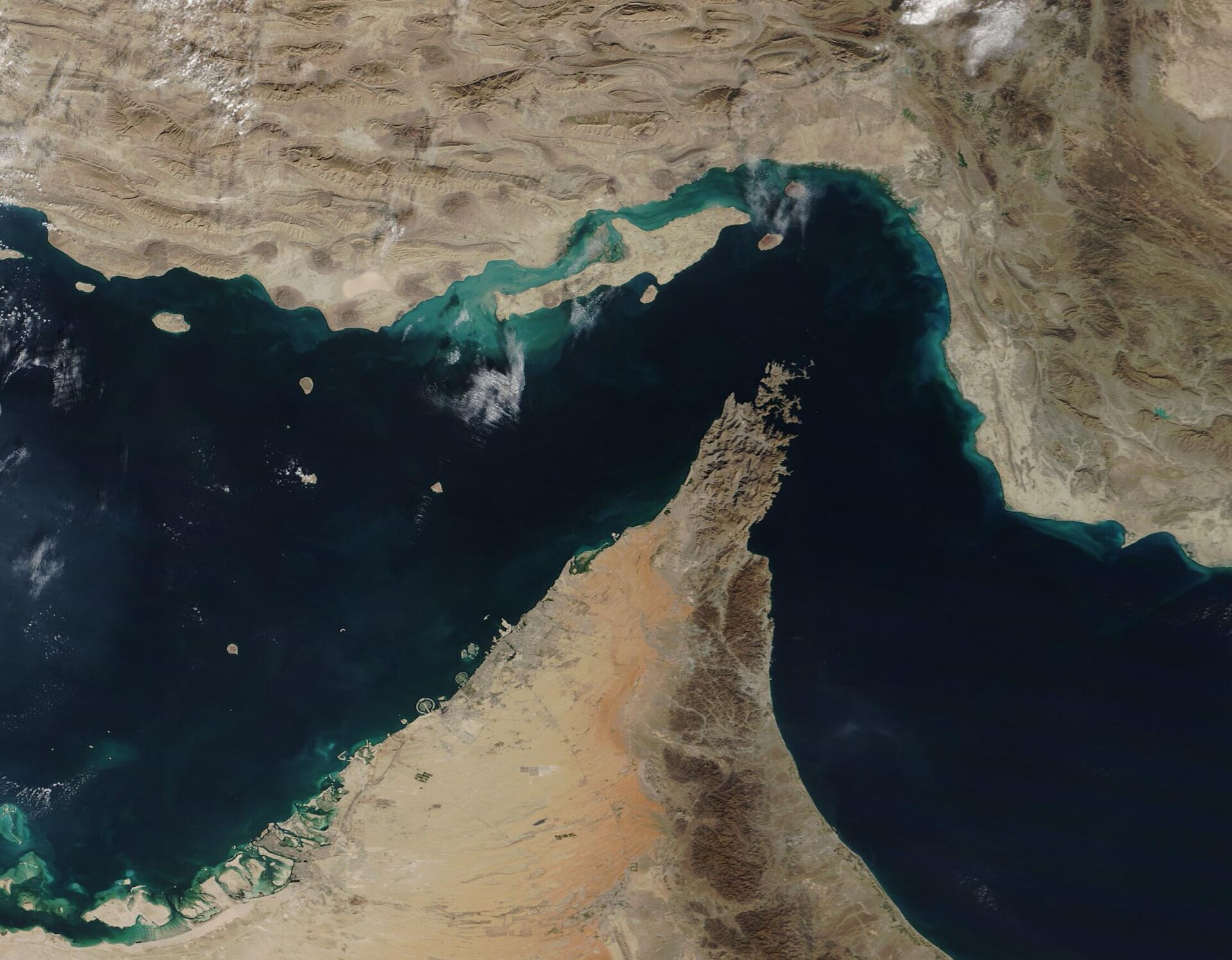
MBZ pushed for a coordinated Gulf attack on Iran because the UAE absorbed nearly four times the missile and drone volume directed at Saudi Arabia — approximately 2,260 intercepted drones and 580 missiles, according to Al Jazeera and the Gulf International Forum — and concluded that Gulf collective defense had failed. Bloomberg reported on May 15 that MBS refused, as did Qatari leadership, even though the Trump administration supported the Emirati effort.
The failed coordination attempt is the founding event of the current fracture. The Gulf International Forum attributed the targeting intensity to the UAE’s “intersection of alliances Tehran distrusts”: the Abraham Accords, the Israeli military presence on Emirati soil, and the bilateral US defense relationship. Abu Dhabi drew the rational conclusion from MBS’s refusal: if the Gulf would not fight together, Abu Dhabi would pursue its own military calculus independently.
Axios described MBZ and MBS as holding “opposite outlooks” on the war. MBZ pushed for a fight to the finish once hostilities began. MBS, initially supportive of military action, grew eager for an off-ramp as the economic damage to Saudi production and export infrastructure mounted. The Foundation for Defense of Democracies observed that Saudi Arabia “found itself freer of the Iranian menace” through its own restraint — choosing to absorb strikes and “reserve the right” to respond without pulling the trigger, while the UAE chose an entirely different posture.
The personal dimension matters. MBZ, 64, once served as a mentor to the younger MBS, 40. That dynamic has curdled into what Axios described as “personal animosity between the two leaders” alongside structural disagreements over Yemen, Sudan, and Palestine. Senator Lindsey Graham’s public instruction to MBS — “Knock it off, Saudi Arabia” — captured Washington’s frustration with Riyadh’s refusal to align with what Graham and the Trump administration saw as a natural Gulf coalition against Iran. Middle East Eye reported the exchange. The message was directed at Riyadh, but its subtext was that Washington viewed Abu Dhabi’s posture as the correct one.
Two Ceasefire Positions, Two Foreign Policies
When the ceasefire framework emerged from the Islamabad talks, the UAE and Saudi Arabia responded with incompatible positions that revealed a structural divergence in threat perception, not a tactical disagreement over timing.
UAE Foreign Minister Abdullah bin Zayed, in statements tracked by MEMRI’s reporting on Gulf ceasefire responses, stressed the importance of Iran’s “full commitment to the immediate cessation of all hostile activities, the full and unconditional reopening of the Strait of Hormuz, and the termination of threats to freedom of navigation, international trade, and energy security.” Abu Dhabi demanded a plan addressing Iran’s ballistic missiles and nuclear program, war reparations for damage sustained, and explicit security guarantees. These are conditions for a comprehensive adversarial settlement, not a pause in fighting.
Saudi Arabia took a different approach. Riyadh issued formal statements of support for the ceasefire while its state press expressed pessimism about its durability. The kingdom’s public language contained no accountability mechanism, no reparations demand, and no preconditions for engagement with Tehran. Where Abu Dhabi wanted a settlement that extracted costs, Riyadh wanted de-escalation at minimal diplomatic price — a posture consistent with MBS’s broader pattern of seeking off-ramps once the war’s fiscal consequences became clear.
The divergence reflects two governments that have drawn different conclusions from the same war. Having absorbed nearly four times the Iranian ordnance directed at Saudi Arabia, and having been designated a “hostile base” by the Iranian parliament — lawmaker Ali Khezrian declared on state television that “our label of ‘neighbours’ with the Emirates has for now been lifted” — Abu Dhabi treats anything less than a settlement constraining Iran’s strike capacity as unacceptable. Saudi Arabia, which maintained diplomatic distance from Israel and absorbed fewer strikes, retains options Abu Dhabi has foreclosed, including eventual normalization with Tehran without preconditions.
Iran’s strategic calculus in targeting the UAE with disproportionate force was itself a commentary on the Abraham Accords. The IRGC framed the operational military reality of Israeli crews on Emirati soil as a civilizational transgression — language designed for domestic Iranian and pan-Islamic consumption but encoding a strategic fact: Abu Dhabi’s bilateral defense relationships made it the more threatening adversary, and Iran treated it accordingly. The formal reclassification of the relationship that followed — covered in the GCC section below — was a consequence, not a cause.
Does MBS’s Wartime Veto Over Washington Bind Abu Dhabi?
No. MBS’s wartime hold on Washington — hosting US operations and controlling the Yanbu bypass that sustained Saudi exports — binds American operational choices but does not extend to Abu Dhabi’s strategic decisions. The UAE independently hosted Israeli military personnel, exited OPEC, and demanded Iranian reparations while Riyadh pursued quiet de-escalation, all without Saudi consent or coordination.
Saudi Arabia’s wartime position rested on two pillars: hosting American forces conducting operations against Iran, and controlling the East-West Pipeline corridor through Yanbu that sustained 80 to 85 percent of pre-war Saudi exports once Hormuz traffic collapsed. This gave MBS structural power over Washington’s military logistics and over global oil supply simultaneously. It was real power, and Washington treated it as such.
But that power operated on a single axis. MBS could shape American operational choices — basing, overflight, supply routing. He could not shape Abu Dhabi’s decision to host an Israeli Iron Dome battery, or to push for a joint strike he had refused to join, or to exit OPEC without consultation, or to demand reparations from Tehran while Riyadh sought quiet. The asymmetry is the structural fact of the post-war Gulf: Saudi wartime influence over Washington does not translate into influence over Abu Dhabi, because the UAE’s parallel architecture — Abraham Accords, bilateral Israeli defense ties, the $1.4 trillion US investment anchor — gives Abu Dhabi its own direct relationship with Washington that does not route through Riyadh.
The Abraham Accords Defense Cooperation Act makes this statutory. If the bill passes, the Pentagon will be directed by law to build defense cooperation with Abraham Accords signatories as a category. Saudi Arabia, which is not an Abraham Accords signatory, would be structurally excluded from a US-managed defense framework that includes its principal Gulf rival. MBS’s refusal to normalize with Israel — driven by domestic religious constraints and the Palestinian question — now costs him membership in the defense architecture Washington is building for the post-war Middle East.
The FDD’s characterization of Saudi Arabia’s war as “strange” — appease Iran, rebuff Israel — captures the bind. Riyadh’s strategic logic is internally coherent: avoid provoking Iran further, maintain distance from Israel to preserve Arab and Islamic credibility, deploy the Custodian of the Two Holy Mosques title as diplomatic insulation. But that logic constrains Saudi Arabia to a defensive posture at the exact moment Abu Dhabi is building the diplomatic and military architecture that will define the next decade of Gulf security.
The Informal Blocs Replacing the GCC
The Institute for National Security Studies, in its 2026 analysis “From Quiet Competition to Open Rivalry,” identified informal alliance structures forming across the region: “UAE, India, and Israel in one camp and Saudi Arabia, Pakistan, and Turkey in the other, supported not by formal pacts but by arms sales, port agreements, and the inevitable calculus of a regional rivalry.”
The bloc geometry is visible in the war’s diplomatic traffic. Pakistan served as the ceasefire’s primary venue and enforcement mechanism — a role that reinforced Islamabad’s structural alignment with Riyadh, deepened by the Saudi-Military Defense Alliance signed in September 2025 and a $5 billion Saudi loan maturing in June 2026. Turkey positioned itself as a secondary mediator. Egypt, which shares Saudi Arabia’s caution toward Israel, joined the emerging quadrilateral. The IISS noted that the UAE was “explicitly absent” from this Saudi-Pakistan-Turkey-Egypt alignment.
On the other axis, Indian Prime Minister Narendra Modi spoke with MBZ within 48 hours of the most intense Iranian strikes on the UAE. India’s strategic interest is precise: the UAE is its third-largest trading partner, ADNOC supplies a growing share of Indian crude, and the I2U2 framework — India, Israel, UAE, United States — already provided the institutional scaffolding for a non-Gulf-based regional grouping before the war began. The Diplomat observed that the UAE’s OPEC exit positions ADNOC to supply increasing volumes of light, low-sulfur Murban crude to Asian markets — China, India, Japan, and South Korea — through the back half of the decade.
Carnegie’s “Three Scenarios for the Gulf States After the Iran War,” published in April by Andrew Leber and Sam Worby, projected a range from renewed cooperation through a reconstituted GCC to “greater fragmentation” in which bilateral deals replace collective institutions entirely. The cautionary scenario described Gulf states pursuing “individual security bargains” that “undermine the logic of collective defense.” Two weeks after publication, the UAE exited OPEC — an act that sits squarely in Carnegie’s fragmentation scenario.
The CSIS analysis “A New Rift in the Gulf, and Only the Gulf Can Solve It” maintained a more cautious view, arguing that internal Gulf diplomacy could still manage the rivalry. But the CSIS framing depends on a premise the war has invalidated: that both Saudi Arabia and the UAE still accept the GCC as the primary institutional arena for Gulf coordination. Abu Dhabi’s actions since May 1 suggest it does not. The Jerusalem Post characterized the competition as “the Gulf’s Cold War,” but cold wars are stable by definition, sustained by mutual deterrence and institutional buffers. The Saudi-UAE split lacks both. There is no institutional mechanism for managing it — the GCC cannot, and no bilateral channel has produced binding commitments — and neither side has interest in stability that preserves the other’s preferred architecture.
What Happens to Saudi Oil Power When Hormuz Reopens?
When the strait reopens, the UAE will ramp production toward 5 million barrels per day immediately and without quota constraint, while Saudi Arabia remains bound by OPEC+ discipline and a fiscal breakeven of approximately $90 per barrel. Every barrel of unconstrained Emirati production entering the market and depressing prices erodes Saudi fiscal capacity at a moment when Riyadh can least afford it.
The pricing mechanics are punishing. The kingdom already faces a war-adjusted budget deficit that Goldman Sachs estimates at roughly $80-90 billion, versus the official $44 billion projection — the FDD reported a record $34 billion Q1 deficit alone. The double blockade — the US controlling Arabian Sea entry since April 13, the IRGC controlling Gulf of Oman exit since early March — has reduced Hormuz transits to 45 since the April 8 ceasefire, roughly 3.6 percent of the pre-war baseline. The production collapse documented above is still not reflected in export revenues, because the bypass cannot cover the gap.
ADNOC’s post-OPEC investment program is designed for a world without quota constraints. The contracts target expanded capacity at Upper Zakum, Hail, Ghasha, and offshore gas projects that will come online regardless of what OPEC+ decides. These capital commitments make the exit irreversible in the most concrete sense: ADNOC’s shareholders — principally the Abu Dhabi government — have locked in expenditures premised on unconstrained production and will not accept a return to quotas that strand that investment.
| Metric | Saudi Arabia | UAE |
|---|---|---|
| Pre-war production (Feb 2026) | 10.4M bpd | ~3.4M bpd (OPEC+ quota) |
| Wartime production (March 2026) | 7.25M bpd | ~4.0M bpd (est.) |
| Installed production capacity | ~12.5M bpd | 4.85M bpd |
| Post-Hormuz unconstrained target | Bound by OPEC+ | 5M bpd by 2027 |
| Fiscal breakeven (per barrel) | ~$90 (PIF-inclusive) | Substantially lower |
| Q1 2026 budget deficit | $34B (record) | Surplus position |
An unconstrained UAE competing for Asian market share against a fiscally strained Saudi Arabia fighting to maintain price floors is a structural inversion of the pre-war oil order. Saudi Arabia cannot exit OPEC+ without destroying the cartel and its own pricing power. The UAE can produce freely precisely because Saudi Arabia cannot.
The GCC’s Structural Obsolescence
Anwar Gargash, diplomatic adviser to the UAE president, stated publicly that “the GCC is the weakest in history, considering the nature of the attack and the threat it poses to everyone.” In a separate statement reported by Khaleej Times, he called the organization “not fit for purpose,” citing the failure of Gulf collective containment vis-à-vis Iran. Gargash is not a backbencher. He is the UAE’s senior diplomatic voice, and his statements were published by Gulf News and Khaleej Times — outlets aligned with Abu Dhabi’s official messaging.
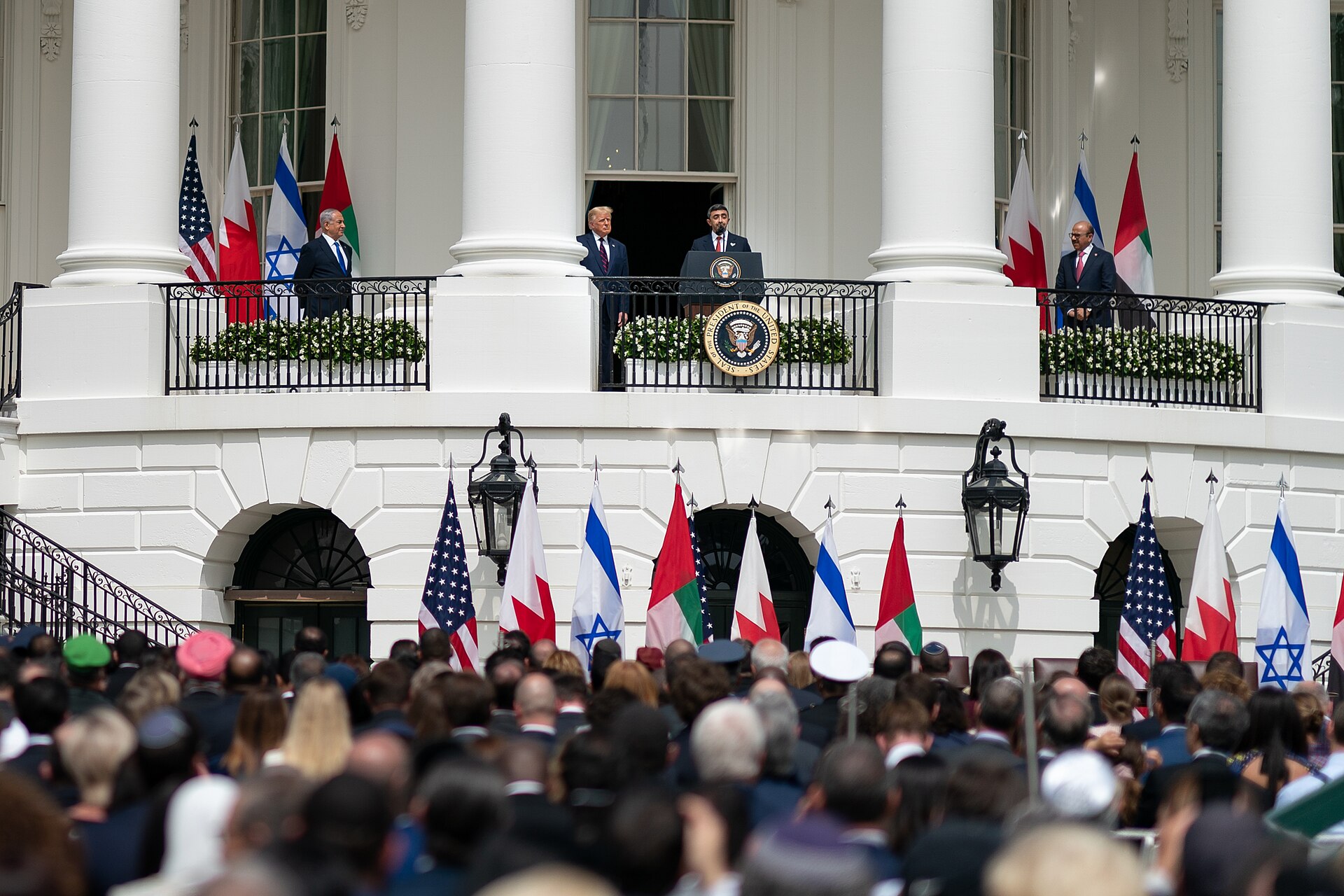
The protocol evidence corroborated the rhetoric. On May 2, the day the UAE’s OPEC exit took effect, Abu Dhabi sent its foreign minister — not MBZ — to the emergency GCC summit Riyadh convened in Jeddah. The downgrade was read across Gulf capitals as a deliberate signal. The ECFR’s analysis described Abu Dhabi as “increasingly unbound by Arab and Muslim consensus politics or inherited institutions such as OPEC,” noting that the Iran war “accelerated a strategic shift that was years in the making.” Foreign Policy identified three convergent forces behind the shift: the war itself, a deepening rivalry with Saudi Arabia, and a strategic realignment with Washington that predated the first Iranian missile.
When the MBS-MBZ phone call finally took place on May 13, Al Arabiya’s readout described a conversation about “fraternal relations,” “various aspects of cooperation and coordination,” and “regional developments and their serious implications for regional and international security and stability.” The language contained no joint commitment, no shared initiative, and no resolution mechanism. CNBC’s Joumanna Nasr Bercetche reported it was the first call between the two leaders since a rift emerged over Yemen in late 2025. MBS expressed “readiness to support the UAE with any measures it takes” — language that conceded initiative to Abu Dhabi rather than asserting Saudi primacy.
Iran, for its part, has responded to the UAE’s strategic choices by formally reclassifying the relationship. The IRGC joint command warned the UAE against turning its country into “the den of Americans and Zionists and their military forces and equipment to betray the world of Islam and Muslims.” Lawmaker Ali Khezrian told state television that the label of “neighbours” had been “lifted” and replaced with “hostile base.” This is not diplomatic friction. It is an explicit revocation of the neighborly status Iran maintained even after the 2020 Abraham Accords — driven not by the normalization itself but by the operational military consequences the war revealed.
The GCC was designed for a Gulf in which Saudi Arabia set the pace and other members followed within an institutional framework. That Gulf no longer exists. The question is not whether the GCC can be reformed — Gargash has answered that — but what replaces it. The answer, visible in the diplomatic traffic, the defense contracts, and the production data, is bilateral architecture: each Gulf state pursuing its own security bargains, its own production strategy, and its own great-power alignment. Abu Dhabi has moved first and furthest. Whether Riyadh adapts to the new geometry or tries to reassert the old one will determine which of Carnegie’s three scenarios materializes — but the scenario in which the pre-war Gulf order survives intact is already off the table.
Frequently Asked Questions
Has the UAE formally withdrawn from the GCC?
No — and a formal exit is unlikely in the near term. The GCC provides the UAE with diplomatic cover, a trade facilitation framework, and a collective Arab League posture that would be costly to abandon publicly. Abu Dhabi’s calculus is to render the GCC irrelevant rather than exit it — retaining the institutional label while hollowing out the strategic substance. That approach is cheaper than withdrawal and produces the same outcome. Formal exits create adversaries; quiet obsolescence does not.
Could Saudi Arabia impose economic costs on the UAE for its strategic independence?
The bilateral economic relationship constrains both sides. Saudi nationals and residents constitute a measurable share of UAE consumer and real estate demand, particularly in Dubai. But the dependency runs both ways: Saudi Arabia’s Vision 2030 infrastructure ambitions depend in part on logistics networks, financial intermediation, and professional talent pools concentrated in the UAE. Dubai International Financial Centre remains the Gulf’s dominant financial hub. Riyadh’s capacity to impose asymmetric economic pain on Abu Dhabi is limited by its own exposure — and by the political risk of opening a second front of economic confrontation while managing record war-era budget deficits and collapsed oil production.
How does Oman position itself between Saudi Arabia and the UAE?
Sultan Haitham bin Tariq has maintained Oman’s traditional neutrality, hosting Iranian and Western diplomatic traffic throughout the war while avoiding alignment with either Gulf camp. Oman’s geographic position — controlling the southern shore of the Strait of Hormuz — gives Muscat structural weight that neither Riyadh nor Abu Dhabi can afford to ignore. Oman Transport Minister Salim Al Maawali’s public rejection of Hormuz toll proposals — “No tolls can be imposed for crossing Hormuz” — demonstrated Muscat’s willingness to assert independent positions on the strait’s governance. Oman’s balancing act is sustainable precisely because neither Saudi Arabia nor the UAE can afford to alienate a country whose territorial waters shape the most contested waterway in the world.
What precedent does the UAE’s OPEC exit set for other producers?
Kazakhstan and Iraq both face OPEC+ quota allocations that undercount their production capacity — a structural grievance identical to the one that drove the UAE’s departure. Kazakhstan exceeded its OPEC+ quota repeatedly in 2025 and paid fines rather than reduce output. Iraq’s actual capacity has grown beyond its assigned baseline, and Baghdad has resisted calls for deeper compensatory cuts. The UAE’s exit removes the precedent of endurance — Abu Dhabi endured the quota gap for years before leaving, but the fact of departure demonstrates that exit is survivable and potentially advantageous. If Kazakhstan or Iraq follows, the production discipline that sustains current price floors collapses entirely, and Saudi Arabia’s ability to manage global oil markets through OPEC+ coordination ends.
Is the MBS-MBZ relationship personally reparable?
The relationship has a structural problem that personal diplomacy cannot solve. MBZ was the senior partner when the two leaders forged their alliance in the mid-2010s; MBS was his protégé. That dynamic inverted as MBS consolidated power and Saudi Arabia’s economic ambitions — Vision 2030, NEOM, the Aramco IPO — began directly competing with the UAE’s established model. The 2019 Aramco IPO pricing dispute, in which MBZ reportedly declined to provide the anchor investment MBS sought, was an early signal of strain. The war accelerated personal grievances into institutional facts: the OPEC exit, the Abraham Accords defense architecture, and the ceasefire divergence are not gestures that a phone call can retract. The May 13 call produced diplomatic boilerplate about “fraternal relations” — the language of managed distance, not reconciliation.