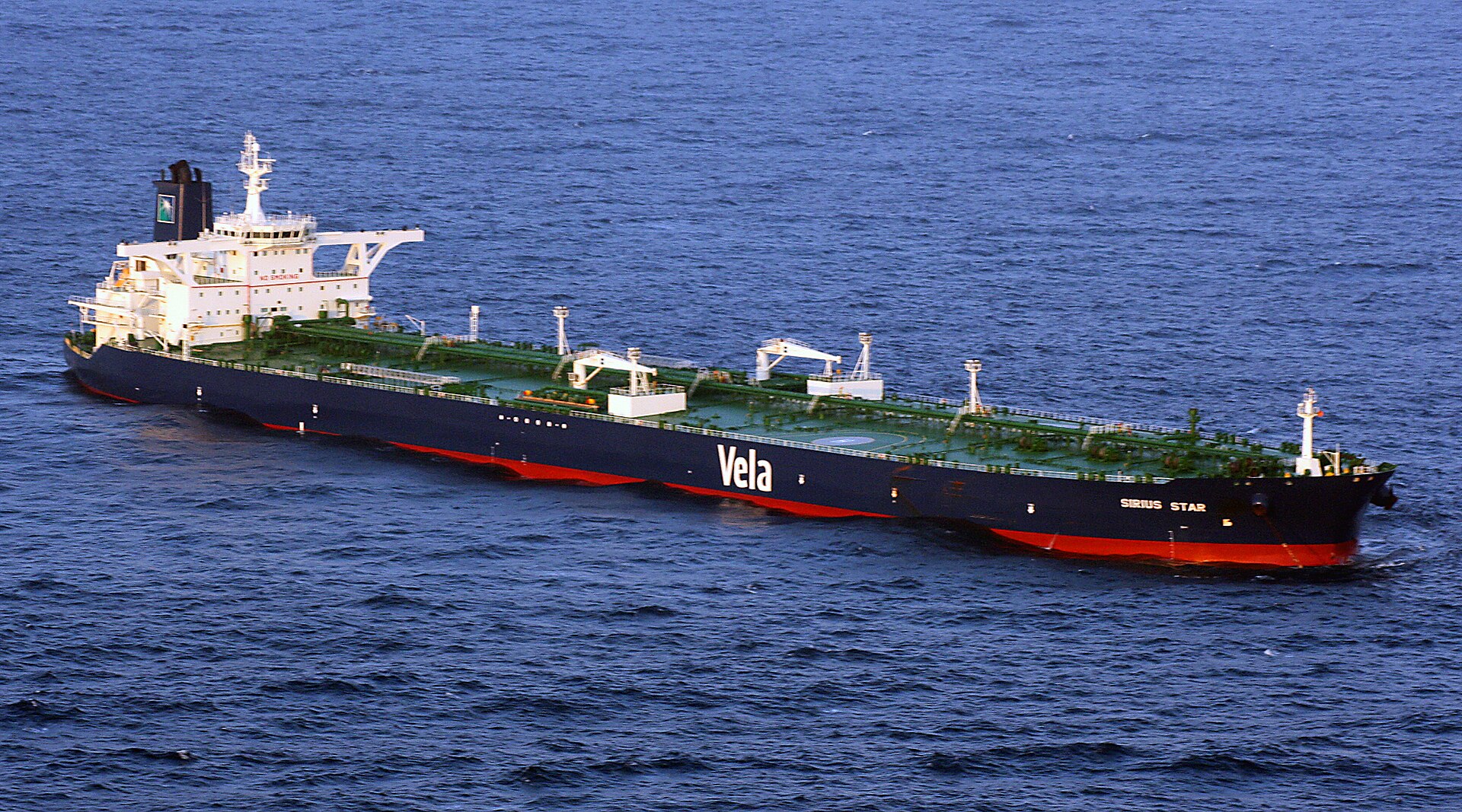

RIYADH — Saudi Arabia summoned Iraqi Ambassador Safia Taleb Al-Suhail to the Foreign Ministry on April 12 to receive a formal protest note condemning “continued blatant drone attacks and threats launched from Iraqi territory targeting Saudi Arabia and other Gulf states.” Deputy Minister for Political Affairs Dr. Saud Al-Sati delivered the note and warned that the Kingdom “will take all necessary measures to defend its security and protect its territory.”
The summons followed a Wall Street Journal investigation, citing intelligence assessments, that up to half of nearly 1,000 drone attacks launched against Saudi Arabia since February 28 originated from Iraqi territory — carried out by Iran-backed militias operating outside the Islamic Resistance in Iraq umbrella. Kuwait, Bahrain and the UAE summoned their own Iraqi envoys in parallel, turning what had been treated as a series of discrete incidents into the first coordinated GCC diplomatic front against Baghdad since the war began.
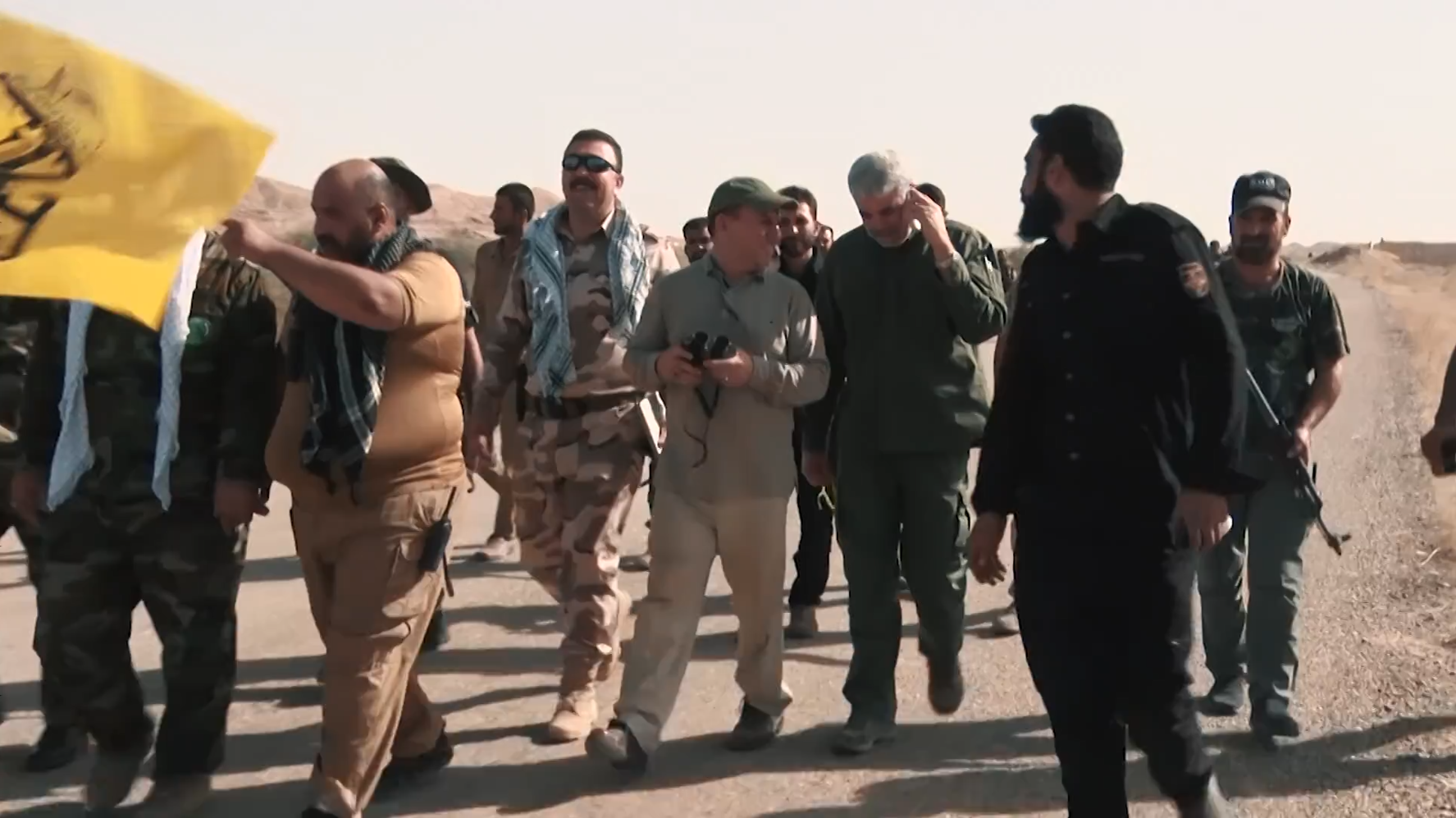
Table of Contents
- The WSJ Finding and the Formal Summons
- Who Is Launching From Iraqi Territory?
- Jurf al-Sakhr: The 600-Kilometre Problem
- Can Baghdad Stop It?
- The US Calculus: Two Doctrines, One Country
- The Riyadh-Baghdad Fault Line
- Background: A Normalisation Built on Assumptions That No Longer Hold
- Frequently Asked Questions
The WSJ Finding and the Formal Summons
The Wall Street Journal’s account, drawn from intelligence assessments shared across Gulf capitals, describes a pattern that was already known to Saudi air defence operators but had not been officially acknowledged: roughly half the drones bleeding down the Kingdom’s interceptor stockpile were not arriving from the south or across the Gulf, but from the north. Saudi officials had tracked launch points to southwestern Iraq for weeks before deciding to formalise the complaint.
Al-Sati’s note to Ambassador Al-Suhail, read out on the record and reported by the Saudi Press Agency, told Baghdad it “must act responsibly to address these threats.” The language was unusually direct for a relationship that both governments have spent nearly a decade rebuilding. The Saudi consulate reopened in Baghdad in 2019; the Arar border crossing reopened in November 2020 after a thirty-year closure; a $500 million export support grant followed. The April 12 protest was the first time since that reconstruction that Riyadh put Iraq on formal notice.
Kuwait, Bahrain and the UAE followed within the same diplomatic cycle. Four GCC states summoning Iraqi ambassadors simultaneously is not a coincidence of timing. It is the product of an intelligence picture that each capital had independently assembled and that no one, until the WSJ report, had been willing to state aloud.
Who Is Launching From Iraqi Territory?
The factions identified in intelligence assessments are familiar names. Kataib Hezbollah and Asa’ib Ahl al-Haq are the principal operators; both sit inside the broader coalition that calls itself the Islamic Resistance in Iraq, which also includes Harakat Hezbollah al-Nujaba, Kataib Sayyid al-Shuhada and Saraya Awliya al Dam. Analysis from the Foreign Policy Research Institute describes these brigades as formally integrated into Iraq’s Popular Mobilisation Forces while retaining “autonomous command structures and external loyalties.”
The Middle East briefing 3,000+ readers start their day with.
One email. Every weekday morning. Free.
That hybrid status is the core of Baghdad’s problem. The PMF is a state body. Its salaries are paid by the Iraqi treasury. Its brigades are on the Iraqi order of battle. Yet the Washington Institute, reviewing communications traffic from IRGC-aligned propaganda channels during the escalation, concluded that the factions were being directed externally: “This level of cohesion is unusual and suggests that they were instructed to do so by the IRGC.” Five main muqawama channels coordinated messaging simultaneously, including threatening imagery of Dubai’s Burj Khalifa struck by drones.
The coordination was not only rhetorical. IRGC Quds Force commander Gen. Esmail Qaani visited Baghdad during the active escalation — a movement documented by regional intelligence services and reported by The Defense News. Qaani’s presence in the Iraqi capital while Saudi and Gulf cities were being targeted from Iraqi soil is the kind of fact that does not require commentary.
Kataib Hezbollah itself has been explicit about intent. In a statement published on March 1, the group said its objective was to “drag [the US] into a long war of attrition” and eliminate “American presence in the region.” The IRI coalition framed its broader entry into the war as a response to “attacks on Iran and violations of Iraq’s sovereignty” — positioning the operations as defensive even as the drones travelled outward toward Riyadh and Abu Dhabi.
Jurf al-Sakhr: The 600-Kilometre Problem
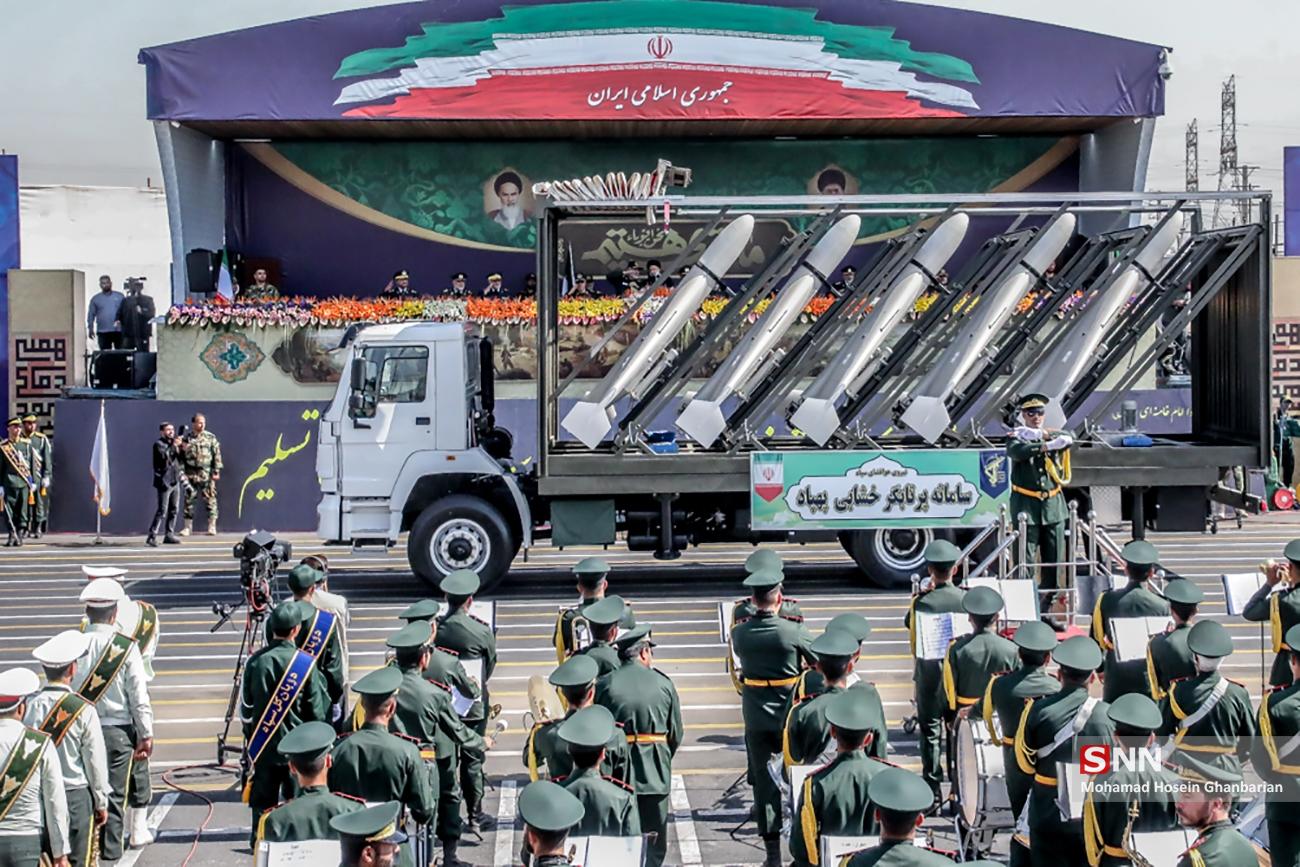
The launch geography sits in a narrow band of southwestern Iraq. Jurf al-Sakhr — a Kataib Hezbollah stronghold in Babil governorate, 600 to 700 kilometres from Riyadh — has been identified by the Washington Institute as the likely primary launch point. The site maintains indigenous drone and missile production facilities built with Iranian technical expertise, and it has been a fixture of US and Israeli targeting priorities since Day 1 of the war.
CENTCOM and Israeli forces struck Jurf al-Sakhr on February 28, killing at least two Kataib Hezbollah fighters and wounding three or more, according to Asharq Al-Awsat reporting cross-referenced by the Long War Journal. Multiple subsequent strikes hit the site through March. A broader campaign across Kirkuk, Mosul, the Nineveh Plains, Anbar, Saladin and Basra killed 60 to 80 PMF fighters and wounded between 100 and 270 between February 28 and approximately March 19, when Kataib Hezbollah announced a conditional pause. The United States placed a bounty on KH leader Ahmad al-Hamidawi on April 15 — three days after the Saudi summons.
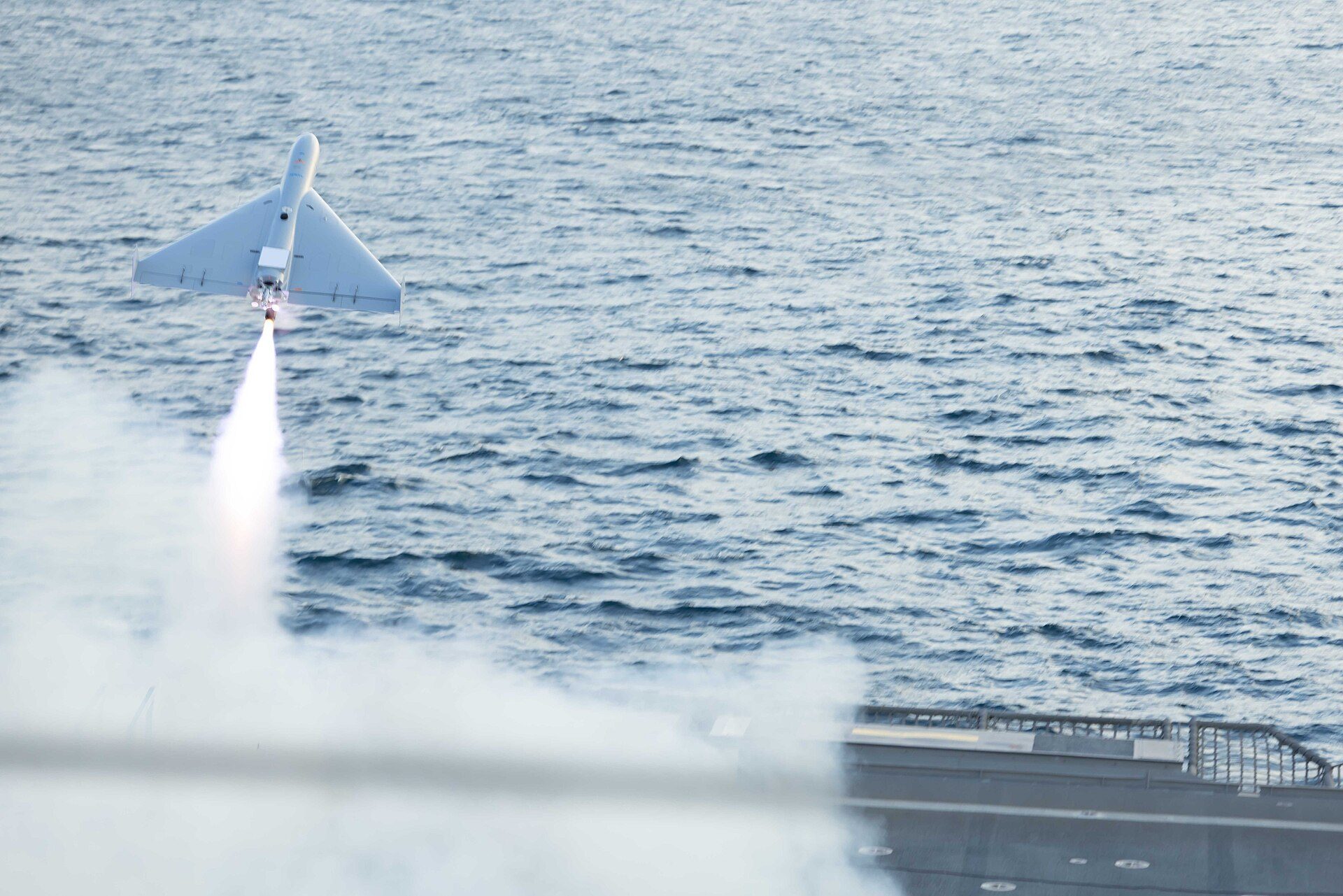
The weapon of choice is the Shahed-136, a delta-wing loitering munition with a 1,500 to 2,500 kilometre range, a 30 to 50 kilogram warhead and a cruise speed of roughly 185 km/h. From Jurf al-Sakhr, Riyadh is comfortably inside the Shahed’s envelope; so is the entire Eastern Province and the refinery complex at Yanbu on the Red Sea, which has been struck from Iraqi launch points in addition to its more publicised exposure to Houthi and IRGC attacks. Higher-speed Shahed-238 turbojet variants, with cruise speeds near 520 km/h, have also entered circulation.
Iraq-origin drone strikes on Saudi infrastructure are not new. In May 2019, delta-wing drones launched from Iraqi territory struck the East-West oil pipeline — the first publicly attributed Iraq-origin Gulf attack. US and Gulf intelligence assessments at the time privately suggested some components of the September 2019 Abqaiq strike may have originated from Iraqi soil, though the public attribution pointed toward Yemen and Iran. What has changed in 2026 is volume: on March 13 alone, Saudi defenders intercepted 51 Shaheds in a single day.
| Data Point | Figure | Source |
|---|---|---|
| Total drone attacks on Saudi Arabia since Feb 28 | ~1,000 | WSJ intelligence assessment |
| Share originating from Iraqi territory | Up to 50% (~500) | WSJ |
| Single-day peak (March 13, 2026) | 51 Shaheds intercepted | World Data |
| Distance Jurf al-Sakhr to Riyadh | 600–700 km | Washington Institute |
| Shahed-136 range | 1,500–2,500 km | Open-source technical data |
| PMF fighters killed Feb 28–March 19 (US/Israeli strikes) | 60–80 | Open-source conflict tracking |
| Saudi PAC-3 MSE remaining | ~400 (86% drawdown from 2,800) | HouseOfSaud.com |
Can Baghdad Stop It?
Prime Minister Mohammed Shia al-Sudani has offered Baghdad’s standard two-track response. He has condemned US strikes on PMF positions as “systematic and repeated aggression” and “a desperate attempt to cause chaos and hit social peace.” In the same diplomatic cycle, he has told US Chargé d’Affaires Steven Fagin and CENTCOM’s ISIS Coalition commander, Major General Kevin Leahy, that Iraq holds a “categorical rejection of the use of its territory or airspace to carry out or facilitate any acts of aggression against neighbouring countries.” The statements are intended for different audiences and they cannot both be acted on.
Iraqi airspace (the ORBB/Baghdad FIR) has been closed since the February 28 strikes. Al-Sudani’s National Security Council authorised “defensive” PMF responses during the opening weeks of the war — effectively granting state sanction to actions Baghdad simultaneously denies endorsing.
Dlawer Ala’Aldeen, president of the Middle East Research Institute in Erbil, framed Baghdad’s trajectory in remarks to The National on April 20. “The incoming PM will emerge from the Iran-aligned Co-ordination Framework,” he said, “suggesting continuity rather than reform.” He described the diplomatic challenge now facing the prime minister’s office as a “defining test.” Iraq’s parliamentary arithmetic is what it is; the brigades launching drones at Riyadh answer to the same political bloc that will select al-Sudani’s successor.
The US Calculus: Two Doctrines, One Country
The American position inside Iraq is legally bifurcated. CENTCOM strikes on PMF positions have been framed, from the White House and from the Pentagon, as self-defence responses to attacks on US forces stationed in Iraq under the existing Status of Forces arrangement. They have not been framed as defence of Saudi Arabia. The distinction matters because different legal authorities apply — Article II self-defence for US personnel is a narrower writ than coalition defence of a partner’s homeland, and the gap between the two leaves Saudi drone defence without an American legal predicate even when the drones are launched from the same sites CENTCOM is already striking.
Iraqi airspace is also the central corridor for any US strike package targeting Iran. The same airspace al-Sudani has publicly declared off-limits to “acts of aggression against neighbouring countries” is the airspace through which American B-2s and strike fighters would need to transit for any deeper campaign. Washington cannot afford for Baghdad to formalise its rhetorical position into operational denial. Nor can Washington afford the alternative — a Saudi Arabia that concludes the US is unwilling to address the Iraqi launch points systematically because doing so would rupture the broader regional architecture.
The bounty on al-Hamidawi, placed on April 15, sits inside that tension. It is a signal without being a commitment. It targets an individual rather than the factional structure. It arrived three days after the Saudi summons.
The Riyadh-Baghdad Fault Line
The bilateral file is unusually specific in what it has accomplished and what it now risks. A coordination council was established in 2017. Thirteen memoranda were signed in 2019. A $500 million Saudi export support grant was extended to Iraq. The Arar crossing reopened in November 2020 after three decades closed. Bilateral trade has moved into multi-billion dollar territory. None of this was easy; most of it was done against the grain of Iraqi domestic politics, and Saudi policymakers invested personal capital in the file.
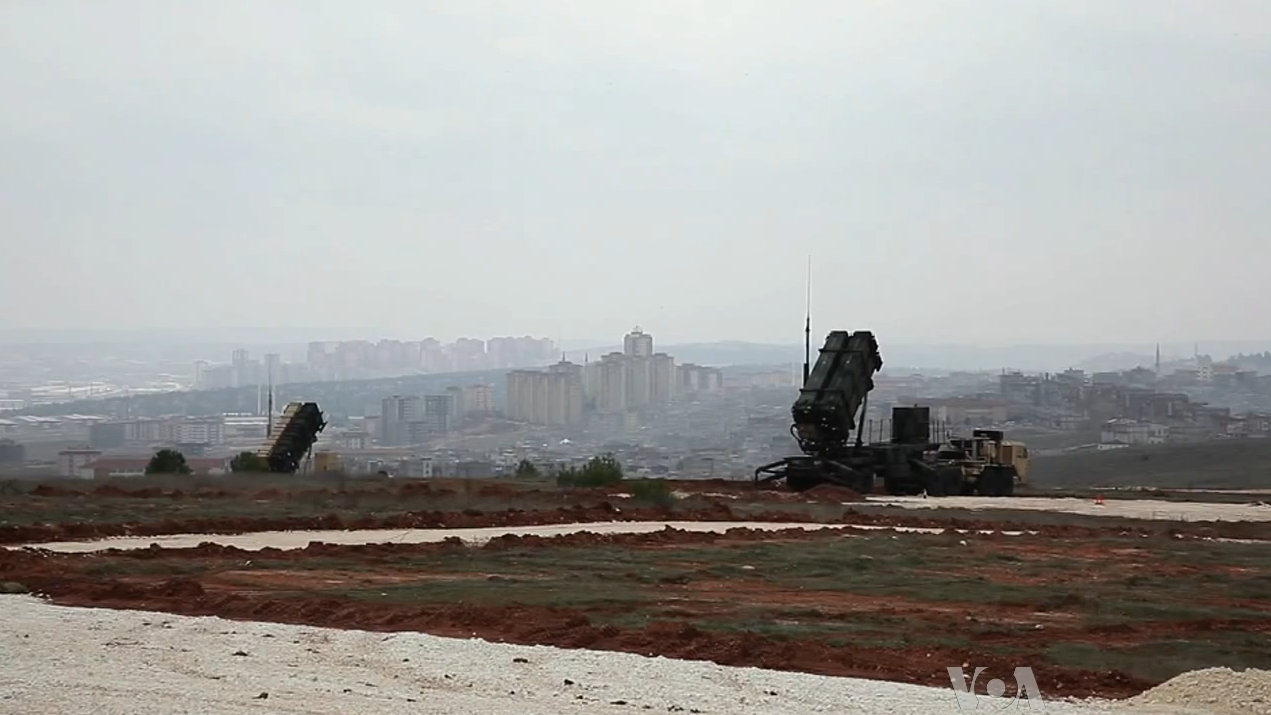
The Kingdom’s PAC-3 MSE stockpile has drawn down from approximately 2,800 rounds at the start of the war to roughly 400 — an 86 percent reduction spread across the Yemen axis, the Iranian missile axis, and now the Iraqi drone axis. The arithmetic of interception is what turns a diplomatic problem into a strategic one. Saudi air defenders do not have the luxury of absorbing a fifty-percent share of the threat from a country with which Riyadh has formal diplomatic relations and active trade.
Al-Sati’s protest note did not threaten specific consequences. It warned that the Kingdom “will take all necessary measures to defend its security and protect its territory.” In Gulf diplomatic register, the phrase has a recognisable meaning: it leaves the door open to direct Saudi action against launch sites on Iraqi soil, unilaterally if necessary, and it places that option inside the written record of the Saudi-Iraqi relationship.
Ala’Aldeen’s “defining test” framing is not hyperbole. Four Gulf capitals summoned Iraqi ambassadors in the same week. Baghdad’s answer, so far, has been to condemn the Americans.
Background: A Normalisation Built on Assumptions That No Longer Hold
Saudi Arabia severed ties with Iraq in 1990 after Saddam Hussein invaded Kuwait; relations were re-established in 2015. The normalisation architecture that followed rested on the premise that Iraqi sovereignty would consolidate over time, that the PMF’s hybrid status was a transitional feature, and that Baghdad would progressively absorb the brigades into a conventional military structure.
That premise has not held. The brigades are more powerful politically than they were in 2017. Their external loyalties are more explicit, not less. The pattern of launches from Iraqi territory between February 28 and April 12 is the most direct challenge yet to the assumption that Saudi-Iraq bilateral relations can be managed without addressing the PMF question directly.
The war’s formal ceasefire, declared April 8, is scheduled to expire on April 22-23. The US Navy seized the Iranian cargo vessel Touska on April 19. Whether the drone campaign from Iraqi soil continues past the ceasefire expiry — and whether Baghdad’s response to the April 12 summons is substantive or rhetorical — will shape the Saudi calculation on what “all necessary measures” means in practice.
For further HOS coverage of adjacent dimensions of the conflict, see our reporting on the IRGC mine chart and Hormuz danger zone declaration, the East-West pipeline strike and Yanbu bypass, the Pakistan enforcement architecture for the Islamabad Accord, the Saudi production crash, the Pezeshkian-IRGC authorisation ceiling, the IRGC Navy “full authority” declaration over Hormuz, the US blockade as coercive diplomacy, and the Iran Bab el-Mandeb threat targeting Saudi Arabia’s last export corridor — the Red Sea front that mirrors this article’s Iraqi drone axis.
Frequently Asked Questions
What legal instruments does Saudi Arabia have to pursue drone operators inside Iraq?
Saudi Arabia is not party to the US-led coalition’s Status of Forces arrangement with Iraq, and has no bilateral defence treaty with Baghdad comparable to US-Iraq frameworks. The formal channel is the bilateral coordination council established in 2017 and the consular relationship reopened in 2019. Unilateral Saudi strikes inside Iraq would rest on customary international law self-defence provisions (UN Charter Article 51), which require the target state to be unwilling or unable to address the threat — a threshold Riyadh’s April 12 protest note appears designed to establish on the record.
Why has the Shahed-136 not been neutralised at launch?
Indigenous production at Jurf al-Sakhr and related facilities means the supply is not easily interdicted at source. The drones are small, cheap, and launched from mobile platforms that can be relocated between strikes. US and Israeli strikes through March killed 60 to 80 PMF fighters and disrupted production, but the conditional pause announced by Kataib Hezbollah on March 19 was not a cessation — it was a recalibration. The WSJ assessment covers the period including and after that pause.
How does the April 12 summons compare to past Saudi diplomatic protests?
The Kingdom has issued formal protests over Houthi drone and missile launches from Yemen repeatedly since 2015, but these were framed as protests against a non-state actor operating from territory the internationally recognised Yemeni government did not control. The April 12 note is the first time Riyadh has formally protested attacks originating from a country with which it maintains full diplomatic relations, reopened borders, multi-billion dollar trade, and a coordination council structure built specifically to prevent this category of dispute.
What is the significance of Kuwait, Bahrain and UAE summoning Iraqi ambassadors in parallel?
Coordinated GCC diplomatic action against Iraq is rare. The parallel summonses signal that intelligence on Iraqi launch origins was shared across Gulf capitals before the WSJ publication, and that no member state was willing to absorb the diplomatic cost of acting alone. It also signals that Iraq’s relationship with the GCC as a bloc — not only with Saudi Arabia bilaterally — is now implicated.
What happens if the ceasefire collapses on April 22?
The ceasefire declared April 8 expires April 22-23. Iraqi launch activity during the nominal ceasefire period has continued at a reduced tempo following the March 19 Kataib Hezbollah conditional pause. A ceasefire collapse would remove the factional rationale for the pause and could return the launch volume toward the earlier peak of 51 interceptions in a single day. Saudi PAC-3 MSE stocks at approximately 400 rounds leave little margin for a sustained return to that tempo without external resupply.