
Najran is one of Saudi Arabia’s most historically layered destinations, a city where 4,000 years of continuous habitation have left behind fortified palaces, ancient ruins, and a living tradition of mud-brick architecture found nowhere else in the Kingdom. Tucked in the deep south near the Yemeni border, it remains well off the standard tourist circuit — which is precisely its appeal. This guide covers the two headline sites — the imposing Emara Palace and the Al-Ukhdood archaeological ruins — along with everything else worth seeing, eating, and planning in a region that rewards the curious traveller. If you are building a wider Saudi Arabia travel itinerary, Najran adds a dimension that Riyadh and Jeddah simply cannot match: the deep, ancient south.
Best Time to Visit: November to March (daytime 24–28°C, cool evenings)
Getting There: Fly to Najran Regional Airport (EAM) — direct flights from Riyadh (~1h 40m), Jeddah, and Dammam via Saudia, flynas, and flyadeal
Visa Required: Yes — tourist e-visa
Budget: $60–120 USD per day (Najran is affordable by Saudi standards)
Must-See: Al-Ukhdood archaeological ruins, Emara Palace, Hima UNESCO rock art
Avoid: Visiting June–August (extreme heat above 37°C) and approaching the Yemeni border zone
Why Visit Najran?
Najran sits at the crossroads of civilisations. For at least two millennia it served as a station on the ancient incense trade route, funnelling frankincense and myrrh northward from Yemen toward the Mediterranean. The Himyarite Kingdom, the Aksumite Empire, early Christian communities, and the first generations of Islam all left their marks here. The result is an archaeological density that rivals AlUla, minus the crowds.
The city also preserves around 230 traditional mud tower houses — multi-storey structures built using a distinctive Najrani technique called al-wathar, where courses of wet mud are layered onto stone foundations and left to dry in stages. Several of these towers are over 350 years old and still standing. For anyone interested in Saudi Arabia’s traditional architecture, Najran is essential.
Al-Ukhdood Archaeological Site
Al-Ukhdood (also spelled Al-Okhdood) is Najran’s most significant archaeological site, located approximately 14 km south of the city centre on the southern bank of Wadi Najran. The name means “the ditch” or “the trench” in Arabic — a direct reference to the events described in Surah Al-Buruj (Chapter 85) of the Quran, which tells of believers burned alive in fire-filled trenches for refusing to renounce their faith.
History of the Site
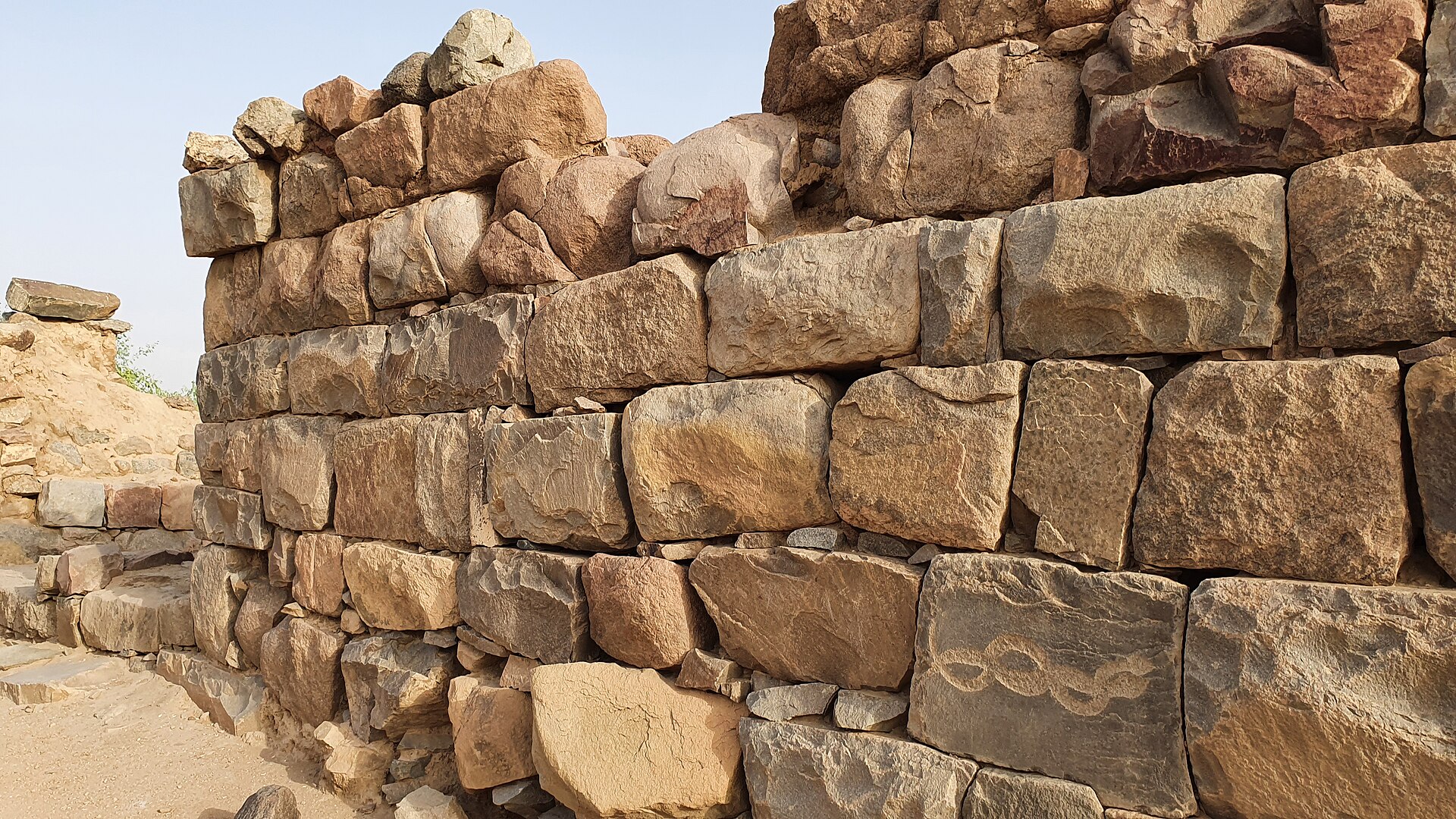
Settlement at Al-Ukhdood dates to at least 500 BCE. The central fortified city is enclosed by a wall measuring 235 metres long by 220 metres wide, constructed from hewn stone blocks at the base with mud-brick upper sections. The site functioned as a prosperous trading hub until the early 7th century CE, when the population migrated to what is now modern Najran. An early Islamic mosque was later built on the site — the oldest in Najran Province.
The most famous historical event associated with Al-Ukhdood is the massacre carried out by Dhu Nuwas (Yusuf As’ar Yath’ar), the last Jewish king of the Himyarite Kingdom, around 523 CE. After besieging Najran for six months, Dhu Nuwas ordered the execution of the Christian community when they refused to convert. Contemporary Sabaean inscriptions record approximately 1,000 killed and 1,500 taken prisoner. The atrocity triggered an invasion by the Aksumite Empire (modern Ethiopia) in 525 CE, backed by the Byzantine Emperor, which ended Himyarite rule permanently.
What You Can See Today
Excavations led by the Saudi Ministry of Culture since 1979, with collaboration from France’s CNRS in 2016, have uncovered remarkable finds across the 5 sq km site. Foundation walls stand 2–4 metres high in places. Visitors can walk among the ruins and see the outlines of the ancient fortified city, including residential quarters, religious structures, and the early mosque.
Key discoveries include the “Najran Treasure” — a pottery jar found in 2018 containing over 2,850 silver coins depicting Qataban and Himyarite kings, plus metal seals and stones engraved in the South Arabian Musnad script. A 230 cm granite inscription found at the site is the longest Musnad text discovered in the region. Other finds include three gold rings with butterfly engravings, a bronze bull head, Attic ceramics from the 3rd century BCE, and artifacts spanning from the Stone Age through the Umayyad and Abbasid periods.
The Al-Ukhdood Visitor Centre, established by the Heritage Commission, covers 300 sq m of indoor exhibition space and 3,400 sq m of outdoor displays with interactive exhibits. The ruins themselves are open access and free to visit. Al-Ukhdood is on Saudi Arabia’s UNESCO Tentative List but has not yet achieved full World Heritage status.
Tip: Combine Al-Ukhdood with a visit to the Hima Cultural Area, a UNESCO World Heritage Site approximately 100 km north of Najran. Hima contains over 6,400 rock art panels spanning 7,000 years — one of the largest petroglyph complexes in the world.
Emara Palace (Qasr Al-Emara)
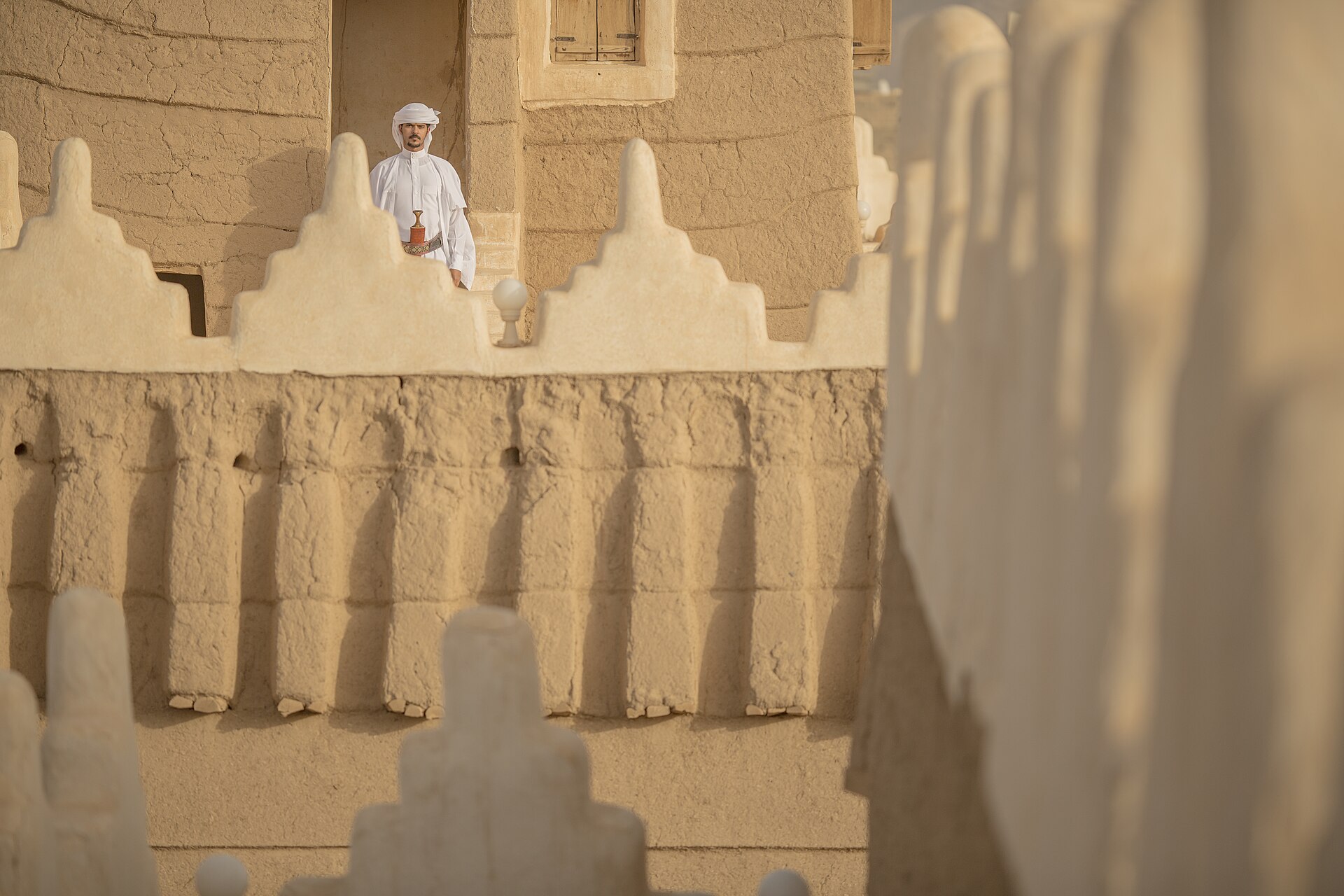
Emara Palace is Najran’s most recognisable landmark — a multi-storey mud-brick fortress that has served as the symbol of the city since its construction in 1942. Built during the tenure of Prince Turki bin Mohammed Al-Madhi, the tenth Emir of Najran, it served as the provincial governorate, courthouse, radio station, and princely residence.
Architecture and Layout
The palace covers approximately 625 square metres and contains 65 rooms spread across multiple floors. Its design reflects the Yemeni-influenced building tradition of Saudi Arabia’s deep south: thick insulating mud walls, narrow defensive doors, high windows with small slit-like openings, and round watchtowers on all four corners rising three to four storeys. The towers are distinctive for their white-painted tops, visible from across the city.
The construction came after the 1934 Treaty of Taif resolved the Saudi-Yemeni border and formally established Najran as a Saudi province. The palace was therefore a statement of sovereignty as much as a functional government building.
Visiting Today
Emara Palace now operates as a museum documenting the history of Najran Province. Inside you can see the original mosque, a pre-Islamic well, and historical displays covering the region from its earliest settlements through the modern Saudi era. Entry is free. The palace is located in the Aba Al-Saud Historical Area in central Najran.
Al-Aan Palace (Qasr Al-Aan)
Older and arguably more atmospheric than Emara Palace, Al-Aan Palace dates to 1688 and sits atop Al-Aan mountain overlooking the old city. This four-storey mud-brick structure is one of the finest surviving examples of Najran’s distinctive residential architecture. Each floor was historically occupied by one family. The palace is surrounded by a defensive wall with circular and rectangular towers, and offers panoramic views over Najran and the wadi.
The construction technique — the al-wathar method of building mud walls in successive stages on a stone foundation, with roofs of palm trunks, tamarisk wood, and Ziziphus branches coated in mud plaster and lime — is characteristic of Najran’s heritage village architecture. Entry is free.
Traditional Mud Architecture
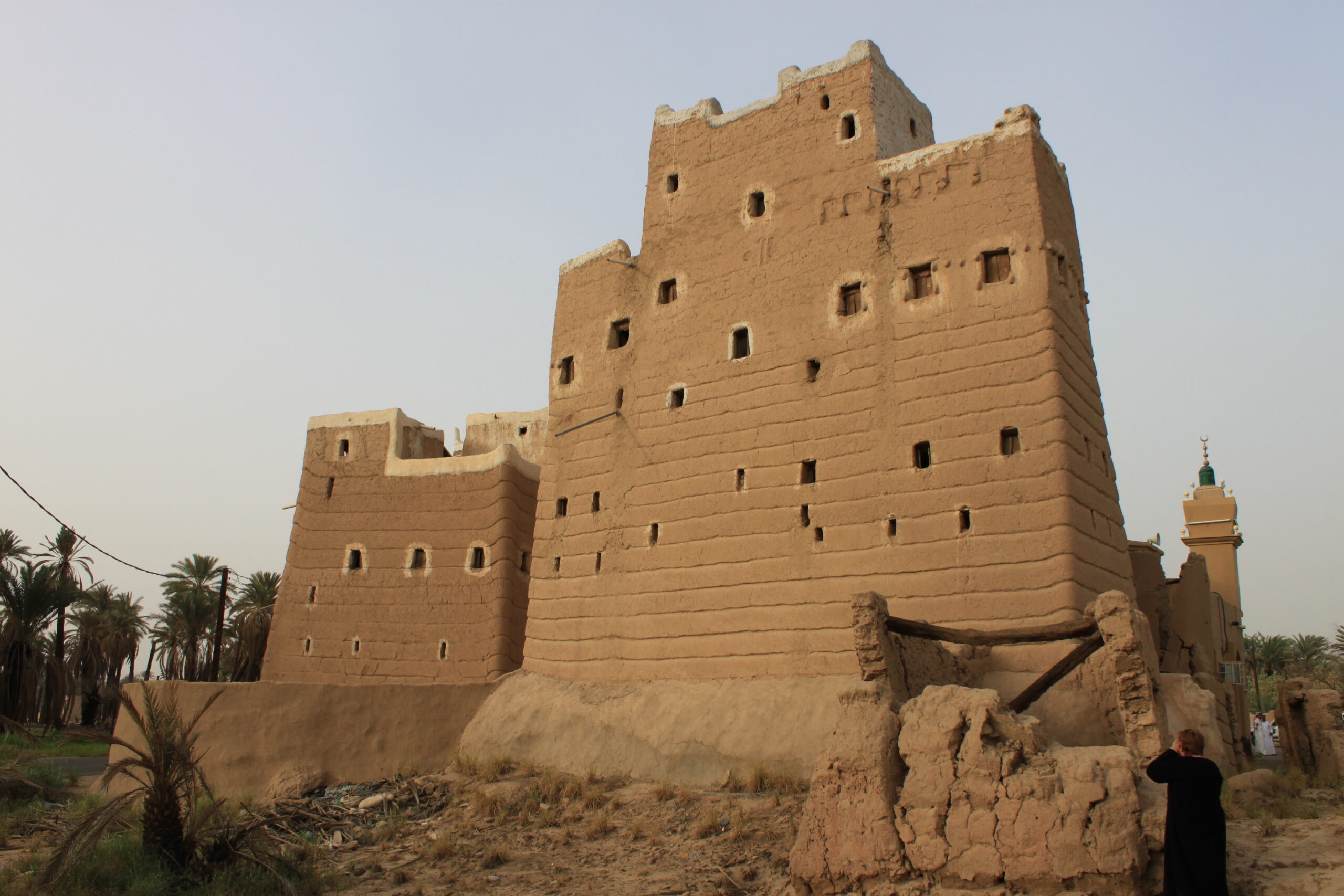
Najran preserves one of the most intact collections of traditional mud tower houses in the Arabian Peninsula. Around 230 structures survive across the city and its surrounding villages, many of them over 200 years old.
Al-Qabil Village
The best concentration of surviving mud houses is in Al-Qabil Village, where over 200 structures remain, some exceeding 350 years in age. The buildings vary in height from two to five storeys, with walls constructed in the traditional al-madmak stone-row method at the base and the al-wathar mud-layering technique above. Roofs use palm trunks or sidr wood coated with the al-qadad lime-and-mud plaster process. For travellers interested in heritage village experiences elsewhere in southern Saudi Arabia, Najran’s mud architecture offers a distinct contrast to the painted stone houses of Asir.
Other Najran Attractions
Najran Regional Museum
A logical starting point before visiting archaeological sites, the Najran Regional Museum displays pre-Islamic artifacts, Islamic-period items, traditional Najrani clothing, jewellery, pottery, and inscriptions. Entry is free. Opening hours are approximately 8:00 AM to 5:30 PM (confirm locally, as hours may vary during Ramadan and holidays). The museum provides useful context for understanding what you will see at Al-Ukhdood and Emara Palace, and is part of the wider Saudi museum network.
Aj-Janabi Souq (The Dagger Market)
Located in the Aba Al-Saud area west of the city, Aj-Janabi Souq is devoted to the janbiya — the curved dagger that remains a symbol of tribal identity in southern Saudi Arabia. Over 70 shops sell hand-forged daggers, leather holsters, and accessories alongside cardamom, coffee, silver jewellery, and handmade crafts. Premium daggers with ornate handles can fetch over SAR 250,000 (approximately $66,000 USD). Visit in the morning for the best atmosphere and selection.
Najran Valley Dam
Approximately 15 km southwest of the city, Najran Valley Dam is an arch dam on Wadi Najran with a capacity of around 100 million cubic metres. The reservoir area is popular for picnicking, hiking, fishing, and birdwatching — particularly rewarding during and after the brief rainy season (March–April). It is one of the few bodies of open water in this otherwise arid landscape and offers a welcome change of scenery.
Hima Cultural Area (UNESCO World Heritage Site)
About 100 km north of Najran, the Hima Cultural Area was inscribed as Saudi Arabia’s sixth UNESCO World Heritage Site. The site contains over 6,400 human and animal illustrations — including 1,800 camels and 1,300 human figures — alongside inscriptions in Musnad, Thamudic, Greek, and Arabic scripts spanning 7,000 years. The ancient wells of Bi’r Hima, dating back at least 3,000 years, still produce fresh water. The rock art is exceptional, though the site is remote with no facilities — bring water and sun protection.
Getting to Najran
By Air
Najran Regional Airport (IATA: EAM) receives direct flights from Riyadh (approximately 1 hour 40 minutes), Jeddah, and Dammam. Airlines serving the route include Saudia, flynas, and flyadeal. Flights are generally affordable, with fares from Riyadh starting around SAR 300–500 ($80–130 USD) return. The airport is approximately 20 km from the city centre.
By Road
Najran is approximately 280 km from Abha (about 3 hours driving) and roughly 950 km from Riyadh. The drive from Abha passes through dramatic highland scenery before descending into the Najran valley. A rental car is strongly recommended for exploring sites around the city, as public transport options within Najran are limited.
Visa Requirements
International visitors need a Saudi tourist e-visa, available online for citizens of 49 eligible countries. The visa costs approximately SAR 535 ($142 USD) including insurance, is valid for one year, and allows stays of up to 90 days per visit. Processing typically takes 5–30 minutes.
Where to Stay
Najran is not a luxury-hotel destination. Accommodation is functional and affordable, catering primarily to domestic travellers and business visitors.
| Hotel | Rating | Approx. Price/Night |
|---|---|---|
| Le Park Concord Hotel | 5-star | $80 USD |
| Park Inn by Radisson Najran | 4-star | $70–100 USD |
| Holiday Inn Najran | 4-star | $65–90 USD |
| Levant Hotel | 3-star | $50–70 USD |
| Florida Inn Hotel | Budget | $35–50 USD |
Book through major platforms (Booking.com, Agoda) for the best rates. Most hotels are clustered in the city centre, within 15–20 minutes’ drive of both Emara Palace and Al-Ukhdood.
Best Time to Visit
Najran has a hot desert climate. The ideal visiting window is November through March, when daytime temperatures range from 24–28°C and evenings are pleasantly cool at 10–15°C. Summer months (June–August) bring extreme heat above 37°C, making outdoor exploration of archaeological sites uncomfortable. Annual rainfall is minimal at around 50 mm, with the small wet season in March–April occasionally greening the wadi landscape.
Suggested Itinerary: 2–3 Days in Najran
Day 1: The City
- Morning: Najran Regional Museum for historical context
- Mid-morning: Emara Palace — explore the fortress-museum and the Aba Al-Saud historical quarter
- Lunch: Try haneed (slow-roasted lamb) or mandi at a local restaurant
- Afternoon: Al-Aan Palace for panoramic city views, then browse Aj-Janabi Souq for janbiya daggers and spices
- Evening: Walk through the old mud-house districts
- Morning: Al-Ukhdood archaeological site and visitor centre (allow 2–3 hours)
- Afternoon: Najran Valley Dam area for a change of scenery
- Evening: Explore Al-Qabil Village and its 200+ surviving mud tower houses
- Full day: Drive north to the Hima UNESCO World Heritage Site (2 hours each way). Pack water, food, and sun protection — there are no facilities at the site. The Hima rock art rewards the effort with panels spanning seven millennia of human expression.
- Language: Arabic is the primary language. English is limited outside hotels. Download an offline translation app.
- Currency: Saudi Riyal (SAR). Cards are widely accepted at hotels and larger shops; carry cash for souqs and smaller establishments.
- Dress code: Najran is conservative even by Saudi standards. Dress modestly — long sleeves and trousers for men, loose-fitting clothing covering arms and legs for women. A headscarf is appreciated though not strictly required for foreign women outside religious sites. See our full Saudi dress code guide for details.
- Photography: Always ask permission before photographing people, especially in the souq and residential areas. Archaeological sites are freely photographable.
- Transport: Rent a car. There is no metro or reliable public bus network. Ride-hailing apps (Uber, Careem) operate with limited coverage.
- Cultural sensitivity: Najran has strong tribal traditions. Respect local customs, greet elders first, and accept tea or coffee if offered — it is considered impolite to refuse. Our guide to Saudi culture covers the essentials.
- Saudi Arabia Travel Guide 2026 — The complete guide to visiting the Kingdom
- Hima Cultural Area — Saudi Arabia’s newest UNESCO World Heritage Site, 100 km north of Najran
- The Incense Route Through Saudi Arabia — Ancient trade roads that passed through Najran
- Saudi Heritage Villages — Traditional settlements across the Kingdom
- Saudi Arabia Rock Art Guide — Petroglyphs and inscriptions from Hima to Jubbah
- Saudi Arabia Visa Guide — Every visa type explained
Day 2: Al-Ukhdood and the Valley
Day 3 (Optional): Hima Day Trip
Practical Tips
Safety Note: Najran lies near the Saudi-Yemeni border. Several governments advise caution or against travel within 20–30 km of the border. Do not approach restricted military zones south of the city. Check your government’s latest travel advisory before booking. The archaeological sites and city centre are well north of the border zone and have historically been safe for visitors.