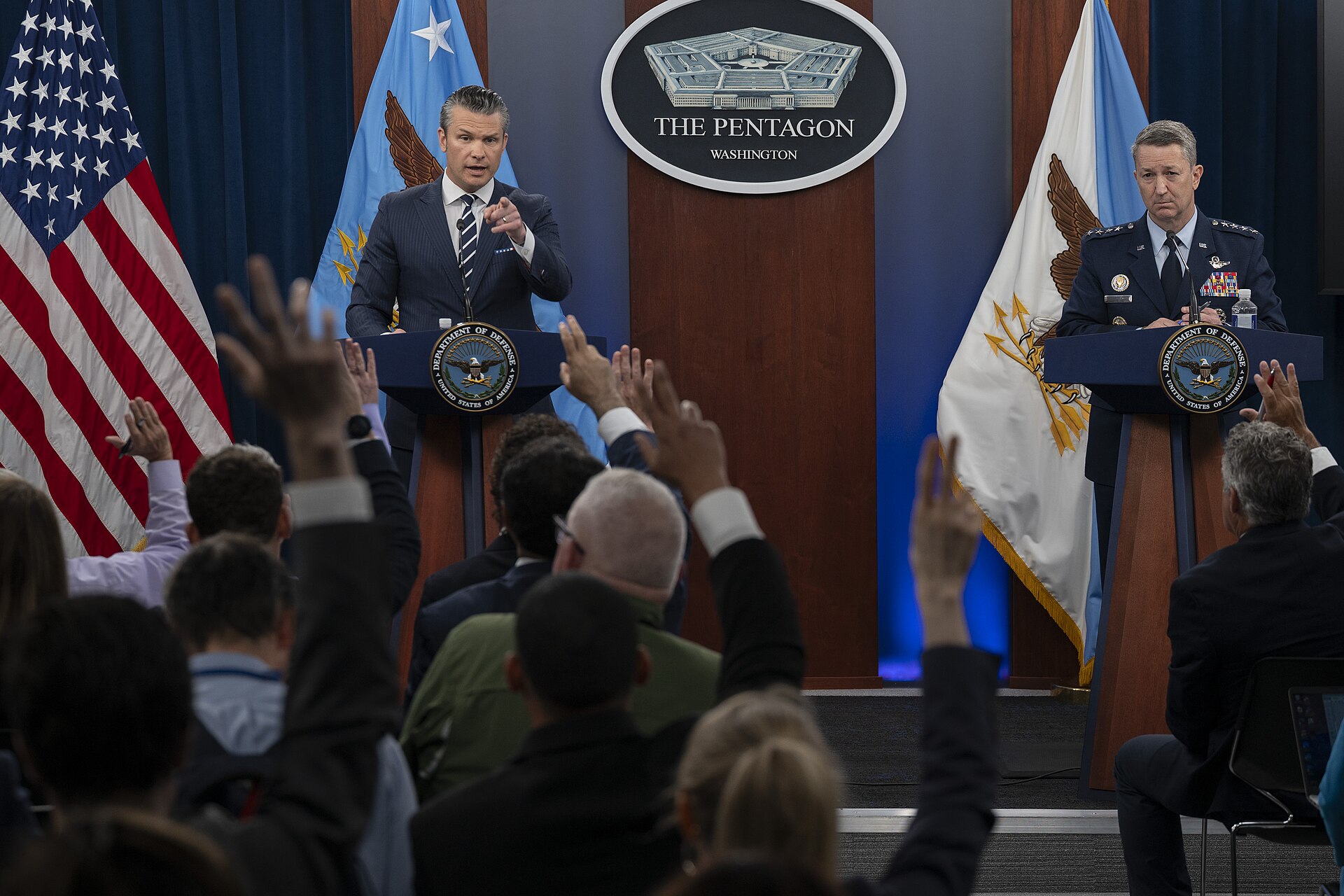
RIYADH — Saudi Arabia’s Public Investment Fund has formally abandoned the idea that The Line matters, and in doing so has answered the question that hung over Vision 2030 since the first missile struck Dhahran on February 28: which parts of MBS’s $925 billion investment empire were built on industrial logic, and which were built on the assumption that the world would keep watching in admiration. PIF Governor Yasir Al-Rumayyan, speaking after the fund’s board approved its 2026–2030 strategy on April 15, made the hierarchy explicit: “Is having The Line by 2030 important? I don’t think so. What we must have is Oxagon.” That single sentence — delivered to Al Arabiya in the casual register of a man disclosing something he has known for months — rewrites the capital allocation map of the largest economic diversification programme in modern history, redirecting 80 percent of PIF’s deployable capital to domestic projects and cutting international exposure from a peak of 30 percent to 20.
The implications extend well beyond construction schedules in the Tabuk desert. PIF’s international portfolio — Newcastle United, LIV Golf, a $45 billion commitment to SoftBank’s Vision Fund, a controlling stake in Lucid Motors, nearly 10 percent of Uber — was not just an investment strategy but Saudi Arabia’s primary soft-power projection vehicle outside oil. Shrinking that portfolio while a war craters Aramco’s production base doesn’t merely adjust a sovereign wealth fund’s risk profile; it quietly dismantles the influence architecture that made the Kingdom’s post-oil identity legible to the world.
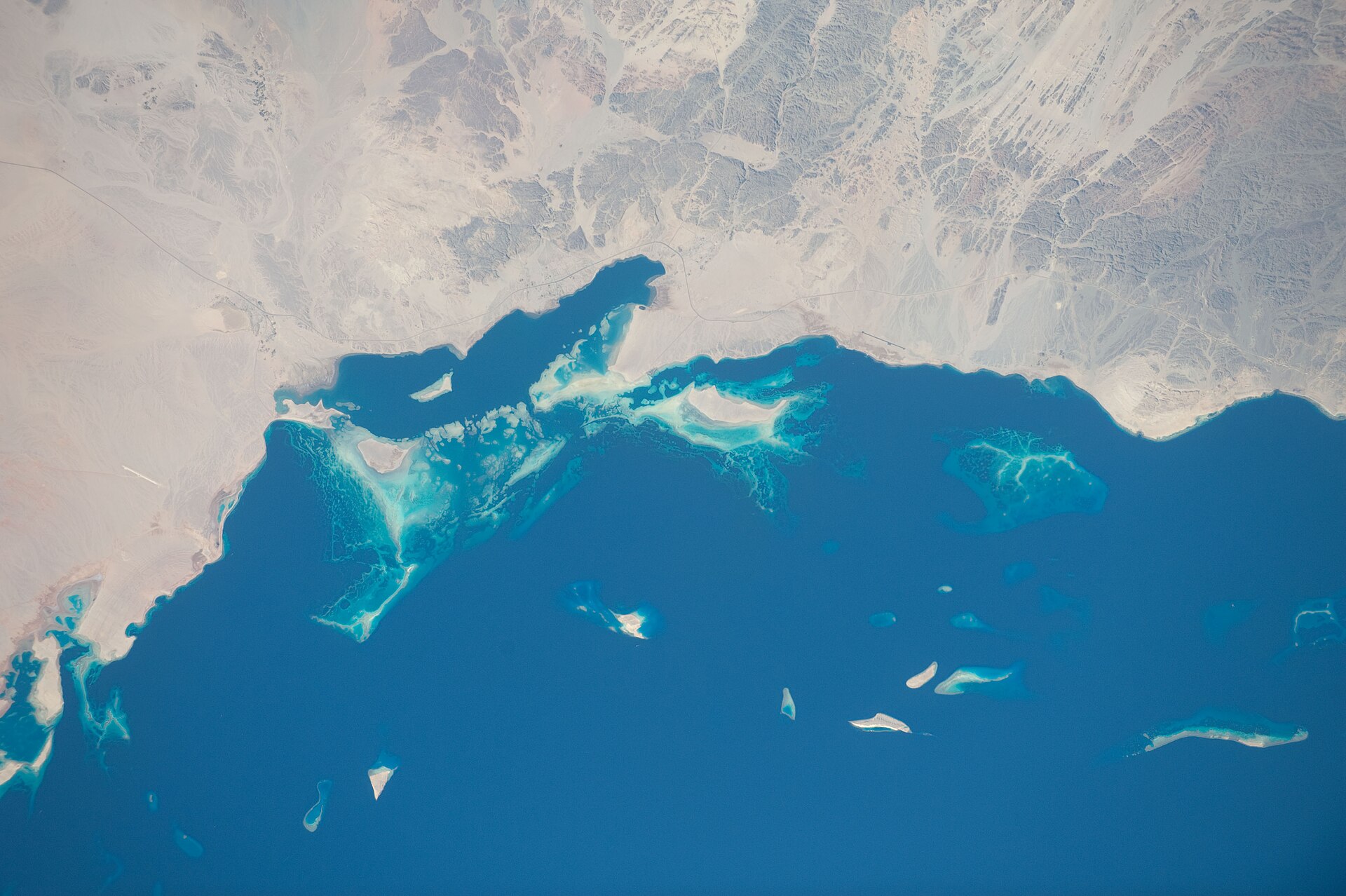
Table of Contents
- What PIF Actually Approved on April 15
- The Line’s Arithmetic Was Always Fantasy
- What Is Oxagon, and Why Does Al-Rumayyan Need It?
- Oxagon’s Credibility Problem: 12 Tenants, 4 Construction Sites
- Humain: $23 Billion in Partnerships Nobody Can See
- How Does the 80% Domestic Pivot Dismantle Saudi Soft Power?
- The Wartime Fiscal Reckoning
- Can Aramco’s Dividend Survive the War?
- What Survives Vision 2030?
- FAQ
What PIF Actually Approved on April 15
The PIF board — chaired by Crown Prince Mohammed bin Salman — approved the fund’s second five-year strategy on April 15, 2026, replacing the 2021–2025 plan that had nominally targeted 70 percent domestic allocation. The new strategy raises domestic commitment to 80 percent and organises PIF’s portfolio around six “ecosystems”: tourism, travel, and entertainment; urban development and livability; advanced manufacturing and innovation; industrials and logistics; clean energy, water, and renewables; and NEOM as a standalone ecosystem with its own capital allocation framework. The international allocation drops to 20 percent, down from the approximately 30 percent that characterised PIF’s most aggressive overseas expansion period between 2016 and 2023, when Al-Rumayyan deployed $45 billion into SoftBank’s first Vision Fund alone.
Al-Rumayyan described the shift as “aimed at becoming a more efficient and returns-driven investment vehicle,” language that Tim Callen — a former IMF mission chief for Saudi Arabia now at the Arab Gulf States Institute — translated more bluntly: “It makes sense that PIF is cutting capex because previous ambitions were too lofty.” The fund’s construction commitments have already dropped from $71 billion to $30 billion, with the April strategy adding a further 15 percent cut. That represents a total construction-spending reduction of roughly $50 billion in under eighteen months, a pace of capital retrenchment that has no sovereign wealth fund precedent.
PIF’s total assets under management stand at approximately $925 billion, making it the fifth-largest sovereign wealth fund globally and the largest in the Middle East. Its cumulative contribution to Saudi non-oil GDP between 2021 and 2024 reached $243 billion, or roughly 10 percent of the non-oil economy — a figure that reveals both the fund’s centrality to the diversification project and the scale of dislocation that follows when it pulls back.
The Line’s Arithmetic Was Always Fantasy
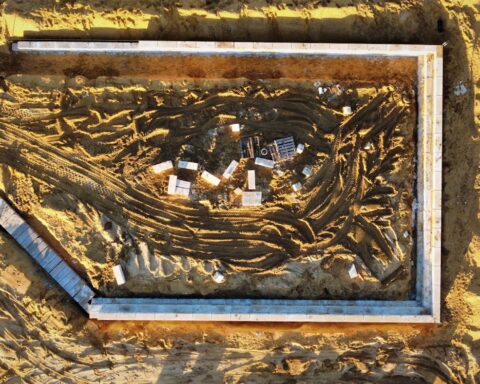
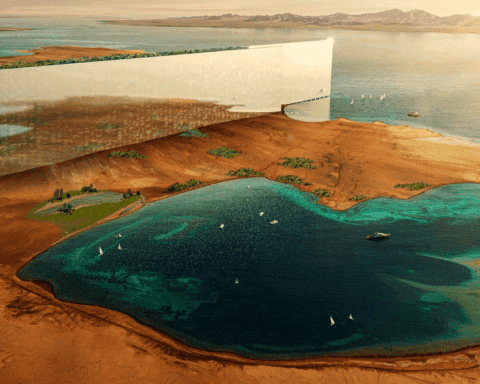
The Line was announced in January 2021 as a 170-kilometre linear city, 200 metres wide and 500 metres tall, housing nine million residents at zero carbon emissions and zero car traffic, at an official cost of $500 billion. It was formally suspended on September 16, 2025, with only 2.4 kilometres of the 170-kilometre structure completed — a delivery rate of 1.4 percent. An internal NEOM audit, portions of which were reported by Bloomberg in April 2024, projected the actual total cost at $8.8 trillion with a realistic completion date of 2080, and recommended reducing the 2030 population target from 1.5 million to under 300,000.
The Middle East briefing 3,000+ readers start their day with.
One email. Every weekday morning. Free.
That audit was completed before a single Iranian missile hit Saudi territory. The war did not kill The Line — the arithmetic killed it, and the war merely removed the political cover that had allowed MBS to keep funding a structure whose internal cost estimate exceeded the GDP of every country on earth except the United States and China. Roughly $50 billion had been spent before suspension, including terminated contracts with Hyundai Engineering & Construction ($540 million) and Webuild, whose workers were among the last to leave the Tabuk construction site. The Trojena alpine ski resort, another NEOM signature project requiring artificial snow generation in a desert mountain range, was suspended on the same timeline.
NEOM Deputy CEO Rayan Fayez acknowledged the $50 billion figure at Davos in early 2025, framing it as investment rather than sunk cost. But with the fund’s cash reserves at approximately $15 billion as of late 2024 — the lowest since 2020 — and annual deployment targets of $40–70 billion requiring capital-markets borrowing to sustain, the distinction between investment and sunk cost is one that only survives inside a boardroom.

What Is Oxagon, and Why Does Al-Rumayyan Need It?
Oxagon was announced alongside The Line in 2021 as a floating octagonal industrial city — a geometric impossibility that generated the same breathless architectural renderings and the same scepticism. What Al-Rumayyan is actually elevating, however, is not the floating octagon (now pushed to the early 2030s at the earliest) but a conventional onshore industrial complex: a port terminal, a green hydrogen plant, and an AI data centre campus. The rebranding tells the story precisely because it is boring — the components that survived are the ones that generate revenue without requiring visitors to suspend their understanding of physics.
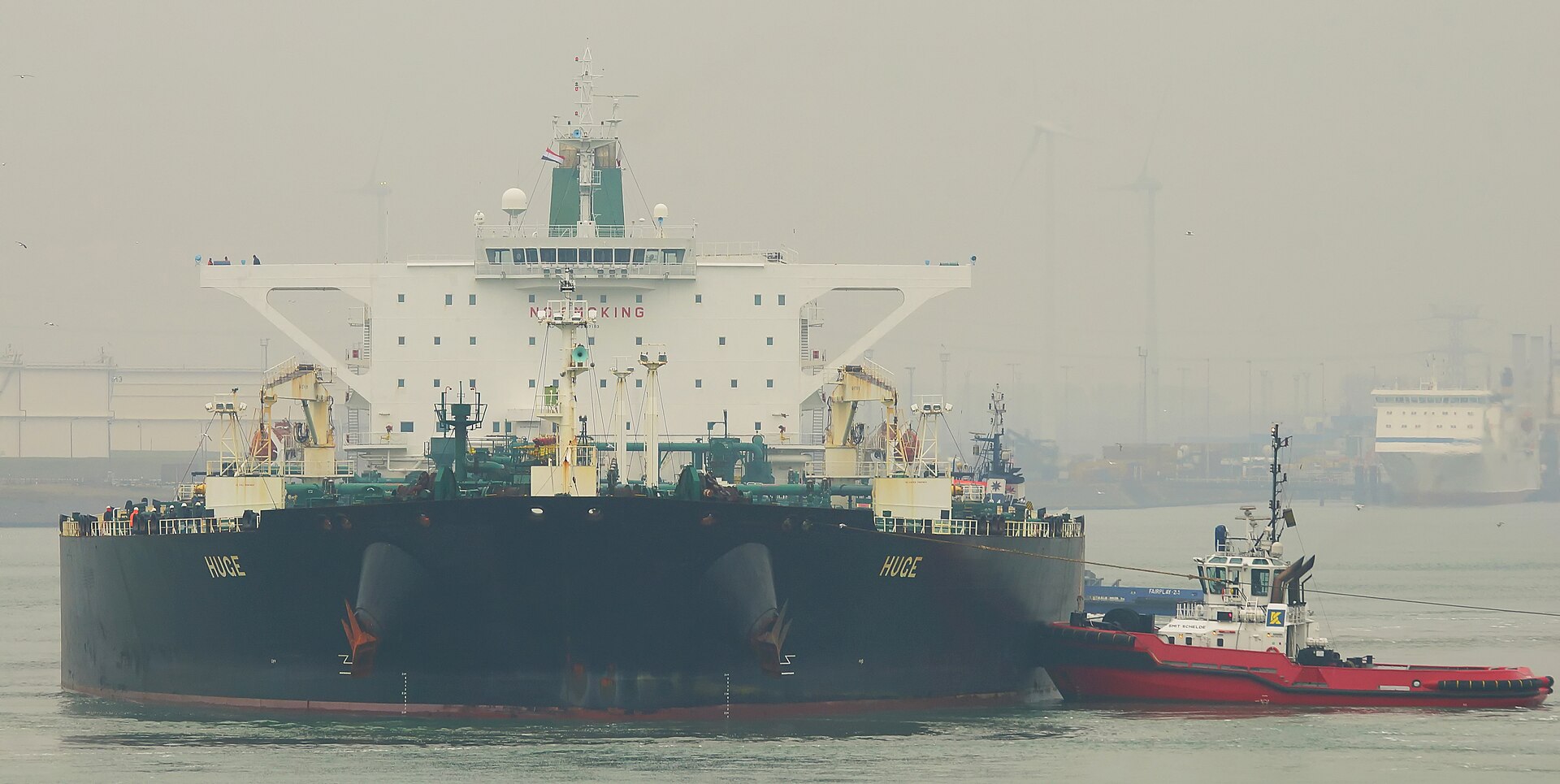
Port Terminal 1, scheduled for commissioning in 2026, offers 1.5 million TEU capacity with a 900-metre quay and Saudi Arabia’s first fully automated ship-to-shore cranes. In a wartime context where Saudi crude exports through the Eastern Province have collapsed by 38.6 percent and the East-West Pipeline’s Yanbu bypass handles a maximum of 4–5.9 million barrels per day against pre-war Hormuz throughput of 7–7.5 million, a functioning Red Sea port with automated logistics on the northwestern coast is not a vanity project but infrastructure with immediate strategic utility. It sits outside the Iranian missile envelope that has already struck Ras Tanura and Khurais, and it provides diversified export capacity at a moment when every barrel routed through the Eastern Province carries both physical and insurance risk.
The NEOM Green Hydrogen Company (NGHC) is the anchor tenant and, at 80–90 percent construction completion, the only major Oxagon project that doesn’t require government subsidy to service its debt. The $8.4 billion facility — an equal joint venture between ACWA Power, Air Products, and NEOM — secured $6.1 billion in non-recourse third-party financing from 23 banks and a 30-year off-take agreement with Air Products for green ammonia exports. At 600 tonnes per day of carbon-free hydrogen, it represents the largest green hydrogen production facility under construction anywhere in the world, with first exports via the Oxagon jetty expected in 2027.
Oxagon’s Credibility Problem: 12 Tenants, 4 Construction Sites
The gap between Al-Rumayyan’s rhetoric and Oxagon’s physical reality is measurable. Of twelve commercial tenant agreements signed between 2022 and 2025, only four have progressed to physical construction. Five remain in the signed-agreement stage with no ground activity, and three appear dormant — a 33 percent conversion rate that would concern any industrial park developer, let alone one positioned as the centrepiece of the Kingdom’s sovereign wealth strategy. Middle East Insider’s tracking, published in March 2026, identified the pattern before the PIF board formalised it.
The tenants who have broken ground include DataVolt, which signed a $5 billion agreement in February 2026 for a 1.5 GW net-zero AI data centre at Oxagon, with Phase 1 (300 MW) targeted for 2028 operations, and AHG, which signed a SAR 600 million land lease for an industrial gases facility with groundbreaking in February 2026 and operations expected by late 2026. These are real commitments with real capital behind them, but they are also the only two non-NGHC commercial signings of any scale to result in construction activity in more than three years of marketing. Rachel Ziemba of Ziemba Insights, who tracks PIF’s international portfolio, noted that she is “not certain the new strategy will be a game changer” — a measured assessment that applies with equal force to the domestic strategy’s dependence on a handful of anchor projects carrying the weight of an entire industrial zone.
The floating octagonal platform that gave Oxagon its name and its renderings has been pushed to the early 2030s, which in Saudi megaproject timelines means it may never be built. What PIF is actually betting on is a land-based port-plus-hydrogen-plus-data-centre triangle, positioned on the Red Sea coast with defensible wartime logic and two anchor tenants whose financing structures don’t depend on PIF’s balance sheet. That is a more credible proposition than a mirror-clad linear city in the desert — but it is also a dramatically smaller ambition than anything Vision 2030 originally promised.
Humain: $23 Billion in Partnerships Nobody Can See
The most aggressive element of PIF’s new strategy is also the least visible. Humain, the fund’s AI subsidiary launched in 2025, amassed $23 billion in technology partnerships within eleven months — a deployment pace that exceeds even PIF’s 2016–2017 SoftBank spending. The portfolio includes a $10 billion deal with AMD for 500 MW of AI compute over five years, a $5 billion AWS commitment to build a dedicated AI Zone in Saudi Arabia, a $3 billion investment in Elon Musk’s xAI that made Humain a “large minority shareholder,” and a $3 billion data centre deal with Blackstone’s AirTrunk platform. PIF’s $41 billion reduction in construction spending was redirected substantially toward these technology partnerships — physical concrete exchanged for computational infrastructure.
The strategic logic is sound: AI data centres generate recurring revenue from hyperscaler tenants, create technology-transfer pathways that construction megaprojects never did, and position Saudi Arabia in a global compute supply chain rather than a tourism marketing contest. But there is a political problem that Al-Rumayyan’s strategy documents don’t address. The Line, for all its engineering absurdity, was a narrative instrument of extraordinary power — a visual argument that Saudi Arabia was building the future, legible to anyone who had ever seen a YouTube rendering. Humain’s $23 billion in partnerships are commitments with 2028-plus delivery dates, producing invisible infrastructure that is functionally impossible to narrate to a domestic audience accustomed to seeing cranes and concrete as proof of national transformation.
Karen Young at Columbia’s Center on Global Energy Policy has described PIF as simultaneously “the deployer of capital” and “an attractor of capital, and has the geographic location to be central as a supply centre.” That dual role is more credible when the deployment takes the form of partnerships with AMD and AWS than when it takes the form of a 170-kilometre mirrored wall — but credibility and visibility are different currencies, and MBS has historically needed both.
How Does the 80% Domestic Pivot Dismantle Saudi Soft Power?
PIF’s international portfolio was never primarily about returns. The fund’s overall portfolio delivered approximately 0 percent return in 2024, against an average of 8.7 percent between 2017 and 2024 — a performance collapse that Callen attributes partly to the concentration risk of holding legacy positions while deploying into pre-revenue ventures. But Newcastle United, LIV Golf, Lucid Motors, and the SoftBank Vision Fund served a function that no return metric captures: they made Saudi Arabia a presence in boardrooms, sports media, and technology ecosystems where the Kingdom had previously been visible only as an oil supplier and an arms customer.
That architecture is now being dismantled piece by piece. LIV Golf, into which PIF invested $5.3 billion, has confirmed that funding ends after the 2026 season, with CEO Scott O’Neil acknowledging publicly that “I have to work like crazy to keep it going.” Kristian Coates Ulrichsen at Rice University’s Baker Institute described the exit as “recognition that this is another project that has been loss-making and doesn’t maybe tie into domestic Saudi economic interests.” PIF sold its 70 percent stake in Al-Hilal football club to Kingdom Holding Company for £276 million — a minor transaction in portfolio terms but a signal that even domestic sports ownership, once a core element of the entertainment-economy thesis, is being rationalised. Key players like Brooks Koepka and Patrick Reed have already returned to the PGA Tour, an exodus that tells the sponsorship market everything it needs to know about where the momentum lies. The concurrent HUMAIN signings with McKinsey and Accenture — announced within twenty days of the LIV exit confirmation — mark the institutional close of the soft-power portfolio and the opening of PIF’s AI infrastructure era.
The one notable exception is Lucid Motors, which received a fresh $550 million PIF injection in April 2026 despite the fund’s broader retrenchment. Lucid has a manufacturing facility under construction in King Abdullah Economic City — the kind of technology-transfer-plus-domestic-production arrangement that survives the new strategy’s logic, unlike a golf league whose only Saudi footprint was a wire transfer. Ziemba expects a broader pattern: “We are likely to see a slower pace of investments in the US” with a pivot toward companies offering “expertise that could be deployed in Saudi Arabia.” The international positions that survive will be those that deliver technology on Saudi soil, not those that deliver headlines in Western sports pages.
Neil Quilliam at Chatham House has warned of a different consequence: “expatriate retention crises for Riyadh HQs” as the soft-power narrative that attracted foreign executives — the excitement of building something unprecedented — gives way to the harder sell of wartime austerity and conventional industrial policy. Every multinational regional headquarters that relocated to Riyadh under Vision 2030’s ultimatum (move or lose government contracts) did so on the implicit promise that Saudi Arabia was becoming a destination, not merely a market. The pivot from spectacle to substance may be financially rational, but it removes the narrative scaffolding that made Riyadh attractive to the talent that every knowledge-economy aspiration requires.
The Wartime Fiscal Reckoning
The 80 percent domestic pivot cannot be understood outside the wartime fiscal environment that made it inevitable. Saudi crude production fell from 10.4 million barrels per day in February to 7.25 million in March — a 3.15 million bpd collapse that the IEA called “the largest disruption on record.” Khurais, which produced 300,000 bpd, remains offline with no timeline for restoration. Aramco’s Q1 2026 results showed a 57 percent profit surge driven entirely by price — Brent averaged above $100 for the quarter — masking the production loss that will become the dominant variable once prices normalise. Asia-bound exports dropped 38.6 percent according to Kpler tracking data, and OPEC+ quotas remain set at 10.2 million bpd, some 3 million barrels above Saudi Arabia’s actual output capacity.
Goldman Sachs models the real 2026 fiscal deficit at $80–90 billion, roughly double the official $44 billion projection, with a war-adjusted GDP deficit of 6.6 percent. Bank of America’s estimate is slightly more conservative at approximately 5 percent. Jadwa Investment, the Riyadh-based advisory firm, published a March 15 research note projecting that the war could add SAR 80–120 billion ($21–32 billion) in unbudgeted defence and emergency spending for the remainder of 2026. The IMF cut its Saudi GDP growth forecast from 4.5 percent to 3.1 percent in its April 2026 World Economic Outlook, and Q4 2025 was already Saudi Arabia’s largest quarterly budget deficit since 2020 before the war’s fiscal impact had fully materialised.
Against this backdrop, PIF’s cash position of approximately $15 billion is not a war chest but a rounding error. The fund’s annual deployment target of $40–70 billion requires continuous capital-markets borrowing, and the shift to 80 percent domestic allocation is partly an acknowledgement that borrowing to fund international prestige investments — a golf league here, a football club there — is no longer defensible when the revenue base that underwrites PIF’s creditworthiness is being physically destroyed by Iranian ballistic missiles.
| Metric | Pre-War (2024) | Wartime (2026) | Change |
|---|---|---|---|
| AUM | ~$930B | ~$925B | -0.5% |
| Portfolio return | ~0% | TBD | vs. 8.7% avg (2017–24) |
| Cash reserves | ~$15B | Below $15B (est.) | Lowest since 2020 |
| Construction commitments | $71B | ~$25.5B | -64% |
| International allocation | ~30% | 20% (target) | -10 ppts |
| Aramco dividend income (PIF share) | ~$20B | ~$14B (base only) | -30% |
| Saudi crude production | 10.4M bpd | 7.25M bpd (March) | -30% |
Can Aramco’s Dividend Survive the War?
PIF holds 16 percent of Saudi Aramco, which translates to approximately $14 billion annually from Aramco’s declared 2026 base dividend of $87.6 billion. The Ministry of Finance holds 81.5 percent, making the base dividend the single largest line item in the Saudi government’s revenue structure and the one commitment Aramco cannot walk away from without triggering a sovereign fiscal crisis. But the base dividend was declared pre-war as a contractual obligation to shareholders, and the question of whether Aramco can sustain it under wartime production levels is no longer theoretical.
Aramco’s total dividend payments fell from $124.3 billion in 2024 to $85.5 billion in 2025, a decline driven almost entirely by the collapse of the performance-linked dividend that had supplemented the base payout during the high-price years of 2022–2024. Fitch Ratings, in a December 2025 rating action, assumed “no performance-linked dividends for 2026–2028” — an assumption that predated the war but has since been validated by Q4 2025 performance-linked payouts of just $219 million, down from multi-billion quarterly payments in prior years. Even before the war, Aramco drew $33 billion from reserves in 2023 to fund dividends at levels that exceeded free cash flow, according to Callen’s analysis at AGSI.
At current Brent prices of approximately $90 — below the Saudi fiscal break-even of $108–111 that Bloomberg calculates when PIF-inclusive spending is factored in — the base dividend of $87.6 billion consumes more free cash flow than Aramco generates at 7.25 million bpd. The math is brutal and simple: either Brent stays above $100 (requiring the Hormuz disruption to persist, which simultaneously destroys Saudi export volumes), or the base dividend becomes a mechanism for transferring Aramco’s balance-sheet strength to the government at the cost of the company’s investment capacity. PIF’s 16 percent share means Al-Rumayyan is on both sides of this equation — dependent on a dividend he cannot afford to see cut, from a company whose production base is being degraded by the same conflict that makes the dividend necessary.
What Survives Vision 2030?
The 2026–2030 PIF strategy is not the death of Vision 2030 but its triage — the moment when a programme that was designed as peacetime spectacle gets sorted into what is fundable by industrial logic and what was fundable only by optimism and a $100 oil price. Oxagon’s port and hydrogen plant survive because they have off-take agreements and third-party financing. Humain’s AI partnerships survive because hyperscalers are writing the cheques. Lucid survives because it puts a factory on Saudi soil. The Line does not survive because an $8.8 trillion completion cost was never a real number — it was an aspiration denominated in currency that the war has now devalued to zero.
The spectacle-versus-substance divide became acutely visible on April 25, when Saudi Arabia published Vision 2030’s best-ever Annual Report — 93 percent of 2025 KPIs met or exceeded — into a wartime economy that those 2025 numbers cannot reflect. Vision 2030 Turned Ten the Same Week the Blockade Was Confirmed deconstructs the political logic behind that timing decision.
The deeper question is what Saudi Arabia becomes when the soft-power portfolio is liquidated and the domestic portfolio consists of a port, a hydrogen plant, and a data centre campus. Vision 2030 was already in trouble before the first missile — “disappointing” FDI flows and an eight-year IPO low were structural problems that the war worsened but did not create. Saudi IPO activity had dropped to levels not seen since the mid-2010s, and foreign direct investment never approached the volumes that Vision 2030’s architects had projected as necessary to sustain the programme’s employment and GDP targets.
SABIC’s April 8, 2026 regulatory disclosure warning of “material impact to 2026 financial results” and Sadara Chemical’s 26 offline manufacturing units with a $3.7 billion debt cliff on June 15 are not Vision 2030 failures — they are war casualties in the petrochemical heartland of the Eastern Province. But they compound the fiscal pressure on a fund that was already running a $25–55 billion annual funding gap between its cash reserves and deployment targets. The war did not create PIF’s structural deficit; it removed the narrative margin that allowed MBS to keep spending as though the deficit didn’t exist.
What survives Vision 2030, in the end, is what was always real: the parts that someone other than PIF was willing to fund, the parts that generate revenue without requiring a tourist to fly to a desert, and the parts that produce something the world needs — hydrogen, compute, port capacity — rather than something the world merely found interesting to look at. Al-Rumayyan’s April 15 admission was not a strategic pivot but a confession, delivered with the calm of a man who has known the answer for longer than he has been willing to say it publicly. The war gave him permission to say it. Whether the remaining portfolio can sustain Saudi Arabia’s post-oil ambitions without the narrative architecture that made those ambitions legible is the question that the next five years will answer, and it is not one that a strategy document can resolve.
Frequently Asked Questions
Is The Line permanently cancelled or just suspended?
PIF’s official position, reiterated by Al-Rumayyan on April 15, is that “no NEOM projects have been cancelled” — only “reassessed.” But the distinction is largely semantic. With $50 billion already spent on 1.4 percent of the structure, an internal cost projection of $8.8 trillion for completion, and PIF’s construction budget cut by 64 percent, resumption at meaningful scale would require oil revenues and geopolitical conditions that do not exist in any plausible five-year scenario. The Hyundai E&C and Webuild contract terminations are not pauses — they are exits, and no replacement contractors have been announced. Trojena, the alpine ski resort that was to host the 2029 Asian Winter Games, faces a separate timeline crisis: the Games’ organising committee has not publicly addressed whether an alternative host is under consideration.
How does PIF fund its $40–70 billion annual deployment with only $15 billion in cash?
Through capital-markets borrowing — primarily dollar-denominated bonds and syndicated loans — supplemented by Aramco dividend income ($14 billion from PIF’s 16 percent stake) and asset recycling (selling mature positions to fund new ones). Callen has noted that “they’re going to have to be looking at recycling capital,” which in practice means liquidating or reducing international positions whose strategic rationale has weakened. The Al-Hilal sale to Kingdom Holding (£276 million) and the planned LIV Golf exit ($5.3 billion cumulative sunk cost) are early examples, though neither generates deployable capital at any scale relative to PIF’s annual needs. The fund’s 2024 portfolio return of approximately 0 percent also means that compounding — the mechanism by which sovereign wealth funds normally grow their deployable base — has effectively stalled.
What happens to PIF’s international positions like Newcastle United and Lucid Motors?
The new strategy creates a clear filter: international positions survive if they deliver technology, manufacturing capability, or supply-chain expertise deployable on Saudi soil; they do not survive if their primary output is brand exposure or soft-power narrative. Lucid Motors ($550 million fresh injection in April 2026) clears this filter because its King Abdullah Economic City manufacturing facility represents genuine technology transfer — EV production expertise, battery engineering, and a domestic industrial workforce. Newcastle United’s position is less certain; PIF’s 80 percent ownership stake has limited technology-transfer value, though the club’s commercial revenues may justify retention as a financial asset rather than a strategic one. The broader pattern Ziemba anticipates — “a slower pace of investments in the US” tilted toward deployable expertise — suggests that the SoftBank Vision Fund relationship, which was always about financial engineering rather than technology transfer, may be the largest casualty of the new framework.
Is Oxagon’s green hydrogen plant commercially viable without government subsidy?
The short answer is yes — but the more instructive question is why it was structured that way while its neighbours were not. NGHC’s 23-bank non-recourse syndication was assembled in 2021–2022, when green hydrogen commanded premium off-take interest and Air Products was actively building a global low-carbon ammonia network. The window for that financing structure has since narrowed: green hydrogen project finance has tightened globally, Air Products itself announced a strategic review of its clean energy commitments in late 2024, and the war has disrupted Red Sea shipping routes that NGHC’s exports will depend on. Whether the 30-year off-take agreement contains force majeure provisions relevant to wartime disruption of the Oxagon jetty is a material question that PIF’s April 15 strategy documents do not address — and that the 23 lending banks’ due diligence teams almost certainly asked before signing.
Does the 80% domestic allocation mean Saudi Arabia is retreating from global influence?
Not retreating — restructuring the vehicle. PIF’s Humain subsidiary has deployed $23 billion in technology partnerships (AMD, AWS, xAI, Blackstone/AirTrunk) that position Saudi Arabia inside global AI supply chains rather than on the periphery of global sports and entertainment markets. The influence is different in character: less visible, less emotionally resonant, but more structurally embedded in industries that generate recurring commercial relationships rather than one-off headlines. The risk, as Quilliam at Chatham House has noted, is that the shift creates an “expatriate retention crisis for Riyadh HQs” — the knowledge workers and executives who relocated to Saudi Arabia under Vision 2030’s promise of spectacle may not stay for the promise of hydrogen and data centres. Influence without narrative is infrastructure; influence with narrative is power. PIF’s new strategy bets that infrastructure is enough.