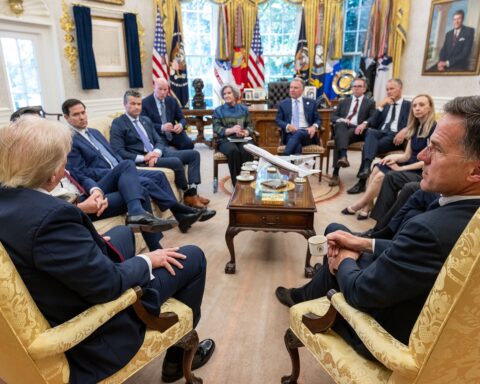
WASHINGTON — Israeli Prime Minister Benjamin Netanyahu announced on April 9 that he had instructed his ambassador to begin direct negotiations with Lebanon at the U.S. State Department, the first such talks since the ill-fated May 17 Agreement of 1983. The announcement came hours after phone calls with President Trump and special envoy Steve Witkoff, who asked Netanyahu to “calm down” Israel’s strikes on Lebanon — strikes that killed at least 303 people the previous day and prompted Iran to re-close the Strait of Hormuz.
For Saudi Arabia, the development creates a paradox more dangerous than the one it resolves. Iran’s Deputy Foreign Minister Saeed Khatibzadeh told the BBC on April 9 that ships may pass through Hormuz only once the United States ends “aggression” and “Israel stops attacking Lebanon.” But an unnamed Israeli official told Axios the same day: “No ceasefire in Lebanon.” The talks that Washington brokered to ease pressure on the strait are structurally incapable of satisfying the condition Iran has set to reopen it — and Saudi Arabia’s June OSP repricing window opens around May 5, weeks before any of these threads can converge.
Table of Contents
- What Netanyahu Proposed — and What Israel Ruled Out
- Why Does Iran Link Hormuz to Lebanon?
- The Mine Chart That Diplomacy Cannot Clear
- Can Lebanon Talks Actually Reopen the Strait?
- Saudi Arabia’s Narrowing Fiscal Window
- The Islamabad Gap
- Background: The 1983 Precedent and Its External Veto
- Frequently Asked Questions
What Netanyahu Proposed — and What Israel Ruled Out
Netanyahu’s statement, issued through his office on April 9, framed the initiative as a response to Lebanese requests. “In light of Lebanon’s repeated requests to open direct negotiations with Israel, I instructed yesterday to begin direct negotiations with Lebanon as soon as possible,” he said. “The negotiations will focus on disarming Hezbollah and establishing peaceful relations between Israel and Lebanon.”
The negotiating team will consist of Israeli Ambassador to the United States Yechiel Leiter, Lebanese Ambassador Nada Hamadeh Moawad, and U.S. Ambassador to Lebanon Michel Issa. Talks are expected to begin the week of April 14 — four days before the Hajj cordon seals on April 18 and eight days before the fragile ceasefire expires on April 22.
But Netanyahu simultaneously stated Israel would continue striking Hezbollah “with force, precision and determination.” Trump told reporters, “I spoke with Bibi, and he’s going to low-key it,” language that stopped well short of a ceasefire commitment. Israel’s April 8 bombardment of central Beirut — 50 jets, 100 targets, 160 munitions by IDF count — killed at least 303 people and wounded over 1,100, according to Lebanese government figures. Hezbollah fired approximately 30 rockets into northern Israel in the 24 hours following the ceasefire announcement, according to the Israel Defense Forces.
Lebanon’s government had not been officially notified of Netanyahu’s invitation when the announcement was made, according to CNN. Prime Minister Nawaf Salam declared April 9 a national day of mourning. President Joseph Aoun said the only solution was a ceasefire. Hezbollah lawmaker Ali Fayyad rejected the talks outright, demanding an Israeli ceasefire, troop withdrawal, and the return of displaced persons as preconditions — conditions structurally incompatible with Israel’s opening position of disarmament and normalization.
The Middle East briefing 3,000+ readers start their day with.
One email. Every weekday morning. Free.
Why Does Iran Link Hormuz to Lebanon?
Iran’s position, articulated by Khatibzadeh on the BBC, is that Hormuz passage requires two conditions: the United States ending military operations and Israel ceasing strikes on Lebanon. “Anybody who communicates with the Iranian authority has got permission to pass,” he said — while simultaneously acknowledging the strait is mined and all vessels must coordinate with IRGC authorities to transit.
Foreign Minister Abbas Araghchi stated the logic plainly on April 8, the day Israel struck central Beirut: “The U.S. must choose — ceasefire or continued war via Israel. It cannot have both.” That same day, Iran re-closed Hormuz after only two tankers had crossed, citing the Lebanon strikes as direct cause. The re-closure confirmed what had been implicit since March: Iran treats its Hormuz chokepoint and its Lebanese proxy as parts of a single deterrence architecture.
President Masoud Pezeshkian reinforced the linkage on April 9, declaring that Israeli attacks on Lebanon “deem ceasefire negotiations meaningless” and that “Iran will not abandon the Lebanese people.” He added: “Our fingers remain on the trigger.” Parliament Speaker Mohammad Bagher Ghalibaf called the talks “unreasonable” due to “repeated violations of all forms of commitments,” naming three specific breaches: continued Israeli attacks on Lebanon, an unauthorized drone in Iranian airspace, and an attempted ban on uranium enrichment.
The U.S. must choose — ceasefire or continued war via Israel. It cannot have both.
— Abbas Araghchi, Iranian Foreign Minister, April 8, 2026
The civilian government track and the IRGC-connected command structure appear unsynchronized. Pezeshkian’s “fingers on the trigger” warning was issued while Netanyahu was making his announcement. The reversibility architecture of Iran’s ceasefire halt order — attributed to a written Khamenei statement on IRIB, though the Supreme Leader has been physically absent for 39 days — leaves operational authority fragmented among at least three command nodes.
The Mine Chart That Diplomacy Cannot Clear
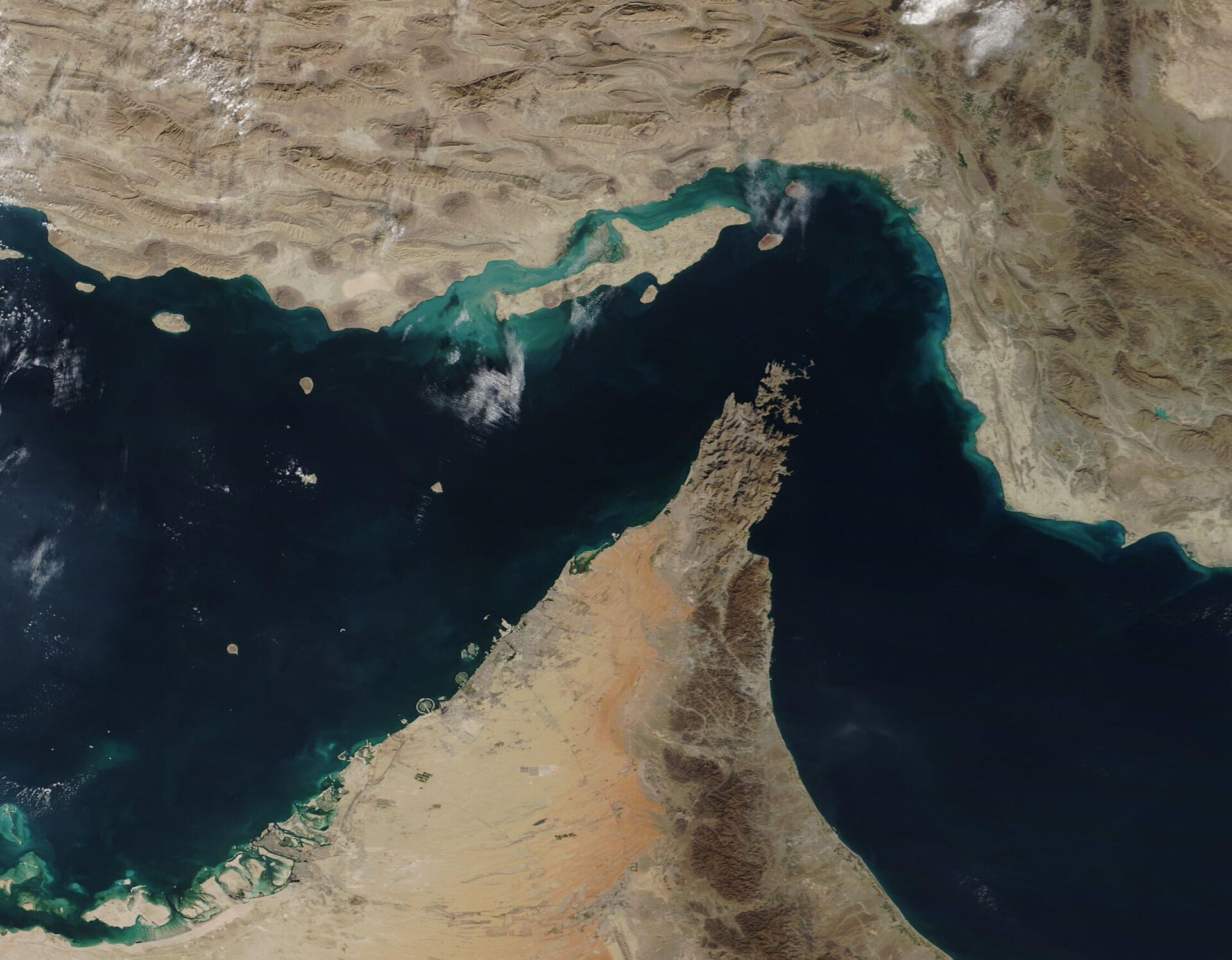
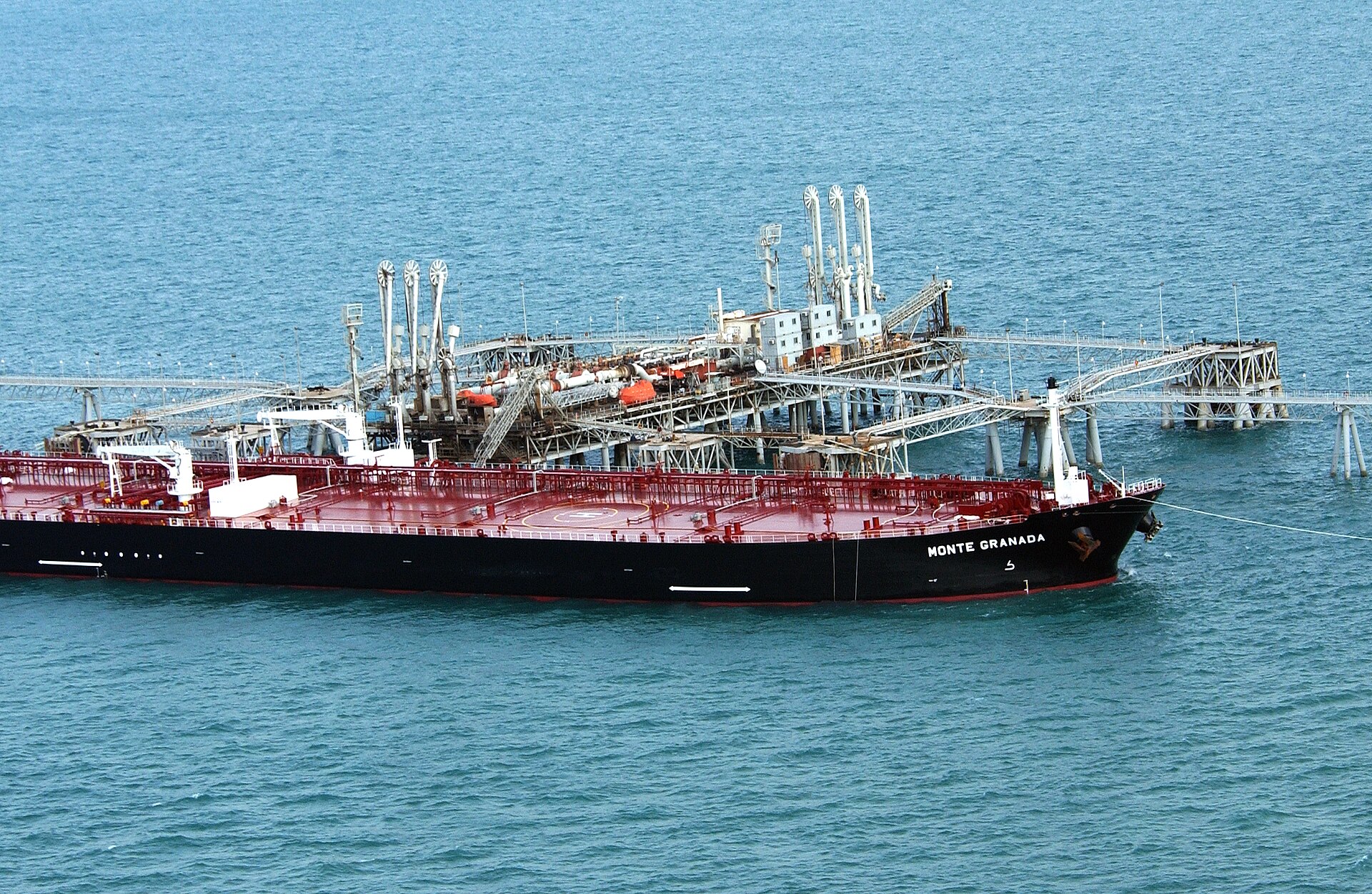
On April 9, the same day Netanyahu announced Lebanon talks, IRGC-affiliated media published a navigational chart marking the standard Hormuz Traffic Separation Scheme as a “danger zone” in Farsi. The chart — covering the period from February 28 to April 9 — constitutes the first official Iranian confirmation of mines in the strait. Safe-passage routes now run north and south of Larak Island, through a 5-nautical-mile channel inside Iranian territorial waters where all transiting vessels must accept IRGC coordination.
Only one tanker transited Hormuz in the 24 hours of April 9, along with five dry bulk carriers, against a pre-war daily average of approximately 60 laden tankers. More than 400 oil-laden tankers and dozens of LNG and LPG carriers are anchored outside the Gulf awaiting passage signals, according to Insurance Journal.
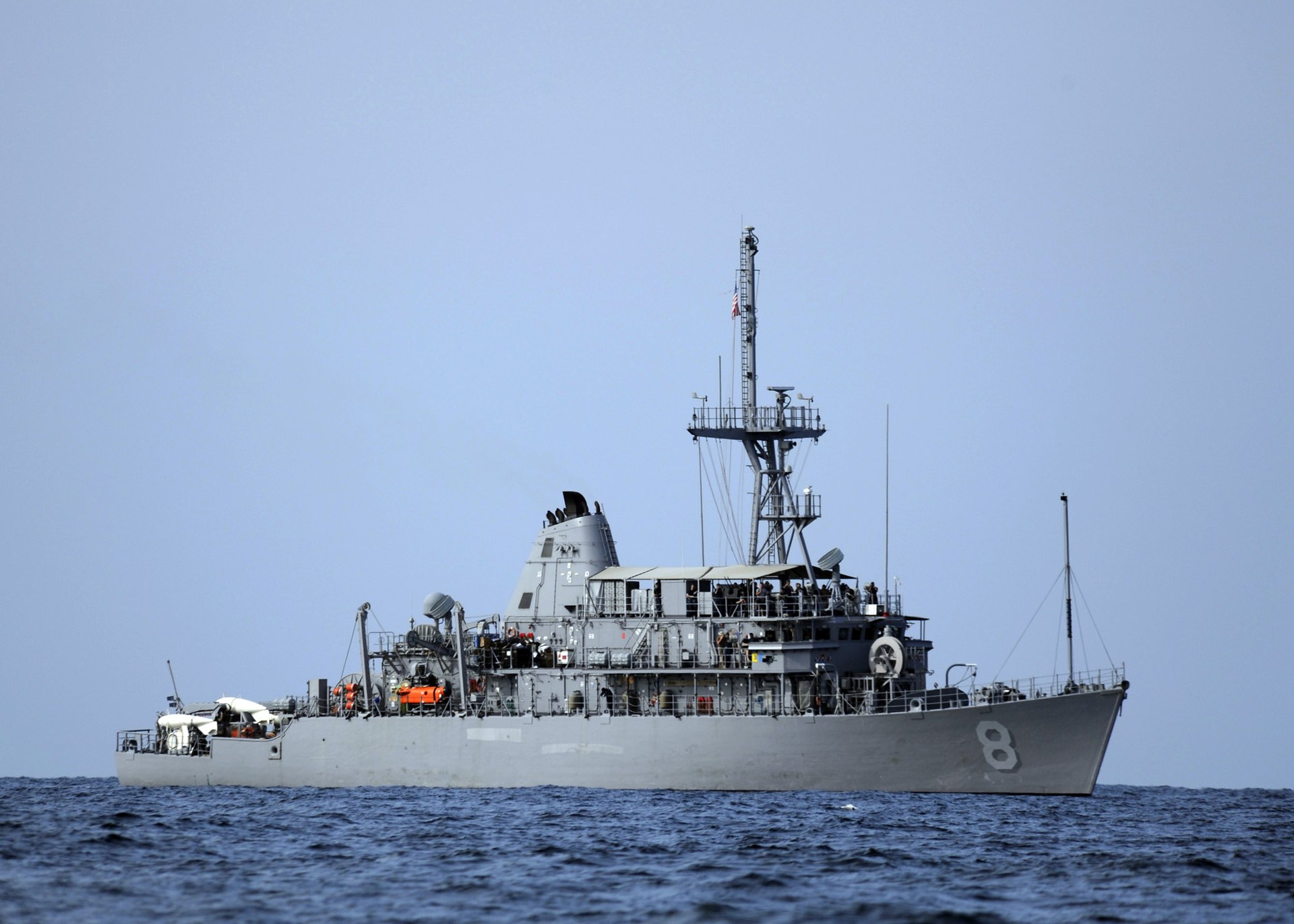
The 1991 Kuwait benchmark — the most recent large-scale mine clearance operation in the Gulf — required 51 days to clear 200 square miles. The four Avenger-class mine countermeasure ships that had been forward-deployed to Bahrain were retired in September 2025. Three Littoral Combat Ships remain in the Pacific. A diplomatic breakthrough on Lebanon would not shorten the physical timeline for clearing the strait.
Can Lebanon Talks Actually Reopen the Strait?
Four structural contradictions prevent the Lebanon talks from satisfying Iran’s conditions for Hormuz normalization.
First, Israel has explicitly ruled out a ceasefire. Netanyahu’s opening position pairs continued strikes with a demand for Hezbollah disarmament. Iran’s condition is not that talks begin, but that Israel stop attacking. The gap between these positions is not negotiable — it is definitional.
Second, there is no agreed baseline for what “Lebanon” means in the ceasefire context. The United States and Israel maintain that Lebanon was not included in the April 7-8 ceasefire. Iran, Pakistan — the mediating power — and Hezbollah say it was. Without a shared definition, progress cannot be measured.
Third, the Islamabad talks on April 10 — where Vance, Witkoff, and Kushner will meet Ghalibaf and Araghchi — do not include Lebanon on the formal agenda. The nuclear programme, sanctions, and direct U.S.-Iran arrangements are the subjects. Lebanon is being handled on a separate State Department track. Saudi Arabia is excluded from the bilateral entirely, though the kingdom’s foreign minister held a co-guarantor seat at the earlier March 29-30 round.
Fourth, mines do not negotiate. Even if every diplomatic condition were met tomorrow, the physical infrastructure of obstruction requires weeks to dismantle.
Oil markets registered the contradiction in real time. Brent rebounded 4.7 percent to $99.14 per barrel on April 9 after crashing 13.3 percent the previous day on the ceasefire announcement. Prices “pared advances sharply” when Netanyahu announced the Lebanon talks, according to MarketScreener, before resuming upward pressure. WTI recovered to approximately $99.42.
Saudi Arabia’s Narrowing Fiscal Window
Saudi Arabia’s exposure is measured in calendar days, not diplomatic cycles. Aramco set its May Official Selling Price at a record +$19.50 per barrel above the Oman/Dubai benchmark when Brent was trading at approximately $109. Brent has since crashed to $98-99, leaving the May OSP $10-11 above spot — an inversion that penalizes every Asian buyer contractually obligated to lift Saudi crude this month.
The June OSP repricing window opens around May 5. Goldman Sachs Research projects that if Hormuz remains effectively closed one additional month, Brent averages above $100 per barrel through 2026; a prolonged closure pushes prices to $120 in the third quarter and $115 in the fourth. The price at which Saudi Arabia sets its June OSP depends on whether Hormuz reopens before that window — and no mechanism currently exists to achieve that.
The kingdom’s PIF-inclusive fiscal breakeven stands at approximately $94 per barrel, according to Bloomberg estimates. PAC-3 missile interceptor stocks are down to roughly 400 rounds — an 86 percent drawdown from the pre-war inventory of approximately 2,800. Hormuz throughput on the first day after the ceasefire was 15-20 ships, against a pre-war average of 138 total vessel transits per day. The bypass gap — the difference between what the East-West Pipeline to Yanbu can carry and what Saudi Arabia needs to export — remains 8.5 to 13.5 million barrels per day.
Saudi Arabia cannot object to Israeli operations in Lebanon without implying alignment with Iran and Hezbollah — a political impossibility given that 99 percent of Saudi respondents opposed Israel normalization in an INSS survey from August 2025. But every Israeli strike that continues gives Iran fresh justification to keep Hormuz restricted. The kingdom holds no diplomatic channel to Israel. Trump pre-agreed the Lebanon carve-out with Netanyahu without consulting Riyadh.
The Islamabad Gap
The April 10 Islamabad talks represent the highest-level direct U.S.-Iran engagement of the war — Vice President Vance meeting Parliament Speaker Ghalibaf in a principal-level bilateral. But Ghalibaf’s three named ceasefire violations extend well beyond Lebanon. The enrichment ban and drone incursion complaints have no connection to the State Department track. Even a hypothetical Israeli pause in Lebanon would leave two of three Iranian objections unresolved.
Ghalibaf himself is a former IRGC Aerospace Force commander (1997-2000). An unnamed Iranian parliamentarian told NBC that “Vahidi is in charge” — a reference to SNSC Secretary Ahmad Vahidi, who controls the operational authorization ceiling that has constrained Iranian diplomats throughout the conflict. Trump simultaneously threatens Iran while sending Vance to negotiate, a dual posture that mirrors the Netanyahu contradiction of opening talks while refusing a ceasefire.
The formal Islamabad agenda — nuclear programme, sanctions architecture, direct bilateral arrangements — does not include Hormuz, Lebanon, or Saudi Arabia’s interests. Riyadh’s foreign minister, who held a co-guarantor seat at the March 29-30 round, has no role in the April 10 session.
Background: The 1983 Precedent and Its External Veto
The last time the United States mediated direct Israel-Lebanon negotiations at this level was the May 17, 1983 Agreement, brokered by Secretary of State George Shultz. Syria — then the dominant external power in Lebanon — refused to withdraw its forces as the agreement required. The Lebanese government, unable to implement terms that Syria would not permit, cancelled the agreement in March 1984.
In 1983, Syria held a veto over any Lebanese government commitment through its military presence. In 2026, Iran holds a comparable veto through Hezbollah’s political and military infrastructure. Fayyad’s rejection of talks without a ceasefire is not a negotiating position — it is the Iranian-aligned bloc exercising that veto in real time.
The 1983 agreement collapsed not because the talks failed but because they succeeded in producing terms that the external veto actor would not accept. Netanyahu’s opening demands — Hezbollah disarmament and normalization — are, by design, terms that Iran cannot accept. They would dismantle the very proxy architecture that gives Tehran its kill switch over Saudi oil recovery.
Frequently Asked Questions
What is the May 17 Agreement of 1983 and why does it matter now?
The May 17 Agreement was a security arrangement brokered by U.S. Secretary of State George Shultz between Israel and Lebanon in 1983. It called for Israeli withdrawal from Lebanon in exchange for security guarantees and a form of diplomatic normalization. Syria’s Hafez al-Assad refused to withdraw the 40,000 Syrian troops then occupying Lebanon’s Bekaa Valley, making implementation impossible. Lebanon abrogated the agreement under Syrian pressure in March 1984 — ten months after signing. The episode established that no Israel-Lebanon agreement survives without the consent of the dominant external power operating inside Lebanon. In 2026, that role belongs to Iran through Hezbollah.
How many mine countermeasure ships does the U.S. Navy currently have in the Gulf region?
Zero dedicated mine countermeasure vessels are currently stationed in the Gulf. The four Avenger-class MCM ships that had been forward-deployed to Bahrain — USS Devastator, USS Gladiator, USS Sentry, and USS Dextrous — were decommissioned in September 2025 as part of the Navy’s fleet modernization. Three Littoral Combat Ships with mine countermeasure mission modules are deployed in the Western Pacific. The Navy’s next-generation mine countermeasure capability, based on unmanned systems, has not yet reached initial operational capability. The 1991 Kuwait mine clearance operation, which required 51 days for 200 square miles, used a multinational force of more than 20 MCM vessels.
What is the Iran-Oman transit coordination protocol and how does it relate to the Lebanon talks?
Since approximately mid-March 2026, Iran has imposed an informal transit coordination requirement on all vessels entering the Strait of Hormuz. Ships must request passage through IRGC-designated channels — currently routed through a narrow corridor near Larak Island — and pay fees of approximately $2 million per VLCC, payable in cryptocurrency or Chinese yuan via Kunlun Bank. Oman’s Transport Minister Salim Al Maawali has publicly stated that “no tolls can be imposed for crossing Hormuz” under UNCLOS, but the protocol operates as a de facto toll. The Lebanon talks do not address this architecture. Even if Israel ceased all strikes on Lebanon tomorrow, the IRGC transit protocol, mine infrastructure, and fee structure would remain in place pending separate negotiations that have not yet been proposed.
Who is Nada Hamadeh Moawad, the Lebanese negotiator?
Nada Hamadeh Moawad is Lebanon’s Ambassador to the United States. She was named by Axios and Al-Monitor as the Lebanese negotiator for the upcoming State Department talks. Her appointment to the talks has not been confirmed by the Lebanese government, which according to CNN had not been officially notified of Netanyahu’s invitation at the time of his announcement. Prime Minister Nawaf Salam’s declaration of a national day of mourning and President Aoun’s call for a ceasefire suggest the Lebanese government’s immediate priorities diverge from the negotiating framework Netanyahu outlined.
What happens to Aramco’s pricing if Hormuz is still restricted on May 5?
Aramco typically announces each month’s Official Selling Price in the first week of the following month. The June OSP — covering cargoes that will load throughout June — would normally be announced around May 5. The May OSP was set at +$19.50 per barrel above the Oman/Dubai benchmark when Brent was at $109. With Brent now at $98-99, Aramco faces a repricing decision with no modern precedent. In December 2024, during a market-share defense, Aramco adjusted by $2 per barrel. The current dislocation is roughly ten times that magnitude. Asian buyers — including India’s IOC, BPCL, and HPCL — can source spot crude at $6 to $6.50 per barrel below Saudi contract prices, creating a structural incentive to reduce Saudi liftings. Goldman Sachs estimates Saudi Arabia’s real fiscal deficit at $80-90 billion against the official $44 billion projection.