
Saudi Arabia Spent Its Annual Deficit in Ninety Days
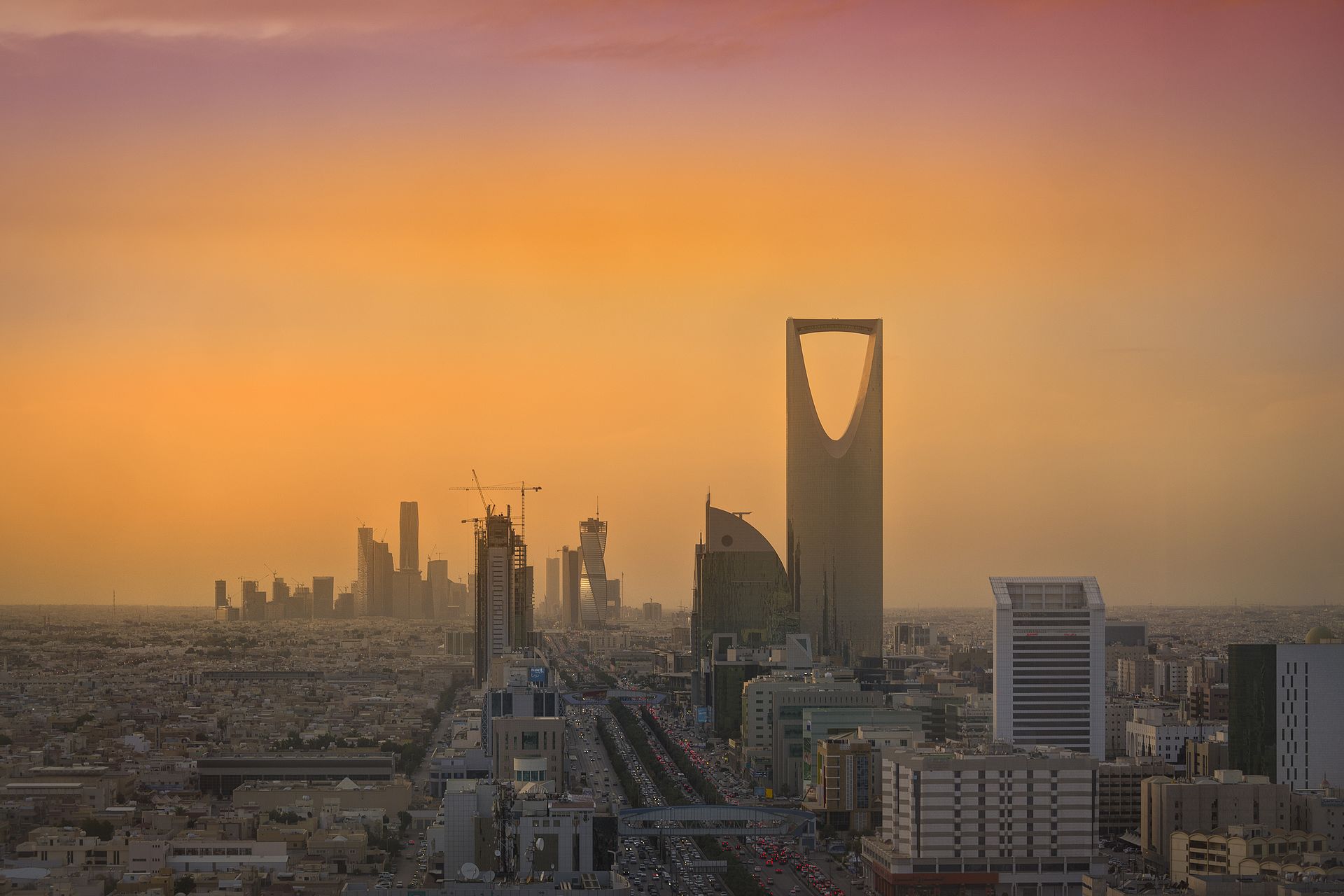
RIYADH — Saudi Arabia’s first-quarter 2026 budget deficit of SAR 125.7 billion ($33.5 billion) — the largest quarterly shortfall ever recorded by the Kingdom — consumed 76% of the full-year deficit projection in ninety days. The number, released by the Ministry of Finance on May 6, does more to explain Riyadh’s sudden interest in a Helsinki-style non-aggression framework with Tehran than any diplomatic cable could.
The deficit landed in a quarter when Brent crude averaged above $107 per barrel. At that price, Saudi Arabia should be running a surplus. It is not, because the war with Iran has severed the link between price and revenue: production collapsed from roughly 10 million barrels per day pre-war to 6.879 million bpd by April, while military spending surged and emergency subsidies nearly tripled. The result is a fiscal position structurally worse than the 2014–2016 oil crash — when at least Riyadh could pump its way toward recovery.
Table of Contents
- Introduction
- The Q1 Numbers in Full
- Why Is Brent at $107 Not Generating a Surplus?
- The Triple Squeeze: Volume, Spending, and Frozen Capital
- How Large Will the Full-Year Deficit Actually Be?
- PIF’s Liquidity Problem
- Why 2026 Is Worse Than 2015
- What Does the Deficit Tell Us About Saudi Diplomatic Behaviour?
- The Borrowing Runway
- Frequently Asked Questions
The Q1 Numbers in Full
The Ministry of Finance reported Q1 2026 expenditure of SAR 387 billion ($103.2 billion) — up 20% year-on-year and the highest opening-quarter spend on record. Revenue held at SAR 261.3 billion, with oil receipts at SAR 145 billion ($38.7 billion), down 3% despite a Brent price environment that would have produced windfalls in any peacetime quarter.
The House of Saud Daily Briefing
Saudi Arabia's news in 3 minutes, every morning. Free. See today's issue
Military spending drove much of the surge: SAR 64.7 billion in Q1, up from SAR 51.4 billion a year earlier — a 26% increase. Subsidies rose nearly three-fold year-on-year, as the government intervened to hold consumer prices against supply-chain disruptions caused by Hormuz closure and Eastern Province infrastructure damage. Capital spending on investment projects jumped 56%, with 27% of the annual capital budget deployed in Q1 alone, compared to 16% in Q1 2025.
| Metric | Q1 2026 | Q1 2025 | Change |
|---|---|---|---|
| Total expenditure | SAR 387B ($103.2B) | SAR 322.5B (~$86B) | +20% |
| Oil revenue | SAR 145B ($38.7B) | SAR 149.4B (~$39.8B) | -3% |
| Budget deficit | SAR 125.7B ($33.5B) | SAR 18.6B (~$5B) | +576% |
| Military spending | SAR 64.7B | SAR 51.4B | +26% |
| Subsidies | ~3x Q1 2025 | Baseline | ~+200% |
| Capital investment | 27% of annual budget | 16% of annual budget | +56% YoY |
Sources: Saudi Ministry of Finance; AGBI; Al Arabiya English; AGSI analysis, May 2026
The December 2025 budget projected a full-year deficit of SAR 165.4 billion ($44 billion). That projection assumed a pre-war production baseline near 10 million bpd and no armed conflict. Q1 alone has now consumed 76% of that figure. The pre-war deficit forecast — set before hostilities — was SAR 65 billion ($17 billion). Q1’s actual deficit is nearly double that original annual target.
Why Is Brent at $107 Not Generating a Surplus?
The answer is volume. Saudi Arabia’s fiscal break-even oil price — the price at which the budget balances — operates on two axes: price per barrel and barrels sold. The IMF’s 2026 central-government fiscal break-even sits at $86.60 per barrel. Bloomberg Economics’ PIF-inclusive break-even, which incorporates capital calls for NEOM, the Diriyah Gate project, the Pakistan development package, and international bond debt service, sits at $108–$111 per barrel. Brent at $107.18 on May 18 falls at or below that threshold.
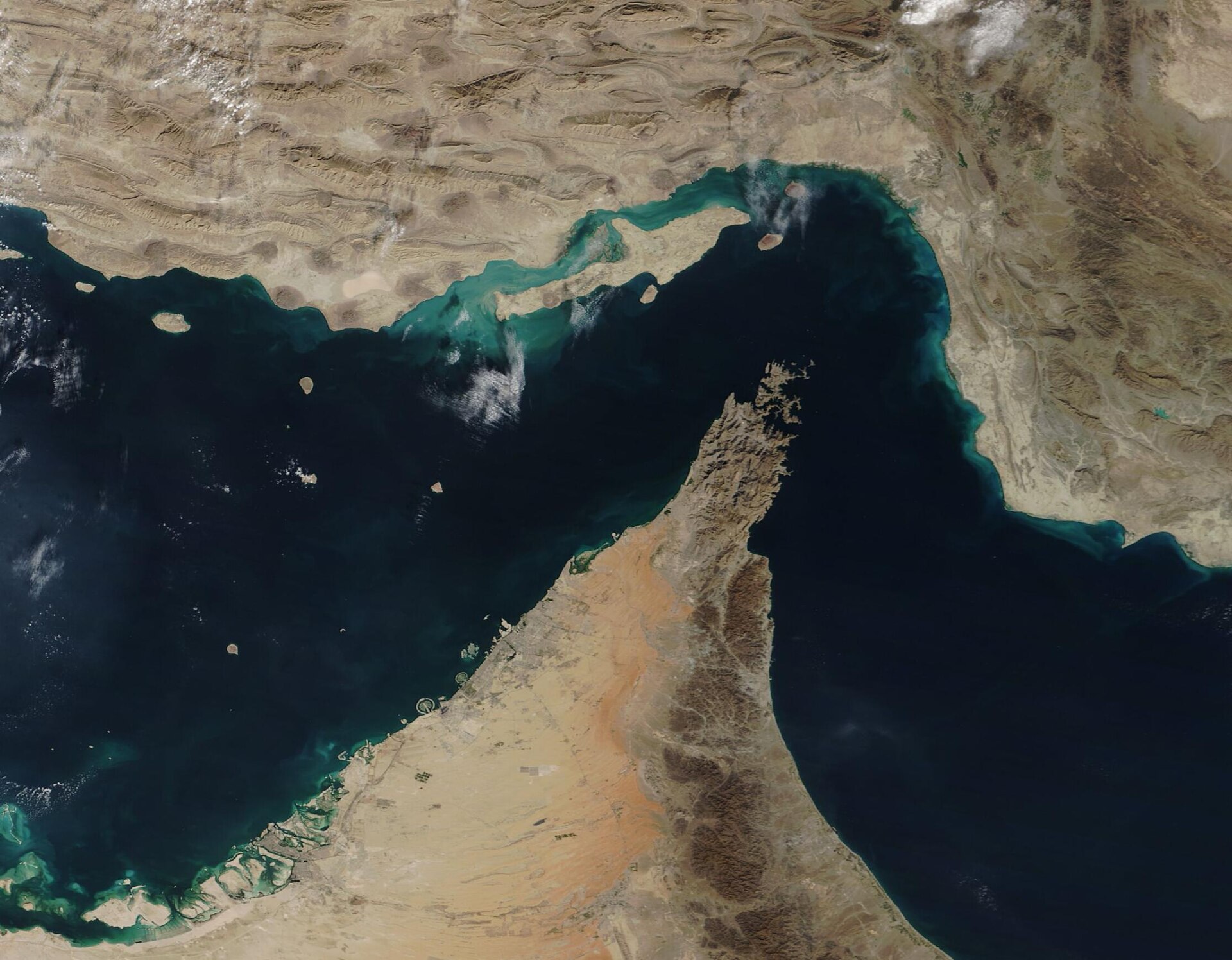
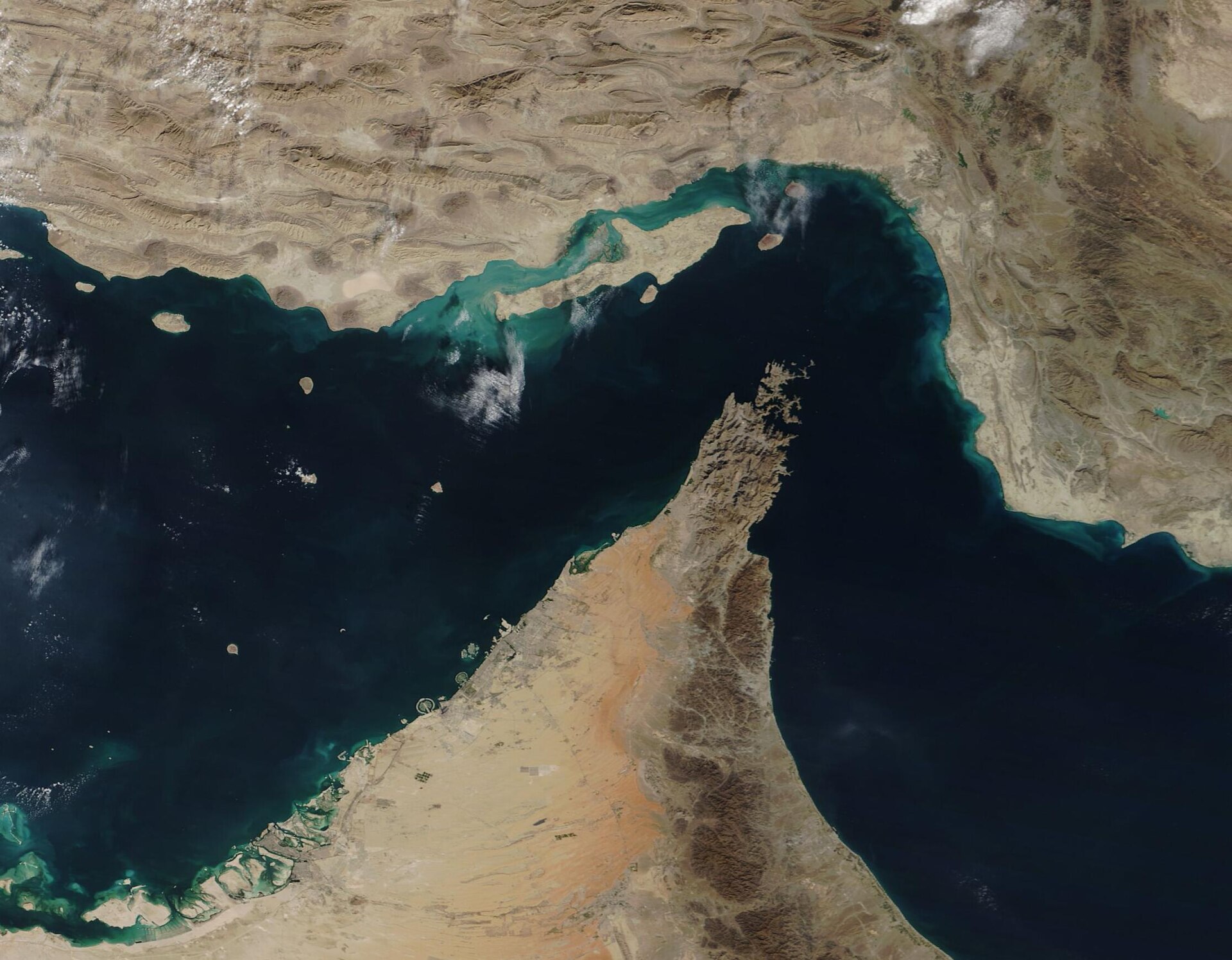
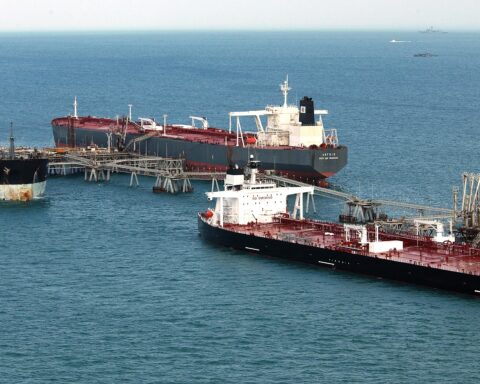
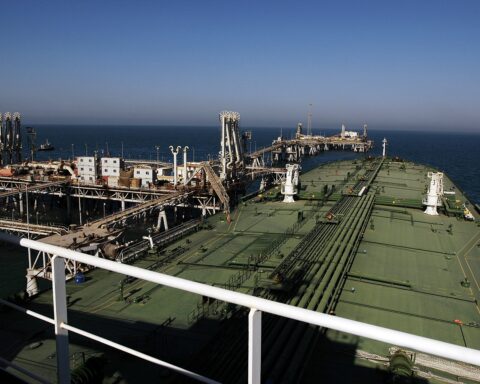
But even the Bloomberg break-even assumes something close to normal production volume. Saudi April output of 6.879 million bpd represents a 3.4-million-barrel-per-day gap below the OPEC+ June quota of 10.291 million bpd. The Hormuz disruption and Eastern Province infrastructure damage have made the quota functionally unreachable. The Yanbu export terminal on the Red Sea coast, fed by the East-West Pipeline, has a practical ceiling of 4–5.9 million bpd against pre-war Hormuz throughput of 7–7.5 million bpd — a structural gap that no pipeline adjustment can close without new infrastructure.
Aramco CEO Amin Nasser told BOE Report on May 11 that the company can reach 12 million bpd maximum sustainable capacity “in three weeks if required.” The constraint is not reservoir or processing capacity. It is that the barrels have nowhere to go. Market normalization, Nasser added, would come “only in 2027” if disruption persists.
The result is a price-volume paradox: oil is expensive enough that Saudi Arabia should be flush, but the Kingdom cannot sell enough of it to benefit. Q1 oil revenues fell 3% year-on-year — a modest decline that masks a catastrophic volume shortfall partially offset by higher per-barrel receipts. AGBI reported that a single month — March, when Hormuz closure took full effect — accounted for a SAR 5 billion drop in oil revenue on its own. On May 18, an unconfirmed Tasnim report of a US sanctions waiver on Iranian oil moved Brent $4 lower to $107.78 — briefly pushing the benchmark below Saudi Arabia’s fiscal break-even, demonstrating how Iranian state media can shift the price axis that dominates Riyadh’s fiscal calculus.
The Triple Squeeze: Volume, Spending, and Frozen Capital
Three pressures are compounding simultaneously, and none can be relieved without relieving the others.
First, volume. Production at 6.879 million bpd in April is roughly 31% below pre-war levels. OPEC+ has maintained Saudi Arabia’s quota at 10.291 million bpd for June, a number that now functions as a diplomatic fiction — a placeholder preserving Riyadh’s market share claim while barrels sit in the ground. GDP growth in Q1 registered 2.8% year-on-year (oil sector +2.3%, non-oil +2.8%), well below the pre-war official forecast of 4.6%, according to GASTAT data released around May 1. The PMI contraction in April confirmed the slowdown had spread beyond the oil sector.
Second, spending. Military expenditure is politically non-negotiable during active hostilities. The 26% year-on-year increase to SAR 64.7 billion in Q1 reflects PAC-3 interceptor replenishment, five-layer air defence operations over Makkah during Hajj preparation, Yanbu terminal hardening, and forward-deployed Saudi forces along the Eastern Province perimeter. The nearly three-fold surge in subsidies is equally locked in: with Hormuz closure disrupting food and commodity supply chains, allowing consumer prices to rise would compound the political cost of the war itself. Semafor noted on May 14 that part of the spending acceleration was a deliberate policy choice — Riyadh front-loaded investment in alternative trade routes — but the military and subsidy lines are compulsory, not elective.
Third, frozen capital. Vision 2030’s flagship projects have entered triage. NEOM contractor cancellations in March 2026 totalled approximately $6.85 billion: Webuild’s $4.7 billion Trojena ski resort contract, Hyundai E&C’s tunnel contract, and Eversendai’s structural steel package. The Line was formally suspended in September 2025 with an $8 billion PIF write-down. PIF Chairman Yasir al-Rumayyan said on April 15 that “no NEOM projects have been cancelled” — only “spending priorities reassessed.” The distinction is relevant to PIF’s bond covenants and credit rating. For the contractors who have left, it is less so.
“Saudi Arabia recorded its largest quarterly budget deficit on record in the first quarter of 2026 due to falling oil revenues and a sharp rise in spending linked to war costs… expenditures were the highest of any previously reported start to the year, fuelled in part by a spike in military spending and a nearly three-fold increase in state subsidies amid supply-chain disruptions.”
— AGBI, May 2026
The Clingendael Institute’s 2026 assessment observed that the war “has exposed the physical vulnerability of the kingdom’s energy and transportation infrastructure” and is “likely to push Riyadh into a more security-first posture in the near term.” That posture has a direct fiscal cost: every riyal redirected to air defence and subsidy backstops is a riyal unavailable for the diversification projects that are supposed to generate non-oil revenue by the end of the decade.
How Large Will the Full-Year Deficit Actually Be?
Every assumption behind the December 2025 full-year projection has been invalidated: production is 31% below the pre-war baseline, Brent is well above the budgeted level but volume prevents the Kingdom from benefiting, and military spending is running at more than double the peacetime trajectory.
Goldman Sachs projects the war-adjusted 2026 Saudi deficit at 6.6% of GDP — roughly double the official 3.3% projection — implying a true gap of $80–90 billion. That estimate, reported by Bloomberg via AGSI, accounts for sustained production below 7 million bpd, elevated military spending through at least Q3, and the subsidy architecture required to maintain social stability.
If Q1’s deficit rate of $33.5 billion per quarter were to hold for the full year, the annual deficit would reach $134 billion — exceeding even the 2015 record of $98 billion. That scenario assumes no improvement in export volume, which is plausible if IRGC restoration of Hormuz missile sites continues to prevent a return to normal shipping patterns. It also assumes no reduction in military spending, which is certain while the ceasefire remains fragile and air defence coverage over Hajj pilgrimage sites is non-discretionary.
The Ministry of Finance’s 2026 borrowing plan, published in January, projected total financing needs of $58 billion — comprising the $44 billion deficit plus $14 billion in principal repayments on existing debt. At a Goldman-projected $80–90 billion deficit, borrowing needs would nearly double to $94–104 billion, absent reserve drawdowns or asset sales.
PIF’s Liquidity Problem
The Public Investment Fund entered the war with cash reserves of approximately $15 billion — the lowest level since 2020, according to the Clingendael Institute. For a sovereign wealth fund with $930 billion in total assets and commitments spanning NEOM, Diriyah Gate, the Saudi Pro League, and a portfolio of international holdings from Lucid Motors to Nintendo, $15 billion in liquid cash is thin.
PIF moved to address the gap on May 7, raising a record $7 billion bond in a three-tranche issuance that drew a $23.8 billion orderbook — more than three times oversubscribed. The bond’s success demonstrated that credit markets still view PIF as investment-grade. It also demonstrated that PIF needed the money.
PIF’s revised 2026–2030 strategy now commits 80% of future allocation to domestic projects with a 15% reduction in total capital expenditure — a fundamental reordering of priorities forced by the war. PIF opened a Shanghai office on May 6 — the same day the Q1 deficit was published — signalling continued internationalization even as domestic capital is constrained. The Shanghai timing reflects a long-scheduled expansion, not a pivot; the optics of coincidence with the deficit release were an accident of the calendar.
Aramco, the Kingdom’s other financial pillar, reported Q1 2026 net income of $32.5 billion, up 25% year-on-year, with a base dividend of $21.9 billion (up 3.5%). The company is profitable. But Aramco’s dividends flow to the government and PIF, where they are immediately consumed by the deficit. The structural loss of Gulf export monopoly position means Aramco’s per-barrel profitability cannot compensate for the volume it cannot ship.
Why 2026 Is Worse Than 2015
In the 2014–2016 oil price crash, Saudi Arabia posted a record budget deficit of $98 billion in 2015 — 15.4% of GDP. Foreign reserves fell from $732 billion at end-2014 to $587 billion by March 2016, a $145 billion drawdown in under eighteen months. Riyadh borrowed $26 billion, issued its first international bond, and cut spending 14% in 2016. It was painful. It was also recoverable, because the underlying production infrastructure was intact and the problem was a single variable: price.
In 2026, two variables are broken simultaneously. Price alone would generate surpluses — Brent at $107 is well above the IMF’s $86.60 central-government break-even. But volume has collapsed by 31%, and the infrastructure to restore it (Hormuz transit) is controlled by an adversary. The production gap cannot be closed by OPEC+ negotiation or market dynamics. It requires either a military outcome at the Strait or a diplomatic arrangement with Tehran — which is precisely what the Helsinki framework is designed to deliver.
| Variable | 2015 Crisis | 2026 Crisis (annualized at Q1 rate) |
|---|---|---|
| Budget deficit | $98B (15.4% of GDP) | $80–134B (6.6–11% of GDP) |
| Brent average | $52/bbl | $107/bbl |
| Production | ~10.2M bpd (at capacity) | ~6.9M bpd (31% below capacity) |
| Problem variable | Price only | Price AND volume |
| Production infrastructure | Intact | Export routes severed |
| Military spending | Discretionary (Yemen ramp-up) | Non-negotiable (homeland defence) |
| Social subsidies | Being cut (austerity) | Being tripled (~+200%) |
| Reserves available | $732B | $475B |
| Policy response available | Cut spending, pump more, borrow | Cannot pump more, cannot cut military/subsidies |
Sources: World Bank (2016); Saudi MoF; Goldman Sachs; SAMA; AGBI; Bloomberg Economics
The 2015 crisis offered Riyadh a menu of responses: pump more, cut spending, draw reserves, borrow. In 2026, three of four options are constrained. Pumping more requires Hormuz. Cutting military spending is politically impossible during hostilities. Cutting subsidies would expose the population to wartime inflation — a risk the government has explicitly chosen to absorb, at nearly three-fold cost growth. That leaves borrowing and reserve drawdowns as the only available levers.
SAMA foreign reserves stood at approximately $475 billion in February 2026, a six-year high reached just before the war began. If the 2015 drawdown rate of roughly $10 billion per month were repeated, reserves would fall below $350 billion within twelve months — a threshold that would trigger credit rating reviews and raise borrowing costs. Saudi outstanding sovereign debt has already surpassed $520 billion, up approximately 21% year-on-year.
What Does the Deficit Tell Us About Saudi Diplomatic Behaviour?
Hussain Abdul-Hussain, a research fellow at the Foundation for Defense of Democracies, wrote in February 2026 — before the Q1 data was available — that “economic prosperity has been the foundation of the Saudi social contract, and when shaken, the Saudi government itself will start facing sociopolitical headwinds.” The Q1 numbers confirm the shaking has begun.
The fiscal data provides a material explanation for several Saudi diplomatic moves that were previously interpreted as purely strategic calculations. The Helsinki non-aggression framework floated by MBS — treated by the FT on May 14 as a geopolitics story — is also, and perhaps primarily, a fiscal survival mechanism. Every month the war continues at Q1 rates costs Riyadh $34.4 billion in expenditure against $23.2 billion in total revenue: a monthly deficit of $11.2 billion that is not sustainable for a government simultaneously trying to service $520 billion in debt and maintain a $930-billion sovereign wealth fund. The IEA’s May 2026 Oil Market Report places that pressure in market terms: global inventories are draining at 8.5 million barrels per day, and the Yanbu ceiling means the fiscal gap cannot close even if a ceasefire holds.
“Saudi Arabia’s sizable first-quarter budget deficit has been widely read as an early sign of the Iran war’s toll on the biggest Arab economy. However, the widest quarterly shortfall since late 2018 also reflected, to a degree, a policy choice.”
— Semafor, May 14, 2026
Semafor’s May 14 analysis argued that the deficit is partly a “policy choice”: Riyadh accelerated investment in alternative trade routes, front-loading capital spending. That reading is partially correct. But it coexists with SAR 64.7 billion in non-discretionary military spending and a subsidy bill that nearly tripled. The “choice” portion of the deficit is perhaps 20–25% of the total. The rest is compulsory.
The IMF’s Middle East director, Jihad Azour, said Saudi Arabia has “strong financial buffers to confront Iran war impact.” At $475 billion in reserves, that statement is technically accurate. It is also the kind of reassurance that becomes less reassuring when repeated — because its truth is time-limited. At a Goldman-projected $80–90 billion annual deficit, the buffers buy two to three years of runway before reserves enter the danger zone. A second round of hostilities would compress that timeline.
The Iranian perspective, as reflected in state media, has focused less on Saudi fiscal distress than on framing Hormuz control as an Iranian victory in the economic dimension. Iran’s own economy has fared far worse: Fortune reported on April 12 that prices are up 40% since the war began, with the rial collapsing sharply against the dollar. Iran’s fiscal position is worse than Saudi Arabia’s in absolute terms. But Iran’s social contract has never been built on prosperity in the way Saudi Arabia’s has — a structural asymmetry that gives Tehran more tolerance for economic pain than Riyadh.
The Borrowing Runway
PIF’s $7 billion bond in May — three times oversubscribed at $23.8 billion in orders — demonstrated continued market appetite for Saudi credit. But PIF and sovereign issuance draw from the same credibility pool. With sovereign debt already above $520 billion and rising 21% year-on-year, each successive issuance incrementally raises the cost of the next one. Saudi Arabia’s credit rating remains investment-grade (Fitch: A+, Moody’s: A1), but ratings agencies evaluate trajectory, not snapshots. A Q2 deficit on the same scale as Q1 would place the full-year figure firmly in Goldman’s $80–90 billion range and prompt formal rating outlook revisions.
The arithmetic narrows to a corridor. Riyadh can sustain the current burn rate for approximately 18–24 months before reserves, debt levels, and borrowing costs converge in a way that forces structural adjustment — spending cuts, project cancellations, or a fundamental renegotiation of Vision 2030’s timeline. Every month of co-belligerent status without a diplomatic resolution accelerates that convergence.
The policy choice framing is important because it preserves agency. If the entire deficit were compulsory — pure war damage — Riyadh’s negotiating position would be weaker. The fact that a portion reflects deliberate investment acceleration (alternative trade routes, Yanbu expansion, capital front-loading) allows the government to present the spending as strategic rather than desperate. But the ratio matters. When 75–80% of the deficit is driven by military spending, emergency subsidies, and lost oil revenue, the “strategic investment” narrative covers an increasingly small share of the total.
Frequently Asked Questions
What is Saudi Arabia’s fiscal break-even oil price in 2026?
The IMF’s central-government-only break-even is $86.60 per barrel for 2026. Bloomberg Economics calculates a higher PIF-inclusive break-even of $108–$111 per barrel, which accounts for capital calls to NEOM, Diriyah Gate, the Pakistan development package, and international bond debt service. At Brent spot of $107.18 on May 18, the Kingdom sits at or below the PIF-inclusive threshold — meaning that even at current elevated oil prices, the consolidated Saudi fiscal position is approximately break-even at best, before accounting for the production volume shortfall that makes the break-even calculation theoretical rather than operational.
How do Saudi Arabia’s 2026 reserves compare to the 2015 crisis?
SAMA foreign reserves peaked at approximately $475 billion in February 2026 — a six-year high, but $257 billion lower than the $732 billion peak at end-2014 that preceded the 2015 oil crash. The 2015 crisis drew down $145 billion in reserves over eighteen months. If a similar drawdown rate occurred in 2026, reserves would reach approximately $330 billion by mid-2027 — a level that, combined with $520 billion in sovereign debt, would bring the debt-to-reserves ratio to a historically uncomfortable 1.58:1, compared to a negligible ratio at the start of the 2015 crisis when sovereign debt was minimal.
What specifically is being subsidised, and why can’t the government cut those costs?
The subsidy surge covers three categories that the government cannot reduce without compounding the war’s political damage. Food and staple goods subsidies have risen because Hormuz closure has disrupted import shipping routes and Eastern Province strikes have affected regional distribution; letting food prices rise during active hostilities would directly translate military distress into domestic unrest. Fuel and energy subsidies have risen because domestic supply chains reliant on Eastern Province infrastructure have been disrupted. A third category covers emergency housing and displacement costs in Eastern Province communities affected by strikes. All three are politically locked until the security situation stabilises.
What happened to NEOM spending in 2026?
NEOM has entered a triage phase. The Line was formally suspended in September 2025 with an $8 billion PIF write-down. In March 2026, three additional contractor cancellations totalled approximately $6.85 billion: Webuild’s $4.7 billion Trojena ski resort contract, Hyundai E&C’s tunnel contract, and Eversendai’s structural steel package. PIF’s revised 2026–2030 strategy shifted to 80% domestic allocation with a 15% overall capex reduction. PIF Chairman Yasir al-Rumayyan’s April 15 statement that “no NEOM projects have been cancelled” — only “spending priorities reassessed” — is technically accurate in that the master plan remains on paper. The distinction is relevant to PIF’s bond covenants and credit rating, which are structured around asset valuations that depend on projects remaining nominally active.
Could Saudi Arabia run out of fiscal runway?
Not imminently, but the corridor is narrowing. At Goldman Sachs’ projected $80–90 billion annual deficit, combined with $520 billion in sovereign debt rising 21% year-on-year and reserves of $475 billion, Saudi Arabia has an estimated 18–24 months before reserves, debt service costs, and borrowing capacity converge to force structural fiscal adjustment. The January 2026 borrowing plan projected $58 billion in financing needs; the war-adjusted figure of $94–104 billion would require Saudi Arabia to issue more sovereign and quasi-sovereign debt in a single year than at any point in its history. PIF’s May $7 billion bond — at 3x oversubscription — shows markets are still lending. The question is at what price, and for how long, when each issuance increases the denominator.
The fiscal arithmetic of the May 18 veto — MBS spending Saudi political capital to stop a war he cannot afford — operates within a relationship whose public terms Trump articulated fifty-two days earlier: Trump’s FII Miami remarks and what they reveal about the price of the Gulf veto.
The House of Saud Daily Briefing
Saudi Arabia's news in 3 minutes, every morning. Free. See today's issue