
Saudi Arabia covers 2.15 million square kilometres of the Arabian Peninsula, and the idea that it is simply “hot desert everywhere” is one of the most common misconceptions among first-time visitors. The Kingdom contains four distinct climate zones, from the humid Red Sea coast where summer humidity regularly tops 85 per cent, to the Asir highlands where temperatures dip below 12 °C in winter and annual rainfall exceeds 500 mm. Understanding Saudi weather by region is the single most important factor in planning a successful trip, and this guide breaks it down city by city so you can pick the right destination for the right month. If you are putting together a broader itinerary, start with our Saudi Arabia travel guide, which covers the full planning picture.
Best Time to Visit: November to February (cool season nationwide); October and March are shoulder months with comfortable temperatures in most regions
Getting There: International airports in Riyadh (RUH), Jeddah (JED), and Dammam (DMM)
Visa Required: Yes — tourist e-visa available for 63 nationalities
Budget: $80–$250 per day depending on city and season
Must-See: AlUla in winter (20 °C days, 7 °C nights), Abha highlands in summer (escape the heat), Riyadh Season events November–March
Avoid: Visiting inland cities between June and August unless you are prepared for temperatures above 45 °C; avoid Hajj period in Mecca/Medina unless you are a pilgrim
Understanding Saudi Arabia’s Climate Zones
Saudi Arabia is not a single-climate country. The Kingdom sits across three recognised climatic classifications: hyper-arid desert covering most of the interior and south, semi-arid steppe along the western highlands, and a small zone of relatively humid, mild conditions in the mountainous southwest near the Yemen border. What this means in practice is that Abha and Riyadh might as well be on different continents in July — Abha sits at a pleasant 25 °C while Riyadh bakes above 45 °C.
Four main factors drive regional variation:
- Altitude: The Sarawat Mountains along the western edge rise above 2,700 m, dropping temperatures by roughly 6.5 °C per 1,000 m of elevation gain. Abha, at 2,270 m, is the coolest major city in the Kingdom.
- Coastal proximity: Both the Red Sea and the Arabian Gulf moderate extreme heat but add significant humidity. Jeddah rarely exceeds 40 °C but feels hotter than Riyadh at 45 °C because humidity along the coast regularly exceeds 85 per cent.
- Latitude: The northern border with Jordan sits at roughly 32 °N, while the southern coast near Jizan is around 17 °N. This 15-degree span produces meaningful seasonal variation — Tabuk occasionally receives snowfall on Jabal al-Lawz (2,549 m) in winter, while Jizan stays warm year-round.
- Continentality: The central Najd plateau is hundreds of kilometres from any ocean, producing the widest daily temperature swings in the country. In January, Riyadh can reach 21 °C by day and drop below 8 °C at night — a 13-degree daily range.
- Eastern Province: Dammam, Al Khobar, and Dhahran are in the direct path of shamal winds. Spring dust events can last 2–5 days and severely reduce visibility.
- Riyadh and central Najd: Riyadh receives roughly 2–3 dust events per month during peak season, usually briefer than in the east.
- Northern regions: Hafar al-Batin on the Iraq border is one of the most dust-prone cities in the Kingdom.
- Western highlands and coast: Jeddah, Abha, and Taif are significantly less affected, sheltered by the Sarawat Mountains.
- Lightweight layers for daytime (long sleeves, breathable fabrics)
- A warm jacket or fleece for evenings in Riyadh, Tabuk, AlUla, and desert camps
- Closed-toe shoes for cooler mornings
- Sunglasses and SPF 50 sunscreen — winter sun is still strong
- See our full Saudi Arabia packing list for a complete breakdown
- Loose, light-coloured clothing that covers arms and legs (both for cultural respect and sun protection)
- A wide-brimmed hat and high-SPF sunscreen
- Electrolyte sachets — essential for preventing dehydration
- A light scarf or shemagh to protect against sand and sun
- Comfortable sandals and a reusable water bottle
- Waterproof jacket — monsoon rain is heavy and persistent
- Non-slip hiking shoes for wet mountain trails
- Warm layers for evenings (temperatures drop with rain)
- National Centre for Meteorology (NCM): The official Saudi weather authority provides forecasts, dust storm warnings, and historical data at ncm.gov.sa
- AccuWeather and Weather Spark: Useful for city-by-city monthly breakdowns and “feels like” temperature readings that factor in humidity
- ArabiaWeather: Regional specialist with Arabic and English coverage, particularly good for dust storm tracking in the Gulf
- Windy.com: Excellent for Red Sea divers and coastal visitors — shows real-time wind, wave, and visibility data
- Saudi Arabia Travel Guide 2026 — The complete guide to visiting the Kingdom
- Saudi Arabia Packing List — What to bring for every climate zone
- Desert Camping in Saudi Arabia — Safety, sites and what to bring for cold desert nights
- Abha and the Asir Region — Saudi Arabia’s cool mountain escape
- Driving in Saudi Arabia — Roads, rules, and how to handle sand on the highway
- Saudi Arabia Visa Guide — Every visa type explained
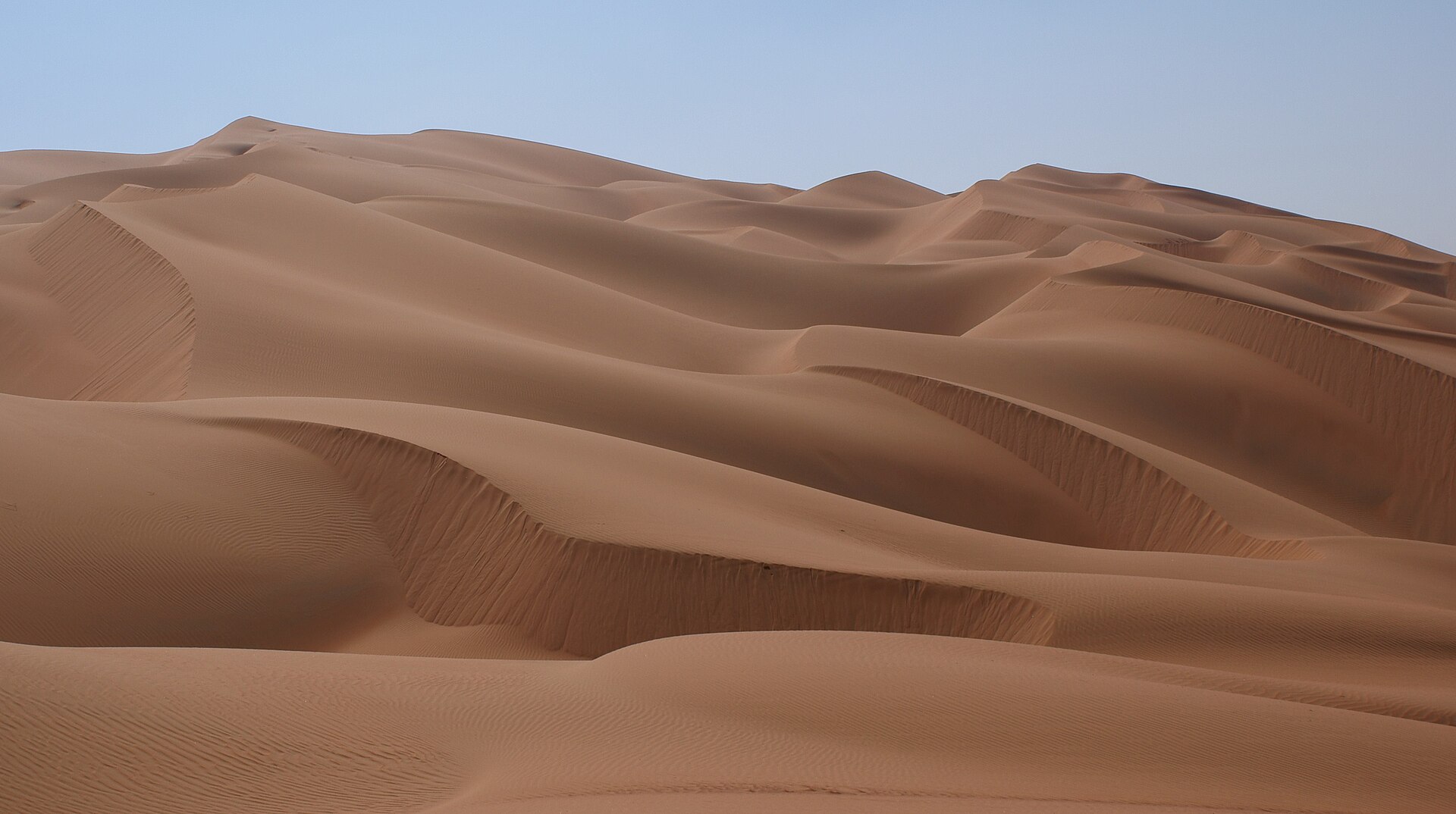
Riyadh and the Central Plateau (Najd)
The capital city sits at approximately 612 m elevation on the Najd plateau, surrounded by arid desert in every direction. Riyadh has the most extreme temperature range of any major Saudi city — brutally hot summers and genuinely cold winter nights.
Monthly Temperatures in Riyadh
| Month | Average High (°C) | Average Low (°C) | Rainfall (mm) | Humidity (%) |
|---|---|---|---|---|
| January | 21 | 7 | 11 | 50 |
| February | 24 | 10 | 7 | 40 |
| March | 28 | 14 | 22 | 33 |
| April | 34 | 19 | 19 | 27 |
| May | 39 | 25 | 4 | 17 |
| June | 43 | 27 | 0 | 14 |
| July | 45 | 29 | 0 | 10 |
| August | 44 | 29 | 0 | 12 |
| September | 41 | 25 | 0 | 14 |
| October | 36 | 20 | 3 | 21 |
| November | 28 | 14 | 12 | 38 |
| December | 22 | 9 | 11 | 48 |
What Riyadh Weather Means for Visitors
The golden window for Riyadh is November through February. Daytime temperatures sit between 21 °C and 28 °C — comfortable for walking the Diplomatic Quarter parks, exploring Olaya District on foot, or taking day trips to the Edge of the World escarpment. This is also when Riyadh Season runs, the Kingdom’s largest entertainment festival featuring concerts, sports events, and immersive experiences.
Nights in December and January get genuinely chilly — 7–9 °C — so pack a jacket if you are visiting in winter. Frost is not unheard of on the outskirts of the city.
Practical tip: Summer in Riyadh (June–August) is survivable only with heavy air conditioning. Temperatures above 45 °C mean outdoor sightseeing is effectively limited to early morning (before 8 AM) and after sunset. Most residents retreat indoors during summer; many restaurants and malls do not fill up until 10 PM.
The same climate pattern applies to nearby cities in the Najd region, including Buraydah in the Qassim region, which runs slightly cooler due to its more northern latitude.
Jeddah and the Red Sea Coast
Jeddah is Saudi Arabia’s second city and gateway to the holy cities of Mecca and Medina. Its Red Sea position gives it a completely different climate profile from Riyadh: narrow temperature range, high humidity, and warm winters.
Monthly Temperatures in Jeddah
| Month | Average High (°C) | Average Low (°C) | Sea Temp (°C) | Humidity (%) |
|---|---|---|---|---|
| January | 29 | 19 | 26 | 60 |
| February | 29 | 18 | 25 | 59 |
| March | 31 | 20 | 26 | 58 |
| April | 34 | 22 | 27 | 56 |
| May | 36 | 25 | 29 | 55 |
| June | 37 | 26 | 30 | 55 |
| July | 39 | 28 | 31 | 53 |
| August | 38 | 28 | 32 | 58 |
| September | 37 | 27 | 31 | 62 |
| October | 36 | 25 | 30 | 60 |
| November | 33 | 23 | 28 | 61 |
| December | 30 | 20 | 27 | 62 |
What Jeddah Weather Means for Visitors
Jeddah never gets cold. Its coolest month averages 29 °C high and 18 °C low, which feels pleasant once the humidity drops slightly in winter. The best months for Jeddah are December through February, when you can comfortably walk the historic Al Hamra district, explore the Corniche waterfront, and spend time outdoors without the oppressive summer humidity.
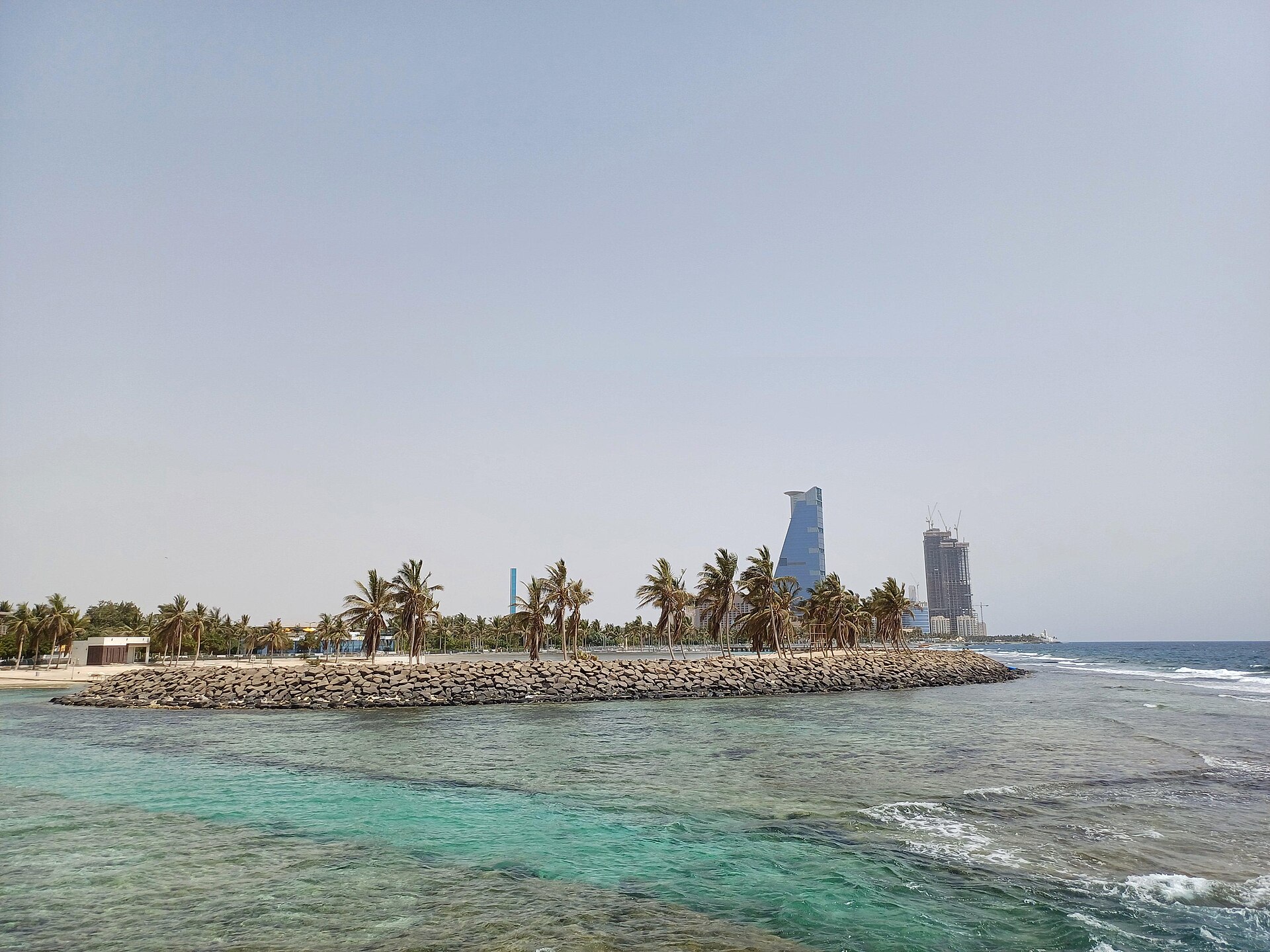
Summer (June–September) in Jeddah is not as extreme by thermometer as Riyadh — highs hover around 37–39 °C rather than 44–45 °C — but the combination of heat and humidity makes it feel far worse. The muggy conditions are particularly unpleasant when the wind drops. On days when hot desert air blows in from the east, humidity falls but temperatures spike, sometimes exceeding 47 °C, and sandstorms can reduce visibility.
Diver’s note: Red Sea water temperatures stay between 25 °C and 32 °C year-round, making diving in Saudi Arabia viable in every month. Visibility is best from April to June (calmer seas, less plankton), but winter diving is equally enjoyable with water at a still-warm 25–26 °C.
The Red Sea coast climate extends to other coastal cities including Yanbu (slightly cooler, less humid than Jeddah), Umluj (similar pattern, quieter beaches), and Jizan in the far south (warmer year-round due to lower latitude, more tropical feel).
Dammam, Al Khobar and the Eastern Province
The Arabian Gulf coast has its own distinct weather personality. Dammam and Al Khobar sit on a flat, low-lying coastal plain facing the shallow waters of the Gulf. The shallow sea heats up rapidly in summer, pushing humidity to uncomfortable levels, while winters are milder than Riyadh but cooler and less humid than Jeddah.
Monthly Temperatures in Dammam
| Month | Average High (°C) | Average Low (°C) | Rainfall (mm) | Humidity (%) |
|---|---|---|---|---|
| January | 21 | 10 | 14 | 58 |
| February | 23 | 11 | 13 | 54 |
| March | 27 | 15 | 16 | 46 |
| April | 33 | 20 | 9 | 37 |
| May | 39 | 26 | 2 | 26 |
| June | 43 | 28 | 0 | 20 |
| July | 45 | 30 | 0 | 22 |
| August | 44 | 29 | 0 | 27 |
| September | 41 | 26 | 0 | 31 |
| October | 36 | 22 | 1 | 39 |
| November | 29 | 17 | 10 | 50 |
| December | 23 | 12 | 16 | 56 |
What Eastern Province Weather Means for Visitors
The best window for the Eastern Province is November through March, when temperatures range from 21–29 °C and humidity is manageable. This is ideal for visiting Al Ahsa Oasis, the UNESCO-listed date palm oasis that is one of Saudi Arabia’s most underrated attractions, or exploring Dhahran’s Ithra cultural centre.
Summer in the Eastern Province is the worst of both worlds: inland-style heat (45 °C) combined with coastal humidity from the Gulf. The “feels like” temperature can exceed 55 °C in July and August. The shamal winds that blow from the northwest in June can also bring dust storms, reducing visibility and air quality for days at a time.
Watch out for shamal winds: The shamal is a persistent northwesterly wind that blows across Iraq and down the Gulf, primarily from March to August. It is strongest in June and July, and can trigger dust storms that ground flights, close roads, and make outdoor activity miserable. Check forecasts before booking outdoor excursions in the Eastern Province during spring and summer.
Abha, Asir and the Southwestern Highlands
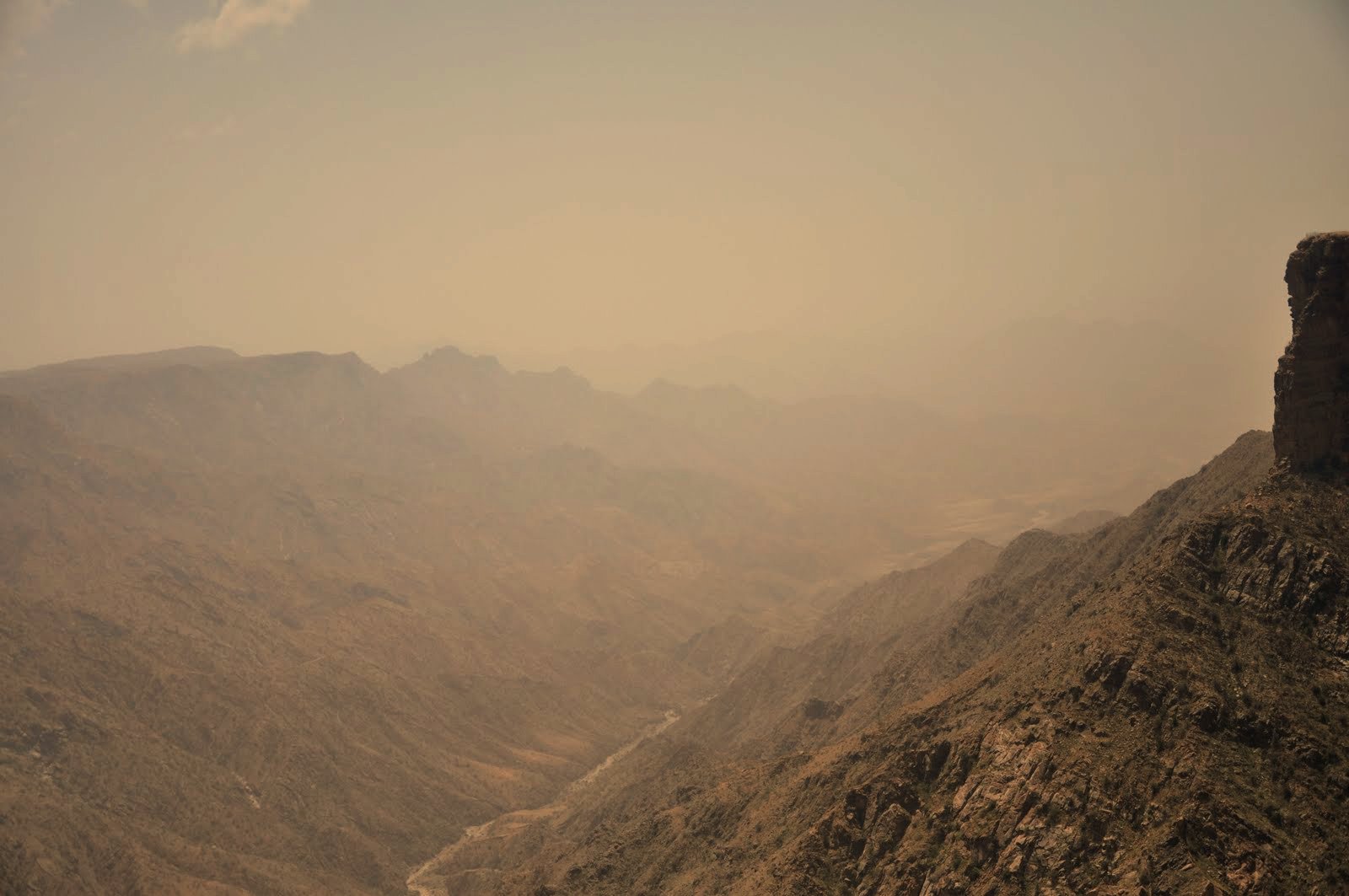
The Asir region is Saudi Arabia’s climate anomaly — a genuine mountain escape where monsoon rains fall in summer and temperatures rarely exceed 32 °C even in the hottest month. Abha sits at 2,270 m elevation in the Sarawat Mountains and receives an average of 500 mm of rainfall per year, more than six times Riyadh’s annual total.
Monthly Temperatures in Abha
| Month | Average High (°C) | Average Low (°C) | Rainfall (mm) | Conditions |
|---|---|---|---|---|
| January | 22 | 6 | 13 | Cool, dry, clear skies |
| February | 23 | 7 | 13 | Cool, dry |
| March | 24 | 9 | 38 | Warming, spring showers begin |
| April | 25 | 11 | 56 | Pleasant, regular showers |
| May | 27 | 13 | 38 | Warm, some rain |
| June | 30 | 15 | 15 | Dry heat, clear |
| July | 29 | 16 | 83 | Monsoon onset, heavy fog |
| August | 28 | 16 | 103 | Peak monsoon, heavy rain |
| September | 28 | 13 | 29 | Monsoon easing |
| October | 25 | 10 | 12 | Cool, drying out |
| November | 23 | 7 | 19 | Cool, clear |
| December | 22 | 5 | 9 | Cold nights, clear days |
What Asir Weather Means for Visitors
Abha and the Asir highlands are Saudi Arabia’s summer escape. When Riyadh and Jeddah are unbearable in July, Abha sits at 28–29 °C — but be warned that July and August bring the Indian Ocean monsoon, with heavy rainfall, thick fog that can blanket the mountains for days, and reduced visibility. If you want the cool without the rain, October through December and March through May are the sweet spots.
The cool climate means the vegetation here is completely different from the rest of Saudi Arabia — juniper forests, terraced farms, and green hillsides that look more like East Africa than the Arabian Peninsula. The Abha cable car to Habala Village and the road up to Al Soudah (near Jabal Sawda, the Kingdom’s highest peak at approximately 3,015 m) are must-do experiences, but check visibility before heading out during the monsoon season.
Nearby Khamis Mushait sits at a similar elevation and shares the same climate. Al Baha, about 300 km north along the Sarawat escarpment, is slightly warmer but still much cooler than the lowlands. Taif, perched at 1,879 m further north, offers a milder version of the highland experience with less rainfall and easier access from Jeddah or Mecca.
AlUla and the Northwest Desert
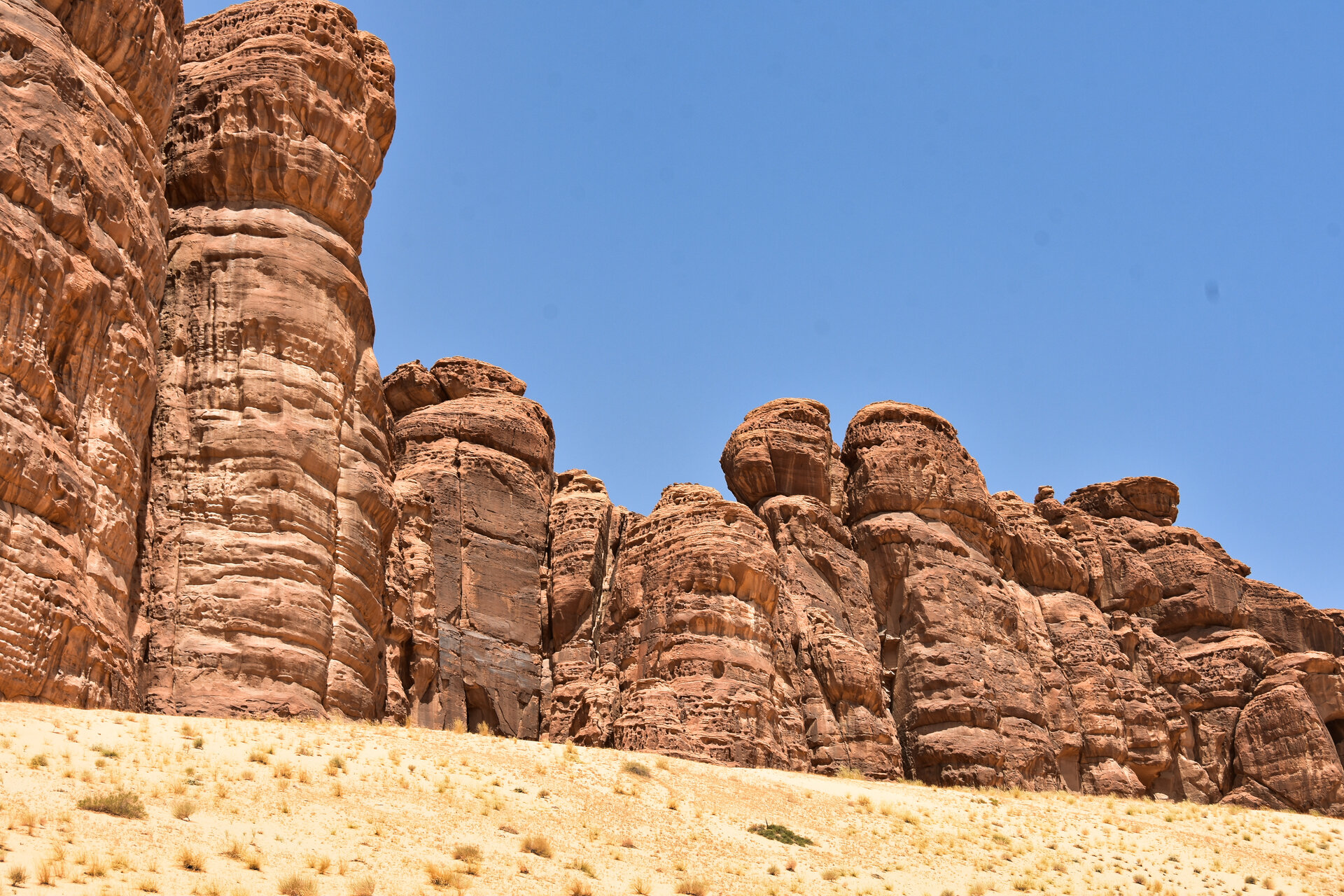
AlUla sits in a desert valley in the Medina region at approximately 650 m elevation. It has a classic arid climate with almost no rainfall (around 29 mm per year), but its position in the northern Hejaz gives it cooler winters than you might expect from a Saudi desert destination.
Monthly Temperatures in AlUla
| Month | Average High (°C) | Average Low (°C) | Best for |
|---|---|---|---|
| January | 20 | 7 | Hegra, outdoor activities, AlUla Arts season |
| February | 23 | 9 | Desert walks, hot air ballooning |
| March | 27 | 13 | Last comfortable outdoor month |
| April | 31 | 17 | Shoulder — mornings still pleasant |
| May | 36 | 22 | Getting hot — early morning only |
| June | 39 | 25 | Very hot — avoid |
| July | 41 | 27 | Peak heat — avoid |
| August | 41 | 25 | Peak heat — avoid |
| September | 38 | 23 | Still very hot |
| October | 34 | 18 | Season reopening, warming down |
| November | 27 | 13 | Ideal — comfortable all day |
| December | 22 | 9 | Best month — AlUla Season events |
What AlUla Weather Means for Visitors
AlUla has the simplest weather equation in Saudi Arabia: visit between October and March, avoid June to September. The official AlUla season, when the Royal Commission for AlUla opens most attractions and runs its arts and cultural programme, aligns perfectly with the cool months. The hot air balloon rides over Hegra launch at dawn when temperatures are at their lowest — a magical 10–15 °C in December and January.
Desert nights can be genuinely cold in winter. January nights average 7 °C and can drop lower, so bring warm layers if you are staying at a desert camp or doing a stargazing experience. This is also excellent photography weather — crisp, low-humidity air with long golden-hour light.
Tabuk and the Northern Frontier
The Tabuk region in northwest Saudi Arabia is the coldest part of the Kingdom. The city of Tabuk itself sits at 770 m elevation, but the surrounding mountains — including Jabal al-Lawz at 2,549 m — are the only places in Saudi Arabia that receive regular winter snowfall.
Monthly Temperatures in Tabuk
| Month | Average High (°C) | Average Low (°C) | Notes |
|---|---|---|---|
| January | 16 | 3 | Coldest month; frost common; snow possible on mountains |
| February | 19 | 5 | Still cold; snow on Jabal al-Lawz |
| March | 22 | 8 | Spring warming; wildflowers appear |
| April | 27 | 13 | Pleasant; best for Wadi Disah hikes |
| May | 32 | 18 | Warming quickly |
| June | 36 | 22 | Hot but drier than coast |
| July | 38 | 24 | Peak summer heat |
| August | 38 | 24 | Hot; occasional thunderstorms |
| September | 35 | 21 | Heat easing |
| October | 30 | 16 | Comfortable; autumn colours |
| November | 23 | 10 | Cool and clear |
| December | 18 | 5 | Cold nights; snowfall possible on peaks |
What Tabuk Weather Means for Visitors
Tabuk is the destination for travellers who want a different Saudi Arabia. The historic low temperature in the region is –4 °C, and the nearby city of Ha’il has recorded –10 °C. October through April is the best window, with the caveat that December through February can be genuinely cold — bring proper winter clothing if you are heading into the mountains.
The star attraction is Wadi Disah, a sandstone canyon that requires dry conditions and moderate temperatures for comfortable hiking. Spring (March and April) is arguably the best time, when wildflowers bloom and temperatures are ideal for outdoor activity. The region is also the gateway to NEOM and the future The Line project, though visitor access to NEOM remains limited.
The northern frontier, including Ha’il, Sakaka and Al Jouf, and Arar, shares this cold-winter pattern. Ha’il in particular can be brutally cold in January, with overnight temperatures well below zero.
Mecca and Medina
The two holy cities have distinct climate profiles despite being only 400 km apart. Mecca sits in a narrow valley at roughly 277 m elevation, which traps heat and makes it one of the hottest cities in Saudi Arabia. Medina, further north and at 620 m elevation, has a more continental pattern similar to Riyadh.
Mecca
Mecca is hot for most of the year. Summer temperatures routinely exceed 43 °C, and on the hottest days can reach 48–50 °C in the confined valley. The best months for Umrah are November through February, when highs drop to 30–33 °C. Hajj dates are determined by the Islamic lunar calendar and shift earlier by approximately 11 days each year. In 2026, Hajj falls in late May and early June — one of the hotter possible periods, with expected highs above 42 °C during the pilgrimage.
Medina
Medina is more tolerable. Winters (December–February) bring daytime temperatures of 24–27 °C with cool nights down to 10–12 °C. Summers are very hot (41–43 °C) with extremely low humidity, making shade and hydration essential. The Madinah airport is well connected, and the Haramain high-speed railway links Medina to Mecca via Jeddah in about 2.5 hours.
Pilgrim warning: Heat-related illness is the leading health risk for Hajj and Umrah pilgrims. The Saudi authorities provide misting stations, shaded corridors, and free water throughout the holy sites, but pilgrims should still carry electrolytes, wear lightweight white clothing, and avoid midday exposure during summer months. See our health and vaccinations guide for pre-trip medical preparation.
The Empty Quarter (Rub al Khali)
The Rub al Khali covers approximately 650,000 square kilometres of southern Saudi Arabia — making it the largest continuous sand desert on Earth. This is not a casual tourism destination, but organised dune bashing and desert camping experiences are increasingly available along its northern edges.
Summer temperatures in the Empty Quarter frequently exceed 50 °C in the air and 80 °C at ground level. Annual rainfall averages less than 35 mm, and some parts can go two to three years without measurable precipitation. The only viable season for visiting is November through February, when daytime temperatures drop to a more manageable 25–30 °C, though nights can be cold (8–12 °C).
Sandstorm Season: When and Where
Sandstorms are a significant weather hazard in Saudi Arabia, particularly in the central and eastern regions. The primary sandstorm season runs from late February to mid-July, with peak frequency in March through June. Saudi Arabia experiences an average of 15–20 significant dust storms per year, with the most intense activity driven by shamal winds blowing from Iraq southeastward across the Gulf.
The regions most affected are:
Practical tip: If you are caught in a dust storm, stay indoors with windows closed. If driving, pull over and turn on hazard lights. Dust storms can reduce visibility to near zero and are responsible for major road accidents every year. Flight delays and cancellations are common during severe events.
Best Time to Visit Each City — Summary
| City / Region | Best Months | Avoid | Key Factor |
|---|---|---|---|
| Riyadh | Nov – Feb | Jun – Aug | Extreme summer heat (45 °C+) |
| Jeddah | Dec – Feb | Jul – Sep | Oppressive summer humidity (>85%) |
| Dammam / Al Khobar | Nov – Mar | Jun – Aug | Heat + humidity + shamal dust |
| AlUla | Oct – Mar | Jun – Sep | 41 °C+ summer highs in open desert |
| Abha / Asir | Oct – Dec, Mar – May | Jul – Aug (rain/fog) | Monsoon season brings heavy rain |
| Tabuk | Oct – Apr | Jul – Aug | Cold winters on mountains; hot summer |
| Mecca | Nov – Feb | Jun – Aug | Valley trap intensifies heat to 50 °C |
| Medina | Nov – Mar | Jun – Aug | Dry heat; lower elevation than Mecca |
| Empty Quarter | Nov – Feb | Apr – Oct | Ground temps above 80 °C in summer |
| Taif | Year-round | None (mild climate) | 1,879 m elevation keeps it cool |
What to Pack for Each Season
Winter (November – February)
Summer (May – September)
Monsoon Season in Asir (July – August)
Month-by-Month Calendar
January – February: Peak Season
The coldest and most comfortable months nationwide. Riyadh Season is in full swing. AlUla runs its arts and culture programme. Desert camping is at its best. The only downside: this is peak tourist season, so hotels may be pricier and popular attractions busier.
March – April: Shoulder Season
Temperatures rise but remain manageable in the north and highlands. Wildflowers bloom in the Tabuk region and Asir foothills. Sandstorm season begins in the east. This is the last good window for outdoor adventures in AlUla before the heat sets in.
May – June: Heat Arrives
Only the highlands (Abha, Taif, Al Baha) remain comfortable. Coastal cities are muggy. Inland cities cross the 40 °C threshold. Tourism drops off sharply except for Hajj and Umrah pilgrims heading to Mecca and Medina.
July – August: Extreme Heat
Avoid the lowlands entirely. Abha is the only mainstream destination with tolerable weather, though it is the peak of monsoon season with heavy rain and fog. Saudi families flock to the Asir highlands; accommodation fills up quickly.
September: Transition Month
Still very hot everywhere except the highlands. The monsoon eases in Asir. Not recommended for general tourism.
October: Season Reopening
AlUla reopens for the season. Temperatures begin their autumn descent. Northern regions (Tabuk, Ha’il) are comfortable. Riyadh is still warm (36 °C) but no longer dangerous. This is a smart month to visit for lower prices before peak season.
November – December: Return of Comfort
The tourism window is fully open again. Riyadh Season launches. AlUla Season runs. The road trip from Jeddah through AlUla to Tabuk is at its best. Desert nights are cold enough for campfires. This is the sweet spot for a first visit to Saudi Arabia.
Practical Weather Resources
Before and during your trip, these tools will help you track Saudi weather:
For visa processing, keep in mind that the tourist e-visa is valid year-round and takes only minutes to process online, so you can be flexible with your timing.