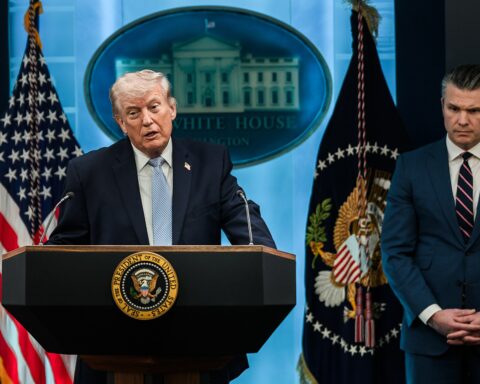

WASHINGTON — Three senior Iranian officials confirmed to the New York Times on April 17 that Iran and the United States are finalizing a three-page memorandum of understanding — a framework so short it fits on a napkin and so deliberately vague that Donald Trump and Iran’s own foreign ministry spent the same day publicly contradicting each other about what it says. Trump told CBS News that Iran had “agreed to everything,” including shipping its enriched uranium abroad and never closing the Strait of Hormuz again; hours later, Iran’s foreign ministry spokesperson went on state television and called the uranium “sacred as Iranian soil,” ruling out any transfer under any circumstances.
The contradictions are not a breakdown in communication. They are the document’s operating principle — a framework engineered to mean different things in Washington, Tehran, and the IRGC’s operational headquarters, because that is the only kind of framework all three can tolerate at the same time. The MOU defines a 60-day negotiating window for a final deal, but every load-bearing question — how long Iran pauses enrichment, where the uranium goes, who controls Hormuz — has been deferred into that window, leaving both sides free to claim victory on the same sheet of paper.
Table of Contents
Three Pages, Three Audiences
The document the NYT’s sources described is not a deal. It is a framework for talking about a deal — three pages that outline broad principles and open a 60-day clock for continued negotiations toward something final. According to Iranian officials and mediators who spoke to Reuters on April 16, the MOU allows nuclear research reactors for medical isotopes but requires all facilities to be above ground, which would keep Iran’s Fordow underground enrichment plant out of commission. No final enrichment duration has been agreed, and the gap between the two sides is a canyon: the US demanded a 20-year moratorium, per Reuters, and Iran offered three to five years.
That 15-to-17-year gap was not resolved. It was deferred — pushed into the 60-day window alongside every other question that would have killed the MOU if either side had been forced to answer it. The disposition of Iran’s highly enriched uranium, the duration of any enrichment pause, and the terms of Hormuz’s reopening all sit in the same bucket of deliberate non-answers. Three Iranian officials told the NYT that this structure was intentional, and it would have to be, because the alternative was no document at all.
The Institute for the Study of War (ISW) put it plainly in its April 16 assessment: “The Iranian negotiating council is not unified.” The IRGC appears to be playing an outsized role in decision-making, and conflicting Iranian positions on deal terms confirmed what ISW had been tracking for weeks — that the people negotiating and the people with operational authority over the issues being negotiated are not the same people, and do not agree.
What Did Trump Actually Claim?
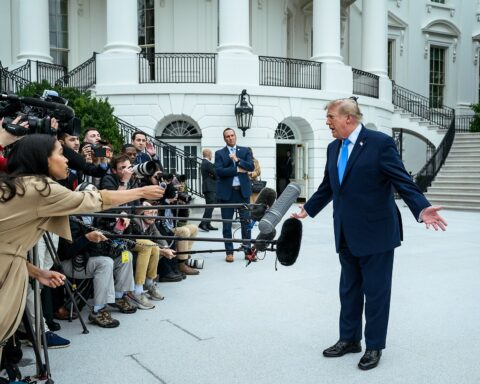
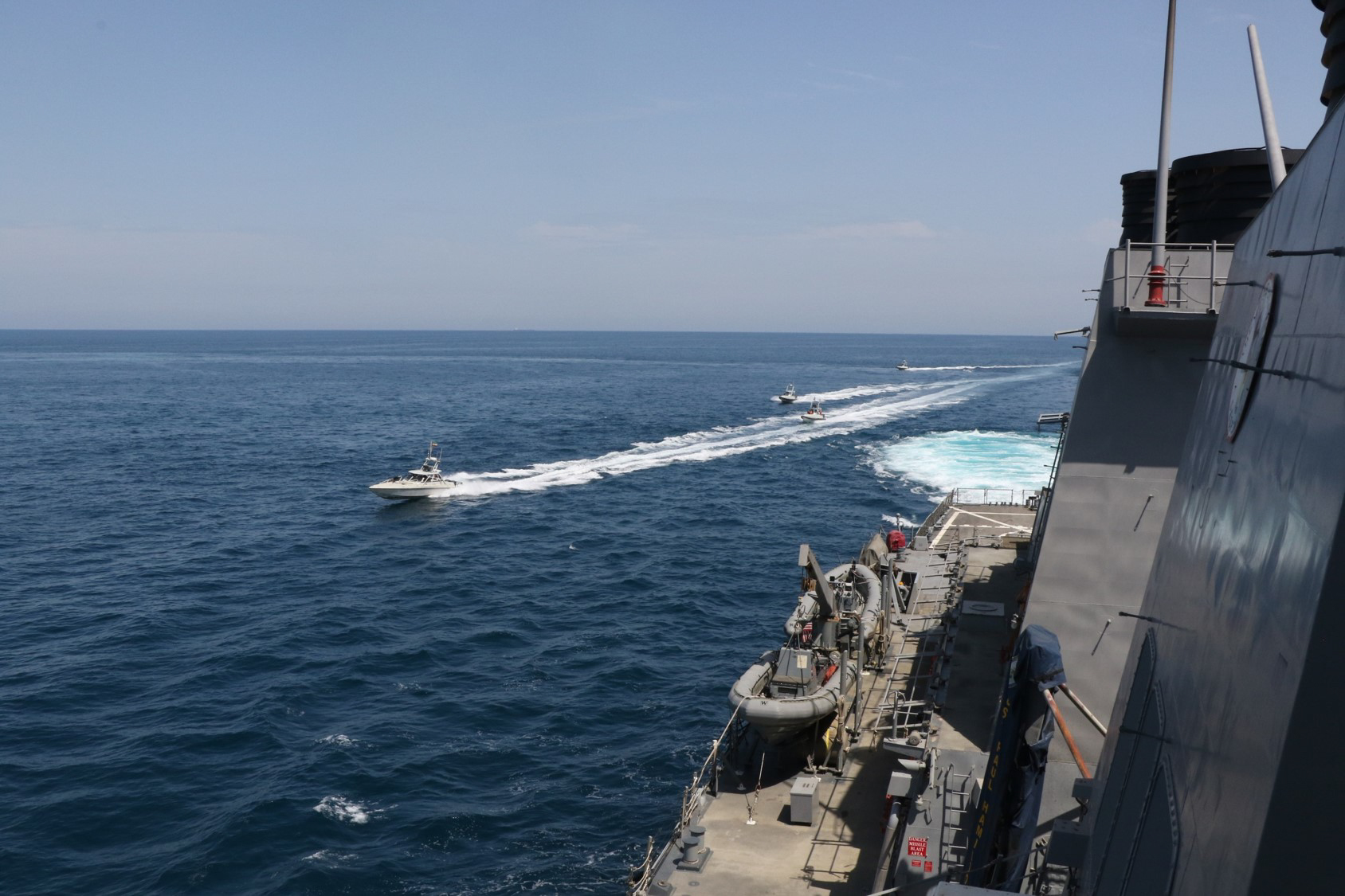
In a single hour on April 17, Trump told CBS News that Iran had “agreed to everything,” told Reuters that the US would “go in with Iran, at a nice leisurely pace, and go down and start excavating with big machinery” — describing the physical removal of buried enriched uranium as though it were a construction project already underway — and called Iran’s uranium stockpile “nuclear dust.” Iran’s parliamentary speaker, Mohammad Bagher Ghalibaf, who led Iran’s delegation at the Islamabad talks, counted seven false claims in that single hour and posted the tally on social media.
The Middle East briefing 3,000+ readers start their day with.
One email. Every weekday morning. Free.
The excavation language is worth pausing on. Iran has roughly 2,000 kilograms of total enriched uranium, with approximately 450 kilograms enriched to 60 percent purity — a level that requires only 564 separative work units to reach weapons grade. The US position, per Reuters and Axios reporting from April 16-17, is that all highly enriched uranium must be removed from Iran. Iran has proposed a split: partial shipment to a third country and partial down-blending inside Iran under international monitoring. The idea that either side has agreed to the other’s position is contradicted by every Iranian official who has spoken on the record, and by reporting from every outlet covering the talks.
Trump also claimed Iran had agreed to never close the Strait of Hormuz again — a statement that would require the IRGC Navy to surrender operational control of waterways it has publicly designated as an IRGC-administered corridor since early March 2026. No Iranian official confirmed this, and the IRGC’s own actions on April 17 contradicted it directly.
The Same-Day Denials
Iran’s foreign ministry spokesperson, Esmaeil Baghaei, went on state television hours after Trump’s CBS interview and delivered a statement that left no room for interpretation. The language was crafted less for Washington’s consumption than for Tehran’s, where any hint of concession on the nuclear file would be seized upon by IRGC-aligned factions already accusing the diplomatic corps of weakness.
Iran’s enriched uranium will under no circumstances be transferred anywhere. Transferring uranium to the United States has not been an option. Just as Iran’s soil is sacred, enriched uranium is the same.
Esmaeil Baghaei, Iranian Foreign Ministry Spokesperson, state TV, April 17
The “sacred soil” formulation is not improvised rhetoric — it is a public red line designed to make any future concession on uranium transfer politically impossible for any Iranian official who might be tempted to agree. Baghaei was not freelancing; he was establishing the foreign ministry’s position on the single issue Trump had just told an American audience was already settled. Ghalibaf reinforced the message from a different angle, using social media to accuse Trump of seven fabrications in the same breath, a framing that positioned any future American claim about agreed terms as presumptively false.
The denials created a problem that no amount of diplomatic language can paper over. If Iran’s foreign ministry says uranium will “under no circumstances” leave Iran, and Trump says Iran agreed to let the US excavate it, at least one side is lying — or, more precisely, the document they are both describing was written to accommodate both readings. The three Iranian officials who spoke to the NYT confirmed that the MOU exists and that it defines a 60-day framework, but their description of its contents was far narrower than Trump’s, covering above-ground research reactors and medical isotopes rather than uranium removal or permanent Hormuz guarantees.
Tasnim vs. Araghchi — the IRGC Breaks Ranks in Real Time
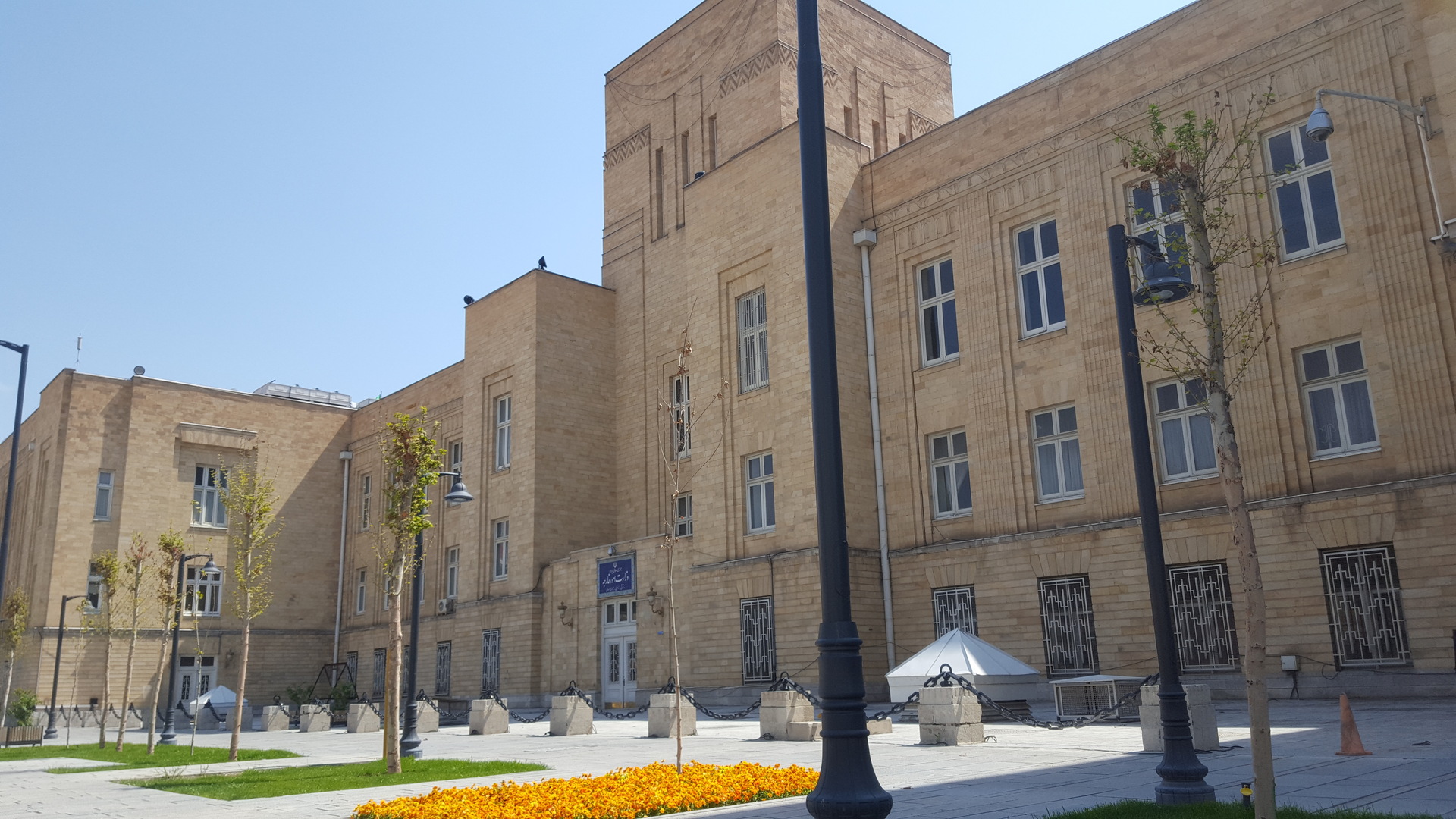
The most revealing split on April 17 was not between Washington and Tehran. It was between Iran’s foreign minister and the IRGC’s own media operation, happening publicly and in real time. Abbas Araghchi, Iran’s foreign minister, declared on social media that the Strait of Hormuz was “completely open for the remaining period of ceasefire” for commercial vessels — but qualified the statement with “under the supervision of Iran,” a formulation that preserved IRGC operational authority while sounding like a concession. The IRGC Navy then issued its own clarification: vessels must use designated routes near Larak Island with IRGC permission, and military vessels remain barred entirely.
Within hours, Tasnim News Agency — the IRGC-affiliated outlet that functions as the Revolutionary Guard’s unofficial public communications channel — published a response calling Araghchi’s own statement “bad and incomplete.” Tasnim warned that any reopening of Hormuz would be “void” if the US naval blockade remained in place, a condition that Araghchi had not mentioned and that the US has shown no intention of lifting as a precondition. The IRGC was publicly editing its own government’s foreign minister, on the same day, about the same statement, in front of the same international audience.
This is not diplomatic confusion. Under Article 110 of Iran’s constitution, President Pezeshkian has zero authority over the IRGC, and Araghchi — as Pezeshkian’s foreign minister — cannot bind the IRGC Navy to any commitment about Hormuz. Supreme Leader Khamenei, the only figure with constitutional authority to override the IRGC, has been absent from public life for more than 44 days. Araghchi’s statement, which moved oil markets by nine percent, was made by an official who does not have the authority to enforce what he announced — a fact the IRGC made sure everyone understood before the trading day ended.
The $20 Billion Question
Axios reported on April 17 that the US is considering releasing $20 billion in frozen Iranian funds in exchange for Iran’s uranium stockpile — a figure that had already climbed from an initial US offer of $6 billion, against an Iranian demand of $27 billion. Trump reacted to the Axios report with visible anger, per the New Republic, disputing the reported terms almost immediately after publication. Even within the US government, the specifics of what has been offered are contested in real time.
A senior Iranian official confirmed to Reuters a formulation far narrower than Trump’s: “agreement on unfreezing billions of dollars in Iranian assets,” with no timeline attached and no description of what Iran would deliver in return. The gap between “releasing $20 billion for Iran’s uranium” and “unfreezing billions in Iranian assets” is large enough to contain an entirely different deal — and that may be precisely the point. Each side can characterize the same financial arrangement in terms its domestic audience will accept, as long as neither is forced to commit the characterization to paper in language the other side would have to reject.
The $20 billion figure has a structural problem beyond the politics. That stockpile represents years of centrifuge work and, from Iran’s perspective, the closest it has come to a credible nuclear threshold capability. Paying $20 billion for it sets a price on nuclear latency that Iran could, in theory, rebuild over time, particularly if the enrichment moratorium lasts only the three to five years Iran has offered rather than the 20 years the US demanded. A senior military official, Abdollahi, told state news agency IRNA that the US and Israel “have no option but to bow and submit” — the kind of framing that positions any Iranian concession as a tactical pause rather than a strategic reversal.
Is Hormuz Actually Open?
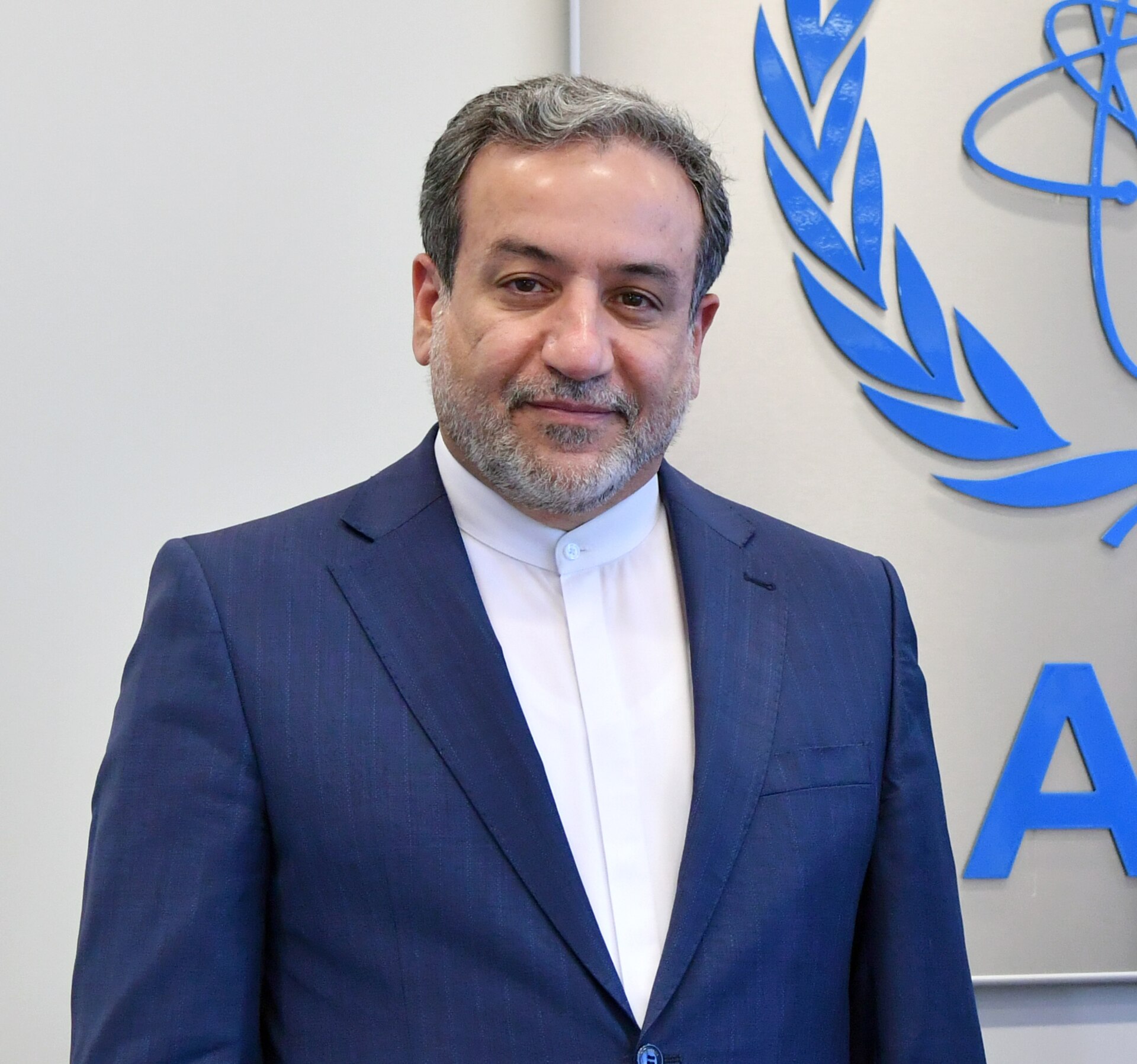
In theory, yes. In practice, not in any way that matters for oil markets. On the same day Araghchi declared the strait “completely open,” the NYT’s live blog tracked actual ship movements and found that only a handful of vessels crossed — and zero oil tankers exited the Persian Gulf. The IRGC’s Larak Island corridor system remained fully operational: vessels must submit their IMO number, cargo manifest, crew names, ownership details, and destination to IRGC intermediaries before receiving a VHF route code authorizing passage through designated lanes. That is not an open strait — it is a supervised one, and the supervision belongs to the same organization that publicly contradicted the foreign minister who announced the opening.
Brent crude fell nine percent to $90.38 on the announcement, with a session low of $86.09, before the IRGC’s qualifications made clear that Araghchi’s “completely open” was more aspiration than operational reality. The market priced a headline before the footnotes arrived, and the footnotes — Larak corridors, IRGC permission requirements, Tasnim’s “void” warning — described a strait that functions less like an international waterway and more like an IRGC-administered toll road with a temporary promotional offer. Araghchi’s qualifier was also time-limited: “for the remaining period of ceasefire,” which expires on April 22, five days from his statement, with the MOU not yet signed.
Trita Parsi of the Quincy Institute, observing the broader diplomatic pattern, told Al Jazeera that “Trump’s failed use of force has blunted the credibility of American military threats, introducing a new dynamic into US-Iran diplomacy.” The dynamic Parsi described was visible in Hormuz’s non-opening: Iran could announce the strait was open, collect the oil-price drop that came with the announcement, and maintain every operational restriction that made the opening meaningless — because the US blockade gave the IRGC a ready-made justification for keeping its own restrictions in place.
What Saudi Arabia Loses Before Phase Two Starts
The three-page MOU, if signed, creates a 60-day window in which the hardest questions — enrichment duration, uranium disposition, Hormuz — are negotiated toward a final deal. For Saudi Arabia, this window is the problem. Every day of negotiation is a day in which coercive pressure on Iran diminishes: oil prices fall on the perception of progress, the US blockade faces mounting legal and logistical challenges, and the IRGC retains operational control of Hormuz while diplomats discuss its future status in air-conditioned rooms.
Saudi Arabia’s fiscal break-even price, including PIF commitments, sits at $108-111 per barrel according to Bloomberg. With Brent already down nine percent on Hormuz headlines and still falling on deal optimism, every further percentage point of decline widens a deficit the kingdom was already struggling to manage at wartime prices. The kingdom’s March production crashed to 7.25 million barrels per day from February’s 10.4 million — a 30 percent drop that the IEA called “the largest disruption on record.” A framework that defers Hormuz resolution to Phase Two while letting markets price in a reopening that hasn’t operationally happened gives Saudi Arabia the worst of both outcomes: lower revenue without lower risk.
ACLED’s April 2026 assessment mapped three GCC positions on any US-Iran deal. Saudi Arabia’s was pragmatic, prioritizing Hormuz reopening guarantees and direct-attack protections; UAE and Bahrain took a harder line, demanding IRGC proxy dismantlement; Oman and Qatar favored dialogue. The risk ACLED identified was that a minimal deal — the kind a three-page MOU is designed to produce — would satisfy Saudi Arabia’s top-line demand for Hormuz access without resolving the IRGC’s operational sovereignty over the waterway, while giving UAE and Bahrain grounds to play a spoiler role if their demands were unmet. The Hajj deadline looming on April 18, one day after the MOU’s emergence, added a kinetic dimension: 1.2 to 1.5 million pilgrims arriving into a country whose PAC-3 interceptor stockpile is down to roughly 400 rounds, with a ceasefire expiring four days later.
Background
The structural template for this MOU is the 2013 Geneva Interim Agreement, or Joint Plan of Action, which froze key elements of Iran’s nuclear program in exchange for limited sanctions relief while deferring comprehensive terms to a six-month negotiating window. That window stretched to 18 months before producing the July 2015 JCPOA — a timeline that suggests the current MOU’s 60-day clock is aspirational rather than binding. The NYT made the parallel explicit on April 13 with a headline that read: “U.S. Is Negotiating an Iran Deal That Would Buy Time, Again.”
The JCPOA itself contained what diplomats call constructive ambiguity on ballistic missiles. UN Security Council Resolution 2231 replaced binding language — “Iran shall not” test missiles — with “calls upon Iran not to,” a formulation Iran exploited for years while claiming full compliance. The precedent is directly relevant to the current MOU: any language on Hormuz that “calls upon” Iran rather than binding it would give the IRGC the same interpretive freedom it used on missile testing, while allowing the US to claim the issue had been addressed. The Vance-Ghalibaf meeting in Islamabad — the first direct US-Iran talks since 1979 — produced no binding commitments, and the US blockade imposed on April 13 was itself a response to the talks’ failure to produce enforceable terms.
The authorization ceiling problem — the gap between what Iran’s diplomatic apparatus can agree to and what the IRGC will actually do — has defined this conflict since its earliest days. Pezeshkian publicly accused Vahidi and Abdollahi on April 4 of wrecking the ceasefire, but under Article 110 of Iran’s constitution, the president has no IRGC authority whatsoever. Khamenei’s 44-day absence means the only person who can constitutionally override the IRGC is unavailable, and his son Mojtaba has been communicating only by audio, per multiple reports. Any MOU that Araghchi signs is not binding on the IRGC Navy — which is why the IRGC felt free to contradict him within hours of his Hormuz announcement.
FAQ
What happens if the MOU is signed but the 60-day window expires without a final deal?
The 2013 Geneva precedent is instructive: that agreement’s six-month window was extended four times over 18 months before producing the JCPOA. No mechanism for extending the current 60-day window has been publicly described, and the Soufan Center noted in its April analysis that the ceasefire itself contains no extension clause. If the window expires without a deal, both sides revert to pre-MOU positions — but the political cost of resuming hostilities after a framework has been announced is substantially higher than never having announced one, which gives both sides an incentive to extend rather than collapse the process, even without a formal mechanism.
Why did Brent fall nine percent on a Hormuz announcement that didn’t actually reopen the strait?
Commodity markets trade on headlines and adjust on details, and Araghchi’s “completely open” statement hit trading desks before the IRGC’s Larak corridor qualifications or Tasnim’s “void” warning reached the same audience. The session low of $86.09 reflected the headline; the close at $90.38 reflected the correction. Bloomberg had identified Hormuz, Lebanon, and nuclear enrichment as three outstanding hurdles on April 16 — the market interpreted Araghchi’s statement as clearing the first hurdle, then spent the afternoon learning it hadn’t been cleared at all.
Could the IRGC torpedo a signed MOU unilaterally?
It has the operational capacity and, arguably, the constitutional cover to do so. The IRGC Navy controls Hormuz’s physical access through the Larak corridor system, and its “full authority” declaration from April 5 and April 10 was issued while Araghchi was actively negotiating in Islamabad. Under Iran’s constitutional structure, IRGC Navy orders require Khamenei ratification to override — and Khamenei has not been seen in public for over 44 days. ISW’s April 16 assessment that “the IRGC appears to be playing an outsized role in Iranian decision-making” is, if anything, understated: the IRGC is not playing an outsized role, it is playing the only operational role, because the civilian chain of command cannot reach the person who outranks it.
Has Iran proposed any alternative to uranium removal that the US might accept?
Iran’s counterproposal, per Reuters reporting on April 16, is a split arrangement: partial shipment of enriched uranium to a third country (not the US) combined with partial down-blending of the remainder inside Iran under international monitoring. The US has not publicly responded to this structure, but the $20 billion figure reported by Axios suggests financial terms are being discussed alongside physical disposition — meaning the final arrangement, if one emerges, could involve Iran retaining some enriched material in a diluted form while receiving frozen assets as compensation for the portion it ships out. The enrichment moratorium duration — three to five years versus 20 — would determine whether this amounts to a permanent reduction or a temporary loan.
Bloomberg’s subsequent report that the nuclear issue “remains in limbo” and Iran’s Foreign Ministry denial that transferring enriched uranium was ever under consideration are examined in detail in Trump Says Iran Will Hand Over “Nuclear Dust.” Bloomberg Says Deal Is in Limbo, which maps the gap between Trump’s public framing and the actual state of negotiations.