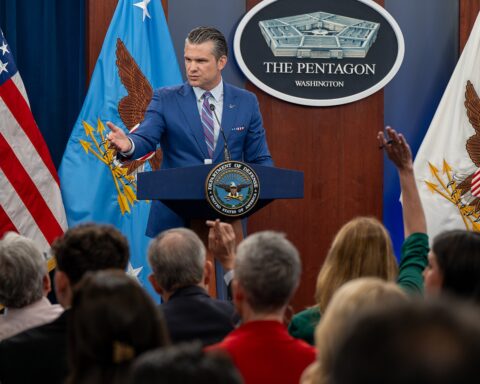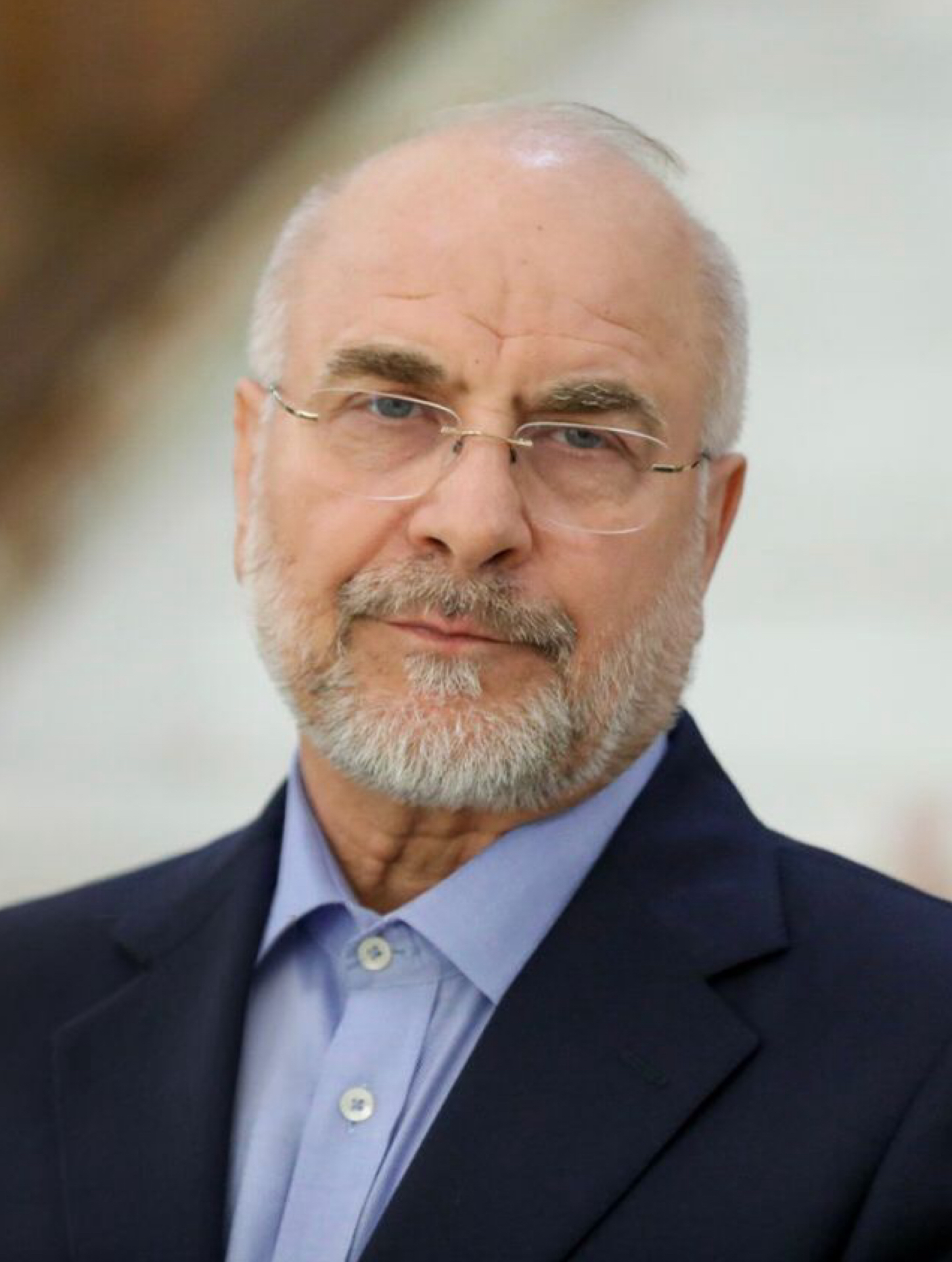

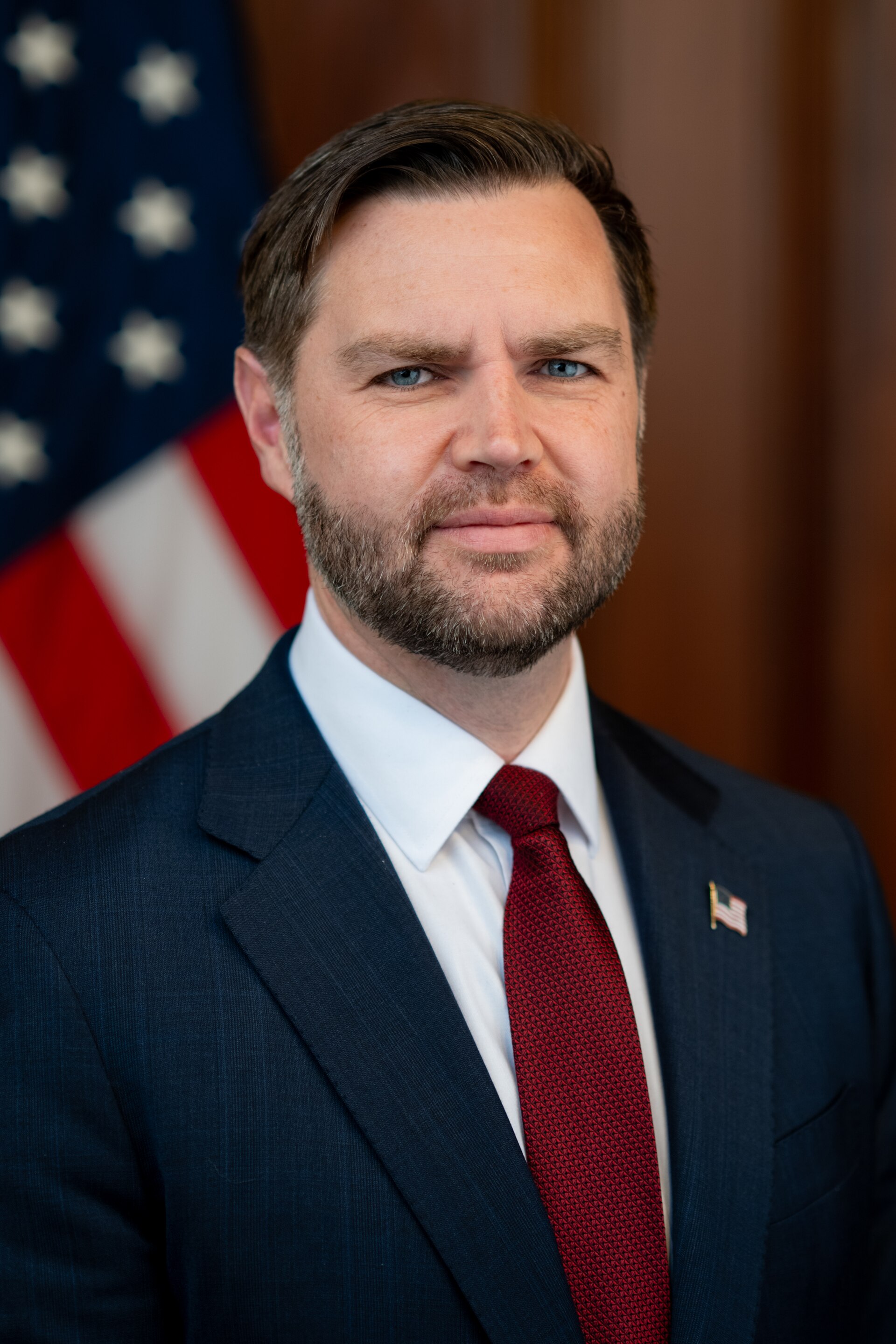
TEHRAN — Iran has designated Parliament Speaker Mohammad Bagher Qalibaf as its signatory to the Islamabad Memorandum of Understanding scheduled for signing in Geneva on Sunday, June 14, bypassing Foreign Minister Abbas Araghchi and President Masoud Pezeshkian in favor of a legislative-branch official with no constitutional authority to bind the executive. His American counterpart will be Vice President JD Vance — the constitutional second-in-line to the US presidency, with full executive authority to commit the United States.
The designation, confirmed by Reuters on June 12, breaks with the precedent of the 2015 Joint Comprehensive Plan of Action, in which Foreign Minister Mohammad Javad Zarif signed for Iran opposite US Secretary of State John Kerry — both executive-branch officers with parallel institutional standing. Israeli intelligence sources told the Jerusalem Post that neither Araghchi nor Qalibaf “have signing rights” without approval from Supreme Leader Mojtaba Khamenei. Araghchi has separately told Iran International that the signing will be conducted “remotely,” meaning Vance signs in person in Geneva while Qalibaf signs from Tehran.
Table of Contents
The Constitutional Mismatch
Vance arrives in Geneva as an executive-branch officer whose authority derives from Article II of the US Constitution and direct presidential delegation. When a US vice president signs an international agreement, the commitment carries the institutional weight of the branch that commands the military, conducts foreign policy, and enforces treaties. Trump named Vance as signatory on June 12, and four US Air Force C-17 Globemaster IIIs deployed to Europe the same day, according to Bloomberg.
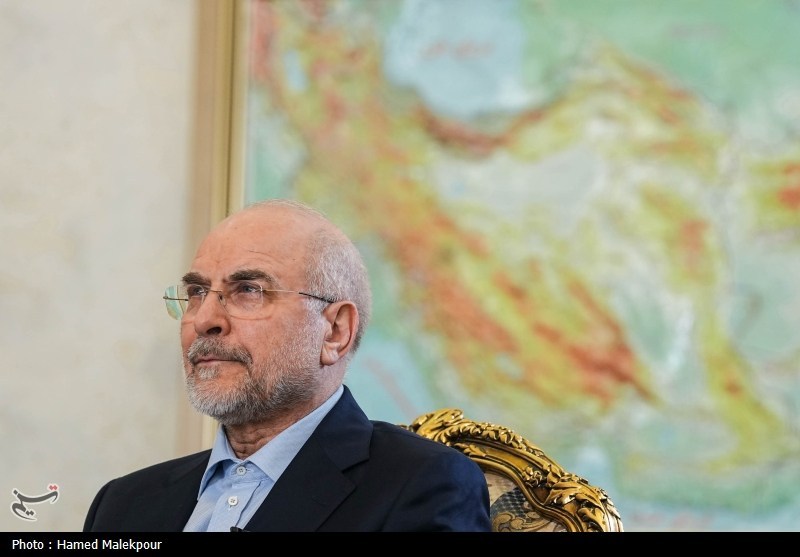
Qalibaf occupies the third position in Iran’s constitutional hierarchy — behind the Supreme Leader and the President — but his office is legislative. Under Article 89 of Iran’s constitution, the Speaker of the Islamic Consultative Assembly manages parliamentary sessions, oversees legislative procedure, and can interrogate cabinet ministers. He does not command the armed forces, conduct foreign policy, or hold executive power. No Iranian government source has publicly explained why a legislative officer was selected over the foreign minister or president.
| JD Vance (United States) | Mohammad Bagher Qalibaf (Iran) | |
|---|---|---|
| Title | Vice President | Parliament Speaker |
| Branch | Executive | Legislative |
| Constitutional rank | 2nd (after President) | 3rd (after Supreme Leader, President) |
| Military authority | Succeeds to commander-in-chief | None (Art. 110: Supreme Leader commands) |
| Treaty authority | Full executive delegation | Chairs ratifying body; no signing provision |
| Precedent | VP Biden signed agreements in office | No Speaker has signed a US-Iran framework |
Article 113 of Iran’s constitution designates the President as “the highest public official” after the Supreme Leader. Article 110 vests the Supreme Leader with supreme command of the armed forces and authority over “general policies of the system.” Iran’s constitution assigns treaty-signing authority to the executive branch; no provision extends it to the Speaker of the Majlis.
What Authority Does Iran’s Speaker Actually Hold?
Qalibaf is an automatic member of Iran’s Supreme National Security Council by virtue of his speakership. The SNSC — which includes the foreign minister, intelligence minister, IRGC commander, and armed forces chief of staff — advises the Supreme Leader on security policy. But SNSC membership is consultative, not executive. The council’s decisions require the Supreme Leader’s ratification to carry force of law under Article 176 of the constitution.
The Middle East briefing 3,000+ readers start their day with.
One email. Every weekday morning. Free.
On May 25, nineteen days before the proposed signing, Qalibaf was reelected Speaker with 235 of 271 votes cast, according to PressTV and Fars News. On May 17, he was appointed Iran’s Special Representative for China Affairs by proposal of President Pezeshkian and approval of Supreme Leader Mojtaba Khamenei. The semiofficial Tasnim News Agency — linked to the IRGC — noted at the time that the China envoy role “differs in terms of level of authority” from a presidential appointment, RFERL reported.
The China envoy appointment established a pattern: Qalibaf designated as “Iran’s” representative rather than the president’s or the Supreme Leader’s envoy, creating ambiguous authority that neither binds the executive nor clearly excludes it. The MOU signing replicates the same model — Qalibaf signs as Iran’s designee, but no constitutional provision grants the Parliament Speaker authority to commit the state to international security agreements.
Under Iranian law, international treaties must be ratified by the Majlis — the parliament Qalibaf chairs — and are then subject to Guardian Council review by a twelve-member body, six of whose jurists are appointed by the Supreme Leader. A Parliament Speaker who signs an agreement he must then shepherd through his own chamber for ratification is a structural arrangement Tehran has not addressed.
The JCPOA Precedent
The last comparable Iran-US agreement was the 2015 Joint Comprehensive Plan of Action, negotiated over twenty months in Vienna and signed on July 14, 2015. Iran’s signatory was Foreign Minister Mohammad Javad Zarif. His American counterpart was Secretary of State John Kerry. Both were executive-branch officers with parallel institutional standing — the top diplomats of their respective governments, operating under direct presidential authority, according to the European External Action Service archives of the agreement.
The JCPOA had seven signatory parties: Iran, the United States, the United Kingdom, France, Germany, Russia, and China, with the European Union as coordinator. Every signatory sent its foreign minister or equivalent. No parliament speaker, no legislative officer, no figure from outside the executive branch signed the JCPOA or any of its predecessor interim agreements, including the 2013 Joint Plan of Action negotiated in Geneva. The 1981 Algiers Accords, which resolved the hostage crisis, were mediated through Algeria with no direct US-Iran signatory ceremony.
No precedent exists in modern Iranian diplomacy for a Parliament Speaker signing a bilateral military or nuclear framework with the United States. PressTV, Iran’s English-language state broadcaster, has referred to Qalibaf as “chief negotiator” without explaining the constitutional basis for a legislative officer signing an executive agreement. IRNA, the Islamic Republic News Agency, has offered no explanation for why the Speaker — rather than the foreign minister whose ministry negotiated the framework — was designated.
Can Qalibaf Bind the IRGC He Once Commanded?
Qalibaf joined the Islamic Revolutionary Guard Corps at eighteen during the Iran-Iraq War and was involved in the 1982 recapture of Khorramshahr, according to Britannica and RFERL. Ayatollah Ali Khamenei — the elder, now deceased — appointed him directly to command the IRGC Aerospace Force from 1997 to 2000, and then to head the national police from 2000 to 2005. His IRGC credentials run deeper than those of Araghchi, a career diplomat who served as deputy foreign minister before his appointment as foreign minister.
But as Parliament Speaker, Qalibaf holds no institutional authority over the IRGC. His personal history with the corps does not translate into command authority from the Speaker’s chair. He ran for president four times — in 2005, 2013, 2017, and 2024 — and lost each time, according to Britannica. He has never held executive office.
“We seize concessions not through dialogue, but with missiles. In negotiations, we merely make them understand. The winner of any agreement is the one who prepares better for war from the day after.”
— Mohammad Bagher Qalibaf, X (social media), May 29, 2026
The statement, reported by PressTV and the Washington Times, appeared sixteen days before the signing Qalibaf is now designated to conduct. During the first Islamabad face-to-face talks on April 11-12 — the highest-level US-Iran meeting since 1979 — Qalibaf led the Iranian delegation through twenty-one hours of negotiations with US envoy Steve Witkoff. Those talks ended without agreement because Iran refused to commit not to develop a nuclear weapon, according to AP and Al Jazeera.
Qalibaf later told reporters that Iranian negotiators did not trust the US side “due to the experiences of the two previous wars,” Time reported. He also described domestic opponents of the negotiations — including SNSC member Saeed Jalili and hardline MPs — as “extremist militia-like actors who would destroy Iran,” according to Iran International.
‘They Do Not Have Signing Rights’
Israeli intelligence sources have offered the most direct assessment of Qalibaf’s authority gap. In statements to the Jerusalem Post in June 2026, unnamed Israeli sources said that Araghchi and Qalibaf “may have reached agreements and guiding points with the Iranian negotiating team, but they do not have signing rights.” The Times of Israel, citing separate Israeli sources, reported: “We do not have indications that Mojtaba has said yes.”
The reference is to Mojtaba Khamenei, who succeeded his father as Supreme Leader after the elder Khamenei’s assassination on February 28. Iranian hardliners have echoed the Israeli assessment from a different direction: Bloomberg and Iran International reported unnamed hardline sources declaring that “no understanding is valid without Mojtaba Khamenei’s approval.” Mojtaba Khamenei has been communicating through couriers with multi-day delays since going into hiding after his father’s death, creating an additional question about whether timely approval is even mechanically possible before Sunday.
The Soufan Center described Qalibaf in March 2026 as “a key node between the political, security and clerical elites” — an elevation that followed the killing of SNSC Secretary Ali Larijani, Khamenei’s primary strategic interlocutor for decades, in mid-March 2026. Qalibaf has filled part of that vacuum informally, but without a formal security-policy mandate and with no institutional mechanism to convert that informal role into binding authority over the IRGC or nuclear program.
Tasnim News Agency, which is linked to the IRGC, offered its own framing at an earlier stage of the negotiations. Qalibaf, Tasnim stated, “was introduced as a negotiating party in order to present a contradictory and non-unified image of Iran.” The agency’s posture has since shifted — Qalibaf’s May 25 reelection as Speaker and his China envoy appointment brought quieter coverage — but the original IRGC-affiliated characterization has not been retracted. Two hundred sixty-one of Iran’s 290 members of parliament issued a statement in April supporting Qalibaf and the negotiating team amid hardliner opposition, Iran International reported.
The Remote Ceremony
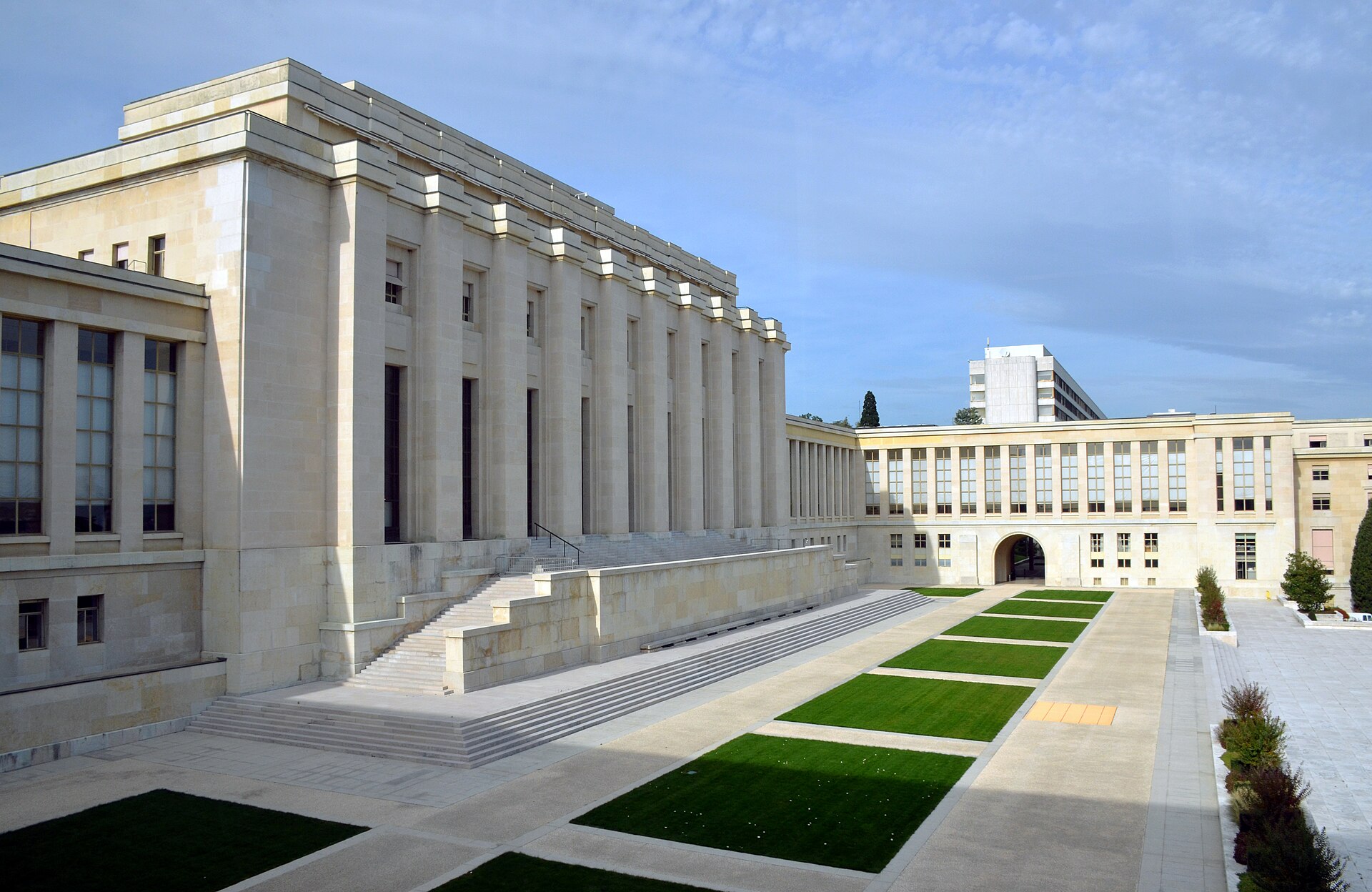
Araghchi told Iran International on June 12 that the MOU “could be signed remotely within days.” If the signing proceeds as described, Vance will travel to Geneva — a city selected for its diplomatic neutrality, confirmed by Bloomberg — and sign in person. Qalibaf will sign from Tehran. There will be no handshake, no shared table, no photograph of the two signatories together.
The arrangement also means Araghchi — the foreign minister who negotiated the framework and who would have been the institutional parallel to a US secretary of state — managed the signing logistics without signing himself. On CBS on June 13, Araghchi declared that enriched uranium dilution inside Iran was “the only acceptable position.” The Speaker of Parliament will sign a document whose first phase contains no nuclear terms at all. Enrichment caps, stockpile disposal requirements, and IAEA access provisions have been deferred to a sixty-day second phase.
Saudi Arabia, named among twelve “approvers” by Trump on June 11, has no seat in any of the three mediation tracks — Pakistani, Omani, and Qatari — that produced the agreement. The kingdom’s foreign ministry has been silent for more than twenty-three days. The framework that governs the region’s most contested waters will bear the signature of a man whose constitutional authority extends to managing the chamber that must ratify it, and the approval of a vice president whose government has not resolved Iran’s claim to manage the Strait of Hormuz.
Background
The Islamabad MOU takes its name from the April 11-12 talks in Pakistan’s capital. Pakistan’s dual-letter architecture — Prime Minister Sharif communicating through civilian channels and Army Chief Munir maintaining a separate IRGC back-channel — facilitated the initial contact. Sharif called the resulting text “final” on June 12; Vance told CBS the same day it was “still TBD.”
Iran’s government has rejected characterizations that the text is finalized. Fars News, which is affiliated with the IRGC, stated on June 12 that “no text has been approved.” Foreign Ministry spokesman Esmail Baghaei called reports of a finalized agreement “speculative” in comments to France 24. Tasnim described the claim as the “38th such claim.” These denials ran concurrent with the designation of a signatory — and with the deployment of four American military transport aircraft to Europe.
Frequently Asked Questions
Has Iran ever sent a non-executive official to sign an international agreement with the United States?
No. The 2015 JCPOA — the only comparable US-Iran agreement in the post-revolutionary period — was signed by Foreign Minister Zarif, an executive-branch officer. The 2013 Joint Plan of Action interim framework was also handled by the foreign ministry. Iran’s 1981 Algiers Accords, which resolved the hostage crisis, were mediated through Algeria with no direct US-Iran signatory ceremony. Qalibaf’s designation as a legislative-branch signatory to a bilateral security framework is without precedent in the Islamic Republic’s forty-seven-year history.
What is the legal status of a document signed by a parliament speaker under Iranian law?
Iran’s constitution requires international treaties to be ratified by the Majlis under Article 77 and then reviewed by the Guardian Council. A memorandum of understanding — as distinct from a formal treaty — occupies a gray area in Iranian constitutional law. The Islamic Republic has historically treated MOUs as executive instruments that do not require parliamentary ratification, which makes a parliament speaker’s signature constitutionally anomalous: he is signing a category of document that his own branch does not typically authorize or ratify.
Does Qalibaf’s SNSC membership give him authority to sign?
Qalibaf sits on the Supreme National Security Council by virtue of his speakership — an institutional seat, not a personal appointment. SNSC membership confers a voice in security deliberations; it does not confer authority to sign international agreements. The IRGC commander, foreign minister, and intelligence minister also sit on the SNSC, and none would claim signing authority through that membership alone.
Why was Araghchi not named signatory, given that he negotiated the framework?
No Iranian government source has publicly explained the decision. Araghchi is the foreign minister whose ministry negotiated the MOU and who would be the institutional parallel to a US secretary of state signing on behalf of the executive. He told Iran International on June 12 that the agreement “could be signed remotely within days,” suggesting he is coordinating the logistics. Tasnim News Agency, which is linked to the IRGC, described Qalibaf at an earlier negotiating stage as having been “introduced as a negotiating party in order to present a contradictory and non-unified image of Iran” — characterization that was not retracted. The substitution of a legislative officer for the foreign minister on an executive-branch agreement is unexplained in Iranian state media.
What happens if Mojtaba Khamenei does not ratify the agreement after Qalibaf signs?
Under Article 110, the Supreme Leader holds authority over “general policies” and supreme command of the armed forces. An international security agreement that lacks the Supreme Leader’s backing would have no mechanism for enforcement on provisions involving the IRGC, nuclear program, or military posture — all of which fall under the Supreme Leader’s direct constitutional authority. The MOU would exist as a signed document with no institutional anchor in the branch of government that controls the subjects it addresses. Iran has not publicly stated whether Mojtaba Khamenei’s approval is a precondition for the signing or a post-signing formality. Iran subsequently confirmed the June 14 ceremony would not proceed, with spokesman Baghaei stating Sunday was off — leaving Sadara’s $3.7 billion deadline the following day as the only fixed date still on the calendar.