RIYADH — On the same day Iran hit eighteen targets across two GCC capitals, Saudi Arabia’s only confirmed diplomatic act was a phone call about pomegranates. Crown Prince Mohammed bin Salman ordered the resumption of Lebanese exports to the kingdom on June 11 — lifting a ban that began with 5.3 million Captagon pills hidden in a pomegranate shipment five years ago and expanded into one of the sharpest diplomatic ruptures between Saudi Arabia and any Arab state this century. The decision landed in a twenty-four-hour window when Riyadh could not speak to Washington, could not speak to Tehran, could not invoke GCC collective defence, and could not join any of the three mediation tracks running through Pakistan, Oman, and Qatar. What it could do was reopen a trade lane to Beirut, and that is what it did.
The Lebanon ban lift is not an economic story, though it will be covered as one. It is a map of where Saudi diplomatic agency still functions when the Iran axis has structurally foreclosed every other direction — a reading of Riyadh’s remaining degrees of freedom that tells you more about MBS’s strategic priorities than any statement his foreign ministry has failed to issue about the war.
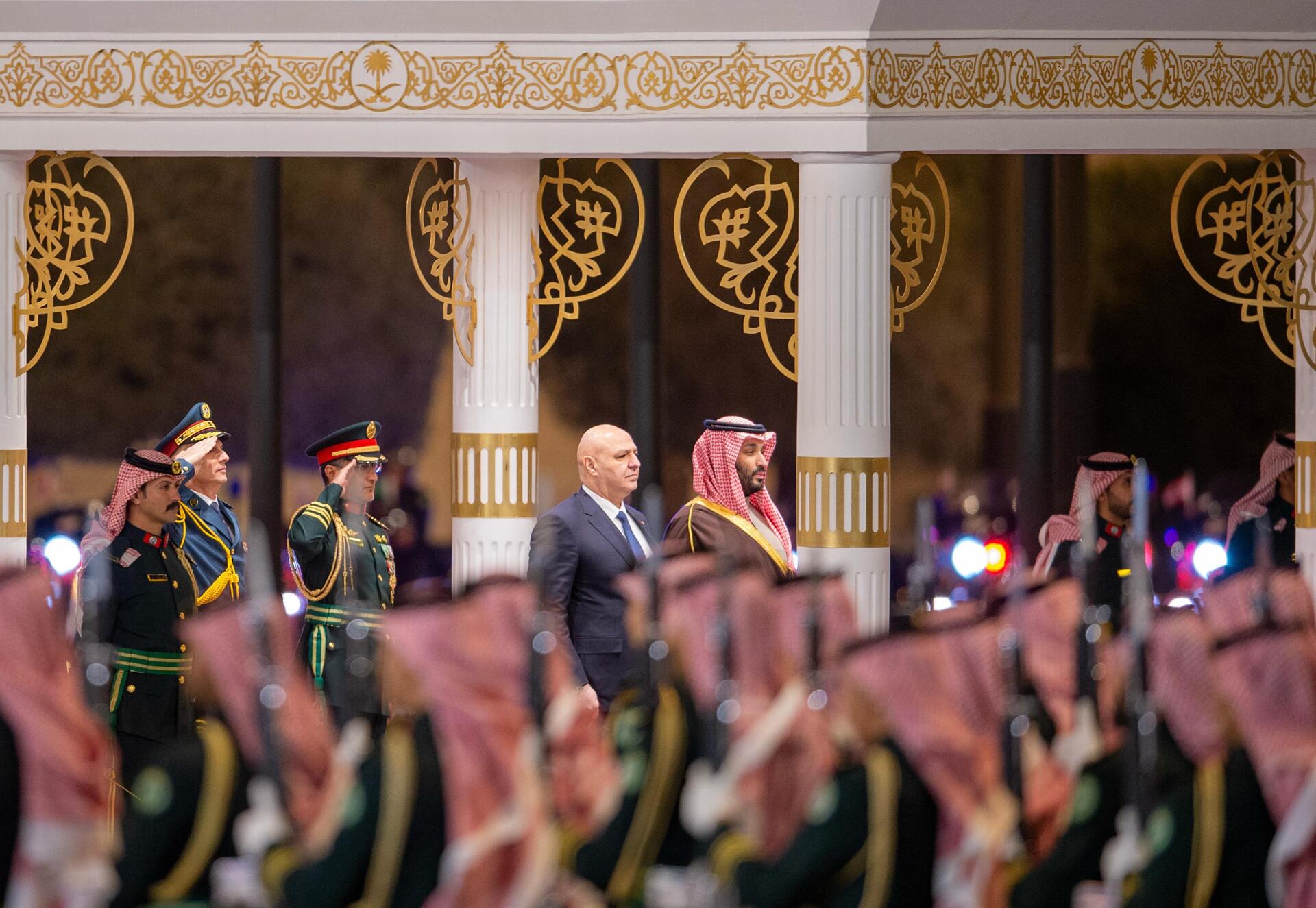
Table of Contents
- What Did Saudi Arabia Actually Announce on June 11?
- The Ban’s Dual DNA
- Why Did Riyadh Move on Lebanon the Day Iran Hit Kuwait?
- The Diplomatic Runway to June 11
- How Much Is Lebanese Trade Worth to Either Side?
- What Does Hezbollah’s Silence Tell Us?
- The Bifurcation Problem
- A Saudi-Only Move in a GCC-Wide Ban
- Where Saudi Diplomacy Still Works
- FAQ
What Did Saudi Arabia Actually Announce on June 11?
MBS directed the resumption of Lebanese exports to Saudi Arabia, citing “positive steps taken by the Lebanese government toward rebuilding state institutions” and what “specialised teams have accomplished throughout the past year,” according to the Saudi Press Agency. The language was deliberate in its vagueness — the “specialised teams” received no public identification, no joint enforcement protocol was named, and no Captagon-specific treaty or inspection mechanism appeared in the SPA statement or any subsequent Saudi government communication.
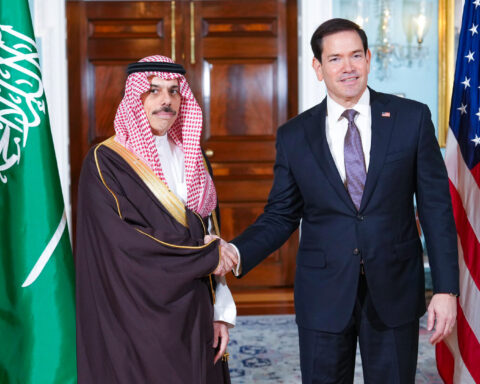
The mechanism itself was a phone call. Foreign Minister Prince Faisal bin Farhan called Lebanese Prime Minister Nawaf Salam to convey the directive, telling him that Riyadh was “confident that Lebanon’s government will take all necessary measures to ensure the country was not used as a platform to harm others,” as reported by The National. The decision was framed as coming “at the request of” both President Joseph Aoun and PM Salam — a diplomatic courtesy that makes the lifting appear responsive rather than strategic, though the timing argues otherwise.
That phone call was, based on the public record, Saudi Arabia’s most recent confirmed diplomatic contact with any government. Prince Faisal’s last recorded communication before it was a contact with Qatar’s prime minister on June 3 — eight days of silence on a channel that handles a region at war, broken not by a call to Washington or Tehran but by a call to Beirut about fruit and vegetables.
“The kingdom supports Lebanon’s stability and the well-being of its people.”
The HOS Daily BriefThe Middle East briefing 3,000+ readers start their day with.
One email. Every weekday morning. Free.
— Prince Faisal bin Farhan to PM Nawaf Salam, June 11, 2026 (SPA / The National)
The Ban’s Dual DNA
The Saudi-Lebanon rupture had two concurrent origins that merged into a single punitive posture. The first was customs enforcement: on April 25, 2021, Saudi officials at Jeddah port seized 5.3 million Captagon pills concealed inside a pomegranate shipment from Lebanon, prompting an immediate ban on Lebanese fruits and vegetables, as Al Arabiya and Al Jazeera both reported at the time. Captagon — the amphetamine that funds militias and moves through Lebanese ports at industrial scale — gave Riyadh an enforceable, apolitical pretext for shutting the trade door.
The second trigger, six months later, was political and far more personal. On October 29, 2021, Saudi Arabia expanded the ban to all Lebanese imports and expelled Lebanon’s ambassador after George Kordahi, then Lebanon’s information minister, was heard in a pre-appointment Al Jazeera interview calling the Yemen war “pointless” and saying the Houthis were “defending themselves.” That the interview had been taped before Kordahi held any ministerial portfolio did not matter — Saudi Arabia treated it as a state-level provocation, and Kuwait, Bahrain, and the UAE coordinated their own diplomatic downgrades within days.
Kordahi resigned on December 3, 2021, in an explicit attempt to ease the crisis. The Washington Post covered the resignation as a concession. Saudi Arabia did not accept it as sufficient, and the ban held for four and a half more years — long enough to outlast three Lebanese caretaker governments, a catastrophic economic collapse, and a war between Israel and Hezbollah that killed more than 3,600 people and displaced a million Lebanese citizens.
Why Did Riyadh Move on Lebanon the Day Iran Hit Kuwait?
What Riyadh could do — the one autonomous diplomatic action available to it that day — was point toward Beirut. The Lebanon trade lift required no coordination with Washington, no engagement with Tehran, no GCC consensus, and no risk of being pulled into a war-footing statement. It was sovereign, self-contained, and entirely within MBS’s gift.
The date is the story. On June 11, the IRGC launched its largest-ever GCC strike — eighteen targets across two waves, hitting Ali Al-Salem and Ahmad Al-Jaber air bases in Kuwait, Sheikh Isa Air Base in Bahrain, and Al-Azraq in Jordan with twelve ballistic missiles. Fifteen Americans were wounded in Kuwait. Saudi Arabia was not hit, was not targeted, and — for the second consecutive IRGC operation — was excluded entirely from the strike pattern.
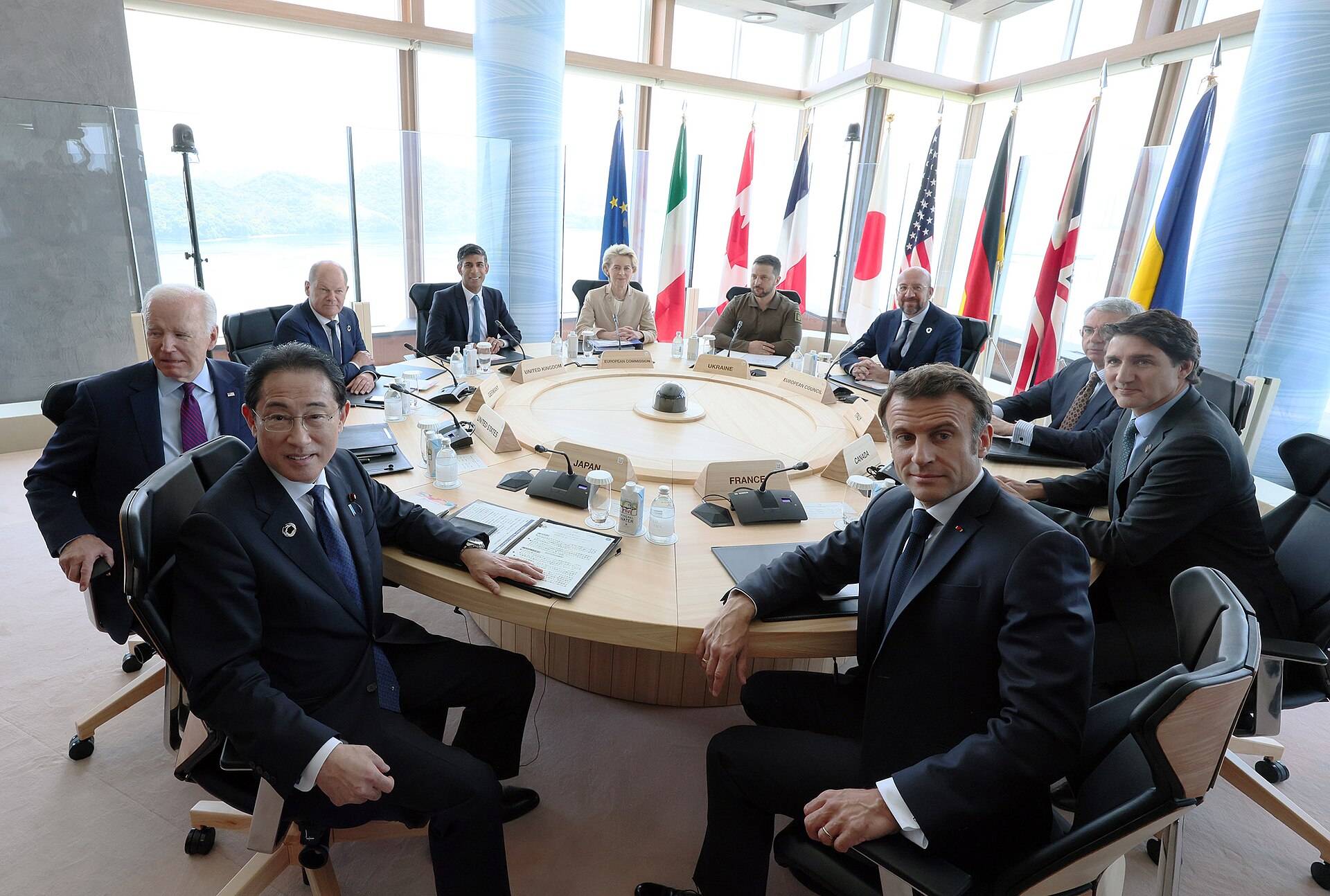
Saudi Arabia could not respond to that day’s events through any of the channels a state normally uses in a regional crisis. It could not invoke GCC collective defence on its own behalf — it had signed the clause for Kuwait but was not among the three countries named in the invocation statement. It could not condemn the IRGC strikes without breaking the structural silence Riyadh has maintained throughout the war, a silence so consistent it has become policy. It could not join any mediation effort — the Pakistan, Oman, and Qatar tracks all exclude Saudi Arabia from the negotiating architecture. And the same morning, it became clear that MBS had declined the Evian G7 session, his third consecutive refusal of a multilateral format that would require co-signing an Iran-as-aggressor posture.
The contrast between the drama of eighteen IRGC targets and the quiet domesticity of reopening Lebanese agricultural imports is precisely the point: this is what diplomatic agency looks like when every other axis is structurally foreclosed.
The Diplomatic Runway to June 11
The ban lift did not come from nowhere. It arrived at the end of a deliberate sixteen-month Saudi re-engagement with Lebanon’s post-war political architecture — a process that accelerated as Saudi options on the Iran axis narrowed. President Joseph Aoun’s first foreign trip after his January 9, 2025 election was to Riyadh, meeting MBS on March 3, 2025, in a deliberate signal that Saudi Arabia was Lebanon’s primary external patron reference, as The National reported. Aoun requested the reactivation of a $3 billion military grant that Saudi Arabia had suspended in 2016 after Beirut failed to condemn Iranian attacks on Saudi diplomatic missions — a request whose public status remains unconfirmed as of June 2026.
The March 2025 Saudi-Lebanese joint statement explicitly referenced the Taif Agreement, Lebanese sovereignty, and “exclusive possession of arms by the Lebanese state” — language that amounted to a Saudi-endorsed disarmament roadmap aimed squarely at Hezbollah. By September 2025, the Salam government had formally adopted the Lebanese Army’s plan for state control over all weapons in a cabinet meeting from which all five Shia ministers walked out in protest. By early 2026, the Lebanese Armed Forces had deployed more than 9,000 soldiers south of the Litani River for the first time in four decades — a deployment that Israel’s war had made possible and that Saudi money, if the grant were reactivated, would help sustain.
Saudi envoy Prince Yazid bin Farhan “ramped up” visits to Beirut in April 2026, according to The National, with his trips coinciding with Lebanon-Israel White House talks. On June 5, MBS spoke directly with Aoun — the same day Aoun told CNN’s Christiane Amanpour that Iran was using Lebanon as “a bargaining chip” and that Tehran’s message to Lebanon amounted to “it’s not your country.” The call-to-CNN-to-call-to-MBS sequence is tight enough to read as coordination: the Lebanese president went on American television to say what Saudi Arabia cannot say publicly about Iran, and Riyadh rewarded the performance six days later with a trade concession worth roughly a quarter of a billion dollars annually.
How Much Is Lebanese Trade Worth to Either Side?
Lebanese exports to Saudi Arabia were approximately $230–240 million annually at their 2020 peak, representing 5.6% of Lebanon’s total exports, according to Al-Monitor and Trading Economics historical data. Saudi Arabia accounted for roughly 85% of the GCC market for Lebanese goods, per Asharq Al-Awsat — meaning the 2021 ban did not merely close one market but effectively shut Lebanon out of the entire Gulf trade corridor at one stroke.
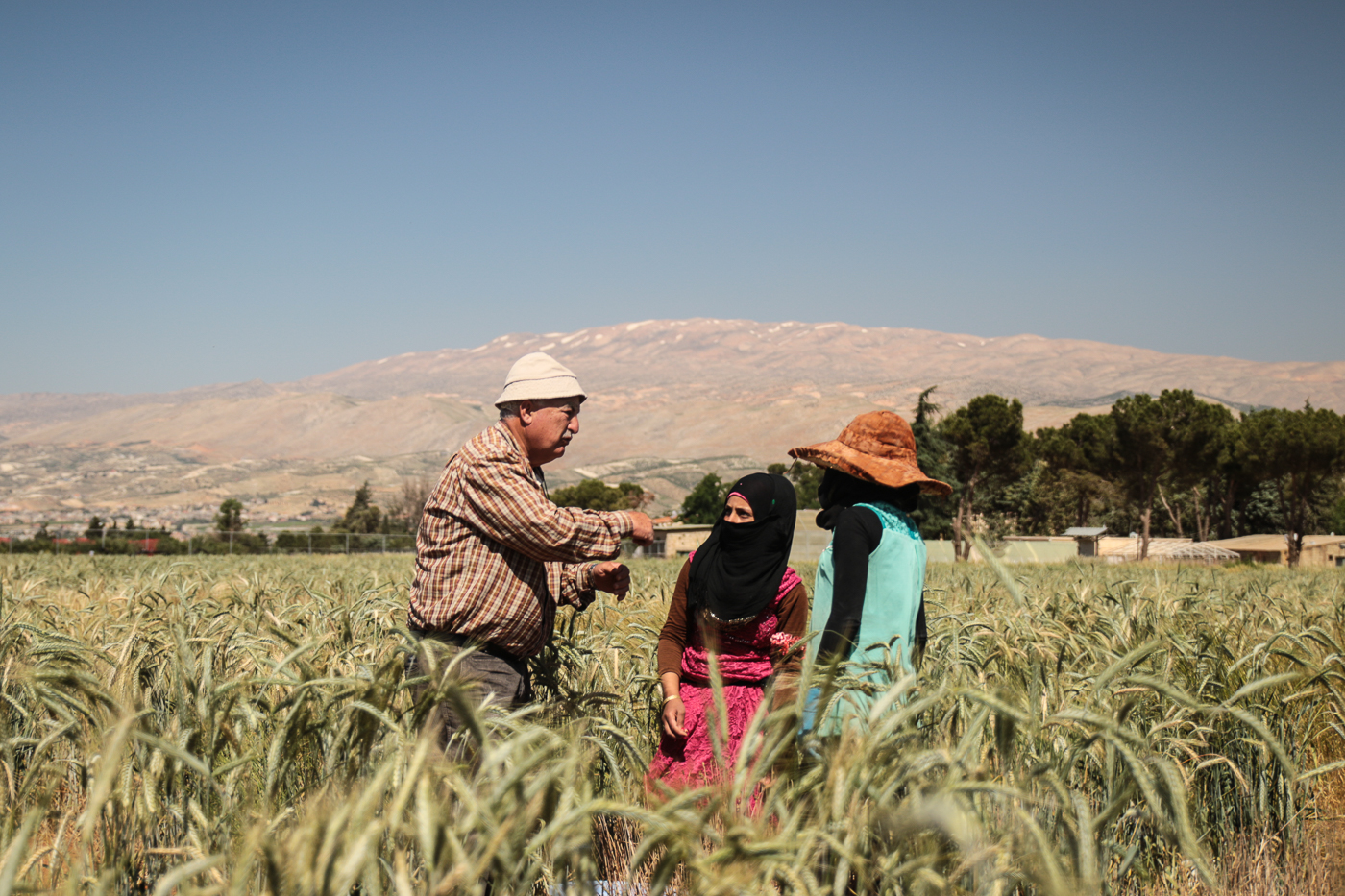
The products at the core of the original agricultural ban — potatoes, tomatoes, cucumbers, grapes, apples, cherries, figs, mint, coriander, parsley, radishes — come disproportionately from the Bekaa Valley, Lebanon’s agricultural interior. Agriculture contributes only 1.2% of Lebanon’s GDP according to World Bank data, but these exports were vital foreign currency earners for rural communities in an economy that has contracted 7.5% in 2024 alone and is projected at near-zero growth in 2026 due to regional war spillover, per Al Jazeera’s May 2026 reporting and the BTI Lebanon 2026 assessment.
| Date | Event | Trigger |
|---|---|---|
| April 25, 2021 | Saudi bans Lebanese fruits & vegetables | 5.3M Captagon pills seized at Jeddah in pomegranate shipment |
| October 29, 2021 | Ban expanded to all imports; ambassador expelled | Kordahi interview calling Yemen war “pointless” |
| December 3, 2021 | Kordahi resigns | Attempt to ease crisis — Saudi deems insufficient |
| March 3, 2025 | Aoun visits Riyadh as first foreign trip | Requests reactivation of $3B military grant |
| September 5, 2025 | Lebanon cabinet adopts army disarmament plan | Five Shia ministers walk out |
| June 5, 2026 | MBS-Aoun phone call | Same day as Aoun’s CNN “bargaining chip” interview |
| June 11, 2026 | MBS orders ban lifted | Faisal-Salam phone call; same day as IRGC 18-target GCC strike |
For Saudi Arabia, $230 million in Lebanese imports is a rounding error — invisible against the kingdom’s $1.1 trillion GDP. President Aoun was candid about the asymmetry: the lift “will contribute significantly to the revival of the national economy and support a wide range of Lebanese producers and exporters,” he told The National and Zawya. For Lebanon, where foreign reserves sit at approximately $11 billion and the pound has stabilised only at 89,500–90,000 per dollar on the parallel market, even a quarter-billion-dollar trade lane reopening is a lifeline. The economic value flows overwhelmingly in one direction, which is exactly what makes the concession a useful instrument of Saudi patronage — it costs Riyadh almost nothing to give and costs Beirut a great deal to lose.
What Does Hezbollah’s Silence Tell Us?
No Hezbollah statement on the ban lift was available in Arabic or English-language sources as of June 12, 2026. No Iranian state media outlet — not IRNA, not PressTV, not Mehr — published a direct response. That silence, from organisations that will issue a communiqué about a municipal water dispute in southern Lebanon, is the most instructive response available.
The structural logic of the silence is straightforward. Hezbollah cannot publicly welcome a Saudi move — the party’s identity is built on resistance to Gulf monarchy patronage, and acknowledging that MBS’s directive benefits Lebanese citizens would validate the Saudi-Aoun-Salam governance architecture that Hezbollah’s Shia ministers walked out on in September 2025. Opposing the ban lift is equally impossible: telling Lebanese farmers that their access to the kingdom’s $230-million market should be rejected on ideological grounds is a political gift to every rival faction in Beirut. The trade lift traps Hezbollah in a position where any public statement is worse than no statement, and the party — whatever its many deficiencies — knows when to stay quiet. That calculation changed on June 13: Araghchi told IRIB that the MOU must cover “all fronts, including Lebanon,” meaning Iran had formally conditioned the MOU on a Lebanon ceasefire Hezbollah itself had rejected nine days before the ceremony — a bind that places the organisation at the centre of a timeline it publicly dismantled.
The trade lift implicitly rewards the Aoun-Salam government while materially bypassing Hezbollah’s core constituencies, who draw their income from militia wages and Iranian transfer payments rather than from Bekaa Valley tomato exports. Katharine Sorensen of the Hoover Institution argued in a June 2025 paper that Saudi Arabia should “aid Lebanon’s success by reengaging with its new leadership through targeted economic aid, military support, and political cooperation, conditioned on major Lebanese reforms ensuring Hezbollah’s disarmament, judicial independence, and economic restructuring.” The June 11 directive reads like the first page of that prescription — conditional re-engagement that strengthens the state at Hezbollah’s institutional expense without ever naming the party.
The Bifurcation Problem
Three days before MBS lifted the ban, the Foundation for Defense of Democracies published an analysis that complicates the clean “Saudi rewards sovereignty” narrative. Hussain Abdul-Hussain, an FDD research fellow, alleged on June 8 that Saudi Arabia, Egypt, and Qatar were helping Hezbollah establish “an indirect channel to U.S. President Donald Trump” — arguing that Riyadh was “circumventing the Lebanese state” even as it publicly embraced it.
Abdul-Hussain’s language was pointed: “If the kingdom wants to play footsie with Iran and Hezbollah, it should be prepared to face the same venom directed at Iran and Hezbollah by Lebanese sovereignty advocates for decades.” The timing — three days before the trade lift — was either coincidental or designed to pre-frame the Saudi gesture as cynical rather than principled. FDD’s institutional position as a hawkish, pro-Israel think tank means its analysis of Saudi-Hezbollah dynamics carries a particular charge, but the underlying question it raises is real: can Riyadh simultaneously reward the Aoun-Salam government at the institutional level and hedge on Hezbollah at the back-channel level?
The honest answer is that Saudi Arabia’s Lebanon policy has always been bifurcated — and deliberately so. Riyadh backed the March 14 Alliance while maintaining communication with Hezbollah through intermediaries for years before 2021. The trade lift and the alleged Hezbollah facilitation, if both are accurate, are not contradictory but complementary instruments in a patronage strategy that treats Lebanon as a client state with multiple internal power centres, each requiring a different Saudi approach. Whether this qualifies as sophisticated diplomacy or incoherent hedging depends entirely on which power centre survives the post-war settlement.
A Saudi-Only Move in a GCC-Wide Ban
The 2021 diplomatic rupture was a coordinated GCC action — Kuwait, Bahrain, and the UAE all recalled or summoned Lebanese envoys within days of Saudi Arabia’s lead. The 2026 reversal, by contrast, appears to be Saudi Arabia moving alone. No parallel announcement from Abu Dhabi, Manama, or Kuwait City appeared in available sources as of June 12, despite those states having joined the original action.
This unilateral quality matters for two reasons. The first is that it underlines the degree to which the ban lift is a Saudi bilateral instrument — not a GCC consensus position but a tool of MBS’s personal diplomacy with the Aoun government, executed at his directive and conveyed through his foreign minister. The second is that the other Gulf states, currently absorbing the consequences of IRGC strikes on their territory, have no bandwidth for Lebanon policy. Kuwait is dealing with wounded Americans on its soil. Bahrain is assessing damage to Sheikh Isa Air Base. Neither is in a position to announce a trade thaw with Beirut on the day their airports were hit by ballistic missiles.
Saudi Arabia can afford to think about Lebanon precisely because it is not, at this moment, absorbing the kinetic consequences of the war. The IRGC’s targeting pattern has excluded Saudi Arabia from two consecutive strike waves — a structural anomaly that gives Riyadh something its GCC partners lack: the bandwidth for strategic diplomacy rather than crisis management. The Hajj passive deterrent expired on June 9 when the last Iranian pilgrims departed, and the post-Hajj window was supposed to be the period of maximum Saudi vulnerability. Instead, the IRGC turned its missiles on Kuwait and Bahrain, and MBS used the opening to consolidate a position in Beirut.
Lebanon is where Saudi bandwidth goes when every Iran-facing channel is closed. The Faisal-Salam call was not a substitute for the calls Riyadh could not make — it was a demonstration that Saudi foreign policy still has a pulse in at least one direction, at a moment when every analyst tracking the kingdom’s diplomatic isolation could be forgiven for wondering whether it had flatlined entirely.
Where Saudi Diplomacy Still Works
The Lebanon trade lift, read alongside the Evian refusal and the ongoing silence on Trump’s claim that Saudi Arabia “approved” a deal it has not confirmed, reveals the outline of a Saudi diplomatic strategy that operates entirely in the spaces the Iran crisis cannot reach. With every Iran-axis channel structurally closed — no Tehran back-channel, no military instrument on Hormuz, no mediation seat — what Riyadh can do is bank political capital in the post-war order by picking the one Arab state whose reconstruction will require a patron, and positioning itself as the creditor before the reconstruction bidding begins.
Lebanon’s new political architecture — the Aoun-Salam government, the LAF south-of-Litani deployment, the cabinet-level commitment to disarmament — is the most Saudi-aligned Lebanese government since Rafik Hariri’s era. Every concession MBS extends now, from the trade lift to the possible reactivation of the $3 billion military grant, embeds Saudi influence into Lebanon’s institutional recovery at a moment when Hezbollah is simultaneously weakened by war and reported to be rearming. The $230 million in annual exports is not the investment — it is the deposit on a much larger position.
Lebanese officials confirmed the transactional nature without irony: “Lebanon provided guarantees to Saudi Arabia, and resuming exports is a step that supports the economy,” a Lebanese government source told the Voice of Emirates on June 12. The guarantees were not specified. The “specialised teams” were not named. The enforcement mechanism was not published. This is not ambiguity — it is leverage. A conditional concession whose conditions are never made public can be revoked at any time for any reason, and both sides know it.
On the day the IRGC made the Gulf’s war visible in two capitals, MBS made his own priorities visible in a phone call about Lebanese cucumbers and coriander. The Faisal-Salam call was the last confirmed Saudi diplomatic contact of June 11 — and it pointed away from every front that everyone else was watching, toward the one place where Saudi Arabia still gets to decide what happens next.
FAQ
Has Saudi Arabia restored full diplomatic relations with Lebanon?
The June 11 directive covers trade only — specifically the resumption of Lebanese exports to Saudi Arabia. Diplomatic relations were partially restored when Saudi Arabia returned its ambassador to Beirut in 2023, but the full pre-2021 relationship, including military cooperation and the $3 billion defence grant suspended in 2016, has not been publicly reinstated. President Aoun requested the grant’s reactivation during his March 2025 Riyadh visit, but no Saudi confirmation has appeared as of June 12, 2026.
Does the trade lift apply to all Lebanese goods or only agricultural products?
The SPA statement referenced a blanket resumption of Lebanese exports, which, if applied as stated, reverses both the April 2021 agricultural ban and the October 2021 expansion to all Lebanese imports. The original agricultural ban covered twelve specific product categories including potatoes, tomatoes, grapes, apples, and herbs. The full expansion added all manufactured and processed goods. Saudi customs enforcement will determine which products clear in practice — prior Captagon seizures were found in pomegranate, citrus, and industrial machinery shipments.
Have other GCC states followed Saudi Arabia’s decision?
No. As of June 12, 2026, no parallel announcement has come from the UAE, Kuwait, or Bahrain, all of which joined the 2021 diplomatic action against Lebanon. Kuwait and Bahrain, both struck by IRGC missiles on June 11, are focused on immediate security rather than trade policy. The UAE, which recalled its ambassador in 2021, has separately pursued bilateral re-engagement with Lebanon but on its own timeline and terms.
What happened to the Captagon smuggling that triggered the original ban?
The SPA statement credited “specialised teams” and “cooperation shown by the Lebanese side” over the past year, but no public anti-Captagon enforcement protocol, joint inspection mechanism, or bilateral treaty was published. Lebanon’s official position was that it “provided guarantees to Saudi Arabia.” Captagon production in the Levant was historically concentrated in Syrian regime-held and Hezbollah-controlled territories. With Hezbollah weakened after the 2024–25 Israel war and Syria’s political landscape reshaped, the smuggling networks that prompted the original seizure may have shifted — but no open-source evidence confirms their dismantlement.
Could MBS revoke the trade access?
The mechanism of the lift — a royal directive conveyed by phone call, not a treaty or signed agreement — means it can be reversed as easily as it was issued. Saudi Arabia revoked diplomatic normalisation with Qatar in 2017 over similar patronage disputes and maintained that blockade for three and a half years. The absence of published conditions makes revocation a standing option: if the Aoun-Salam government falters on disarmament, fails to prevent a Captagon resurgence, or deviates from Saudi-aligned foreign policy positions, the trade lane can close again without any formal mechanism being violated.