
GENEVA — Iran’s Foreign Ministry spokesperson Esmaeil Baghaei confirmed on Friday that the US-Iran memorandum of understanding will not be signed on Sunday, June 14, collapsing the Geneva ceremony that had served as the sole near-term diplomatic anchor for oil-market pricing and creditor timelines across the Gulf.
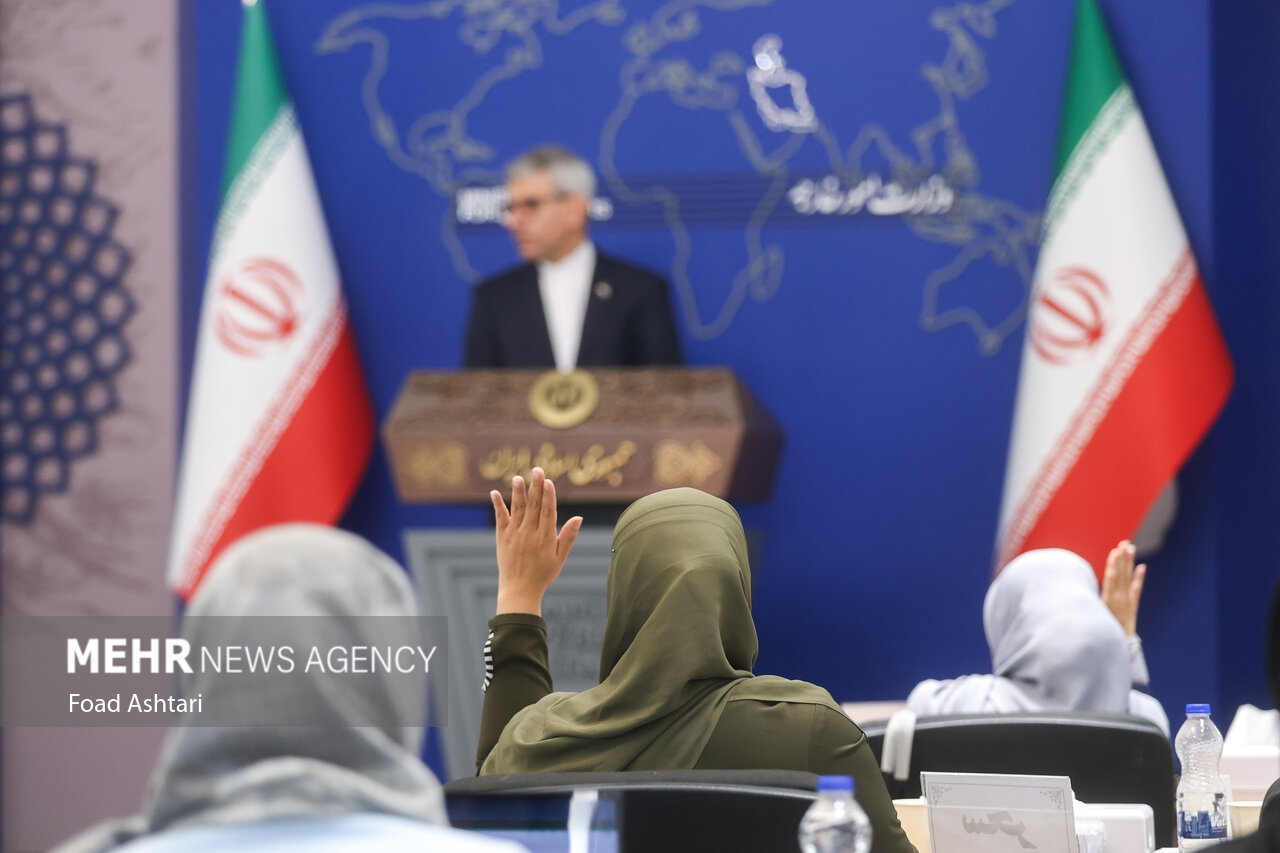
“The memorandum will not be signed on Sunday,” Baghaei told reporters, attributing the delay to “the hesitation of the other side” and American “instability.” He did not rule out a signing “in the coming days” but offered no replacement date. As of Friday evening, neither side had proposed one. What Baghaei did not address was the structural reason the deadline slipped: Araghchi had told IRIB the same day that the MOU must cover “all fronts, including Lebanon” — a precondition that depends on a Lebanon ceasefire Hezbollah had formally rejected on June 4, ten days earlier. The announcement arrives less than forty-eight hours before a deadline with no diplomatic flexibility: Sadara Chemical Company’s $3.7 billion in guaranteed senior debt exits its grace period on Monday, June 15.
Table of Contents
What Baghaei Said — and What He Left Open
Baghaei’s language was calibrated. He did not say negotiations had collapsed or that terms had been rejected. He said the other side hesitated — positioning Iran as the party that was ready and Washington as the source of disorder.
“Patience is needed,” he told APA, the Azerbaijani news agency, without attaching a timeline to the instruction.
The framing is structurally familiar. During the 2021-2022 Vienna revival talks, Iranian officials attributed successive delays to American “procrastination,” casting Tehran as the consistent, waiting party against a US delegation that could not finalize its own positions. Baghaei’s Friday statement follows the same rhetorical architecture.
On the same day, Foreign Minister Abbas Araghchi told Iranian state television that Iran had “won the war” and claimed $24 billion in frozen assets would be released — a figure Washington has not confirmed. On June 12, Araghchi had told Axios the two sides had “never been closer” to a deal.
The Middle East briefing 3,000+ readers start their day with.
One email. Every weekday morning. Free.
Mohsen Rezaei, a military adviser to Supreme Leader Khamenei, offered a parallel claim through Tasnim, the IRGC-affiliated news agency: Trump “has agreed to release part of Iran’s frozen assets but is unwilling to announce it publicly.” The assertion cannot be independently verified.
Tehran’s messaging operated on parallel tracks Friday: Araghchi delivered a victory declaration to domestic television, Baghaei told international reporters that patience was needed and no date was set, and Rezaei told an IRGC-affiliated outlet that Trump had privately conceded on asset releases. Three statements, three audiences, within hours of one another.
What Did Washington Call the Draft?
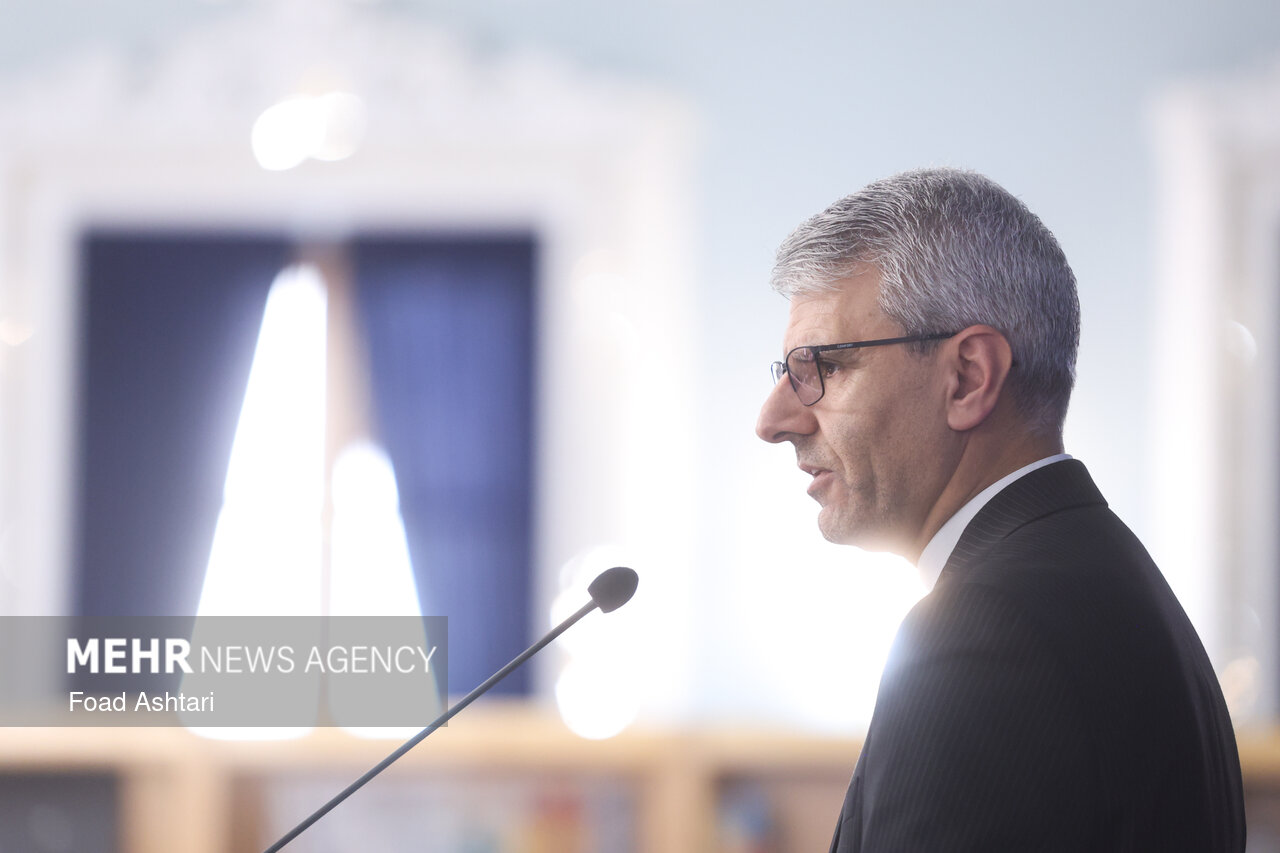
The White House and the designated US signatory both rejected the text Iran claims to have agreed to — on the same day Iran’s spokesperson canceled the ceremony at which it was to be signed.
JD Vance, named on June 12 as the US signatory for the Geneva ceremony, told RFE/RL on Friday that circulating deal terms constituted “fake information about a potential deal.” Economic benefits, he said, would flow to Iran only when it “meets its obligations.”
The White House characterized the MOU draft published by IRNA — Iran’s official state news agency — as “a complete fabrication,” according to The Hill. The IRNA text, published June 12, contained seven points and zero nuclear terms. IRNA additionally reported that Iran “assumes no new nuclear obligations” under the framework. All enrichment caps, stockpile disposition requirements, and IAEA access provisions had been deferred to a sixty-day second phase.
Trump himself had said as recently as Thursday that Supreme Leader Khamenei had personally approved the MOU. The ceremony, he told reporters, could happen “Saturday or Monday.” That timeline is now void.
Pakistan’s Prime Minister Shehbaz Sharif had posted on X on June 12 that the “final, agreed upon text of the peace deal has been reached.” Vance responded the same day: “still TBD.” Sharif’s claim of a finalized text was contradicted by the US signatory within hours and rendered moot by Baghaei less than twenty-four hours later. White House Press Secretary Karoline Leavitt offered only that the administration “is on a diplomatic path with Iran.”
The Trump administration had sent the MOU draft back to Tehran with two demands: specified timing and extent of nuclear compliance, and immediate reopening of the Strait of Hormuz upon signing, according to the Soufan Center’s IntelBrief.
The Price Signal That Lost Its Floor
Brent crude closed Friday at approximately $86.98 per barrel, down 3.78 percent. West Texas Intermediate settled near $84.33, down 3.85 percent. Both figures reflected residual deal optimism — they were set before Baghaei’s announcement reached trading desks.
The Geneva ceremony had functioned as the market’s nearest resolution event: the date against which risk premiums, hedging positions, and war-insurance underwriting were being calibrated. Its removal leaves no scheduled diplomatic milestone before the G7 summit in Evian, which begins Monday, June 16 — a meeting from which Crown Prince Mohammed bin Salman has already declined the invitation.
No formal diplomatic event now sits between Friday’s cancellation and the G7 opening. The three active mediation tracks — through Pakistan, Oman, and Qatar — operate as bilateral channels with Tehran on no public calendar. None has announced a next meeting or proposed an alternative signing date.
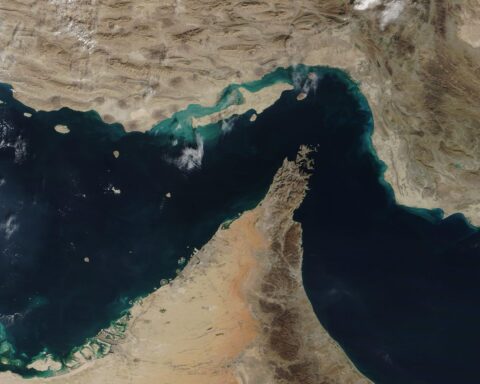
The Strait of Hormuz remains in its ninety-ninth-plus day of effective closure, with approximately two commercial vessels transiting daily against a pre-war baseline of ninety-four. Iran’s Persian Gulf Security Administration, established May 5, charges approximately one dollar per barrel on transiting tankers — a fee structure the US-Iran MOU draft prohibits as “tolls” but that Tehran has rebranded as “service fees.” On June 14, Araghchi confirmed that distinction is written into the deal itself: the semantic gap between “tolls” and “service fees” in the draft text is the mechanism through which Iran’s fee regime survives the agreement meant to end it.
Saudi Arabia’s fiscal breakeven price is $108 to $111 per barrel. At Friday’s close, the gap was $21 to $25 per barrel. The kingdom’s first-quarter fiscal deficit reached SAR 125.7 billion ($33.5 billion), consuming 76 percent of Goldman Sachs’s full-year projection in a single quarter.
Polymarket priced the probability of a US-Iran nuclear deal by June 30 at 45 percent as of Thursday. The figure predates Baghaei’s statement.
Can Sadara’s Lenders Wait for a Date Tehran Has Not Set?
Sadara Chemical Company’s $3.7 billion in guaranteed senior debt exits its grace period on Monday. Aramco backs $2.405 billion — 65 percent of the total. Dow covers $1.295 billion. The exposure is distributed across more than twenty-five lending institutions. No creditor communication has been publicly disclosed.
Expiration grants the banks holding Sadara’s guaranteed debt the contractual right to call the guarantees — obligating Aramco and Dow to cover the full $3.7 billion. Whether lenders exercise that right, seek a further extension, or initiate restructuring depends on assessments neither guarantor has publicly discussed.
All twenty-six Sadara production units have been offline since late March, when IRGC strikes damaged Jubail industrial infrastructure. Revenue has been zero for eleven consecutive weeks. Aramco’s public filings since April contain no language addressing the June 15 deadline, the Jubail damage, or the guarantee exposure.
The Geneva ceremony had offered creditors something to point to — not a resolution, but a date on a calendar that could justify patience. A signed MOU, even one with deferred nuclear terms and no enforcement mechanism, would have constituted a de-escalation signal. The next possible diplomatic event is the G7 in Evian, which starts the day after the grace period expires and at which Saudi Arabia will not be present.
Aramco’s post-dividend cash position stands at approximately $53.3 billion after paying its $21.89 billion quarterly dividend on June 9. Free cash flow of $18.6 billion covers the dividend at 0.85 times — the first quarter below 1.0 since the pandemic.
Where Is Riyadh?
The Saudi Ministry of Foreign Affairs has not issued a public statement in twenty-four days, since the May 20 Gymnich meeting.
Saudi Arabia was named among twelve “approvers” of the MOU framework. It holds no seat in any of the three active mediation tracks. Pakistan, Oman, and Qatar each maintain bilateral channels with Tehran that Riyadh does not possess. The kingdom was not party to the Geneva ceremony’s planning, is not party to its cancellation, and has no diplomatic mechanism through which to influence a replacement date. Riyadh did break its silence on June 13 — not through MOFA but through a phone call between FM Faisal and Pakistani FM Dar that endorsed Pakistan’s mediation hours before Baghaei’s cancellation announcement; the mechanics of that endorsement-by-proxy are documented in If Saudi Arabia Approved the Deal, Why Did Pakistan Have to Say So?
The June 14 signing was the nearest event on the calendar that could have altered conditions surrounding the June 15 Sadara deadline. Tehran removed it on Friday. Saudi Arabia — named as an approver, excluded from all three mediation tracks, and liable for $2.405 billion of the Sadara guarantee — learned of the cancellation through the same press conference as every other party.
Background — The JCPOA Deadline Precedent
The JCPOA signed in July 2015 provides the closest structural precedent. The Vienna talks missed three successive deadlines — June 30, July 7, and July 10 — before the final text was agreed on July 14. Each missed deadline prompted Iranian statements attributing the delay to the other side’s hesitation.
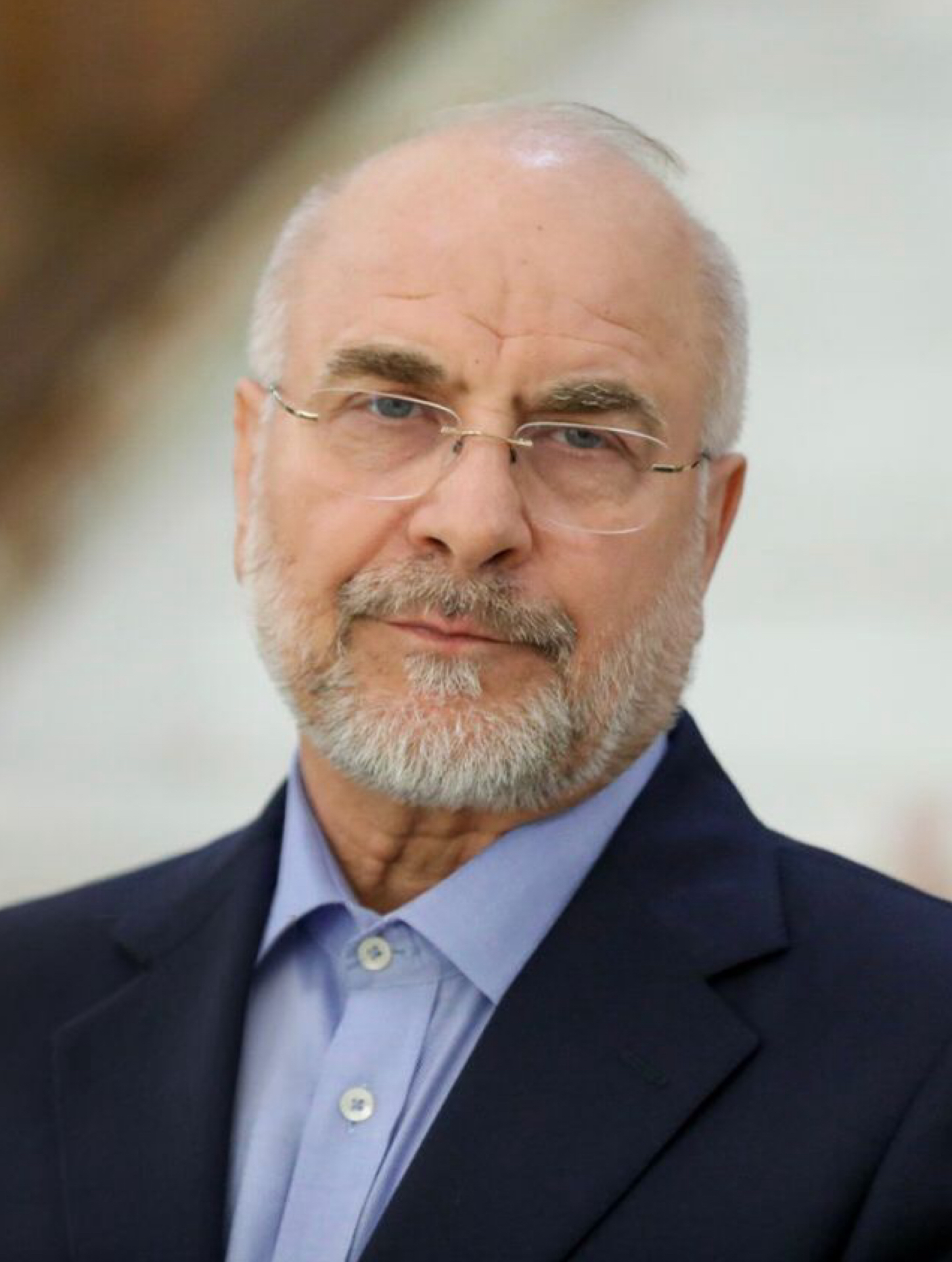
The Geneva ceremony had been set at the Palais des Nations. Vance was designated the US signatory. Iran’s signatory was to be Parliament Speaker Mohammad Bagher Qalibaf, reelected to the speakership on May 25 with 235 of 271 votes — a legislative figure, not an executive or diplomatic one. Foreign Minister Araghchi was to sign separately, reportedly not in person.
Four USAF C-17 Globemaster III transport aircraft were pre-positioned to Europe on Thursday in advance of the ceremony — heavy-lift assets typically deployed for VIP security details and armored-vehicle transport. The Pentagon has not publicly addressed whether the aircraft remain forward-deployed or have been recalled following Baghaei’s announcement.
The IAEA Board of Governors voted 19-3 on Thursday to find Iran in non-compliance with its safeguards obligations — the first such finding in approximately twenty years. The agency has been unable to verify the disposition of 440.9 kilograms of uranium enriched to 60 percent for more than ninety-seven days. Iran’s Fordow enrichment facility remains approximately 70 percent intact, according to ISIS estimates.
Iran’s negotiating architecture extends beyond the nuclear file. Tehran has demanded that the MOU include terms ending Israeli military operations against Hezbollah in Lebanon. On June 4, Hezbollah Secretary-General Naim Qassem rejected the existing Lebanon ceasefire framework, calling it “absurd, humiliating and insulting” and “a roadmap to annihilate part of the Lebanese people,” according to Axios and Time.
Iran cannot deliver on that demand. The Lebanon component Tehran has made a precondition now depends on acceptance by an actor whose secretary-general publicly called the available terms a roadmap to annihilation nine days before Baghaei canceled the ceremony.
Frequently Asked Questions
What exactly did Washington demand from Tehran before the ceremony could proceed?
According to the Soufan Center’s IntelBrief, the Trump administration returned the MOU draft to Tehran with two specific requirements: a defined schedule and scope for nuclear compliance, and an immediate reopening of the Strait of Hormuz upon signing. Neither condition appears in the seven-point IRNA draft, which Iran’s state agency published June 12 and which the White House called “a complete fabrication.” The gap between what Washington required and what Tehran’s published text contained is the structural reason no replacement date has been set.
Has Iran proposed a replacement signing date?
No. Baghaei said the signing would not occur Sunday but did not rule out “the coming days.” As of Friday evening, neither side had formally proposed a new date, and none of the three active mediation tracks — Pakistan, Oman, Qatar — has announced a next meeting.
What is the PGSA, and how does it affect Hormuz transit?
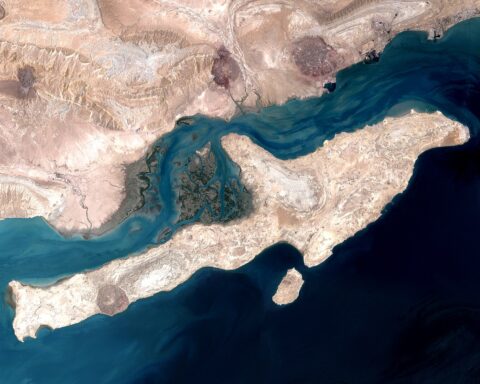
Iran’s Persian Gulf Security Administration, established May 5, administers a corridor in the Qeshm-Larak stretch of the Strait of Hormuz — approximately five nautical miles wide — through which commercial tankers must transit. The PGSA charges approximately one dollar per barrel, or roughly two million dollars per VLCC voyage. Saudi Arabia, which ships an estimated 5.5 million barrels per day through the strait, has no seat in the administration and no bilateral arrangement governing the fee. The US-Iran MOU draft prohibits “tolls” on Hormuz transit, but Tehran has rebranded the charge a “service fee” — a distinction that, if accepted, would survive the MOU’s prohibition unchanged. OFAC sanctioned the PGSA on May 27; the agency continued operating.
What does the IAEA’s non-compliance finding mean procedurally?
The IAEA Board of Governors voted 19-3 on June 12 to formally find Iran in non-compliance with its safeguards obligations — the first such determination in approximately twenty years. Under the IAEA Statute and the NPT, a non-compliance finding can be referred to the UN Security Council, which is empowered to impose binding measures including sanctions. Whether the Board pursues referral depends on member-state agreement; past findings (2005-2006) were referred and resulted in multiple UNSC resolutions. The agency has been unable to verify the disposition of 440.9 kilograms of uranium enriched to 60 percent for more than ninety-seven days, and Iran’s Fordow enrichment facility remains approximately 70 percent intact per ISIS estimates.
What odds does the prediction market give a deal by June 30?
Polymarket placed the probability of a US-Iran nuclear deal by June 30 at 45 percent as of June 12. That figure was established before Baghaei’s Friday announcement that the June 14 ceremony would not proceed. The JCPOA took until July 14, 2015 — after missing three successive deadlines — to reach final signature; a comparable slip here would push any ceremony well past June 30.