
VIENNA — On March 1, 2026, the OPEC+ alliance of oil-producing nations made what may rank among the most counterintuitive supply decisions in petroleum history. Meeting in Vienna amid the worst military crisis in the Persian Gulf since Saddam Hussein’s armies rolled into Kuwait in 1990, the cartel voted to boost collective oil output by 206,000 barrels per day starting in April — even as Iranian drones and ballistic missiles were actively striking Saudi Arabian oil infrastructure. The Ras Tanura refinery, one of the Kingdom’s crown jewels with a capacity of 550,000 barrels per day, lay partially shuttered from a drone attack. Brent crude had already surged from roughly $68 per barrel before the war to the $80–84 range. Insurance premiums for tankers transiting the Persian Gulf had tripled. And yet, Saudi Energy Minister Prince Abdulaziz bin Salman walked out of the OPEC+ ministerial meeting and told reporters the alliance was not only maintaining its planned output increases — it was accelerating them. To understand why, it is necessary to examine the interlocking strategic calculations of Riyadh, Moscow, Washington, and every other capital with a stake in the price of a barrel of oil.
Table of Contents
- Why Did OPEC+ Boost Output During the Worst Gulf Crisis Since 1990?
- What Did the March 1 OPEC+ Decision Actually Entail?
- The Ghost of 1973 — When OPEC Chose the Opposite Strategy
- How Much Oil Can Saudi Arabia Actually Produce Under Fire?
- Is the Hormuz Strait Really Closed — and Does It Matter for OPEC+?
- The Trump Factor — Did Washington Pressure Riyadh to Pump More?
- How Is Russia Playing Both Sides of the OPEC+ Output Decision?
- The Wartime Output Calculus
- What Happens to Oil Prices If the War Drags On?
- Can Aramco Deliver on Its Production Promises While Refineries Burn?
- Who Benefits Most From OPEC+’s Wartime Gambit?
- Will OPEC+ Reverse Course If Iran Escalates Further?
- Frequently Asked Questions
Why Did OPEC+ Boost Output During the Worst Gulf Crisis Since 1990?
The short answer is that Saudi Arabia decided the benefits of flooding the market outweigh the risks of pumping more oil while under aerial bombardment. The longer answer involves three overlapping calculations that converged in the same direction: punishing Iran economically, satisfying the Trump administration’s demand for cheap oil, and signaling to global markets that Saudi Arabia remains an unshakable pillar of energy supply even when its refineries are burning. Each of these motivations alone would be sufficient to explain the March 1 decision. Together, they made the output increase virtually inevitable.
The conventional wisdom in energy markets holds that wartime is precisely when producers should restrict supply. When your infrastructure is under attack, the logic goes, you conserve capacity, build strategic reserves, and let scarcity do the work of propping up prices — which in turn funds your war effort. This is precisely what the Arab oil states did during the 1973 Yom Kippur War, when OPEC imposed an embargo on the United States and the Netherlands, slashing production and quadrupling prices virtually overnight. It is what Iran itself did during the Tanker War of the 1980s, attacking rival shipping to restrict Gulf exports and support its own price floor. The risk to Saudi production is not theoretical — Iran has already targeted the Shaybah oil field in the Empty Quarter with sixteen drones, probing whether the Kingdom can defend a million barrels per day of capacity in the most remote corner of its territory.
But Crown Prince Mohammed bin Salman is not playing the 1973 playbook. He is playing a different game entirely — one in which Saudi Arabia’s advantage lies not in restricting supply but in weaponizing its surplus capacity against an adversary whose economy depends entirely on oil revenue. Iran exports approximately 1.5 million barrels per day, down from a pre-sanctions peak of 2.5 million. Every dollar that Brent crude drops translates directly into fewer resources for Tehran’s drone program, fewer missiles for the Islamic Revolutionary Guard Corps, and fewer dollars flowing to Hezbollah and the Houthis. By boosting output and putting downward pressure on prices, Riyadh is waging economic warfare by other means.
There is a second, equally important audience for the March 1 decision: the White House. President Donald Trump has made low energy prices a centerpiece of his economic agenda, repeatedly pressuring OPEC+ to open the taps. Bloomberg reported on March 2, 2026, that the United States has no immediate plan to tap the Strategic Petroleum Reserve, a signal that Washington believes the OPEC+ output increase will be sufficient to keep prices in check without American intervention. The subtext is unmistakable: Riyadh is doing Trump a favor, and Trump owes Riyadh something in return — likely expanded military support, accelerated weapons deliveries, or diplomatic cover at the United Nations.
The Middle East briefing 3,000+ readers start their day with.
One email. Every weekday morning. Free.
The third motivation is reputational. Saudi Aramco’s entire business model rests on the premise that it can deliver oil reliably under any circumstances. If Iran’s attacks created the impression that Saudi production was fragile, vulnerable, or unpredictable, the long-term consequences for Aramco’s valuation — and for the Vision 2030 economic diversification program — would be catastrophic. The output increase is a statement of defiance: Saudi Arabia’s oil machine keeps running, war or no war.
What Did the March 1 OPEC+ Decision Actually Entail?
The specifics of the March 1 agreement reveal the careful diplomatic choreography that preceded the announcement. The 206,000 barrels per day increase, scheduled to begin in April 2026, was distributed among eight OPEC+ members according to a quota system that reflects both production capacity and political weight within the alliance. Saudi Arabia and Russia each took the largest individual share at 62,000 barrels per day — a symmetry that underscores the centrality of the Saudi-Russian axis to the OPEC+ framework. Iraq was allocated 26,000 barrels per day, the United Arab Emirates 18,000, Kuwait 16,000, Kazakhstan 10,000, Algeria 6,000, and Oman 5,000.
| Country | Additional Output (bpd) | Share of Total Increase | New Target (million bpd) |
|---|---|---|---|
| Saudi Arabia | +62,000 | 30.1% | 10.2 |
| Russia | +62,000 | 30.1% | — |
| Iraq | +26,000 | 12.6% | — |
| UAE | +18,000 | 8.7% | — |
| Kuwait | +16,000 | 7.8% | — |
| Kazakhstan | +10,000 | 4.9% | — |
| Algeria | +6,000 | 2.9% | — |
| Oman | +5,000 | 2.4% | — |
| Total | +206,000 | 100% | — |
The decision followed a period in which OPEC+ had paused previously scheduled output increases during the first quarter of 2026, citing seasonal demand weakness and the need to assess the impact of Iranian hostilities on global supply patterns. That pause was itself significant — it signaled that the alliance was not on autopilot but was actively calibrating its output trajectory in response to geopolitical conditions. The March 1 vote to resume and accelerate increases was therefore a deliberate policy shift, not a default outcome.
For Saudi Arabia specifically, the new target of 10.2 million barrels per day represents a meaningful step-up but remains well below the Kingdom’s maximum sustained capacity of 12 million barrels per day, according to Aramco’s own disclosures. This leaves approximately 2 million barrels per day of spare capacity in reserve — a buffer that is both an insurance policy against further Iranian attacks and a latent threat to global oil prices. If Riyadh chose to open the taps fully, it could single-handedly add enough oil to the market to offset the entirety of Libya’s output or nearly match Canada’s oil sands production. The revenue implications of deploying even a fraction of that spare capacity at current prices are staggering — analysis of Saudi Arabia’s wartime economic windfall suggests the Kingdom could convert its planned $44 billion deficit into a substantial surplus.
The decision was not unanimous in enthusiasm. According to Reuters, Iraqi delegates expressed concern about the price impact of additional supply at a time when Baghdad’s fiscal position was already strained. Kazakhstan, which has struggled to meet its existing OPEC+ quotas due to aging infrastructure at the Tengiz field, signaled privately that its 10,000 barrel per day increase was aspirational rather than guaranteed. But the Saudi-Russian consensus carried the day, as it has in every major OPEC+ decision since the alliance’s formation in 2016.
The Ghost of 1973 — When OPEC Chose the Opposite Strategy
To appreciate the radicalism of the March 2026 decision, it must be placed alongside the most famous oil weapon deployment in history: the 1973 Arab oil embargo. In October of that year, Egypt and Syria launched a surprise attack on Israel during the Jewish holiday of Yom Kippur. When the United States and the Netherlands provided military support to Israel, the Organization of Arab Petroleum Exporting Countries — led by Saudi Arabia under King Faisal — responded by imposing a total oil embargo on both countries and cutting production by 5 percent per month. The result was an oil price shock that sent crude from $3 per barrel to $12 within months, triggered a global recession, produced gasoline lines across America, and permanently altered the relationship between oil-producing and oil-consuming nations.
The 1973 strategy rested on a specific set of assumptions: that oil was a political weapon to be wielded against adversaries, that restricting supply would generate the maximum revenue per barrel, and that producer solidarity mattered more than market share. King Faisal calculated — correctly, as it turned out — that the economic pain inflicted on the West would force a diplomatic recalibration on the Arab-Israeli conflict.
In 2026, every one of those assumptions has been inverted. Saudi Arabia is not trying to punish the West; it is trying to help the West — specifically, the United States — while punishing a regional rival. The Kingdom is not restricting supply to maximize per-barrel revenue; it is increasing supply to maintain market share and signal reliability. And producer solidarity within OPEC+ is directed not against consumers but against a fellow OPEC member: Iran, which holds a seat on the cartel but has been effectively frozen out of quota decisions since the reimposition of U.S. sanctions.
There is also a structural difference that makes the 1973 playbook unworkable in 2026. In the 1970s, there were no meaningful alternatives to Middle Eastern crude oil. The North Sea was not yet producing. U.S. shale oil was decades away. The world’s strategic petroleum reserves were minimal. Today, the International Energy Agency reports that its member states hold approximately 1.2 billion barrels of emergency stocks — enough to cover roughly 60 days of total OPEC output. The United States alone sits on hundreds of millions of barrels in its Strategic Petroleum Reserve. If OPEC were to attempt a 1973-style embargo, consuming nations could flood the market with stored crude and break the cartel’s hold on pricing within weeks.
The Saudi leadership has internalized this lesson. Prince Abdulaziz bin Salman, who has served as energy minister since 2019 and is widely regarded as one of the most sophisticated oil strategists alive, has repeatedly argued that OPEC’s power lies not in restricting supply but in managing expectations. The March 1 decision is the apotheosis of this philosophy: by increasing supply during wartime, Saudi Arabia demonstrates that no amount of Iranian aggression can dislodge it from its role as the global swing producer.
How Much Oil Can Saudi Arabia Actually Produce Under Fire?
The credibility of the entire OPEC+ output increase hinges on a single technical question: can Saudi Aramco actually deliver 10.2 million barrels per day while Iranian drones and missiles are hitting its infrastructure? The answer, according to Aramco’s own operational data and assessments by the Center for Strategic and International Studies (CSIS), is almost certainly yes — but with important caveats about duration, distribution, and risk.
Saudi Aramco maintains a maximum sustained capacity of 12 million barrels per day, a figure that has been independently verified by multiple auditing firms and is considered reliable by the IEA and the U.S. Energy Information Administration (EIA). This capacity is distributed across more than 50 processing facilities, dozens of oil fields, and a network of pipelines, storage tanks, and export terminals that spans the entire Kingdom. The geographic dispersal is itself a form of defense: unlike Iran, whose export capacity is concentrated in a handful of terminals on the Persian Gulf coast, Saudi Arabia’s production infrastructure stretches from the Eastern Province oil fields to the Red Sea coast.
The most critical piece of this dispersal is the East-West Pipeline, formally known as the Petroline, which runs 1,200 kilometers from the oil fields of the Eastern Province to the Red Sea port of Yanbu. The pipeline’s nominal capacity is 5 million barrels per day, though Reuters reported in February 2026 that Aramco has raised throughput capacity to approximately 7 million barrels per day through compression upgrades and the activation of previously dormant parallel lines. This is the single most important piece of infrastructure in the current crisis, because it allows Saudi Arabia to export crude without transiting the Strait of Hormuz — the 21-mile-wide chokepoint that Iran has threatened to blockade.
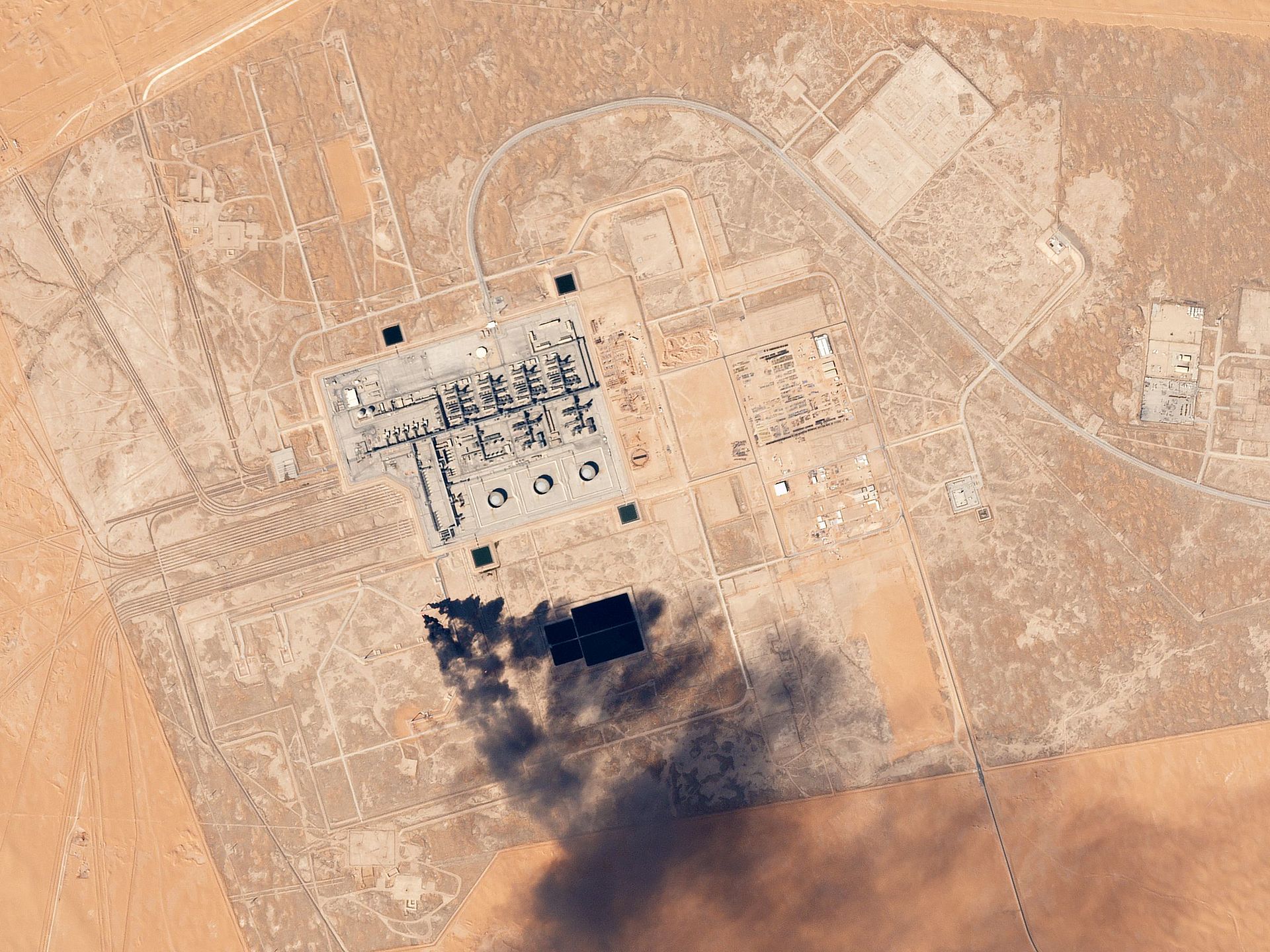
The damage from Iranian attacks, while real, has been less catastrophic than initial reporting suggested. The Ras Tanura refinery, struck by a drone swarm in late February, has a capacity of 550,000 barrels per day and was Saudi Arabia’s second-largest refining complex. Its partial shutdown removed approximately 300,000 barrels per day of refining capacity from the market — significant, but manageable within Aramco’s system. The company rerouted crude that would have been processed at Ras Tanura to other refineries and to direct export terminals, minimizing the impact on overall production volumes.
Saudi Arabia also holds approximately 150 million barrels of oil in strategic and commercial storage, both within the Kingdom and at overseas facilities in Egypt, Japan, and the Netherlands. At current production rates, the Kingdom’s reserves of 258.6 billion barrels — the world’s second largest after Venezuela — could sustain output for decades. Even in a worst-case scenario where the Strait of Hormuz were completely closed, Saudi Arabia could continue exporting via the East-West Pipeline and drawing down storage for approximately 73 days before needing to curtail drilling operations, according to an analysis by Chatham House.
The real constraint is not volume but logistics. Aramco’s export terminals on the Persian Gulf — Ras Tanura, Ju’aymah, and Ras al-Khair — handle roughly 70 percent of the Kingdom’s exports under normal conditions. Rerouting this volume through Yanbu on the Red Sea requires not just pipeline capacity but also tanker availability at Red Sea ports, scheduling adjustments for global shipping routes, and coordination with refinery customers in Asia and Europe who are accustomed to receiving Gulf-loaded cargoes. Aramco has spent decades preparing for exactly this contingency, but executing it under fire is a different matter than planning for it in peacetime.
The urgency is clearest in Asia, where India, Japan, South Korea, and China face an energy crisis of a severity not seen since the 1973 embargo — with some nations holding less than 30 days of reserves.
Is the Hormuz Strait Really Closed — and Does It Matter for OPEC+?
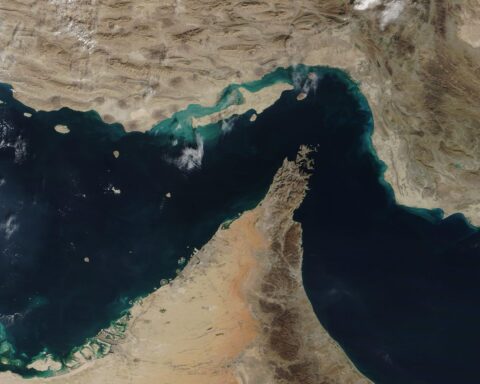
The Strait of Hormuz is the most important oil chokepoint on Earth. Approximately 20 million barrels per day of crude oil and petroleum products pass through this narrow waterway between Iran and Oman — roughly 20 percent of global oil consumption. When Iran began its military campaign against Saudi Arabia and U.S. forces in the Gulf, one of the first questions on every energy trader’s screen was whether Tehran would attempt to close the Strait.
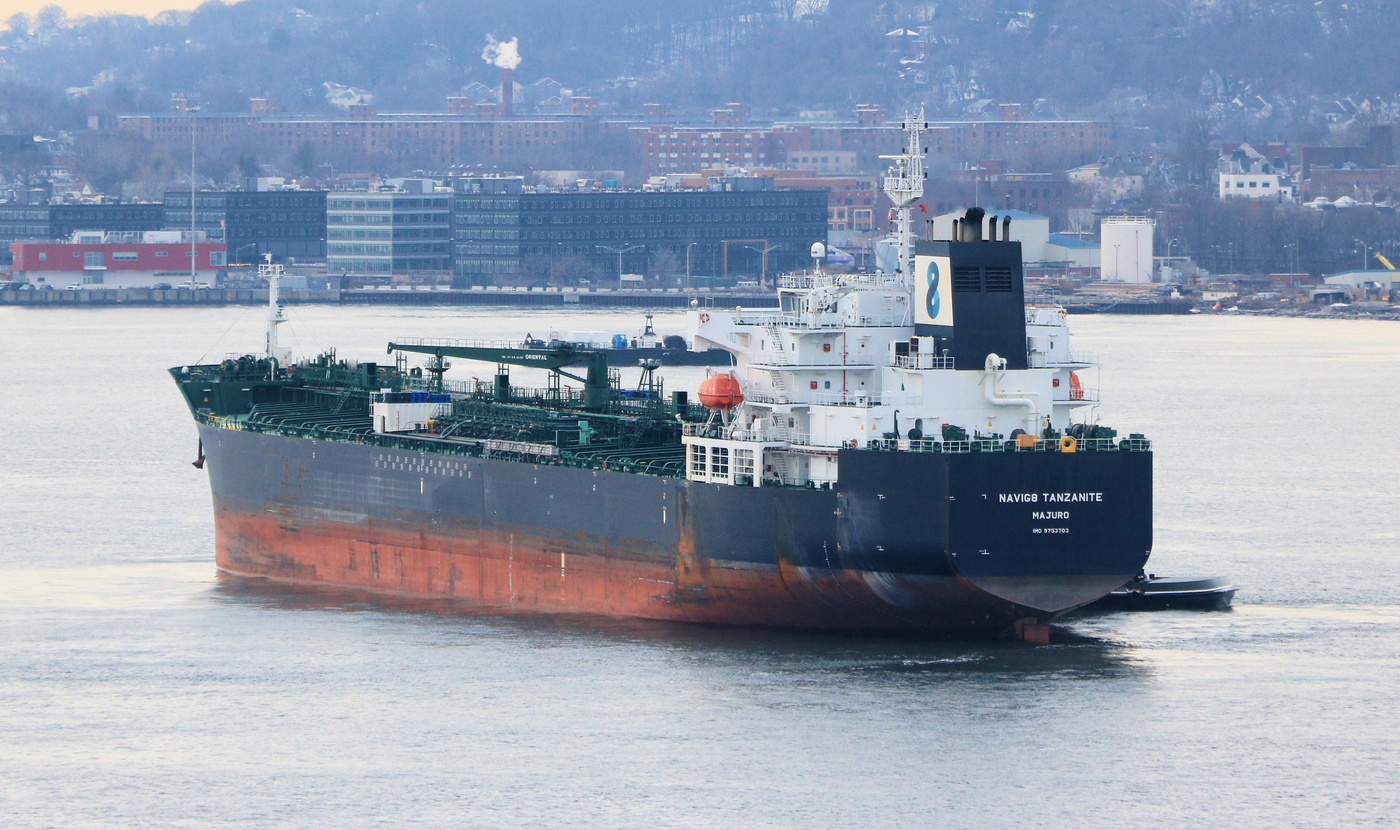
The answer, as of early March 2026, is that the Strait is functionally impaired but not fully closed. Iran has deployed naval mines in the shipping lanes, harassed tankers with fast-attack boats, and fired anti-ship missiles at vessels it claims are carrying cargo to Saudi Arabia. Several tankers have been hit or damaged. Insurance premiums for Hormuz transit have spiked to levels not seen since the Tanker War of the 1980s, and some shipping companies have suspended Gulf operations entirely. With VLCC rates hitting all-time records and Lloyd’s underwriters withdrawing war risk coverage entirely, the tanker war that is rewriting global shipping has made the cost of moving a single barrel through the strait almost prohibitive. But the U.S. Fifth Fleet, operating out of Bahrain, has maintained a minesweeping and escort operation that has kept the Strait technically navigable for tankers willing to accept the risk.
For OPEC+’s output decision, the partial disruption of the Strait actually strengthens the case for a production increase rather than weakening it. The logic works as follows: if the Strait were fully closed, additional Saudi production would be meaningless because the oil could not physically reach the market (except via the East-West Pipeline, which has finite capacity). But because the Strait is partially open — some tankers are getting through, with military escorts, at higher cost — additional production helps offset the effective supply reduction caused by slower transit times, higher insurance costs, and voluntary shipping withdrawals.
The Hormuz disruption has also reshuffled the geography of global oil trade in ways that benefit certain OPEC+ members. Iraq, which exports primarily through its southern terminal at Basra (also on the Gulf), has been affected by the shipping disruption. But Iraq also has a northern export route through Turkey via the Kirkuk-Ceyhan pipeline, which has added strategic value during the crisis. The UAE has its own bypass pipeline — the Habshan-Fujairah pipeline — with a capacity of roughly 1.5 million barrels per day, allowing Abu Dhabi to export from the Indian Ocean coast without transiting Hormuz.
Goldman Sachs issued a research note in late February projecting that Brent crude could reach $100 per barrel if the Hormuz Strait were fully closed for five weeks. UBP, the Swiss private bank, went further, forecasting $120 per barrel in the event of a prolonged closure. Standard Chartered revised its Brent forecast for Q1 2026 upward to $74 per barrel from a previous estimate of $62, citing the conflict premium. These projections underscore the market’s sensitivity to Hormuz disruptions — and explain why Saudi Arabia’s willingness to increase output, combined with its ability to bypass the Strait via the Red Sea, has a price-dampening effect that exceeds the 206,000 barrel per day headline figure.
The Trump Factor — Did Washington Pressure Riyadh to Pump More?
No analysis of the March 1 OPEC+ decision is complete without examining the role of the United States — and specifically, the transactional relationship between President Donald Trump and Crown Prince Mohammed bin Salman. The Trump-MBS alliance has been the defining bilateral relationship of the Gulf conflict, and the OPEC+ output increase bears its fingerprints.
Trump has made low gasoline prices a defining promise of his presidency. He views high energy costs as both an economic drag and a political liability, and he has repeatedly — and publicly — pressured OPEC to increase production. In January 2026, before the outbreak of hostilities with Iran, Trump posted on Truth Social that Saudi Arabia and OPEC should “PUMP MORE OIL” and warned that failure to do so would result in unspecified consequences. The message was characteristically blunt, but it reflected a genuine policy priority: the Trump administration’s economic strategy depends on cheap energy to offset inflationary pressures from tariffs, tax cuts, and military spending.
The war with Iran created an acute dilemma for this strategy. Military conflict in the Gulf is inherently inflationary for energy prices — the Brent crude spike from $68 to above $80 per barrel demonstrated this immediately. Every dollar increase in oil prices translates into higher costs at the pump, higher costs for manufacturing and transportation, and a drag on consumer spending that ripples through the entire economy. For Trump, the OPEC+ output increase is a partial antidote to the price effects of his own military campaign.
Bloomberg reported on March 2 that the United States has no immediate plan to tap the Strategic Petroleum Reserve, despite the price spike. This is a telling omission. The SPR, which holds several hundred million barrels, exists precisely for supply disruptions of this kind. The decision not to release SPR barrels suggests that Washington is confident the OPEC+ increase — combined with continued (if disrupted) Hormuz transit — will be sufficient to prevent a price spiral. It also suggests a quid pro quo: Riyadh pumps more so that Washington does not have to deplete its own reserves.
The political economy of the Trump-MBS relationship extends beyond oil prices. Saudi Arabia is the largest purchaser of U.S. weapons, with tens of billions of dollars in outstanding defense contracts. The Kingdom depends on American-made Patriot and THAAD air defense systems to intercept Iranian missiles and drones. MBS needs Trump’s military support to prosecute the war; Trump needs MBS’s oil to keep the American economy humming. The OPEC+ output increase is the oil side of this bargain.
There is also a diplomatic dimension. Saudi Arabia’s willingness to pump more oil gives the United States bargaining power in its broader negotiations with European and Asian allies over sanctions enforcement against Iran. If OPEC+ can keep oil prices manageable, the economic argument for exemptions from Iran sanctions weakens — countries that might otherwise seek waivers to buy discounted Iranian crude have less incentive to do so when Saudi and Russian barrels are plentiful. The output increase thus serves as a tool of sanctions enforcement by other means. The stakes for Europe are particularly acute — the Iran war has given Saudi Arabia its greatest energy leverage over the continent since 1973, with gas prices doubling and storage at decade lows.
The March 1 OPEC+ decision is not merely an oil market event — it is the energy dimension of a wartime alliance between Riyadh and Washington. Saudi Arabia is spending barrels the way the United States is spending missiles: as instruments of strategic pressure against a common adversary.
How Is Russia Playing Both Sides of the OPEC+ Output Decision?
Russia’s role in the March 1 decision deserves scrutiny because Moscow occupies a uniquely contradictory position in the current crisis. Russia is simultaneously a strategic partner of Iran, a co-leader of the OPEC+ alliance with Saudi Arabia, and a beneficiary of the conflict premium that has pushed oil prices above $80 per barrel. Its decision to support the output increase — and to take a 62,000 barrel per day share equal to Saudi Arabia’s — reveals the priorities of a Kremlin that values hard currency over ideological solidarity.
Moscow’s relationship with Tehran has deepened substantially since 2022, when Iran began supplying Shahed drones and other military equipment to Russia for use in Ukraine. The two countries share an adversarial stance toward the United States, coordinate military operations in Syria, and have expanded bilateral trade in sanctioned goods. By conventional diplomatic logic, Russia should be siding with Iran against the Saudi-American axis in the current Gulf conflict.
But Russia’s OPEC+ behavior tells a different story. Moscow supported the output increase because Russia desperately needs the revenue. The Russian economy, still laboring under Western sanctions imposed after the 2022 invasion of Ukraine, depends on oil and gas exports for approximately 40 percent of federal budget revenue. Every additional barrel Russia can sell at $80 or above is a barrel that funds the Ukrainian war effort, subsidizes domestic social spending, and props up the ruble. Russia’s OPEC+ quota increase of 62,000 barrels per day is worth approximately $5 million per day at current prices — not a transformative sum for a $2 trillion economy, but meaningful at the margin for a treasury under sanctions pressure.
There is also a market share calculation at work. Russia has watched with alarm as the OPEC+ production cuts of 2023–2025 ceded market share to non-OPEC producers, particularly U.S. shale operators, Guyana, and Brazil. Moscow’s preference, expressed repeatedly in private OPEC+ negotiations, is for a strategy that prioritizes volume over price. The March 1 increase aligns with this preference. Russian Deputy Prime Minister Alexander Novak, the Kremlin’s point man on OPEC+, has argued that moderate output increases help the alliance retain its relevance in a market where non-OPEC supply is growing at roughly 1.5 million barrels per day per year, according to the IEA.
The contradiction in Russia’s position — supporting an output increase that will put downward pressure on prices and thereby reduce Iran’s revenue — is managed through compartmentalization. Russian diplomats continue to express support for Iran in public statements. Russian military equipment continues to flow to Iranian forces. But at the OPEC+ negotiating table, Moscow votes its wallet. The Kremlin has calculated that the marginal revenue from additional oil sales exceeds the diplomatic cost of undermining an ally, particularly when that ally — Iran — is too consumed by its own military campaign to pay much attention to OPEC+ quota politics.
The 2020 oil price war between Saudi Arabia and Russia offers a precedent for understanding the current dynamic. In March 2020, the two countries failed to agree on production cuts in response to the COVID-19 demand crash. Saudi Arabia responded by flooding the market with cheap crude, sending prices into negative territory and inflicting massive damage on Russian producers. That crisis, which lasted only a few weeks before Moscow capitulated and agreed to the largest production cuts in OPEC history, taught Russia a painful lesson: in a volume war, Saudi Arabia always wins because its production costs are lower. Russia’s acquiescence to the March 2026 output increase reflects a desire to avoid repeating that experience.
The Wartime Output Calculus
The OPEC+ decision to increase production during active military conflict involved a matrix of factors that, analyzed individually, might point in different directions but collectively favored a supply increase. The following framework maps each major consideration against the conventional wisdom, the actual strategic logic as assessed from Riyadh’s perspective, the associated risk, and the primary beneficiary.
| Factor | Conventional Wisdom | Actual Strategic Logic | Risk Level | Beneficiary |
|---|---|---|---|---|
| Iranian infrastructure attacks | Cut production to conserve damaged capacity | Increase output to demonstrate resilience and deny Iran the narrative that attacks reduce Saudi supply | Medium — further attacks could overwhelm spare capacity | Saudi Arabia (reputation), global consumers |
| Hormuz Strait disruption | Hold output steady until shipping normalizes | Boost output to compensate for effective supply loss from shipping delays and cancellations; reroute via East-West Pipeline | High — full Strait closure would strand Gulf-loaded barrels | Asian importers (Japan, South Korea, India) |
| Brent price at $80-84/bbl | Let prices rise to maximize per-barrel revenue | Cap prices below $90 to prevent demand destruction and maintain long-term market share against shale, renewables | Low — prices remain above Saudi fiscal breakeven | OPEC+ (long-term demand preservation) |
| Trump administration pressure | Resist external pressure to maintain OPEC autonomy | Comply strategically to secure U.S. military support, weapons deliveries, and diplomatic cover during wartime | Medium — overcompliancee risks OPEC credibility | Saudi Arabia (security), United States (inflation) |
| Iran’s oil revenue dependency | Irrelevant to output decisions | Higher output depresses prices and directly reduces Iranian export revenue, weakening Tehran’s war machine | Low — Iran already under sanctions with limited export capacity | Saudi Arabia and allies (strategic) |
| Spare capacity signaling | Preserve spare capacity as insurance | Deploy a fraction of spare capacity (206k of ~2M bpd surplus) to signal confidence while retaining substantial buffer | Low — 90% of spare capacity remains in reserve | Global markets (stability signaling) |
| Russian budget pressure | Russia should side with Iran as strategic partner | Russia needs revenue more than Iranian solidarity; additional barrels at $80+ fund Ukraine operations and domestic spending | Medium — strains Moscow-Tehran relations | Russia (fiscal), OPEC+ cohesion |
| Non-OPEC supply growth | Let non-OPEC fill the gap during conflict | Prevent U.S. shale and other non-OPEC producers from capturing market share during OPEC+ restraint period | Medium — requires sustained discipline on follow-through | OPEC+ (market share) |
| Emergency stock drawdowns (IEA) | Let consuming nations tap strategic reserves | Pre-empt IEA stock releases by increasing supply organically; maintains OPEC+ control over market narrative | Low — IEA has 1.2 billion barrels available but prefers coordinated releases | OPEC+ (narrative control) |
What emerges from this matrix is a pattern: in nearly every case, the actual strategic logic favors an output increase even where the conventional wisdom argues for restraint. The risk column reveals that the decision carries genuine downside — a full Hormuz closure or a sustained Iranian attack on Saudi oil fields could quickly make the production increase untenable — but the risk levels are manageable given Saudi Arabia’s 2 million barrel per day spare capacity buffer and 150 million barrels of stored crude.
The framework also highlights the multiple beneficiaries of the decision. This is not a case where one actor wins and others lose. Saudi Arabia benefits strategically and reputationally. Russia benefits fiscally. The United States benefits from lower inflation pressure. Asian oil importers benefit from continued supply. Even the global economy benefits, to the extent that oil price stability prevents the kind of demand shock that accompanied previous Gulf conflicts. The only clear loser is Iran, which faces lower prices, reduced export revenue, and the embarrassment of watching its attacks fail to dislodge Saudi Arabia from its position as the world’s swing producer.
What Happens to Oil Prices If the War Drags On?
The oil market’s response to the Gulf conflict has been surprisingly muted compared to historical precedents. Brent crude’s move from approximately $68 per barrel to the $80–84 range represents a war premium of roughly 20 percent — substantial in absolute terms but modest compared to the 300 percent price spike of the 1973 embargo, the 150 percent increase during the Iranian Revolution of 1979, or even the 40 percent jump following Iraq’s invasion of Kuwait in 1990. The question is whether this restraint will hold if the conflict intensifies or drags into the second half of 2026.
Several scenarios are worth modeling. In the baseline case — where the current level of hostilities continues, the Strait of Hormuz remains partially navigable, and the OPEC+ output increase proceeds as planned — most energy analysts expect Brent to trade in the $78–88 range through Q2 2026. The additional 206,000 barrels per day from OPEC+ provides a modest supply cushion, while the Hormuz risk premium prevents prices from falling back to pre-war levels. Standard Chartered’s revised Brent forecast of $74 per barrel for Q1 2026, up from $62, captures the lower end of this range and likely underestimates the persistence of the conflict premium.
The bull case — Brent above $100 — requires an escalation that materially reduces global oil supply. Goldman Sachs has identified a five-week full closure of the Strait of Hormuz as the trigger for $100 crude, based on the removal of approximately 20 million barrels per day of supply from global markets. Even accounting for strategic reserve releases, East-West Pipeline rerouting, and demand destruction, a full Hormuz blockade would create a physical shortage that no amount of OPEC+ spare capacity could fully offset. The UBP forecast of $120 per barrel in a prolonged closure scenario assumes that the disruption lasts long enough to exhaust strategic petroleum reserves and force rationing in import-dependent economies like Japan and South Korea.
The bear case — Brent falling below $70 — requires a ceasefire or de-escalation that removes the conflict premium, combined with weaker-than-expected global demand. China’s economic recovery, which has been slower than anticipated, is the demand-side wildcard. If Chinese oil imports continue to disappoint, the combination of OPEC+ output increases and reduced Asian demand could push prices back toward pre-war levels, even without a resolution of the conflict. This scenario would be particularly painful for Iran, whose budget requires oil prices above $90 per barrel to balance, and for Russia, which has structured its 2026 budget around Brent at $70.
The specter of $100 oil haunts every actor in this crisis. For the Trump administration, triple-digit oil prices would be a political catastrophe, fueling inflation at a moment when the Federal Reserve is already under pressure to keep rates elevated. For Saudi Arabia, $100 oil sounds like a windfall but actually represents a strategic failure — it means the market perceives Saudi supply as unreliable, which erodes Aramco’s long-term franchise value and accelerates the energy transition. For Iran, $100 oil would provide desperately needed revenue but would also intensify international pressure for sanctions enforcement and military intervention to reopen the Strait.
| Scenario | Brent Price Range | Key Trigger | Probability (analyst consensus) | Source |
|---|---|---|---|---|
| Baseline (status quo) | $78–88/bbl | Continued partial Hormuz disruption, OPEC+ increase proceeds | ~55% | Reuters, Bloomberg consensus |
| Escalation (full Hormuz closure, 5 weeks) | $100+/bbl | Iran mines or blockades Strait completely | ~20% | Goldman Sachs |
| Prolonged closure (3+ months) | $120+/bbl | Extended Strait closure, SPR drawdowns insufficient | ~10% | UBP |
| De-escalation/ceasefire | $65–72/bbl | Ceasefire agreement, Strait reopens fully | ~15% | Standard Chartered |
Can Aramco Deliver on Its Production Promises While Refineries Burn?
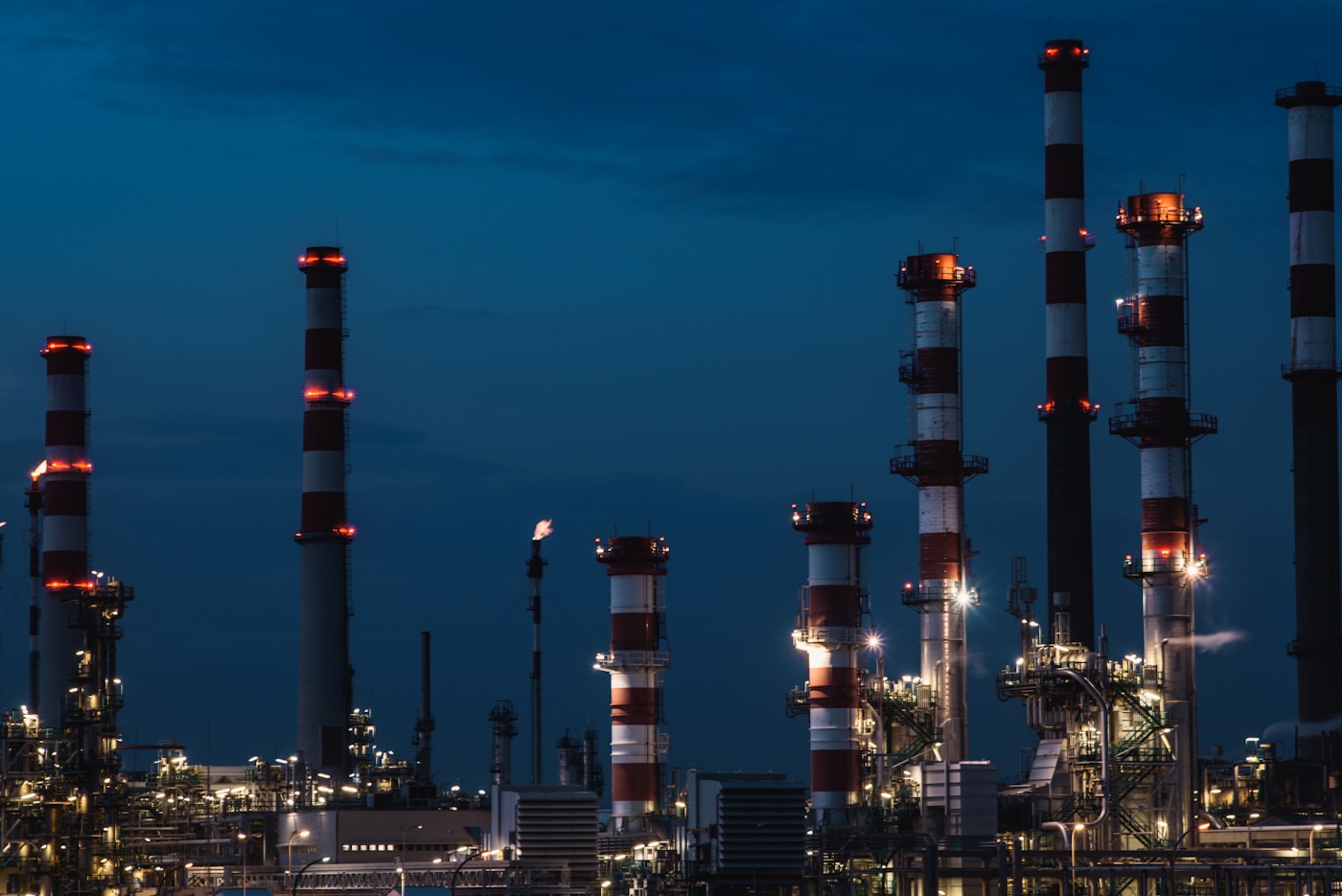
Saudi Aramco’s ability to execute the March 1 production increase rests on a distinction that is frequently confused in media coverage: the difference between upstream production capacity (extracting crude from the ground) and downstream refining capacity (processing crude into gasoline, diesel, and other products). The Iranian attacks have primarily targeted downstream facilities — refineries and processing plants — rather than upstream oil fields. This means that Saudi Arabia’s ability to produce and export crude oil remains largely intact, even as its ability to refine that crude domestically has been impaired.
The Ras Tanura refinery, with its 550,000 barrels per day of refining capacity, was the highest-profile casualty of the Iranian drone campaign. The facility processes crude from the massive Ghawar and Safaniyah fields into refined products for both domestic consumption and export. Its partial shutdown has forced Aramco to redirect crude that would have been refined at Ras Tanura toward two alternative destinations: other Saudi refineries with available capacity, and direct export as unrefined crude oil to refineries in Asia and Europe.
This distinction matters because the OPEC+ output quota is measured in crude oil production, not refined product output. When Saudi Arabia commits to producing 10.2 million barrels per day, it is committing to extracting that volume of crude oil from the ground and making it available for sale — whether as refined products or as raw crude. The loss of the Ras Tanura refinery reduces Saudi Arabia’s refined product exports but does not, by itself, prevent the Kingdom from meeting its crude output target. The crude simply goes into the market in a less processed form, at a lower price point than refined products would command.
Aramco’s operational resilience has been tested before. In September 2019, a Houthi drone and missile attack struck the Abqaiq processing facility and the Khurais oil field, temporarily knocking out approximately 5.7 million barrels per day of production capacity — more than half of Saudi Arabia’s total output at the time. It was the largest single disruption to oil supply in history. Yet Aramco restored full production capacity within approximately two weeks, a feat that stunned the energy industry and demonstrated the company’s depth of engineering talent and spare equipment reserves.
The 2019 experience is not perfectly analogous to the current situation. The Abqaiq-Khurais attack was a single strike; the current conflict involves sustained, repeated attacks over weeks. The cumulative damage from multiple drone and missile strikes across multiple facilities is more difficult to repair than a one-time disruption, because repair crews must operate under the constant threat of further attacks, and replacement parts must be sourced and transported through a supply chain that is itself disrupted by the conflict.
Nevertheless, Aramco’s track record suggests the company can meet its 10.2 million barrel per day target for April, provided that Iran does not score a direct hit on a major oil field or the East-West Pipeline itself. The upstream oil fields — Ghawar, Safaniyah, Shaybah, Khurais, Manifa — are spread across hundreds of square kilometers of desert and are far more difficult to disable with drones than concentrated refining complexes. The East-West Pipeline, while theoretically vulnerable to sabotage, runs through remote desert terrain and has redundant capacity that makes it resilient to localized damage.
The EIA’s most recent assessment of Saudi production capacity, published in its Short-Term Energy Outlook, notes that Aramco’s spare capacity of approximately 2 million barrels per day provides a buffer that few other producers can match. Even after the April output increase, Saudi Arabia will retain roughly 1.8 million barrels per day of untapped capacity — enough to offset a major disruption to any single facility and still meet its OPEC+ commitment.
Who Benefits Most From OPEC+’s Wartime Gambit?
The March 1 OPEC+ decision creates winners and losers across the global energy system, and the distribution is not immediately obvious. The most straightforward beneficiary is the global consumer — every additional barrel of oil on the market exerts downward pressure on pump prices for gasoline, diesel, and jet fuel. In the United States, where the average price of gasoline had risen from approximately $3.10 per gallon before the war to $3.65 by late February, the OPEC+ increase offers a modest counterweight, though it is unlikely to fully offset the war premium.
Among OPEC+ members, the calculation is more complex. Saudi Arabia benefits from the output increase on net, even though the per-barrel price may be slightly lower than it would be under tighter supply. At 10.2 million barrels per day and Brent at $80, Saudi Arabia’s gross daily oil revenue is approximately $816 million. If the Kingdom had held output at 10.138 million barrels per day (the pre-increase level) and the resulting tighter supply pushed Brent to $86, revenue would be approximately $871 million — higher per day, but at the cost of market share, reputational damage, and the strategic costs of appearing unable to produce during wartime. The Saudi leadership has clearly decided that the non-financial benefits of the increase — signaling reliability, punishing Iran, satisfying Washington — outweigh the marginal revenue loss.
Russia benefits fiscally, as noted above, but faces reputational costs with Iran. Moscow’s decision to support the output increase — and to take its full 62,000 barrel per day share — will not go unnoticed in Tehran. Iran’s leadership has already expressed frustration with what it perceives as Russian neutrality in the Gulf conflict, despite years of deepening military cooperation. The OPEC+ decision adds another irritant to a relationship that is more transactional than either side publicly admits.
The biggest loser, unambiguously, is Iran. Tehran’s oil revenue depends on both the volume of its exports (constrained by sanctions to approximately 1.5 million barrels per day) and the price those exports command (typically a discount of $5–10 per barrel to Brent, reflecting sanctions risk). Every dollar that the OPEC+ increase shaves off the Brent price translates directly into reduced revenue for the Iranian government. If the increase pushes Brent from $84 to $80, Iran loses approximately $6 million per day — not catastrophic for a $400 billion economy, but painful for a government funding a multi-front military campaign while under comprehensive Western sanctions.
Non-OPEC producers occupy an ambiguous position. U.S. shale producers, who are the marginal barrel in global supply, benefit from higher absolute prices ($80+ Brent) but face competitive pressure from OPEC+ volume increases. The U.S. shale industry’s breakeven price varies by basin but averages roughly $45–55 per barrel for existing wells. At current prices, American producers are comfortably profitable and are likely to respond to the OPEC+ increase with modest output increases of their own, further adding to global supply.
Asian oil importers — Japan, South Korea, India, and China — are among the primary intended beneficiaries of the OPEC+ decision. These countries depend heavily on Gulf crude and are most exposed to supply disruptions from the Hormuz conflict. The OPEC+ increase, combined with Saudi Arabia’s rerouting of exports through the Red Sea, provides a degree of supply security that would not exist if the cartel had chosen restraint. Japan and South Korea, which import virtually all of their oil, have been quietly lobbying Riyadh for supply assurances throughout the crisis.
In the calculus of wartime oil strategy, the paradox resolves itself: producing more during a conflict is not an act of recklessness but of strategic supremacy. Saudi Arabia is demonstrating that its oil weapon is not the power to withhold, but the power to flood — drowning its adversary’s revenue while keeping its allies supplied.
Will OPEC+ Reverse Course If Iran Escalates Further?
The OPEC+ production increase is presented as a firm commitment, but the alliance retains the option to reverse course at its next ministerial meeting if circumstances change dramatically. The question is what level of Iranian escalation would trigger such a reversal — and whether the political dynamics within OPEC+ would even permit it.
The most obvious trigger would be a successful Iranian attack on the East-West Pipeline, which would eliminate Saudi Arabia’s ability to bypass the Strait of Hormuz and effectively trap all Saudi exports on the Gulf coast. If Aramco cannot get oil to Red Sea ports, increasing production becomes meaningless — the crude has nowhere to go. An East-West Pipeline disruption, combined with a Hormuz closure, would create a genuine supply emergency that would force OPEC+ to acknowledge physical reality and cut its production targets to match actual export capacity.
A second trigger would be a sustained, catastrophic attack on Saudi Arabia’s upstream oil fields — not just refineries and processing plants, but the well heads, gathering centers, and injection facilities that extract crude from the ground. The 2019 Abqaiq attack demonstrated that such strikes are technically possible, but the geographic dispersal of Saudi oil fields makes a systemic upstream disruption far more difficult to achieve than a targeted refinery strike. Ghawar, the world’s largest oil field, spans an area of roughly 280 by 30 kilometers. Disabling it would require a sustained military campaign, not a single drone swarm.
A third, less dramatic trigger would be a sustained oil price decline that pushes Brent below $70 per barrel. While this might seem paradoxical — why would prices fall during a war? — it is conceivable in a scenario where global demand weakens significantly due to recession fears, Chinese economic slowdown, or the psychological impact of the conflict on business confidence. If OPEC+ output increases combine with demand destruction to push prices below the fiscal breakeven level for most member states, the alliance would face strong internal pressure to cut production, regardless of the strategic case for maintaining volume.
The political dynamics within OPEC+ also constrain the reversal option. Any production cut would need to be negotiated among all eight member states that participated in the March 1 increase, each of which has its own fiscal pressures and strategic calculations. Iraq, which has historically been a reluctant participant in OPEC+ cuts, would resist any reversal that reduced its revenue. Russia, which is fighting its own expensive war in Ukraine, would push back against cuts that reduce its dollar income. The consensus required for an OPEC+ reversal is significantly harder to achieve than the consensus for an increase, because cuts impose concentrated costs on each member while increases distribute benefits more broadly.
The most likely scenario, according to analysts at Chatham House, is that OPEC+ maintains the April output increase but conditions any further increases on the trajectory of the conflict and the state of the Hormuz Strait. The alliance’s next scheduled ministerial meeting will provide an opportunity to assess whether the April increase has been absorbed by the market without a price crash, whether Iranian attacks have escalated to a level that threatens Saudi upstream capacity, and whether the political alignment between Riyadh and Moscow remains intact. The output decision, in other words, is not a one-time event but an ongoing calibration — a dial that OPEC+ can turn up or down in response to conditions on the ground and on the water.
The historical record suggests that OPEC+ is more likely to err on the side of maintaining or increasing output during this crisis. The alliance’s founding purpose — to prevent a repeat of the 2014–2016 oil price crash — has evolved into a broader mandate to manage the global supply-demand balance in a way that serves the strategic interests of its most powerful members. In the current environment, those interests point overwhelmingly toward higher output: Saudi Arabia wants to punish Iran and please Washington, Russia wants revenue, and the smaller Gulf states want to maintain their relevance within the alliance. Only a dramatic deterioration in physical security — the kind of escalation that would make production physically impossible — is likely to reverse this trajectory.
The oil production decision has ripple effects across the entire Saudi financial system. The Tadawul stock exchange plunged 5 percent on March 1 before staging a partial recovery driven largely by energy stocks — an ironic outcome in which the OPEC+ output increase simultaneously supported crude prices and propped up the only sector of the Saudi market still showing gains.
Frequently Asked Questions
Why is Saudi Arabia increasing oil production during a war instead of cutting it?
Saudi Arabia is increasing output for three converging reasons. First, higher production puts downward pressure on oil prices, which directly reduces Iran’s oil export revenue and weakens Tehran’s ability to fund its military campaign. Second, the output increase satisfies the Trump administration’s demand for affordable energy, cementing U.S. military and diplomatic support for the Kingdom during wartime. Third, maintaining and expanding production signals to global markets that Saudi Aramco remains a reliable supplier despite Iranian attacks — preserving the Kingdom’s most valuable economic asset: its reputation as the world’s swing producer. The 206,000 barrel per day increase also uses only a fraction of Saudi Arabia’s 2 million barrels per day of spare capacity, meaning Riyadh retains substantial reserves for further escalation.
How much spare oil production capacity does Saudi Arabia have?
Saudi Aramco maintains a maximum sustained production capacity of 12 million barrels per day, verified by independent auditors and recognized by the IEA and EIA. With the post-increase target set at 10.2 million barrels per day, the Kingdom retains approximately 1.8 million barrels per day of spare capacity — the largest buffer of any oil producer on Earth. Additionally, Saudi Arabia holds approximately 258.6 billion barrels in proven reserves, the second largest in the world after Venezuela, and maintains roughly 150 million barrels of oil in strategic and commercial storage facilities both domestically and at overseas locations in Egypt, Japan, and the Netherlands. Chatham House estimates that if the Strait of Hormuz were fully closed, Saudi Arabia could sustain operations for approximately 73 days before needing to curtail drilling.
What happens to oil prices if the Strait of Hormuz is fully closed?
Approximately 20 million barrels per day of oil — roughly 20 percent of global consumption — transits the Strait of Hormuz. A full closure would represent the largest oil supply disruption in history. Goldman Sachs projects that a five-week complete closure would push Brent crude to $100 per barrel or higher. UBP, the Swiss private bank, forecasts $120 per barrel in the event of a prolonged blockade lasting three months or more. However, a full closure remains operationally difficult for Iran to achieve given the presence of U.S. Fifth Fleet minesweeping and escort operations, and several Gulf producers have bypass infrastructure — Saudi Arabia’s East-West Pipeline to Yanbu (reportedly upgraded to 7 million barrels per day capacity) and the UAE’s Habshan-Fujairah pipeline (1.5 million barrels per day) — that would mitigate but not fully offset the disruption. The IEA has indicated that its member states hold approximately 1.2 billion barrels of emergency stocks that could be released in a coordinated drawdown.
Is Russia siding with Saudi Arabia or Iran in the OPEC+ decision?
Russia is pursuing its financial interests over ideological solidarity with Iran. Despite a deepening strategic partnership with Tehran — including Iranian drone sales to Russia for use in Ukraine, military cooperation in Syria, and expanded bilateral trade — Moscow voted for the OPEC+ output increase and accepted a 62,000 barrel per day quota increase equal to Saudi Arabia’s. The Kremlin’s priority is revenue: Russia depends on oil and gas exports for approximately 40 percent of federal budget revenue, and every additional barrel sold at current prices of $80 or above helps fund the Ukraine campaign and domestic spending programs. The 2020 Saudi-Russia oil price war, which saw Brent crash to historic lows after the two countries failed to agree on production cuts, taught Moscow that it cannot afford to oppose Saudi Arabia on output decisions. Russia is effectively playing both sides — maintaining its diplomatic and military relationship with Iran while voting with its wallet inside OPEC+.
Could OPEC+ reverse the production increase if the war escalates?
OPEC+ retains the institutional mechanism to reverse the April output increase at any future ministerial meeting, but several factors make a reversal unlikely absent a dramatic escalation. A successful Iranian attack on the East-West Pipeline — which would eliminate Saudi Arabia’s ability to bypass the Hormuz chokepoint — would be the most likely trigger for a production cut, as it would make increased output physically impossible to export. A sustained attack on upstream oil fields (as opposed to refineries) could also force a reassessment. However, the political dynamics within the eight-nation coalition favor maintaining output: Russia needs the revenue for its Ukraine war effort, Iraq resists cuts that reduce its income, and Saudi Arabia views production volume as a strategic weapon against Iran. The most probable trajectory is that OPEC+ maintains the April increase while conditioning any further increases on the evolution of the conflict and the state of Hormuz shipping.
How does the 2026 OPEC+ decision compare to the 1973 oil embargo?
The 1973 Arab oil embargo and the 2026 OPEC+ production increase represent diametrically opposite strategies. In 1973, Saudi Arabia under King Faisal led OPEC in cutting production and imposing an embargo on the United States and Netherlands in retaliation for their support of Israel during the Yom Kippur War — a strategy of restriction designed to maximize political influence through economic pain. In 2026, Saudi Arabia under Crown Prince Mohammed bin Salman is increasing production during wartime — a strategy of abundance designed to signal reliability, punish Iran, and satisfy the United States. The structural differences are significant: in 1973, there were no meaningful alternatives to Middle Eastern crude, no strategic petroleum reserves, and no U.S. shale industry. In 2026, the IEA holds 1.2 billion barrels of emergency stocks, U.S. shale produces over 13 million barrels per day, and consuming nations have diversified their supply chains. An embargo strategy would fail in the modern market; the flood strategy is the only version of the oil weapon that still works.
What is Saudi Arabia’s fiscal breakeven oil price?
Saudi Arabia’s fiscal breakeven oil price — the price per barrel required to balance the government’s budget — is estimated by the International Monetary Fund at approximately $80–85 per barrel for 2026. With Brent trading in the $80–84 range, the Kingdom is operating near its breakeven threshold, which means the OPEC+ output increase is not generating significant surplus revenue. However, the Saudi government has access to substantial financial reserves, including holdings in the Public Investment Fund and foreign reserves managed by the Saudi Arabian Monetary Authority, that allow it to run budget deficits for extended periods without fiscal distress. The decision to increase output at prices near breakeven reflects a strategic calculation that the non-financial benefits — military alliance with Washington, economic pressure on Iran, market share preservation — outweigh the short-term fiscal cost of producing more at a marginal loss relative to higher prices that a production cut might achieve.
The arithmetic changed dramatically on 9 March when Saudi Arabia began cutting oil production as the Hormuz blockade filled Gulf storage tanks. The OPEC+ output increase strategy became irrelevant overnight as producers ran out of physical space to store crude they could not ship.